REVIEW · CARCASSONNE
Carcassonne: Castle and Ramparts Entry Ticket
Book on GetYourGuide →Operated by Distributor: GetYourGuide Tours & Tickets GmbH · Bookable on GetYourGuide
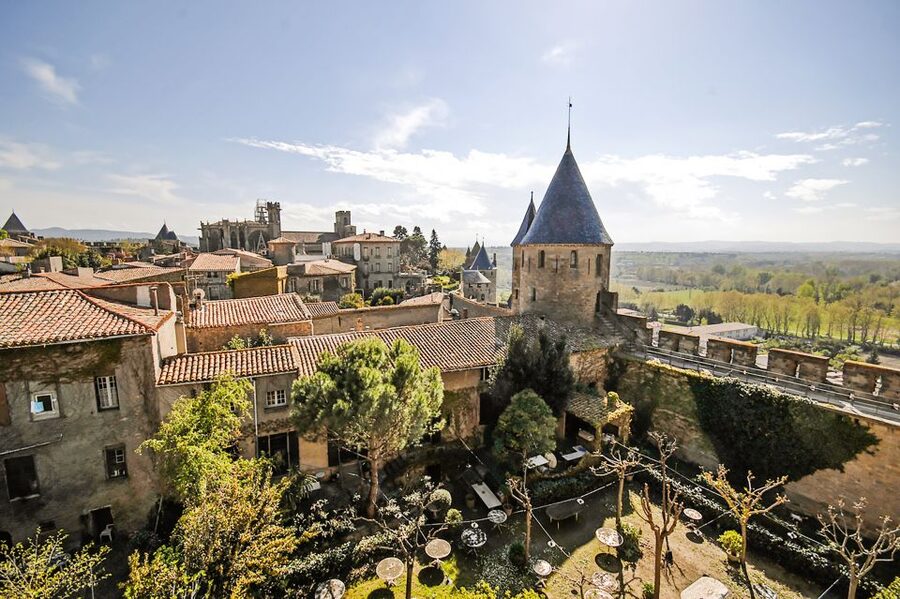
Carcassonne’s walls make history feel real. With this entry ticket, you’re free to pace yourself through the Château Comtal, the archaeological museum, and the ramparts—plus a few standout stops like the Salle Pierre Embry and a climb up the Bishop’s Tower.
What I like most is the practical self-guided format and the pay-off: you get major medieval structures in one compact visit, including the only construction that straddles both city walls (the Bishop’s Tower). I also love the way the experience ties together centuries of fortification—Roman through Cathar-era scars and 19th-century restoration.
One consideration: the ramparts aren’t a casual stroll. There are stairs and uneven, narrow sections, so if mobility is tight, plan your route and take breaks early rather than later.
In This Review
- Key things I’d focus on
- First Look: Château Comtal and Ramparts in Plain Sight
- What’s Included (and What Costs Extra)
- Entering the Château Comtal: Courtyards and the Feel of the Fort
- Salle Pierre Embry: The Alabaster Room You’ll Remember
- Climbing Bishop’s Tower: The Double-Wall View You Can’t Imitate
- The Ramparts Walk: Western Views and a 30-Minute Circuit of Photos
- Timing Tips: When to Arrive for Less Fuss
- Price and Value: Is $15 Worth It?
- Getting There and the On-Site Reality Check
- Who This Is Best For (and Who Might Feel Strained)
- Should You Book This Ticket?
- FAQ
- How much does the Carcassonne castle and ramparts entry ticket cost?
- Is this tour self-guided or do I need a guide?
- Is the audio guide included?
- What are the main highlights inside the château and walls?
- How long is the experience?
- When is the attraction closed?
- Are there days when the ramparts are closed?
- Is there free entry for some people?
- Can I bring a stroller, bicycle, or scooter onto the ramparts?
Key things I’d focus on
- Skip the ticket line with a pre-booked timeslot and go straight into the walled complex
- Climb the Bishop’s Tower for the unusual view and the geometry of the double walls
- Don’t miss Salle Pierre Embry with its early-15th-century polychrome alabaster statues
- Do the ramparts walk fully for the best spread of views and photo angles
- Rent the audio if you like context (it’s optional, but it meaningfully upgrades the experience)
- Go early if you can, since the narrow ramparts can feel crowded later in the day
First Look: Château Comtal and Ramparts in Plain Sight
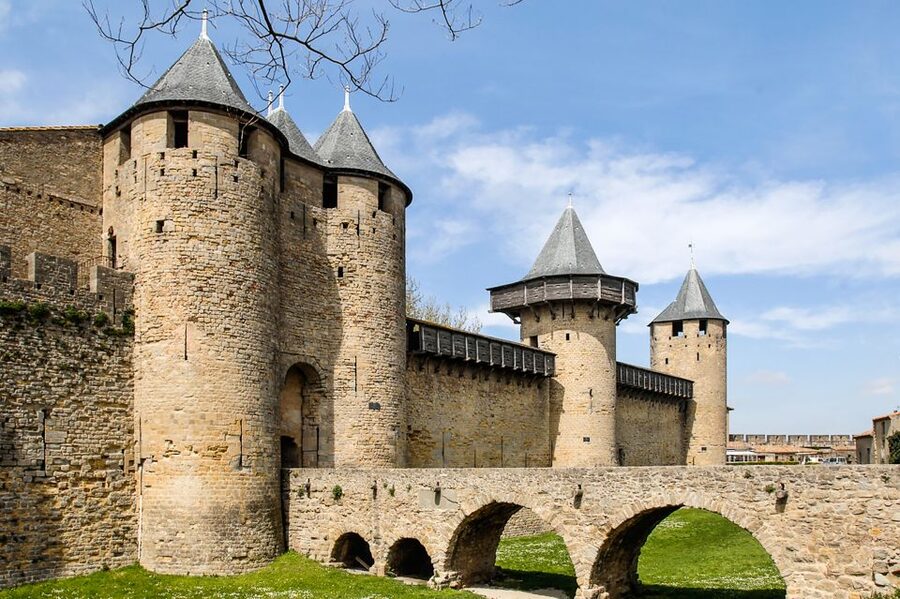
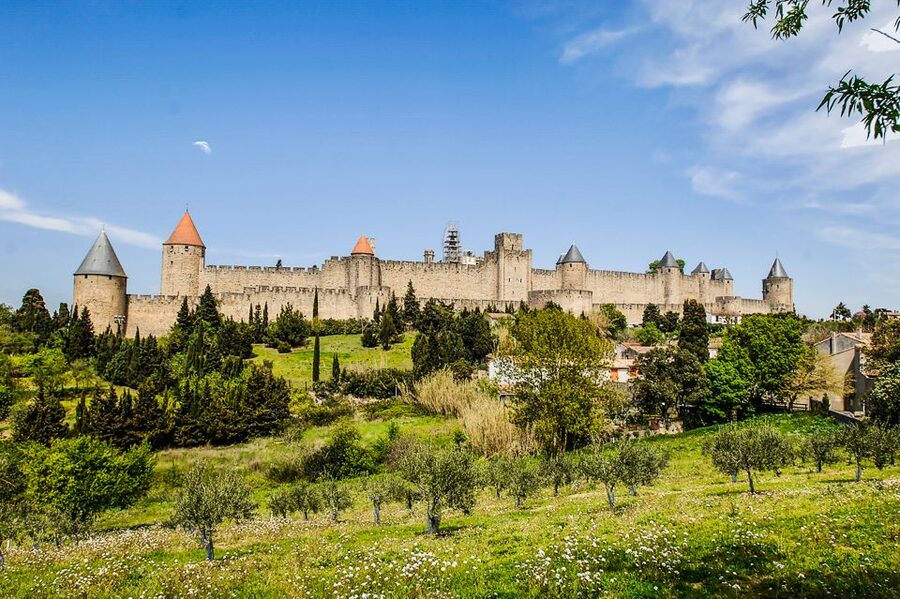
Carcassonne’s medieval city is dramatic even before you start walking. The Château Comtal sits high and controlled, like the place was designed to keep outsiders out and keep decisions made inside. Once you step into the fortress grounds, the “why” behind all that stone becomes easier to understand—military architecture wasn’t just decorative.
This ticket works because it gives you the best parts of the fortified core in one visit: castle courtyards, an archaeological museum, and the ramparts walk that turns Carcassonne into a live map. You’re not waiting for a tour group to finish a photo or a restroom stop. You pick the pace, stop when you want, and move on when you’re ready.
You can also read our reviews of more tours and experiences in Carcassonne.

What’s Included (and What Costs Extra)
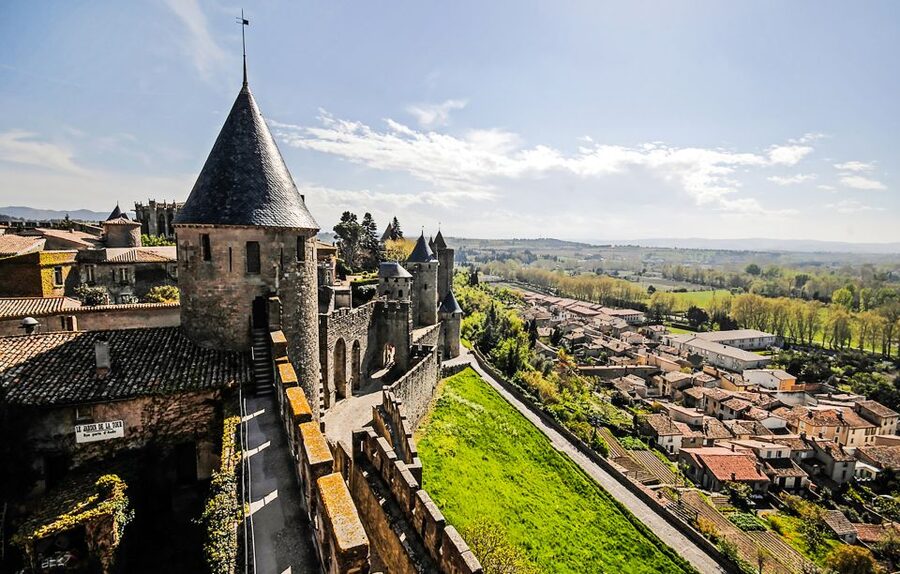
Here’s the deal: your entry ticket includes a self-guided tour through the main castle courtyards, the archaeological museum, and the ramparts. You’ll also get a multilingual leaflet on-site (French, English, German, Italian, Spanish, Portuguese, Dutch, Japanese, Chinese, Russian, or Polish).
What’s not included is the audio guide. You can rent one on-site for 3 Euros, and you’ll need to leave an ID to get the headset. In practice, the audio guide is a smart add-on if you want narration instead of reading your way through every stop. If you’re short on time, you can still do well with signage and your own wandering.
Small group size is part of the setup too (limited to 10 participants), but the real magic here is that it’s self-guided—so you’re not locked into someone else’s tempo.
Entering the Château Comtal: Courtyards and the Feel of the Fort

Inside the Château Comtal, you start with the spaces that make the castle feel like a working stronghold, not just a pretty building. The courtyards help you orient yourself fast. You’ll notice how movement funnels between spaces and how openings frame what you’re supposed to see—or keep protected.
This is also where the self-guided format shines. There’s enough going on that you can spend 10 minutes scanning and then another 20 minutes slowing down at the spots that catch your attention. If you’re the kind of visitor who likes to understand a place before taking photos, this area rewards that approach.
One practical tip: since the château closes earlier than you might expect on some dates, I’d treat your first hour inside the fortress as your “must-see sweep.” Then you can spend longer on ramparts once you know what you can cut if you’re running low on time.
Salle Pierre Embry: The Alabaster Room You’ll Remember
If you want one interior stop that feels instantly special, aim for the Salle Pierre Embry. This room features a window made from three polychrome alabaster statues dating to the early 15th century.
Even if you don’t know your art history, the window format makes a strong impression. It’s not just “a sculpture in a building.” It’s a deliberate display—color, material, and scale all working together. In a fortress setting, that kind of refined artistry can feel almost surprising, and that contrast helps you understand how power and display went together in medieval life.
If you’re renting the audio guide, this is exactly the sort of room where narration tends to make the details land faster.
Climbing Bishop’s Tower: The Double-Wall View You Can’t Imitate
The standout climb here is the Bishop’s Tower. It’s unique because it’s the only construction that straddles both city walls. That means the architecture isn’t just “near the walls.” It literally spans the layers of fortification.
That detail matters when you’re standing on the stairs. From the top and at the angles where the tower crosses the walls, the whole system makes more sense. You stop thinking of the walls as a single barrier and start seeing them as stacked protection—built for strategy, not just for appearance.
Yes, you’ll earn your views. The climb is worth it, but the tower and rampart areas involve stairs and uneven footing. If you need to conserve energy, I’d prioritize this tower climb earlier in your visit—when you’re fresh and less tempted to rush.
The Ramparts Walk: Western Views and a 30-Minute Circuit of Photos
The ramparts are why Carcassonne feels like a “castle city” instead of a single monument. The self-guided ramparts route is designed to be doable even if you’re not trying to win a walking contest.
A common pacing target is about 30 minutes for the ramparts walk, with views that keep changing as you move along. Some sections give you sweeping sightlines over the city and surrounding countryside; others put you closer to the wall’s texture and construction details.
There’s also a self-guided addition tied to the medieval western ramparts, giving you a fresh set of views if you’re up for a little extra walking.
Two realities to keep in mind:
- The ramparts can be narrow, so it helps to go when you’re not fighting a crowd.
- You may find some very high steps. If you need to step out or turn back, there are exit points along the ramparts route that can help.
If you want the best experience, take your photos, breathe, then keep going. Don’t spend all your time stopped in the first great spot.
Timing Tips: When to Arrive for Less Fuss
A pre-booked timeslot is the best way to reduce waiting. Once you’re inside, the real timing issue is crowd flow—especially on ramparts.
Plan on arriving early if your schedule allows. When I see people finish around midday and encounter queues afterward, it usually comes down to simple physics: the complex is fixed-size and the ramparts squeeze bodies into a smaller space. Early visits also help if you’re climbing the tower and want fewer photo interruptions.
Also note closure windows:
- Closed Jan 1, May 1, and Dec 25
- Ramparts closed July 14 due to fireworks
- The attraction closes at 4:00 PM on Dec 24 and Dec 31
If you’re visiting in winter, those dates matter a lot for planning your day.
Price and Value: Is $15 Worth It?
At $15 per person, this ticket is priced like an entry you can justify quickly—especially because it bundles multiple experiences instead of giving you one room and a gift shop. You’re paying for access to the Château courtyards, museum, and ramparts system in one day.
Then there’s the optional upsell: the audio guide for 3 Euros. I think that extra cost is worth it if you want more than “look at this, it’s old.” The audio tends to connect the dots between fortification, restoration, and specific locations like the Bishop’s Tower and Salle Pierre Embry. If you’re the type who prefers reading at your own pace, the leaflet and on-site interpretation boards can be enough, and you can save the 3 Euros.
So the value equation looks like this:
- Buy the ticket for the core experience (stone + access + ramparts views)
- Add audio if you want story and context instead of just signage
Either way, the fortress is the main event, and the ticket gets you into the right parts of the medieval city.
Getting There and the On-Site Reality Check

Your meeting point is at Chateau et Remparts de la Cite de Carcassonne, 1, rue Viollet-le-Duc, 11000 Carcassonne.
A few rules are worth knowing before you show up, because they affect comfort:
- Scooters, bicycles, helmets, non-folding strollers, and large luggage aren’t permitted inside the Château Comtal or on the ramparts
- Animals are not allowed inside the monument
- If you’re using the ramparts, be ready for stairs and narrow sections
Also, you’ll want ID with you. You may need it for audio rental (as a deposit) and it’s required for certain free-entry categories (details below).
If your goal is photos, bring patience. Narrow ramparts + great viewpoints + camera phones is a recipe for slow moving sections. Going early helps.
Who This Is Best For (and Who Might Feel Strained)
This ticket is excellent for:
- People who like medieval fortifications and want to understand how defenses were built
- Visitors who enjoy self-guided walking without waiting on a group
- Anyone who wants standout sights like the Bishop’s Tower and the Pierre Embry room in a single day
It may be a tougher fit if:
- You struggle with stairs or uneven surfaces (the ramparts include steep/high steps)
- You’re hoping for a fully stroller-friendly, smooth-surface route (the complex has restrictions)
- You hate wandering without a live guide (this is self-guided, with interpretation materials rather than a person)
For limited mobility, the monument is described as accessible for limited-mobility visitors in certain areas (Barbican and main courtyard). The ramparts walk itself may still be challenging depending on what you can manage.
Should You Book This Ticket?
Yes—if your goal is the heart of Carcassonne’s castle-and-walls experience in one day, this is the ticket I’d prioritize. The Bishop’s Tower straddling both walls is a rare architectural moment, and the ramparts walk is where Carcassonne turns from “historic place” into “I get it now.”
I’d book even if you skip the audio, because the basic signage and the walk itself do enough. But if you like context—why the walls look the way they do, how the restoration shaped what you see—rent the audio when you arrive.
If you’re visiting on or near major closure dates (like Dec 24/31 early close or July 14 fireworks) or you know you’ll need smoother terrain, plan your route around that before you commit.
FAQ
How much does the Carcassonne castle and ramparts entry ticket cost?
It costs $15 per person.
Is this tour self-guided or do I need a guide?
It’s self-guided. You get a leaflet in multiple languages and explore the castle courtyards, archaeological museum, and ramparts at your own pace.
Is the audio guide included?
No. The audio guide is not included. You can rent one on-site for 3 Euros (an ID is needed to receive the headset).
What are the main highlights inside the château and walls?
Key highlights are the Bishop’s Tower (the only construction straddling both city walls) and the Salle Pierre Embry with its window made of three polychrome alabaster statues from the early 15th century. The ramparts walk is the other big draw.
How long is the experience?
The activity is listed as 1 day and your ticket is valid for 1 day (with available start times).
When is the attraction closed?
It’s closed on January 1st, May 1st, and December 25th. The attraction also closes at 4:00 PM on December 24th and December 31st.
Are there days when the ramparts are closed?
Yes. The ramparts will be closed on July 14 due to fireworks.
Is there free entry for some people?
Entrance is free for those under 18 and EU citizens under 26 with a valid ID. A timeslot must be pre-booked via www.remparts-carcassonne.fr.
Can I bring a stroller, bicycle, or scooter onto the ramparts?
No. Scooters, bicycles, helmets, non-folding strollers, and large luggage are not permitted inside the Château Comtal or on the ramparts. Animals are also not allowed.