REVIEW · ROYAL PALACE OF CASERTA
Caserta: Small-Group Royal Palace Tour
Book on GetYourGuide →Operated by Askos Tours · Bookable on GetYourGuide
Caserta feels bigger than it looks. This small-group Royal Palace of Caserta tour gets you inside fast with skip-the-line tickets, then helps you make sense of a palace that’s seriously huge.
I especially like how the visit moves you through the palace’s key highlights without turning into a timed obstacle course, and I also love that you’re guided like a real place has stories—Throne Room drama, chapel fresco craft, and even the Murat-era rooms that connect this site to wider Italian history.
One consideration: this tour isn’t suitable for people with mobility impairments or wheelchair users, and you’re also not getting a guided Royal Park and English Gardens visit as part of the 2 hours.
In This Review
- Key things to know before you go
- Royal Palace of Caserta: why it hits harder than the price suggests
- Entering fast at Piazza Carlo di Borbone and beating the crowd
- The view of the gardens sets the tone for what you’re about to see
- The 116-step monumental staircase: more than a climb
- Palatine Chapel: fresco detail you’ll actually notice
- Royal rooms: Throne Room, Astrea Room, and the Four Seasons
- Throne Room
- Astrea Room and celestial motifs
- Four Seasons Room
- Palatine Library: where the palace turns intellectual
- Joachim Murat apartments: the Napoleonic link that makes it real
- Gardens timing: what you’ll get in 2 hours (and what you’ll probably plan next)
- Price and value: what $23 buys you, and what it doesn’t
- Who this tour suits best (and who should rethink it)
- Guide quality is the real differentiator
- Should you book this Royal Palace of Caserta small-group tour?
- FAQ
- How long is the Caserta small-group Royal Palace tour?
- Where do I meet the guide for the tour?
- Does the tour include skip-the-line tickets?
- What rooms and areas are included inside the palace?
- Is the Royal Park and English Gardens guided tour included?
- What languages are available for the live guide?
- Are headphones included?
- Is this tour wheelchair accessible or suitable for mobility impairments?
- Are there days when the palace is closed?
Key things to know before you go
- Skip-the-line entry saves you from waiting at the palace entrance.
- A historian-style live guide helps you connect what you see to who lived there and why.
- 116 marble steps set the tone before the upper-floor royal rooms.
- The Palatine Chapel + Palatine Library give you both spectacle and brains-on-the-shelves.
- English Gardens are not included in the guided portion, so plan if you want them.
- Private group options are available if you want more control over pacing.
Royal Palace of Caserta: why it hits harder than the price suggests

The Royal Palace of Caserta is the kind of site that can trick you at first glance. You may think, palace plus rooms equals just wandering. Then you learn the scale: designed by Luigi Vanvitelli and completed in 1774, it’s often compared to Versailles, and it’s famous for being Europe’s largest palace.
What makes this tour feel like a smart buy is that it turns the sheer size into a clear route. You don’t have to guess where to go or what matters first. In 2 hours, you get a guided hit of the palace’s most important spaces: chapel, staircase-to-upper-floors grandeur, royal rooms, and the library.
You can also read our reviews of more tours and experiences in Royal Palace Of Caserta.

Entering fast at Piazza Carlo di Borbone and beating the crowd

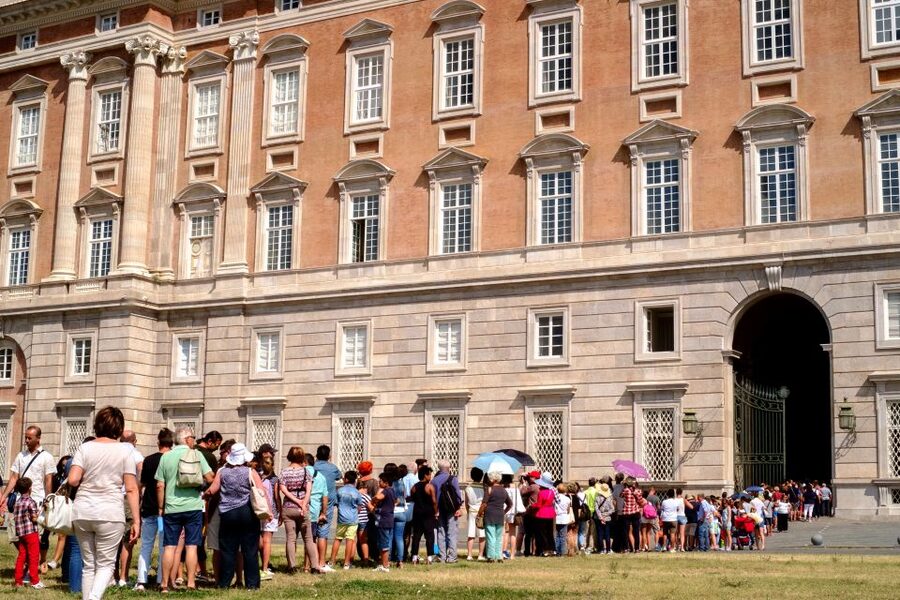
Your visit starts at Piazza Carlo di Borbone. The guide meets you at the central entrance portal under the hanging flags, holding an ASKOS TOURS sign. If you like starting the day with zero confusion, this kind of explicit meeting point helps.
The biggest practical win here is skip-the-line tickets. At a palace like Caserta, time disappears fast. Cutting the queue means you can spend your energy inside, where the rooms, frescoes, and decor are the whole point.
Small-group setup also matters more than people think. If your group is small enough, the guide’s comments land better, and you’re less likely to spend half the tour trying to hear over a crowd.
The view of the gardens sets the tone for what you’re about to see
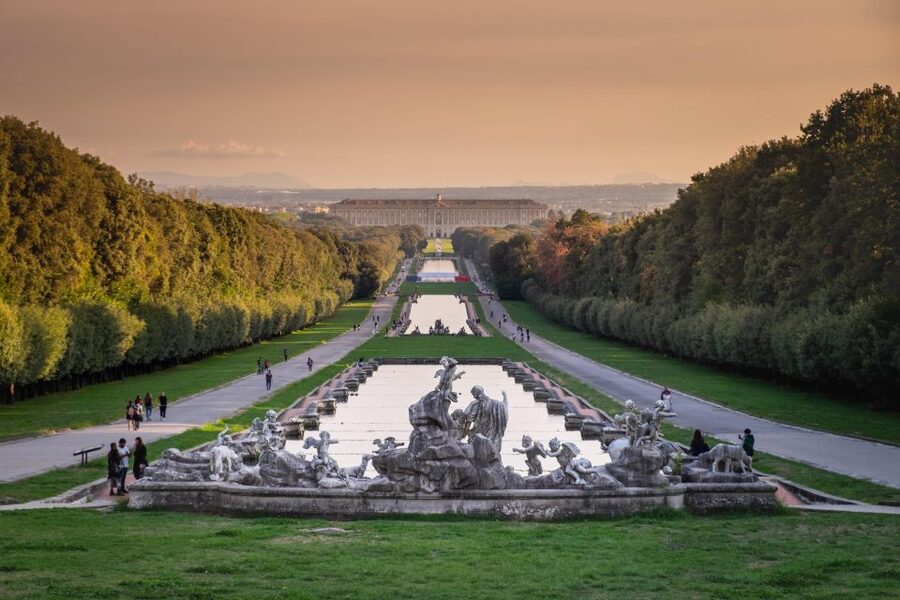
Before you even go deep inside, you start by admiring the magnificent view of the gardens. That’s not just a nice photo moment. It frames the palace as a designed experience—architecture in conversation with landscape, not just a building dropped into town.
And yes, Caserta is one of those places where the scale is hard to take in at once. Seeing the gardens early helps your brain map what comes next: the palace isn’t only about rooms; it’s about power, planning, and control over space.
The 116-step monumental staircase: more than a climb
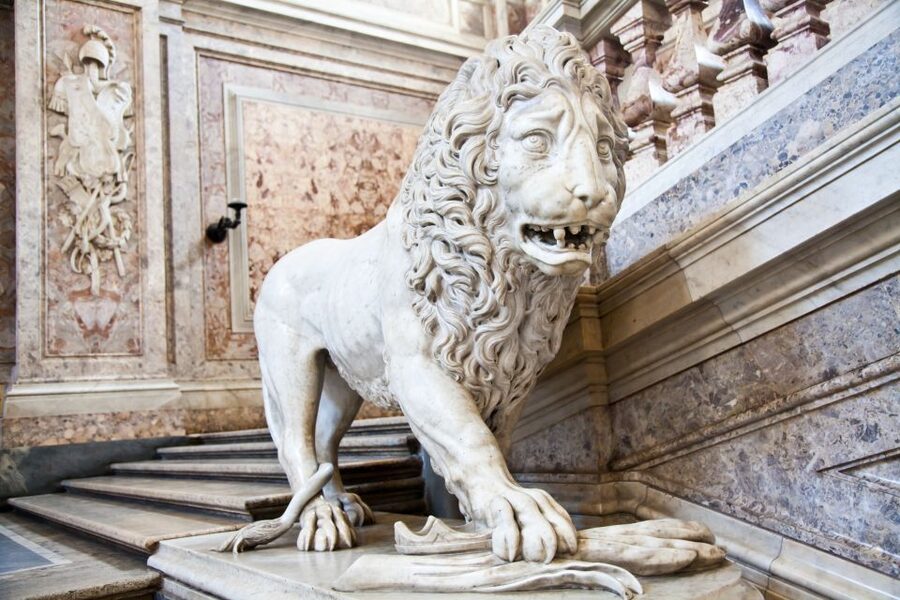
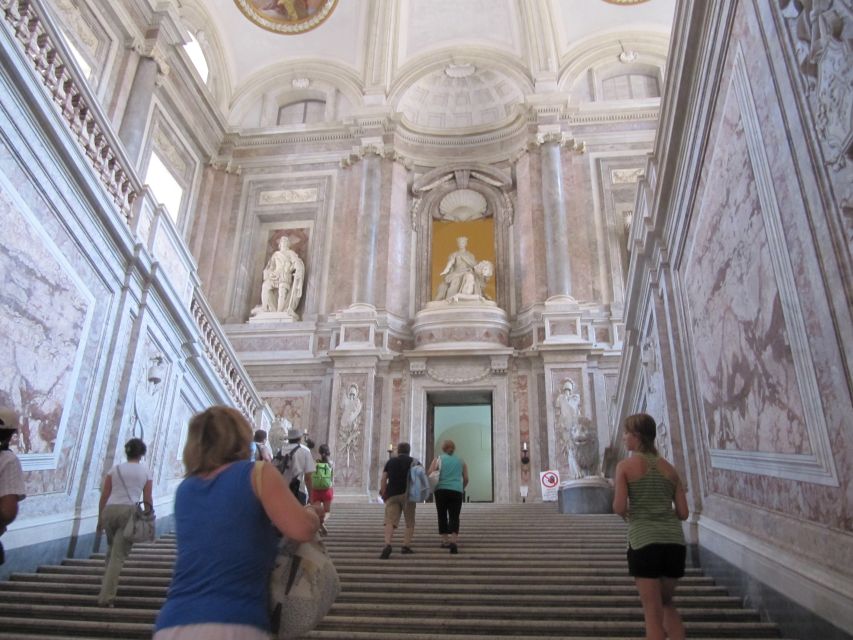
You access the apartments by going up the monumental staircase—an impressive 116 marble steps, lined with statues. This is where the tour’s structure earns its keep.
Staircases are often just a way to get upstairs. Here, it works like a theatrical cue. Climb it with a guide, and you don’t just see pretty stone. You understand why this kind of approach makes visitors feel small and ceremonies feel big.
You’ll also be using the staircase time well. In many palaces, you lose minutes because you’re reading signs or waiting for your group to reposition. Here, the movement is part of the plan, so you keep momentum.
Palatine Chapel: fresco detail you’ll actually notice
One of your early stops is the Palatine Chapel, a sacred space filled with frescoes and intricate decorative details. Even if you’re not a chapel person, it’s worth it because chapel decoration at this level tells you how elite power wanted to look—religion with paint, drama, and precision.
With a live guide, your attention changes. Instead of just admiring the ceiling, you learn what to look for and how the chapel fits into the palace’s larger story. It’s the kind of room where the guide’s pacing makes a big difference, since too fast and you miss the craft.
Royal rooms: Throne Room, Astrea Room, and the Four Seasons
Once you reach the upper floor, you get the shift from sacred to royal theater—decor meant to signal authority.
Throne Room
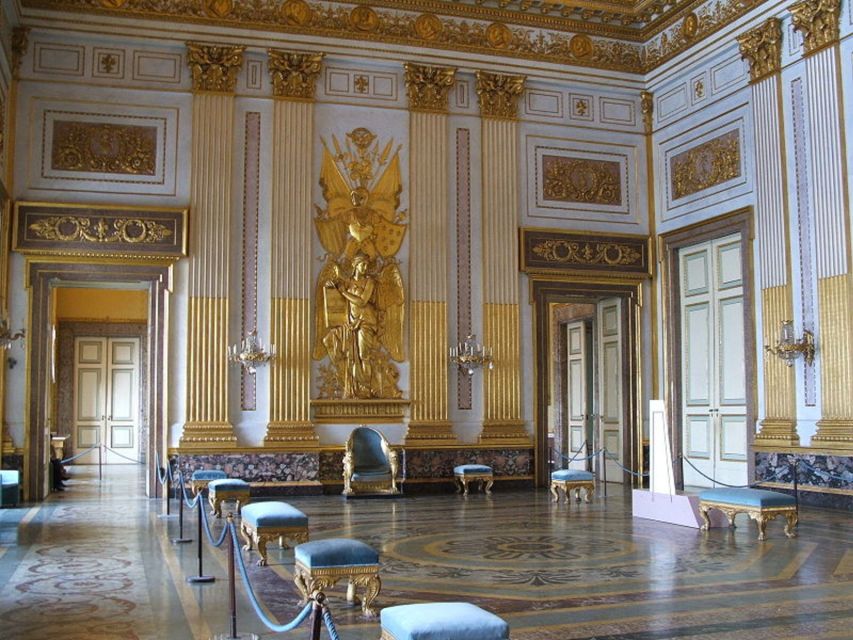
The Throne Room is where you see summed-up status. It’s described as sumptuous and connected to the Neapolitan kings, and that context helps. Without it, the room can feel like yet another ornate interior. With it, you start reading the space like a political statement.
Astrea Room and celestial motifs
The Astrea Room stands out for its celestial motifs. This is the kind of room where the artwork isn’t random; it’s part of a message about order, control, and cosmic authority. A guide helps you connect the imagery to why it would matter to the people funding all this.
Four Seasons Room
The Four Seasons Room focuses on the essence of each season through its frescoes. This is where you get a nice payoff: you’re not only staring at beauty, you’re seeing how a visual theme system can organize an entire decorative program.
If you like art that has structure—period, symbolism, theme—these rooms will feel more satisfying than a quick walk-by.
Palatine Library: where the palace turns intellectual
Then you move into the Palatine Library, a “hallowed hall” vibe with a treasure trove of literature and learning. The shelves hold a vast collection of rare books, and that detail shifts the mood.
A palace can sometimes feel like surface-level luxury. The library changes that. It suggests these rooms weren’t only for display; they were also for knowledge, taste, and the kind of culture that helps elites justify their world.
This stop is also a reset for your eyes. After fresco rooms and theatrical decor, the library’s more contained feel can be surprisingly calming.
Joachim Murat apartments: the Napoleonic link that makes it real
Your final set of interior highlights is the apartments of Joachim Murat, described as Napoleon’s brother-in-law and King of Naples. This is a key human bridge.
When you connect decor to a specific ruler, the rooms stop being generic. You start to understand this palace as a living stage—people, politics, and style all changing over time, not just one moment frozen in plaster.
Gardens timing: what you’ll get in 2 hours (and what you’ll probably plan next)

The tour starts with a gardens view, which helps you set expectations. But the guided portion does not include a guided tour at the Royal Park and English Gardens.
Still, you can absolutely treat the palace visit as the start of a longer day. In one real-life tip from a guide, English Gardens close at 2, so if you want to go further, you need to hustle your timing. Also, the gardens area is huge, and people use different ways to reach deeper entrances—like an e-bike, shuttle, or golf cart, depending on how much time they have.
So my advice is simple: decide ahead of time what you want from the gardens. If you only want the main impression, you’re fine with the palace-focused route. If you want the English Gardens experience, plan your next step before you finish the tour.
Price and value: what $23 buys you, and what it doesn’t
At $23 per person for a 2-hour guided experience, the value is strong—mainly because of three things you’re getting together:
- Skip-the-line tickets to the Royal Palace of Caserta
- A live guide (and the description emphasizes a historian-style approach)
- Headphones if the group exceeds more than 6 people, which is a practical upgrade for a palace full of echoes and overlapping conversations
What you don’t get is also important. Transportation and meals aren’t included. And the guided visit doesn’t cover the Royal Park and English Gardens.
If you’re doing Caserta as a standalone palace visit, this price makes sense because you’re buying time and structure. If you already plan to arrive early, wander at your own pace, and only want a couple rooms, then a guide might feel less necessary. But for a palace of 1,200 rooms, structure is what keeps your day from turning into random walking.
Who this tour suits best (and who should rethink it)
This fits best if you like:
- classic palace interiors with meaning, not just photos
- a guided route that hits the big rooms efficiently
- history told through actual places (chapel, throne room, library, ruler apartments)
It also works well for families. There’s at least one account of a guide engaging kids around ages 9–11, with explanations paced so children could stay interested. That tells me the guide approach isn’t just for adults who already know the names.
Not for everyone: it’s not suitable for people with mobility impairments and wheelchair users. The staircase and the overall flow of palace interiors make that limitation real, not theoretical.
Guide quality is the real differentiator
The palace is famous for size, but the guide is what turns it into a story you can follow. You’ll be with a live tour guide and language options include English, Spanish, Italian, French, German, and Portuguese.
Names that have popped up in the guide rotation include Gennero, Michele, Bruno, Alessia/Alesia, Sylvia, and Antonietta. The common thread across those experiences is clarity and a sense of pacing—people ask questions, and the guide answers them without turning the tour into a lecture marathon.
One extra bonus: in at least one case, the guide also handled a tricky multi-language moment by keeping the tour in English while still answering specific questions in Italian for speakers in the group. That kind of flexibility can make the experience feel smoother, especially if your group has different language comfort levels.
Should you book this Royal Palace of Caserta small-group tour?
If you want a palace visit that’s efficient, guided, and built around key rooms, I’d book it. For the price, you’re paying for skip-the-line access plus a route through the palace’s most important spaces: Palatine Chapel, the 116-step staircase, Throne Room, Astrea Room, Four Seasons Room, Palatine Library, and Joachim Murat’s apartments.
Skip it only if you:
- need wheelchair-friendly access
- plan to spend most of your time in the gardens and want a full Royal Park/English Gardens guided program (since that’s not part of this 2-hour tour)
- prefer wandering without structure and don’t mind spending more time figuring out where to go next
If Caserta is on your Naples-area list, this tour is a smart way to see the palace without wasting your limited time staring at maps.
FAQ
How long is the Caserta small-group Royal Palace tour?
The guided tour runs for 2 hours.
Where do I meet the guide for the tour?
Meet at the central entrance portal under the hanging flags at Piazza Carlo di Borbone. The guide will be holding an ASKOS TOURS sign.
Does the tour include skip-the-line tickets?
Yes. The tour includes skip-the-line tickets to the Royal Palace of Caserta.
What rooms and areas are included inside the palace?
The tour includes visits to the Palatine Chapel, the Throne Room, the Astrea Room, the Four Seasons Room, the Palatine Library, and the apartments of Joachim Murat.
Is the Royal Park and English Gardens guided tour included?
No. The guided tour at the Royal Park and English Gardens is not included.
What languages are available for the live guide?
The live guide is available in English, Spanish, Italian, French, German, and Portuguese.
Are headphones included?
Headphones are included if the group exceeds more than 6 people.
Is this tour wheelchair accessible or suitable for mobility impairments?
No. It is listed as not suitable for people with mobility impairments and wheelchair users.
Are there days when the palace is closed?
Yes. The Royal Palace of Caserta is closed every Tuesday, as well as 1 January and 25 December.