REVIEW · EDINBURGH
Edinburgh Castle & Royal Mile Walking Tour – Ticket Included
Book on Viator →Operated by Edinburgh Walking Tours · Bookable on Viator
Edinburgh’s Old Town has a way of grabbing you fast. This guided walk links the Royal Mile landmarks to the people, power, and beliefs that shaped Scotland over centuries. You end in Edinburgh Castle with a guided look and time to roam on your own.
I especially like how the tour makes big history feel practical at street level. You’ll get clear stops at Mercat Cross (including that unicorn on top) and St Giles Cathedral, with the Act of Union conversation built in at West Parliament Square. I also like that your castle time is handled as a true combo: guided inside-entry plus independent wandering after, so you can choose what you linger on.
One drawback to plan for: it’s not a sit-and-smile outing. Expect steps, steep paths, and cold-weather outdoor walking, and there are also times when crowds can make hearing tricky on the Royal Mile.
In This Review
- Key things I’d pencil into your day
- Royal Mile to Mercat Cross: a fast, clear way to get oriented
- St Giles Cathedral and West Parliament Square: faith meets politics
- Writers’ Museum, Makars’ Court, and the Heart of Midlothian
- Grassmarket: pubs and a darker side of the Old Town
- Climbing toward Edinburgh Castle: views, the Hub, and Tattoo sightlines
- Inside the fortress: guided castle history plus your own wandering time
- Price and group size: value for a 2-hour-plus history walk
- What the walking details mean for your comfort
- Getting the most out of the tour day
- Should you book this Royal Mile and Castle tour?
- FAQ
- How long is the Edinburgh Castle and Royal Mile walking tour?
- What’s included in the ticket price?
- Where do I meet the tour, and where does it end?
- What should I know about walking and fitness?
- Can I bring large luggage into Edinburgh Castle?
- What if the weather is bad or I need to cancel?
Key things I’d pencil into your day
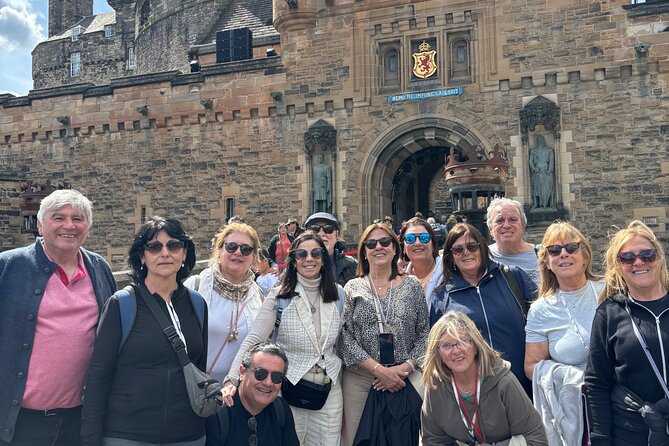
- Mercat Cross, unicorn spotting, and the idea of Royal Mile closes: you’ll read the Old Town like a map, not a blur
- St Giles Cathedral plus the Act of Union stop: a church and a political turning point on the same line
- Heart of Midlothian and writer connections: Robert Burns, Sir Walter Scott, and Robert Louis Stevenson pop up naturally
- Victoria Street and the Grassmarket: picture-postcard color with a darker backstory
- Edinburgh Castle views and the One O’Clock Gun firing chance: you get the fortress angle plus a daily spectacle
Royal Mile to Mercat Cross: a fast, clear way to get oriented
This is a smart first-day tour if you’re trying to understand Edinburgh quickly. The walk focuses on the spine of the Old Town, so you’re not zig-zagging across town with no reason. You start at the Royal Mile, then move site to site with short, story-driven stops that help you remember what you’re seeing.
One of the best parts is the way the guide turns the Royal Mile into a lesson. You’ll learn how the narrow lanes—often called closes—were used, and why this part of Edinburgh grew the way it did. If you’ve ever wandered and thought, I’m looking at buildings, but what’s the point?—this kind of framing fixes that.
At Mercat Cross, you’ll pause where public messages and punishment were once announced. Then you get the kind of detail that makes a landmark stick: look up for the unicorn at the top. It’s a small moment, but it’s exactly how good guided walks work—one clue you can find again later.
A practical note: the Royal Mile can be noisy and packed. The tour pace is “moderate,” but if you’re hard of hearing or you hate crowds, pick a moment to stand where you can face the guide, even if it means stepping slightly aside.
You can also read our reviews of more tours and experiences in Edinburgh.


St Giles Cathedral and West Parliament Square: faith meets politics
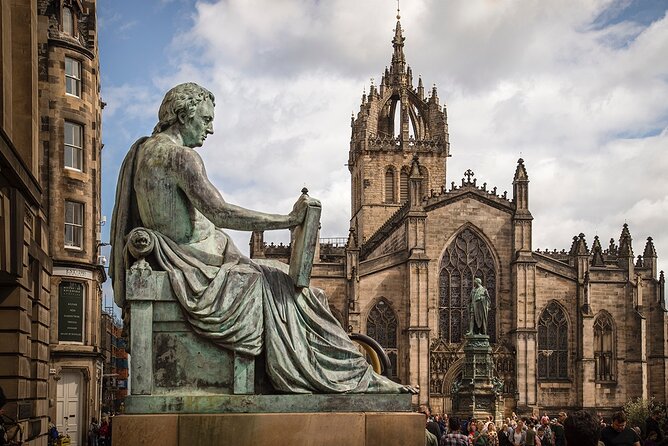
St Giles Cathedral is the stop that turns your walk from “cool streets” into “wow, this mattered.” You’ll talk about the cathedral’s architecture and the role it played in Scotland’s religious story. You’ll also connect it to the rise of Presbyterianism, which helps explain why Edinburgh’s culture looks the way it does.
Then you move toward West Parliament Square for the Act of Union discussion. This matters because it ties religion and governance together. You start seeing Old Town sites as parts of a single long argument: who had authority, who made rules, and how people justified it.
If you like history that connects directly to the buildings you’re standing in front of, this is a strong segment. You’re not asked to memorize dates. You’re guided to understand why these places were built and why they were used.
The other upside: the St Giles area is a good visual anchor. After this stop, the rest of the Royal Mile feels less random. Even streets you might have dismissed—shops, courtyards, small transitions—start to feel like steps in a story.
Writers’ Museum, Makars’ Court, and the Heart of Midlothian

This stretch is where Edinburgh’s identity gets fun. You leave St Giles behind and pick up the literary thread along the Royal Mile.
On the way, you’ll spot and talk about the Heart of Midlothian, the mosaic heart that’s more than decoration. It’s one of those Edinburgh details that looks quirky at first glance, but the explanation makes it land. From there you head into Makars’ Court, with the Writer’s Museum as a backdrop.
This is a quick stop, but it’s not shallow. You’ll hear about Scotland’s major writers—Robert Burns, Sir Walter Scott, and Robert Louis Stevenson—and how their influence connects to the places you’re walking past. It also helps if you’re traveling with kids or anyone who’s tired of battle history; writers give you a different doorway into Scotland’s past.
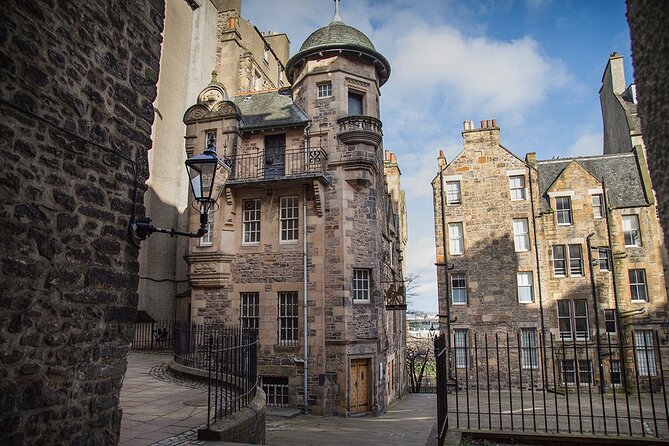
Next comes Victoria Street, with its stairs, angles, and colorful facades. You’re given enough time to take it in, not just sprint past it. If you want photos, this is one of the better spots. The street’s shape naturally frames shots without you needing to hunt for viewpoints.
Keep your eyes up and your schedule flexible here. Victoria Street can feel like a film set, and it’s easy to lose track of time if you wander into every shop window.
Grassmarket: pubs and a darker side of the Old Town

From Victoria Street you drop down to the Grassmarket, a large plaza that’s famous for pubs. The tour doesn’t sugarcoat it, though. You’ll hear about the area’s dark past, which adds a layer most “pub crawl” descriptions skip.
What I like about this stop is balance. The Grassmarket is visually easy—it’s open, it’s photogenic, and it’s lively. But when your guide ties the space to historical uses, it becomes more than a place to drink. It becomes a reminder that the Old Town mixed everyday life with harsh consequences.
This is also the part of the tour where you start to feel the physical reality of the day. You’re transitioning from flat-ish street walking into the climb toward the castle. If your legs need a heads-up, this is where to slow down slightly and keep your grip on the pace.
If you’re visiting in winter or in wet weather, the Grassmarket area can be windy. Plan for gusts and keep a layer handy. The castle hill will take it from chilly to “why did I leave home in sneakers?”
Climbing toward Edinburgh Castle: views, the Hub, and Tattoo sightlines
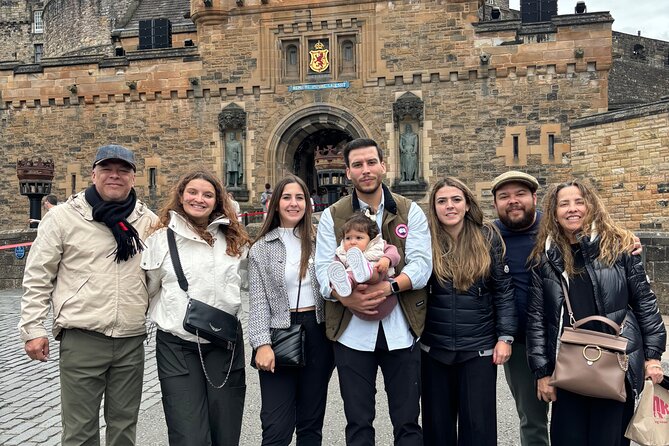
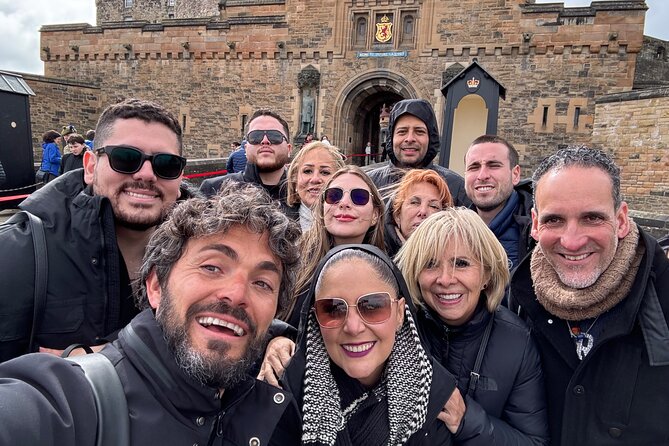
Getting to Edinburgh Castle is part of the show. From the Grassmarket you reach the Castle Esplanade by walking up steps. Along the way, you’ll see the Hub building (you’ll also hear what it is) and you’ll talk about the Edinburgh Military Tattoo—where it takes place and why people gather there.
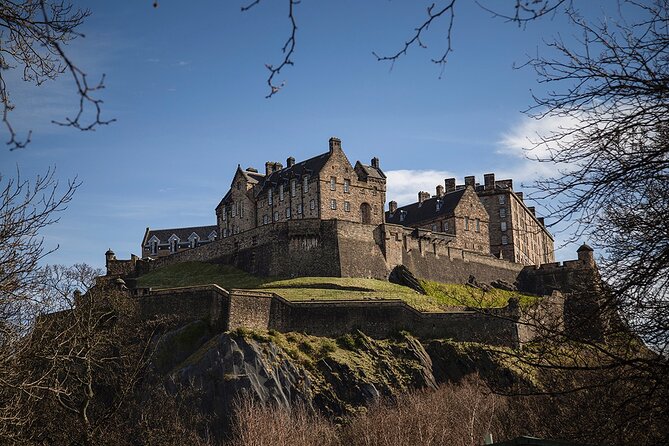
Once you reach the esplanade, you’re rewarded with city views. This is a good moment to pause and look around before you enter. From up here, Edinburgh stops feeling like a random maze and starts feeling like planned defense, planned crowding, and planned authority.
Also, the tour is built for a chance to experience the One O’Clock Gun firing from the castle. That moment can be surprisingly memorable, especially if you’re the type who always thinks you’ll catch the “big thing” later. Here, you’re timed so it’s part of the day.
One more logistics tip: the guided portion of the castle experience happens on outdoor areas. After the guided tour, you get time to explore roofed buildings and museums on your own. So dress for being outside for part of the castle time, even if you’re excited to get indoors afterward.






Inside the fortress: guided castle history plus your own wandering time

Now you get the ticketed part: you’ll enter Edinburgh Castle and enjoy a guided history route. The guided segment runs about 40 minutes, then you’re free to explore at your own pace.
This tour format is smart because it prevents the classic castle problem. Without a guide, castles can turn into rooms and courtyards that all look equally important. With a guided route, you understand what to prioritize once you’re on your own.
You’ll hear stories involving kings, queens, battles, and sieges—plus the overall “why this place” logic of a fortress that dominated the city. Even when a guide can’t go into every indoor space with the group, you still get the lay of the land and the pointers that make self-guided time work.
After the guided portion, you can focus on what interests you most. Maybe that’s museum time, maybe views from different corners, maybe the parts that feel too famous to rush. The tour ends inside the castle, so you don’t have to turn your day into a second navigation task.
One small thing to watch: if you’re traveling with a big bag, Edinburgh Castle has rules. Suitcases and large rucksacks aren’t permitted inside the castle. Bring a small daypack or crossbody so you’re not stuck reorganizing at the entrance.
Price and group size: value for a 2-hour-plus history walk
At $65.07 per person and about 2 hours 15 minutes, this is a reasonably priced way to get both city context and castle access with a guided history route included. You’re paying for more than tickets. You’re paying for someone to connect the dots between the Royal Mile streetscape and the fortress at the end.
The group size stays small—up to 20 people—which matters on a walk like this. It helps you actually hear the guide at most stops and reduces the “lost in the crowd” feeling. It also helps at the castle, where crowds can be intense.
Timing-wise, the tour tends to sell well (it’s commonly booked around six weeks out). If your dates are fixed, don’t wait for last-minute decisions. You’re dealing with a top attraction in a city that draws people fast.
Is it worth it if you’re an independent explorer? If you already know a lot and you love reading on your own, you might skip the guide. But if you want to understand what you’re seeing without spending your whole vacation in guidebook mode, this one is a good deal.
What the walking details mean for your comfort
This tour is listed as requiring moderate physical fitness, and that’s accurate. You’ll face three sets of steps and two steep paths along the route. Some of that is inside the Old Town streetscape transitions. Some of it is the climb to the castle.
If you’re bringing mobility aids, the best approach is to think in terms of “can I handle several step sections and a steep hill?” rather than just “can I walk for two hours.” Also, the tour relies on outdoor areas during the castle portion, so weather changes the feel fast.
On congested days, hearing can be a challenge on the Royal Mile. That’s not a flaw in the content; it’s just the reality of a famous street in peak season. Stand where you can face the guide, and don’t be afraid to step a half-step aside to get a clear line of sight.
Getting the most out of the tour day
Start with the practical stuff: meet on time. The tour meets at the Clan Pascual Tours walking tours spot at the Blue Umbrella (B), 180 High St, Edinburgh EH1 1QS. If you arrive late and the group is gone, the tour begins at Mercat Cross and Old Parliament Square. So your safest plan is to show up early enough to find the right umbrella and settle in.
Once inside the castle, use your guided time to pick priorities. When the tour ends inside Edinburgh Castle, you’ll have time for the indoor museums and roofed buildings. If you go into that phase with no plan, crowds and lines can drain your energy. Think about what you want most: views, exhibitions, or specific rooms the guide highlighted.
Finally, pack light. The castle bag restriction is real, and it’s annoying to fight with straps and zippers while everyone else is moving on.
Should you book this Royal Mile and Castle tour?
Book it if you want a strong Edinburgh starter that mixes streets, church, politics, and fortress history in one day. It’s a great match for first-timers, families who can handle short outdoor walking, and anyone who likes guides who keep the story moving rather than turning the tour into a lecture.
Skip it or pick a different option if you hate crowds, struggle with stairs and steep paths, or you prefer totally self-guided touring. The Royal Mile can get loud, and the walking hill to the castle is part of the deal.
If your goal is to get oriented fast and walk away with the main threads of Edinburgh’s past—this combo is one of the most efficient ways to do it.
FAQ
How long is the Edinburgh Castle and Royal Mile walking tour?
It runs for about 2 hours 15 minutes.
What’s included in the ticket price?
You get a local tour guide, entrance to Edinburgh Castle with a guided tour, and a guided highlights walk of the Old Town and Royal Mile.
Where do I meet the tour, and where does it end?
Meet at Clan Pascual Tours – Edinburgh Walking Tours, the Blue Umbrella (B) at 180 High St, Edinburgh EH1 1QS. The tour ends inside Edinburgh Castle.
What should I know about walking and fitness?
The tour is best for people with moderate physical fitness. Along the route, there are three sets of steps and two steep paths.
Can I bring large luggage into Edinburgh Castle?
No. Suitcases and large rucksacks are not permitted inside Edinburgh Castle.
What if the weather is bad or I need to cancel?
This experience requires good weather. If it’s canceled due to poor weather, you’ll be offered a different date or a full refund. You can also get a full refund if you cancel at least 24 hours before the start time.