REVIEW · BEIJING
Forbidden City Admission Ticket – With Guide Option
Book on Viator →Operated by Travel China Guide · Bookable on Viator
Skip the ticket line chaos. That’s the whole point here. With this Forbidden City admission service, you book ahead, then just show your passport at the Meridian Gate (Wu Men) for entry into the palace complex.
I love how straightforward the day feels once you’re there: you’re not hunting for a counter, and your entry is tied to your passport details you provided in advance. I also like that your ticket isn’t just a quick peek—this works well for a slow walk through huge, historic spaces, including the main ritual halls and the emperor’s living quarters.
One thing to plan for: access is tied to your reserved date and time slot, so you can’t just wander in whenever. Also, if you choose the ticket-only option, you’ll be self-guided rather than led by a person.
Key things to know before you go
- Passport entry at Meridian Gate (Wu Men): no paper ticket needed at the gate
- Major highlights included: Hall of Central Harmony, Preserved Harmony, Heavenly Purity, Earthly Tranquility, plus the Imperial Garden
- 2–4 hour visit window works best if you plan your route: it’s a big site over 72 hectares
- Correct passport info matters: names and passport numbers must match what you’ll show on arrival
- Crowds are part of the deal: even with a smooth entry process, you should expect security lines and busy courtyards
- Your exit choice is useful: Shenwu Gate (near Jingshan Park) or Donghua Gate (near Wangfujing Street)
In This Review
- Passport Entry at Meridian Gate: The Fastest Way In
- The Forbidden City Scale: Why Your 2–4 Hours Matter
- Walking the Axis: Meridian Gate to the Big Hall Moments
- Hall of Central Harmony and Hall of Preserved Harmony
- Hall of Central Harmony (Zhonghe Dian)
- Hall of Preserved Harmony (Baohe Dian)
- The Emperor’s Rooms: Heavenly Purity and Earthly Tranquility
- Palace of Heavenly Purity (Qianqing Gong)
- Palace of Earthly Tranquility (Kunning Gong)
- Imperial Garden and the Final Walk Across 72 Hectares
- Price and Value: Is $9.90 a Good Deal?
- Who This Experience Fits (and Who Might Prefer a Guide)
- Should You Book This Forbidden City Ticket Service?
- FAQ
- Do I need a separate ticket QR code to enter?
- Which gate do I enter and where can I exit?
- Is this a guided tour?
- How long will I have to visit?
- Do I need to visit on a specific date and time slot?
- What if I made a mistake when entering my passport details?
- Are children free?
- Is this service available to everyone in China?
- Can I cancel for a refund?
Passport Entry at Meridian Gate: The Fastest Way In

The Forbidden City can be intimidating on a first trip. Not because the place is confusing, but because it’s famous—and that means lines. This ticket service leans into the reality: instead of you getting a separate ticket to manage, you use your passport.
At the entrance, the staff scan your passport for direct entry. In plain terms: bring the passport you used when you booked. If your passport number or name doesn’t match, you’re the one who pays the price in stress and delay. It’s a small admin step up front that saves you real time on the ground.
Entry is through the Meridian Gate (Wu Men), the main ceremonial gate. It’s the kind of start that makes the whole visit feel official right away. And because you’re entering as an organized, reserved entry, you avoid the most painful part of a popular attraction: waiting around while tickets are sorted out.
You should also know the practical logistics:
- It’s near public transportation.
- Your entry is limited to a reserved time slot, and that slot is tied to your selected date.
- If you booked ticket-only, there’s no meeting point arranged and you proceed to the Meridian Gate on your own.
If you’re someone who likes a calm start—no surprise “sold out” moments—this is the booking style that fits.
The Forbidden City Scale: Why Your 2–4 Hours Matter
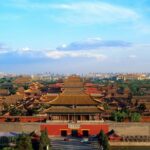
The palace complex covers about 72 hectares, and it’s built to impress at every step. It’s also massive in its layout, with a history that stretches back through the Ming and Qing dynasties. The site’s stories are big too: it’s described as having over 9,000 rooms, and it was home to 24 emperors over more than 600 years.
So here’s the truth about timing: even if entry is efficient, you’ll still spend energy walking between major points. That’s why the ticket’s planned duration (about 2–4 hours) is useful. It helps you avoid the “I’ll just wing it” trap, where you spend too long drifting and then you run out of time before the best buildings.
You’ll move through large courtyards, and the famous ceremonial structures are arranged in a way that rewards slowing down just enough to understand what you’re looking at. If you only have a half day, you’ll get more out of the visit by using your time intentionally—hit the key halls first, then decide how much time to spend in the Imperial Garden.
And yes, crowds are part of the experience. The good news is that the site is designed to funnel visitors through major axes and checkpoints. Even in busy periods, the flow is generally manageable as long as you’re not trying to sprint.
You can also read our reviews of more tours and experiences in Beijing.
Walking the Axis: Meridian Gate to the Big Hall Moments
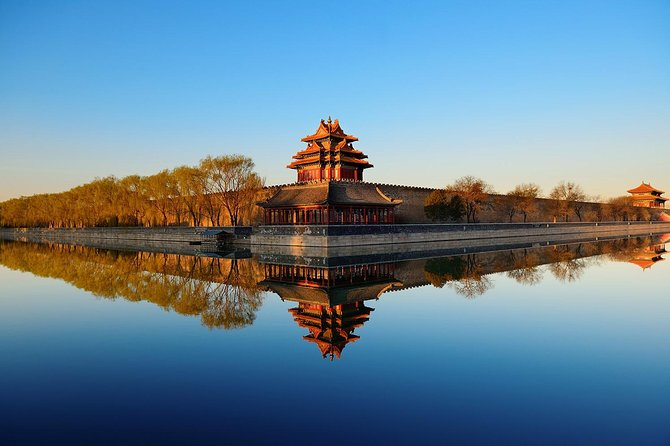
Your route begins at the Meridian Gate (Wu Men). This gate isn’t just an entrance; it’s a statement. It’s where you start seeing the Forbidden City as a designed “procession” of spaces, not just a collection of buildings.
From there, you’ll pass into the palace museum areas and the central spaces that are included with your ticket. Expect to encounter key symbolic points along the main path, including references like the Gate of Divine Prowess and the Dragon Throne area as you orient yourself to the ceremonial layout.
Then you’ll reach the core ritual zone: the major halls. These are the buildings that helped define imperial authority through architecture and ceremony. The buildings are not interchangeable. Each one has a role in the story of governance and ritual.
A simple way to approach this section:
- Don’t try to photograph every step while you’re still entering and orienting.
- Once you get into the central halls, slow down for a few minutes to look at how the courtyards open up and how the buildings frame your view.
- If you’re traveling at a peak time, accept that you’ll work around crowds rather than fight them.
Also, keep your expectations realistic about images. There are rules inside the Forbidden City that affect photography. One important limitation to plan for: tripods are not allowed, and even setting your phone on a flat platform is not permitted. If you care about getting a clean, full-body shot, you may need to use handheld photos or accept that some shots are harder here than in open-air parks.
Hall of Central Harmony and Hall of Preserved Harmony
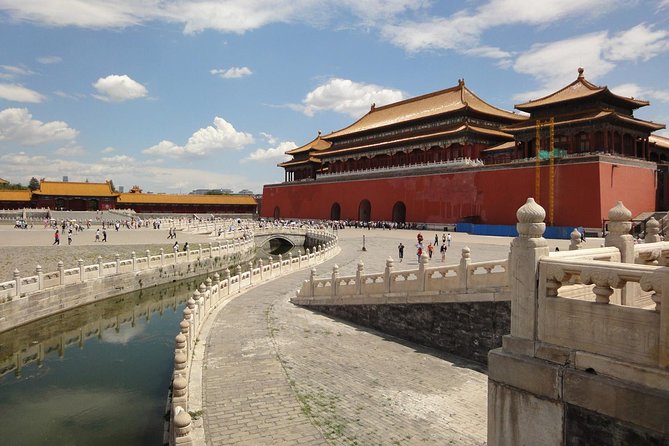
These two halls are the heart of the palace’s ceremonial identity, and both are included in your admission. If you want a “why was this place so important?” answer, start right here.
Hall of Central Harmony (Zhonghe Dian)
This hall is included with your ticket and represents one of the most significant ceremonial spaces on the main axis. When you’re standing in these areas, you can feel why rulers needed architecture to do the persuasion work for them. The building and its courtyard setup create a strong sense of symmetry and official scale.
What I’d do here:
- Take a minute to notice how the courtyard acts like a stage.
- Look for the way visitors naturally flow around the main viewpoints.
- Spend longer than you think you should—this is one of those places where a quick glance turns into a “wait, look at that” moment once you slow down.
Hall of Preserved Harmony (Baohe Dian)
Right after, you’ll reach the other major ceremonial hall included in your ticket. The names alone hint at purpose: harmony and preservation, the idea that order must be maintained.
This is where the visit becomes less about “collecting buildings” and more about understanding the palace as a system—spaces built for ceremony, not casual wandering.
One drawback to mention: in busy times, you may not be able to linger at your exact favorite spot in the exact angle you want. Crowds compress your time at each checkpoint. That’s not a dealbreaker, but it’s a reason to plan for quick stops at peak moments and longer stops when the flow shifts.

The Emperor’s Rooms: Heavenly Purity and Earthly Tranquility
After the ceremonial halls, the visit pivots into the more private governance and residence realm. Your ticket includes both of these major palaces:
Palace of Heavenly Purity (Qianqing Gong)
This is one of the key imperial spaces included in your admission. As you move through, focus on how the atmosphere changes—from “public ceremony” energy to spaces that feel more controlled and personal in scale.
If you’re the type who likes details, slow down and watch how the palace interior layouts guide your attention. The Forbidden City doesn’t give you everything at once; it gives you viewpoints in stages, and these palaces are a big part of that.
Palace of Earthly Tranquility (Kunning Gong)
Next is the Palace of Earthly Tranquility, also included. Together with Heavenly Purity, these palaces help you understand the imperial idea of balancing heaven and earth, ritual and rule.
Here’s a practical tip: if your feet are getting tired (they will), this is a good section to keep your pace steady rather than rushing. You’ll get more out of what you see if you don’t arrive already exhausted.
Also, if you’re planning audio help: there are audio guides available on-site, but one practical caution from real-world use is that availability and performance can be hit-or-miss depending on language and device. Don’t rely on it as your only source of understanding.
Imperial Garden and the Final Walk Across 72 Hectares
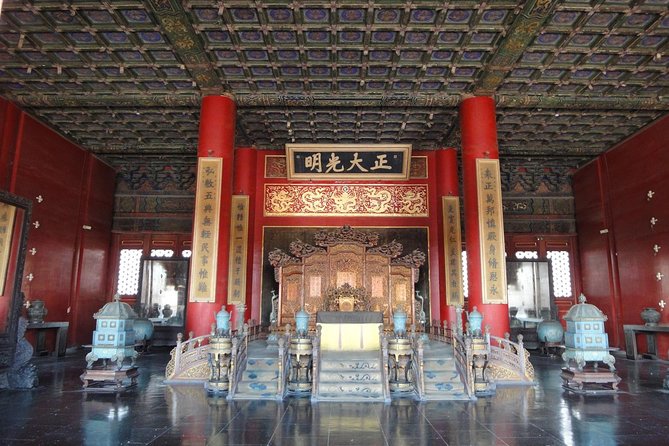
Your ticket also includes the Imperial Garden. This part of the Forbidden City gives you a break from the heavy ceremonial stone-and-structure feeling. It’s still within the palace complex, but the mood shifts toward cultivated nature and curated views.
The Imperial Garden is a smart place to:
- take a breather after the big halls,
- slow down and notice sightlines,
- and reset your legs before the final stretch.
Even with efficient entry, this site rewards the traveler who plans their pacing. If you’re trying to fit everything into one visit, I’d recommend treating the garden as your “final chapter,” not your first stop. Start with the big included halls, then use the garden to soften the day.
Also: bring patience and a little strategy for crowd flow. You’ll see a lot of people, but the site’s layout helps you move through without constantly backtracking—especially if you’re willing to follow the main paths and accept that the best views come in short windows.
If you like food breaks, I’d pack a simple plan for snacks and water. You’re outdoors for stretches, and once you’re inside, you won’t want to lose time hunting down small refreshment stops.
Price and Value: Is $9.90 a Good Deal?
At $9.90 per person, this is one of the more cost-friendly ways to secure a visit to a major Beijing must-see. The value isn’t just the price tag—it’s what that price buys you in day-of convenience.
You’re getting:
- admission to the Forbidden City,
- access to major included areas (the central halls, two key palaces, and the Imperial Garden),
- and a passport-based entry process that saves you from ticket desk drama.
This is especially valuable if you:
- don’t have a local phone number to handle complicated ticket systems,
- want to avoid “maybe we’ll get in” uncertainty,
- and prefer spending your time seeing buildings rather than solving logistics.
There’s one real condition: you must treat the reserved date and time slot seriously. If you miss your window, your ticket can’t be treated like a flexible museum pass. So the money is a good value if your travel plan is firm enough to use the time slot.
Who This Experience Fits (and Who Might Prefer a Guide)
This setup works best for independent travelers who want a smooth entry and a self-guided pace inside the museum complex.
You’ll likely be happy if you:
- want control over how long you stay at each hall,
- like reading the space at your own rhythm,
- and want to avoid the steep learning curve of buying and managing a popular attraction ticket.
About the guide: the name of your booking includes a guide option, but the important detail here is that a guide service is not included for ticket booking only. So if you want someone to explain what you’re seeing as you go, double-check that you selected the guide-included version rather than the self-guided ticket option.
Also, note eligibility: this service is exclusively for overseas clients and is not available to Chinese citizens. If you’re within that group, this is basically designed for you. If not, you’ll need the correct local option instead.
Should You Book This Forbidden City Ticket Service?
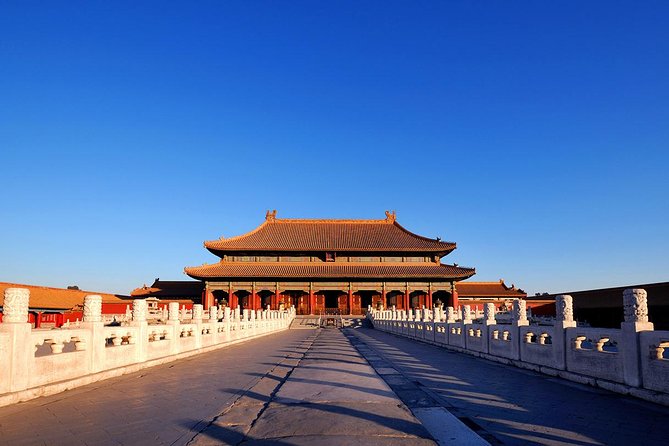
Book it if you want to treat the Forbidden City like a real visit, not a logistics puzzle. The passport-based entry through Meridian Gate, plus the inclusion of the biggest named stops (Central Harmony, Preserved Harmony, Heavenly Purity, Earthly Tranquility, and the Imperial Garden), makes this a strong “time-saver” choice for first-timers.
Don’t book it if:
- your plans are uncertain and you might not make the reserved time slot,
- you’re expecting fully guided narration (ticket-only won’t provide that),
- or you need tripod-style photography and highly controlled photo setups (rules inside limit that kind of gear and even certain phone positioning).
If you’re ready with your passport, you plan around crowds, and you’re happy to explore at your own pace, this is a smart way to get into the palace complex without wasting your morning.
FAQ
Do I need a separate ticket QR code to enter?
No. For this service, your passport is used for direct entry at the Meridian Gate. The gate staff scan the passport on-site.
Which gate do I enter and where can I exit?
You enter through Meridian Gate (Wu Men). The two listed exit options are Shenwu Gate (near Jingshan Park) and Donghua Gate (near Wangfujing Street).
Is this a guided tour?
If you book the ticket-only option, there is no guide service for ticket booking only. If you want a guide, you need to choose the guide option.
How long will I have to visit?
The duration is listed as approximately 2 to 4 hours.
Do I need to visit on a specific date and time slot?
Yes. Tickets are valid for the selected date and entry is strictly limited to the reserved time slot.
What if I made a mistake when entering my passport details?
Make sure your name and passport number are accurate. Your ticket is booked under your passport, and you must present the matching passport for direct entry.
Are children free?
Children under 6 enter for free. You’ll need to show the passport on-site.
Is this service available to everyone in China?
It’s exclusively for overseas clients and not available to Chinese citizens.
Can I cancel for a refund?
Yes. You can cancel up to 24 hours in advance for a full refund (cut-off is based on local time).