REVIEW · BURG FORCHTENSTEIN
Forchtenstein Castle Admission Ticket & Optional Guided Tour
Book on GetYourGuide →Operated by Esterhazy Betriebe AG · Bookable on GetYourGuide
Forchtenstein Castle is a small visit with big punch. In one compact hour in Burgenland, you get museum-style rooms plus eye-catching sights like the largest secco wall paintings north of the Alps.
I especially love the Gallery of Ancestors with that only known full-length portrait tied to Vlad the Impaler. I also like the castle’s obsession with collecting, shown in Europe’s largest and earliest silver furniture collection. One drawback to plan for: the visit is short, so if you want to linger, you’ll have to move at a steady pace through rooms and floors.
In This Review
- Key highlights worth building your route around
- Forchtenstein’s inner courtyard secco murals: start here
- Oratory, chapel, and the castle’s “serious” first floor
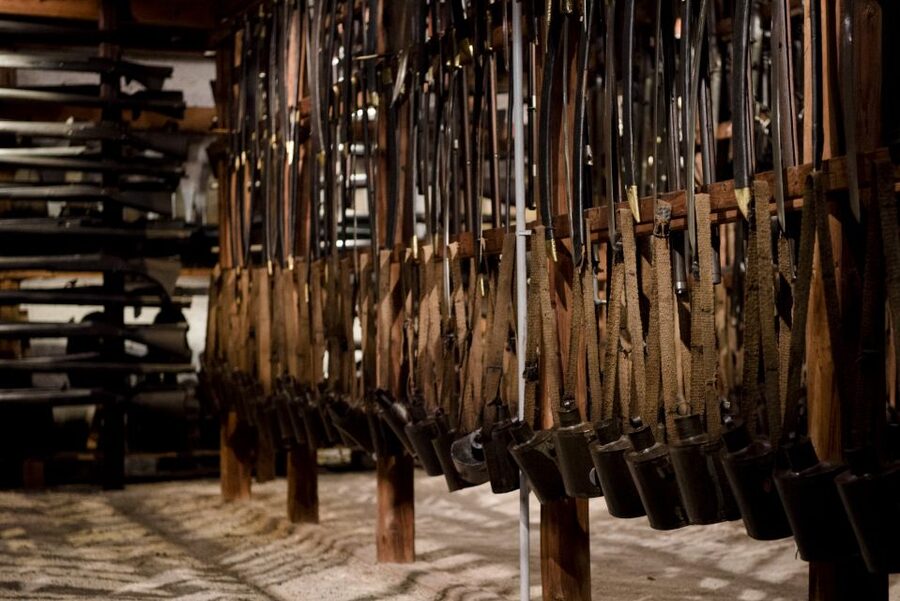
- The private armory: weapons as collectible objects
- Second-floor collecting: Ottoman tent, Kunstkammer, and the Esterházy mindset
- Europe’s biggest silver furniture collection: why it’s more than shiny objects
- Gallery of Ancestors: Vlad the Impaler and the power of portraits
- Corination flags from the 17th century: the room for symbolism nerds
- What the optional guided tour (and audio guide) can add
- How to pace a one-hour ticket so you don’t feel rushed
- Value for money: what $22 buys you here
- Who should book this castle visit, and who might skip it
- Should you book Forchtenstein Castle admission?
- FAQ
- How much does admission cost?
- How long is the visit?
- What is included with the ticket?
- Is an audio guide available, and what language is it in?
- What are the main highlights I should plan to see?
- What time should I arrive?
- Is this suitable for people with mobility impairments?
- What is the cancellation policy?
Key highlights worth building your route around
- Largest secco murals north of the Alps in the inner courtyard, a striking way to start
- Europe’s biggest and earliest silver furniture collection, a real feast for the detail-spotter
- Gallery of Ancestors, including the only known full-length portrait of Vlad the Impaler
- 17th-century coronation flags tied to Hungary, Croatia, and Serbia, among the oldest known
- Private armory and weapon displays, placed in one of Europe’s largest private collections of its kind
Forchtenstein’s inner courtyard secco murals: start here
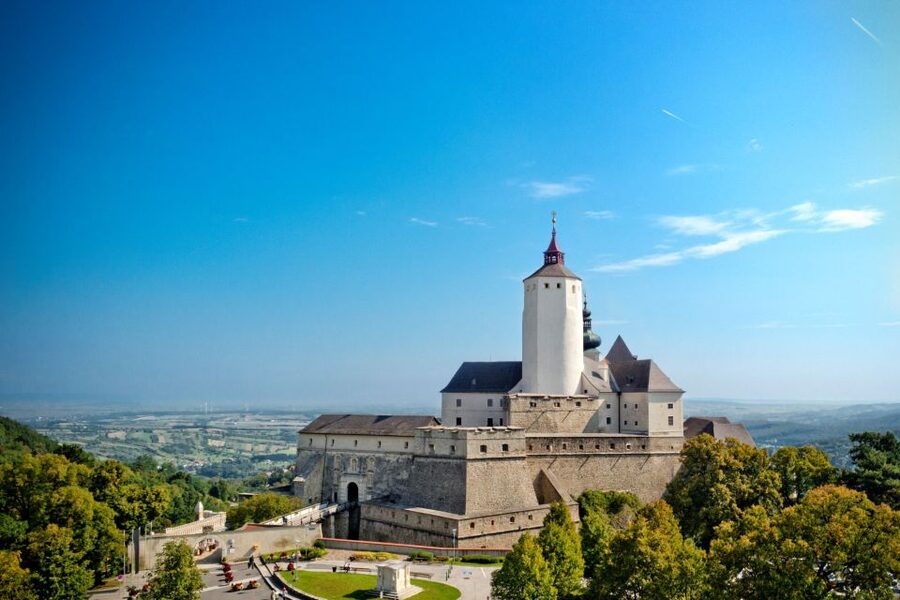
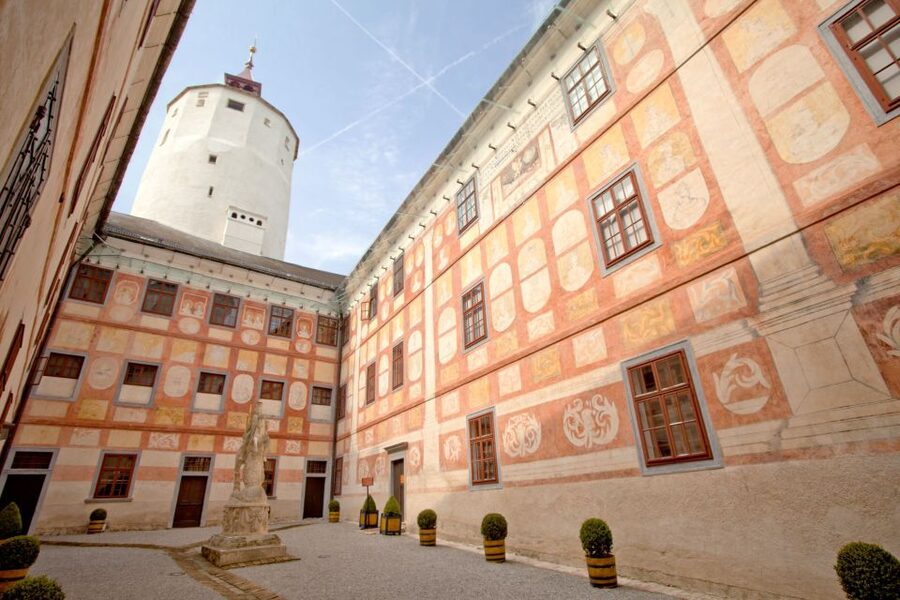
Your ticket gets you into Forchtenstein Castle for about one hour, so the order you see things matters. I like that you can begin in the inner courtyard, because the castle doesn’t waste time getting your attention.
The courtyard is where you’ll spot the largest secco wall paintings north of the Alps. This isn’t just decorative background. Secco murals are painted on plaster, so when you stand close you can appreciate how much work went into the surfaces and scenes. It’s also a strong orientation tool: after seeing the courtyard, the rest of the castle feels like a guided loop through themes—power, collecting, and legend.
If you’re the kind of traveler who likes a strong visual anchor early, this start works. You leave the courtyard thinking, Okay, this place is serious about art.
Oratory, chapel, and the castle’s “serious” first floor

After the courtyard, you’ll move through key rooms on the first level, including an oratory and chapel. Even if you’re not a church-architecture person, these spaces help you understand the castle as a whole. It’s not only about displays; it’s also about how the Esterházy household would have operated day to day—prayer spaces, ceremonial spaces, and social spaces all in one complex.
This is also where you’ll find one of the star sections for weapon lovers: an impressive display of arms in one of Europe’s largest private armories. That’s a big promise, and it’s also a big reason to set expectations. You’re going to see weapons as curated objects, not as a battlefield reenactment.
Practical note: your visit is time-limited. If you care most about the armory, don’t let the chapel-oratory stop you for too long before moving on.
The private armory: weapons as collectible objects
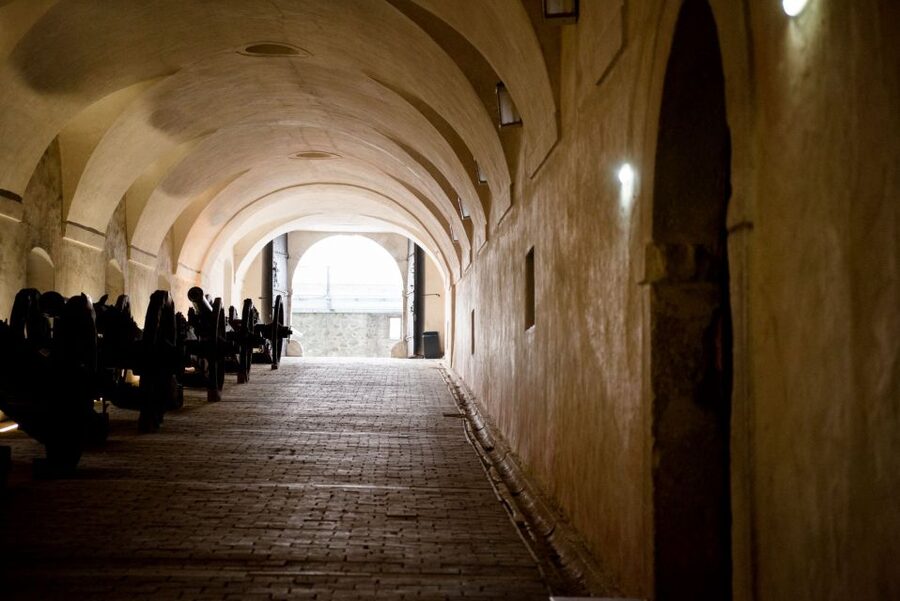
For many people, the weapon rooms are the wow factor. The castle places impressive weapon displays in one of Europe’s largest private armories, and it shows that the Esterházy family treated arms as status items, not just tools.
What I like about this approach is that you don’t just walk past metal and straps. You’re meant to notice craftsmanship and collection logic—how different types were gathered, preserved, and displayed as part of a broader family identity.
If you’re sensitive to intense battle imagery, this still feels more like “museum objects” than gore or trauma. But it is weapons-focused, so consider your comfort level before you commit.
Second-floor collecting: Ottoman tent, Kunstkammer, and the Esterházy mindset
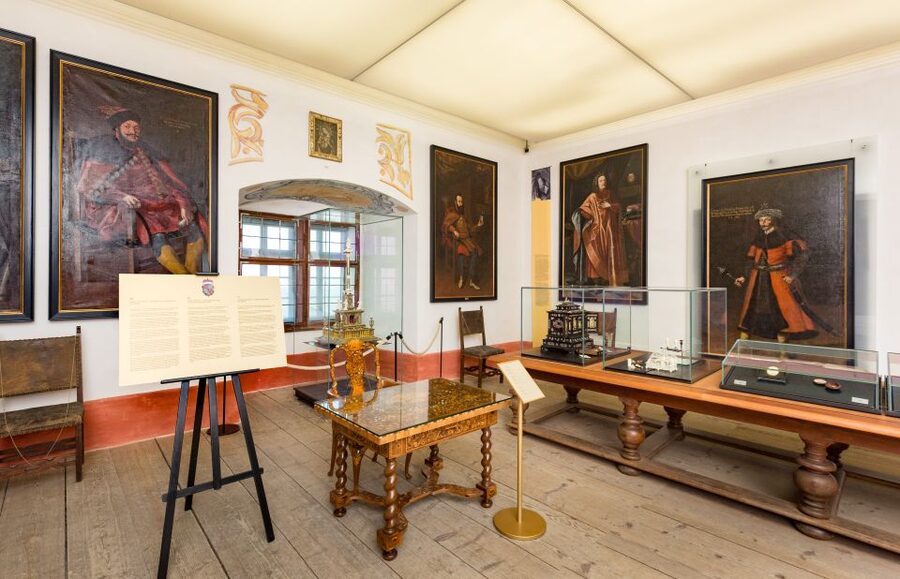
As you go up to the second floor, the tone shifts toward objects and curiosities. This is where the castle’s collecting story becomes easy to understand, because you get a mix of display categories—textiles, artifacts, and cabinet-style pieces.
One highlight here is an ornate 400-year-old Ottoman tent. This matters because it shows how European noble collections weren’t only about local treasures. They also pulled in prestige objects from across political and cultural boundaries. It turns the castle into a crossroad of interests, and it gives you something physical and theatrical to look at.
You’ll also encounter the castle’s Kunstkammer, the cabinet of curiosities, dating from the late 16th to the early 18th century. A Kunstkammer is basically an educational status symbol: it’s where a collector showcases the world as seen through their interests—art, science-adjacent wonders, exotic materials, and craftsmanship.
Prince Paul Esterházy’s passion for collecting is part of the story here. You don’t need to be a specialist. Just notice how the rooms are arranged to show that collecting wasn’t a hobby; it was a public statement.
Europe’s biggest silver furniture collection: why it’s more than shiny objects
Now for one of the most practical reasons to plan this visit: if you care about material culture, Forchtenstein delivers. The castle features Europe’s largest and earliest collection of silver furniture.
Silver furniture is easy to misunderstand at a distance. It sounds decorative and flashy. Up close, it turns into something more interesting—silversmithing skill, design choices, and how wealthy families marked their presence through objects that were meant to be used and seen.
I like that this collection is anchored in something specific: earliest and largest. That makes it feel less like a random “miscellaneous antiques” show and more like a serious strength.
If you only have an hour, this is one section where you’ll get a lot of satisfaction per minute. Even a quick look can be rewarding because the pieces are designed to be noticed.
Gallery of Ancestors: Vlad the Impaler and the power of portraits
The Gallery of Ancestors is the section that makes Forchtenstein feel like a storytelling machine. Here you’ll see Esterházy family portraits, including fictional ancestors—yes, fictional.
Two details stand out. First, there’s the only known full-length portrait of Vlad the Impaler. Second, the gallery includes images tied to Attila the Hun and Vlad the Impaler among the fictional-ancestor theme.
Why is that valuable for you as a visitor? Because it shows how noble families shaped identity. Portraits aren’t just likenesses. They’re political messaging, lineage theater, and myth-making—built into paint and framing.
This is also where you’ll stop thinking of the castle as only a collection of objects. You’ll start seeing it as a curated narrative of who the Esterházys wanted to be.
Corination flags from the 17th century: the room for symbolism nerds
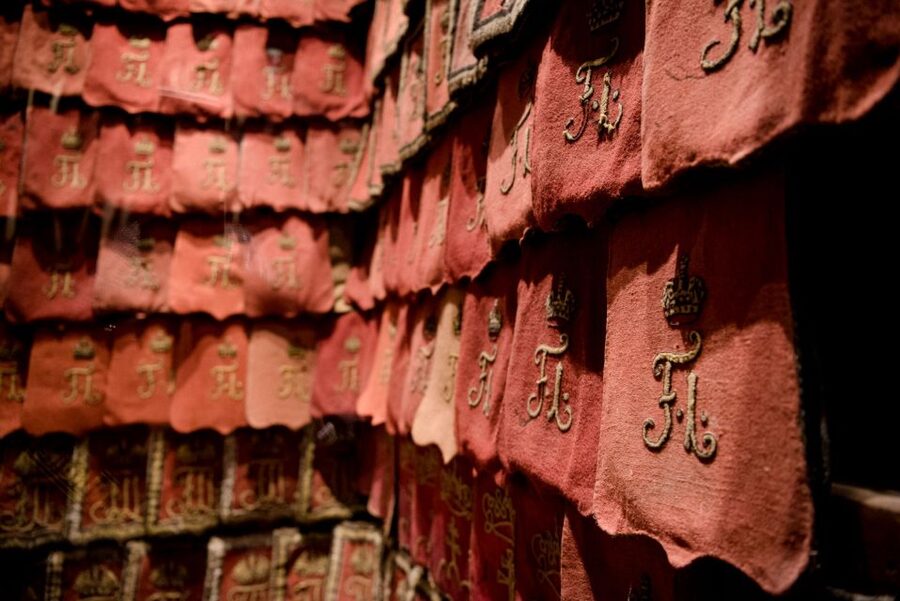
If you like “how did they do that” details—old flags, official objects, ceremonial items—make space for the coronation rooms. You’ll see three coronation flags dating from the 17th century, described as the oldest known from Hungary, Croatia, and Serbia.
Flags are small compared to armor and furniture. But they carry a lot of meaning, and they’re often hard to find outside specialized collections. In Forchtenstein, they become a kind of historical shorthand: you look at fabric, symbols, and dates, and suddenly you’re thinking about rule, legitimacy, and ceremony.
If you’re not usually flag-focused, still take the time. These flags work because they connect a household collection to regional political history.
What the optional guided tour (and audio guide) can add
Admission gets you into the castle, and the experience can be done with just the ticket. But the castle’s stories are layered, and that’s where extra guidance helps.
There’s an audio guide listed in German, but the info also notes an audio guide price in euros. To avoid disappointment, check at booking whether your entry includes it or whether it’s an add-on. Either way, language matters: the German audio option is your best match based on what’s provided.
If you choose the optional guided tour, it can turn “look at objects” into “understand why these objects were gathered and shown.” One of the strongest review patterns is praise for how guides explained history vividly, and that kind of narration can be exactly what you need in a one-hour visit.
How to pace a one-hour ticket so you don’t feel rushed
A one-hour visit sounds tidy. In practice, it means you should pick priorities before you start walking.
Here’s my practical approach:
- Start in the inner courtyard and courtyard murals first, because it sets the visual tone.
- Next, decide whether you’re a weapons-first person or a portraits-first person, and head that way.
- Treat the silver furniture and the Kunstkammer as “stop and really look” areas. You’ll remember those more than quick hallway passes.
- Save the Gallery of Ancestors and coronation flags for later, because these are storytelling-heavy rooms where context makes a difference.
If you tend to read every label, you may still make it, but you’ll be moving briskly. One review noted that the first level wasn’t accessible on their visit, which is a reminder that conditions can vary. If you show up and find a section closed, quickly pivot to the rooms you care about most rather than trying to force a perfect plan.
Value for money: what $22 buys you here
At about $22 per person, Forchtenstein Castle is priced like a focused castle museum stop, not a full-day excursion. The value comes from density: you’re not just seeing one highlight. In an hour, you get major categories—murals, furniture, weapons, ceremonial flags, and portrait symbolism.
This is a good deal if you like collections and interpretation. If you only want scenery and broad views, you might end up wanting more time than you’re paying for. But if you’re a “show me the artifacts” traveler, the money tracks with what’s on display.
Also, this is a place where guidance can add value. If you can handle German, the audio guide or optional guided tour can help you make sense of why an Ottoman tent and silver furniture land in the same building and why portraits include fictional ancestors.
Who should book this castle visit, and who might skip it
You’ll be happiest here if:
- you like museums where objects tell stories
- you’re curious about Central European noble collections
- you enjoy portraits, symbolism, and ceremonial items
- you want a one-hour stop that still feels substantive
You might think twice if:
- you want a relaxed, browse-all-day pace
- you dislike rooms focused on weapons
- you need full mobility accessibility (the activity is not suitable for people with mobility impairments)
If you’re pairing Forchtenstein with other sights in Burgenland, it also works as a smart “culture concentration” stop—especially if your schedule is tight.
Should you book Forchtenstein Castle admission?
Yes, if you’re the kind of traveler who loves when a place has a clear identity. Forchtenstein isn’t trying to be everything. It’s very good at being a compact collection of art, arms, ceremonial objects, and portrait myth-making—wrapped into one efficient visit.
Book it if the names you care about include Vlad the Impaler, early silver furniture, and old coronation flags. Skip it if you want mostly outdoor time or you need lots of accessibility support. Otherwise, this is a strong use of your hour, and it leaves you with images you’ll remember long after you walk back out.
FAQ
How much does admission cost?
The admission ticket is listed at about $22 per person.
How long is the visit?
The duration is about 1 hour.
What is included with the ticket?
The ticket includes admission to Forchtenstein Castle.
Is an audio guide available, and what language is it in?
An audio guide is available in German. The details provided also indicate it may cost €2, so check at booking whether it’s included with your option.
What are the main highlights I should plan to see?
Plan for the inner courtyard secco wall paintings, the silver furniture collection, the Gallery of Ancestors with the Vlad the Impaler portrait, and the 17th-century coronation flags.
What time should I arrive?
Arrive 15 minutes before the activity starts.
Is this suitable for people with mobility impairments?
No. The activity is not suitable for people with mobility impairments.
What is the cancellation policy?
Free cancellation is available up to 24 hours in advance for a full refund.