REVIEW · TOLEDO
Guided tour of the Royal Palace of Aranjuez
Book on Viator →Operated by VisitAranjuez · Bookable on Viator
That first step inside the Royal Palace can feel like time travel. This guided visit, Palatial Tales, focuses on the rooms, the power games, and the small details that make Aranjuez memorable. I like that the tour is paced for real viewing time, not just walking past walls, and that guide Gloria brings the palace stories into focus.
Two things I especially like: you see standout spaces like the Hall of Warships and the Arab Cabinet (an exclusive room), and you get a guided path through 25+ rooms in about 75 minutes. One possible drawback: the palace ticket is not included, and buying it at the box office after you meet your guide can add a bit of waiting.
In This Review
- Quick Take: What You’ll Notice Right Away
- Royal Palace of Aranjuez, Palatial Tales: the vibe and the value
- What you’re paying for (and what you’re not)
- The 75-minute route: how the timing really feels
- Group size and pace
- Entering through Palatial Tales: meeting point and first impressions
- Hall of Warships: the room that sets the tone
- Why this stop is a great opening
- Arab Cabinet (exclusive room): when the palace changes mood
- Porcelain Cabinet: beauty you can actually track
- Queen’s Bedroom and Dressing Room: royal life feels personal
- What to watch for in these rooms
- Ballroom/Reception and Gala Dining Room: where ceremony happens
- Royal Chapel: why it feels independent even inside the monument
- Guide energy: what Gloria does well
- A small heads-up about the content balance
- Ticket planning: the one thing that can change your day
- Why this matters for your schedule
- Who this tour is best for
- Quick practical notes that affect comfort
- Should you book Palatial Tales? My take
- FAQ
- Is the Royal Palace ticket included in the tour price?
- How long is the Royal Palace visit with this guided tour?
- Where do I meet the guide?
- Do I need to use a printed ticket?
- What group size should I expect?
- Can I cancel for free?
Quick Take: What You’ll Notice Right Away
- Gloria’s explanations connect rooms to royal life, not just dates on plaques.
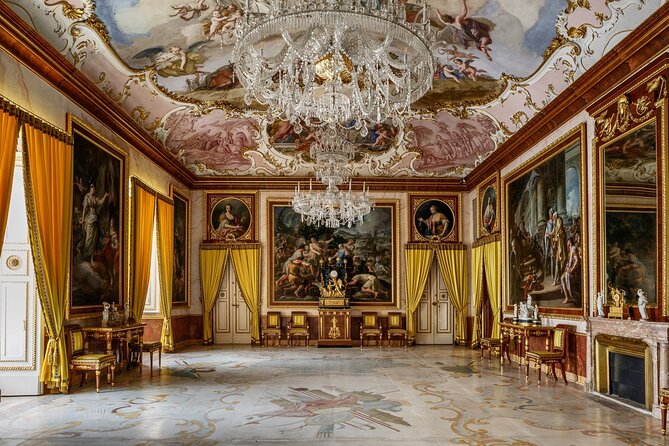
- Hall of Warships delivers the wow factor fast, including very old tapestries.
- Arab Cabinet + Porcelain Cabinet give you two different artistic moods in one route.
- Queen’s private spaces (bedroom and dressing room) make the royals feel close.
- Royal Chapel’s separate feel stands out even though it’s part of the monument.
- Small-group feel with a maximum of 30 travelers keeps questions from getting lost.
Royal Palace of Aranjuez, Palatial Tales: the vibe and the value
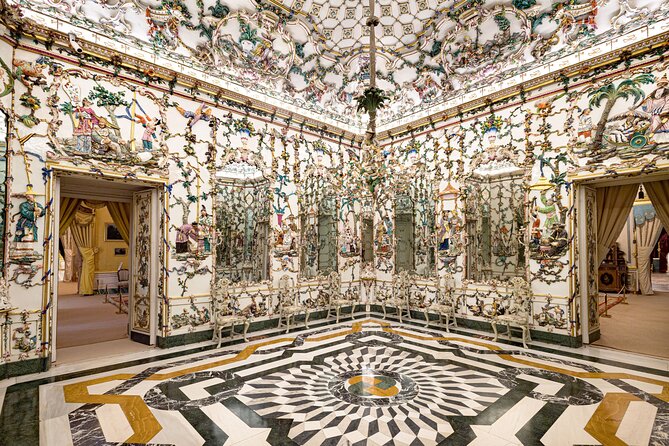
Aranjuez’s Royal Palace isn’t trying to be a theme park. It’s a working-feeling monument: heavy doors, ceremonial rooms, and decorative splendor that you can actually track as you move from room to room. The Palatial Tales tour gives you a clear way to make sense of it without turning your visit into an academic project.
The price you’ll see—$14.23 per person—is for the guided portion. That matters because the palace entrance itself is paid separately at the ticket office. Think of your money here as paying for a person to guide your eyes: where to look, what to notice, and how each room fits the larger story of royal life and court drama.
You can also read our reviews of more tours and experiences in Toledo.

What you’re paying for (and what you’re not)
Here’s the honest breakdown: your tour includes the guided walkthrough inside the monument, but palace admission is not included. You’ll pick up the Royal Palace ticket at the box office (after meeting your guide). The palace ticket price is €7 basic, €4 for visitors 65+ and students up to 25 (and there may be free entry for some visitors—check eligibility).
That setup is very common in Spain, but it can still surprise people, especially if you’re expecting the tour price to cover everything. The good news: the guide helps you get the tickets out at the box office after you gather at the meeting point, which keeps you from wandering around trying to figure it out solo.
The 75-minute route: how the timing really feels
The time inside the palace is about 75 minutes, with an overall tour duration listed at around 1 hour 15 minutes. In a palace setting, that’s a practical amount of time. Long enough to see real details up close. Short enough that you won’t feel like you’re spending your whole day in formal rooms.
This is also a tour built around more than 25 rooms. That can sound like a sprint, but it’s managed by focusing on the rooms that do the most storytelling. You’re not just ticking boxes. You’re getting a guided path that explains why each room matters, what it was used for, and what visual clues to pay attention to.
Group size and pace
The group size max is 30. That’s large enough that you’ll stay aware of where you are in the crowd, but small enough that questions can still land. If you like to ask things on the spot, this size is usually workable.
You should also know the tour ends back at the meeting point, so you’re not dealing with a half-day “where do I go next” scramble.
Entering through Palatial Tales: meeting point and first impressions
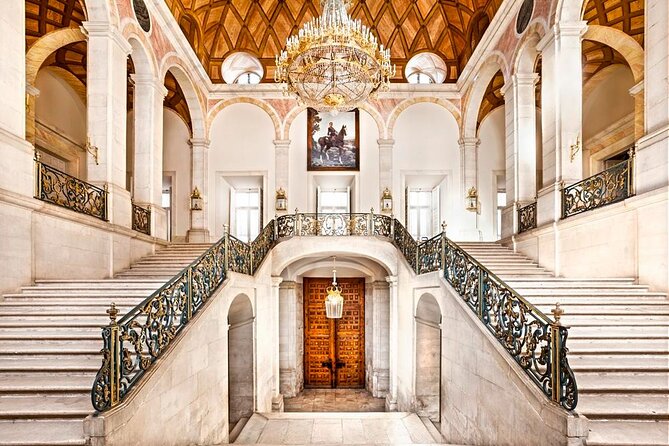
You start at Pl. de Parejas, 16, 28300 Aranjuez, Madrid, Spain. Once you’re there, you’ll meet your guide and then handle the palace ticket at the box office together. It’s a smart structure for visitors who don’t want to guess about lines, discounts, or where to go first.
Mobile tickets are used for this experience, which is handy when you’re juggling phone battery and walking plans. Since the site is near public transportation, it’s also easier to chain this with other Aranjuez stops without over-planning.
Hall of Warships: the room that sets the tone
The Hall of Warships is one of those spaces you understand even before the guide starts talking. Big room energy, ceremonial feel, and that “royal power” atmosphere that comes from scale and display.
What makes this stop extra memorable is the tapestries more than 400 years old. Standing in front of them, you can shift from awe to observation. The guide’s job here is to help you read the room: what’s being shown, why the decor was chosen, and how these kinds of displays supported royal messaging.
A practical tip: in a room like this, look at both extremes—the centerpiece details and the surrounding borders or panels. That’s often where the story lives, not only in the most obvious focal area.
Why this stop is a great opening
This is a strong early anchor because it gives you context. After you’ve seen the Hall of Warships, the palace stops feel less random. The rest of the rooms start to line up into a pattern—court image, craft, politics, and status.
Arab Cabinet (exclusive room): when the palace changes mood
Then comes one of the tour’s signature moments: the Arab Cabinet, listed as an exclusive room. This is where the palace can surprise you. Instead of staying locked in “Spanish royal museum,” you get a different design mood and a different visual language.
If you’ve ever wondered why palaces borrow styles from elsewhere, this kind of room is where the answer becomes visible. The guide helps you connect what you see to the wider idea of taste and influence at court—how a royal residence could reflect power in many forms, not just local tradition.
Practical note: rooms like this can feel visually busy, so it helps to slow down. Ask yourself what stands out first—pattern, color, framing, or materials—and then let the guide steer you toward the details that matter.
Porcelain Cabinet: beauty you can actually track
The Porcelain Cabinet is one of the most famous pieces in the Royal Palace of Aranjuez, and it earns that reputation. Porcelain isn’t just decoration. It’s a statement about collecting, craftsmanship, and control over luxury.
This is a room where close looking pays off. The surfaces can be intricate, and from across the room they might look like “pretty objects.” Up close, you start seeing organization and intention—the kinds of arrangement choices that make porcelain displays feel composed rather than chaotic.
The guided element matters here. A good explanation helps you understand what you’re looking at—so you leave with a room you can describe, not just a photo you took.
Queen’s Bedroom and Dressing Room: royal life feels personal
One of the most compelling parts of the tour is that it doesn’t stay purely ceremonial. The itinerary includes both the Bedroom of the Queen and the Dressing room of the Queen. Those are private spaces, and that shift alone changes how the palace lands in your brain.
Ceremonial rooms say: power, events, public image. Private rooms say: routine, identity, the human rhythm behind the official story. Even if you’re not a “royal-history” person, this is where the palace becomes relatable.
What to watch for in these rooms
When you’re standing in a bedroom space, don’t just look at the bed or the obvious centerpiece. Look at how the room is set up: furniture placement, display logic, and any visual cues that suggest how the queen’s day-to-day life connected to court standards.
The guide’s storytelling helps you notice those cues without turning the visit into homework.
Ballroom/Reception and Gala Dining Room: where ceremony happens
After the private spaces, the tour moves back toward display and social power with the Ballroom or Reception and the Gala Dining Room.
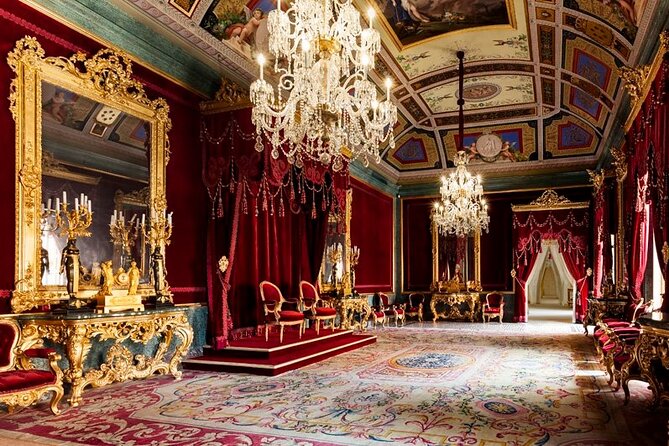
These rooms are for events—moments when the palace becomes a stage. The guide helps you understand what kind of atmosphere each room was designed to create. You’ll likely notice how the layout supports movement and how decor helps define “important” space.
If you like rooms that feel dramatic, this is the section that delivers. Even with a quick pace, these stops are designed to let you appreciate the scale and the rules of ceremony embedded in the space.
Royal Chapel: why it feels independent even inside the monument
The Royal Chapel of the Palace is called out as extraordinary, and there’s a detail that’s worth paying attention to: although it’s part of the monument, it was realized independent of the rest of instances.
That phrase may sound architectural, but it translates to how the space experiences. You can often feel the separation in how the chapel reads—its own mood, its own focus, its own rhythm. It’s the kind of room where silence (or at least slower footsteps) improves your experience.
The guided narration helps here too, because a chapel isn’t just a “pretty room.” It’s a place with purpose, symbolism, and a built-in sense of solemn direction.
Guide energy: what Gloria does well
This tour’s success depends heavily on your guide, and in this case the name that shows up again and again is Gloria. What I like about a guide like this is the balance: she’s comfortable answering questions, and the explanations aren’t stuck in a single tone.
The style you’re aiming for is practical. You don’t want lectures. You want a guide who tells you what to notice and then helps you connect it to the bigger story of the royal court. Gloria is strong on clarity, and she can adapt when people ask follow-ups.
A small heads-up about the content balance
One consideration: some visitors may find there are a lot of historical facts and fewer jokes or anecdotal detours. If you prefer lighter storytelling, go in ready to appreciate detail. On the upside, the heavy info is exactly what helps the palace rooms click into place in your mind.
Ticket planning: the one thing that can change your day
The palace entrance costs extra. The basic ticket is €7, and there are reduced rates for €4 for visitors 65+ and students up to 25. There may also be free entry depending on eligibility, so it’s worth checking before you go.
Here’s the practical tip I’d give you: if your plan is to save money, don’t assume every ticket-buying method costs the same. Some visitors noted they paid more when buying via machine than when buying at the box office after meeting with the guide. The tour is set up so you buy at the box office after gathering at the meeting point, which can come with a discount compared with other purchasing options.
Why this matters for your schedule
When you arrive, you’re not just paying and walking in. You may have to queue at the box office control flow, then re-enter with your ticket. It’s not a deal-breaker, but it’s a real reason to arrive on time and keep your expectations flexible.
If you hate waiting in line, it helps to treat the first part of the tour as a two-step process: meet, ticket, then palace.
Who this tour is best for
This experience fits well if you want a guided tour that helps you make sense of a big interior without getting overwhelmed.
I’d especially recommend it if:
- you like structured sightseeing with a clear path through many rooms
- you want specific highlights like the Arab Cabinet, Porcelain Cabinet, and Royal Chapel
- you enjoy asking questions and getting straightforward answers
It’s also a solid option for many visitors overall, since most travelers can participate and the group size stays capped at 30.
If you’re visiting with kids, the tour can still work, but the success will depend on your kids’ patience for room explanations. If they tire easily, you may want to plan short breaks.
Quick practical notes that affect comfort
A few details from the experience format are worth keeping in mind:
- Mobile ticket is used, so have your phone ready.
- The meeting point is near public transportation, which makes timing easier.
- Service animals are allowed, which helps for travelers who need support.
- The palace visit is indoor, but your overall day may still include some walking and queuing outside.
Also, because the palace ticket is separate, keep a bit of cash or be ready for whatever payment method the box office supports. The tour itself is handled by the provider, but you’ll own the admission purchase step.
Should you book Palatial Tales? My take
If you want a guided palace visit that focuses on rooms with real identity—Warships, Arab Cabinet, Porcelain Cabinet, Queen’s private spaces, ceremony rooms, and the Royal Chapel—then I think this is a strong pick.
Book it if:
- you value a guide who can explain what you’re seeing in plain terms
- you want the tour to do the heavy lifting of connecting rooms into a story
- you’re okay paying palace admission separately and joining the box office step with your guide
Skip it or choose a different format if:
- you hate any chance of ticket-line delays
- you prefer lighter storytelling over lots of historical detail
- you’d rather buy admission entirely on your own before meeting anyone
Palatial Tales is good value when you treat it as what it is: a guided route through a famous palace, timed well, and powered by a guide who helps you look smarter while you walk.
FAQ
Is the Royal Palace ticket included in the tour price?
No. The guided tour inside the monument is included, but admission to the Royal Palace is not included. You’ll need to buy the Royal Palace ticket at the box office after meeting at the start point. The basic price is €7, with €4 options for 65+ and students up to 25 (check for free entry if eligible).
How long is the Royal Palace visit with this guided tour?
The visit inside the palace is approximately 75 minutes, and the overall tour duration is listed at about 1 hour 15 minutes.
Where do I meet the guide?
You meet at Pl. de Parejas, 16, 28300 Aranjuez, Madrid, Spain. The tour ends back at the same meeting point.
Do I need to use a printed ticket?
No. This experience uses a mobile ticket, so you’ll have your ticket on your phone.
What group size should I expect?
The tour has a maximum of 30 travelers.
Can I cancel for free?
Yes, free cancellation is available. You can cancel up to 24 hours in advance for a full refund. If you cancel less than 24 hours before the experience starts, the amount you paid will not be refunded. If it’s canceled due to poor weather, you’ll be offered a different date or a full refund.