REVIEW · ISTANBUL
Hagia Sophia, Topkapı Palace, Blue Mosque Guided Small Group
Book on GetYourGuide →Operated by Aljazeera Tour · Bookable on GetYourGuide
Hagia Sophia and Topkapı in one packed day is a win. This guided small-group route is built around Istanbul’s biggest “wow” sites, with clear explanations, smart pacing, and time to wander the Grand Bazaar without feeling lost. You’ll see the Blue Mosque’s hand-painted tile work, walk the imperial atmosphere of Topkapı, and still get a proper guided look at Constantinople’s key landmarks.
My favorite part is the way the guide ties each stop together: Blue Mosque design choices connect to Ottoman power, and Hagia Sophia’s many lives (church to mosque to museum) make the building feel more than just a photo backdrop. I also like the inclusion of skip-the-line entry handling for major sites—meaning you spend more time inside and less time stalled at entrances.
The main drawback is practical: Hagia Sophia and Topkapı/Harem entrance tickets aren’t included, and you’ll need cash on the spot for the skip-the-line ticket costs. It’s still good value, but you should budget for it before you go.
In This Review
- Key takeaways before you go
- Getting oriented: where the day starts and how you move
- The Blue Mosque: tiles, minarets, and why the details matter
- Hippodrome: the city’s old public stage in one guided pass
- Hagia Sophia: see why it got so many different lives
- The Grand Bazaar: how to shop without getting swallowed
- Topkapı Palace and Harem: where the Ottoman court felt real
- Hagia Irene: a quieter Byzantine stop that adds perspective
- Lunch and free time: how the day balances structure and wandering
- Value check: is $68 worth it with tickets extra?
- What guides are like on this tour (and what it means for you)
- Who this tour fits best
- Should you book this Hagia Sophia and Topkapı small-group tour?
- FAQ
- Are the Hagia Sophia and Topkapı Palace entrance tickets included?
- Does the tour include guided visits at all the main sites?
- Is lunch included?
- What’s the meeting point?
- Is there hotel pickup?
- What should I wear for these stops?
Key takeaways before you go
- Early momentum: You start with the Blue Mosque, so the day’s first big stop isn’t left for last.
- Real architecture talk: The guide focuses on what you’re seeing—tiles, minarets, and how the buildings were commissioned and used.
- Hippodrome monuments in context: You’ll get a guided look at Wilhelm II’s German Fountain, the Serpentine Column, and more.
- Grand Bazaar time that feels human: You get browsing freedom after a short setup from the guide.
- Topkapı isn’t just palace rooms: The Harem section adds the court’s private social world, not only ceremonial halls.
- Hagia Irene adds a twist: You’ll see Constantinople’s early Christian layer with a guided visit to this lesser-known church.
Getting oriented: where the day starts and how you move
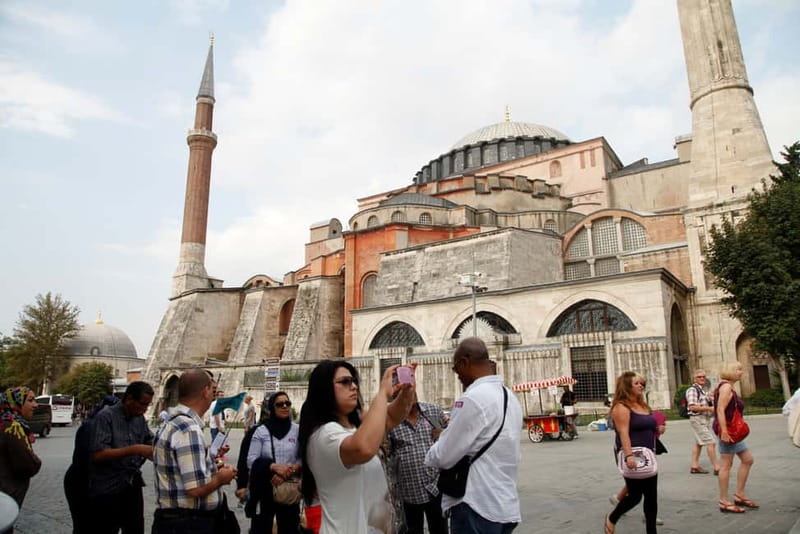
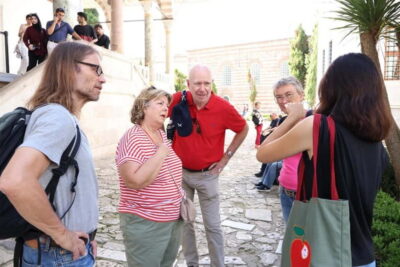
Most people do Istanbul “by the landmark list.” This tour does it by flow. You meet in Sultanahmet at Buhara 93 Restaurant—look for the Aljazeera Tour logo flag—then head through the historic core with an English-speaking guide.
You may also have the option of hotel pickup in centrally located areas. Transfers are shared by minibus or midibus, and pickup time can be early or late. Once you’re in the thick of Sultanahmet, the plan becomes a true walking day. That’s a good thing for seeing the spaces properly, but it means your shoes matter.
Practical tip: plan for crowds and security checks. Even with skip-the-line handling, you’re not skipping safety screening. Bring your headscarf and dress for sacred sites, even if it feels like a warm day.
You can also read our reviews of more tours and experiences in Istanbul.
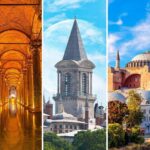
The Blue Mosque: tiles, minarets, and why the details matter
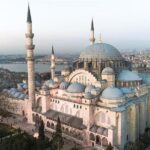
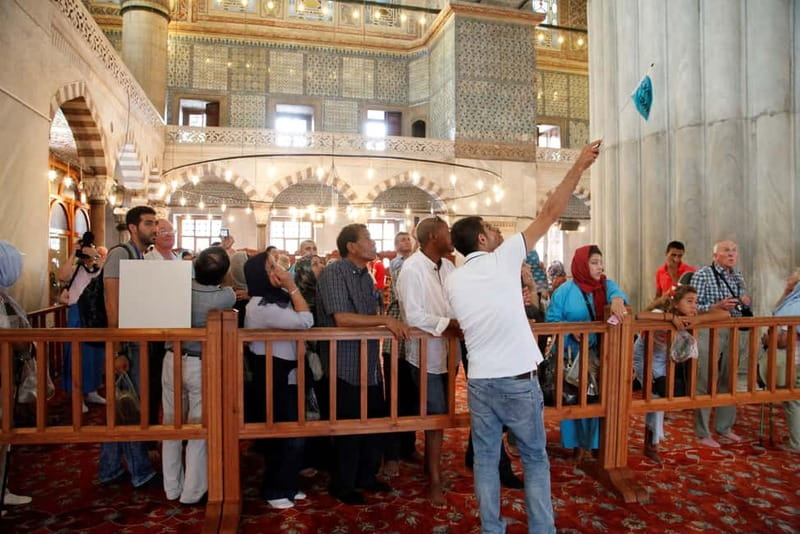
Your day begins with the Sultan Ahmed Mosque, famous for its 20,000 hand-painted blue Iznik tiles and six minarets. You’ll hear how it was commissioned by Sultan Ahmet I and why it became a landmark of the Classical Ottoman period.
Here’s what makes this stop more than a quick exterior moment: the guide points your eyes to the visual logic. When you know how the tiles and interior surfaces are working, you’ll see patterns and layout with more meaning. You’re also listening to the building’s purpose as a statement of Islamic artistry at the height of Ottoman power.
One note for planning: the mosque is religious space. You’ll need appropriate clothing—long pants and a long-sleeved shirt—and you should come with a scarf for your head. Security checks are mandatory, so arrive ready and expect some waiting.
Hippodrome: the city’s old public stage in one guided pass
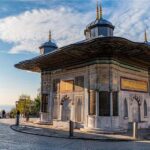
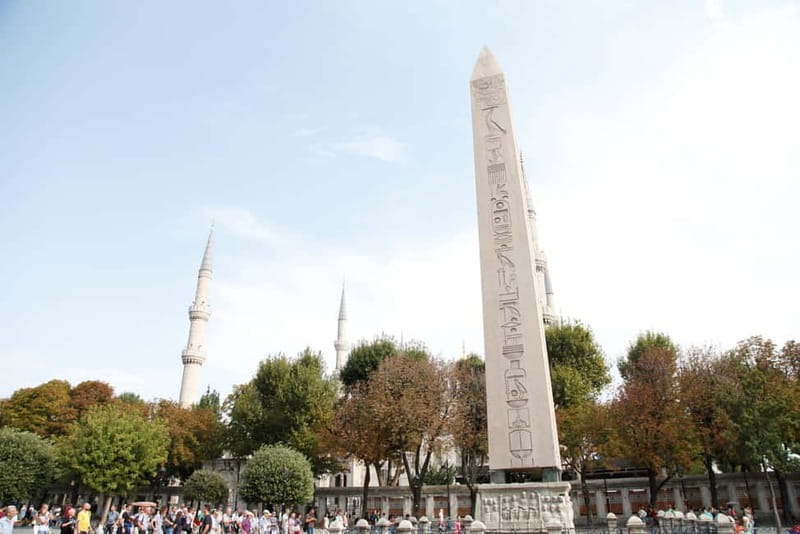
Next you’ll step into the Hippodrome, once the center of social and sporting life in ancient Constantinople. This stop is a great breather from pure “building worship,” because the guide talks about monuments tied to power, memory, and imperial display.
You’ll see:
- the German Fountain of Wilhelm II
- the Bronze Serpentine Column
- the Obelisk of Theodosius
- the Column of Constantine
Even though you’re outside, you’ll get the feeling that these aren’t random antiques. They’re deliberate reminders of who ruled, who sponsored, and what the city chose to remember. It’s the kind of stop that makes the next churches and mosques easier to place on the map—mentally and historically.
Hagia Sophia: see why it got so many different lives
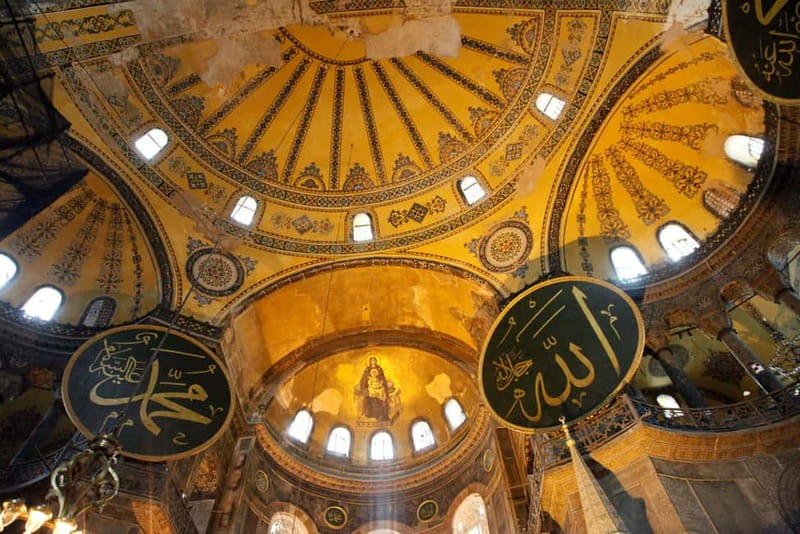
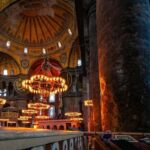
Then comes Hagia Sophia, the 6th-century masterpiece built by Emperor Justinian as a Greek Orthodox church. You’ll learn how it transitioned from church to mosque and later became a museum, spending nearly a millennium as the world’s largest church.
The best part of going with a guide here is not just the dates. It’s learning how to “read” a space that has changed hands. When you understand what elements were added, adapted, or preserved, your brain stops seeing it as one building and starts seeing it as layers of meaning.
And yes, you’ll need an entrance ticket for Hagia Sophia. The skip-the-line ticket cost is listed as €25, paid in cash. Even with skip-the-line assistance, you still face security screening, so don’t treat this as a five-minute stop.
Practical tip: dress appropriately and bring your scarf. If you’re sensitive to heat, plan your hydration, because there’s not much “sit-down and chill” time once you’re in the queue and galleries.
The Grand Bazaar: how to shop without getting swallowed
Before you reach the bazaar, you get a brief stop at a local shop. This is a useful setup if you want souvenirs but don’t want to wander in blind. Then you gather near the Grand Bazaar’s main gate for insights about its history.
Then you get the real value: free time for shopping at your own pace. This market is world-famous for a reason—65 covered streets and more than 4,000 shops covering carpets, jewelry, spices, ceramics, and more. The guide can give you the context, but you still control your browsing speed.
A quick practical note: the Grand Bazaar is closed on Sundays and religious holidays. If your travel dates hit one of those, this schedule may shift, so check dates carefully before you commit.
Shopping strategy that saves money: decide your “must-buys” before you enter. If you go in with zero plan, you’ll buy something just to feel like you did it. If you go in with a target—like a specific style of ceramic or a practical spice blend—you’ll shop smarter and feel less pressure.



Topkapı Palace and Harem: where the Ottoman court felt real
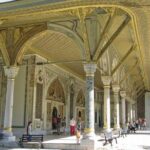
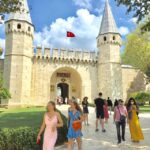
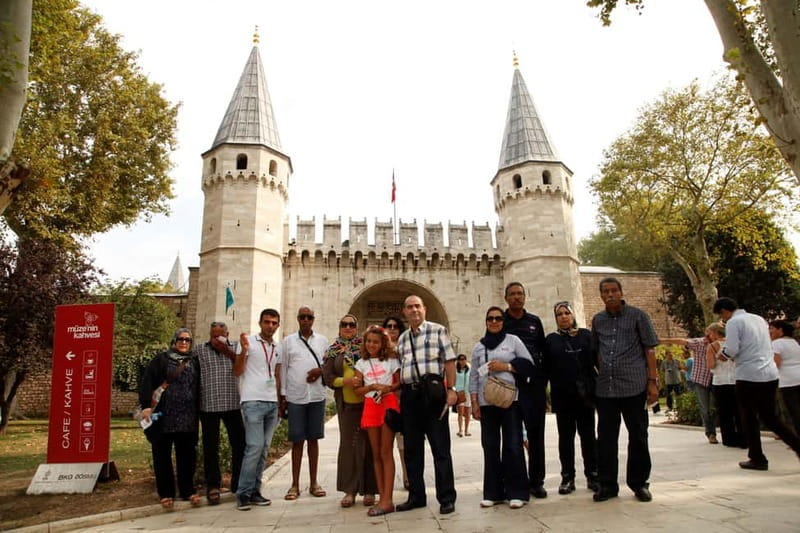
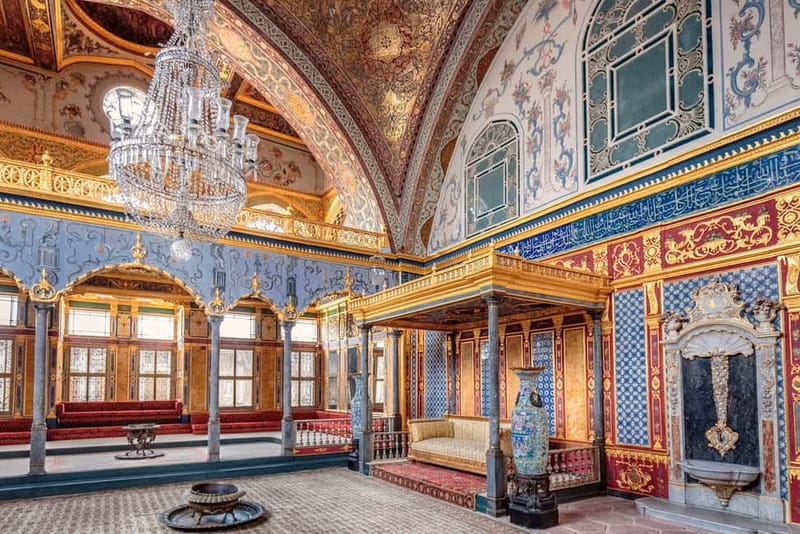
In the afternoon you move to Topkapı Palace, once the Ottoman sultans’ residence and administrative center for over four centuries. This is one of Istanbul’s best places to understand how empire works—who lived where, how authority was displayed, and how power moved through rooms, courtyards, and collections.
You’ll explore opulent chambers and see major collections, including:
- sacred Islamic relics associated with the Prophet Mohammed
- imperial treasures
- Chinese porcelain
- weapons
- calligraphy
It’s impressive on sight, but what makes it land is the guided explanation. You don’t just get “pretty room” time—you learn what the palace meant and how people used these spaces.
Then comes the Harem, inside the palace grounds, which housed the sultan, his mother, wives, concubines, children, and other women of the court. Walking through this area helps you understand Ottoman domestic life as a complex social and political system. It’s a maze of rooms, courtyards, and private chambers, and the guide helps you make sense of the layout so you don’t feel like you’re wandering.
Budget note: the Topkapı Palace and Harem skip-the-line entrance ticket cost is 2750 Turkish Lira, paid in cash. Plan for this in advance so you don’t scramble.
Hagia Irene: a quieter Byzantine stop that adds perspective
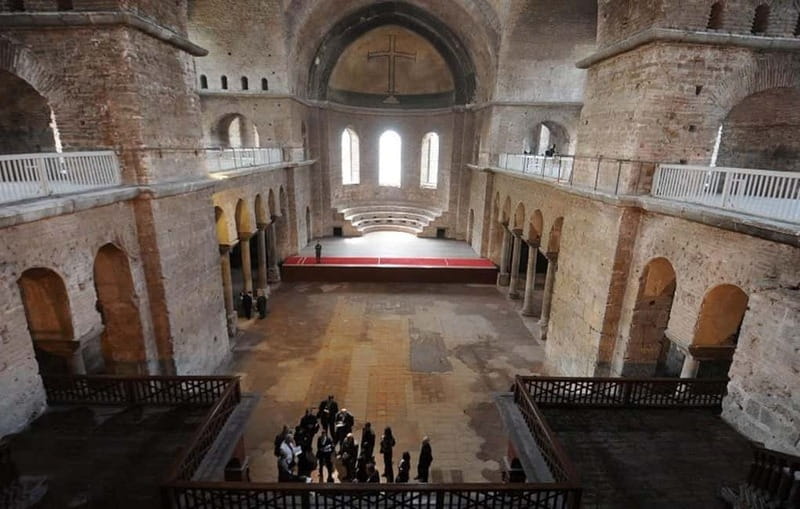
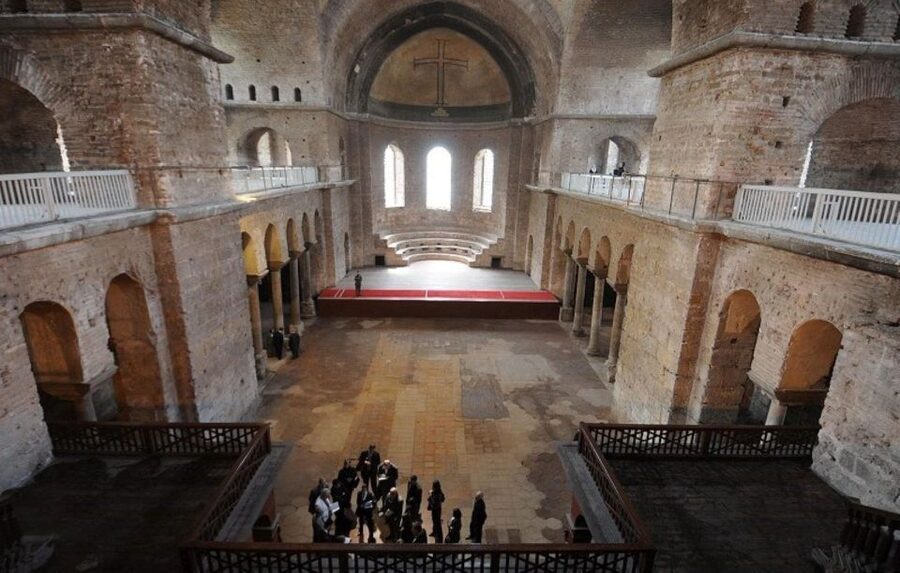
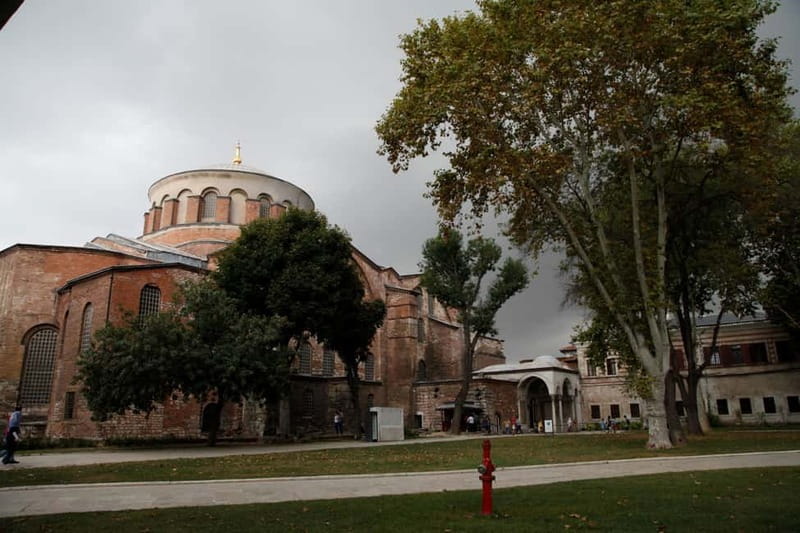
Finally, you visit Hagia Irene, a Byzantine landmark and the first church built in Constantinople. This stop is special because it gives you an early Christian layer that sits alongside Hagia Sophia.
If you loved the idea of seeing how Constantinople’s religious buildings evolved, this is the kind of visit that rounds out the day. Hagia Sophia is the star, but Hagia Irene helps you understand the background story of the city’s church building traditions.
Lunch and free time: how the day balances structure and wandering
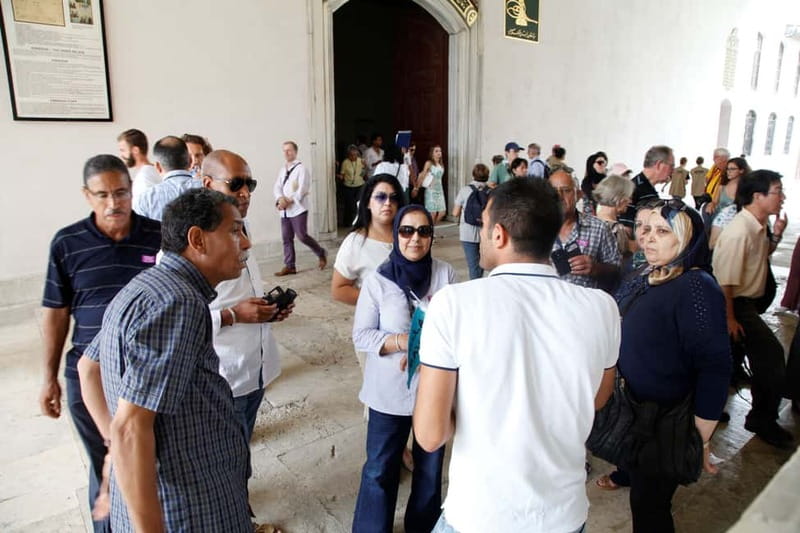
You’ll get free time for lunch, plus separate time to roam in the Sultanahmet area and shop in the Grand Bazaar. In practice, that balance matters. If everything is guided, you never breathe. If everything is free, you lose the meaning. This model lands in the middle: guided interpretation where it counts, then breathing room to follow your own interests.
One more practical point: this is a walking tour. Even with stops inside, you’ll want to wear comfortable shoes and keep your water and sunscreen ready.
Value check: is $68 worth it with tickets extra?
At $68 per person for a 7-hour day, the value comes from the full package: an English-speaking guide, multiple UNESCO-listed landmarks, and guided time at sites that would take much longer (and feel more confusing) if you tackled them solo.
The tradeoff is clear: Hagia Sophia and Topkapı/Harem entrance tickets are extra, and the skip-the-line ticket costs must be paid in cash. Some people will feel the ticket add-on pushes the total higher than they expected, and that’s a fair reaction.
Still, the math works better if you care about how you experience these buildings. Skip-the-line handling, guided explanations at the biggest stops, and time for Grand Bazaar browsing in between is often more efficient than trying to stitch together tickets and tours on your own—especially in Sultanahmet where lines and security checks can pile up.
What guides are like on this tour (and what it means for you)
The guide is a major part of your experience here. I’m paying attention to names from the most positive feedback: Felis was praised as amazing, knowledgeable, and caring, and she answered questions with solid recommendations. Sean also got high marks for being nice, and Halis was described as kind and good at managing the group while teaching effectively.
That said, one review note did mention occasional trouble understanding the guide’s English. The practical takeaway for you: if your English comprehension is sensitive, ask questions often and speak up when you don’t catch something. Good guides handle that patiently, and you’ll get more out of the day.
Who this tour fits best
This tour fits you if you want:
- a structured day that hits Istanbul’s top Christian and Ottoman-era icons
- guided explanations so you understand what you’re looking at, not just see it
- some free time for shopping and lunch without taking on navigation stress
It’s less ideal if you hate walking, want a super slow pace, or you’re traveling on a strict “all-in price” budget (because Hagia Sophia and Topkapı/Harem tickets are extra and require cash).
Should you book this Hagia Sophia and Topkapı small-group tour?
If you want the biggest Istanbul landmarks in one efficient 7-hour stretch, I think this is a smart booking. The guide-led flow helps you make sense of sites that can otherwise blur together, and the Grand Bazaar free time gives you room to pick souvenirs without feeling rushed.
Just do two things before you go: budget for the Hagia Sophia (€25 cash) and Topkapı/Harem (2750 TL cash) entrance add-ons, and bring proper clothing plus a scarf. If you’re good with a busy walking day, you’ll likely come away feeling like you saw the core of Istanbul’s imperial story with your eyes open.
FAQ
Are the Hagia Sophia and Topkapı Palace entrance tickets included?
No. Hagia Sophia entrance is not included, and Topkapı Palace & Harem entrance is not included. The skip-the-line ticket costs are listed as €25 for Hagia Sophia and 2750 Turkish Lira for Topkapı Palace & Harem, and they must be paid in cash.
Does the tour include guided visits at all the main sites?
Yes. Blue Mosque, Hagia Sophia, Topkapı Palace and Harem, Hagia Irene, and the Hippodrome are guided in English. The Grand Bazaar has guided background, then you have free time to explore on your own.
Is lunch included?
No. Lunch is not included, though you’ll have free time during the day to eat.
What’s the meeting point?
You meet in front of Buhara 93 Restaurant at Sultanahmet Square. The guide will be holding an Aljazeera Tour logo flag.
Is there hotel pickup?
Hotel pickup is available if you choose the pickup option. It’s a shared transfer by minibus or midibus, and pickup time can be early or late. You’ll need to confirm pickup location and time with the local operator after booking.
What should I wear for these stops?
Dress appropriately for sacred sites: long pants, a long-sleeved shirt, and a scarf to cover your head. Comfortable shoes are also important since it’s a walking tour.