REVIEW · LUANG PRABANG
Luang Prabang: Cooking Class at the Former Royal Palace
Book on GetYourGuide →Operated by Victoria Xiengthong Palace Hotel · Bookable on GetYourGuide
Lao cooking starts with the morning market. I love how a chef-guided walk through Luang Prabang’s morning stalls turns ingredients into names and flavors, and I love cooking at the Former Royal Palace grounds where the day feels calm and special. You’ll finish by eating the meal you made in a peaceful riverside setting.
One thing to plan for: you should be comfortable standing for stretches, and there may be a bit of downtime while the team gets ingredients ready. If you hate waiting, bring patience (and maybe a snack after the market).
Key highlights
- Chef-led market walk that helps you buy the right herbs, spices, and produce
- Former Royal Palace setting that makes the cooking feel ceremonial, not touristy
- Small group size (max 10) for better attention and a friendlier pace
- Four-dish-style lunch flow often including laab and coconut dessert examples
- Riverside lunch at a restaurant setting with relaxing Mekong views
In This Review
- Entering the Former Royal Palace Kitchen in Luang Prabang
- The Morning Market Ride: Bamboo Baskets, Herbs, and Real Choices
- The Short Sightseeing Pause While the Kitchen Gets Ready
- Cooking at Your Speed: Hands-On Lao Dishes With a Chef at Your Side
- What the cooking can include
- Expect teamwork (and a bit of shared chopping)
- Lunch Overlooking the Mekong: Eating Lao Food Without the Performance
- Price and Value: Is $45 for 4 Hours a Smart Deal?
- Who Should Book This Lao Cooking Class (and Who Might Not Love It)
- Helpful Tips to Make Your Day Smoother
- Should You Book? My Decision Checklist for Luang Prabang
- FAQ
- FAQ
- How long is the Luang Prabang cooking class?
- What does the $45 per person price include?
- How many people are in the group?
- Is the class taught in English?
- Where does the experience start?
- What kinds of dishes will I cook?
- Are vegetarian options available?
- Do I need to bring anything?
- Can I cancel or pay later?
Entering the Former Royal Palace Kitchen in Luang Prabang
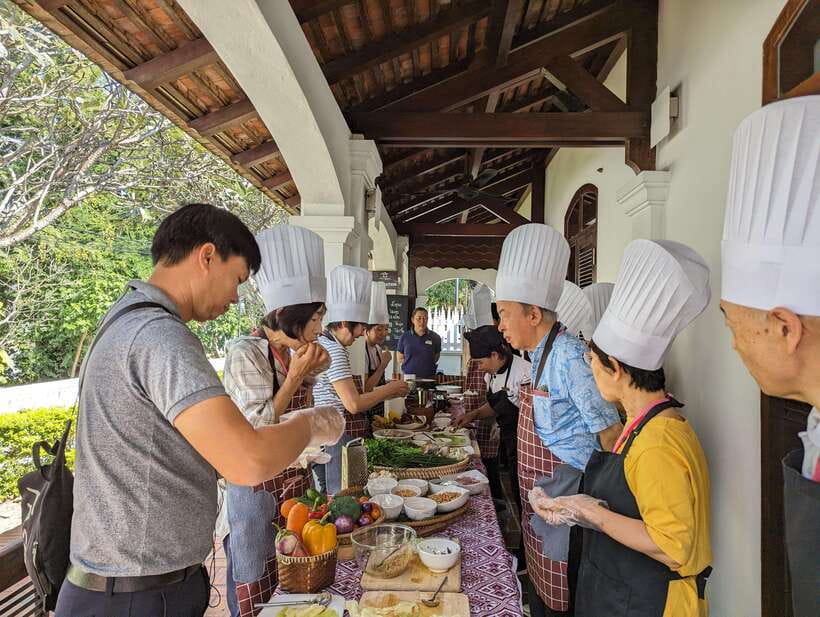
Luang Prabang already feels like a film set at sunrise. This cooking class adds one more layer: you’re not just “doing a food activity.” You’re cooking Lao dishes in a heritage setting linked to the Victoria Xiengthong Palace Hotel area, with Alame Restaurant as the lunch spot along the river.
What makes it work for me is the mix of structure and atmosphere. You get a clear arc to the morning—market, cooking, lunch—but the environment stays serene. Think shaded outdoor space, a gentle rhythm, and a crew that explains what you’re doing rather than rushing you through steps.
I also appreciate the human side. English instruction is part of the package, and in previous sessions the class has been led by chefs and guides such as Noi and Vannasone, who people describe as patient, friendly, and organized. That matters in cooking classes. If you feel lost, you stop learning fast.
The Morning Market Ride: Bamboo Baskets, Herbs, and Real Choices
Your start is at Victoria Xiengthong Palace (near Wat Xiengthong Temple on Kounxoau Rd, Ban Phonehueng). From there, you head to the morning market with the chef and your small group—often by bicycle or tuk-tuk, depending on how the operator schedules it.
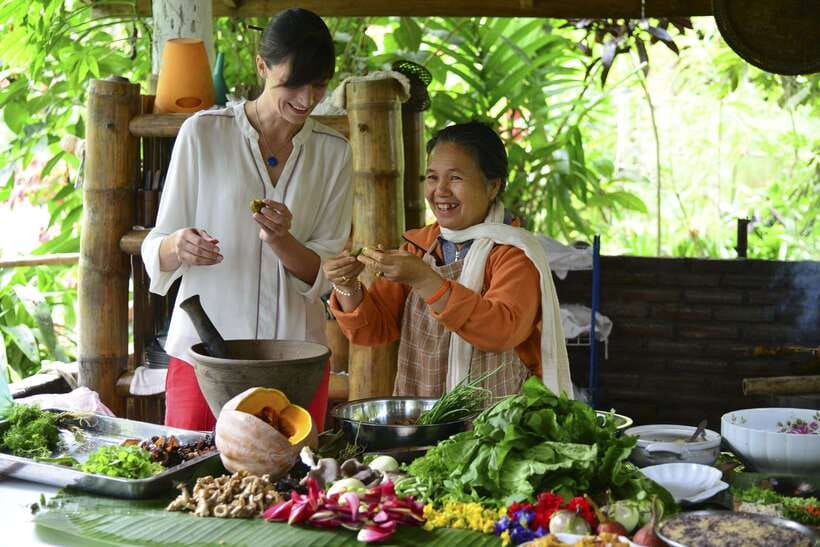
This is the part that usually makes Lao cooking click. You’re not just buying ingredients blindly. A chef leads you through the market stalls and points out what different items are used for, including local herbs and vegetables that show up in common Lao flavor patterns: sour, salty, fresh, and aromatic.
You’ll also notice the practical side of the class: you learn what to look for, what to avoid, and how small ingredient choices affect taste later. Even if you’re an experienced eater, market context changes how you cook. It’s the difference between copying a recipe and understanding the logic behind it.
If you’d like to bring home something more than food, this is where it starts. Several dishes in Lao cuisine depend on specific herbs and pantry staples. Seeing them up close (and hearing how a local chef uses them) is the shortcut.
The Short Sightseeing Pause While the Kitchen Gets Ready
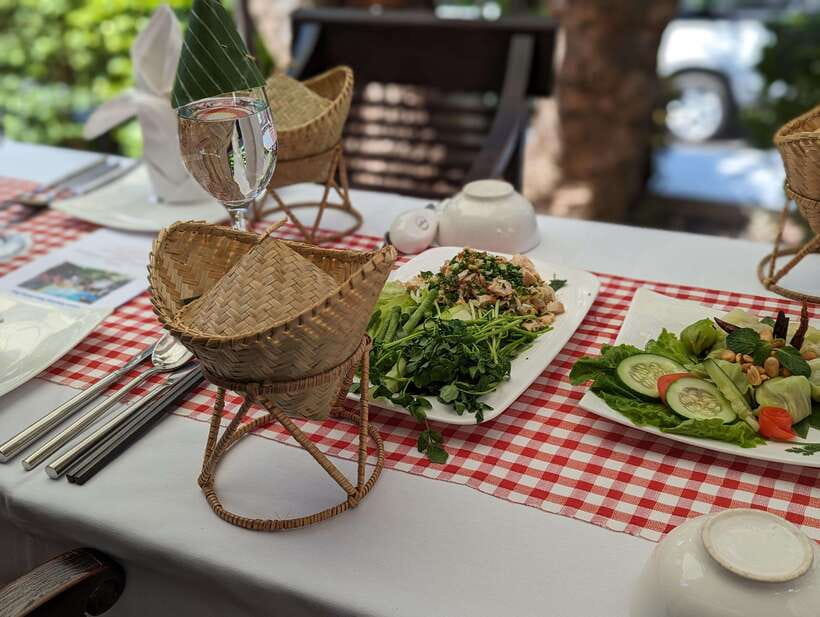
After the market, you’re not sent straight into cooking drills. There’s a sightseeing break (about an hour). In practice, this often means time for a casual wander—temple area time, nearby cafes, and a chance to reset before the hands-on work begins.
There’s also something important to know: the class often includes a period where the main prep is completed before you start your cooking phase. In real-world examples from past groups, you may spend time waiting or wandering while chefs do preliminary work, then return later for the cooking steps.
That pause is not wasted. It helps keep the class from turning into chaos, and it gives you time to see more of Luang Prabang’s calm morning energy. But it’s also why you should wear comfortable shoes and expect a relaxed pace rather than a nonstop activity.
Cooking at Your Speed: Hands-On Lao Dishes With a Chef at Your Side
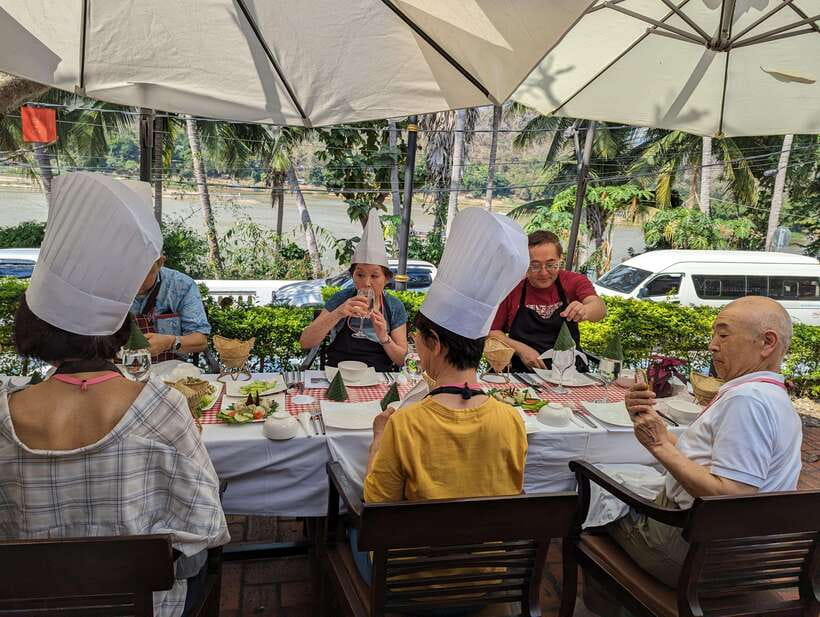
Once you’re back at the cooking station (linked to the Alame Restaurant setup), you move from shopping to doing. This is a hands-on class limited to 10 participants, which is a big deal in a country where cooking sessions can get crowded fast.
You’ll typically cook multiple dishes as a group, with guidance and step-by-step instruction in English. In previous sessions, chefs like Noi have explained techniques clearly and helped people move through tasks without feeling rushed. That’s especially helpful if you’re a beginner or if you’re traveling solo and don’t want to feel like you’re standing out.
What the cooking can include
Based on dish patterns described by prior participants, the menu commonly features flavors you’ll recognize right away in Lao food, such as:
- Sour soups and herb-heavy mixes (often with pork and mushrooms in examples)
- Laab-style salads (including chicken laab examples), where herbs and seasoning are a big part of the final taste
- Sticky-rice components, sometimes described as a featured step in the cooking flow
- Coconut-based dessert items, with coconut milk showing up in multiple examples
Even when the exact dish list varies, the class teaches the method behind the taste. You learn how Lao cooking builds flavor using herbs, sour notes, and balanced seasoning—not just heat.
Expect teamwork (and a bit of shared chopping)
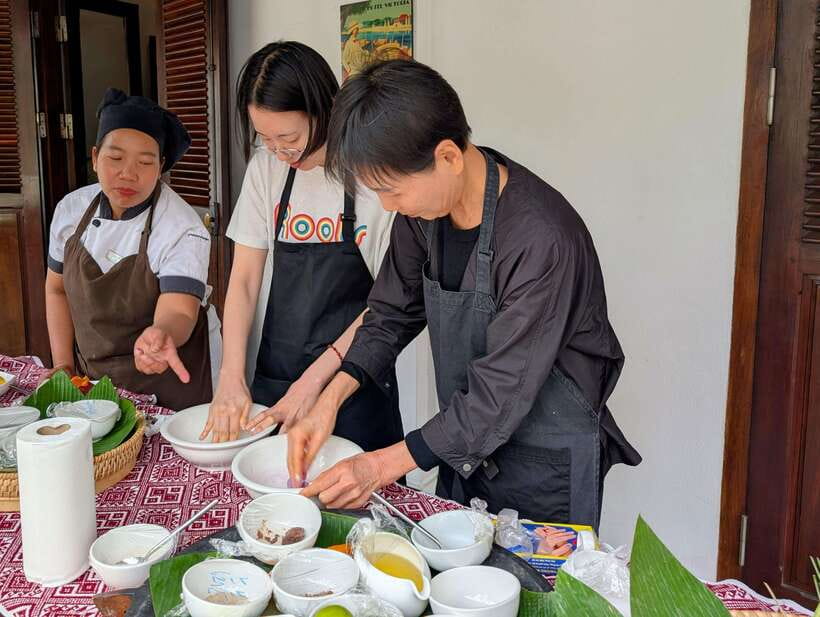
In a small group setting, the class runs like a coordinated kitchen. Not every guest handles every single step of every dish. Some ingredients may already be prepped, and you’ll contribute to the parts that matter most—cutting, mixing, seasoning, and assembling.
If you’re the type who wants full control from start to finish, ask questions during the steps you’re doing. The chef’s explanations (names, ingredients, and why you’re adding them) are the real takeaway.
Lunch Overlooking the Mekong: Eating Lao Food Without the Performance
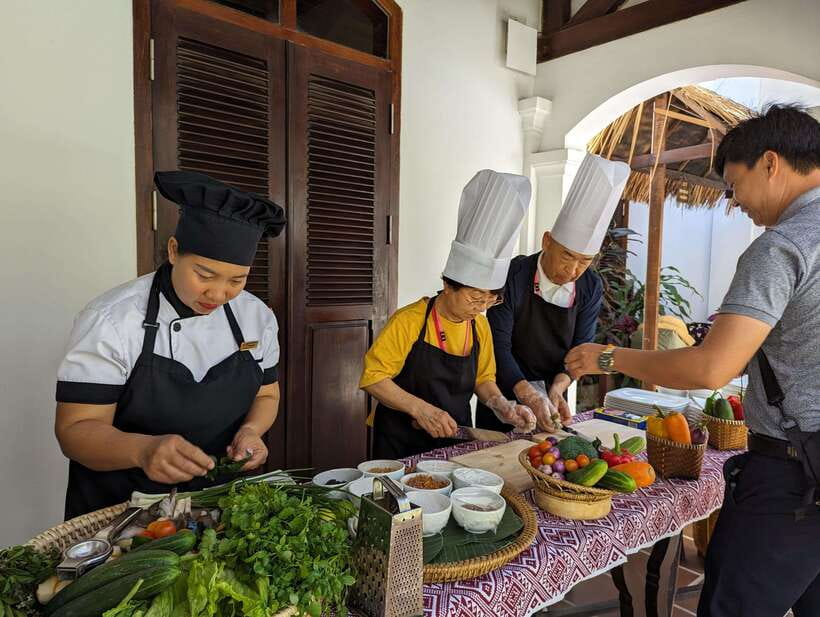
The best part of any cooking class is always the same: you eat your work. Here, lunch happens at a peaceful riverside restaurant setup near the Alame area, with the Mekong view adding a relaxing endnote to the day.
This lunch isn’t just a plate delivery. It’s the moment you connect the flavor words you learned at the market with what you actually taste. When your laab salad hits that salty-sour-herb balance, or when the coconut dessert feels creamy and sweet, you understand why those herbs mattered.
A few practical notes:
- Drinks are not included, so plan to buy water or other drinks separately.
- You’ll likely eat outdoors or in an open-air style space, so dress for morning to midday change in temperature.
- Vegetarian options are available if you notify the operator in advance, so you can still enjoy the experience without getting the short end of the menu.
And yes, the food can be generous. People often come away feeling like the meal alone would have been worth it—then add the cooking and market walk, and the value improves.
Price and Value: Is $45 for 4 Hours a Smart Deal?
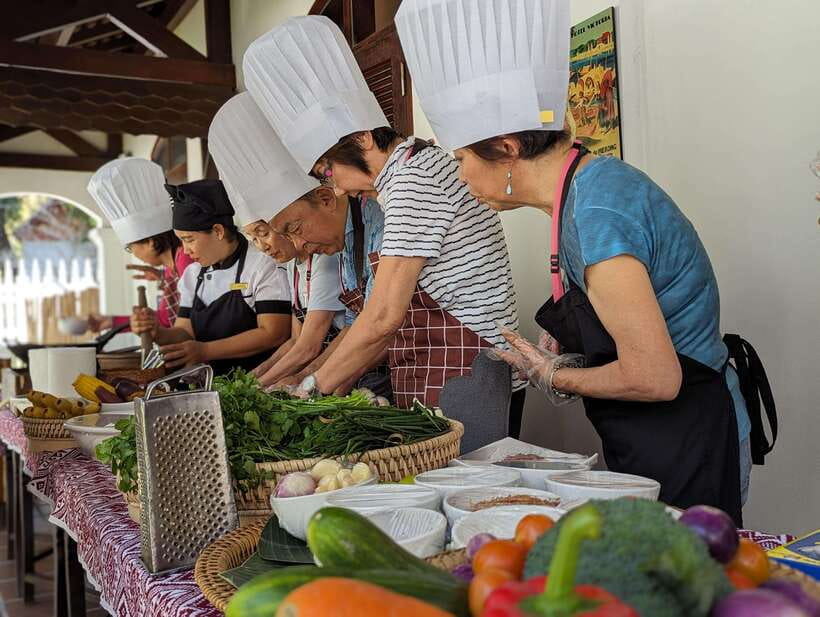
At $45 per person for about 4 hours, this class sits in the “serious value” zone for Luang Prabang. Why? Because you’re paying for three real components bundled together:
- A guided morning market tour (with chef input)
- A hands-on cooking lesson with English instruction
- A sit-down lunch where you eat what you made
Many cooking classes charge a similar amount but cut the market element short or skip meaningful ingredient explanation. Here, the market is a central feature. That’s what turns cooking into learning instead of just following steps.
Could it be better? Sure. The one consideration is the downtime/prep period. If you land at a time when you’re waiting longer than you expect, it can feel less hands-on than you hoped. Still, that gap is often there to keep the quality high and the cooking experience smooth.
Bottom line: if you like food and you enjoy learning through doing, the price makes sense.
Who Should Book This Lao Cooking Class (and Who Might Not Love It)
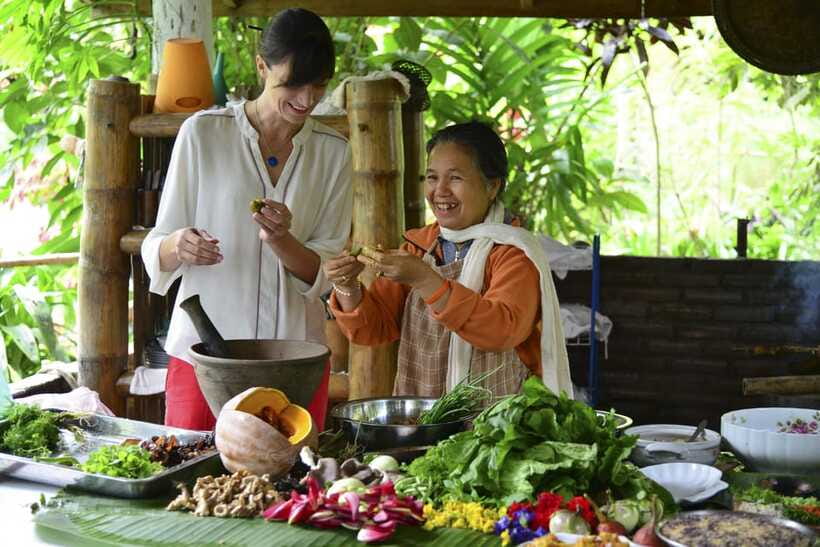
This is a strong match if you:
- Want an authentic Lao food day in Luang Prabang, not just a meal tasting
- Enjoy markets because ingredient choice is part of the fun
- Want a small group experience (max 10) with English instruction
- Are happy to stand and work in an active, hands-on way
- Want recipes you can take home and recreate
It may not be ideal if you:
- Need wheelchair access (it’s not suitable for wheelchair users)
- Don’t do well with extended standing
- Want zero waiting time between market and cooking
Also, bring a hat. It’s a small thing, but Luang Prabang sun adds up quickly during morning activities.
Helpful Tips to Make Your Day Smoother
These are the practical choices that tend to matter most in Luang Prabang cooking classes:
- Wear comfortable shoes. You’ll be on your feet during market time and cooking.
- Plan for sun and heat. A hat helps.
- Go into the market with curiosity, not a shopping list. The chef’s guidance is the point.
- If you’re vegetarian, notify the operator ahead of time so the kitchen can adjust.
- Save room in your schedule for a calm afternoon after lunch. You’ll likely eat more than you expect.
And if you’re traveling with friends, this is also a good split activity. You’ll talk about flavors right away—laab seasoning, sour soup herb mixes, coconut sweetness—and it becomes a shared memory.
Should You Book? My Decision Checklist for Luang Prabang
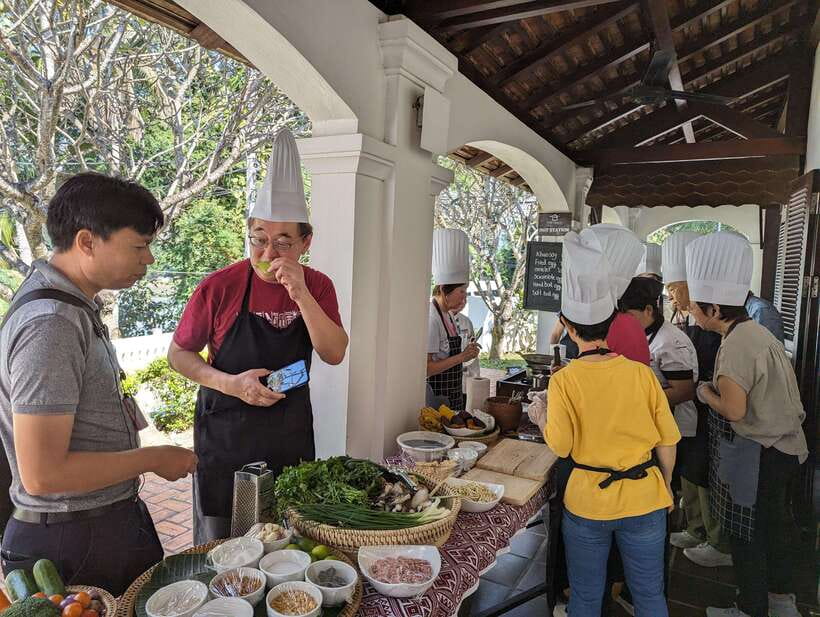
Book it if you want a Lao food experience that connects the dots: market → cooking → lunch. The setting at the former royal palace grounds plus the chef-led market walk makes it more than a typical cooking class.
Skip it if you dislike waiting, hate standing for long stretches, or need full accessibility support. In those cases, a simpler meal tasting might fit your style better.
If you’re on the fence, here’s the quick test: do you want to learn how Lao flavors work, not just eat them? If yes, this class is a smart use of your time.
FAQ
FAQ
How long is the Luang Prabang cooking class?
It runs for about 4 hours.
What does the $45 per person price include?
The package includes a morning market tour (by bicycle or tuk-tuk), the cooking class, and lunch. Tip and drinks are not included.
How many people are in the group?
It’s a small group with a limit of 10 participants.
Is the class taught in English?
Yes. The instructor provides instruction in English.
Where does the experience start?
You meet at Kounxoau Rd, Ban Phonehueng, Luang Prabang, near Wat Xiengthong Temple, at Victoria Xiengthong Palace.
What kinds of dishes will I cook?
You’ll learn to prepare traditional Lao dishes during the cooking session. Past classes have included items like laab salad, sour soup, sticky rice, and a coconut-based dessert.
Are vegetarian options available?
Yes, vegetarian options are available if you notify the operator in advance.
Do I need to bring anything?
Bring a hat. You should also be comfortable standing for extended periods.
Can I cancel or pay later?
Free cancellation is available up to 24 hours in advance for a full refund, and you can reserve now and pay later.