REVIEW · MADRID
Madrid: Guided Visit to the Royal Palace
Book on GetYourGuide →Operated by DE PASEO · Bookable on GetYourGuide
The Royal Palace hits different when someone explains it. In 1.5 hours, I found the skip-the-line entry and the high-impact rooms (from the Sabatini staircase to the throne room) make this feel focused instead of rushed. One drawback to plan around: the meeting point is off-site, so you’ll want to arrive early and find the guide with the white umbrella.
I like that the tour leans on concrete details—art, architecture, and how the monarchy used these spaces—rather than just pointing at rooms. If you’re expecting to wander freely through hundreds of chambers, this isn’t that kind of visit, but it’s a strong way to see the palace’s big moments without getting lost.
In This Review
- Key Things I’d Book This For
- Royal Palace Entry: Finding the Guide at Isabel II Square
- 1.5 Hours That Doesn’t Waste Your Time
- The Sabatini Staircase and Reception Room: Where Status Gets Built
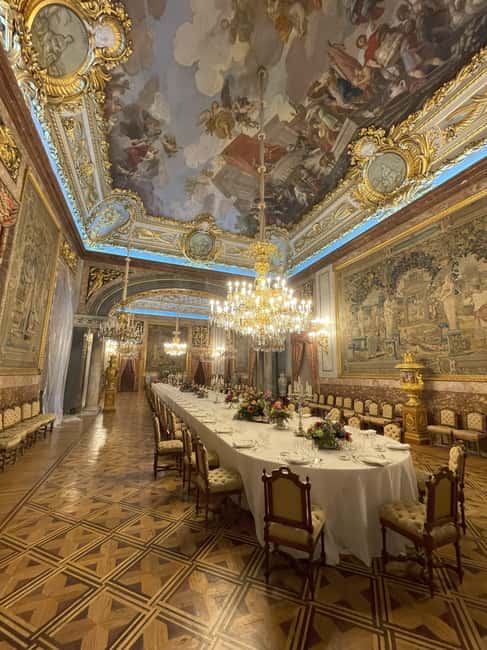
- Private Royal Rooms and the Great Banqueting Hall
- Porcelain Room and Royal Chapel Fresco by Corrado Giaquinto
- Throne Room Ceilings by Giovanni Battista Tiepolo
- What You Really See: Art, Frescoes, and Stringed Instruments
- Price and Value: Why $40 Can Be a Good Deal Here
- Timing Tips That Make the Tour Feel Easier
- Who This Tour Fits Best (and Who Might Want Something Else)
- Should You Book the Royal Palace Guided Visit?
- FAQ
- How long is the Royal Palace of Madrid guided tour?
- What is the meeting point for the tour?
- Is there skip-the-line access?
- What languages are available?
- Do I need to bring cash for lockers?
- Can I bring food or drinks inside the palace?
- What should I do with large bags or items?
- Is the tour wheelchair accessible?
- Is free cancellation available?
- Can I reserve now and pay later?
Key Things I’d Book This For
- Skip-the-line via a separate entrance, so you spend time inside, not waiting at the main door
- A tight 1.5-hour route through the most impressive spaces, including the throne room
- Standout visual stops like the royal chapel fresco by Corrado Giaquinto and ceiling painting by Giovanni Battista Tiepolo
- Royal “show rooms” and private rooms in one circuit: queen and king’s private areas plus the great banqueting hall
- Small-group feel in practice (one tour ran about 8 people), which helps the guide keep a good pace
- Friendly, clear guiding style, with examples of guides like Pacho and Tamar delivering history and room-by-room context
Royal Palace Entry: Finding the Guide at Isabel II Square
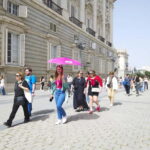
This tour starts at Isabel II Square, right by the Isabel II statue (Plaza de Isabel II, 5). The guide carries a white umbrella, and that’s your quickest way to anchor yourself if you’re coming in from the metro or a nearby stroll.
Here’s the practical part: the meeting point is not inside the palace area itself. You and the group walk over together to use a side entrance for faster access. If you show up right at start time, you can lose the early momentum—some people have needed extra time simply to locate the meeting point and contact the operator.
My advice: arrive 15–20 minutes early, grab a coffee nearby, then look for the umbrella. It’s the simplest way to turn the morning (or afternoon) into a smooth start rather than a scavenger hunt.
You can also read our reviews of more tours and experiences in Madrid.


1.5 Hours That Doesn’t Waste Your Time

The duration is about 90 minutes, which matters because the Royal Palace has more than 300 rooms. You can’t possibly see everything in a short guided visit, so the value here is in what the guide chooses to foreground.
In this tour, you get a concentrated route through the palace’s “wow” spaces:
- major ceremonial areas where power is displayed
- private royal areas (queen and king)
- major art moments like frescoes and decorative ceilings
You’ll also move at a pace set for a group that wants clarity, not a sprint. Still, remember one reality: if the palace is busy (it can be), your route may feel slightly tighter than usual. Plan to be flexible and enjoy the fact that the guide is doing the sorting for you.
The Sabatini Staircase and Reception Room: Where Status Gets Built
One of the most satisfying early moments is climbing the exceptional staircase designed by Francesco Sabatini. It’s not just an architectural flex—this kind of staircase is part of how palaces perform. It creates drama, controls movement, and makes arrival feel like an event.
Right after, you’ll step into the reception room where international meetings are held with King Felipe as the host. That detail is worth paying attention to. It connects the decorative surroundings to real political use, so the room stops being a pretty interior and becomes part of Spain’s ceremonial story.
If you like learning what you’re looking at—how design supports authority—this is one of the best segments of the tour.
Private Royal Rooms and the Great Banqueting Hall
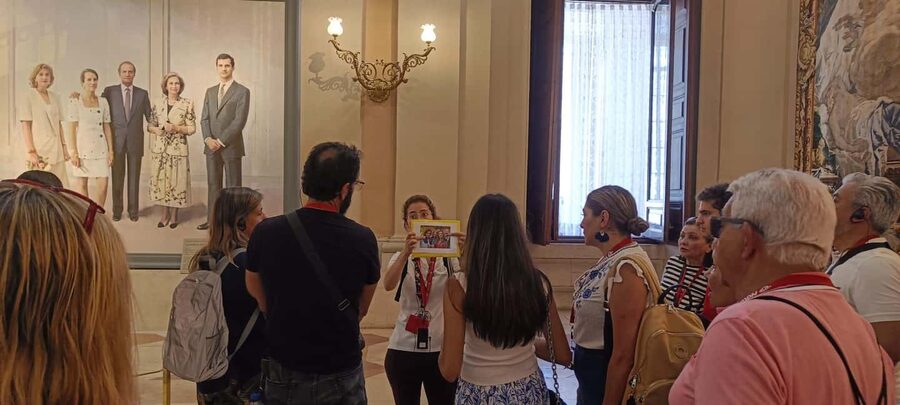
After the formal reception space, the tour shifts into the palace’s more personal side: the private rooms of the queen and king, followed by the great banqueting hall.
This is where the guided format helps. In a self-guided visit, private-room areas can feel like just another corridor of grandeur. With a guide, you get the cues: what each space was for and why those rooms mattered.
The banqueting hall is the kind of room where you can feel how ceremonies worked—where meals were not only meals, but public theater. You’ll also hear how these spaces fit within the broader Spanish monarchy story, with the guide tying architecture to the people who used it.
If you’re the type who gets more out of context than checklists, you’ll likely enjoy this portion a lot.
Porcelain Room and Royal Chapel Fresco by Corrado Giaquinto
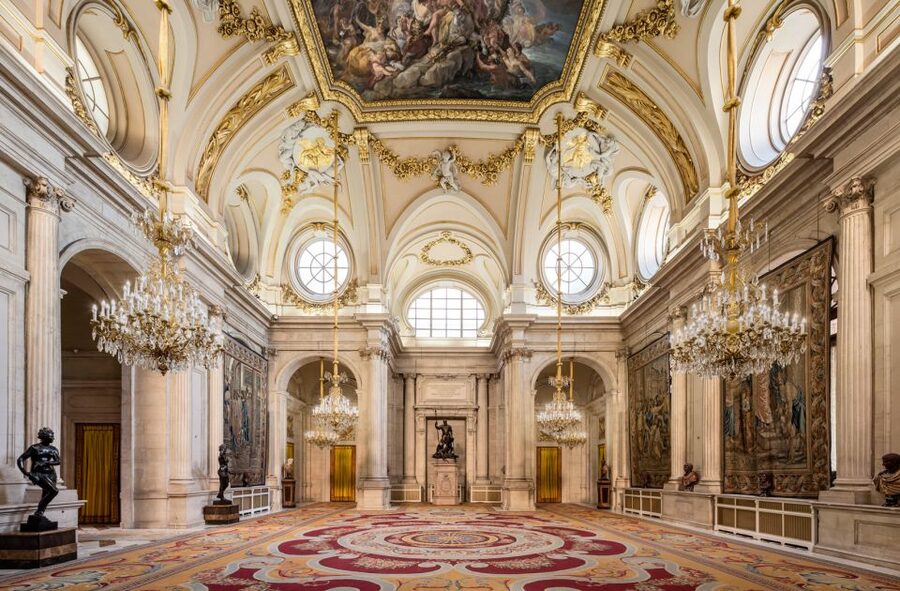
The route includes two high-caliber art stops: the porcelain room and the royal chapel.
The porcelain room is visually memorable because it turns elegance into an object—surfaces and materials that signal refinement. Even if you’re not an art specialist, it’s the kind of room where the “why it’s here” becomes clearer once the guide frames it as part of royal display.
Then comes the royal chapel, with an extraordinary fresco painted by Corrado Giaquinto. This is a standout because frescoes reward attention. A good guide helps you notice the style, the composition, and how the chapel’s decoration amplifies the sacred tone the monarchy wanted to project.
This segment is often the “pause and look” section of the tour—when you’ll want a moment to slow down and actually take in what’s on the ceiling and walls.



Throne Room Ceilings by Giovanni Battista Tiepolo

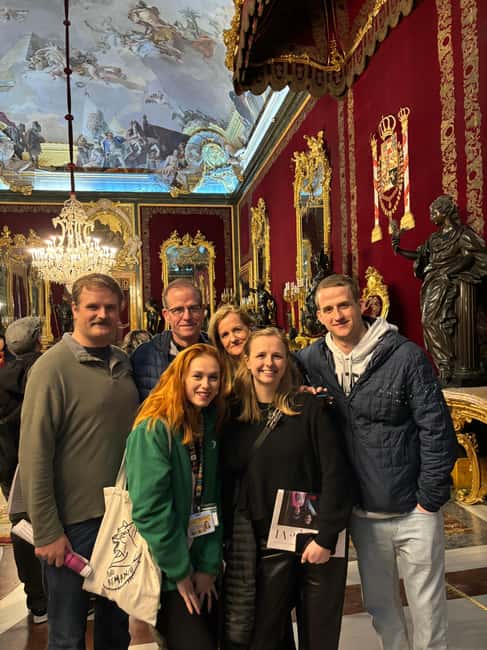
The tour ends (or nearly ends) in one of the palace’s biggest headline areas: the throne room. You’ll be looking up at gorgeous ceilings painted by Giovanni Battista Tiepolo, which is the kind of detail that turns a large room into something personal.
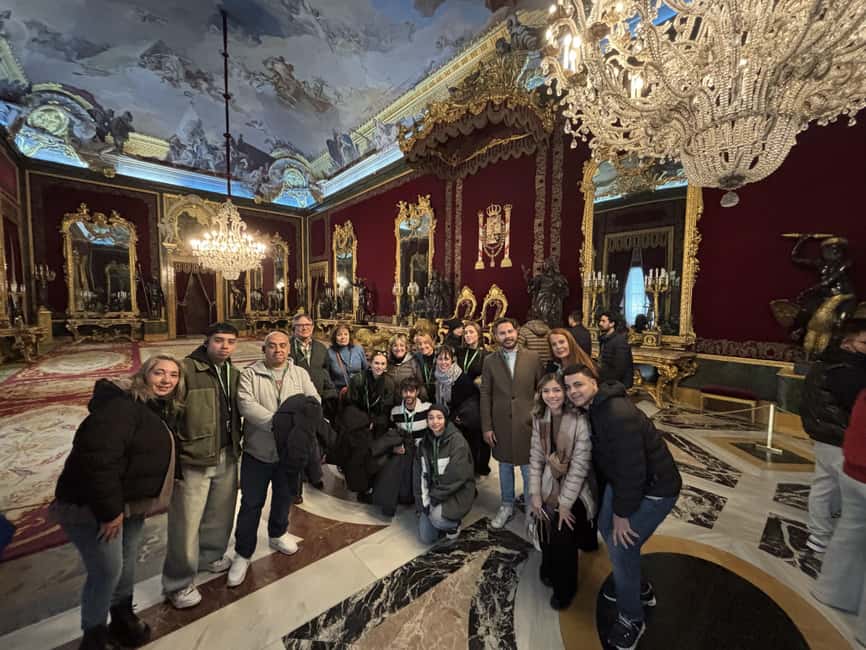
The throne room is also where the tour delivers on its promise about wealth. You’ll see ornate finishes and standout materials—marbled interiors and mahogany doors and windows—plus the painted ceiling work that makes the space feel almost theatrical.
If you’re trying to understand why the Royal Palace became one of Europe’s major showplaces, this room makes the argument for you in seconds.
What You Really See: Art, Frescoes, and Stringed Instruments
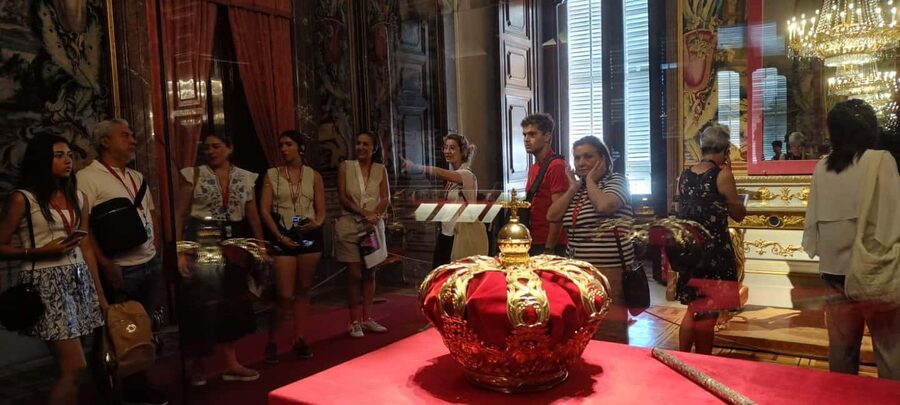
Beyond the major ceremonial rooms and frescoes, you’ll also encounter a variety of artworks, including frescoes and a collection of stringed instruments.
That instrument collection adds variety in a smart way. It prevents the tour from becoming only architecture and royal portraits. Instead, it hints at court life—the sounds and culture that filled the palace beyond ceremonies.
If you love music history, this stop gives you a nice change of pace. If you don’t, it still breaks up the intensity of the most gilded rooms, which makes the overall 1.5 hours feel more balanced.
Price and Value: Why $40 Can Be a Good Deal Here
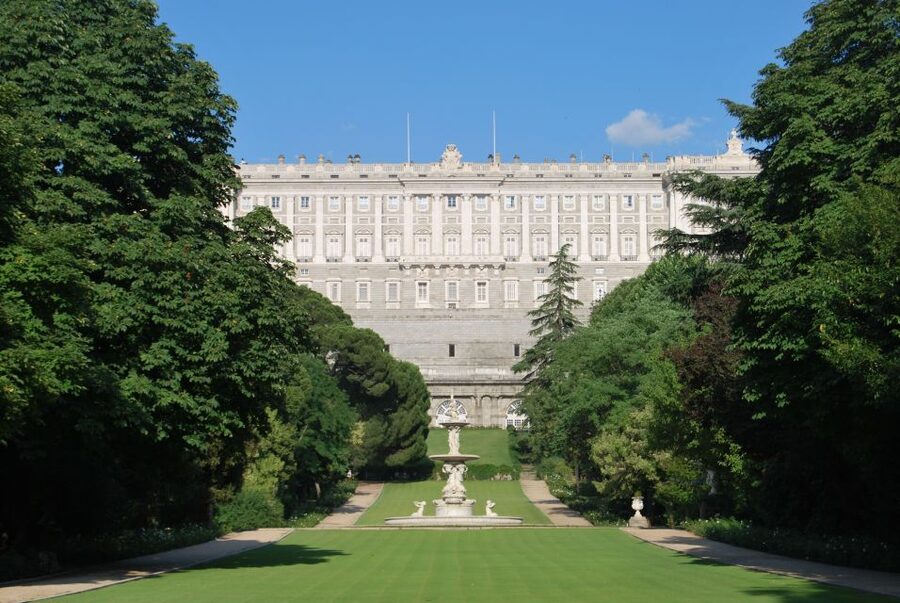
This tour is listed at $40 per person and lasts about 1.5 hours. On the surface, it can sound pricey for a short walk-through. But here’s the value logic that makes it work:
- You get skip-the-line access through a separate entrance. That time is real time, especially at peak hours.
- You’re paying for an expert bilingual guide who points out what matters—Sabatini’s staircase, Giaquinto’s fresco, Tiepolo’s ceiling, and the way rooms connect to monarchy ceremonies.
- The palace is huge. Without guidance, you’re more likely to miss key rooms or spend time guessing what’s worth your energy.
So yes, it’s not the cheapest way in. But for a short Madrid visit, it’s one of the better “spend money to save time” choices—especially if you don’t want to spend half your day planning your own route through an enormous site.
Timing Tips That Make the Tour Feel Easier
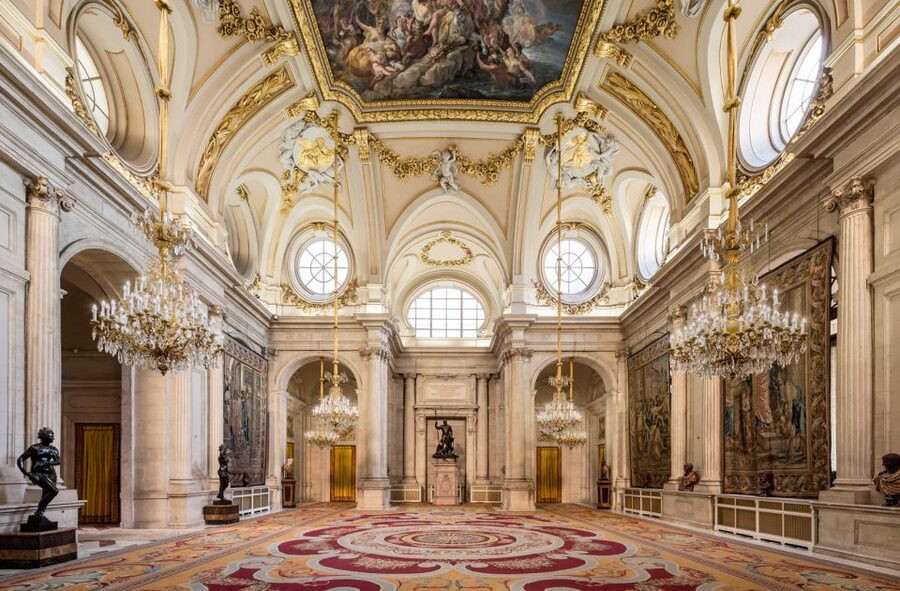
Because the meeting point is off-site, timing affects everything.
Here are the practical moves that help:
- Arrive early enough to find Plaza de Isabel II calmly.
- Expect security screening when you enter palace grounds, and plan to pass through it before you settle in.
- Bring a small amount of cash or coins for lockers if needed. There are lockers by the hall, and I recommend having a 1 Euro coin ready, since it’s used and refunded at exit.
Also note the policy: food and drinks aren’t permitted inside, and large items and bags must be left in the locker room next to the hall. If you’re traveling with a bigger daypack, handle that before you start expecting to move quickly through rooms.
Who This Tour Fits Best (and Who Might Want Something Else)
This guided Royal Palace tour is a great fit if you:
- want to see the most important rooms without building your own itinerary
- like explanations that connect art and architecture to real historical use
- prefer a small-group feel and a steady pace
It’s also a strong option for first-timers in Madrid who want one “big ticket” historic interior before moving on to neighborhoods like La Latina or Malasaña later.
On the other hand, if your travel style is slow wandering—linger in side rooms, chase every corridor, and take your time with the full palace scale—then 90 minutes may feel tight. You might end up wanting a second, self-paced visit later.
Should You Book the Royal Palace Guided Visit?
Yes, if your goal is to understand what you’re seeing and get into the palace efficiently. The strongest reasons to book are the skip-the-line access, the guide-led selection of key rooms, and the fact that you’ll get direct attention on major art moments—like the chapel fresco by Corrado Giaquinto and the throne room ceiling by Giovanni Battista Tiepolo.
I’d skip it only if you know you want a long, self-directed stroll through as many rooms as possible. If that’s you, set aside more time and go on your own.
Otherwise, for a $40, 1.5-hour focused visit, this is a solid way to experience the Royal Palace without turning your day into a logistics puzzle.
FAQ
How long is the Royal Palace of Madrid guided tour?
The tour lasts about 1.5 hours.
What is the meeting point for the tour?
Meet at Isabel II Square, near the Isabel II statue, at Plaza de Isabel II, 5, 28013 Madrid, Spain. The guide will be carrying a white umbrella.
Is there skip-the-line access?
Yes. You enter through a separate entrance to skip the main line.
What languages are available?
Tours are available in Spanish and English, and in some exceptional cases the tour may be bilingual.
Do I need to bring cash for lockers?
You might need a 1 Euro coin for the lockers, which is refunded upon exit. (Lockers are available adjacent to the hall.)
Can I bring food or drinks inside the palace?
No. Food and drinks are not permitted inside.
What should I do with large bags or items?
Large items and bags must be left in the locker room adjacent to the Hall.
Is the tour wheelchair accessible?
Yes, it is wheelchair accessible.
Is free cancellation available?
Yes. You can cancel up to 24 hours in advance for a full refund.
Can I reserve now and pay later?
Yes. There is a reserve now & pay later option.