REVIEW · MANTUA
Mantova City Center and Ducal Palace: 3-Hour Guided Tour
Book on GetYourGuide →Operated by Manuela Roversi · Bookable on GetYourGuide
Mantova feels like a city built on water. This 3-hour guided walk ties the lakes and canals of the Mincio River region to the art and power of the Gonzaga family. You’ll also get the big-picture feel of why Mantova is a UNESCO World Heritage Site.
Two things I really like: the chance to see the Ducal Palace as a connected complex of courts, galleries, and rooms (not just one museum stop), and a guide-led route that helps you read the city fast. The guide (Manuela Roversi is the standout name attached to many top ratings) brings the places to life with practical context, not just facts.
One thing to plan around: churches have rules and hours. You’ll need shoulders covered (shorts aren’t allowed), and some churches close at noon and reopen at 15:00, with no entry during services.
In This Review
- Key highlights to look for
- Mantova’s water-and-stone setting: why this walking tour feels special
- Starting at Rigoletto’s House in Piazza Sordello: your orientation anchor
- Gonzaga connections through the piazzas: how the route actually works
- Piazza delle Erbe, the Clock Tower, and the church circuit (with dress rules)
- Ducal Palace: the 14th–17th century complex that changed what a palace could be
- Mantegna’s Camera degli Sposi: what to expect and why it can be tricky
- Price and value: what you’re paying for in a $124 group tour
- Timing, group size, and “how not to lose the best moments”
- What the guide does right: Manuela Roversi’s style
- Who this tour fits best
- Should you book this Mantova City Center and Ducal Palace tour?
- FAQ
- How long is the guided tour?
- Where does the tour start?
- Is admission to the Ducal Palace included?
- Do I need tickets for the city-center walking part?
- What should I wear for church visits?
- Is the Ducal Palace free on any day?
Key highlights to look for
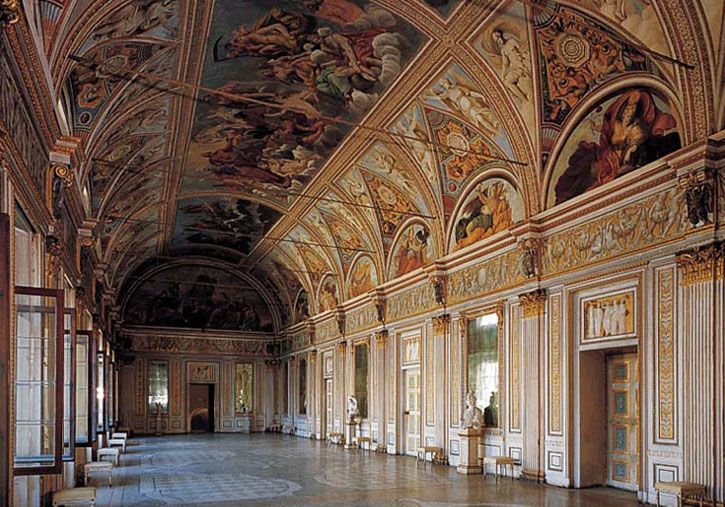
- Gonzaga power in motion: you’ll connect palaces, piazzas, and churches to one ruling family’s art projects
- Ducal Palace scale: corridors, galleries, inner courts and gardens across about 1,000 rooms
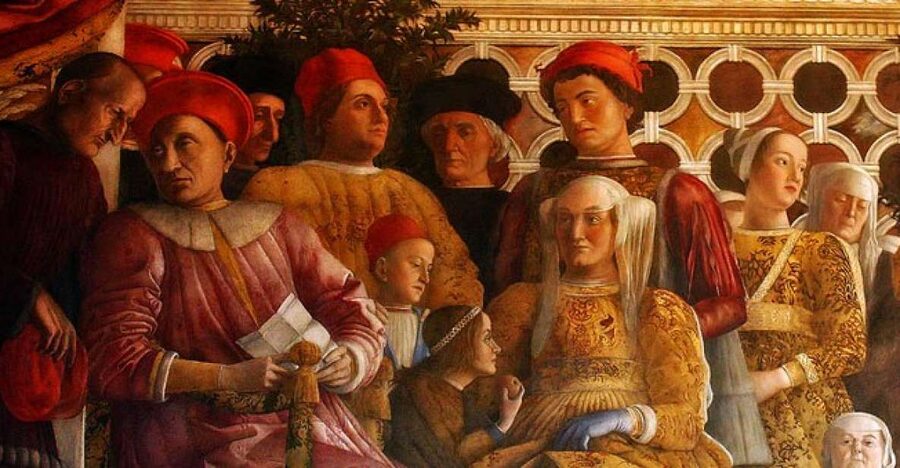
- Mantegna’s Camera degli Sposi: the famous fresco room at the heart of the visit
- A water-and-city story: Mantova’s lakes, the Mincio River, and the medieval canal known as Rio shape the town
- A clear city-center loop: Piazza Castello, Piazza Santa Barbara, Piazza delle Erbe, and more in a tight walking plan
- A guide who adjusts: Manuela Roversi is noted for patience and time flexibility if something runs late
Mantova’s water-and-stone setting: why this walking tour feels special
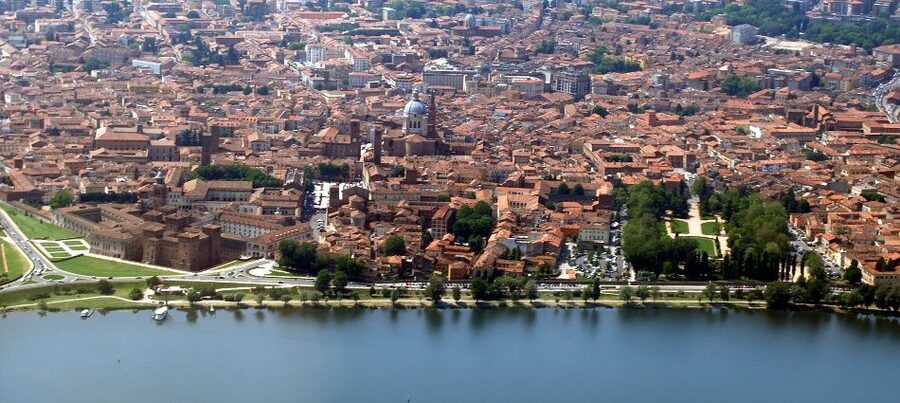
Mantova (Mantua) sits in a watery pocket. The city is surrounded by three small lakes, and the relationship between the town and water isn’t decorative—it’s cultural. As you walk the center, you start to see why the Mincio River, the lakes, and the medieval canal known as Rio show up in local traditions and the city’s layout.
This is a tour built for orientation. You don’t just hop from landmark to landmark. You learn how the geography influences where families built, where crowds gathered in piazzas, and how major religious buildings fit into the same urban system.
You’ll also notice how art and politics share the same address. The Gonzaga court didn’t treat art as a side hobby; it turned the family home into a long-running project of architecture and decoration. That idea makes the Ducal Palace visit much easier to understand later.
You can also read our reviews of more tours and experiences in Mantua.
Starting at Rigoletto’s House in Piazza Sordello: your orientation anchor
The walk starts at Rigoletto’s House, Piazza Sordello 23, near the inner courtyard entrance. This is a smart starting point because Piazza Sordello isn’t just scenic—it’s a visual setup for everything that follows.
From the start, you’re placed in the right frame: the Ducal Palace façade in view, the Cathedral nearby, and the maze of streets that led (and still leads) people between civic, religious, and ducal spaces.
One practical plus: since the tour ends back at the meeting point, you’re not stuck wandering to regroup. It’s a “see the center in one guided rhythm” kind of plan.
Gonzaga connections through the piazzas: how the route actually works
A good walking tour doesn’t feel random. This one moves along a logical arc of historic spaces you can connect on your own afterward.
Here’s the kind of sequence you’ll cover:
- Piazza Castello, plus stops like Piazza Santa Barbara and Piazza Lega Lombarda
- A look at Saint George Castle (mainly from the outside)
- Piazza Sordello viewpoints of the Ducal Palace façade and the surrounding landmarks
- Vicolo Bonacolsi and nearby squares that help you picture how people moved through the ducal world
Then you shift into the civic heart:
- Piazza Broletto, where you’ll see the medieval Palazzo del Podestà and Palazzo del Massaro, plus the Arengario
- Piazza delle Erbe, with its surrounding buildings and key city landmarks
The biggest value here is that you learn to “read” Mantova. You stop thinking of each square as a photo spot and start thinking of it as a stage: commerce in one place, civic governance in another, and ducal display close by.
Piazza delle Erbe, the Clock Tower, and the church circuit (with dress rules)
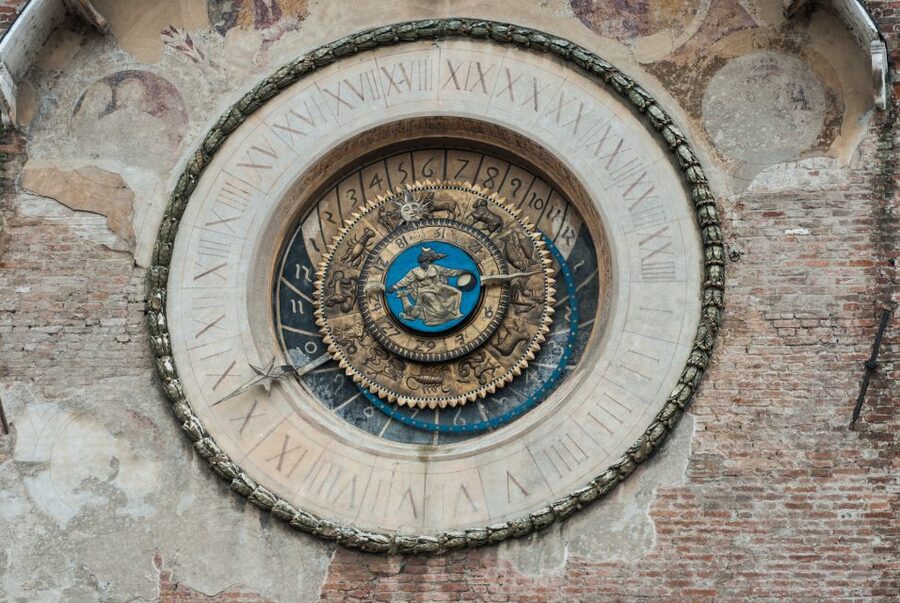
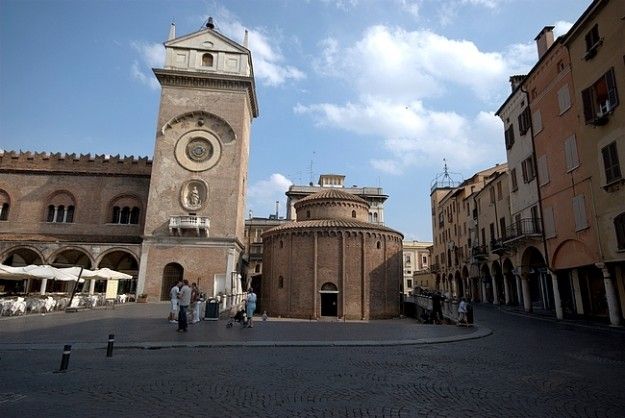
Piazza delle Erbe is where you’ll feel the center tighten around you. You’ll see the Palazzo della Ragione, the Clock Tower, and the Saint Lorenzo Church—all clustered in a way that makes the square’s importance easy to grasp.
From there the tour continues through another layer of the city’s identity:
- the façade of the Merchant’s House
- Piazza Mantegna
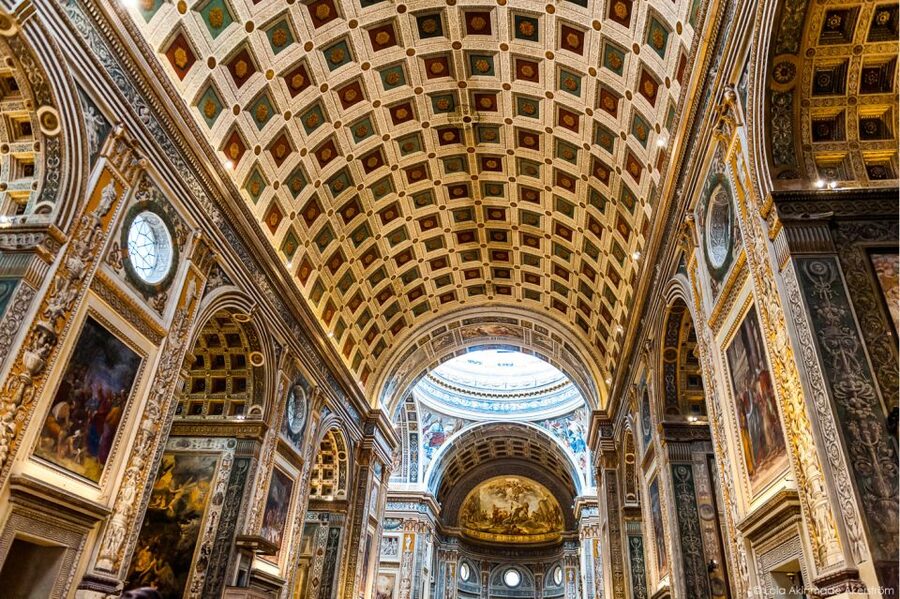
- Basilica of Sant’Andrea (by Leon Battista Alberti)
- Piazza Leon Battista Alberti and the former cloister of the Sant’Andrea Monastery
Now, the practical bit that can genuinely affect your experience: church etiquette matters. The tour notes that shoulders must be covered when entering churches. A wide sarong is suggested, and shorts aren’t allowed.
Also, churches close around noon and reopen at 15:00. And during services, entrance to visit churches isn’t permitted. That means your tour day timing matters if you want every possible church moment.
If you’re traveling in warmer weather, pack a light layer you can throw on fast. It turns “oops” into “we’re good.”
Ducal Palace: the 14th–17th century complex that changed what a palace could be
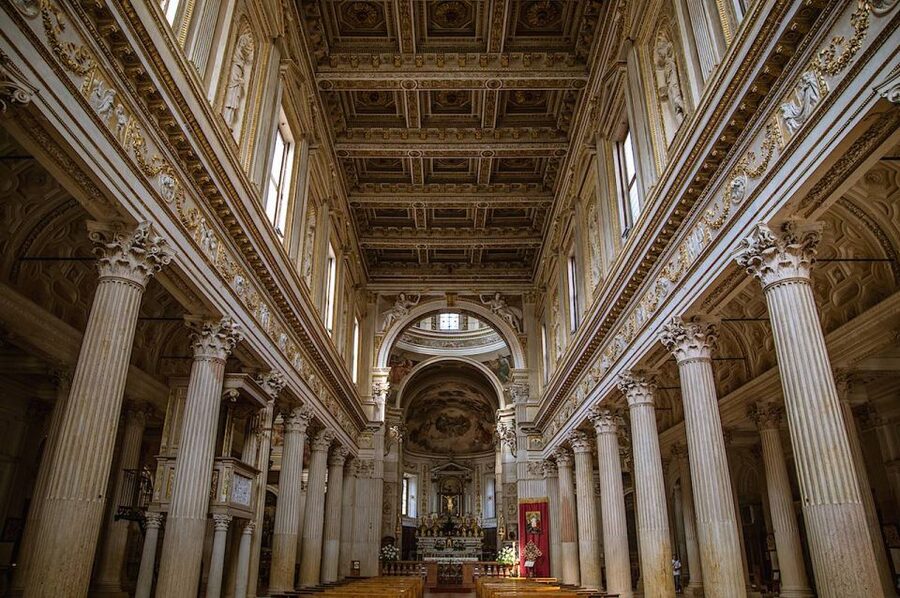
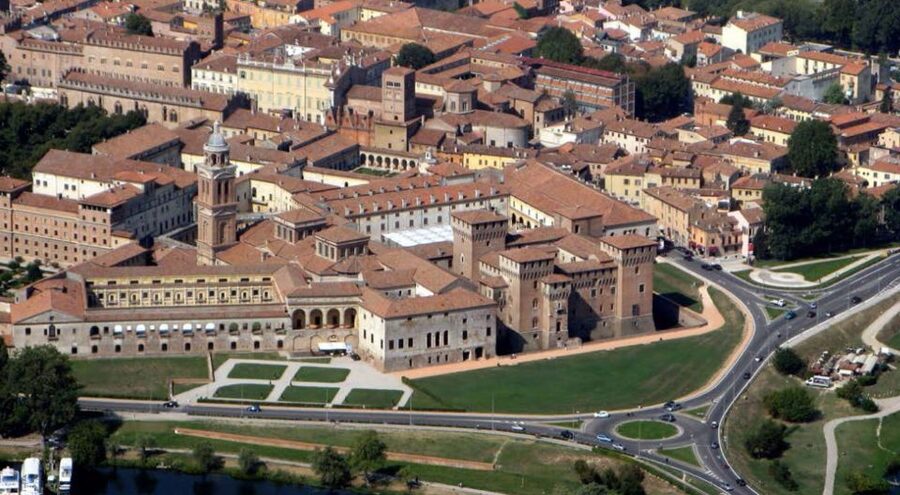
The Ducal Palace is the main event, and the tour is designed to make it understandable in just a few hours. The complex was built between the 14th and 17th centuries as the Gonzaga family’s royal residence—the power base in the capital of their duchy.
A few details help you picture the scale:
- buildings are linked by corridors and galleries
- the complex includes inner courts and gardens
- it covers roughly 34,000 square meters
- it includes about 1,000 rooms
You’re not expected to see everything. Instead, you’re walked through the “logic” of the palace—how spaces connect and why that matters for art, display, and daily life at court.
You’ll focus especially on the Ducal Palace’s major artistic highlights, including the fresco work linked to the famous room, but you’ll also hear about other significant architectural and painted elements. That matters because it stops the visit from becoming a single-room sprint.
Mantegna’s Camera degli Sposi: what to expect and why it can be tricky
Mantegna’s frescoes in the Camera degli Sposi (Wedding Room) are the headline draw. The tour framework puts this at the center of your visit, since it’s the room most famous in the palace complex.
Here’s the consideration: the palace has limits that can affect access. It’s noted that the Castle and Ducal Palace limit entrance to groups not larger than 25 people. And on the first Sunday of every month, entry to the Ducal Palace is free of charge—but that day can be unpredictable.
On that first Sunday, it can be impossible to enter the Camera degli Sposi because only 1,500 people per day can enter that room. Also, the free entry can’t be booked in advance.
If you’re traveling on a tight schedule (or you truly want that specific room), a paid ticket path is usually the safer move.
Price and value: what you’re paying for in a $124 group tour
The price is $124.61 per group up to 5, for a 3-hour guided walking tour with included assistance in booking Ducal Palace admission. Entrance fees are not included.
So where does the value come from?
- You’re getting a guided route that keeps you from wasting time figuring out how to connect Mantova’s key squares.
- You get context that makes the Ducal Palace feel like part of the city, not a separate island.
- You get help with palace admission, which saves effort when you’re trying to line up a timed museum visit during a walking day.
What you should budget separately:
- Ducal Palace entrance fee: €13
- Bibiena Theatre ticket: €2 (optional)
Also remember: churches generally don’t involve ticketing for the city-center walk itself, but you still need to be mindful of access limits, dress code, and service times.
For a couple or small group with limited time, this is the kind of tour that can “pay for itself” by reducing dead time. For a solo traveler who’s extremely comfortable navigating on your own and likes to wander at random, you might feel the value drops a bit.
Timing, group size, and “how not to lose the best moments”
This is a 3-hour experience with live guidance in Spanish, English, German, or Italian. It’s also listed as a private group, which usually means a calmer pace than big mass tours.
That said, palace entry isn’t purely about your group size. The Ducal Palace and Castle limit entrance to groups not larger than 25 people. When the group is larger, additional guides are needed and bookings are required in advance.
One more timing reality: if you arrive near the noon-to-15:00 church closure window, you might end up seeing more exteriors and piazzas than interior church spaces. That’s not a problem, but it can change the feel of the walk.
And if you’re fashioning your day around the Ducal Palace’s famous room, don’t rely on a free-entry day unless your flexibility is high. The first Sunday can be a great deal, but it’s also a risk for Camera degli Sposi access.
What the guide does right: Manuela Roversi’s style
The most praised pattern tied to this experience is the guide’s ability to make Mantova’s art and palace logic click quickly.
Manuela Roversi stands out in feedback for being:
- patient (including waiting when someone ran about 15 minutes late)
- generous with time
- focused on giving you enough background to understand what you’re seeing at the Palazzo Ducale
There’s also a great “art connection” angle. One review described how the guide’s discussion sparked a personal memory about medieval artworks seen at a major museum back home, and how that conversation added extra emotional meaning once they entered the room. Even if that specific story won’t happen to you, the bigger lesson is that the guide listens and ties what you see to broader art themes.
If you like tours where your brain has something to hold onto—rather than just a list of rooms—this style is a good match.
Who this tour fits best
I think this works especially well if you’re:
- visiting Mantova for a short time and want a city-center loop you can repeat on your own later
- interested in the Gonzaga family and how they used architecture and decoration to shape their image
- looking for a guided visit to the Ducal Palace without having to plan every step alone
- the type who enjoys learning “why this place looks like this,” not just “what this place is called”
It may feel less ideal if you:
- want a super free-form day with lots of wandering and no structured stops
- are only interested in one tiny slice of the palace (because this route is broader than that)
- can’t follow basic church dress rules (covered shoulders are required for church entry)
Should you book this Mantova City Center and Ducal Palace tour?
If you want the best use of limited time, I’d book it. This tour is built for momentum: you get the water-and-city orientation, the piazza circuit, and a Palace visit with enough context that the highlights land.
If your heart is set on Camera degli Sposi, especially, plan carefully around your travel dates and avoid leaning on the first-Sunday free entry unless you’re okay with possible access limits.
My practical recommendation: bring something to cover your shoulders, wear comfortable shoes for a city-center walk, and go in ready to connect the dots between Mantova’s geography and the Gonzaga art machine inside the Ducal Palace.
FAQ
How long is the guided tour?
The tour lasts 3 hours.
Where does the tour start?
It starts at Rigoletto’s House, Piazza Sordello 23, Mantova, near the inner courtyard entrance, and it ends back at the meeting point.
Is admission to the Ducal Palace included?
Ducal Palace admission is not included in the tour price, but the experience includes assistance with booking the admission.
Do I need tickets for the city-center walking part?
No entrance tickets are needed for the city center tour, unless you want to visit the Bibiena Theatre (optional, €2).
What should I wear for church visits?
Shoulders must be covered in churches. A wide sarong is suggested, and shorts aren’t allowed.
Is the Ducal Palace free on any day?
Yes. On the first Sunday of every month, entrance to the Ducal Palace is free, but it cannot be booked in advance. Also, access to the Camera degli Sposi may not be possible because only 1,500 people per day can enter that room.