REVIEW · NARBONNE
Narbonne: visit the Archbishops’ Palace and Cathedral
Book on GetYourGuide →Operated by Marion Quart · Bookable on GetYourGuide
Narbonne’s stone hides real power. In just 2 hours, you move from the Archbishops’ Palace to Saint-Juste and Saint-Pasteur Cathedral, with the via Domitia and Les Halles woven in along the way. I especially like the palace courtyards (including the Grand Staircase) and the cathedral’s wow-factor spaces, from the vaulted ceiling to the monumental organ and altarpieces.
This is also a tour that feels built for attention. You’ll cross the cloister, look up at the gargoyles, then finish with a walk along the Promenade des Barques toward Pont des Marchands and the market atmosphere at Les Halles.
One heads-up: if you want the Donjon, the Museum, or the Treasure Room, those entrances are not included, and you’ll need a separate €12 admission ticket.
In This Review
- Key highlights at a glance
- Start at Les Halles de Narbonne and get oriented fast
- Palais des Archevêques: courtyards, façade clues, and the Grand Staircase
- The palace garden adds a human beat
- Via Domitia and Passage de l’Ancre: Narbonne’s Roman backbone
- Saint-Juste and Saint-Pasteur Cathedral: vaulted scale you can feel
- Cathedral exteriors matter too
- Cloister with gargoyles: the pause that makes the cathedral memorable
- Promenade des Barques, Pont des Marchands, and Les Halles at the end
- Price and extras: when €23 is a bargain and when it isn’t
- Who should book this tour
- Should you book the Archbishops’ Palace and Cathedral visit?
- FAQ
- FAQ
- Where is the meeting point for the tour?
- What should I look for to find the guide?
- How long is the tour?
- How much does the tour cost?
- What is included in the tour?
- What is not included?
- What sites does the tour cover in the cathedral area?
- What languages is the tour offered in?
- Is the tour wheelchair accessible?
- Can I cancel for a full refund?
- Can I reserve without paying yet?
Key highlights at a glance
- Palais des Archevêques courtyards: follow the archbishops’ story through real architectural “chapters.”
- Saint-Juste & Saint-Pasteur Cathedral: vaulted ceiling scale, plus a monumental organ and 14th/17th-century altarpieces.
- Via Domitia + Passage de l’Ancre: Narbonne’s Roman spine, not just a photo stop.
- Cloister with gargoyles: the cathedral’s calm pause, with faces of stone looking back.
- Promenade des Barques to Pont des Marchands: finish by linking the water, the bridge, and the market at Les Halles.
- Marion Quart as guide: an enthusiastic pace that keeps it clear in French (and Sangro), even when the details pile up.
Start at Les Halles de Narbonne and get oriented fast
Your tour meeting point is in front of the main entrance to Les Halles de Narbonne, near the war memorial. Your guide, Marion Quart, wears a green neckerchief with a professional card, so it’s not hard to spot her once you’re in the right spot.
This matters more than it sounds. Les Halles is the living center of the city, and starting there helps you understand what all the big stone buildings were really for: power, trade, faith, and daily life. In a compact 2-hour format, that quick orientation keeps the rest of the walk from feeling like random monuments.
Palais des Archevêques: courtyards, façade clues, and the Grand Staircase
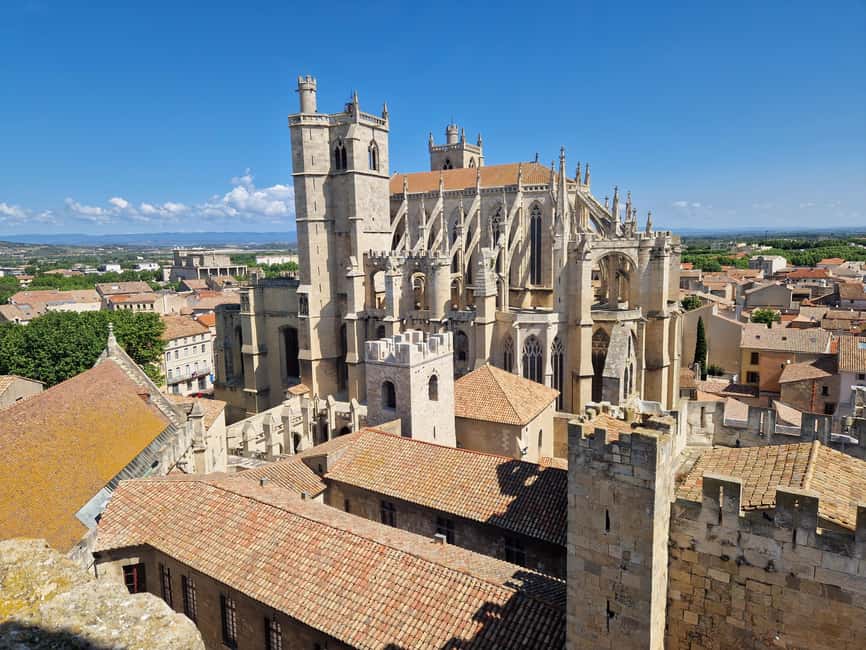
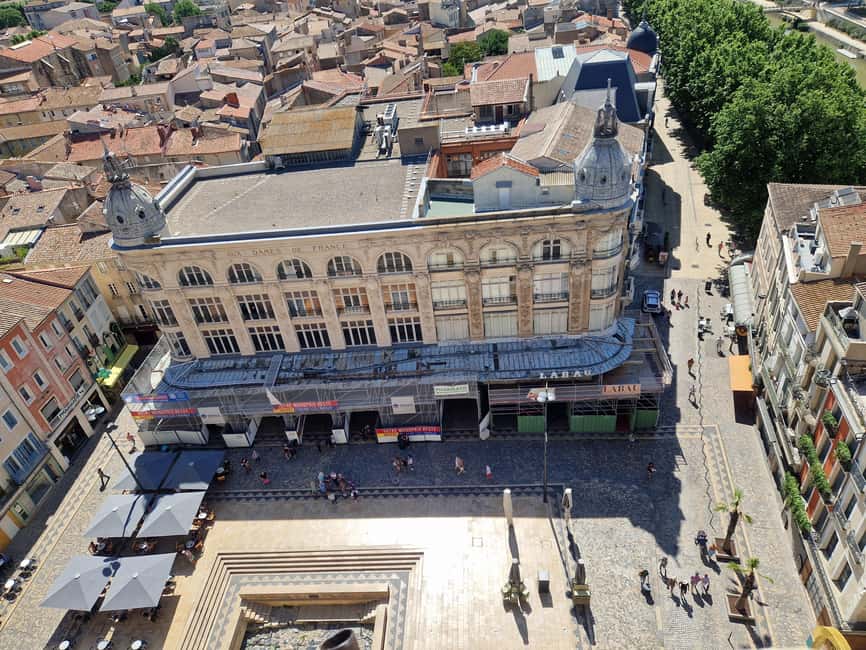
The tour begins on today’s Place de l’Hôtel de Ville, which sits on the former Palais des Archevêques. From the façade alone, you can read hints of who controlled Narbonne and why the archbishops mattered, then you step into the palace’s working spaces.
Inside, the experience focuses on the palace’s main courtyard and its Grand Staircase. Even if you’re not an architecture person, this is the kind of space that communicates status without needing translation. The staircase becomes a “timeline” in stone: where people would gather, where authority was performed, and where visitors would look up before they even reached the next room.
You’ll also spend time in the palace’s courtyards (including exterior courtyard elements). That’s a good choice for a short tour. Courtyards give you breathing room, let you see details from multiple angles, and they’re often where you can spot the contrast between what looks old from the outside and what feels functional up close.
The palace garden adds a human beat
The route includes the archbishop’s garden. Gardens can be an afterthought on tours, but here it functions like a reset button between the cathedral’s height and the palace’s formality. You get a quieter change of pace, which makes the later cathedral interior hit harder.
Via Domitia and Passage de l’Ancre: Narbonne’s Roman backbone
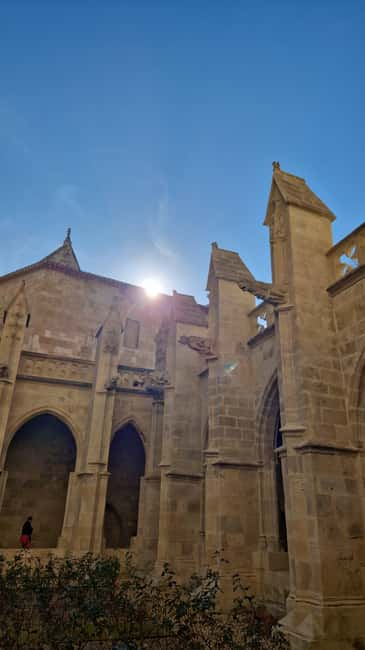
One of the smartest parts of this tour is that it doesn’t treat Narbonne as only medieval. You also visit the via Domitia, the famous Roman road that helped shape movement and commerce across the region.
Seeing the via Domitia on a guided walk gives the Roman angle a real place in your mental map. You stop thinking of Rome as something far away in a textbook, and you start linking Narbonne’s location to why people kept coming back here.
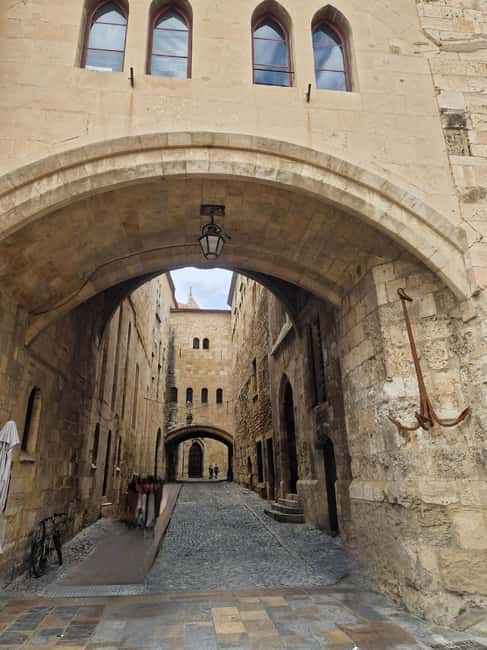
Then there’s Passage de l’Ancre, which helps connect the Roman and later layers of the city. When a tour includes in-between passages like this, it’s usually because those spots show how streets evolved instead of just showing a single era in isolation.
If you like history that feels practical—roads, routes, and how cities actually grew—this portion is a big part of the value.
Saint-Juste and Saint-Pasteur Cathedral: vaulted scale you can feel
After the palace stops, you follow in the footsteps of the archbishops into Narbonne Cathedral, dedicated to Saint-Juste and Saint-Pasteur. This is where the tour turns from “power rooms” to “faith built in stone.”
The cathedral is known for the height of its vaulted ceiling, and the tour encourages you to appreciate that scale while you’re inside. That’s a key difference from quick exterior-only visits. In a building like this, height isn’t decorative; it’s the point. It changes how you stand, where you look, and how long it takes before your mind stops treating it like a normal church.
You’ll also admire major interior artwork and details:
- a monumental organ
- a 17th-century altarpiece
- a 14th-century sculpted altarpiece
Those time periods matter because they show the cathedral didn’t freeze in one moment. It grew, received additions, and kept being refined. If you enjoy noticing how buildings evolve instead of pretending they were completed in a single era, this section will feel satisfying.
Cathedral exteriors matter too
The tour doesn’t limit you to the interior. It includes exterior cathedral time as well, which helps you connect what you saw inside—especially the sense of vertical space—to what the building looks like from outside. Even without deep architectural jargon, that link helps your understanding “stick.”
Cloister with gargoyles: the pause that makes the cathedral memorable
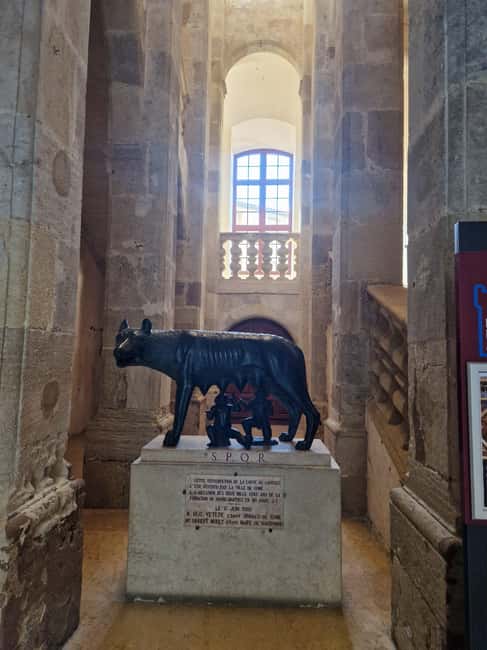
One of my favorite types of tour stops is the one that gives you a breather, then adds meaning. Here, you cross the cloister, where gargoyles tower above you.
Gargoyles are often treated as a quick decoration. In a cloister, they feel different. The stone faces become part of a space built for quiet movement between rooms, not just a performance for the street. You’ll look up naturally, and the result is a short moment that feels almost cinematic—stone watchers, calm air, and a shift from interior height to measured outdoor angles.
The cloister stop also helps the pacing of the entire visit. With so much visual impact across palace and cathedral, the cloister works like punctuation.
Promenade des Barques, Pont des Marchands, and Les Halles at the end
By the time you reach the end of the tour, Narbonne turns from monument to daily life. You stroll along the Promenade des Barques, which leads you toward Les Halles, Narbonne’s emblematic meeting place.
Then you see Pont des Marchands, the bridge connection that ties the waterfront walk to the market area. This is a smart finish, because it brings the story full circle. The palace and cathedral were built to project authority and faith, but Les Halles shows the other side: people coming together to trade, eat, and live.
Walking this final stretch gives you an easy “last impression.” If you want photos, this is where you’ll get them without forcing it. If you want atmosphere, you’ll feel it here because the market setting is built for real crowds and real routines.
Price and extras: when €23 is a bargain and when it isn’t
The price is listed at $23 per person for a 2-hour guided experience. For that time, you’re not just ticking off a single church. You’re covering multiple major stops: the archbishops’ palace courtyards, via Domitia, Passage de l’Ancre, the cloister, cathedral interior and exterior, plus the archbishop’s garden and a market-area finish at Les Halles. That’s a lot of territory for one short walk.
The key thing to watch is what’s not included. Entrance to the Donjon, the town’s Museum, and the Treasure Room requires an additional €12 admission ticket. If those are on your must-see list, you’ll want to factor that extra cost into your planning so you don’t feel cut off.
If your goal is to understand Narbonne quickly—how Roman routes, medieval power, and cathedral art connect—this tour’s value is strong. You get structure, expert interpretation, and a route that keeps the story moving.
Who should book this tour
You should book if you want:
- a tight, guided walk that covers major Narbonne sites in one go
- attention to cathedral art, including the 17th-century altarpiece and 14th-century sculpted altarpiece
- a Roman-to-medieval connection via via Domitia
- a friendly, high-energy guide experience led by Marion Quart
It’s also a solid choice if you like tours that are more about clarity than speed. The guide format is built around you moving site to site, with enough time at each stop to actually look.
This tour is listed as private group and wheelchair accessible, so it can work for a range of mobility needs.
If your travel style is “long museum time only,” you may find 2 hours a bit short. You can still enjoy the guided walk, but you may want to return later for the parts that need extra tickets.
Should you book the Archbishops’ Palace and Cathedral visit?
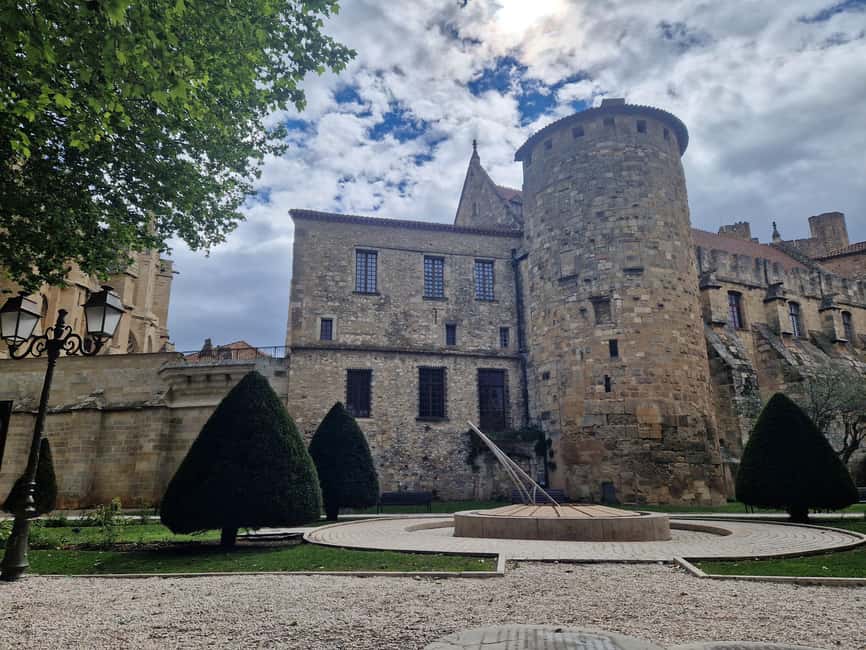
Yes, if you want a smart introduction to Narbonne that doesn’t waste time. The combination of the Palais des Archevêques, the cathedral’s vaulted interior and major artwork, plus the via Domitia and a market-area ending at Les Halles makes this tour feel like a complete city story in one sitting.
Be aware of the add-on €12 admission areas if they matter to you—Donjon, Museum, or the Treasure Room. If they’re not priorities, you’ll likely feel like your $23 is well spent on guided access, interpretation, and a well-paced route.
FAQ
FAQ
Where is the meeting point for the tour?
Meet in front of the main entrance to Les Halles de Narbonne, near the war memorial.
What should I look for to find the guide?
Your guide will be wearing a green neckerchief with a professional card and will wait near the war memorial.
How long is the tour?
The duration is 2 hours.
How much does the tour cost?
The price is listed at $23 per person.
What is included in the tour?
Included are visits to the via Domitia, Archbishops’ Palace (interior and exterior courtyards), Passage de l’Ancre, the cloister, the cathedral (interior and exterior), the archbishop’s garden, the Promenade des Barques to Pont des Marchands, and access to Les Halles.
What is not included?
Admission to the Donjon, the Museum, and the Treasure Room are not included. Those are available with the purchase of a €12 admission ticket.
What sites does the tour cover in the cathedral area?
You’ll visit Saint-Juste and Saint-Pasteur Cathedral, including the cloister and key interior highlights like the vaulted ceiling, the monumental organ, and altarpieces.
What languages is the tour offered in?
The tour guide language is listed as French and Sangro.
Is the tour wheelchair accessible?
Yes, it is listed as wheelchair accessible.
Can I cancel for a full refund?
Yes. Free cancellation is available up to 24 hours in advance for a full refund.
Can I reserve without paying yet?
Yes. The listing offers reserve now & pay later, so you can book your spot and pay nothing today.