REVIEW · BUCHAREST
Private Bucharest city tour visit the Palace of the Parliament & Village Museum
Book on Viator →Operated by Rolandia · Bookable on Viator
One day in Bucharest, and history hits hard. I love the private guide style that keeps everything clear and at a human pace, and I love that entrance fees are included, so your day stays focused on the sights instead of ticket math. You get both the heavy political story at the Palace of the Parliament and the hands-on feel of Romanian village life at the Village Museum.
My only real caution is timing. You start at 10:00 am and a day like this can hinge on museum opening hours and access, so it helps to have your guide actively confirm each stop is actually reachable that day, not just on paper.
In This Review
- Key highlights to know before you go
- Palace of Parliament and Revolution-era context: what you’re really paying for
- Calea Victoriei and the squares that explain modern Bucharest
- Old Town walk: Arch of Triumph and the real street atmosphere
- Village Museum Dimitrie Gusti: the easiest way to see Romanian village life
- Private tour format: why the guide makes the difference
- Price and logistics: is $235.25 per person actually good value?
- What I’d pack and how to keep the day comfortable
- Should you book this Bucharest highlights tour?
- FAQ
- What time does the tour start?
- How long is the tour?
- Is this a private tour?
- What’s included in the price?
- What isn’t included?
- Do you offer pickup?
- What language is the tour in?
- Is there a minimum age for children?
Key highlights to know before you go
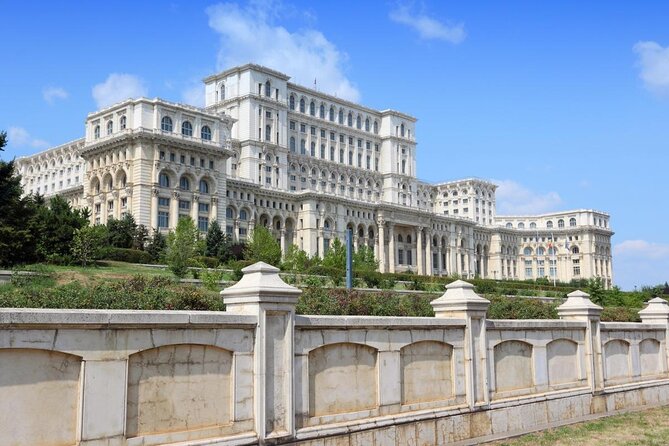
- Palace of Parliament scale in numbers: 12 stories, 8 underground levels, plus an anti-atomic bunker connected by long catacombs
- A guided political storyline: Revolution Square ties what you see to Romania’s 1989 turning point
- Calea Victoriei has a name-changing past: it traces back to Podul Mogosoaiei and takes its Victoriei name after 1878
- Old Town walk that doesn’t waste time: you hit big landmarks like the Arch of Triumph and keep moving through the neighborhood vibe
- Village Museum is built for walking: 360 monuments and about 60,000 objects across reconstructed village life
- The best part is the human routing: guides have a track record of managing heat, traffic, and wait risk while adjusting the flow
Palace of Parliament and Revolution-era context: what you’re really paying for
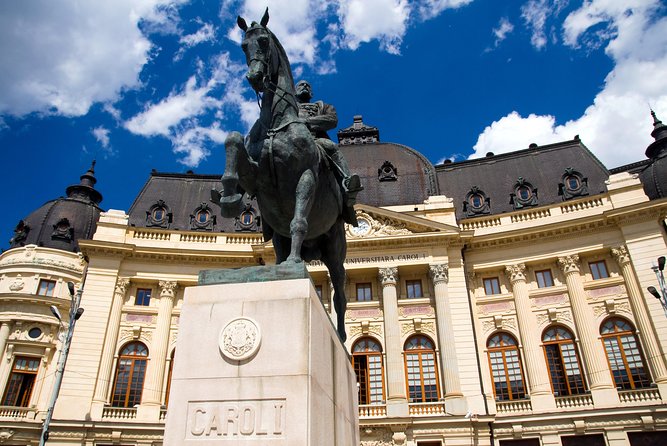
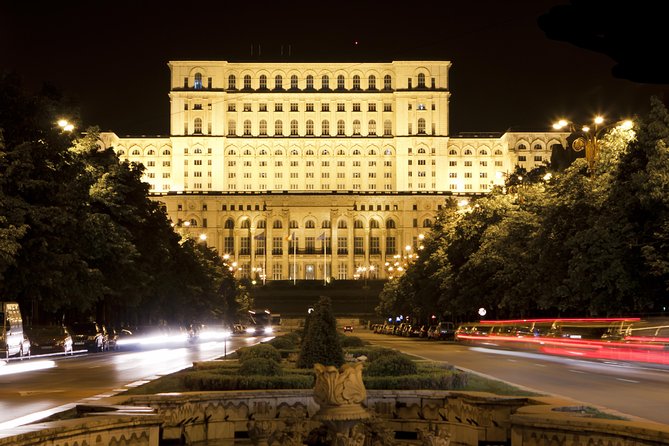
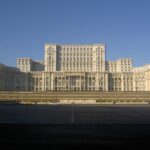
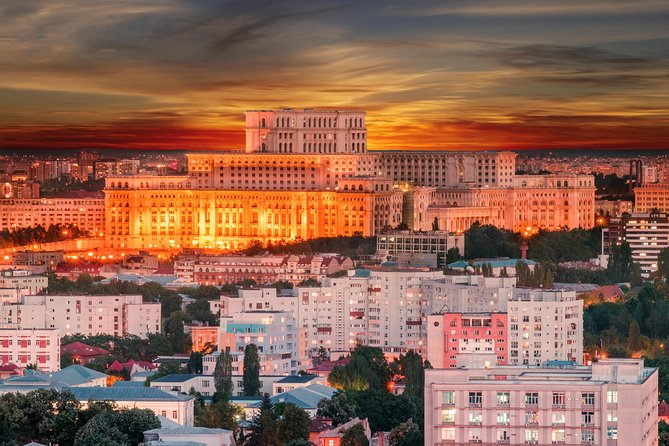
The day starts with a look at Piata Unirii, then you move into the world’s most famous Bucharest “statement building.” The Palace of Parliament (Palatul Parlamentului) is described as the largest building in Europe and it really earns that claim. You’re talking about a 12-story structure with eight underground levels, plus an anti-atomic bunker that’s linked to the city’s institutions by catacombs said to total about 20 km. It also holds Guinness recognition for weight. Yes, that’s a lot of “superlative” talk. But when you stand there, you understand why the superlatives stuck.
Here’s what I think makes this stop valuable: you’re not just looking at concrete size. Your guide ties the architecture to the political message behind it. You’ll hear it framed as homage to the dictatorial regime, tied to Nicolae Ceausescu’s push to reinvent Bucharest. In plain terms, it’s a building you can read like a document: it’s grand, it’s designed to impress, and it’s built to represent power.
One practical note: when you enter a place like this, your experience depends on order and pace. Private tour format matters here. When your guide knows how to move you through the flow of entry and viewing, you spend less time feeling stuck and more time understanding what you’re looking at. In past days, guides like Florin have been praised for being friendly, meeting guests at reception, and handling the day with calm confidence.
You can also read our reviews of more tours and experiences in Bucharest.
Calea Victoriei and the squares that explain modern Bucharest
After the Palace, the tour shifts from heavy interior history to the streets where Bucharest shows its changes over time.
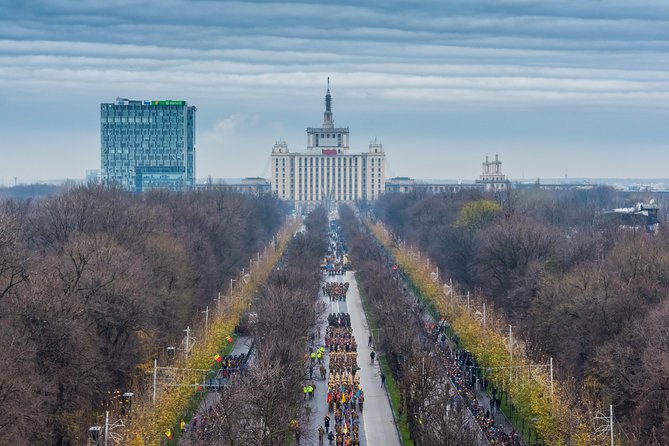
Calea Victoriei (Victoriei Avenue) is a good example. You’ll travel through a roadway that stretches for almost 3 km and carries an older identity. It was first known as Podul Mogosoaiei, and it later took the name Victoriei after Romania’s War of Independence victory in 1878. Your guide turns this into more than trivia by pointing out how this route helps you see the city as it once was—often compared to the old days when people referred to Bucharest as the Little Paris.
You also stop in and around major squares, including Piata Universitatii and Piata Revolutiei. Piata Revolutiei is where the story gets sharp. This is framed as the place where democracy won over socialism, and where Nicolae Ceausescu spent his last moments during the events of 1989. That detail matters because you can walk through a square and still miss why it became symbolic. A good guide connects the visual setting to the political timeline, so your brain doesn’t keep treating everything as separate attractions.
If you’re the kind of person who likes your sightseeing to make sense, this part is a win. You’re gradually building a picture of a city that changed its face multiple times—without the tour turning into a lecture you can’t escape.
Old Town walk: Arch of Triumph and the real street atmosphere
From the squares, you head into the Old Town area. The tour includes a guided walk, which is smart here because Old Town Bucharest is made of contrast: older monuments side-by-side with lively cafes and everyday street life.
A key landmark is the Arch of Triumph, built between 1922 and 1936 to commemorate Romania’s participation in World War I. It’s also declared a historical monument in 2004. You’ll see it in action as well, since it sits at the center of one of Bucharest’s busiest intersections. That matters because monuments are not meant to be frozen in a postcard. In Bucharest, the arch lives in the traffic and the noise, and that makes it feel more real.
In the same area, there are also other sights you’ll likely spot or hear your guide reference, like CEC Palace and Stavropoleos Monastery. Even when your time only allows you to hit the highlights, having a guide helps you know what you’re looking at and what’s worth a longer stop later.
A small timing tip: if you’re in the mid-day sun, the Old Town walk might feel longer than the calendar says. That’s one reason I like the private format. One guide (Alex, in one case) was praised for arranging the day to minimize waits, handle oppressive heat, and keep the order efficient. That’s the difference between seeing Bucharest and getting tired inside your own itinerary.
Village Museum Dimitrie Gusti: the easiest way to see Romanian village life
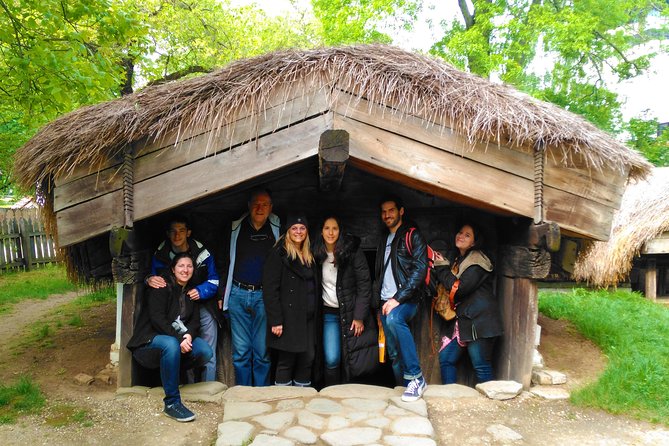
The final major stop is the Village Museum (Muzeul National al Satului Dimitrie Gusti). If the Palace is about power, this museum is about daily life.
The museum is described as an open-air ethnographic museum, and it’s one of the early open-air ethnographic museums in the world. It opened in 1936 and includes 360 monuments and a collection totaling about 60,000 objects. That’s big on numbers, but the experience is built for walking: reconstructed structures and a layout that lets you picture what traditional Romanian village life looked like.
The museum is in Bucharest near Herastrau Park, so you can feel the shift from city pressure to a calmer pace as you move through the grounds. You’ll see things like a church, a windmill, and a watermill, along with folk arts and hand-crafted decorations. In other words, you’re not just looking at artifacts behind glass. You’re moving through spaces that are trying to recreate an older way of living.
The Village Museum works especially well after you’ve learned about communism and political messaging at the Palace. Your brain gets a fresh theme: instead of power, you’re looking at people, crafts, architecture, and how communities built their everyday world. It’s a strong balancing act in a single day.
One practical consideration: this is an outdoor experience in a city. If your travel style prefers shade and indoor stops, wear a hat and plan for the weather. This isn’t a museum where you can easily escape the elements once you’re inside the grounds.
Private tour format: why the guide makes the difference
This is a private tour with pickup offered, and you’ll ride in a private sedan or minivan depending on group size. That matters because Bucharest traffic can be its own attraction. When your guide is comfortable routing and timing the day, you lose less time to detours and you arrive with more energy for the key indoor visits.
The best guide moments in this kind of tour are small, not dramatic. In one group situation, Florin met people at reception, explained clearly how the day would go, and then answered questions with thoughtful context about Romanian history and how people may feel differently depending on your background. In another case, Alex was credited with good English conversation, smart timing, and even a dinner recommendation at the end of the day.
You’ll also like the flexibility. This tour is set up as a structured highlights day, but it’s not rigid in the way large group buses can be. In one example, a group started by telling the guide what they wanted, then the guide shaped the order around those preferences. That’s a simple idea, but it can change your whole day—especially if you care more about the Palace story than about extra walking time in Old Town.
And yes, flexibility can sometimes include an add-on. One group reported adding Palatul Primaverii by paying the entrance separately, after the standard stops. The tour data says additional entrances aren’t included, which matches this kind of scenario.

Price and logistics: is $235.25 per person actually good value?
At $235.25 per person, this isn’t a budget outing. It’s in the category where you’re paying for privacy, a dedicated guide, private vehicle transport, walking time, and entrance fees.
Here’s how I’d judge the value:
You’re getting entrance tickets included for the Palace of Parliament, Old Town highlights walk, and the Village Museum. You’re also getting a tour guide in English and transport in a private vehicle plus a pickup option. For a small group, that can feel much more reasonable than it looks at first glance. One review example even pointed out that the price felt good for four people because the tour was basically their own group in practice.
Still, the cost is worth thinking through if you’re traveling solo. If you’re just one person, you pay the same per-person amount without the easy math of splitting the private vehicle and guide time.
Lunch is on you (about 12 Euros per person), so you’ll want to plan for that break rather than assuming the tour covers food. The good news is you’ll usually have a moment for lunch that doesn’t derail the schedule.
Also, you’ll start at 10:00 am and the day runs about 6 to 8 hours. That’s long enough to feel like a proper day trip, but short enough that you won’t lose your evening entirely. It’s a nice way to do Bucharest highlights without spending hours building a route yourself.
What I’d pack and how to keep the day comfortable
You’ll do walking (Old Town) and you’ll spend time both outdoors and in major sites. Based on the way this day is paced, I’d plan for:
- Comfortable shoes for the Old Town walk and museum grounds
- Sun protection if the weather is hot, since outdoor parts don’t wait for shade
- Patience for any entry flow inside major attractions, since this is a top-site stop
The tour is designed to manage the day efficiently, and guides have been praised for traffic skills and organizing time to reduce stress. Still, you’ll get the best experience if you keep your expectations realistic: you’re packing multiple major Bucharest themes into one day.
Should you book this Bucharest highlights tour?
Book it if you want a full-day, guided overview that connects politics, streets, and everyday life without you having to plan every turn. I especially think it’s a good choice if this is your first time in Bucharest and you want the biggest, most important stops handled for you, including entrance fees.
Skip it or rethink it if you’re the kind of traveler who hates long indoor stops and prefers slow wandering with no fixed rhythm. Also reconsider if you’re hoping for a purely relaxed day with no schedule pressure—because this itinerary is built to hit major sites in one run.
If you do book, go in with one goal: ask your guide to explain what ties the stops together. When the Palace story connects to the squares and then to the Village Museum, Bucharest stops feeling like disconnected landmarks and starts feeling like one evolving city.
FAQ
What time does the tour start?
The tour start time is 10:00 am.
How long is the tour?
It runs about 6 to 8 hours.
Is this a private tour?
Yes. It’s private, meaning only your group participates.
What’s included in the price?
The tour includes a professional English-speaking guide, transportation in a modern vehicle, a walking tour of the Old Town, panoramic city tour stops, and entrance fees.
What isn’t included?
Lunch is not included (about 12 Euros per person), and additional entrances are not included.
Do you offer pickup?
Pickup is offered.
What language is the tour in?
It’s offered in English.
Is there a minimum age for children?
Children must be accompanied by an adult, and the minimum age is 12 years.