REVIEW · WATTENS
Schloss Tratzberg – Hörspielführung
Book on Viator →Operated by Schloss Tratzberg · Bookable on Viator
Tratzberg Castle feels like stepping into a story. This 1-hour Hörspielführung pairs an audio guide with original rooms, armor, and big countryside views over the Tyrolean Unterinntal. I like that it’s built for independent exploration without you needing to track down a history expert every five minutes.
I especially appreciate the Rennaisance rooms and Gothic panelled parlours you can wander through during the timed route.
Another reason I’m a fan: the payoff is visual as well as historic. You get uninterrupted views from the castle setting, plus the kind of setting where the castle’s place in Tyrol’s past feels real, not abstract.
One consideration: this is first and foremost an audio-led experience, so if you’re craving a super detailed, object-by-object spoken lecture, you may find the pace a bit fast and the commentary geared more toward a general audience.
In This Review
- Key takeaways before you go
- Schloss Tratzberg in 60 Minutes: What the Audio Tour Really Delivers
- Where It Fits Geographically: Day Trip Friendly, Not a Time Sink
- Getting There: Your Best Approach to the Hill, Train, and Walk
- Entering the Castle: Courtyard First, Then the Key Rooms
- The Armoury and Renaissance Details That People Notice Fast
- The Habsburg Hall and the Imperial Family Tree Fresco
- Views From Tyrol: Why the Surroundings Matter Here
- VR Headset Show: Optional, and About Adding Context
- Pace, Photography, and the Real Logistics of a 15-Person Max Group
- Food and Break Time at Schlosswirt Tratzberg
- Who This Tour Suits Best (and Who Might Want Something Different)
- Price and Value Check for $21.60
- Practical Tips: Make the Most of Your Visit Day
- Should You Book Schloss Tratzberg Hörspielführung?
- FAQ
- How long is the Schloss Tratzberg Hörspielführung tour?
- Is the audio guide available in English?
- What is included in the ticket price?
- What is not included with the ticket?
- Is there a children’s option?
- What are the opening days and times?
Key takeaways before you go
- A compact 1-hour format with an audio guide, designed to keep you moving through the key rooms
- Original Renaissance and Gothic interiors plus an armor collection that makes the medieval theme tangible
- Panoramic Tyrol views that make the hike or mini-train ride feel worth it
- Small-group feel (max 15), which helps the experience stay organized
- Multiple language options including English, plus a kids fairytale tour in German/English/French/Italian
- On-site extras like the Schlosswirt restaurant and optional VR show, if you want to add more context
Schloss Tratzberg in 60 Minutes: What the Audio Tour Really Delivers
Schloss Tratzberg is one of those places where you don’t need hours and hours to get the point. The visit is set up as a guided audio route that runs about one hour, taking you through the castle’s main highlights in a way that’s easy to follow. You’re not meant to wander aimlessly. You’re meant to hear the story, then look around and catch the details the story points to.
The big appeal is how the audio layers the castle’s past onto what you’re physically seeing. This isn’t just walls and display cases. You’re walking through spaces that were originally furnished in Renaissance style, and you’re also seeing the armor that belonged to the noble knight world the castle is known for. The castle setting helps too: you’re up in Tyrol, with scenery stretching out beyond the walls, so the history has a real geographic anchor.
If you like self-guided travel that still feels guided, this fits. If you prefer lectures and long Q&A with a human guide, you might feel the limits. For many people, though, that’s exactly the sweet spot: you can go at your own pace inside the route without losing the thread.
Where It Fits Geographically: Day Trip Friendly, Not a Time Sink
Tratzberg Castle sits in Wattens, and it’s positioned very conveniently for a day trip. It’s only about 30 minutes from Innsbruck and Kufstein, and roughly 80 minutes from Munich and Salzburg. That matters because you can build it into a normal sightseeing day instead of turning it into a full travel expedition.
Also, the timing is fairly straightforward. The castle runs Thursday to Sunday, 10:00 AM to 4:00 PM (check the operating dates shown for your year). Because it’s limited days and hours, it’s worth arriving a bit early rather than assuming you can show up at any random time and glide right in.
Getting There: Your Best Approach to the Hill, Train, and Walk
Getting up to the castle is half the adventure, but it’s also the part where practical choices matter.
You have three common ways to reach the castle area:
- Walk the ascent via a path that visitors describe as doable but steep
- Take the mini-train (a small rail shuttle that runs up the hill)
- Use the road-route option that can be longer but less steep (and no cars are allowed on the pedestrian road segment mentioned by visitors)
From what people report, the mini-train is the easiest option if your goal is comfort. One visitor noted it cost only a few euros per person and also described the walk down taking longer than the drive up. Another pointed out that the train is not constant; it runs on a loop schedule, so give yourself a buffer if your connection back matters.
If you plan to walk, wear shoes with good grip. One account described the path as possibly slippery due to pea gravel. And if it’s raining, build in extra caution. The castle itself is charming; slipping halfway up the hill is not part of the medieval fantasy.
If you’re coming by bus, there are routes that connect through the valley (one example given was the 601 bus hourly from Jenbach). Plan for waiting time, because one visitor wished for more shelter while waiting in wet weather.
Entering the Castle: Courtyard First, Then the Key Rooms
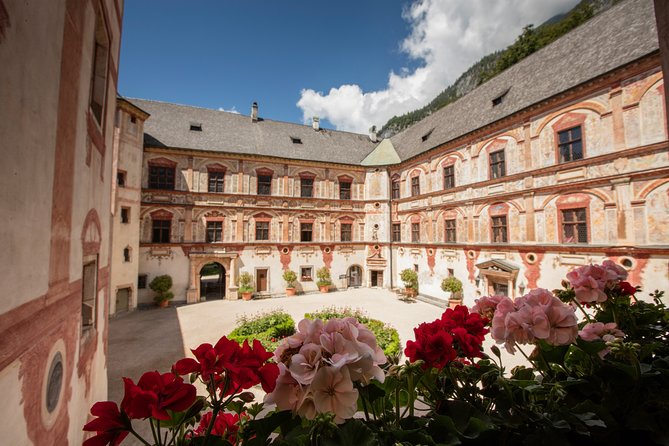
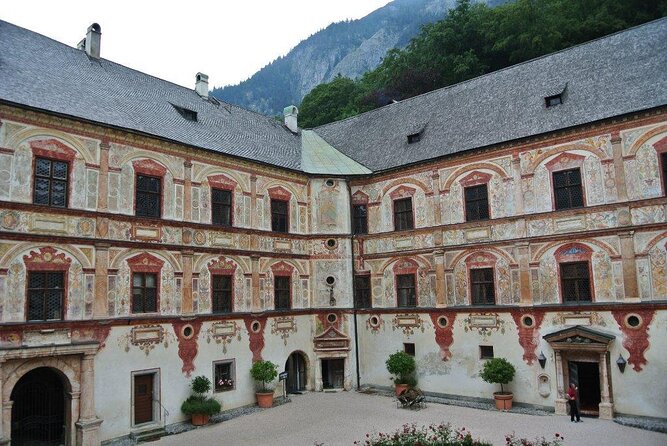
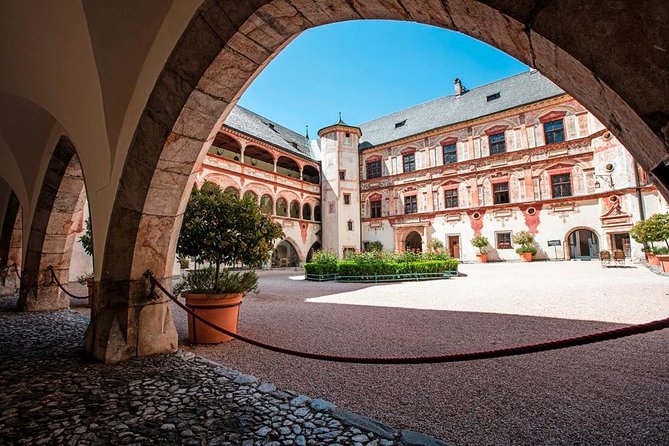
The visit experience starts right away. You enter and you can feel the place is still lived-in, maintained, and treated like a residence rather than a theme park set. That attitude shows in the details people notice most: the courtyard and the interior furnishings.
The castle’s story begins in the early centuries and then moves forward. It’s documented for the first time in the 13th century as a border stronghold, and it later served as Emperor Maximilian I’s hunting lodge. You’ll hear that arc as the route moves from the setting to the spaces the rulers and nobles used.
Then the route pushes you into rooms that are meant to be looked at as art and as living space:
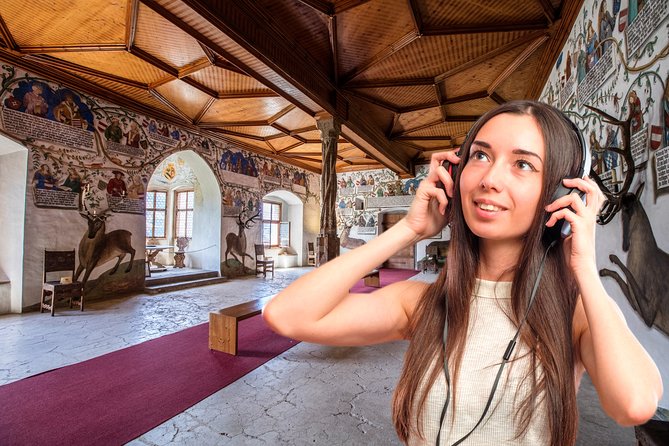
- Renaissance rooms with the look and feel of historic furnishing
- Gothic panelled parlours
- An armoury space that makes the knight theme specific rather than generic
- The Habsburg Hall, where the imperial story becomes visual
The pacing is built around an audio flow. That’s why the route is about an hour: it’s not designed for slow museum wandering. Instead, it’s designed to get you into the castle, through the main rooms, and out with the key images stuck in your mind.
The Armoury and Renaissance Details That People Notice Fast
The part of Tratzberg that most visitors seem to lock onto quickly is the “stuff you can’t fake” feeling. The castle isn’t just showing you historical costume on a mannequin. You’re seeing what looks like real craft and real materials in the way objects are displayed.
In practical terms, you’ll get:
- Armor that ties the castle to its knight-and-ruler identity
- Room interiors that let you study surfaces and detailing
- A sense of how nobility occupied and used these spaces
If you enjoy historical artifacts, this castle gives you the kind of experience where you can pause and absorb. One visitor highlighted how intricate the carving and inlay can be. Another said the furnishings made it easy to imagine living there 500 years ago.
Your best tactic: don’t try to read every label. Use the audio guide as your steering wheel. When the audio points to something, then stop and look closely. That turns a simple tour into a sequence of “oh, I see what that means” moments.
The Habsburg Hall and the Imperial Family Tree Fresco
The Habsburg Hall is a signature moment. It’s also where the audio route earns its keep, because the story shifts from objects to people and power.
You’ll hear about the Habsburg Hall and the imperial family tree it contains. That visual creates a sense of scale: it helps you place the castle in a broader political web rather than treating it like an isolated fortress.
Even if you’re not a royal-nerd, the family tree format tends to work well on an audio tour because it gives structure. You’re not just hearing dates. You’re seeing how families connect and how the story moves.
Views From Tyrol: Why the Surroundings Matter Here
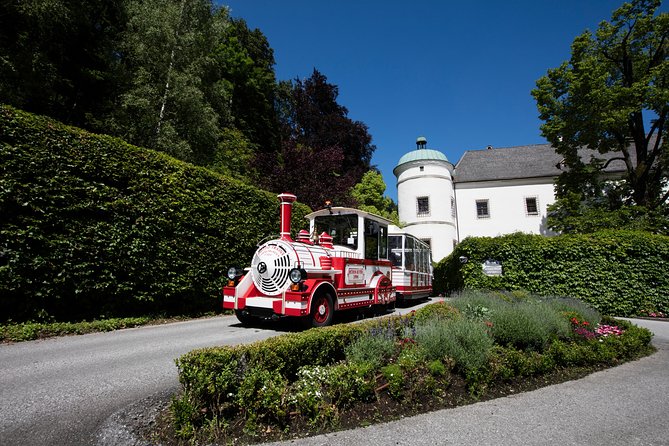
Tratzberg works because the setting isn’t an afterthought. The audio route includes the idea that the castle’s location is part of its history, and once you’re there, the scenery supports that.
You get uninterrupted views over the Tyrolean Unterinntal. That makes a difference on a day trip. You’re not only inside historic rooms. You’re also outdoors with a strong sense of place, and that helps the story stick.
If you like photo stops, the views are your reason to pause. One practical note: people have said you can get perspectives from other viewpoints in the valley too, so if you’re the type who wants a few shots, plan a couple minutes for the surrounding area before or after your tour.
VR Headset Show: Optional, and About Adding Context
There may be an extra experience available on top of the core audio tour. One visitor mentioned paying around 8 euros extra for a VR headset show that adds a bit more history about the castle.
This is optional, not required to enjoy the visit. But it can be a useful add-on if you want a “visual layer” after the audio brings the words.
My advice: if you’re short on time, skip it and spend your energy on the castle rooms. If you have extra time and you like modern interpretive tech, it can make the story feel more vivid.
Pace, Photography, and the Real Logistics of a 15-Person Max Group
The tour is set to a maximum of 15 travelers, which helps keep the experience controlled. Even with an audio format, smaller groups usually mean less chaos at key entry points and fewer bottlenecks in rooms.
Photography appears to be allowed during the tour route, based on visitor feedback. That’s great for keeping souvenirs that aren’t just mental. Still, treat it like a proper museum moment: pause, shoot quickly, then step aside so you don’t hold up the flow.
Pace is the big variable. The castle route covers the key rooms, but it’s still only about an hour. If you tend to linger over details, you might want to arrive with a plan: do the full tour route, then return to the courtyard areas if you have time.
Food and Break Time at Schlosswirt Tratzberg
Your ticket doesn’t include food or drinks, so you’ll want a plan for a snack or meal. On-site, there’s a restaurant called Schlosswirt Tratzberg. It also has its own playground and a traditional beer garden, which makes it easier if you’re traveling with kids or if you want a relaxed break after the hike.
Even on a clear day, it’s smart to think about timing. The tour is short. Then you’ll likely want to spend time outside the route—either with photos or with a rest in the beer garden.
Who This Tour Suits Best (and Who Might Want Something Different)
This is a great fit if:
- you want a compact, one-hour castle experience
- you like audio-guided travel that keeps you moving
- you enjoy historical interiors, armor displays, and visual stories
- you’re traveling with mixed ages and want something structured enough for everyone
It’s less ideal if:
- you’re expecting a long, talky docent-style guided tour with deep object explanations for every room
- you want maximum flexibility to stop and start with zero schedule pressure
- you don’t do well with walking on gravel paths (the ascent can be steep; shoes matter)
Price and Value Check for $21.60
At $21.60 per person, the value comes down to what you actually get. You’re paying for:
- a one-hour audio-guided tour
- an admission ticket included for the castle experience
- English availability (plus multiple other languages)
For many visitors, the value is strong because you’re not paying separately for a human guide or for a long museum stay. You’re buying a guided route through a real historic setting. The small group size also helps avoid that “herded” feeling.
The only way the price can feel less worthwhile is if your personal style is all about slow, expert-led history talks. In that case, audio alone can feel like too little. But if you’re happy to use audio as your framework, you’ll likely feel the ticket is doing what it should.
Practical Tips: Make the Most of Your Visit Day
A few things will improve your experience right away:
- Arrive early when you can. It reduces the stress of waiting and helps you get situated before your audio route starts.
- Bring a layer. Even in good weather, castle visits can involve time outdoors on approach.
- Wear grippy shoes if you walk. Some paths may be slippery due to gravel.
- Plan for the hill. Decide in advance whether you want the mini-train or the walk so you’re not stuck choosing in the moment.
- If you care about views and photos, add a short buffer before or after your route rather than trying to cram everything inside the hour.
If you’re traveling in shoulder season, you may find it easier to get your preferred time without long waits. If it’s busy (especially around school trip periods), expect more foot traffic in and around the ticket area.
Should You Book Schloss Tratzberg Hörspielführung?
Book it if you want a high-impact castle visit that works well for a day trip from Innsbruck or Kufstein. The combination of Renaissance rooms, armour, and panoramic Tyrol views, all delivered through an easy-to-follow English audio guide, makes it a solid use of time.
I’d skip or rethink if you’re the kind of traveler who needs deep, spoken detail from a human guide for every object. This tour is designed to be independent and audio-led, and that’s the whole point.
If that style matches you, you’ll probably leave with two things you can’t download: the feel of the historic rooms and the sense of Tyrol stretching out beyond the walls.
FAQ
How long is the Schloss Tratzberg Hörspielführung tour?
The tour is about 1 hour.
Is the audio guide available in English?
Yes. The experience is offered in English, along with several other languages.
What is included in the ticket price?
Your ticket includes the admission and the 1-hour audio guide tour.
What is not included with the ticket?
Food and drinks are not included.
Is there a children’s option?
Yes. There is an audiovisual fairytale tour for children in German, English, French, and Italian.
What are the opening days and times?
The experience is open Thursday to Sunday from 10:00 AM to 4:00 PM (check the specific operating dates shown for your year).