REVIEW · PELES CASTLE
Sinaia: Peleș Castle Tour with An Expert Guide
Book on GetYourGuide →Operated by Transylvanian Wonders SRL · Bookable on GetYourGuide
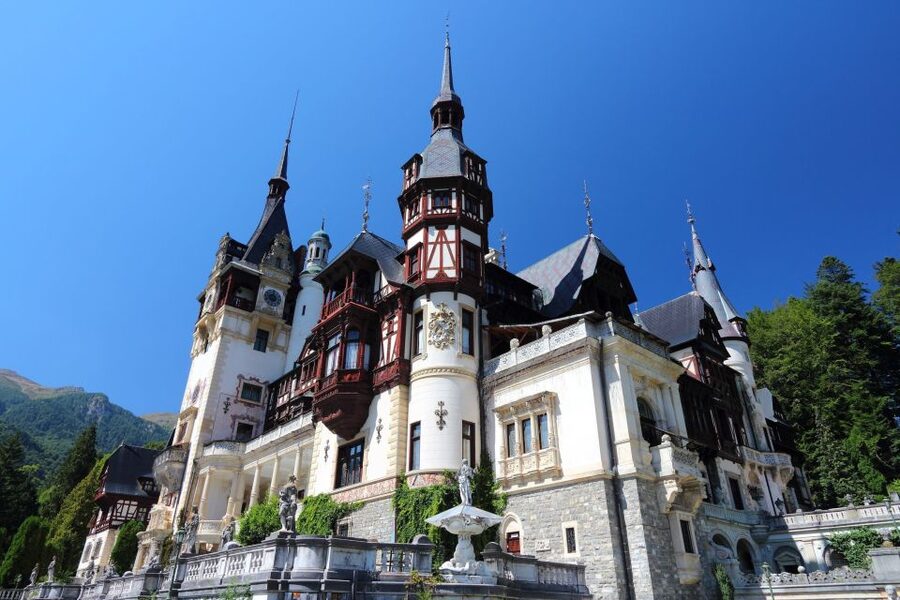
Peleș Castle is pure fairy tale, with real power behind it. This 1-hour guided tour takes you straight into the world of Romania’s royal house, including the rooms chosen under King Carol I and standout features like the enormous reception space and the four statues for the seasons. I especially like how the guide connects what you’re seeing—royal life, politics, design choices—to the building itself.
The main catch: this is a tight schedule. If you like to linger in every room or want time to study details at your own pace, one hour can feel a bit rushed.
In This Review
- Key highlights you’ll care about
- Why Peleș Castle feels different from other Romanian sights
- Meeting the guide at Peleș: in front of the big fountain
- Ground Floor Highlights: the hallway, reception room, and four seasons statues
- The 4,000+ weapon collection: where the tour turns serious
- King’s office and the rooms of trade and empire: Arabic and Turkish spaces
- 1st floor royal apartments: king, queen, and the imperial suite that steals the show
- Price and value: is $64 for an hour fair?
- Photography tax: plan for the 35 leu fee at the door
- Who this Peleș Castle tour suits best
- Should you book? My practical take
- FAQ
- How long is the Peleș Castle tour?
- What’s included in the price?
- Is skipping the ticket line included?
- What language is the live guide?
- Where do I meet the guide?
- Do I need to pay extra for photos?
- How much does the tour cost?
- Is the tour refundable if my plans change?
- Is the tour suitable for wheelchair users?
- What’s the booking setup if I want flexibility?
Key highlights you’ll care about
- Four seasons symbolism in the ground-floor reception area, giving you a quick visual map of what the castle is trying to say
- Weapon collection with 4,000+ pieces, one of the most dramatic stops in all of Romania
- Arabic and Turkish rooms, where style and symbolism shift in a way that’s hard to pick up without a guide
- King and queen apartments on the 1st floor, including the most talked-about suite
- The imperial apartment story, decorated for an Austrian Emperor who never actually stayed overnight
Why Peleș Castle feels different from other Romanian sights
Most castles in Romania give you drama from the outside and then a quick look on the inside. Peleș does something smarter. It’s not only about stone and towers—it’s about taste. The building is full of designed moments: formal rooms built to impress, display spaces meant to show authority, and private quarters that hint at how royalty lived.
That’s why I like a guided visit here. Without context, you might see great rooms and great objects. With context, you start noticing why each room exists and how the royal family used the castle as a stage.
You’ll also get a sense of how this place ties into the monarchy. The castle sits in a setting King Carol I himself chose, so it doesn’t feel random. It feels planned. And once you see that, the tour stops make more sense as a chain, not a list.
Meeting the guide at Peleș: in front of the big fountain
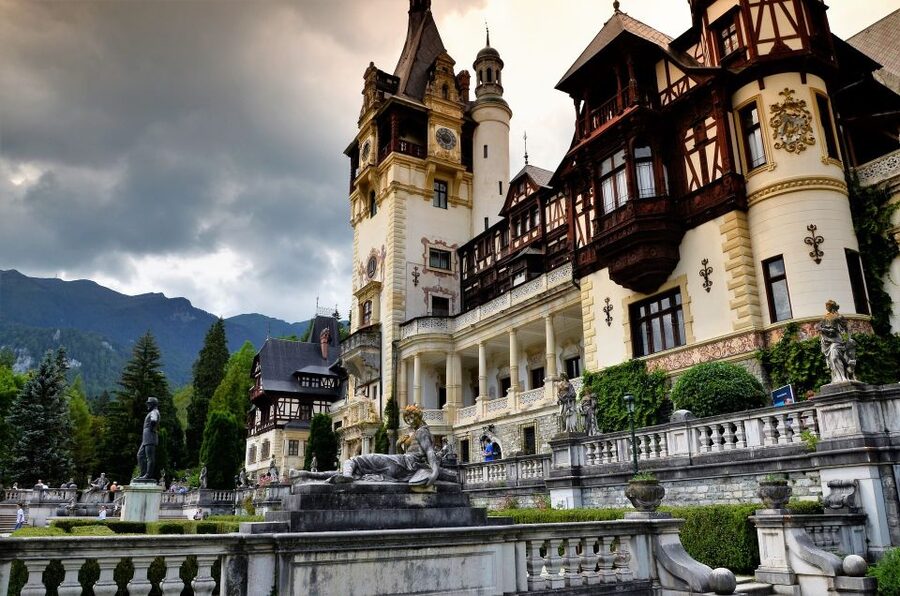
Your tour begins at Peleș Castle itself, in front of the big fountain (Aleea Peleșului 2, Sinaia). The “meet right there” setup matters because Peleș can feel like a maze when you arrive already stressed about getting in on time.
A live English guide runs the show, and it’s set up to help you skip the ticket line. In real terms, that means less waiting at the entrance and more time inside where the rooms actually are. One of the best parts is that you’re not stuck guessing what to look for first.
If you want to make your life easier, arrive a few minutes early. Then you can settle in mentally and be ready when the group moves.
Ground Floor Highlights: the hallway, reception room, and four seasons statues
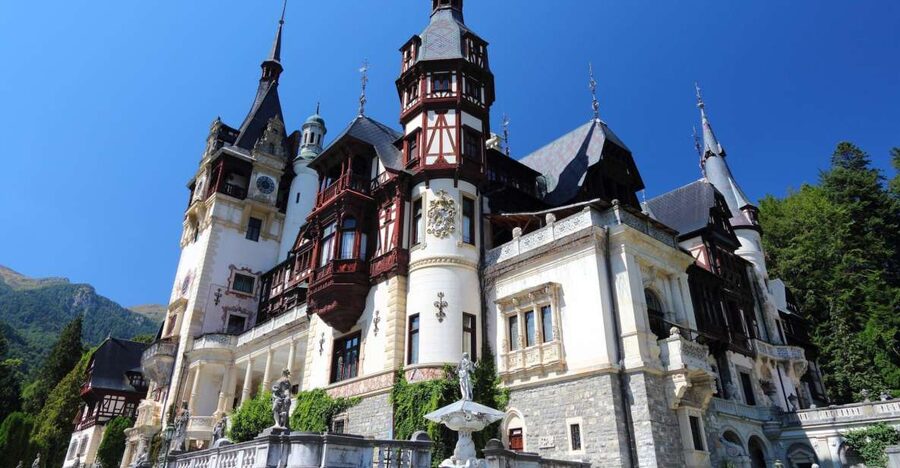
Once you start, the tour flows from the grand public spaces. You’ll walk through an impressive ground-floor hallway and then land in a space designed to impress at first glance: the enormous reception room.
What makes this stop special is the symbolism. You’ll see four statues representing the four seasons. That’s not just decoration. It’s the castle speaking a language of order and time—like the building is saying, this is where life, power, and ceremony belong.
You’ll also get a quick sense of the castle’s layout strategy: public spaces down on the ground floor, then more private royal spaces upstairs. It’s a simple idea, but it helps you understand what you’re walking through, instead of just collecting photos.
Watch-out for pacing: if your group moves quickly, you’ll want to keep your eyes up and not lose focus while you’re stepping through doorways. This part is memorable, and it goes by fast when timing is tight.
The 4,000+ weapon collection: where the tour turns serious
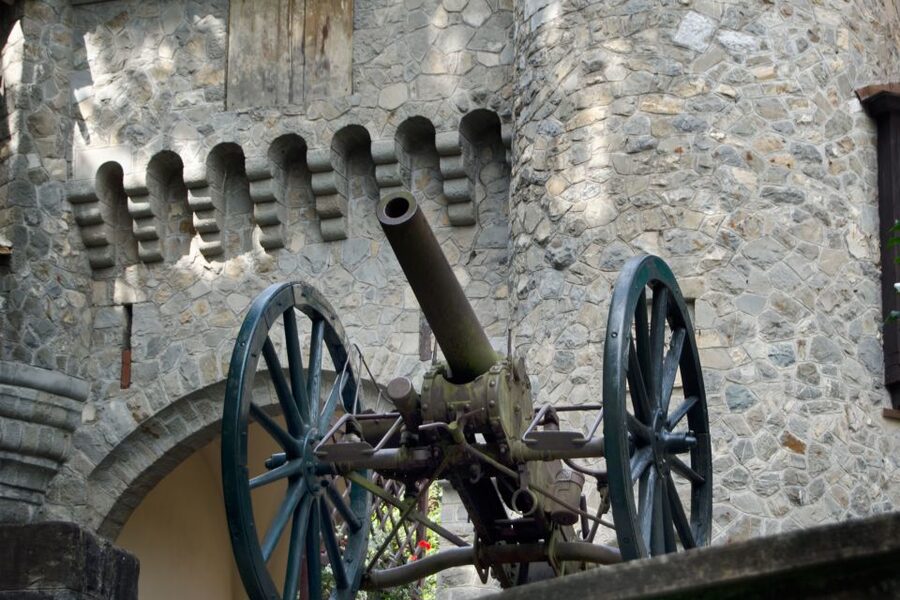
After the grand rooms, the vibe shifts—dramatically. You’ll see one of the biggest weapon collections Romania and Europe has ever seen, totaling more than 4,000 pieces from around the world.
This stop is a reason to book even if you’re not a museum person. It’s visual, it’s human, and it tells you something about collecting as status. A palace like Peleș isn’t only about comfort. It’s also a trophy room—artifacts that say the monarchy is connected to power far beyond local borders.
Why a guide helps here: weapon displays can look like “stuff in glass” if you don’t know how to read what you’re seeing. A good guide frames the collection so you notice themes—style, period, origins—rather than feeling overwhelmed by sheer volume.
Keep your expectations realistic: you won’t see every single piece up close. But you should come away understanding the scale and why the castle chose to display weapons at all.
King’s office and the rooms of trade and empire: Arabic and Turkish spaces
Next comes the king’s office, followed by the Arabic and Turkish rooms. This is where Peleș stops being only about Romania’s monarchy and starts showing influences that stretch outward.
The king’s office is important because it connects the grand look of the castle to decision-making. It’s one thing to see ceremonial rooms. It’s another to see a space built for authority and work—where power becomes practical.
Then the Arabic and Turkish rooms change the tone again. These rooms feel designed for different tastes and different stories, and that contrast is exactly what makes them so interesting. A guide’s job here is to point out what you should be noticing—materials, ornamentation, and the overall feel—so it doesn’t turn into a blur of decorative rooms.
Tip for you: when you enter these themed spaces, take 30 seconds to look at how they’re decorated as a whole before jumping to close details. That’s the fastest way to “get” what the room is doing.
1st floor royal apartments: king, queen, and the imperial suite that steals the show
Up on the 1st floor, you’ll see the larger set of rooms used by different members of the royal house, including the king’s and queen’s apartments. This section feels more intimate than the public spaces below, even if the rooms are still impressive.
The standout is the imperial apartment, specially decorated for the Austrian Emperor. Here’s the irony you’ll want to remember: the emperor never spent a night in the castle. That detail changes the feeling of the room. It stops being a simple “royal guest suite” story and becomes more of a “what did they want this to represent?” story.
That’s where a guided tour pays off again. Without context, you may admire the design and move on. With context, you recognize the tension between intention and reality—the kind of contradiction that makes history feel human.
Also, keep an eye on the flow. The tour is structured so you move from king-and-queen spaces to this big imperial highlight, so the architecture builds toward the most memorable moment. If you’re the type who likes a strong finish, this section delivers.
Price and value: is $64 for an hour fair?
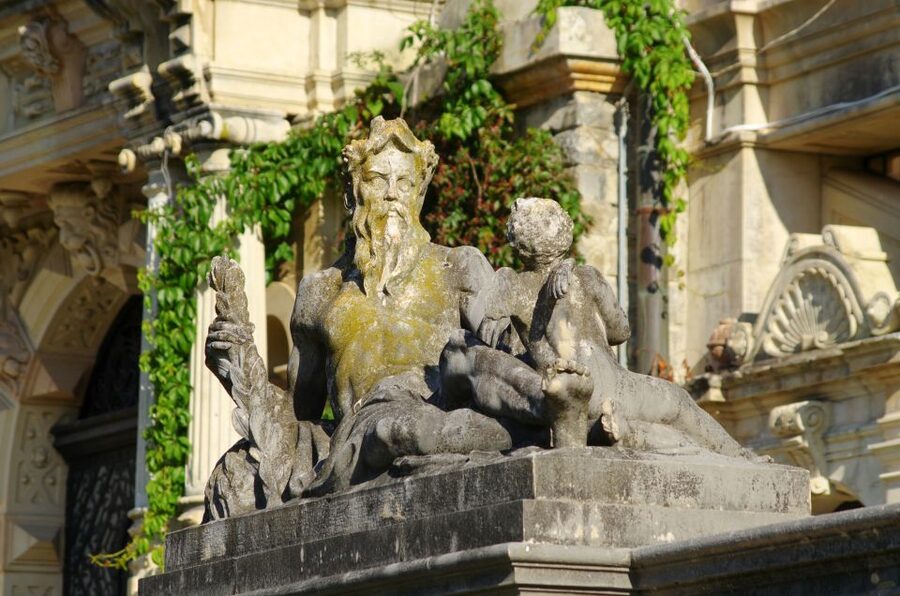
The tour is priced at $64 per person and lasts about 1 hour, with entry to Peleș Castle included and a guided experience in English. On paper, it sounds “standard.” In practice, value depends on how you like to travel.
Here’s the honest math: Peleș is huge, and one hour is not long enough for a slow, self-guided marathon. So if you’re hoping to browse at your own pace, this price won’t feel like a bargain.
But if you want the best parts explained and you don’t want to waste time guessing where to go, $64 can start to make sense. You’re paying for:
- the guide’s ability to connect rooms and objects
- time saved by skipping the ticket line
- a route that hits major highlights: reception room, weapon collection, themed rooms, and royal apartments
Balance that with one reality: the one-hour format can feel like you’re being moved along. That’s not automatically bad. It’s just a fit question.
Photography tax: plan for the 35 leu fee at the door
One thing you should factor into your budget is photo tax. It’s 35 leu per person (roughly €7.50) and can be bought directly at the door. It’s not included in the tour price.
This matters because it affects your decision-making once you arrive. If photography is important to you, don’t let the fee surprise you. Build it into your expectations now.
Also, if you’re traveling with multiple people, this is one of those “small” costs that adds up fast. It’s better to know the number before you get to the payment point.
Who this Peleș Castle tour suits best
This tour fits you best if you want:
- a guided path through the highlights instead of figuring it out alone
- a structured look at how the castle ties to the Romanian royal family
- strong “wow” moments like the weapon collection and the imperial apartment story
It’s also a great choice for first-time visitors to Romania who want one destination that checks multiple boxes: architecture, monarchy, collections, and room-by-room storytelling.
Where it may not fit as well: if you need lots of quiet time in each room, or you travel like you’re on vacation by browsing—slow, flexible, unhurried—this one-hour format might feel too controlled.
Should you book? My practical take
If you’re choosing between skipping a guide and doing a guided hour, I’d lean guide for Peleș. The castle is gorgeous, but it’s also full of meaning that you’ll miss if you just walk room to room. With an expert guide—like Irina Chis, who delivers interesting background during the tour—you’re more likely to leave with understanding, not just images.
Book it if:
- you like learning while you walk
- you want the biggest highlights without wasting time
- you’re okay with a fast-moving pace for a 1-hour experience
Pass or reconsider if:
- you want to linger in every room and read everything slowly
- you’re sensitive to feeling rushed through spaces
If you do book, go in with the right mindset: think of it as a concentrated tour that gives you a strong “first impression” of Peleș Castle, not a full-day deep study.
FAQ
How long is the Peleș Castle tour?
The tour lasts 1 hour.
What’s included in the price?
The experience includes a guided tour and entry to Peleș Castle.
Is skipping the ticket line included?
Yes. You’ll be able to skip the ticket line.
What language is the live guide?
The live tour guide offers English.
Where do I meet the guide?
Meet at Peleș Castle, Aleea Peleșului 2, Sinaia 106100, in front of the big fountain.
Do I need to pay extra for photos?
Yes. Photo taxes are not included and cost 35 leu per person, purchased directly at the door.
How much does the tour cost?
The price is $64 per person.
Is the tour refundable if my plans change?
You can cancel up to 24 hours in advance for a full refund.
Is the tour suitable for wheelchair users?
No, it is listed as not suitable for wheelchair users.
What’s the booking setup if I want flexibility?
You can reserve now & pay later, keeping your travel plans flexible.