REVIEW · ISTANBUL
Topkapi Palace&Harem-Guided Tour-Skip lines- All tickets inc
Book on GetYourGuide →Operated by My Local Guide Istanbul · Bookable on GetYourGuide
Four courtyards, one Ottoman story. I like this tour because it guides you through Topkapi in a smart order and makes the palace feel like a lived-in world, not just rooms on a map. Two things I especially like are the skip-the-line access you get for Topkapi and the Harem, plus the way the guide turns objects and buildings into clear stories you can actually remember.
I also really enjoy how the tour doesn’t treat the Harem like a curiosity box. You learn how the palace ran, why certain spaces existed, and what daily life meant for the people inside, including the concubines. One consideration: it is a mostly walking experience through a big palace complex, so comfy shoes and some water are not optional.
In This Review
- Key Reasons This Tour Feels Worth It
- Entering The Topkapi Complex (Not Just Walking Past It)
- Meeting Behind Hagia Sophia: Where Your Time Starts
- First Courtyard: Bakery, Hospital, and the Executioner’s Fountain
- Second Courtyard and the Harem: Concubines, Courtiers, and Control
- Education Courtyard: Training the Future Heads of the Empire
- Treasury Highlights: The 86-Carat Diamond and Sacred Relics
- Sultan’s Pavilion and the Best View Moment
- Palace Kitchen and Ceramics: Small Details That Make It Feel Real
- Aya Irini Church Museum: From 4th Century to Arsenal
- Price and Value: Is $118 a Smart Buy?
- Group Size, Pace, and What to Bring
- Who This Tour Fits Best
- Should You Book This Tour?
- FAQ
- What does the tour include?
- How long is the tour?
- Where do I meet the guide?
- Are hotel pickup and drop-off included?
- Does this tour include food or drinks?
- Is there skip-the-line access?
- Is the guide in English?
- What will I see during the tour?
- Is free cancellation available?
- Is there reserve now and pay later?
Key Reasons This Tour Feels Worth It
- Skip-the-line tickets for both Topkapi Palace and the Harem section save a lot of time
- Four connected courtyards gives you a logical route through the 15th-century palace layout
- Harem focus includes stories about concubines brought from different counties
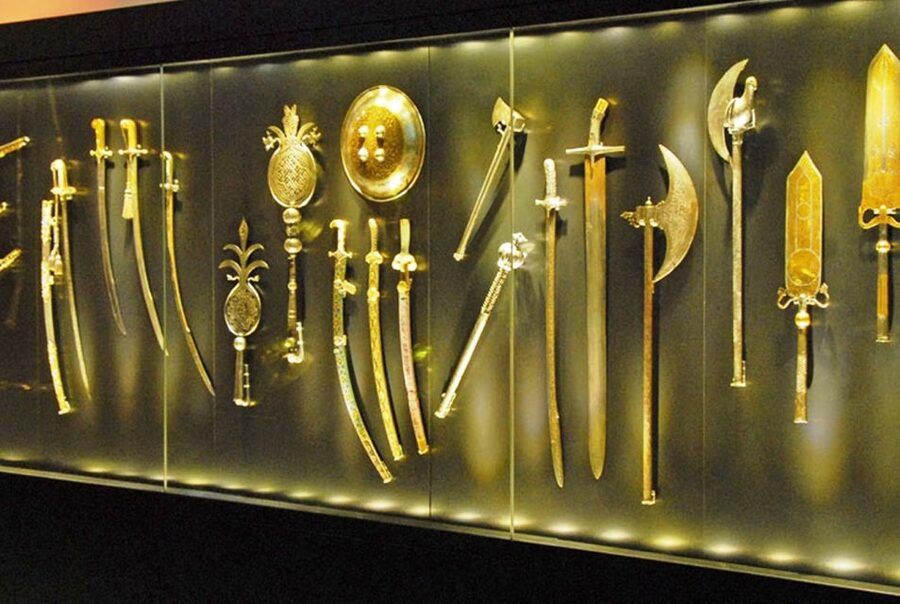
- Treasury headliners feature the 86-carat diamond and the gold-and-emerald dagger associated with the Iranian Shah
- Golden Horn and Bosporus views from the Sultan’s pavilion are a great payoff for the walking
- Aya Irini Church Museum adds a rare angle: a 4th-century church used as a palace arsenal
Entering The Topkapi Complex (Not Just Walking Past It)
Topkapi is huge. If you show up without a plan, you end up bouncing between rooms and hoping everything clicks later. With this guide-led format, you follow a route that mirrors how the palace functions, from courtyards and public spaces toward private life and power.
What makes it work is the pacing and the explanations. You’re not just seeing Ottoman architecture from the 15th to 18th centuries—you’re seeing how it changes and why those choices mattered. I also like that the tour keeps moving while still giving you time to look closely at details like tiles and court layouts.
You can also read our reviews of more tours and experiences in Istanbul.

Meeting Behind Hagia Sophia: Where Your Time Starts
Your meeting point is just behind Hagia Sofia, at the main entrance area of Topkapi Palace. That location matters because it reduces your guesswork and gets you into the right mood fast: the palace is right there, and the tour starts with real orientation instead of wandering.
After you meet your licensed English-speaking guide, you begin with a short walk into the palace grounds. It’s the kind of start that helps you settle quickly, especially when you arrive with that overwhelmed feeling that comes from seeing long ticket lines around Istanbul’s big sights.
First Courtyard: Bakery, Hospital, and the Executioner’s Fountain
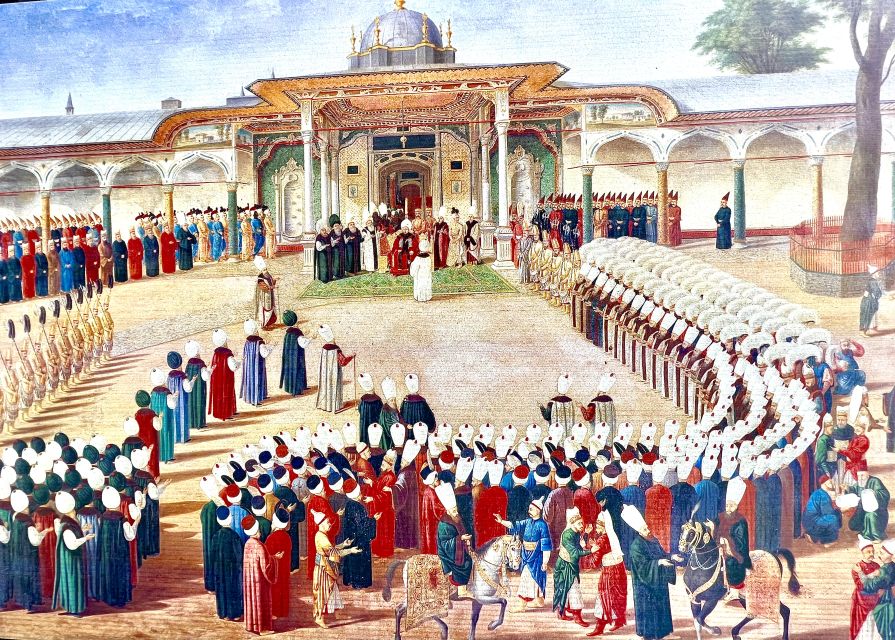
The tour begins where the palace’s everyday machinery lived. In the first courtyard, you’ll hear the stories behind practical buildings that most visitors skip because they look plain compared to palatial halls.
You’ll pass the bakery, the hospital, and the executioner’s fountain. These stops change how you picture Topkapi. The palace wasn’t only sultans and ceremonies. It also ran on systems for food, care, and enforcement—an empire in miniature, operating day after day.
This is one of the most valuable parts of the tour because it trains your eyes. Once you understand the function of a space, you start noticing patterns: where services were placed, how courtyards controlled movement, and how power stayed organized.
Second Courtyard and the Harem: Concubines, Courtiers, and Control
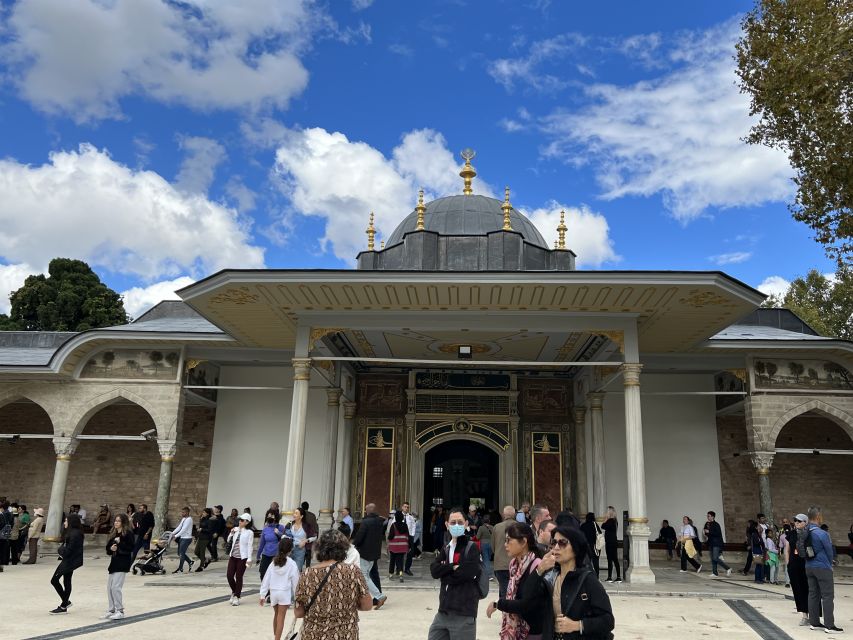
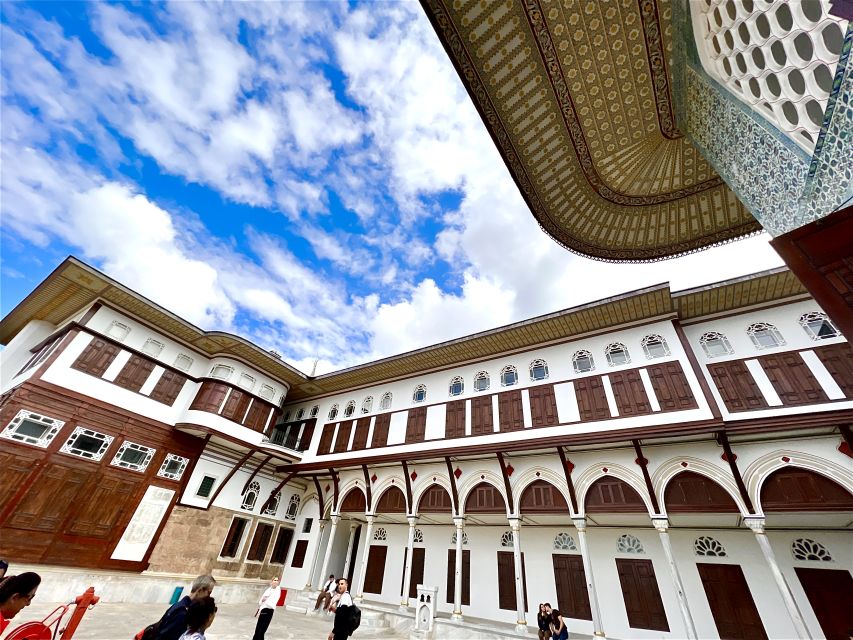
Then you shift to the second courtyard, where you move from palace support functions into the spaces tied to governance and intimate life. Here you’ll see areas connected to the empire’s workings, including the empire council and kitchen.
And then comes the centerpiece for many people: the Harem. This is the female section of the palace, and the tour explains what it meant. You hear how hundreds of concubines were brought in from different counties and how the Harem fit into the broader Ottoman system.
What I like about this part is the tone. It’s not just scandal storytelling. Your guide connects the Harem to structure—who lived where, how people were organized, and why the palace needed that kind of controlled domestic world. It makes the Harem feel understandable, not sensational.
Education Courtyard: Training the Future Heads of the Empire
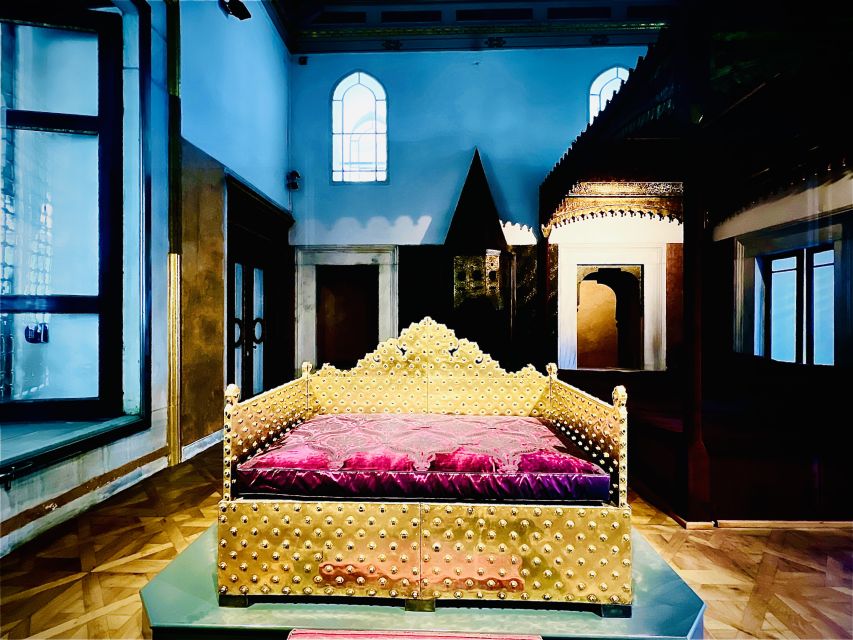
Next, you move into the third courtyard, described as an education space for selected students. This section is where the palace becomes more than a residence. It turns into a training ground.
You’ll learn that some students were taught to become top leaders of the empire. Even if you only know Ottoman history in broad strokes, this helps you see how authority was built. It wasn’t just inherited. It was prepared.
A small but important practical point: this is when the group often starts to feel the walking. Your guide’s job here is to keep it interesting enough that you stay engaged even when your legs are thinking about breaks.





Treasury Highlights: The 86-Carat Diamond and Sacred Relics

The Ottoman Treasury is where the palace turns into a museum of power and wealth. One of the signature items you’ll hear about is the 86-carat diamond, one of the biggest in the world. You’ll also see references to a dramatic dagger made of gold and emeralds associated with the Iranian Shah.
But the tour doesn’t treat the treasury as a handful of shiny objects. You’ll hear about holy relics connected to major figures, including Moses’ staff, David’s sword, and Abraham’s cooking pan, plus other artifacts.
This is the part where a guide really earns their fee. Without explanation, the treasury can feel like a list of museum labels. With guidance, you start to understand why these objects mattered to Ottoman identity and legitimacy—and how they were displayed as proof of history, authority, and connection.
Sultan’s Pavilion and the Best View Moment
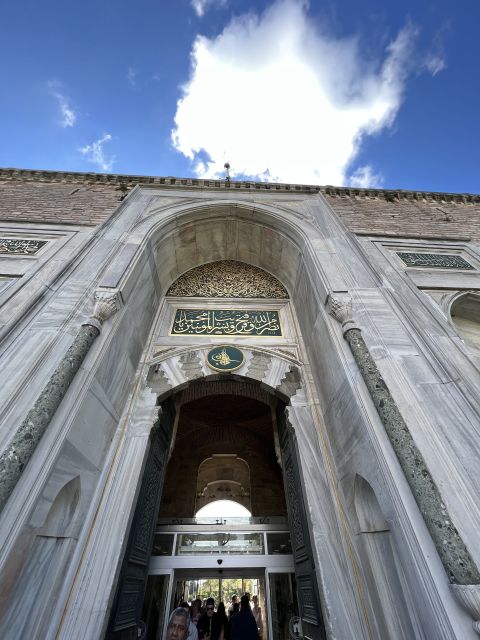
As you reach the later courtyards, the palace opens up into a more ceremonial world. You’ll see pavilions built for the sultans, described as awards for victories.
And then you get one of the best rewards of the tour: an elevated viewpoint from the Sultan’s pavilion overlooking the Bosporus and the Golden Horn. You’re looking from the European side, at the edge of the continent—an easy thing to miss if you’re inside all day without pausing.
If you’re the kind of person who takes photos as proof you were there, this is your moment. If you’re the kind who just wants a memory, even better. The scenery helps you stitch the palace back to Istanbul.
Palace Kitchen and Ceramics: Small Details That Make It Feel Real
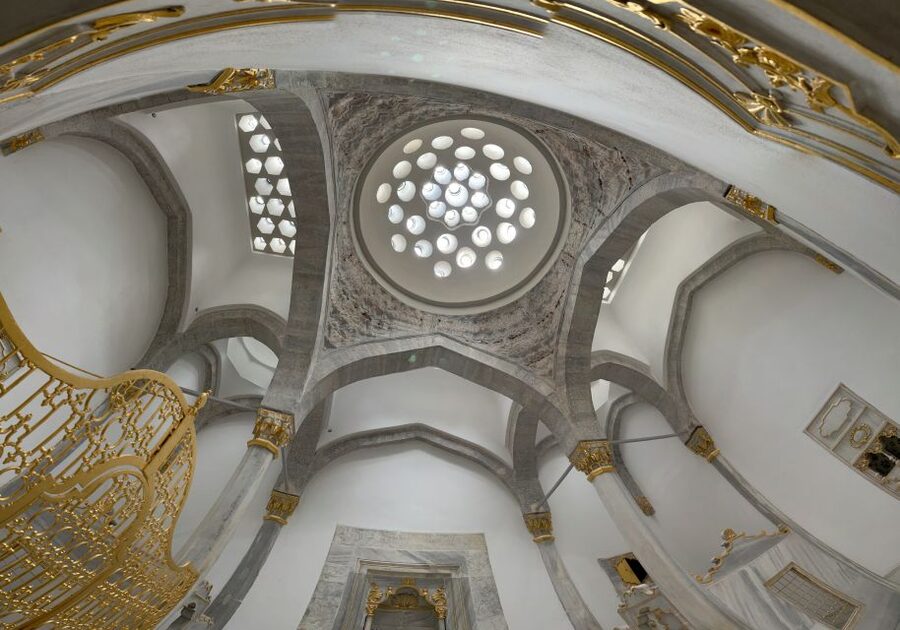
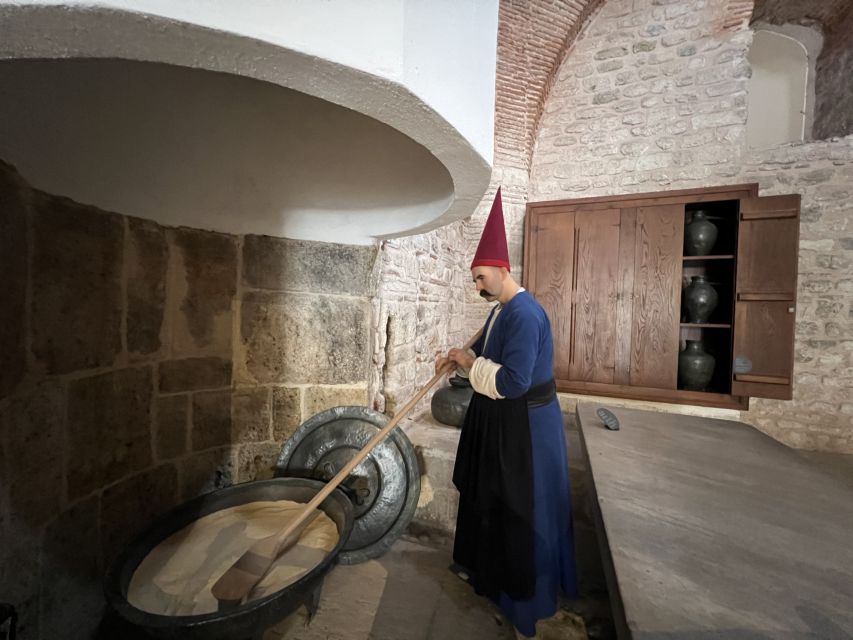
On the way out, you visit the palace kitchen and a ceramics display connected to different parts of the world. This is a subtle shift from the grand views and big-ticket artifacts into the everyday culture of the empire.
It’s also a smart finishing move. Right after the treasury and pavilion highlights, these quieter rooms remind you that Topkapi was a functioning home and production space, not only a theater for rulers.
If you like craft details, keep an eye out for tile work and ceramics. The tour mentions seeing Ottoman handmade Iznik tiles, and those visuals are exactly the kind of thing you’ll remember later when you’re explaining your trip to friends.
Aya Irini Church Museum: From 4th Century to Arsenal
The last stop is Aya Irini (Hagia Irene) Church Museum. The church dates to the 4th century A.D., and it’s described as one of the oldest churches in the world.
Here’s the angle that makes it feel different from other Istanbul church stops: it was used as the palace’s arsenal for centuries. So while Topkapi tells you Ottoman power, Aya Irini shows you how old sacred buildings can be repurposed when empires shift.
This final piece gives your brain a reset. After the palace’s dense Ottoman story, you close with a longer sweep of time—church, arsenal, museum.
Price and Value: Is $118 a Smart Buy?
At $118 per person for 3.5 hours, you’re paying for three things at once: a licensed English guide, walking guidance through a large site, and entry tickets to Topkapi, the Harem, and Aya Irini, plus skip-the-line access for the palace and Harem.
Without a guide, Topkapi can eat time. Lines and slow wandering are real costs, even if you don’t pay extra for them. With this format, your time is structured, and that matters because Topkapi’s layout is not simple.
I also think the ticket bundle is where the value shows. You’re not juggling separate purchase steps or trying to figure out which lines to join. You meet the guide, they handle the included admissions, and you get to spend your energy where it counts: learning what you’re looking at.
Group Size, Pace, and What to Bring
The tour runs about 3.5 hours, and it’s built around continuous movement through major parts of the palace. In past groups, I’ve seen it run as small as five people, and other groups have been around ten, which usually helps the guide keep conversations direct instead of speaking into a megaphone.
Rain can happen in Istanbul. One group reported a rainy day, and the guide still kept things moving. That gives you confidence that the tour is built for normal weather reality.
What you should bring is simple:
- A bottle of water (the palace is big and you’ll walk)
- A few snacks if you get hungry during long museum stretches
One review also highlighted that a guide was patient with a guest who had trouble walking at times. If you have mobility limits, plan to go slower and tell your guide early. The palace will still be the palace, but a considerate pace can make a big difference.
Who This Tour Fits Best
This is a great match if you want Topkapi to make sense. If you like history but hate reading 30 signs at half speed, the guide’s explanations do the heavy lifting.
It’s also ideal if you’re especially curious about the Harem as a historical space, not just a highlight to check off. And if you care about seeing the Bosporus views from the right moment inside the route, the last-courtyard timing helps.
If you’re the type who prefers wandering freely with no scheduled route, you might feel constrained by a guided order. Still, for most people, Topkapi is one of those places where structure turns confusion into a real story.
Should You Book This Tour?
I’d book it if you’re planning to see Topkapi and you want to spend your time understanding it, not just moving through it. The mix of skip-the-line tickets, a focused Harem experience, and the Ottoman Treasury’s standout artifacts makes this a strong value at $118.
Also, pay attention to the guide. Several guides led strong groups in the past, including Omer/Omar, Onder, Berk, Baha, and Önder. If you see a name like those associated with your departure, I’d feel good about the odds of a smooth, well-explained visit.
If you want a fast, cheap, do-it-yourself Topkapi day, you can try that. But if you want Topkapi to feel like Istanbul’s Ottoman heart beating under your feet, this guided approach is the smarter bet.
FAQ
What does the tour include?
The tour includes a licensed English-speaking guide, a walking tour, entry tickets to Topkapi Palace, entry tickets to the Harem section, and skip-the-line entry.
How long is the tour?
The duration is 3.5 hours.
Where do I meet the guide?
You meet just behind Hagia Sofia at the main entrance of Topkapi Palace.
Are hotel pickup and drop-off included?
No. Hotel pickup and drop-off are not included.
Does this tour include food or drinks?
No. Food and drinks are not included.
Is there skip-the-line access?
Yes. The tour includes skip-the-line entry for Topkapi Palace and the Harem.
Is the guide in English?
Yes, the guide is English-speaking.
What will I see during the tour?
You’ll see Topkapi Palace and the Harem, plus the Hagia Irene (Aya Irini) Church Museum.
Is free cancellation available?
Yes. Free cancellation is available up to 24 hours in advance for a full refund.
Is there reserve now and pay later?
Yes. Reserve now & pay later is available, so you can book and pay nothing today.