REVIEW · BRIDGE OF SIGHS
Venice: Historical Walking Tour and Doge’s Palace
Book on GetYourGuide →Operated by Venice Events srl · Bookable on GetYourGuide
Venice hits fast, then goes deeper. In just 3 hours, this guided route stitches together St. Mark’s Square and the Doge’s Palace with skip-the-line entry, so you get more time for story and less time for waiting. I especially like how the guide turns the buildings into explanations of ducal power and daily politics, and I also like the second half in Castello, where the romance of bridges and canals feels earned, not staged. One thing to consider: it’s not a sit-and-stare tour, and it’s not wheelchair accessible.
You start with the big sights, then you trade crowds for narrow streets and small viewpoints. The pace works well if you like your Venice with context, but it can feel like a whirlwind if you’re hoping for long pauses for photos and quiet contemplation.
In This Review
- Key things I’d plan around
- St. Mark’s Square: Basilica focus and the Renaissance clock tower
- Castello’s narrow streets: a walking circuit with bridges and canal turns
- Santa Maria Formosa Square: why this one feels bigger than it looks
- Saints Giovanni and Paolo: doges’ burial ground and civic weight
- Bartolomeo Colleoni and the Marco Polo connection
- Heading into the Doge’s Palace: skip-the-line and a guided hour
- Bridge of Sighs and the new prison: seeing consequences in architecture
- How the 3-hour plan really feels on your feet
- Who should book this Venice tour (and who might skip it)?
- Value check: what you’re really buying
- My verdict: should you book the tour?
- FAQ
- Where do I meet the tour?
- How long is the tour?
- What language options do the guides offer?
- Is it wheelchair accessible?
- Is there skip-the-line entry?
- What should I bring?
- What’s not allowed during the tour?
Key things I’d plan around

- Skip-the-line Doge’s Palace entry means faster access to the main event
- A guided hour inside the palace explains how the Republic of Venice ran its government
- St. Mark’s Square focus includes St. Mark’s Basilica plus the Renaissance-era clock tower
- Castello is a real walking circuit: bridges, canals, and winding alleys rather than a quick drive-by
- Stops include Santa Maria Formosa and the Giovanni e Paolo area, plus Colleoni and Marco Polo references
- You’ll pass the Bridge of Sighs and see the new prison area as part of the palace visit
St. Mark’s Square: Basilica focus and the Renaissance clock tower
This part begins in the heart of Venice, where the square can feel like a stage even on an ordinary day. The tour centers on two anchors: St. Mark’s Basilica and the Renaissance-era clock tower. Instead of treating them like postcard backdrops, you get an explanation of what you’re looking at and why it mattered to Venice’s leaders.
If you’ve ever stared at St. Mark’s and wondered why it’s so hard to summarize in one sentence, this tour helps. The guide connects art, architecture, and status—Venice didn’t become a powerhouse by accident. And the basilica is more than a pretty facade; it’s tied to the city’s identity and the kind of authority the Doge and council claimed.
The clock tower adds a different flavor. It’s not just another landmark photo. It gives you a sense of how time, ceremony, and civic life were intertwined in a city where politics was always on display.
Practical tip: start hydrating early and keep an eye on your footing. Even with the “square” label, the area around it can have uneven stones, and you’ll likely be standing while the guide explains details.
Castello’s narrow streets: a walking circuit with bridges and canal turns
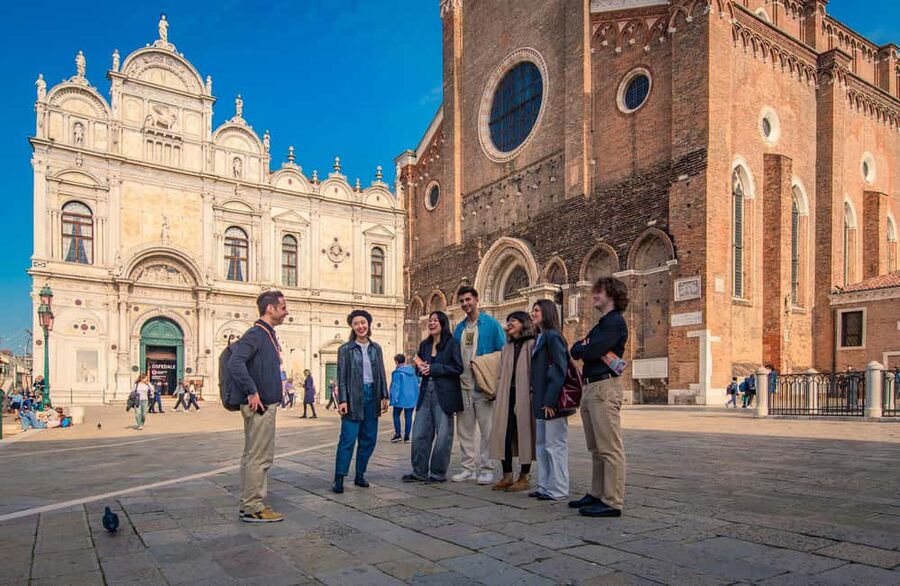
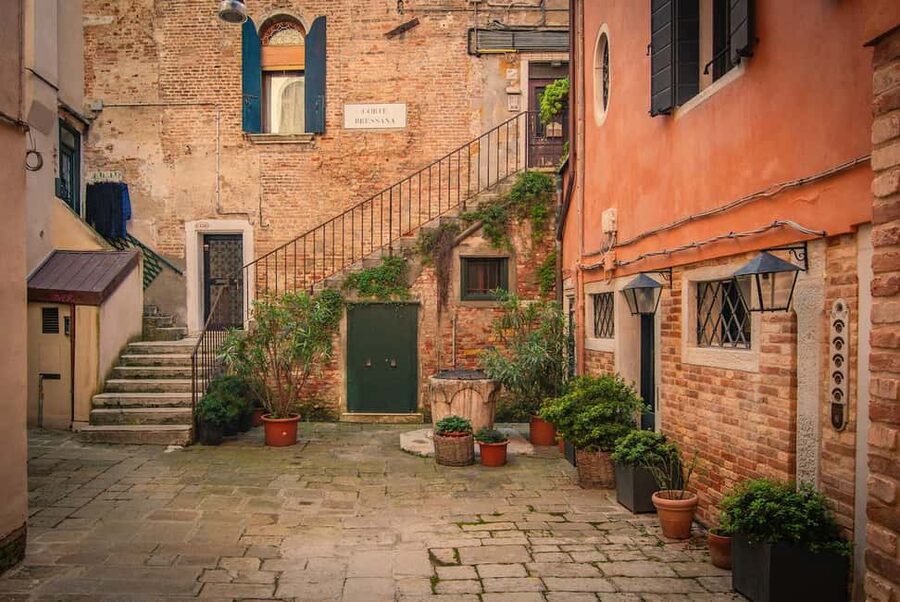
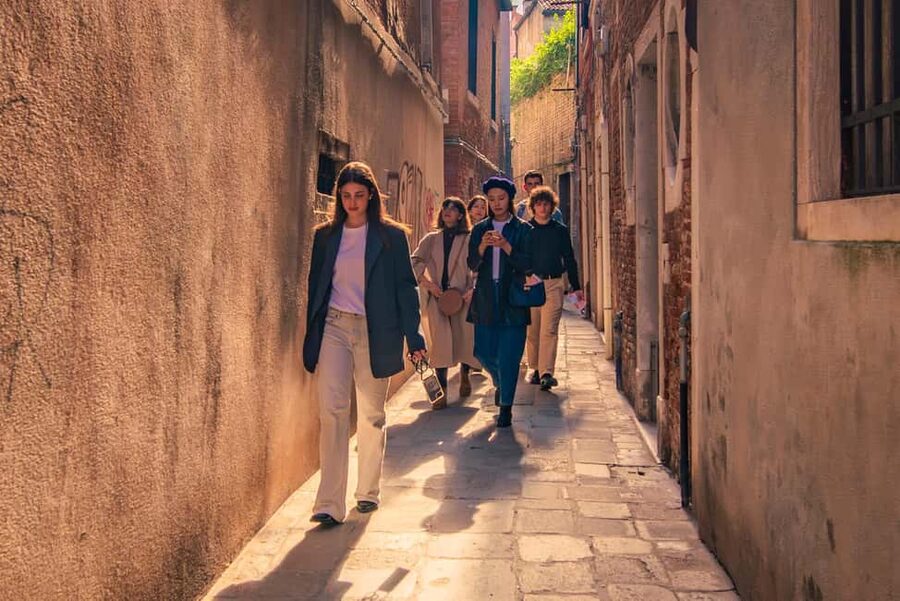
After St. Mark’s Square, the tour swings into Castello, which is where many people first feel Venice as a lived-in place. This is about a 1.5-hour walk through a labyrinth of narrow alleys, bridges, winding canals, and small squares. The streets here are less about spectacle and more about the rhythm of the city—turns, crossings, and little reveals that make you look up.
This section is also where the tour earns its “historical walking” label. You’re not simply moving from one photo spot to another. You’re learning how different corners of Venice connected to merchants, power structures, and the people who built the city’s reputation.
You’ll pass through a mix of open space and tight lanes. That matters because Venice’s feel changes every few steps. In Castello, you’ll see how the city’s layout supports privacy, movement, and connection all at once. It’s the kind of walking that teaches you where things are relative to each other—useful the next time you’re exploring on your own.
If you’re the type who likes cities with texture—cracked stone, small facades, quiet corners—this part will likely be your favorite.
Santa Maria Formosa Square: why this one feels bigger than it looks
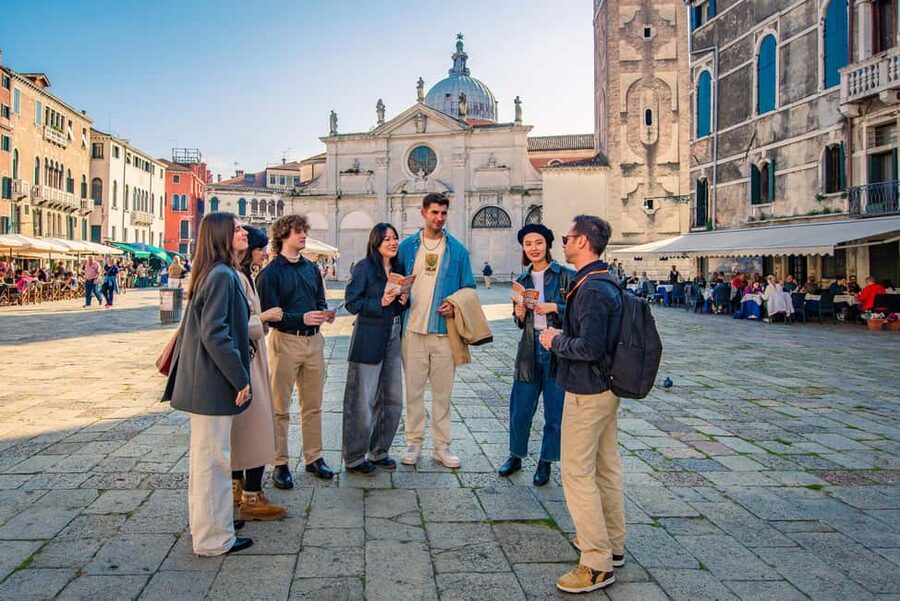
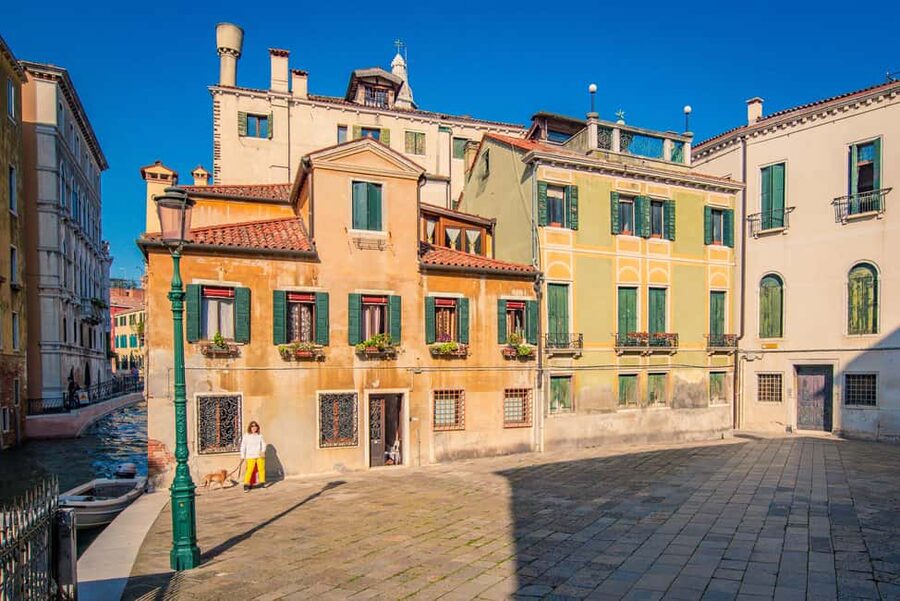
One of the key Castello stops is Santa Maria Formosa Square, described as one of the largest squares in Venice. That’s a fun detail because the first impression of Venice is usually “everything is small and crowded.” This square breaks that pattern a bit, giving you a moment of breathing room before you head back into the smaller lanes.
You also get the church connection: it’s named after the Visitation of the Holy Virgin, along with the Saints Giovanni and Paolo. That naming isn’t just trivia. It helps you understand how religious identity sat in the center of community life, even in a commercial and political powerhouse like Venice.
Think of this stop as a reset. You’re in a bigger space with a clearer view of how the square works, then the tour continues into smaller streets where the city starts to feel like a puzzle.
Saints Giovanni and Paolo: doges’ burial ground and civic weight
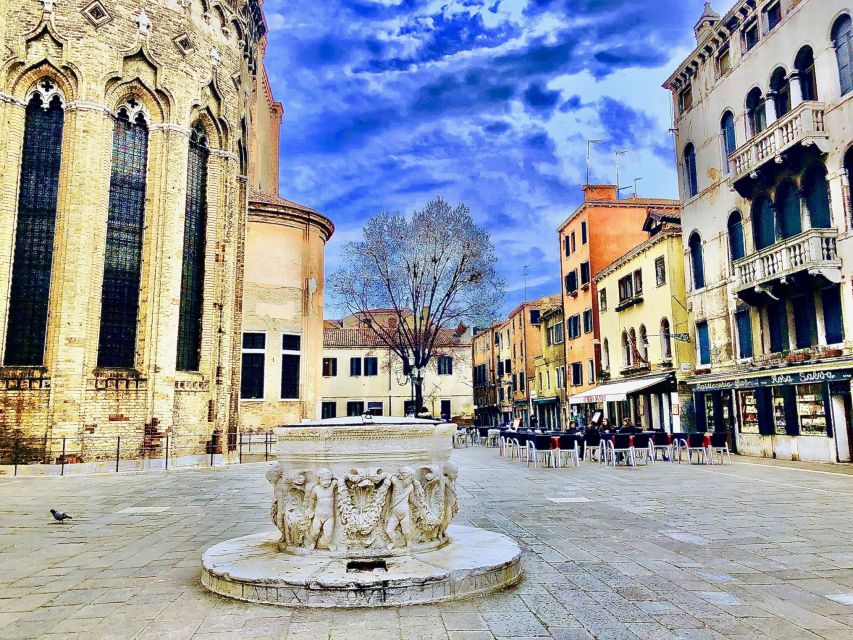
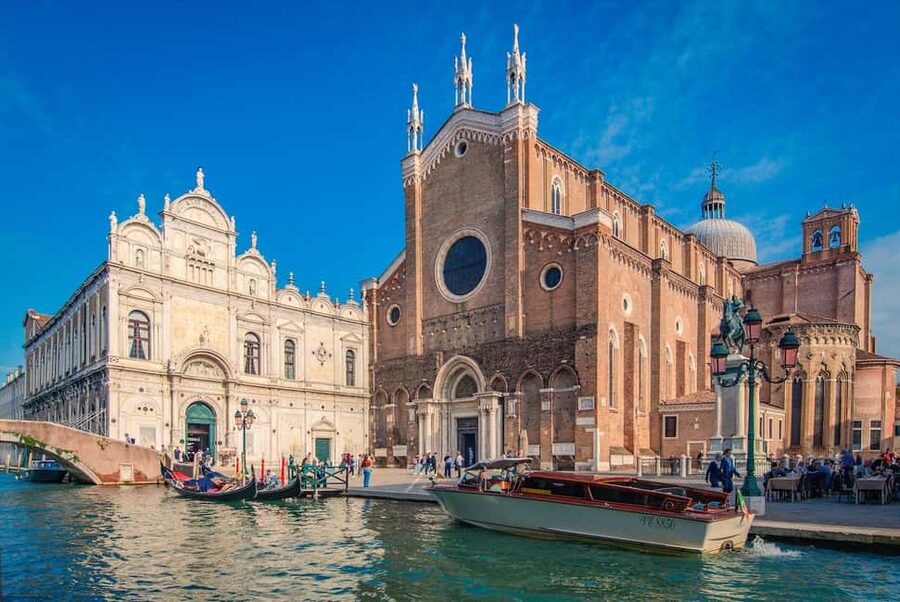
Next comes the Saints Giovanni and Paolo Square area, another major anchor. Here, the tour points out that several dukes (doges) lie buried in the church. That single detail changes how you experience the site. It’s not just a church stop; it’s tied to the Republic’s human legacy and the kind of lasting imprint rulers wanted to leave.
In Venice, burial sites and civic power often overlap. That’s why it helps to have a guide here instead of just wandering. You can still admire the architecture on your own, but with context, you notice how the city organizes memory.
If you’re a first-time visitor, this is the moment when the tour’s theme clicks: Venice is a city that built politics into stone, art, and ritual. You’re seeing that theme repeat.
Bartolomeo Colleoni and the Marco Polo connection
Two standout references in this walking segment are the equestrian monument to Bartolomeo Colleoni and the former residence of Marco Polo, who’s identified as the famous Venetian merchant.
Colleoni gives you a bridge between Venice’s military reality and its political messaging. The monument isn’t just a statue you pass by. It signals who mattered and how power wanted to be represented to the public.
Marco Polo’s former residence, meanwhile, brings commerce and storytelling into the frame. Venice’s identity wasn’t only built on rulers and councils; it was built on people who traveled, traded, and turned outside knowledge into local prestige.
Both stops are short, but they’re placed to help you build a mental map. You begin to see Venice as a web of status: military authority, merchant ambition, and religious civic life all braided together.
Heading into the Doge’s Palace: skip-the-line and a guided hour
Then the main event arrives: Doge’s Palace. The big advantage here is straightforward—skip-the-line and an easy entry. That matters because this is the kind of site that can eat your day if you get stuck in queues.
Inside, you get a guided tour of about an hour, focused on how the ducal system worked. You’ll see the halls where the duke and his council controlled the fate of the Serene Republic. That phrasing is important because it keeps the experience grounded in governance, not just decoration.
You’re also surrounded by artistic masterpieces that explain political history and how Venice viewed itself and its people. The tour highlights major Renaissance artists, including Tintoretto, and specifically notes the world’s largest oil painting by Tintoretto. Even if you don’t know the artist’s catalog, that scale detail makes it harder to treat the palace like another museum room.
What I like most about the guided approach: it doesn’t assume you already understand Venetian government. It gives you the storyline first, then you notice the art as part of that story.
Tip: if you’re prone to museum fatigue, plan to pace yourself inside. The palace is big, and it’s easy to feel like you’re rushing even with a guide.
Bridge of Sighs and the new prison: seeing consequences in architecture
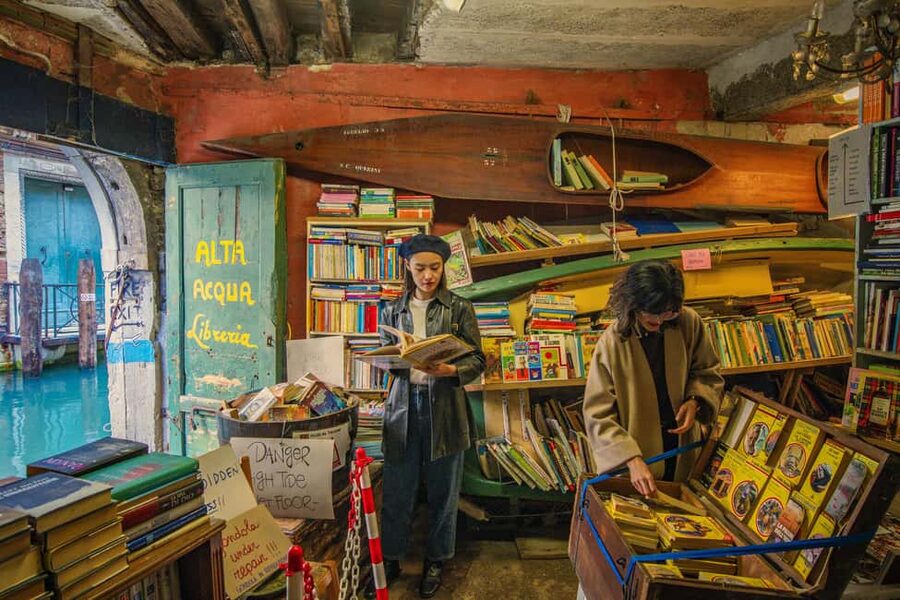
As part of the palace experience, you’ll pass the Bridge of Sighs and see the new prison area. This is one of those architectural moments that people recognize by name, but it hits harder when you connect it back to what the palace represented.
A bridge like this isn’t only scenic. It suggests a system: decisions made upstairs, consequences downstairs, and the idea that justice and imprisonment were part of the same institutional machine. That’s exactly the kind of interpretation a guided tour helps with, because it changes how you read the building.
Seeing the new prison alongside the bridge also helps you understand scale and function. You’re not just hearing dramatic phrases; you’re looking at how the spaces were designed for control.
If you like your history with physical evidence, this is a strong close to the palace portion.
How the 3-hour plan really feels on your feet
This tour is built around two walking sections plus one guided palace chunk. You should assume a steady pace. The walking includes narrow alleys and multiple turns, bridges, and canal crossings, which can be a lot if your shoes aren’t up to it.
The activity also runs rain or shine. Venice weather can change fast, so bring a rain layer that won’t slow you down. And since you’re standing and walking back-to-back, it helps to dress in layers.
One more practical consideration: the tour isn’t wheelchair accessible, and pets, baby strollers, smoking, and luggage or large bags aren’t allowed. Backpacks are also restricted inside the Doge’s Palace. If you’re traveling with more than a daypack, check your packing before you arrive.
Meeting point tip that saves time: arrive 15 minutes early at Calle larga de l’Ascension (behind the Correr museum on the opposite side of St. Mark’s Basilica). Look for the TURIVE assistant next to the post office San Marco.
Also keep in mind a seasonal detail that affects the experience. From November 1 to March 31, there is no skip-the-line entrance to St. Mark’s Basilica. The Doge’s Palace skip-the-line advantage is still valuable, but your St. Mark’s timing may feel different in those months.
Who should book this Venice tour (and who might skip it)?
This is a great fit if you:
- Want to connect St. Mark’s Square to the political story of the Doge’s Palace
- Like walking through authentic-feeling neighborhoods like Castello instead of only staying in the tourist core
- Are doing Venice for the first time and want a guided framework you can reuse later
It’s not a great fit if you:
- Have mobility limitations or need wheelchair access (this one isn’t suitable)
- Expect a slow, low-walking pace
- Need to bring a lot of luggage or a backpack into the palace area (backpacks aren’t allowed inside)
The ideal traveler here is comfortable with pavement and the kind of standing that comes with architecture and museum explanations. If you’re the type who gets restless without action, you’ll probably enjoy it.
Value check: what you’re really buying
Pricing isn’t listed here, but value is easy to judge from the structure. You’re paying for three things that often cost time on your own: a guided narrative, access to a major flagship site, and the ability to connect distant corners of Venice in one coherent circuit.
The skip-the-line part for the Doge’s Palace is a big deal. Palace entry waits can be long, and when you’re on a tight schedule, saving that time lets you spend more energy on the actual experience—art, halls, and the Bridge of Sighs moment.
You’re also getting two different environments for the same paid block: the ceremonial monument feel of St. Mark’s Square, then the working-city texture of Castello. That blend tends to feel more satisfying than doing either area alone.
The only realistic value warning is the one you’ve probably felt in Venice generally: it can be expensive compared to smaller cities. If you’re trying to do Venice on a strict budget, this may still feel like a splurge. If it fits your schedule, though, the time saved at the palace and the guide’s role in making sense of the buildings can justify it.
My verdict: should you book the tour?
Book this if you want a guided, organized path through two of Venice’s top zones: St. Mark’s area and Castello, ending with a strong Doge’s Palace visit. The skip-the-line entry helps, and the palace hour is built around the Republic’s power story, not only pretty rooms.
Skip it or consider a different format if you’re not comfortable with a good amount of walking or you need accessibility support. And if you’re visiting in winter (Nov 1 to Mar 31), go in knowing St. Mark’s Basilica skip-the-line may not apply, which can slightly change how smooth that first part feels.
If you like history you can walk through, and you want Venice to make sense fast, this is a smart use of a half-day.
FAQ
Where do I meet the tour?
Meet at Calle larga de l’Ascension (30124), behind the Correr museum on the opposite side of St. Mark’s Basilica. The guide assistant is next to the post office San Marco, and you should arrive 15 minutes early.
How long is the tour?
The total duration is 3 hours.
What language options do the guides offer?
Live tour guides are available in Spanish, French, German, and English.
Is it wheelchair accessible?
No. The tour is not wheelchair accessible and is not suitable for people with mobility impairments.
Is there skip-the-line entry?
Doge’s Palace has skip-the-line entry. For St. Mark’s Basilica, from November 1 to March 31 there is no skip-the-line entrance.
What should I bring?
Bring a passport or ID card for children.
What’s not allowed during the tour?
Pets, baby strollers, smoking, luggage or large bags, and backpacks are not allowed. Backpacks are not allowed inside the Doge’s Palace.