REVIEW · WINCHESTER
Winchester: Historic Castles and Cathedrals Walking Tour
Book on GetYourGuide →Operated by Walsh Tours · Bookable on GetYourGuide
Arthur shows up in Winchester today. This 2-hour walking tour is a smart way to connect Norman power, medieval legend, and English literature in one loop around the old city, from Winchester Castle’s Great Hall to the River Itchen. I love the moment you step into the Great Hall and see the Round Table, and I love how the guide ties those stories to real places you can stand on. One thing to plan for: entry to sites is not included, so the cathedral/castle experience here leans more toward what you can see from the outside and in the stops that are included.
To get the most out of it, show up at the Westgate meeting point at the top end of the High Street and wear comfy shoes. The guide (often Brian/Bryan, depending on the day) sets a lively pace, keeps it interactive, and makes room for questions and photos, even when the weather turns a bit rude.
In This Review
- Key highlights worth your attention
- Meeting at the West Gate: your easy start point
- Winchester Castle’s Great Hall: why the Round Table hits so hard
- Buttercross Monument: the small stop that makes the streets make sense
- Winchester Cathedral grounds and Jane Austen’s burial stop
- River Itchen and King Alfred: Keats’ inspiration on foot
- Wolvesey Castle and Winchester College: power, faith, and education
- Price and value: is $16 a fair deal?
- The guide experience: fast pacing with room for real questions
- Who this tour is best for (and who might want extra time)
- Should you book this Winchester historic castles and cathedrals walking tour?
- FAQ
- How long is the Winchester: Historic Castles and Cathedrals Walking Tour?
- What does the tour cost?
- Where do I meet the guide?
- What’s included in the price?
- Is entry to Winchester Castle or Winchester Cathedral included?
- What language is the tour guide speaking?
- Is the tour wheelchair accessible?
- FAQ
- Is there free cancellation, and can I reserve without paying right away?
Key highlights worth your attention
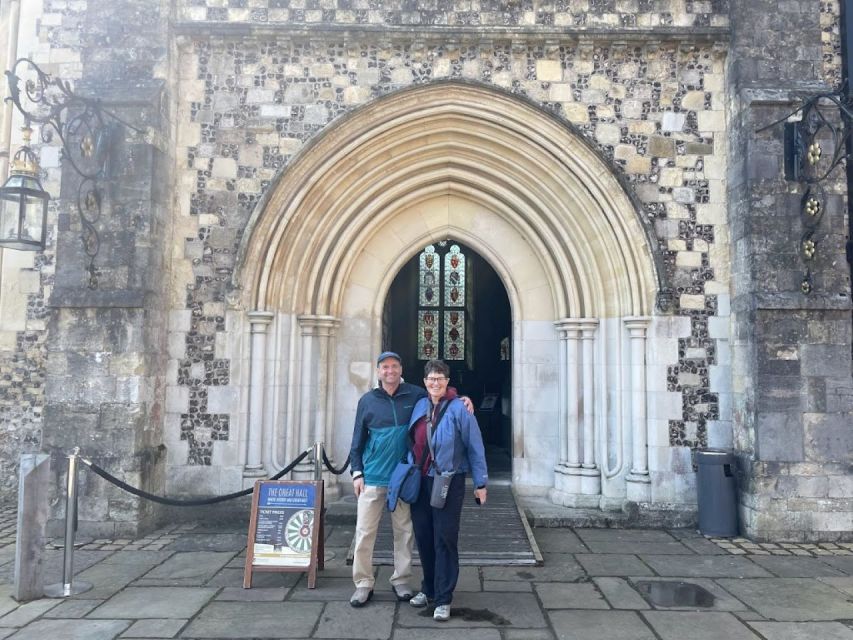
- Winchester Castle’s Great Hall and the Round Table moment that people remember long after the tour ends
- Winchester Cathedral grounds plus a respectful stop connected to Jane Austen
- King Alfred the Great at his iconic statue, with the story behind the name
- River Itchen walk along the Itchen Navigation, tied to John Keats’ poetic inspiration
- Wolvesey Castle (Old Bishop’s Palace) views that help you picture the city’s power structure
Meeting at the West Gate: your easy start point
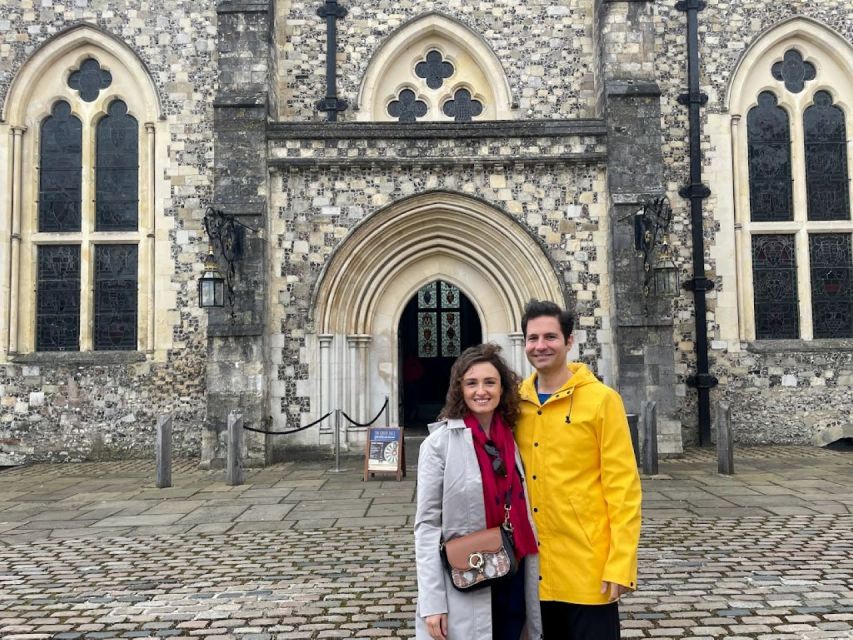
You’ll meet in front of the Westgate, the medieval entrance to Winchester, at the top end of the High Street. That matters more than it sounds. Winchester can feel like a maze of lanes, courts, and clever little sightlines, and starting at a big, obvious landmark helps you lock in your bearings quickly.
From there, the tour is built for flow: you walk a manageable amount, then you stop often enough to take photos and absorb the details. It also helps that the tour is only two hours. You get a concentrated hit of the city’s most famous names—Arthur, William the Conqueror, Alfred, Jane Austen, John Keats—without the time drain of a full-day plan.
Practical tip: if your phone’s GPS tries to drop you on the wrong side of the High Street, use the Westgate as your anchor. That simple move will save you the awkward minutes of wandering while the group moves on.
Winchester Castle’s Great Hall: why the Round Table hits so hard
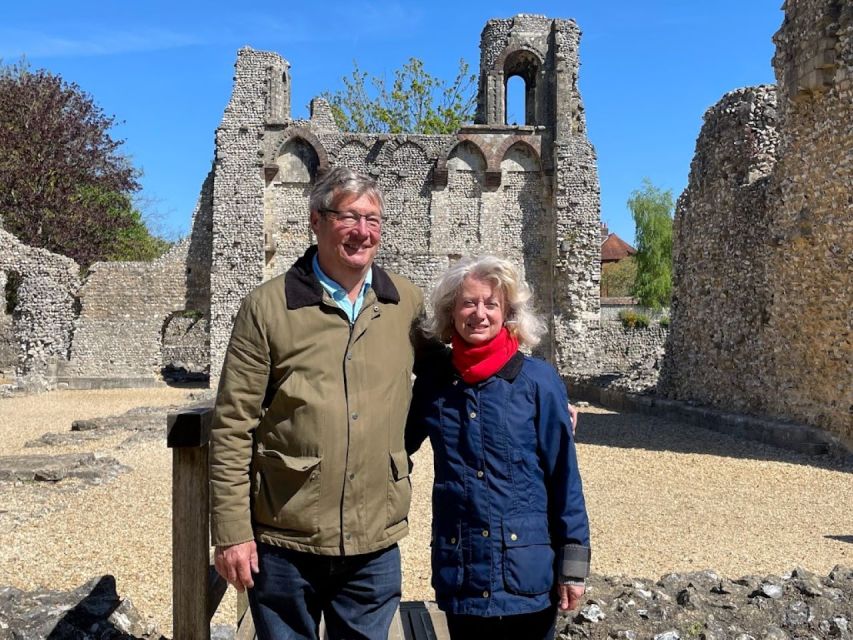
The first big payoff is the castle stop. Winchester Castle was built by William the Conqueror, and that sets the tone right away: this is not just a pretty town walk. It’s about power—who built it, why it mattered, and how legend piggybacks on real buildings.
The highlight is entering the Great Hall and seeing the Round Table. Even if you know the basics of Arthurian legend, this is the kind of scene where the facts and the story blur in the best way. Standing there turns King Arthur from a book idea into something connected to architecture and place. It’s the fastest way I’ve found to make medieval myth feel tangible.
The tour also links what you’re looking at to the bigger thread running through Winchester: Norman rule, royal symbolism, and how later generations kept using these same spaces to tell new stories. You’ll come away with more than names. You’ll understand the logic behind why these legends stuck around.
A small timing note: you’re there for a short stretch, so come with your curiosity turned up. If you’re the type who loves reading plaques slowly and taking lots of notes, you might want to plan a follow-up visit later when you can go at your own speed. Entry to sites isn’t included, so the experience here is shaped by what the tour schedule covers.
Buttercross Monument: the small stop that makes the streets make sense
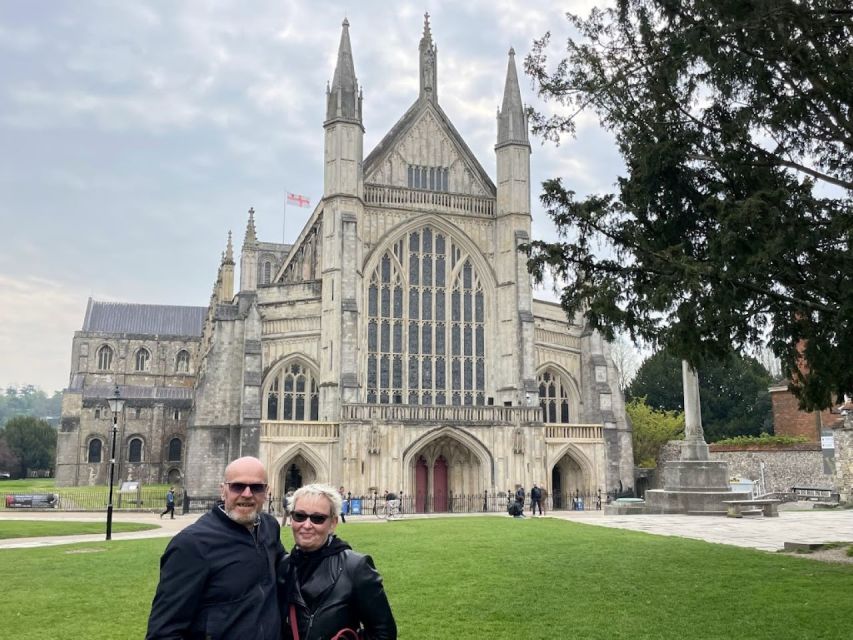
After the castle, you’ll move back into town, with a stop at the Buttercross Monument. It’s easy to treat monuments like background decoration. This is exactly the kind of stop that helps you avoid that mistake.
Why it matters: the Buttercross area connects Winchester’s medieval street life to how the city functioned day to day—markets, civic life, and the kind of public space where stories get repeated and remembered. It’s also a useful transition between the grandness of castle halls and the spiritual scale of the cathedral.
Even though this is brief, it gives your brain a rest from the biggest legends. You start noticing the city as a place people lived in, worked in, and walked through.
Winchester Cathedral grounds and Jane Austen’s burial stop
Next comes Winchester Cathedral, one of Northern Europe’s largest Gothic cathedrals, and the experience here is mostly about the grounds and respectful on-site context.
The stop is timed for photos and main sightseeing rather than a long inside visit. You’ll admire the cathedral’s setting and take in the feel of the place. If you came expecting this to be purely an interior cathedral tour, keep expectations practical: entry to sites is not included, so you’ll want to decide whether you want to add cathedral interior time on your own.
The emotional and literary anchor is Jane Austen’s burial. Hearing her name in a museum is one thing. Seeing the place where she is laid to rest is something else. It gives the day a softer edge, away from kings and castles, and it also helps you understand why Winchester gets remembered by readers as much as historians.
This pairing—cathedral grandeur plus Austen—makes a lot of sense. It reminds you that English history isn’t only battles and crowns. It also lives in the places where writers ended their lives and where later visitors come to reflect.
River Itchen and King Alfred: Keats’ inspiration on foot
One of the smartest sections of this tour is the walk along the River Itchen, tied to the Itchen Navigation area. This is where the tour slows just enough to let the city breathe.
You’ll pass the iconic statue of King Alfred the Great and hear his story, and then you’ll move into the riverbank walk where John Keats’ poetry enters the picture. The connection works because it’s visual. Even if you don’t recite Keats on command, you can stand by the water and feel why poets pick this kind of scene.
This part also helps you understand Winchester as a living system. Rivers powered towns, moved goods, and shaped how people built. So when you hear the Keats connection, it isn’t just name-dropping—it becomes a way to read the setting.
Practical tip: pack layers. The river walk can feel cooler, and weather around rivers can change quickly. Even on a mild day, comfortable shoes matter because you’re on foot through uneven historic streets.
Wolvesey Castle and Winchester College: power, faith, and education
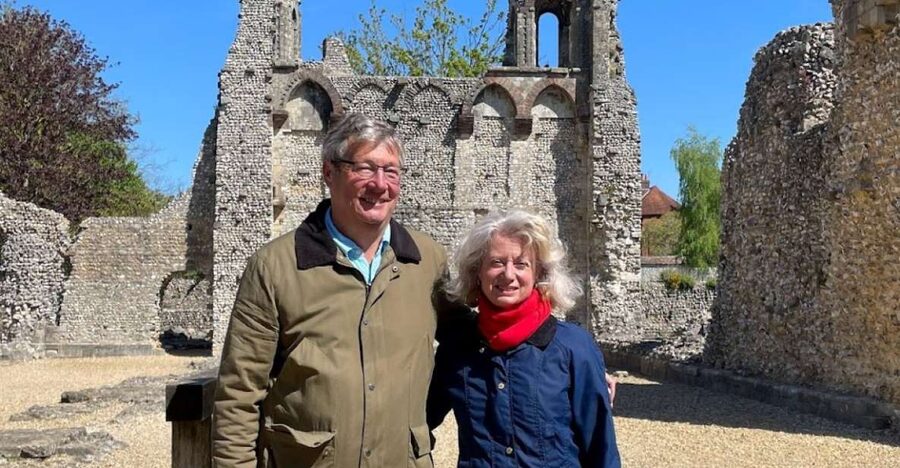
After the river, the tour moves to Wolvesey Castle, the Old Bishop’s Palace. The word palace is doing heavy lifting here. It helps you picture the church’s role as political power—wealth, authority, and the day-to-day influence of religious leadership in medieval Winchester.
This stop is described as a visit and sightseeing time. In practice, it’s a chance to look at remnants and surrounding viewpoints in a way that builds your mental map. You don’t need to be an expert in church history to get something from it. The guide’s job here is to give you the story hooks so the stones don’t feel like random ruins.
Then you’ll pass Winchester College and take in the look of College St, including a stop at 8 College St. These brief city-street sightings do two things:
- They show you Winchester’s long timeline, from medieval authority to later educational prestige
- They help you connect the day’s big story names to everyday street layouts
Even if you only get a quick look, it’s the kind of contrast that makes the day feel cohesive instead of scattered.
Price and value: is $16 a fair deal?
At $16 per person for a two-hour guided walking tour, you’re not paying for long paid-entry time. You’re paying for interpretation—how a guide turns a few key stops into a clear narrative you can carry.
Included value points you’ll actually notice:
- A live guide to connect the Arthur/William/Alfred stories to specific places
- Photography included, which matters because you’ll get more out of your pictures when you know what you’re photographing
- A discount at the Great Hall
- 20% off at The Wykeham Arms, with reservation required
That pub discount is a nice bonus if you’re hungry later and want to keep costs down. Just remember: you still need to handle food and drink yourself.
The main value trade-off is the one already mentioned: entry to sites is not included. That doesn’t make the tour bad—it just means the plan is designed around what you can see within the tour windows. If you’re the type who always wants to go inside every major site, you’ll probably treat this tour as your orientation pass, then add one or two paid entrances on your own afterward.
The guide experience: fast pacing with room for real questions
The most consistent praise from people who’ve done the tour is the guide quality and how the stories land. I’m looking for two things in a walking tour guide: clarity and energy. This one tends to deliver both, with plenty of humour along the way.
Many visitors describe the guides as interactive and good at keeping the walk moving without turning it into a sprint. You still get enough time at stops for questions and photos, which is crucial for a tour like this because the material spans legends, rulers, poets, and novelists.
One more practical win: the guides are comfortable speaking in clear English, which helps if you’re not a native speaker. If you’re travelling from the US, Canada, Australia, or anywhere else, that clarity can make a huge difference to enjoyment. Also, if you end up in a small group (or even just a couple), the tour can feel more personal, because the guide can adjust to your pace.
Who this tour is best for (and who might want extra time)
This tour is a strong fit if you:
- Want a quick first look at Winchester that connects castle, cathedral, and literature
- Like stories with real locations attached, not just dates in a lecture
- Prefer a short walk over a full-day plan, but still want multiple major stops
- Enjoy the Arthur/Conqueror/Alfred storyline and also want the Jane Austen and John Keats angle
It may be less ideal if you:
- Want long interior time in the cathedral or paid museum-level exploring during the tour window
- Plan to spend most of your day deeply inside buildings rather than getting a guided orientation
- Are sensitive to cold or wet weather and don’t want a river walk component
Should you book this Winchester historic castles and cathedrals walking tour?
Yes, I’d book it if this is your first time in Winchester. It’s one of the better ways to understand why the city is famous for more than one kind of heritage. You’ll leave with a mental map, a handful of strong stories tied to places you can point to, and enough direction to choose what to return to on your own.
Book it especially if you like mixed themes—kings and legend plus a real writer connection—because the tour is set up to make those connections feel natural, not forced. And with the extra discounts (especially the Wykeham Arms option), it can feel like more than a walking tour. It’s also a useful way to set up the rest of your day in Winchester.
FAQ
How long is the Winchester: Historic Castles and Cathedrals Walking Tour?
It lasts 2 hours.
What does the tour cost?
The price is $16 per person.
Where do I meet the guide?
Meet in front of the Westgate, the medieval entrance to Winchester, at the top end of the High Street.
What’s included in the price?
The tour includes a guided tour, photography, and discounts: 20% off at The Wykeham Arms (reservation required) and a discount at the Great Hall.
Is entry to Winchester Castle or Winchester Cathedral included?
No. Entry to sites is not included.
What language is the tour guide speaking?
The live tour guide speaks English.
Is the tour wheelchair accessible?
Yes, the tour is wheelchair accessible.
FAQ
Is there free cancellation, and can I reserve without paying right away?
Yes. You can cancel up to 24 hours in advance for a full refund, and you can use reserve & pay later to keep plans flexible.