REVIEW · COPENHAGEN
Copenhagen: Amalienborg Palace Museum Entry Ticket
Book on GetYourGuide →Operated by Kongernes Samling / The Royal Danish Collection · Bookable on GetYourGuide
Royal rooms in Copenhagen tell a human story. With an entry ticket to the Amalienborg Palace Museum, you can walk through preserved spaces connected to Denmark’s monarchy, including rooms kept as if the family just stepped out. I like that it frames the crown as real people, not just portraits and dates.
Two parts I especially liked are the feeling of lived-in history and the way the museum makes connections across countries. You get a guided-by-layout visit through major rooms such as Christian X’s study and the dining room, where period details do a lot of the storytelling.
One caution: this is not a guided tour. You’re doing it on your own (with audio available), and if you arrive late your ticket becomes invalid after 20 minutes, plus large bags and even baby strollers are not allowed inside.
In This Review
- Key points before you go
- Amalienborg Palace Museum: what this ticket actually gets you
- Where to enter and how the ticket check works
- Your self-guided flow: how to pace the visit
- Fabergé Chamber: royal jewelry and Denmark–Russia connections
- Christian X and Queen Alexandrine: dining room as a time capsule
- Christian X’s study: officer-style details you can actually see
- Queen Louise’s private salon: family ties across Europe
- Gala Hall: the big showpiece with craft and scale
- Temporary exhibition: FREDERIK X: King of Tomorrow (as provided)
- Audio support and family-friendly pacing
- Timing matters: the 20-minute rule and why it feels strict
- Price and value: is $19 worth it?
- Who should book this entry ticket?
- Should you book? My practical take
- FAQ
- FAQ
- Where is the entrance to the Amalienborg Museum?
- Do I need to go downstairs to check in my ticket?
- What happens if I arrive late?
- Is a guided tour included with the ticket?
- How long should I plan to spend inside?
- Is the museum wheelchair accessible?
- What items are not allowed inside the museum?
- Is the museum suitable for children?
- Is there a temporary exhibition included?
Key points before you go

- Fabergé Chamber: Russian jewelry (1860–1917) ties Denmark and Russia together, including the Fabergé coronation brooch for Tsar Nicholas II.
- Preserved royal rooms: spaces like Christian X’s study and Christian X and Queen Alexandrine’s dining room are shown much as they were in their time.
- Gala Hall scale: an 8-meter ceiling, gilding, and views toward the palace square, plus sculptures by Bertel Thorvaldsen.
- A strong layout for families: the museum is set up as a historical family museum, and there’s audio support that works well for kids.
- A ticket that includes exhibitions: your entry covers access to exhibitions, including the highlighted temporary show FREDERIK X: King of Tomorrow (Mar 22–Sep 8, 2024) based on the provided info.
- Plan for a tight window: scanning happens downstairs, and your ticket stops being valid if you’re more than 20 minutes late.
Amalienborg Palace Museum: what this ticket actually gets you
Amalienborg Palace is the best-known royal address in Copenhagen, and it’s not one single building. It’s a complex of four palaces, and the Amalienborg Museum is part of Christian VIII’s Palace. That matters because you’re not just seeing a single exhibit room. You’re moving through significant interiors that were tied to the Danish Royal Family.
Your entry ticket is valid for one day, and you’ll want to check available starting times. Once you’re inside, the museum aims to take you through about the last 150 years of monarchy in Denmark, using preserved rooms and personal belongings to connect historical events to the people who lived through them.
What I like about the museum concept is that it treats the monarchy as a family and a household, not just a headline. It’s also one of those rare places where an eight-meter-tall hall can sit right beside a study with dark, officer-style furnishings. The contrast keeps it interesting even if you’re not a die-hard royal history fan.
You can also read our reviews of more tours and experiences in Copenhagen.


Where to enter and how the ticket check works
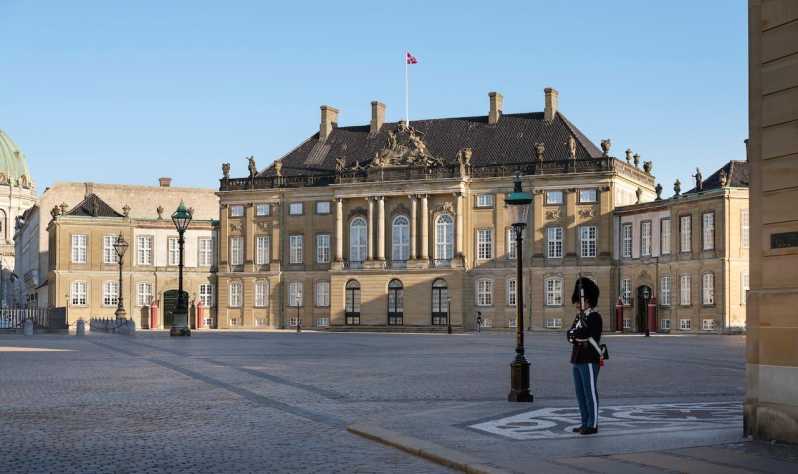
Getting in is straightforward, but it’s the kind of place where a tiny mistake can cost you time. The entrance of the Amalienborg Museum is in the first building to your left if you enter Amalienborg Square from Frederiksgade/the Marble Church.
Before you go upstairs to the exhibition spaces, you’ll need to go downstairs to the cashier to present and scan your online ticket. This is where the process is simple but strict: arrive on time. If you show up more than 20 minutes late, your ticket is no longer valid.
Also plan your bag situation. Large luggage, large purses, backpacks, food and drinks, and pets are not allowed inside. Baby strollers are also not allowed. (Assistance dogs are allowed.) If you’re touring Copenhagen with a daypack, I’d keep it small and avoid bringing anything bulky that could be treated as luggage.
Your self-guided flow: how to pace the visit
This ticket is self-paced. There’s no guided tour included, so your time is your choice. Reviews and the museum layout point to a visit length that often lands around 45 minutes to an hour for the indoor museum route, depending on how slowly you read and how much you linger in the rooms.
Here’s how I’d structure your plan so you don’t feel rushed:
- Start with the main exhibition route and pick up any audio support you want (there’s an audio guide, and it can include kid-focused narration via QR code).
- Focus on rooms that show personal life, like the dining room, study, and private salon. Those are the spaces that make the monarchy feel human.
- Save the largest visual space for last, like the Gala Hall, where ceiling height and design details add a strong finale feeling.
- If time allows, spend a few minutes outside along Amalienborg Square. The museum is great indoors, but the surrounding palace setting helps the rooms make sense.
One practical advantage of a self-guided visit is flexibility. If you spot a room you care about, you can slow down there. If you’re less interested in one section, you can move on without feeling like you’re holding up a group.
Fabergé Chamber: royal jewelry and Denmark–Russia connections
One of the most distinctive stops is the Fabergé Chamber, which highlights hand-crafted Russian jewelry from 1860–1917. What makes this room more than a display case of pretty objects is the stated focus on the close ties between the Danish and the Russian monarchy.
The star item noted here is the Fabergé coronation brooch created for the coronation of Tsar Nicholas II. Even if you’ve never studied European royal marriages, the museum shows you why this matters: royal families didn’t live in isolation. They were linked through marriages, diplomacy, and shared tastes that traveled across borders.
In practical terms, I’d treat this room as your anchor. It’s easy to spend time here because the visual impact is immediate. Then, when you return to other rooms, you’ll start seeing the same idea—power and identity expressed through household choices—show up again and again.
Christian X and Queen Alexandrine: dining room as a time capsule
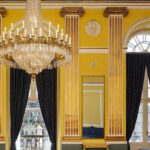
The dining room dedicated to Christian X and Queen Alexandrine is one of those rooms where the museum’s preservation approach really shines. The setup is described as appearing almost exactly as it did when they lived in the palace from 1899 until their deaths in 1947 and 1952.
That timeline detail is important for you as a visitor. You’re not looking at a random historic room. You’re looking at a specific family period that overlaps decades of Danish life. And because dining rooms are where daily routines happen, the exhibit helps you picture ordinary moments—meals, conversation, hosting—rather than only grand events.
If you tend to skip museum furniture because you think it will feel decorative, don’t skip this one. It’s exactly the kind of space where the museum’s idea of personal belongings and preserved interiors gives you a more grounded understanding of monarchy as lived experience.

Christian X’s study: officer-style details you can actually see
Another standout is Christian X’s study, preserved as though he had just left it. The study is shown as it appeared during the king’s time in the palace, from 1899 to his death in 1947.
The museum doesn’t just say preserved. It describes the room’s look and feel: dark, heavy furnishings and dark walls, which are typical of a gentleman’s study around 1900. It’s also described as clear that the room belonged to an officer.
What I like here is that the exhibit gives you a visual clue for interpretation. Instead of presenting the study as a stage set, it ties the atmosphere to a kind of identity: order, discipline, and the working world of a ruler. If you enjoy architecture, interior design, or period objects, this room rewards your attention without needing extra explanation.
Queen Louise’s private salon: family ties across Europe
The Queen Louise private salon, described as from around 1895, shifts the tone from formal to personal. This room reflects interior decoration of the time and includes paintings and framed photographs on tables.
The museum highlights the photographs as evidence of her rich family life with close ties throughout Europe. That detail helps connect the salon to the broader theme of linked monarchies. The palace isn’t shown as a single-country bubble. It’s presented as a networked household.
For me, this room works well if you’re visiting with kids or with someone who finds palace history too stiff. Photos and paintings can feel less academic than timelines, and they give your eyes a path to follow.
Gala Hall: the big showpiece with craft and scale
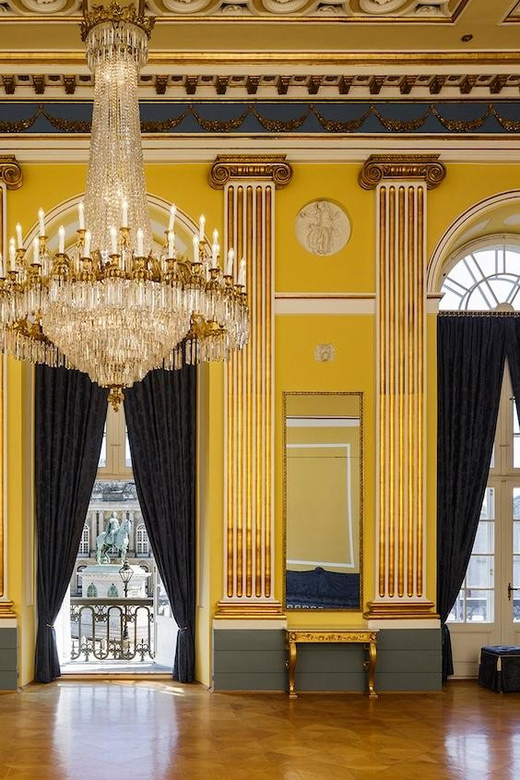
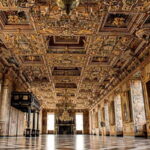
When you reach the Gala Hall, you get the kind of room that makes you stop without effort. The ceiling height is described as 8 meters, with lavish gilding and a view over the palace square.
This hall also has clear artistic credits, which you’ll appreciate if you like tracing who did what:
- Interior design commissioned in 1794 by the Royal Family to Nicolai Abildgaard
- Sculptures by Bertel Thorvaldsen
If you’re wondering why those names matter, here’s the practical take: when a room is this visually impressive, it’s easy to treat it as only decoration. The museum ties the room to major Danish artistic talent, which helps you see the hall as a cultural work, not just royal furniture.
Also, the view toward the palace square gives you a sense of scale and placement. You see the museum’s interior as part of a real civic space in the middle of Copenhagen.
Temporary exhibition: FREDERIK X: King of Tomorrow (as provided)
Your ticket includes access to exhibitions, and the information provided highlights a temporary exhibition: FREDERIK X: King of Tomorrow. It’s described as running from March 22 to September 8, 2024.
The exhibition uses photographs, objects, video clips, paintings, and sound to create a portrait of the new King of Denmark and marks the historical succession on January 14. If you’re visiting around a similar period or if the museum is running another temporary show, expect a mix of media and narrative about monarchy today, not only in the 1800s.
Because the specific dates given are for 2024, your best move is to check what’s currently on display when you book or arrive. But the key point for your planning is this: the museum isn’t only “old rooms.” It adds an exhibition layer tied to succession and present-day monarchy.
Audio support and family-friendly pacing
This museum is set up to work across ages. It’s described as suitable for all ages, and the practical reason is the way the information is delivered.
In the information you provided, there are mentions of audio guide options. One review notes that in each section there’s an audio guide tour for children, and another mentions that there’s an audio guide reached through a QR code, with a typical visit taking about 45 minutes to an hour.
So if you’re traveling with a 7-year-old (or anyone who doesn’t love reading museum labels), this is the kind of place where audio can keep attention without turning it into a guessing game. For adults, audio can also help you connect the room details to the larger monarchy story without feeling like you have to read everything in silence.
Timing matters: the 20-minute rule and why it feels strict
The museum is clear about ticket timing. If you arrive more than 20 minutes late, your ticket will no longer be valid.
I get why it’s frustrating. It’s also a useful rule for you. It encourages you to treat this like an appointment. If you’re doing other Copenhagen stops the same day, don’t schedule this as a last-minute wander.
My advice: aim to arrive a bit early, then build in a buffer for finding the entrance and passing the cashier downstairs.
Price and value: is $19 worth it?
At $19 per person, the value depends on your taste. If you like interiors, preserved spaces, and standout objects like Fabergé jewelry, you’ll likely feel it’s a fair price for a focused palace museum.
But there’s also an honest consideration reflected in one of the comments: some people feel there is not a lot to see for the price. That’s not automatically a bad sign. It often means the visit is more compact than some big museum complexes.
Here’s how to make the price feel better for your day plan:
- Pair it with a walk around Amalienborg Square and the surrounding area so your time feels fuller.
- Prioritize the rooms that match your interests: jewelry and cross-monarchy connections (Fabergé Chamber), personal spaces (dining room, salon, study), and the architecture/art centerpiece (Gala Hall).
- If you have limited time in Copenhagen, a self-contained museum route can be a good use of it. If you have lots of time and prefer larger collections, you might want additional attractions beyond this.
Who should book this entry ticket?
You should strongly consider this ticket if you:
- Want a close-up view of palace rooms tied to Danish royal life
- Like object-driven history, especially the Fabergé-linked Denmark–Russia connections
- Prefer self-guided pacing with audio support, including kid-friendly narration
- Are visiting Copenhagen as a family and want a museum that isn’t only for adults
You might reconsider if:
- You’re expecting a long, guided, multi-stop experience (no guided tour is included)
- You need to bring large bags, strollers, food, or pets (these are not allowed)
- You’re arriving late or running tight on timing, because of the 20-minute ticket rule
Should you book? My practical take
I think this is a good booking when your goal is quality rooms and a readable storyline, not a giant museum marathon. The combination of preserved interiors (especially Christian X’s study and the dining room), plus the Fabergé Chamber, gives you a mix that feels both personal and internationally connected.
If you’re the type who enjoys seeing how power is expressed in everyday spaces—studies, salons, dining rooms—this will likely click fast. If you want lots of variety across many floors for a long time, then it may feel like a shorter visit than the price might suggest.
If you decide to go, do it with a simple plan: arrive on time, go downstairs for your ticket scan, use the audio where it helps, and give the Gala Hall enough time to land properly at the end.
FAQ
FAQ
Where is the entrance to the Amalienborg Museum?
The museum entrance is in the first building to your left if you enter Amalienborg Square from Frederiksgade/the Marble Church.
Do I need to go downstairs to check in my ticket?
Yes. Before your visit, you go downstairs to the cashier to present and scan your online ticket.
What happens if I arrive late?
If you arrive more than 20 minutes late, your ticket is no longer valid.
Is a guided tour included with the ticket?
No. This ticket is for museum entry and access to exhibitions, but it does not include a guided tour.
How long should I plan to spend inside?
A typical visit is about 45 minutes to an hour, and some people spend around an hour in the palace plus extra time exploring outside.
Is the museum wheelchair accessible?
Yes, the museum is wheelchair accessible.
What items are not allowed inside the museum?
Oversize luggage, baby strollers, food and drinks, luggage or large bags, pets (assistance dogs allowed), and bags are not allowed.
Is the museum suitable for children?
Yes. It’s described as suitable for all ages, and there are mentions of audio support for children via QR code.
Is there a temporary exhibition included?
Your ticket includes access to all exhibitions. The provided details specifically mention FREDERIK X: King of Tomorrow running from March 22 to September 8, 2024.