REVIEW · ISTANBUL
Dolmabahçe Palace and Sunset Tour on Luxury Yacht
Book on Viator →Operated by Tour Book Turkey · Bookable on Viator
Dolmabahçe plus sunset water views is a winning combo. You’ll get a guided Dolmabahçe Palace visit, then slide into a luxury yacht sunset cruise with snacks and stories about the Bosphorus highlights. One thing to plan for: Dolmabahçe entry/admission isn’t included, so you’ll want to budget extra for that ticket.
I like how this tour keeps the pacing simple: palace first, then the Bosphorus. The group is kept small (up to 20), and you’ll travel for about 5 hours total, with the second half focused on passing major landmarks and learning what you’re seeing.
Because it’s on the water, it’s not for everyone. If you’re prone to sea-sickness or you have vertigo, this might feel uncomfortable even with a restroom on board.
In This Review
- Key things you should notice before you book
- How this Dolmabahçe + sunset yacht combo makes Istanbul easier
- Entering Dolmabahçe: grand rooms, palace power, and a final moment
- The luxury yacht at sunset: what comfort you actually get
- The Bosphorus pass-by route: landmarks that make sense when you hear the story
- Beşiktaş waterfront energy: Çırağan Palace and Ortaköy
- Bosphorus Bridge and Bebek: the modern skyline with Ottoman context
- Rumeli Hisarı and Anadolu Hisarı: fortresses built for control
- Fatih Sultan Mehmet Bridge: a modern megastructure in the skyline
- Kucuksu Palace and Beylerbeyi Palace: Ottoman summer life on the shore
- Maiden’s Tower and Galata Tower: legends and big-city silhouettes
- Bosphorus 101, explained while you watch the water
- Price and value: where the $78.10 works best
- Who should choose this tour, and who should skip it
- Meeting points, timing, and what to expect on arrival
- Before you go: small comfort and planning notes that matter
- Should you book the Dolmabahçe Palace and Sunset Luxury Yacht Tour?
- FAQ
- How long is the Dolmabahçe Palace and sunset yacht tour?
- What is the price per person?
- Is Dolmabahçe Palace admission included?
- What snacks and drinks are included on the yacht?
- Is alcohol included on board?
- Does the tour have a restroom on the yacht?
- Is the tour guided, and what language is used?
- How big is the group?
- Where does the tour start and end?
- Are transfers included?
- Is this tour refundable if I cancel?
Key things you should notice before you book
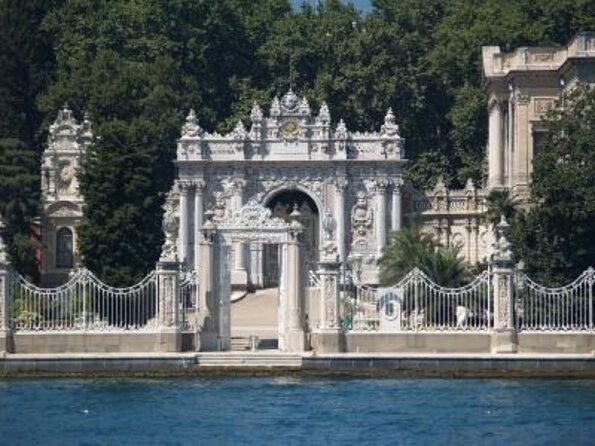
- Dolmabahçe Palace with a guide: you’ll focus on major rooms and the meaning of the palace during Ottoman rule, now as a museum
- Small-group yacht time: max 20 people makes the cruise feel more like a shared experience than a cattle call
- Food and drink on board (no alcohol): cookies, baklava, lemonade, fruit plates, Turkish tea, and water
- A guided Bosphorus pass-by route: you’ll hear stories tied to the palaces, bridges, and fortresses you see from the deck
- Clear comfort limits: not recommended for vertigo or sea-sickness, so choose honestly
How this Dolmabahçe + sunset yacht combo makes Istanbul easier
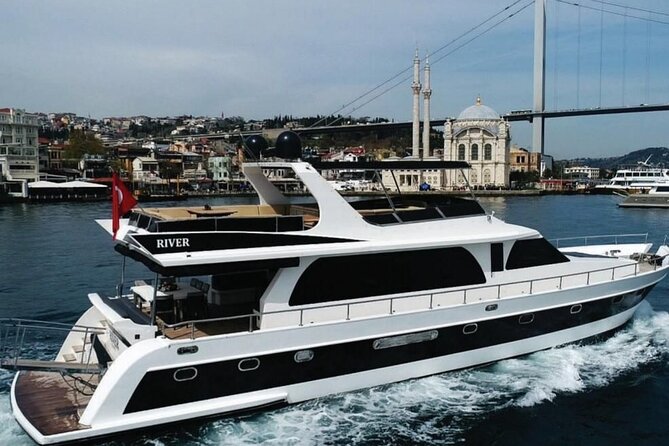
Istanbul can feel like a lot at once. This tour smartly breaks the day into two parts that actually help your brain: first the Ottoman “power center” in Dolmabahçe, then the Bosphorus as a living corridor between empires, neighborhoods, and legends.
You’ll come away with two kinds of understanding. In the palace, you learn how the Ottoman world operated and why these buildings mattered. On the boat, you connect the skyline to the stories behind the shoreline.
And yes, you’ll be hungry in the best way. The yacht includes a steady flow of baklava, cookies, lemonade, fruit plates, Turkish tea, and water, plus a restroom on board. That matters because a sunset cruise feels nicer when nobody is scrambling for food or waiting in lines.
You can also read our reviews of more tours and experiences in Istanbul.
Entering Dolmabahçe: grand rooms, palace power, and a final moment
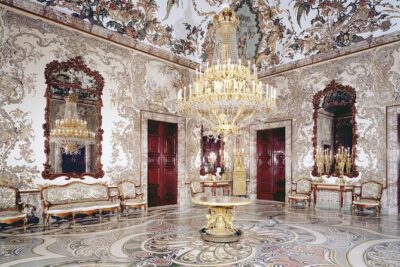
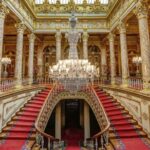
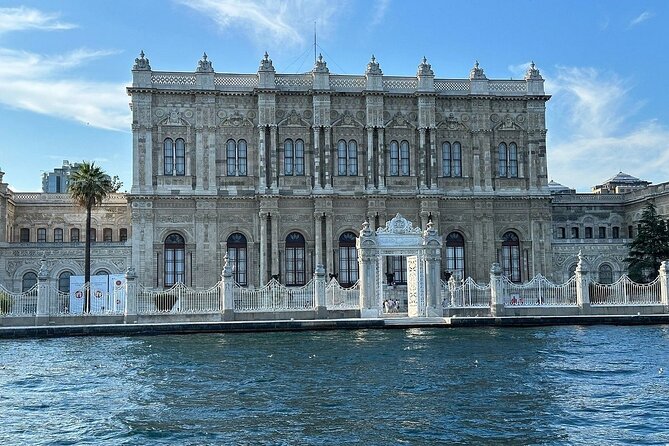
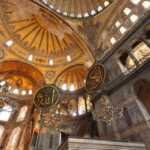
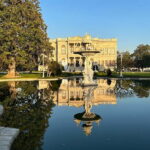
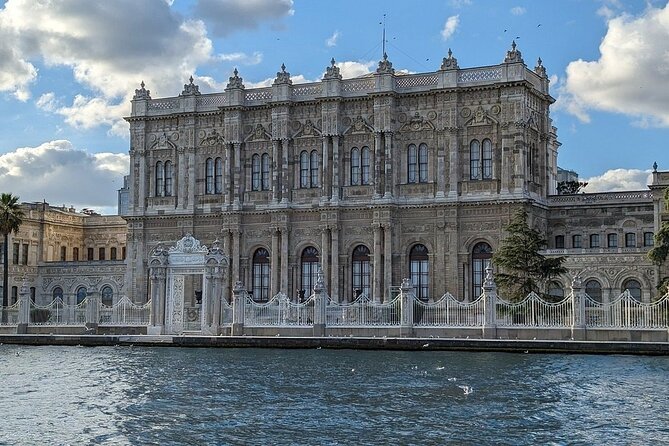
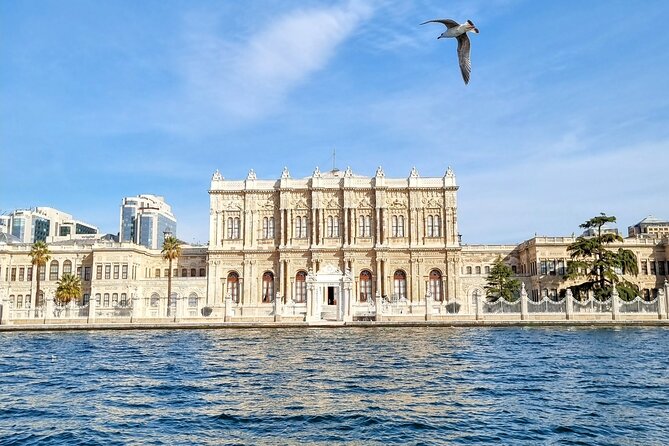
Dolmabahçe Palace is an Ottoman palace that became an administrative center, and it’s now a museum. This part of the day is guided, with a professional guide leading you through the grand halls, lavish gardens, and the opulent furnishings—so you’re not just walking and guessing.
You’ll also hear about a specific emotional piece of the palace: it’s described as the place where the beloved leader passed away. That’s the kind of detail that changes how you look at rooms. You start paying attention to what’s nearby, what feels ceremonial, and what seems designed to impress.
A practical note: Dolmabahçe entry/admission isn’t included. Since the rest of the tour price does include a guide and the yacht experience, you’ll get better value if you handle that ticket early rather than trying to do it last-minute.
The luxury yacht at sunset: what comfort you actually get
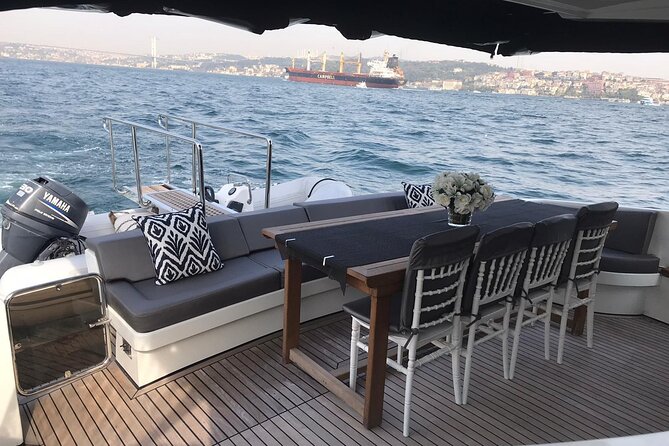
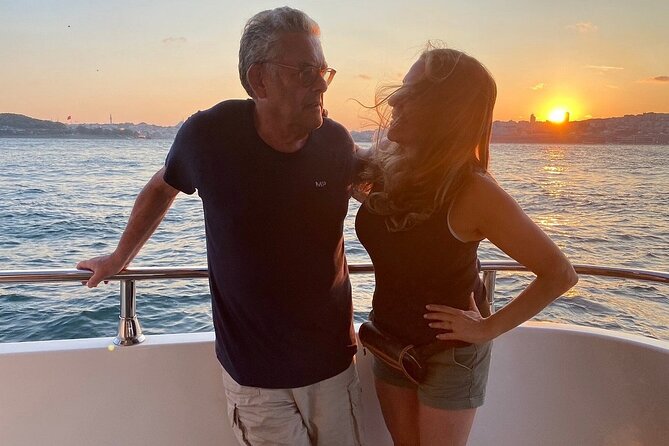
After the palace visit, you shift into a calmer rhythm. The yacht portion is a sunset tour that passes key Bosphorus landmarks while you hear the background stories of each heritage site.
You’re not going into every building. The value is in the viewpoint and the narration. From the water, the Bosphorus becomes a big map. Bridges, towers, fortresses, and palaces line up in your mind, and you start recognizing patterns: where empires guarded, where rulers relaxed, and where trade and travel shaped daily life.
On board, you get:
- cookies and baklava
- Turkish tea plus lemonade
- fruit plates and water
- a restroom on board
No alcohol is included, so if you like wine or beer with views, you’ll need to plan for that separately.
Also pay attention to suitability. This experience specifically isn’t recommended for people prone to sea-sickness, and it’s not recommended for vertigo. If either applies to you, pick another option that stays on land.
The Bosphorus pass-by route: landmarks that make sense when you hear the story
The cruise portion is where Istanbul starts feeling like a single connected place. Here are the standout sights you’ll pass, and what’s worth noticing about each.
Beşiktaş waterfront energy: Çırağan Palace and Ortaköy
Early on, you’ll see Çırağan Palace’s setting along the water. It was commissioned by Sultan Abdulaziz and designed by architect Sarkis Balyan. The building is tied to a darker chapter too: after Abdelaziz was deposed, he was imprisoned there for years with his family. Later, after Murat V was deposed, he was also imprisoned there with his family for 29 years.
You’ll likely also notice how the shoreline changes into Ortaköy. Ortaköy is described as a neighborhood on the European side in Beşiktaş, with a lively Ortaköy Bazaar full of cafes, bars, souvenir shops, and an “intellectual market.” If you’ve ever wandered bazaars at 9 a.m., you’ll appreciate the practical detail here: the movement starts after about 10:00, so the early hours can feel slower.
Even if you’re just passing by, knowing that rhythm helps you understand why locals gather when they do.
Bosphorus Bridge and Bebek: the modern skyline with Ottoman context
At the feet of the Bosphorus Bridge (European side in Ortaköy, Anatolian side in Beylerbeyi), you get an easy visual landmark that links neighborhoods. It’s described as the first bridge built on the Bosphorus, and it works as one of the city’s main connectors alongside ferries and later bridges.
Then you’ll roll into Bebek, a historic Bosphorus neighborhood. The name translation—baby—is tied to its attractive positioning along the water. It’s also known for historical buildings, including Bogazici University, plus waterside mansions and strong restaurant culture today.
On a sunset cruise, Bebek is one of those sections where you’ll feel the contrast. Modern city life sits beside Ottoman-era waterfront patterns.
Rumeli Hisarı and Anadolu Hisarı: fortresses built for control
This is one of the most compelling sections for history-minded travelers. Rumeli Fortress (Rumeli Hisari) is on the European side in Sariyer. Construction started in 1453 by Sultan Mehmet the Conqueror at the narrowest point of the Bosphorus, and it was completed in just three months. It was meant to protect against naval attacks before the conquest, then after conquest it functioned as an inspection point for maritime traffic.
Directly across is Anadolu Hisarı on the Asian side in Beykoz. It was built in 1395 by Beyazit I, with a citadel and exterior castle walls. After the conquest it lost strategic importance and became a military hospital. Over time, settlement grew around it, and later restoration from 1991–1993 turned parts into an open-air museum. You can visit only the outer walls, and the road runs through the area.
From the water, it’s easier to understand why two fortresses faced each other. You’re literally seeing the chokepoint.
Fatih Sultan Mehmet Bridge: a modern megastructure in the skyline
You’ll also pass the Fatih Sultan Mehmet Bridge (Fatih Sultan Mehmet Köprüsü), Istanbul’s second Bosphorus bridge. It began in 1986 and opened on July 3, 1988. It’s described as the 14th largest steel suspension bridge in the world and carries a significant share of trans-Bosphorus traffic.
This is a helpful stop because it frames how Istanbul’s “narrow passage” problem got solved over centuries: first forts, then ferries and bridges, now major suspension infrastructure visible across the skyline.
Kucuksu Palace and Beylerbeyi Palace: Ottoman summer life on the shore
Küçüksu Palace is described as a small Ottoman summer palace on the Bosphorus coast road between Üsküdar and Beykoz, ordered by Sultan Abdulmecit and designed by Nikogos Balyan. What I like about including it as a pass-by moment is the mood shift: you move from military and governance to relaxation.
Then comes Beylerbeyi Palace, also an Ottoman summer palace complex built in the 1860s on the Bosphorus shores, right under the Bosphorus Bridge. Architect Sarkis Balyan designed it, mixing renaissance and baroque elements with other styles from both East and West. It’s arranged with six halls, 24 rooms, and even an on-site hamam, plus apartments for the Imperial Mabeyn and Valide Sultan’s side.
From the deck, you won’t tour every room, but you can still appreciate the scale and the deliberate placement. It’s a reminder that the Bosphorus wasn’t only for defense and transport. It was for court life too.
Maiden’s Tower and Galata Tower: legends and big-city silhouettes
Maiden’s Tower (Kız Kulesi) is one of those sights you can’t miss. It sits on a tiny island about 200 meters from the shore in Üsküdar and carries legends, including the oracle predicting that a sultan’s daughter would die on her 18th birthday from snake bite. The tower was built as protective isolation, and the legend ends tragically—snakes, fate, and a basket of fruit.
The details you’ll hear make it more than a photo stop. You’ll understand why the tower has that eerie “warning light” feeling in the skyline.
The tour also includes stories connected to Galata Tower. The text describes it as built by Genoese in 1348, nine stories tall and 66.90 meters, and notes it was the tallest building in the city when built. It also mentions uses across eras, including a fire observatory and a jail. There’s a standout moment tied to 1632: Hezarfen Ahmet Çelebi gliding from the top of Galata Tower across the Bosphorus to Üsküdar with self-constructed wings. Even if you’ve heard the legend before, hearing it while you see the skyline connection helps it stick.
Bosphorus 101, explained while you watch the water
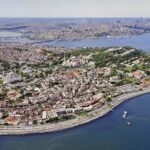
The Bosphorus is the strait separating Europe and Asia, connecting the Sea of Marmara and the Black Sea. The cruise route is basically a visual lesson in what that means for Istanbul’s identity.
You’re not just looking at pretty shoreline. You’re watching a boundary, a connector, and a stage for power shifts over centuries. With narration while you pass, you get the sense of how the city evolved on both sides at once, with forts, palaces, bridges, and neighborhoods taking shape along the same corridor.
Price and value: where the $78.10 works best

At $78.10 per person for about 5 hours, the best value isn’t the Yacht as a standalone. The value is the combo: guided Dolmabahçe plus a luxury sunset cruise with food, tea, and a guide-style narration for the Bosphorus landmarks.
Here’s what you’re getting that most people actually use:
- A guided palace visit (Dolmabahçe is admission-only on your own if you buy it separately, so having a guide for the time inside helps)
- A comfortable boat experience with a restroom on board
- Food and drink that keep the afternoon easy: cookies, baklava, Turkish tea, lemonade, fruit plates, and water
- Pass-by storytelling so you’re not just staring out the window
The cost consideration is straightforward: Dolmabahçe admission isn’t included. If you’ll buy that ticket anyway, the price feels more reasonable because you’re paying less for “guide + experience” and more for “entry” outside the package.
No transfers are included, so you’ll want to plan your own way to the start point.
Who should choose this tour, and who should skip it
This is a great pick if you want one day that balances indoor meaning with outdoor views. You’ll like it if:
- you enjoy a guided palace visit instead of wandering alone
- you want sunset light on the Bosphorus without having to plan a boat rental
- you’re happy with passing many sights from the water, not doing every one on foot
It’s not the right fit if:
- you’re prone to sea-sickness or you have vertigo concerns
- you want alcohol included (it isn’t)
- you’re hoping the palace ticket is covered (it isn’t)
Also, the group size cap of 20 makes it better for conversation and hearing explanations without constantly shouting over everyone.
Meeting points, timing, and what to expect on arrival
The tour starts at Saat Kule Kafeterya Vişnezade, Meclis-i Mebusan Cd. 38 A, 34357 Beşiktaş, Istanbul, and it ends at Kabataş pier (Dentur, Mavi Marmara) at Ömer Avni, 34427 Beyoğlu, Istanbul.
The departure schedule matters because you’re doing palace first, then cruising into sunset. If you’re the type who likes to be early, that’s smart here. Since the tour is in English and confirmation comes at booking time, you’ll usually know what you’re working with ahead of the day.
It’s also listed as near public transportation, which is helpful when you’re trying to keep the day smooth without adding transfer costs.
Before you go: small comfort and planning notes that matter
The most important “be honest” check is motion comfort. This is a yacht cruise, and the tour data notes it isn’t recommended for people prone to sea-sickness.
Second, budget for the Dolmabahçe ticket separately. If you show up thinking it’s included, you’ll lose time and momentum.
Lastly, come hungry in a good way. The on-board menu is designed for an afternoon cruise. You get sweets, tea, and hydration, plus fruit plates and water. With that covered, you’ll enjoy the views more than you’ll worry about meals.
Should you book the Dolmabahçe Palace and Sunset Luxury Yacht Tour?
I think this is a solid booking if you want an efficient Istanbul day with a guided palace start and a relaxed Bosphorus finish. The combo works because it gives you both context and scenery: you learn what the palace meant, then you see the Bosphorus as the stage that connected these power centers.
Book it if:
- you value guided explanations and don’t want to piece together your own cruise plan
- you’ll appreciate Ottoman-era palaces and fortresses even from the water
- you’re comfortable on boats for about a 5-hour window
Skip it if you can’t do boats comfortably, or if you want full building access at every stop. This tour is built around a guided palace and pass-by Bosphorus viewing, not a “go inside everything” checklist.
FAQ
How long is the Dolmabahçe Palace and sunset yacht tour?
It runs for about 5 hours.
What is the price per person?
The price is $78.10 per person.
Is Dolmabahçe Palace admission included?
No. Entry/admission to Dolmabahçe is not included.
What snacks and drinks are included on the yacht?
You’ll get cookies, baklava, lemonade, Turkish tea, fruit plates, and water.
Is alcohol included on board?
No. Alcoholic beverages are not included.
Does the tour have a restroom on the yacht?
Yes. There is a restroom on board.
Is the tour guided, and what language is used?
The Dolmabahçe portion is guided by a professional guide, and the tour is offered in English.
How big is the group?
The maximum group size is 20 travelers.
Where does the tour start and end?
It starts at Saat Kule Kafeterya Vişnezade in Beşiktaş and ends at Kabataş pier.
Are transfers included?
No. Transfer services are not included.
Is this tour refundable if I cancel?
Yes. Free cancellation is available up to 24 hours in advance for a full refund.