REVIEW · NEW DELHI
Golden Triangle with Wildlife and Royal Castle Stay
Book on Viator →Operated by Swastik India Journeys Pvt. Ltd. · Bookable on Viator
Delhi feels like a city of shortcuts—until you slow down. This 6-day Golden Triangle with wildlife and a royal-castle stay strings together Mughal landmarks, Agra’s icons, and a Ranthambore safari-style morning, ending with a heritage hotel night at Talabgaon Castle.
Two things I really like: you get door-to-door A/C car transfers (big deal in India traffic), and you also get wildlife time instead of just temple-and-fort checklists. The trip is built for comfort with 3-star hotels most nights, plus one night at Talabgaon Castle, and includes dinner and breakfast.
One consideration: monument and camera fees are not included, so your final spend won’t be just the tour price. Also, this route involves long drives between cities, so it helps to travel with a relaxed attitude and plenty of water.
In This Review
- Key highlights that make this tour worth a look
- Price and value: what the $415 really buys
- Getting around: A/C car comfort plus real sightseeing pace
- Day 1 in Delhi: Mughal power, Gandhi’s site, and skyline landmarks
- Day 2 Agra: Taj Mahal with a guide, plus forts and gardens
- Ranthambore morning safari: tiger country with an honest realism
- Talabgaon Castle night: a heritage stay that changes the pace
- Jaipur days: temples, museums, and fort views from the right side of the hill
- The Birla Mandir and Albert Hall Museum stretch
- Amber Fort plus the palace lineup: jeep saves time and energy
- The real story: private comfort, shifting guides, and how to plan smart
- Who this tour fits best
- Should you book the Golden Triangle with Wildlife and Royal Castle Stay?
- FAQ
- Do I pay for monument entrances on this tour?
- Are meals included, and how many breakfasts do you get?
- How do the safaris work at Ranthambore and Talabgaon?
- Is transportation included between cities?
- What time does the tour start?
- Is the tour refundable if I cancel?
Key highlights that make this tour worth a look
- Golden Triangle classics (Delhi–Agra–Jaipur) with expert stops like Qutub Minar and the Taj Mahal.
- Ranthambore National Park safari using a shared gypsy with a nature guide and tiger-spotting luck.
- Talabgaon Castle night at a 200-year-old fort/family home, plus a village safari included.
- Amber Fort by jeep to save your legs for the parts that matter.
- Dinner + 5 breakfasts included, so you’re not hunting meals every day.
Price and value: what the $415 really buys
At $415 per person, this is priced like a value-focused private circuit: you’re paying mainly for transportation, guiding support at key stops, and two safari-style experiences. The tour includes 3-star accommodation, 1 night at Talabgaon Castle, an air-conditioned vehicle with a chauffeur, and all interstate taxes/permits/parking/road tolls/fuel.
What’s not included is important: monument entrance and camera fees aren’t part of the package. In practice, that means you should expect extra costs at places like the Taj Mahal, Amber Palace, and other major sites where tickets are required. If you’re traveling with a camera (or even just want to be prepared), it’s smart to budget for those extras early so there’s no surprise at ticket counters.
The “private” part matters too. Even if you end up as a solo traveler, the structure is set up around your group, with guaranteed departure even for one person. That usually translates to fewer awkward compromises about timing, photo stops, and how fast you want to move through crowds.
You can also read our reviews of more tours and experiences in New Delhi.

Getting around: A/C car comfort plus real sightseeing pace
This trip runs on a straightforward rhythm: drive, tour a handful of major sights, drive again. You start at 9:00 am, and the vehicle is door-to-door with air conditioning. That helps a lot because Delhi–Agra–Jaipur routes can be punishing without reliable comfort.
You’ll also notice something practical: several key sites are time-boxed at about 30 to 60 minutes each (depending on the day). That’s not a criticism—it’s how you fit big hitters into limited time. You won’t have hours to wander slowly at every stop, but you’ll get the essentials with a guide.
Driver quality can make or break day-to-day logistics. In the operator’s past departures, drivers such as Prem, Kapil, Mayur, and Narendra Singh (nicknamed Verstappen) have been mentioned for keeping things calm and organized—especially on long stretches and late sightseeing windows. Even with a good driver, be ready for India road conditions, and keep your day bag simple: water, sunscreen, and something to cool down fast when you step into a shaded car.
Day 1 in Delhi: Mughal power, Gandhi’s site, and skyline landmarks
Your first day is a classic Delhi starter set, and it’s well chosen because these monuments are different flavors of the same story—empires, faith, and national memory.
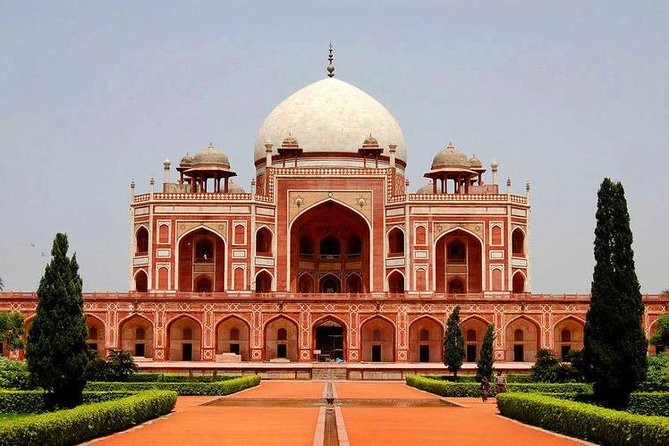
- Humayun’s Tomb (about 30 minutes)
This 16th-century mausoleum is an early Mughal design often described as a predecessor to the Taj Mahal. I like this stop because it trains your eye: you start spotting Mughal symmetry and garden layout before you hit Agra’s biggest monument.
- Raj Ghat (about 30 minutes)
On the Yamuna riverfront, this is Mahatma Gandhi’s cremation memorial after his assassination in January 1948. It’s a quiet reset day-to-day, and the landscaped grounds help you slow your pace.
- Red Fort (about 30 minutes)
The 17th-century fortress in red sandstone is surrounded by a huge boundary wall. Inside are palaces and gardens, but you’ll only get a taste here—still, it’s one of the strongest “big fortress” visuals in Delhi.
- Qutub Minar (about 30 minutes)
At 237 feet, this is Delhi’s tall landmark. Short stop, big payoff: you’ll leave knowing exactly what you’re looking for in the sky.
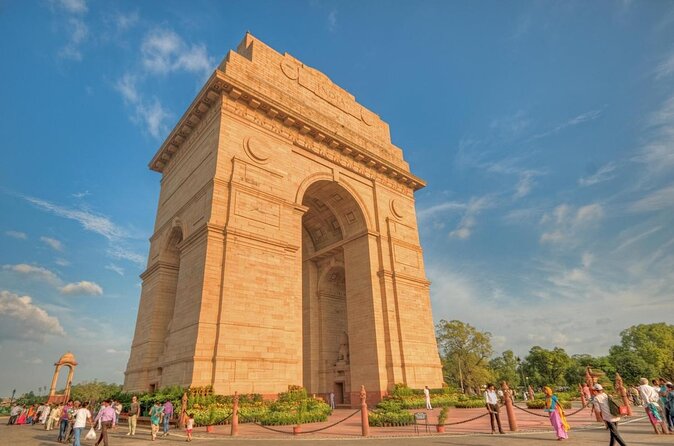
- India Gate (about 30 minutes)
Built to commemorate the 70,000 Indian soldiers who died in the First World War. It works as a reflective finish to a day that started with imperial design.
One practical note: entrances and camera fees are not included at these sights. So I’d plan for ticket lines and small fee payments, and keep cash or cards ready where possible.
Day 2 Agra: Taj Mahal with a guide, plus forts and gardens
Agra is where the Golden Triangle turns cinematic. You start with the main event and then surround it with supporting Mughal-era sites.
- Taj Mahal (about 1 hour with your Agra guide)
You’ll meet your guide and do a structured walkthrough, with time to admire the main buildings. I like starting early in the day because you get a better chance at comfortable viewing rather than battling peak crowds for the best angles.
- Agra Fort (about 30 minutes)
Akbar’s 1565 red sandstone fort sits on the Yamuna. Your guide explains the story, but even without deep reading, the sheer scale helps you understand why this place mattered.
- Itmad-ud-Daula (about 1 hour)
Often treated as the “little Taj,” this mausoleum overlooks the Yamuna and is one of the earlier masterworks of refined Mughal tomb architecture. If you loved the Taj’s details, this stop rewards you.
- Mehtab Bagh (about 30 minutes)
A series of 11 parks on the Yamuna’s east bank. This is a smart add-on because it gives you a different perspective without demanding the same ticket time as the core monuments.
If you’re a photo person, this day is where camera fees and permits become real budget items. It also helps to remember that the Taj and big forts can be bright and hot in the daytime—shade matters, and so does your water strategy.
Ranthambore morning safari: tiger country with an honest realism
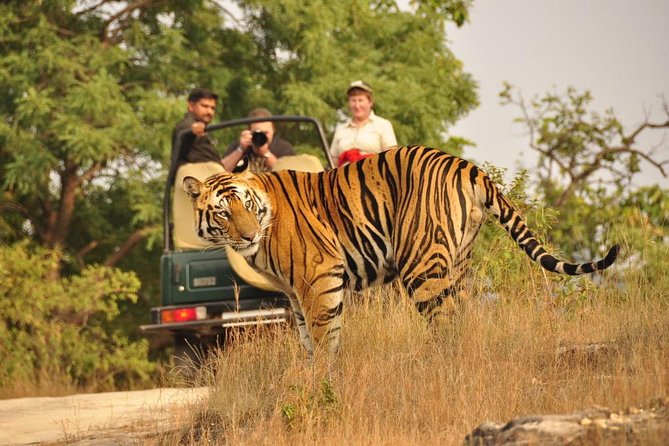
The wildlife day is the twist that keeps this tour from feeling like a nonstop sightseeing montage. You do a morning safari in Ranthambore National Park, using a shared gypsy and a nature guide. The plan includes returning to the hotel and having breakfast.
What makes this part special is that it’s structured around wildlife odds rather than guaranteed moments. During the safari, you have a chance to see animals such as hyenas, chittas, jungle cats, panthers, and Indian tigers if you’re lucky. Even if you don’t spot a tiger, the park experience itself is often what people remember: wildlife tracks, the landscape sounds, and the tension of scanning the bushes.
Two things to keep in mind:
- It’s a shared safari, so expect other travelers in the same vehicle during your session.
- Morning wildlife time usually means cooler air and earlier starts. Bring something light for early hours, and keep your phone/camera ready but not glued to your face—you want your eyes working too.
Talabgaon Castle night: a heritage stay that changes the pace
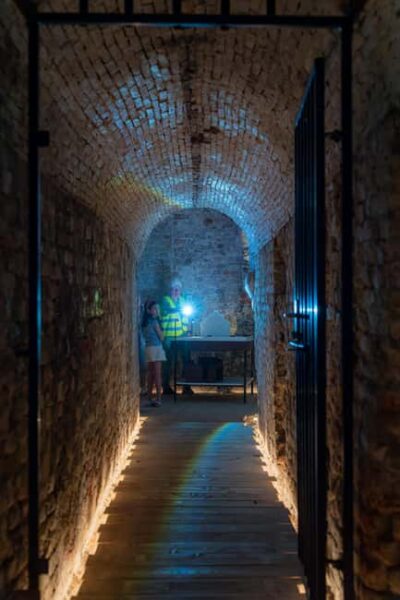
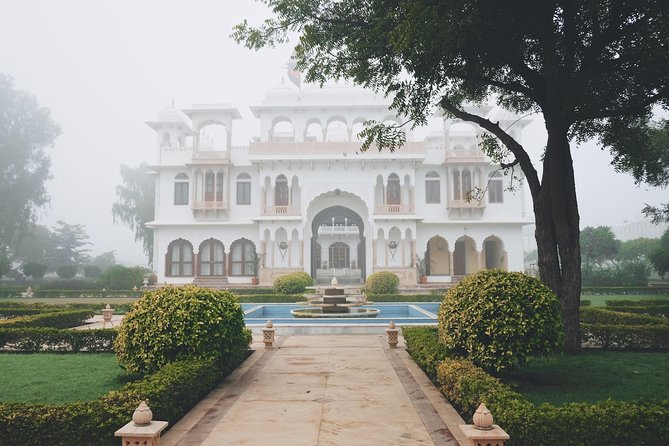
After breakfast, you’re driven to Castle Talabgaon, described as a 200-year-old Indian fort and family home now turned into a heritage resort and luxurious boutique hotel. This is a very different vibe than Jaipur forts or Agra tombs. The setting slows you down.
What’s included here adds depth beyond the room:
- Village safari at Castle Talabgaon is included.
This gives you a more local, human-scale look that complements the wildlife nature of Ranthambore. You’re not only counting animals—you’re also seeing how people live around these protected and rural spaces.
Because this night is a highlight, I’d treat it like a reset. Wear comfortable shoes the day before so you can enjoy the evening without aching legs, and plan on using the downtime. In a tour packed with major monuments, one slower night like this is a gift.
Dinner is included on this tour, and breakfast is included daily across the multi-day program. That helps you avoid the extra search work on a night when you’ll likely be tired from drives.
Jaipur days: temples, museums, and fort views from the right side of the hill
Jaipur is where you get color, craft, and the “princes at work” feel of Rajasthan. The day structure is split between cultural stops and big fort/palace sights.
The Birla Mandir and Albert Hall Museum stretch
- Birla Mandir (about 1 hour)
A Hindu temple on elevated ground at the base of Moti Dungri. It’s a peaceful stop that fits well as a morning or midday break.
- Albert Hall Museum (about 1 hour, free admission)
The oldest museum of Rajasthan, acting as the state museum. Even if you’re not a museum superfan, it gives context—how the region wants you to see its art and artifacts.
Amber Fort plus the palace lineup: jeep saves time and energy
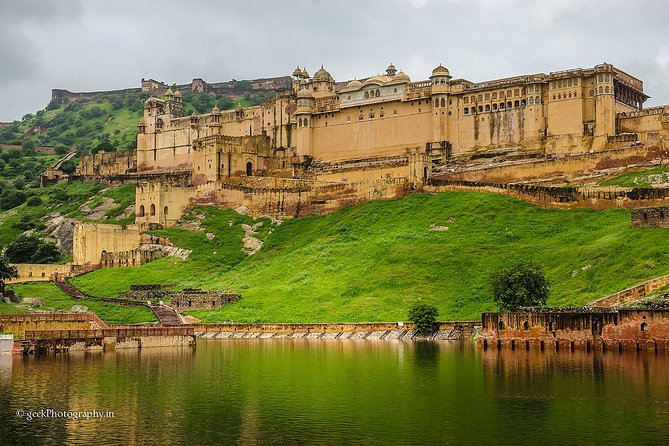
- Amber Palace (about 2 hours, with a jeep ride up and back)
The jeep ride matters because it reduces the slog of climbing and helps keep you fresh for the palace sections. Your guide will explain the history as you go, so the fort doesn’t turn into just walls and stairs.
- City Palace of Jaipur (about 1 hour)
Known for a mix of Rajasthani and Mughal architecture. This is one of those places where you can look at details for a while—textiles, costumes, and armour are included in what you’ll be able to see.
- Hawa Mahal (about 30 minutes)
Palace of Wind, built so royal ladies could watch processions without being seen. It’s short, but it’s visually iconic. You’ll understand why it got its name quickly once you see the façade structure.
- Jantar Mantar (about 1 hour)
A stargazing observatory built by Maharaja Jai Singh. It’s different from the other stops because it’s science-meets-culture. Great if you like when architecture has a purpose beyond looks.
For Jaipur, monument entrance and camera fees are not included. I’d also budget extra for time if you’re sensitive to crowds, because these sights are famous for a reason.
The real story: private comfort, shifting guides, and how to plan smart
This is a private tour, meaning it’s set for only your group. That sounds simple, but it changes your experience. You won’t be stuck waiting for a big bus schedule to flex. You can often move at the rhythm your driver and guides set, and that’s valuable on a route like this where you’re juggling Delhi crowds, Agra monument rules, and safari timing.
You should also expect that guides may change by city. Drivers often act like the glue, and in past trips, people have praised drivers like Prem, Kapil, Mayur, and Narendra Singh for keeping things organized and making late adjustments. That said, you’ll be in the hands of local guides at major stops like Humayun’s Tomb, the Taj Mahal, and Jaipur’s palace and fort sites.
One more honest point: multi-day tours can go smoothly or feel slightly chaotic depending on how your timing matches with crowds, ticket lines, and day-of conditions. If a specific monument is a must for you, it’s smart to confirm the ticket timing and the order so it matches what you care about most—especially since entrances and camera fees are extra.
Who this tour fits best
This is a good match if you:
- Want big Golden Triangle hits without planning every detail yourself
- Are excited about seeing wildlife in Ranthambore, not just reading about it
- Like a change of pace with a heritage resort castle night at Talabgaon
- Prefer an air-conditioned chauffeur-driven format over trains and transfers
It may be less ideal if you:
- Hate long drives between cities and want slower travel
- Need every entrance fee included in the upfront price (because it’s not)
- Want a strictly private safari vehicle (the Ranthambore safari is shared)
Moderate physical fitness helps here. You’ll be walking in and around forts and tombs, and even with jeeps to save you on Amber, you’ll still do plenty of stair and pavement steps.
Should you book the Golden Triangle with Wildlife and Royal Castle Stay?
I’d book it if your dream includes both sides of India: the iconic monuments of Delhi–Agra–Jaipur and the chance to spend a morning in Ranthambore tiger country—then sleep at a real heritage fort hotel rather than another standard city property.
If you’re budget-focused, treat the $415 as the core cost for logistics, not the full bill. Add money for monument entrances and camera fees, and you’ll feel in control instead of surprised. If you like structured days with helpful guides, this route gives you a lot without feeling like a sprint the whole time—especially because that Talabgaon Castle night breaks up the sightseeing grind.
FAQ
Do I pay for monument entrances on this tour?
Monument entrance and camera fees are not included. You should expect to pay at major sights when tickets are required.
Are meals included, and how many breakfasts do you get?
Dinner is included, and breakfast is included for 5 days across the trip.
How do the safaris work at Ranthambore and Talabgaon?
At Ranthambore, you do a morning jungle safari using a shared gypsy with a nature guide (01 round). At Castle Talabgaon, a village safari is included.
Is transportation included between cities?
Yes. You get door-to-door surface transportation by an air-conditioned vehicle with an experienced chauffeur, and interstate taxes, permits, parking, road tax, toll taxes, and fuel charges are included.
What time does the tour start?
The tour start time is listed as 9:00 am, and you’ll be guided through the day’s sightseeing stops from there.
Is the tour refundable if I cancel?
Yes. Free cancellation is available up to 24 hours in advance for a full refund.