REVIEW · GOSLAR
Goslar: Führung durch die Kaiserpfalz
Book on GetYourGuide →Operated by GOSLAR marketing gmbh · Bookable on GetYourGuide
Power lives in stone here. Inside Goslar’s Kaiserpfalz, I love the way the historical paintings cover the whole Great Hall like a visual wall-to-wall sermon, and I love the St. Ulrich chapel moment with Emperor Henry III’s grave plate over his resting heart; the one thing to consider is that the live guide speaks German, so you’ll want to be comfortable with that.
This tour starts with a quick sweep through the old town, then you step into a place tied to the UNESCO World Heritage title awarded in 1992. I like that the experience feels practical, not museum-dusty: you’re shown key rooms, and the guide helps you understand what you’re looking at, especially how rulers wanted to be remembered.
You’ll spend 1.5 hours on an interior-focused route, meeting in front of the Atrium. The palace is wheelchair accessible, and pets aren’t allowed (assistance dogs are fine), so plan accordingly.
In This Review
- Key things worth your attention
- Stepping into Goslar’s Kaiserpfalz after the old-town walk
- Great Hall paintings by Hermann Wislicenus and why to notice them
- St. Ulrich chapel: Henry III’s grave plate and the heart beneath
- Kaiserstuhl throne armrests and the feel of medieval ceremony
- Winter Hall vaults exhibition and the palace beyond the big icons
- Price and timing: making 1.5 hours feel worth it
- Who this tour suits best in Goslar
- Should you book this Kaiserpfalz interior tour?
- FAQ
- How long is the Kaiserpfalz guided tour in Goslar?
- Where does the tour meet?
- What is the price per person?
- What sights are included in the tour?
- Is the tour guided by a live person?
- Is the tour wheelchair accessible?
- Are pets allowed during the tour?
- What language is the tour offered in?
- Is there free cancellation?
Key things worth your attention
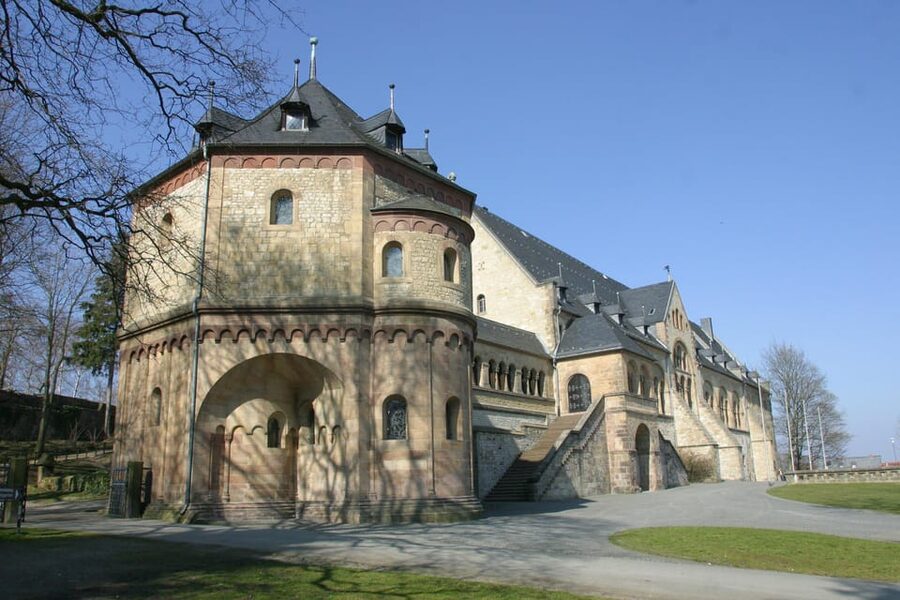
- Wall-to-wall paintings in the Great Hall: You’ll see historical murals filling every available surface, including the big visual impact of the room.
- St. Ulrich chapel and Emperor Henry III’s heart: You’ll look at the grave plate where his heart is still kept.
- Art professor Hermann Wislicenus: The tour points you to the historical paintings attributed to him.
- The imperial chair details: You’ll get a close look at the Kaiserstuhl’s throne armrests.
- Winter Hall vaults exhibition: There’s an additional presentation housed in the vaulted rooms.
Stepping into Goslar’s Kaiserpfalz after the old-town walk
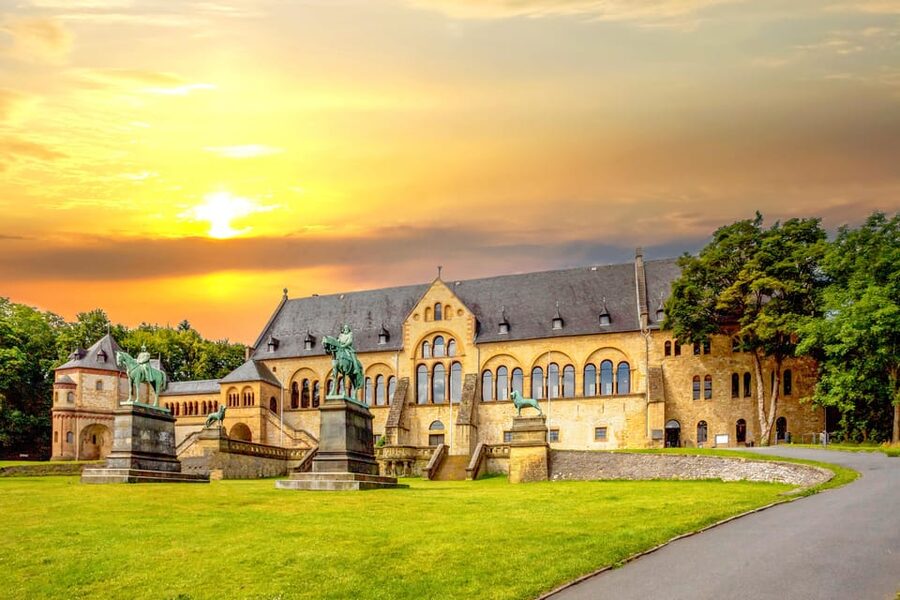
Goslar’s Kaiserpfalz doesn’t feel like a distant monument. After a brief stroll through the old town, you get that satisfying moment of transition: street noise fades, and you’re suddenly inside a palace meant to project authority.
This is a room-to-room tour. You’re not just passing through doors hoping something interesting is on the other side. The guide brings you into the main interior spaces you’ll actually want to spend time in, which makes the 1.5 hours feel focused instead of rushed.
If you’re the type who likes to connect buildings to stories, this helps. The palace spaces are arranged so that the guide can point out the most meaningful objects, from the chapel to the throne to the wall paintings. Even if you’re not a medieval expert, you’ll leave with a clearer mental map of what matters here and why.
One practical note for your planning: this is an interior tour. If you’re hoping for long outdoor views and photo stops, you may feel shortchanged compared with a walking-heavy itinerary. On the other hand, if you want shelter and concentrated sights, it’s a strong match.
Great Hall paintings by Hermann Wislicenus and why to notice them
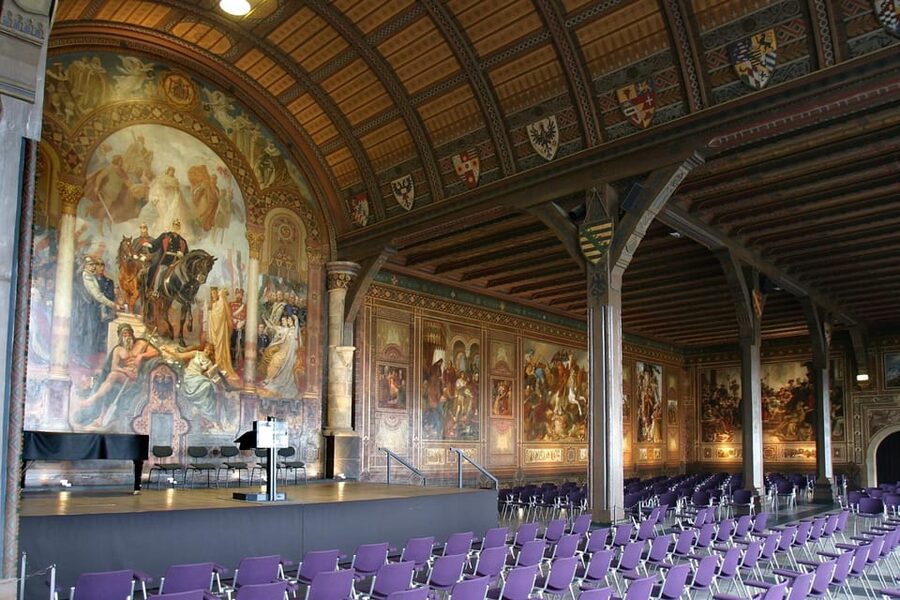
The first big “wow” area is the Great Hall, where the historical paintings cover essentially every wall surface. That detail matters. You’re not looking at a few decorative scenes you can ignore; you’re facing a full program of imagery that turns the room into one large statement.
The guide highlights the art of Hermann Wislicenus, an art professor linked to the paintings you’ll see here. Even without a degree in art history, you can follow the logic: the paintings aren’t random. They help explain how this palace used images to communicate identity, power, and continuity.
Here’s how I’d approach it while you’re standing in the hall:
- Start by looking at the overall wall effect first. Get the pattern of coverage, not just the nearest figure or detail.
- Then let the guide point out what to track. That prevents the classic problem of staring at paintings and absorbing nothing because you don’t know where to focus.
This is also a smart way to spend time in Goslar. The Great Hall gives you a dense, high-impact experience quickly. For a 1.5-hour tour, that kind of concentrated interior intensity is what makes the price feel fair.
St. Ulrich chapel: Henry III’s grave plate and the heart beneath
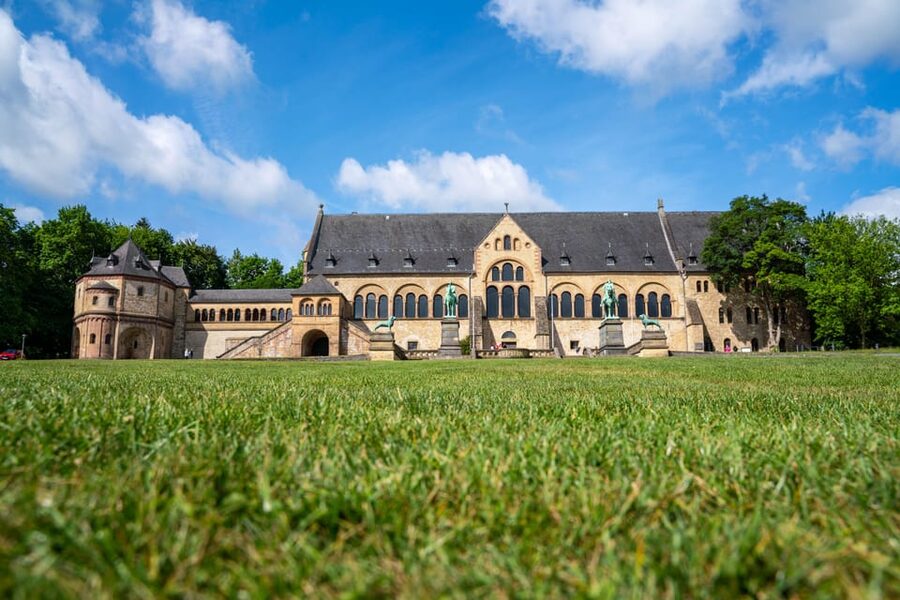
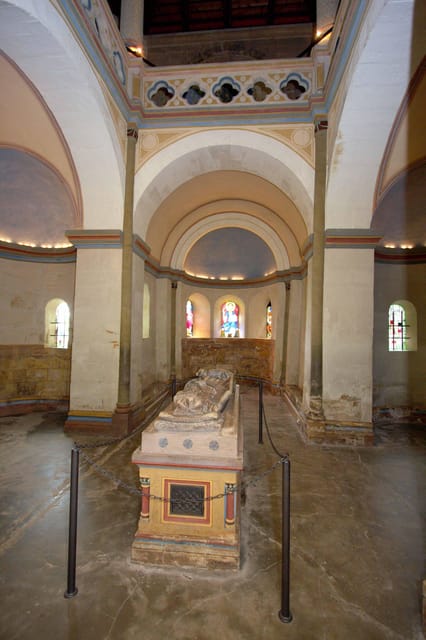
If the Great Hall is the showpiece, the St. Ulrich chapel is the emotional anchor. This Romanesque palace chapel holds the high grave of Emperor Henry III, and the most striking detail is that his heart rests under the grave plate you’ll be shown.
That’s the kind of object that changes how you see everything else. You’re not just learning names and dates. You’re standing in front of a physical reminder of the way rulers were honored and remembered, in a form that makes the story feel unusually immediate.
The guide’s job here is to slow you down just enough. Don’t treat it like a quick “look and move on” stop. Pause, look at the grave plate location, and listen to the explanation of why the heart element still matters.
One consideration: because this is a chapel, it can feel more quiet and focused than the larger hall areas. If you like fast, constant momentum, build your energy for this part. If you enjoy reflective moments, you’ll probably appreciate it more than the murals.
I also like that the tour links this chapel moment to the larger palace narrative. The imperial burial detail doesn’t get dumped as trivia. It’s placed where it can actually deepen your understanding of the palace rooms you’ve already seen.
Kaiserstuhl throne armrests and the feel of medieval ceremony
Next comes a more subtle but very satisfying detail: the Kaiserstuhl (imperial chair) and its throne armrests. It’s easy to think a throne is just a big chair. But in a palace context, it’s furniture with purpose, built for ceremony, distance, and symbolism.
The guide takes you to the throne armrests so you’re not stuck seeing it only from far away. That up-close perspective helps you understand what kind of object it is. You can picture the posture, the formality, and the intent.
I like this stop because it’s practical for your imagination. You don’t need special knowledge to sense that the chair is meant to communicate. Even if you’re not into architecture, this part gives you a human-scale entry into imperial theater.
And since the tour is indoors, you can enjoy it without the usual weather-related interruptions. If you’re visiting in colder months, this kind of focused indoor viewing is a comfort.
As with the chapel, treat this stop as a listening-and-looking moment rather than a photo-only moment. The guide’s explanation is what turns “some old furniture” into part of the palace story.
Winter Hall vaults exhibition and the palace beyond the big icons
The tour also includes an exhibition in the Winter Hall vaults. This matters because it expands what you think you’re there to see. Yes, you’ve got the famous chapel and the major hall. But the vaulted rooms offer a broader presentation tied to the palace interior.
You’ll be shown the exhibition set within the vault spaces, which changes the way you perceive it. Vault ceilings naturally frame attention. They pull your gaze upward and make the room feel like it’s designed to hold meaning, not just people.
I think this part is especially valuable if you want a little extra context without adding a full extra museum day. You get a guided, time-efficient way to absorb more about the palace and its world.
One small caution: because the tour is only 1.5 hours, the time for each stop is shaped carefully. If the Winter Hall exhibition is your top priority, don’t plan to multitask. Put your phone away for a couple minutes so you can actually follow what the guide is highlighting in the vault space.
Price and timing: making 1.5 hours feel worth it
At about $16 per person for a 1.5-hour live guided interior tour, the value comes from the focus. You’re paying for access and interpretation inside the palace, not just for a self-guided wander.
The tour’s structure also helps. You get:
- the palace interior route,
- the guide in German,
- and a sequence of key sights (Great Hall, chapel, throne area, Winter Hall exhibition).
For people who like concentrated sightseeing, it’s a sensible bargain. For people who want a lot of free-roaming time, it can feel short, because it’s designed to be efficient.
Timing-wise, the meeting point is in front of the Atrium, so plan to arrive a few minutes early. These tours run on a set start time, and arriving late can cut into the part you actually want to see first.
My tip: if you want photos, use quick shots early, then commit to listening. The best moments here are tied to the guide’s explanations, not to unlimited wandering time.
Who this tour suits best in Goslar
This is a great fit if you want an organized introduction to Goslar’s imperial core without piecing things together yourself. It works well for couples, history-curious solo visitors, and families who can handle a structured indoor hour and a half.
The vibe also lands well with mixed ages. One of the standout review themes highlights that the guide can keep things interesting even for kids. If you’re traveling with younger people, this kind of guided pacing often beats a solo museum plan.
If you’re traveling with limited German, you’ll have to manage expectations. The tour guide is listed as German, and there’s no language swap noted. Still, even when you don’t catch everything, the objects are clear: the paintings, the grave plate, the throne armrests. You’ll likely get more value if you come in with a bit of curiosity rather than relying on perfect translation.
Finally, because pets aren’t allowed (assistance dogs allowed), this is also easy to plan around if you have allergies or you’re bringing an assistance animal.
Should you book this Kaiserpfalz interior tour?
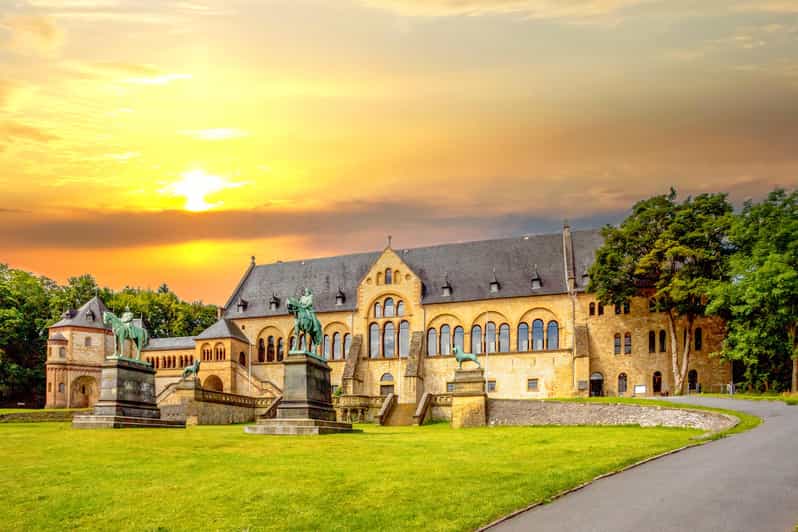
I’d book it if you want a time-efficient, guided, inside-the-palace experience with real highlights: the Great Hall paintings associated with Hermann Wislicenus and the St. Ulrich chapel tied to Emperor Henry III’s heart. The price feels fair for what you’re actually seeing and learning, especially if you enjoy guided context.
I’d hesitate only if German is a major barrier for you or if you’re hoping for a long outdoor walk. If you’re in Goslar for a short visit and you want the palace to be your main story, this tour does that job cleanly.
FAQ
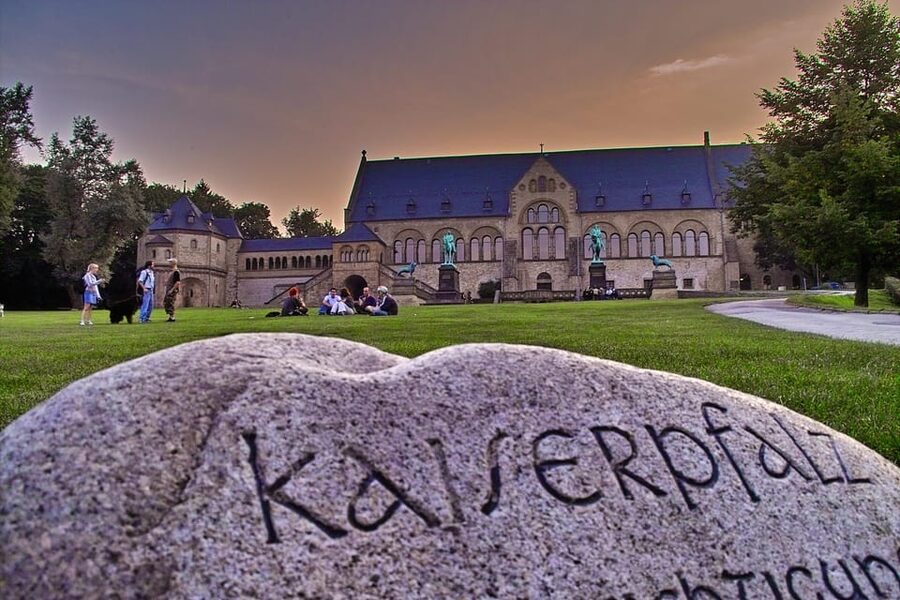
How long is the Kaiserpfalz guided tour in Goslar?
The tour lasts 1.5 hours.
Where does the tour meet?
You meet in front of the Atrium.
What is the price per person?
The price is $16 per person.
What sights are included in the tour?
It includes an interior tour of the Imperial Palace, with stops for the Great Hall paintings, the St. Ulrich chapel (including the grave plate of Henry III), and the Winter Hall vaults exhibition, plus the imperial chair area.
Is the tour guided by a live person?
Yes, it’s a live guided tour with a German-speaking guide.
Is the tour wheelchair accessible?
Yes, the tour is wheelchair accessible.
Are pets allowed during the tour?
Pets are not allowed, but assistance dogs are allowed.
What language is the tour offered in?
The tour is offered in German.
Is there free cancellation?
Yes, you can cancel up to 24 hours in advance for a full refund.