REVIEW · PORTO
Lello Bookshop, Stock Exchange Palace and Cathedral -Guided visit
Book on Viator →Operated by Luka Urban Trails · Bookable on Viator
Three Porto icons in one guided walk.
This tour strings together the city’s bookshop, stock exchange, and cathedral with explanations you can’t easily find on your own. The route is designed to keep you moving, while still giving you real time inside each monument.
I especially like that the stops are paired logically: you start at Livraria Lello, then shift to Porto’s trading powerhouse at Palácio da Bolsa, and end in the cathedral’s fortress-like interior. I also love that entrance fees are included, so you’re not doing money math while you’re trying to see things.
The only drawback to plan around is time: with about 30 minutes per stop, you’ll have to pace yourself. If you prefer to linger for long photos or slow reading, you may find the schedule a bit tight.
In This Review
- Quick highlights for your Porto checklist
- A tight 3-hour route starting at Vímara Peres
- Livraria Lello: more than a famous facade
- Palácio da Bolsa: the trading room behind the grandeur
- Sé Cathedral: fortress church vibes, rose window, and Nasoni’s loggia
- Why the guide matters: Luiz and Fernando’s Porto-specific tips
- Price and value: what $119 buys you (and what it saves)
- Who should book this Porto trio (and who might skip it)
- Should you book the Lello–Bolsa–Sé guided visit?
- FAQ
- How long is the guided visit?
- What is the price per person?
- Is the tour offered in English?
- Are entrance tickets included?
- Do you get direct entry to the monuments?
- How many travelers are on the tour?
- Where does the tour start?
- When do I receive confirmation?
- Is there free cancellation?
Quick highlights for your Porto checklist
- Direct entry and skip-the-queue access at all three monuments
- Small group size (max 15) for a more personal feel
- English-guided storytelling that makes each building easier to understand
- Entrance tickets included, so the price covers the key “must pay” moments
- Three very different Porto styles: ornate literature, trading halls, and Romanesque-Gothic church architecture
A tight 3-hour route starting at Vímara Peres
Porto can feel like a patchwork of neighborhoods and viewpoints, so a timed loop helps a lot. This visit is about 3 hours total, with the tour returning to the same meeting point. You’ll also be walking between sights in the historic center, which is ideal if you want the essentials without spending the whole day stuck in lines.
The start point is the Statue of Vímara Peres on Calçada de Vandoma. It’s a practical hub for getting oriented, and the area is described as being near public transportation—handy if you’re mixing this with other plans in Porto.
Because the group is capped at 15 travelers, the pace usually feels organized rather than chaotic. You’re not fighting crowds at each stop as much as you would on a self-guided day. That’s a big deal at Livraria Lello in particular, where demand can be intense.
You can also read our reviews of more tours and experiences in Porto.


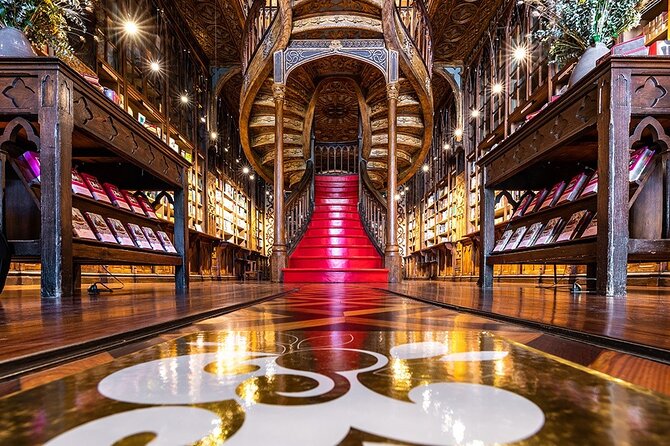
Livraria Lello: more than a famous facade
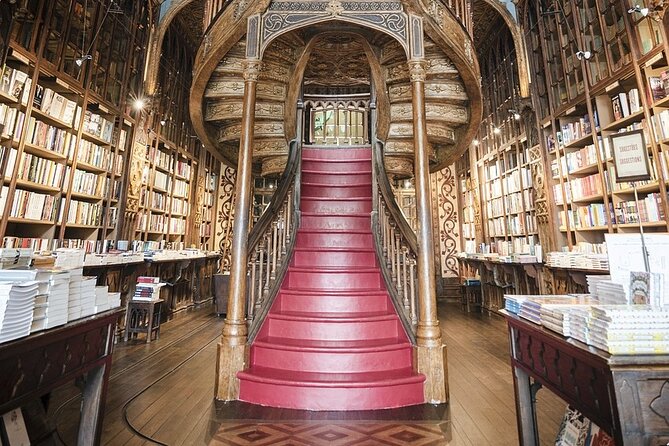
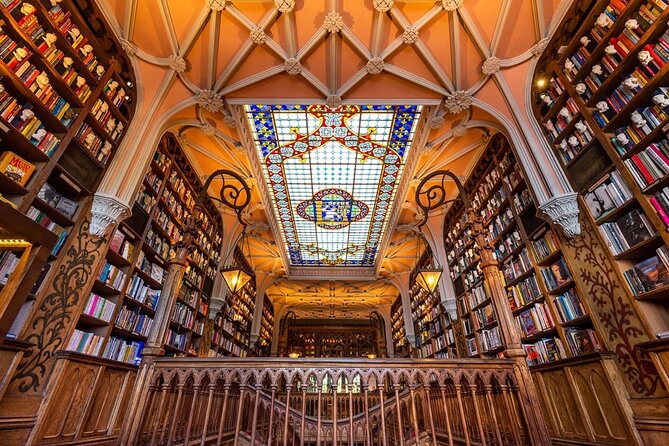
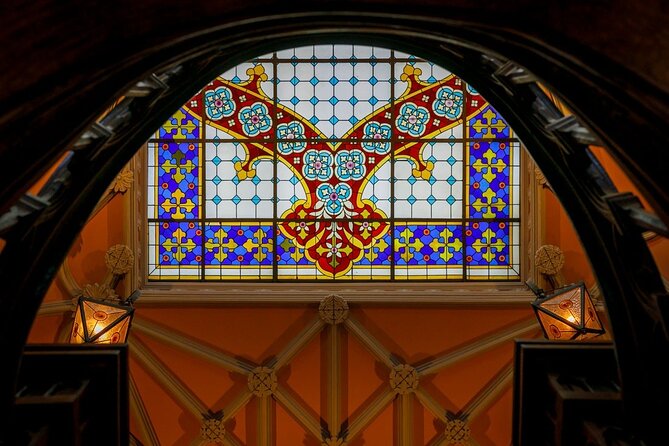
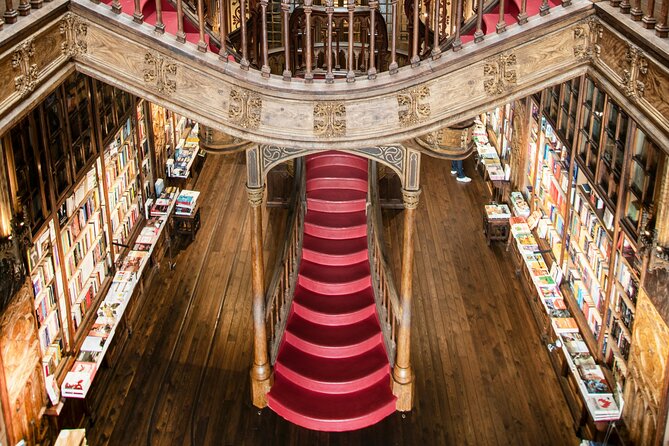
Livraria Lello (Livraria Chardron, 1869–1919) sits at 144 Rua das Carmelitas in Porto’s historic core. It’s not just a pretty storefront; the building is a Monument of Public Interest and is described as being in the process of becoming a National Monument. That matters, because it’s one reason the site has a protected, cared-for feel once you’re inside.
This stop lasts about 30 minutes, and the ticket is included. What makes the guided format useful here is context. On your own, it can be hard to know what you’re looking at and why it’s special—especially because you don’t get much built-in explanation from boards once you’re standing in the room.
Here’s what you can expect your guide to help you notice:
- the building’s preserved character tied to its earlier identity as Livraria Chardron
- why Porto’s literary landmark is treated like a heritage site, not just a photo stop
- the small visual cues that make the interior feel theatrical and historical at the same time
One practical note: even if you’re a casual book fan, this is still worth it. It’s one of those places where the architecture tells a story—how a city builds culture around ideas, not just commerce. And if you care about good timing, direct entry and a guided flow can save you from the long wait that often messes with your whole afternoon.
Palácio da Bolsa: the trading room behind the grandeur
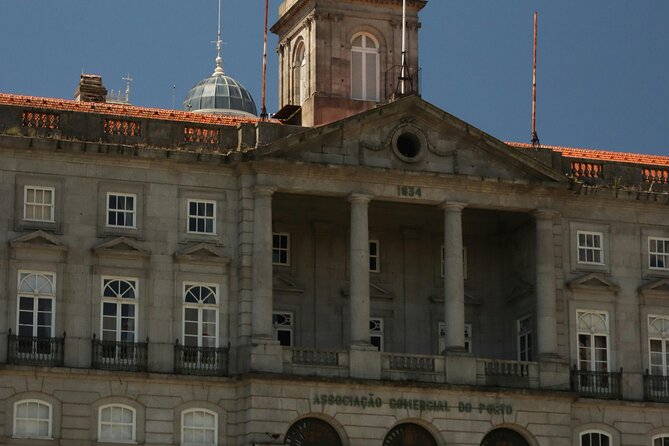
Next up is the Palácio da Bolsa, also known as the Palácio da Associação Comercial do Porto. It’s a neoclassical building, and the story of how it began is very Porto. Construction started on October 6, 1842, tied to a specific reason: the closure of the Casa da Bolsa do Comércio meant traders needed a place to discuss business without meeting in the open air.
This is why the building doesn’t just feel fancy. It feels functional with style. You’re stepping into a monument created by people who had to solve a practical problem, then dressed that solution in serious architecture.
The visit time is about 30 minutes, with admission included. The value of a guide here is that you’ll connect the dots between the dates, the purpose, and what you see in the space. Without that context, a neoclassical interior can become a series of pretty rooms. With the context, it turns into a window on how Porto’s commercial life evolved.
Also, the skip-the-line aspect helps. If you’re juggling multiple big sights in one day, it’s not just convenience—you’re protecting your attention span. When you arrive with less waiting, you’re more present for the details.
Sé Cathedral: fortress church vibes, rose window, and Nasoni’s loggia
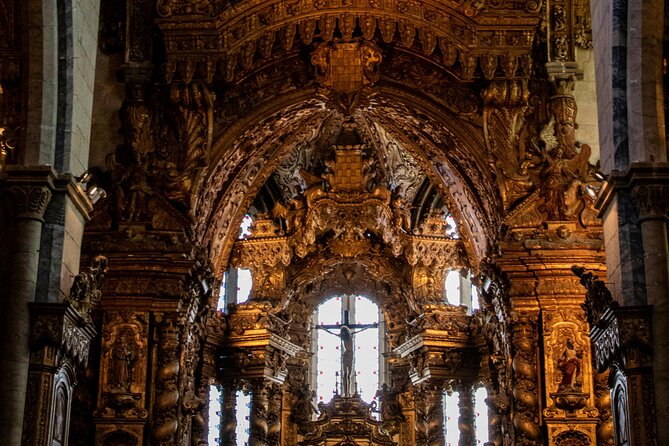
The last stop is Sé Cathedral (Catedral do Porto), a Romanesque-Gothic building dating to the 12th and 13th centuries. Then comes the twist: it underwent major renovations during the Baroque period, in the 17th–18th centuries. That mix is one reason this cathedral feels layered rather than uniform. You’re not seeing one single style for the whole visit—you’re seeing a long timeline of changes.
The interior is described as having the feel of a fortress church, complete with battlements. That’s a fun thing to watch for as you walk in, because it’s not the airy cathedral vibe you might expect from the word cathedral. Instead, it feels protective, solid, and built to stand its ground.
The tour highlights several specific features:
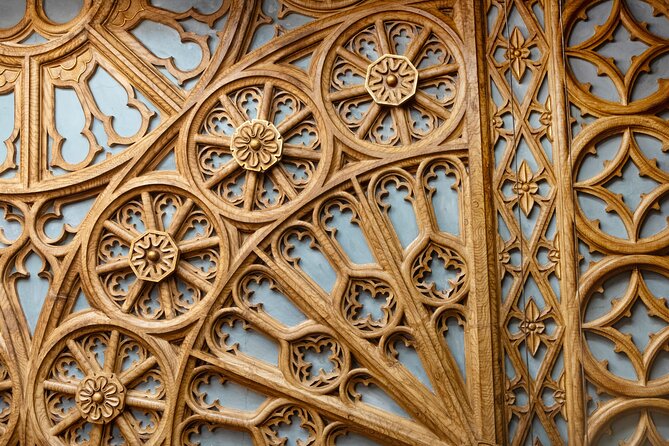
- the rose window from the 12th century
- the loggia or side galilee (1736) facing the city, created by Nicolau Nasoni
- monumental holy water fonts from the late 17th century
- a bas-relief by Teixeira Lopes (Father) near the baptismal font from the 17th century
What I like about having a guide for this stop is that these details are easy to miss. A rose window or a loggia can be visually striking, but unless you know what you’re looking at (and roughly when it dates from), it’s hard to appreciate the “why.” With a guide, it clicks fast.
Another small but important payoff: once you’re inside, the cathedral can become a calm pocket after busier sites. You get a moment to reset before you head back outside and back to your next Porto plan.
Why the guide matters: Luiz and Fernando’s Porto-specific tips
This is the part that separates a good tour from a great one: the guidance you receive while you’re standing in the buildings. The best guides don’t just recite facts. They point out what to look for, and they explain what the place meant when it was alive in daily life.
In this tour, guides like Luiz and Fernando come through with energy and clear structure. You can feel it in how the explanation lands. For instance, people appreciate the way the tour hits the major highlights while still leaving time to absorb what’s in front of you.
What’s also genuinely useful: guides can add city practicality—especially food and restaurant suggestions. In Porto, that can help you steer toward neighborhoods and meal spots that fit your pace, instead of guessing based on whatever happens to be closest to your hotel.
Even better, this circuit is ideal for first-timers because the three stops don’t share one obvious theme. Livraria Lello is literary and visual. Palácio da Bolsa is financial and formal. Sé Cathedral is sacred and defensive in tone. A good guide is what makes those differences feel connected rather than random.
And if you’re the type who likes to understand why locals care, you’ll appreciate that these buildings are explained as more than postcard backdrops. The guide essentially gives you the missing context you would otherwise have to search for on your own.
Price and value: what $119 buys you (and what it saves)
At $119.09 per person for about 3 hours, this tour isn’t trying to be the cheapest way to see Porto monuments. It’s paying for three things you’d otherwise spend time juggling:
- entrance tickets are included for every stop
- direct entry and queue skipping at each monument
- a guide who ties the experience together instead of leaving you to piece it all from signage
That queue-saving angle is worth real money in travel time. Waiting doesn’t just cost minutes. It costs energy. And when you’re choosing between museum time, photo time, and lunch time, shaving off waiting helps you keep your day flexible.
The small group limit also affects value. With max 15 travelers, it tends to feel easier to ask questions and follow the story without being swept along by a crowd.
Finally, consider timing demand. The tour is described as being booked on average about 55 days in advance. That suggests it’s popular enough that you shouldn’t treat it as a last-minute gamble if you’re visiting during peak season.
Who should book this Porto trio (and who might skip it)
Book this tour if you fit one of these profiles:
- You want Porto’s top “wow” interiors—bookshop, trading palace, and cathedral—in a single organized loop.
- You’d rather spend your time looking around than figuring out which details matter.
- You like guided explanations, especially when sites don’t come with clear signage.
- You’re traveling in a small group or as a couple and want a more personal pace (the group cap helps).
- You speak English and want a guide rather than piecing it together from your own research.
You might skip it if:
- you’re determined to go at your own slow rhythm and linger longer than 30 minutes per stop
- you’re traveling with a schedule that’s extremely tight and could be stressed by a fixed route
- you love learning on your own and don’t need a guide to point out the key features
The sweet spot is a balanced day: you’ll get the highlights without turning your afternoon into a waiting game.
Should you book the Lello–Bolsa–Sé guided visit?
If you want a smooth, high-impact Porto experience, I’d book it. The combo of direct entry, tickets included, and a guide who knows what to point out makes the three stops feel richer than a basic checklist. And with the group capped at 15, it avoids the “herded through” feeling that ruins some tours.
If you’re unsure, use this test: do you hate lines and do you want the “why” behind what you see? If yes, this is a strong match. If you only care about quick exterior photos, you can probably build a cheaper self-guided day.
FAQ
How long is the guided visit?
It runs for approximately 3 hours.
What is the price per person?
The price is $119.09 per person.
Is the tour offered in English?
Yes, it’s offered in English.
Are entrance tickets included?
Yes. Entrance fees for all included monuments are included.
Do you get direct entry to the monuments?
Yes. The tour includes direct entry and is designed to help you skip the queues.
How many travelers are on the tour?
The tour has a maximum of 15 travelers.
Where does the tour start?
It starts at the Statue of Vímara Peres on Calçada de Vandoma, 4000-013 Porto, Portugal, and it ends back at the meeting point.
When do I receive confirmation?
Confirmation is received at the time of booking.
Is there free cancellation?
Yes. You can cancel for a full refund up to 24 hours in advance of the experience start time.