REVIEW · MANTA ITALY
Manta: Manta Castle Entry Ticket
Book on GetYourGuide →Operated by FAI - Fondo Ambiente Italiano · Bookable on GetYourGuide
Monte Viso is the big screen behind you.
This visit is all about walking into a medieval fortress in Piedmont and then being rewarded with some unusually detailed painting—especially inside the Baronial Hall. What I like most is the setting (that sharp Monviso skyline framing the castle) and the way the rooms tell a clear story of how the place changed from military outpost to noble home.
I also love the specific fresco program in the Baronial Hall. You’ll see the myth of eternal youth tied to the fountain of youth and a classical set of figures—the nine worthies and nine worthy women—presented in 15th-century dress. It’s rare to find this kind of themed artwork packed into a compact visit.
One potential drawback: it’s a fortress, so plan on a bit of physical effort. The castle sits above the valley, and one practical tip is to treat the climb like part of the experience rather than something you can skip.
In This Review
- Key Points You Should Care About
- Why Manta Castle Feels Different From the Usual Fortress Stop
- A Fortress Built for War, Remodeled for Courtly Life
- Entering the Baronial Hall: Late-Gothic Frescoes With Big Meaning
- The Hall of Grotesques Ceiling: When Court Taste Meets Vatican Influence
- Church, Kitchen, and Cellars: The Castle Beyond the Fancy Rooms
- Shaded Grounds and the Varaita Valley View
- Price and Value: Is $12 Worth Your One-Hour Stop?
- Timing Your Visit and Keeping It Comfortable
- Who This Castle Entry Ticket Is Best For
- Should You Book Manta Castle?
- FAQ
- How long is the Manta Castle entry?
- How much does the ticket cost?
- Is a meal included with the ticket?
- Is Manta Castle wheelchair accessible?
- Can I cancel my booking for a full refund?
- Is there a pay later option?
Key Points You Should Care About
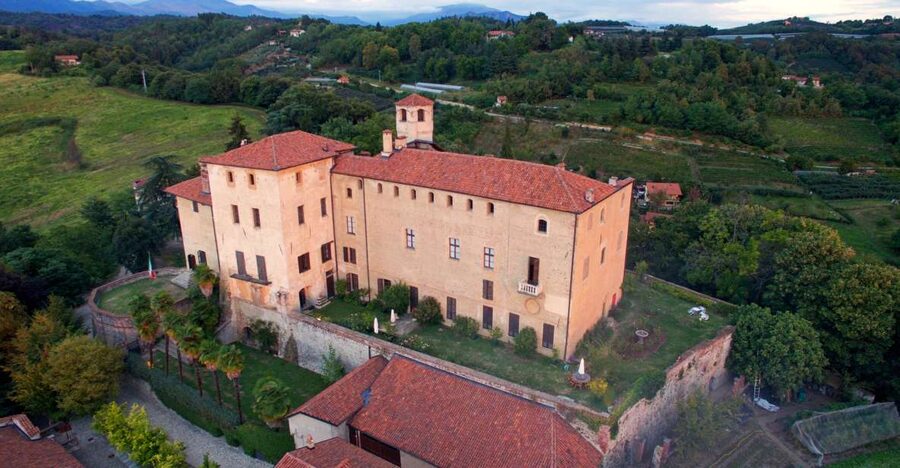
- Monviso views: The castle sits under the Monviso massif, so even breaks between rooms feel scenic.
- Baronial Hall fresco themes: Eternal youth imagery and the nine worthies/nine worthy women are the headline.
- Grotesques in a Mannerist style: The Hall of Grotesques ceiling takes cues from Raphael’s Vatican loggias.
- More than just rooms: Cellars, the kitchen, and the castle church add extra context to daily life.
- All doable in an hour: A 1-hour time window works well if you want culture without a long day.
Why Manta Castle Feels Different From the Usual Fortress Stop
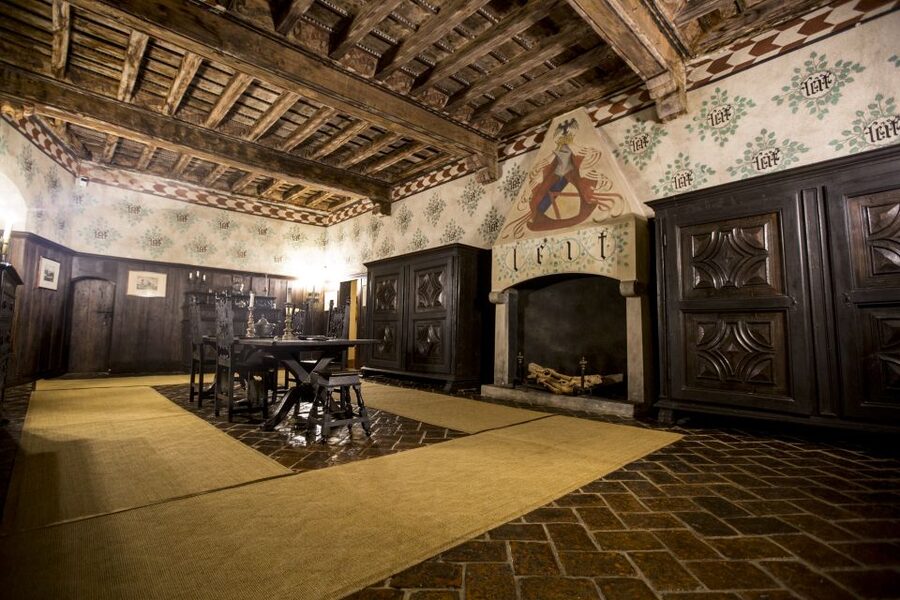
Most castles teach you one thing: power.
Manta Castle teaches you change—how a strategic 13th-century position became a refined family residence by the 15th century. And the geography does half the work for you. You’re looking at the broad crown of the Cottian Alps, with Monviso acting like a dramatic back wall behind the castle.
If you like architecture that actually made sense to real people, you’ll enjoy how the space is arranged. The entry gets you into a fortress structure first, then it shifts into the world of courtly imagery and noble ideology once you reach the key rooms. That contrast is part of the charm.
A Fortress Built for War, Remodeled for Courtly Life
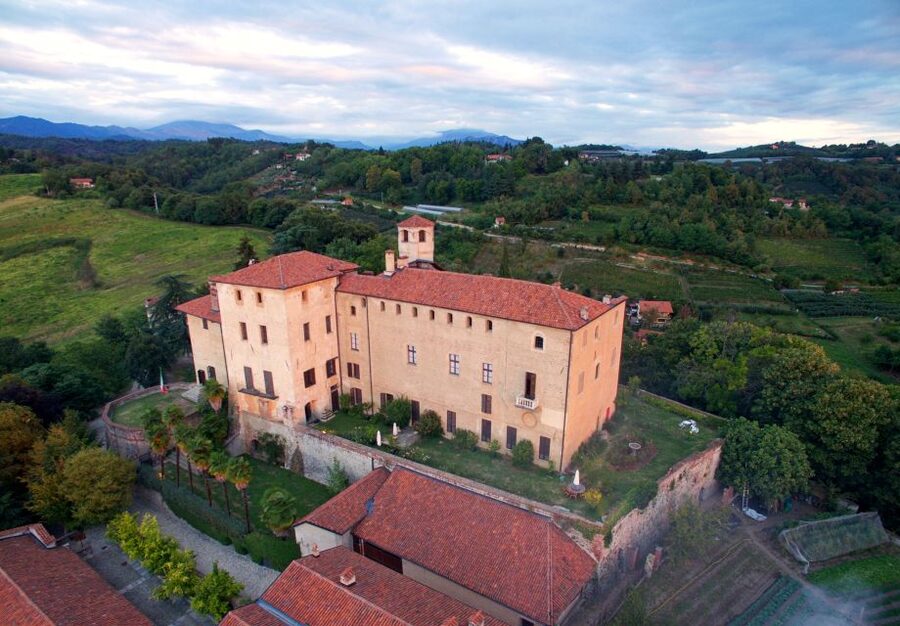
The story starts in the 1200s.
Built in the 13th century as a military outpost, Manta Castle functioned as a defensive foothold. Then the center of gravity changed in the 1400s, when the fortress underwent a major overhaul under Valerano, the enlightened ruler of the Marquisate of Saluzzo.
This is where your visit becomes more than sightseeing. Valerano transformed the fortress into a lavish family home when the fiefdom of La Manta was established. In practical terms, that means you’ll spend time inside spaces meant for status, display, and ceremony—not just survival.
Later, the complex got renovated again around the mid-1500s. That’s important because it helps explain why the frescoes and decorative style don’t all feel like one single moment in time. The castle reads like layered history, and your hour gives you a strong taste of that layering.
Entering the Baronial Hall: Late-Gothic Frescoes With Big Meaning
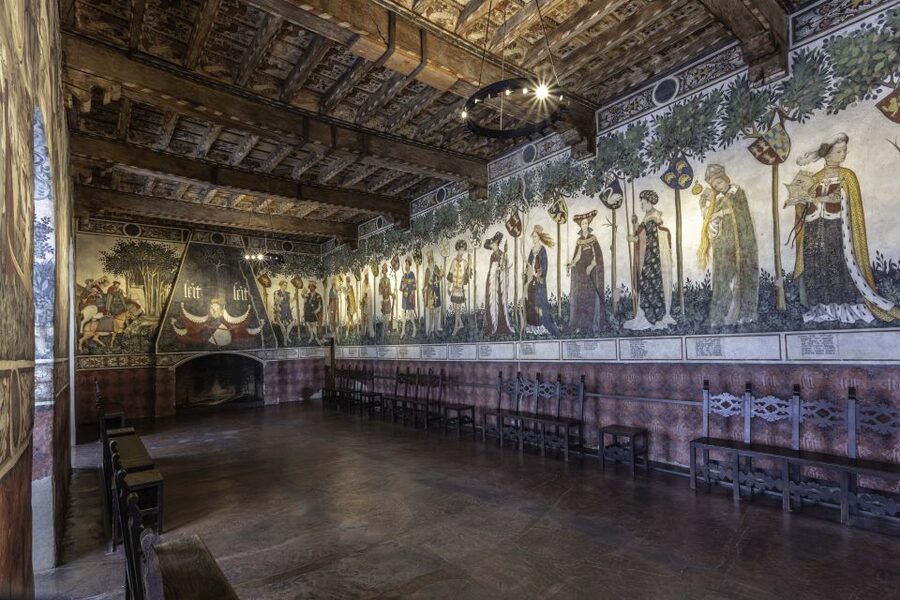
The Baronial Hall is the reason most people set aside the hour.
This is where you get the late-Gothic fresco program tied directly to knightly culture and chivalric ideals—something you can feel without needing a guidebook in your hand.
On one side, the artwork focuses on the myth of eternal youth. You’ll see it through the fountain of youth topped with the god of Love, inspired by the chivalrous tale Roman de Fauvel. The image isn’t just decorative; it reflects the values of the court world—youth, desire, idealized virtue—presented in a visual way meant to impress visitors.
On the opposite side, classical figures take the stage. The nine worthies and the nine worthy women of classical antiquity watch over the room, shown in 15th-century garb. What I like about this is that it turns ancient moral ideals into something closer to a knightly code you can understand at a glance: discipline, moral virtue, and social rank made visible.
The Hall of Grotesques Ceiling: When Court Taste Meets Vatican Influence
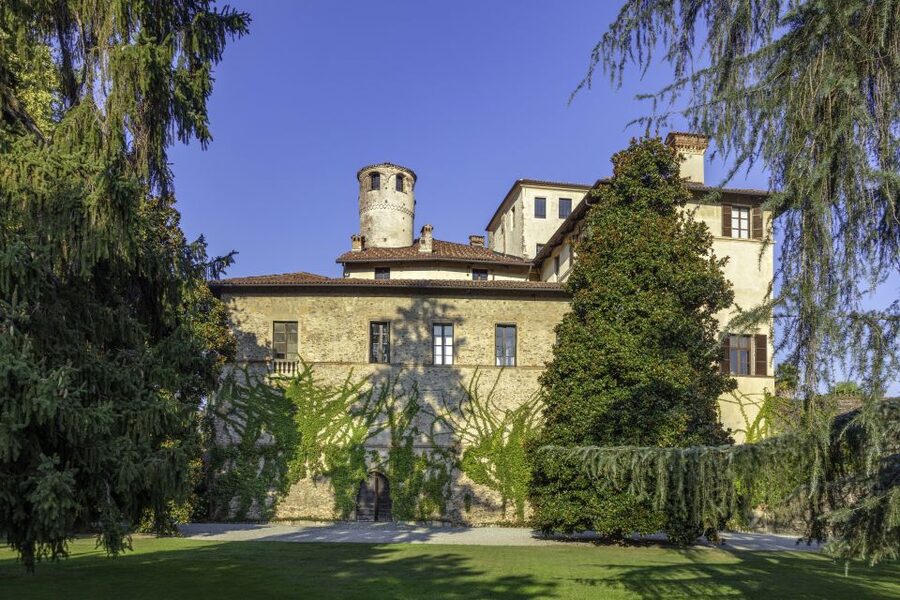
After the Baronial Hall, don’t rush past the other decorated space—especially the Hall of Grotesques.
This room is from the mid-1500s renovation phase, and it’s decorated with paintings and stuccos carrying a clear Mannerist imprint.
Here’s the key detail: the decoration takes its cue from the Vatican loggias, including the kind of artistic language associated with Raphael’s work there. You may not need to know art history to enjoy the effect. The ceiling decoration is visually dense, with a style that feels designed for close attention, not casual passing.
If you’re the type who likes to look up, this is your moment. The ceiling creates a second layer of experience: you’re moving through a fortress, but you’re also inside a curated interior fantasy. It helps the castle feel less like a static ruin and more like a living showpiece.
Church, Kitchen, and Cellars: The Castle Beyond the Fancy Rooms
A common mistake is focusing only on the most famous room. I prefer the opposite approach here: use the famous frescoes to anchor your visit, then let the service spaces broaden it.
Start with the castle church. It was commissioned by Valerano and embellished with significant frescoes on the Passion of Christ. Even if religious art isn’t your usual focus, it adds context to why noble families built and funded religious spaces inside their residences. It’s not just a chapel location; it’s part of the castle’s identity.
Then come the practical areas. You can visit the service spaces, including the cellars and the large kitchen. The kitchen has a vaulted ceiling and an immense fireplace, which helps you imagine daily life: heat, cooking, storage, and the logistics behind hosting people in a fortress setting. It’s one of those spaces that makes the castle feel real instead of staged.
These areas also make the visit worth doing in a single hour. The castle gives you a balanced sample: formal imagery up top, everyday function just around the corner.
Shaded Grounds and the Varaita Valley View
One of the best parts is outside time—short, but meaningful.
The grounds are large and shaded, and they offer an enchanting view over the hillsides of the Varaita Valley. After standing inside rooms with close visual details, a shaded pause lets your eyes reset.
And because this whole area is dominated by mountain presence, the outdoor view isn’t just pretty scenery. It reinforces the fortress logic: why this spot mattered, and why the Monviso backdrop works so well as the visual frame of the castle.
If you’re visiting in warmer months, the shade is a real advantage. If it’s cooler, the open lines of sight still help you connect the castle’s position to the valley around it.
Price and Value: Is $12 Worth Your One-Hour Stop?
At about $12 per person for entry and roughly a 1-hour duration, Manta Castle can be excellent value—especially if you care about interior art, not just stone walls. You’re paying for access to multiple themed spaces: the Baronial Hall fresco program, a decorated grotesques ceiling, plus service areas and the church.
The value equation is simple: if you enjoy looking at paintings and decorative interiors, the ticket price feels justified because the main highlights are concentrated. If you only want sweeping panoramic sightseeing and don’t care about frescoes, you might find it a bit short or art-focused.
One more practical note: there’s no food or restaurant included. So think like a realist. Plan a snack or drink before you go, or pair the castle stop with another nearby break.
Timing Your Visit and Keeping It Comfortable
A 1-hour visit is a sweet spot.
It’s long enough to see the headline rooms and still include time for the shaded grounds, but short enough that it doesn’t hijack your day.
Because the castle is in a higher setting, I’d plan with your legs in mind. Wear comfortable shoes, and if you’re traveling with kids or anyone with limited mobility, treat the climb as the main “exercise moment” of the day rather than an afterthought.
Parking can be simple depending on where you arrive. For camper vans, one practical approach is to look for parking near local facilities like the elementary school area. That tip won’t apply everywhere, but it’s a smart starting point if you’re driving in.
Also, bring a steady pace attitude. This isn’t a museum you sprint through. The real payoff is in slowing down enough to register the fresco themes and then look up at the decorated ceilings.
Who This Castle Entry Ticket Is Best For
Manta Castle works well for:
- Couples or solo travelers who like art inside historic buildings
- People who want a fortress with story, not just scenery
- Anyone doing a Piedmont day who wants a compact stop with strong interiors
It may be less satisfying if you’re expecting a long guided tour format or large-scale exhibitions. Here, the strength is the rooms and the fresco program, not a multi-stop route.
Also, it fits nicely into a broader theme. Manta Castle is part of the project called The Dukes of the Alps, with an itinerary focused on the history of the House of Savoy. If you’re building a “dynasties and power” day in Piedmont, this entry gives you a concrete physical example.
Should You Book Manta Castle?
Yes, if you want a high-impact cultural stop that stays compact.
With a 1-hour time window, a clear focus on frescoes, and multiple spaces beyond the fancy rooms (kitchen, cellars, and church), this is one of those tickets that rewards people who look up and take time.
Book it if:
- Frescoes and decorated interiors are your kind of travel
- You like mountain settings with Monviso in the background
- You want value that doesn’t require half a day
Skip it if you only care about exteriors and panoramas. The castle’s main strength is inside—especially in the Baronial Hall.
FAQ
How long is the Manta Castle entry?
The visit is designed for about 1 hour.
How much does the ticket cost?
The price is listed as $12 per person.
Is a meal included with the ticket?
No. There’s no food or restaurant included.
Is Manta Castle wheelchair accessible?
Yes, it’s wheelchair accessible.
Can I cancel my booking for a full refund?
Yes. You can cancel up to 24 hours in advance for a full refund.
Is there a pay later option?
Yes. You can reserve now & pay later to keep your plans flexible.