REVIEW · BERLIN
Potsdam Tour from Berlin With Guided Sanssouci Palace Visit
Book on Viator →Operated by BEX Sightseeing · Bookable on Viator
Potsdam in one half-day feels efficient. This guided tour takes you from Berlin into a UNESCO World Heritage city for a smart mix of Sanssouci Palace time, photo-worthy town stops, and history you can actually place on a map. I love that you start with a timed, guided palace visit (admission included) rather than wandering around Potsdam guessing where to go first. I also like the small-group feel (up to 30) and the hands-on context from guides such as Susan, Karin, Jasmin, Stefanie, and Bridget, who show up in the reviews with strong storytelling and smooth handling of questions.
The best part for your schedule is the focus: about 4 hours total with a comfortable coach ride and just enough walking to see the big hits without turning it into a full-day grind. At the palace, you’ll get the kind of Frederick-the-Great details that make the terraces, temples, and park layout make sense fast. One possible drawback: this is a short visit, and a few people note the palace time can feel brief, so if you want a long, slow museum-style experience, you may prefer a longer Potsdam day trip.
In This Review
- Key Highlights You’ll Feel on This Tour
- Half-Day Potsdam From Berlin: What You’ll Really See in 4 Hours
- Sanssouci Palace Skip-the-Line: Frederick’s Summer Residence Made Understandable
- Glienicke Bridge: The Bridge of Spies in Real Life
- Dutch Quarter and Alexandrovka: When Potsdam’s Stories Get Odd (In a Good Way)
- Holländisches Viertel (Dutch Quarter)
- Alexandrovka (Russian Colony)
- Old Market Square and St. Nicholas Church: The City Center You Can Walk In
- Guides, Comfort, and the Small Details That Actually Matter
- Price and Value: Is $77.23 Worth It?
- Who Should Book This Potsdam Tour From Berlin (and Who Should Skip It)
- Should You Book This Tour?
- FAQ
- How long is the Potsdam tour from Berlin?
- What time does the tour start?
- Is Sanssouci Palace entry included?
- Is the tour offered in English?
- Are meals included?
- Is there a limit on group size?
Key Highlights You’ll Feel on This Tour
- Skip-the-line Sanssouci Palace with a guide so you don’t burn time at entry
- A tight Stops loop: Sanssouci → Glienicke Bridge → Dutch Quarter → Alexandrovka → Old Market Square → St. Nicholas Church
- Cold War drama at Glienicke Bridge, known worldwide as the Bridge of Spies
- UNESCO-focused Potsdam context, not just sightseeing photos
- Practical small-group pace, usually relaxed, not rushed-wild
Half-Day Potsdam From Berlin: What You’ll Really See in 4 Hours
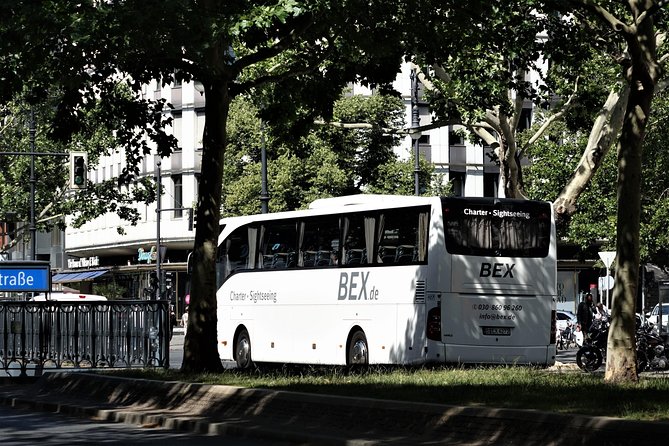
This tour is built for people who want Potsdam without giving up a whole day in Berlin. You leave from Kurfürstendamm 216 and head to Potsdam for a set sequence of stops, returning back to the same meeting point at the end. The timing matters: about two hours of the experience is tied to Sanssouci Palace, and the rest is spent covering the major landmarks that shape how Potsdam is understood—royal power, city planning, and 20th-century history.
The coach ride is part of the value. On a trip like this, the drive time becomes a mini-lesson: you get the big story so the buildings don’t feel random. In the reviews, guides like Susan and Karin are repeatedly praised for mixing history with clear explanations, and that matters because Potsdam is one of those cities where details are the whole point.
Here’s the trade-off to keep in mind: you’ll see many highlights, but you won’t get hours and hours at each place. That’s fine if you’re using this as a “best-of and orientation” day—then later, you can come back on your own if something grabs you.
You can also read our reviews of more tours and experiences in Berlin.
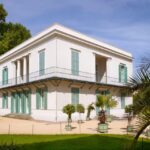
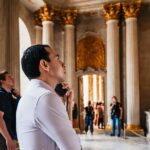

Sanssouci Palace Skip-the-Line: Frederick’s Summer Residence Made Understandable
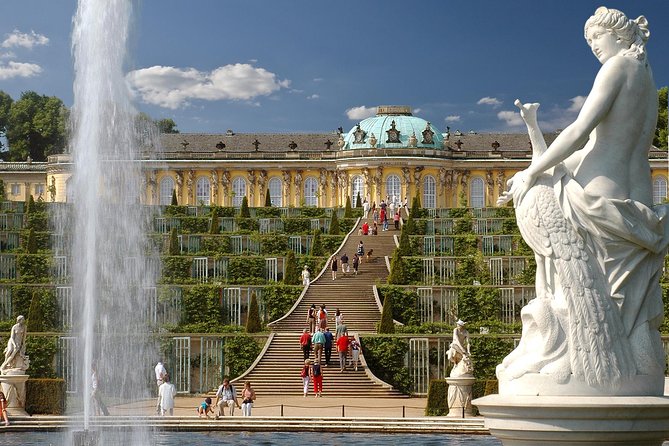
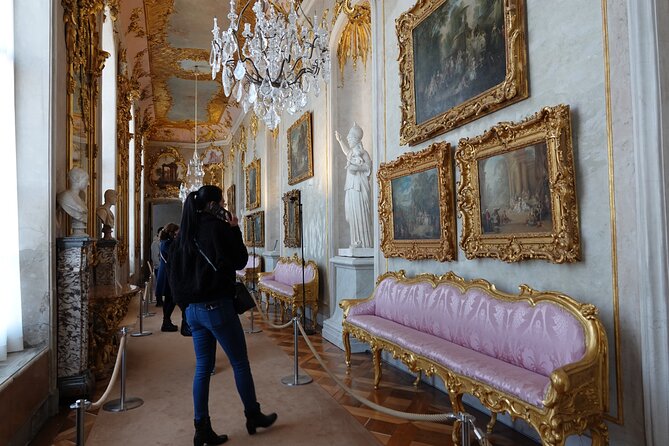
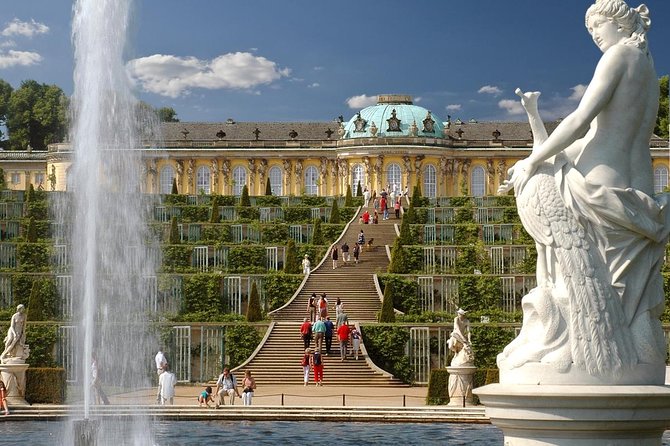
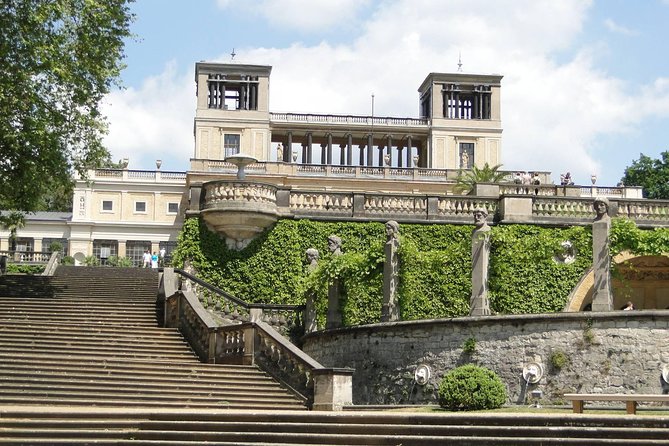
Sanssouci isn’t just another palace stop. It’s the “private escape” version of power. Built between 1745 and 1747 by Georg Wenzeslaus von Knobelsdorff, Sanssouci was created as Frederick the Great’s summer residence—away from the pomp of the Berlin court. When your guide explains that motive, the place starts to feel less like a showpiece and more like a carefully planned retreat.
You’ll have about 2 hours at Sanssouci, and admission is included. Make that time count by thinking in layers:
- Look at the park design first, then let the palace connect to it.
- Pay attention to the “follies” and temple-like features scattered through the grounds. These aren’t random decorations; they’re part of the way Frederick shaped the landscape into a statement of taste and control.
- Listen for how the palace and the park work as one idea, not separate attractions.
A practical note: a couple of reviews mention the palace guidance using a handheld recording device system. That can still be useful, but if you’re hoping for nonstop guide-led narration in English, plan to lean on the guide for main points and let the device support fill in specifics. The good news is that even people who wanted a more even English commentary say the area and palace content itself is fascinating.
Also, set expectations. The palace is impressive—but some guests point out it’s not as grand in feel as the biggest famous palaces of Europe. For many visitors, that makes the experience better, not worse: Sanssouci feels intentional, measured, and designed for a monarch who wanted quiet.
Glienicke Bridge: The Bridge of Spies in Real Life
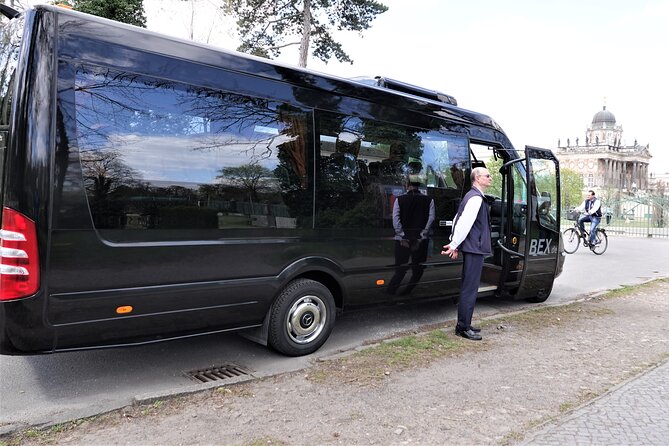
Between the royal garden time and the city stops, you’ll hit Glienicke Bridge, crossing the Havel River between Berlin’s Wannsee area and Potsdam. It’s named after the nearby Glienicke Palace, and while there have been multiple bridges at this spot, the current one was completed in 1907. After World War II, it required major reconstruction.
But the reason you’ll hear this name is the Cold War story. During the Cold War, this river section acted as a boundary between West Berlin and East Germany, and the bridge became famous as a swap location—used for exchanges of captured spies. That’s why the bridge earned the nickname Bridge of Spies. Standing there, it’s one of those places where history isn’t abstract. You can physically sense the “border” geography and why it mattered.
For photos, you’ll want to look for the viewpoints that let you frame both sides of the river. Even without long stops, this is a high-impact moment because the story is so specific.
Dutch Quarter and Alexandrovka: When Potsdam’s Stories Get Odd (In a Good Way)
Potsdam’s charm isn’t only about royal Germany. It also includes planned neighborhoods built from outside influences.
Holländisches Viertel (Dutch Quarter)
The Dutch Quarter is a striking neighborhood with 134 red Dutch brick buildings. Most have been renovated, so it feels like a real living area rather than a staged ruin. Construction ran from 1733 to 1740, following an order from Frederick William I of Prussia, and it was designed by Jan Bouman.
What to notice here: the building style reads instantly as “not Prussian standard.” This is one of the best quick stops on the tour because it gives you a visual answer to the question: How did Prussia attract skills, labor, and design ideas from elsewhere? The Dutch Quarter is Potsdam’s “how to build a city like it belongs here” chapter.
Alexandrovka (Russian Colony)
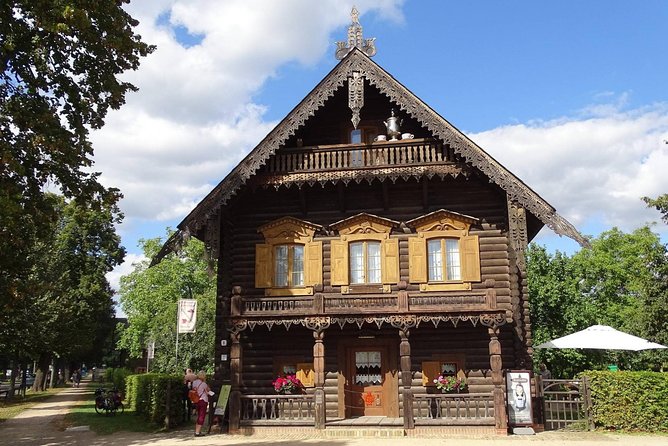
Then you’ll head to Alexandrovka, a Russian colony in northern Potsdam created between 1826 and 1827. Frederick William III of Prussia had it built for the last twelve Russian singers from a former choir of sixty soldiers.
Because the Hohenzollern and Romanov houses had family-friendly relations, the colony was named as a memorial to Tsar Alexander I, who died in 1825. In other words, it’s not just an architectural curiosity—it’s a political and cultural monument to ties between empires.
If you like your history with a human angle, this stop works well. It’s easier to connect to people—singers, soldiers, patronage—than to pure royal theory.
Old Market Square and St. Nicholas Church: The City Center You Can Walk In
Toward the end, you’ll reach Old Market Square, the historical center of downtown Potsdam. It centers on the area around St. Nicholas Church, which is a key landmark both for architecture and for what the building went through.
St. Nicholas Church is a Lutheran church built in the Classicist style, with plans by Karl Friedrich Schinkel between 1830 and 1837. The tower over Potsdam’s roofs is about 77 meters high, with the tambour built between 1843 and 1850 by Ludwig Persius, and construction work continuing from 1845 with Friedrich August Stüler.
Then comes the heavy part: the church was damaged during the end of World War II—hit during the British air raid on Potsdam and later badly damaged by Soviet artillery fire. After years of rebuilding, it was re-consecrated in 1981. Today, it’s open to visitors, and it also hosts concerts.
What I like about finishing with this stop is that you get a “Potsdam beyond palaces” moment. Sanssouci explains Frederick’s era. The Old Market Square and St. Nicholas Church explain what happened to the city afterward—and how the community chose to rebuild and use the space again.
Guides, Comfort, and the Small Details That Actually Matter
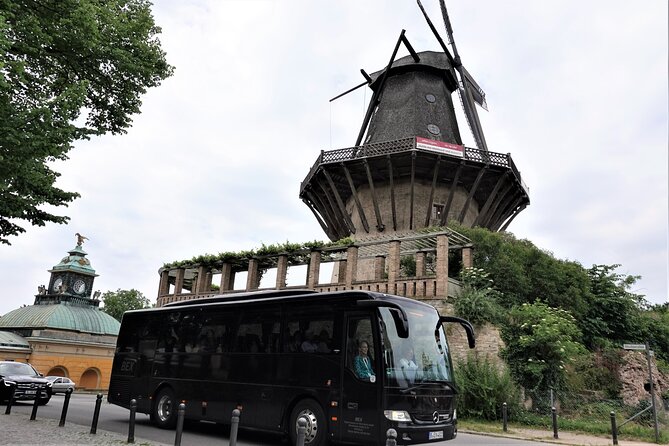
This tour runs with a local guide and uses a coach with driver. It’s offered in English, and it’s also described as English and German. Reviews repeatedly praise guides by name—especially Susan, Karin, Jasmin, Stefanie, and Bridget—for being organized, friendly, and able to shift smoothly between languages when needed.
Group size stays manageable (maximum 30), which helps. You’re not constantly fighting for your spot at windows or rushing through photos with a crowd of 50.
Now for two practical tips pulled from the day-to-day reality:
- Food and drinks aren’t included, so bring a plan. If you’re sensitive to hunger during sightseeing, pack a snack or plan a meal back in Berlin.
- Bathroom access can be limited at the palace area. One review mentions there was no facility at the palace and suggests bringing change for pay toilets at the gate. So I’d bring small coins and keep an eye on timing when the group is boarding.
Finally, the palace experience is time-managed. You’ll have enough time to see the core features and get the story, but it won’t be long enough to turn Sanssouci into a slow, “read every plaque” project.
Price and Value: Is $77.23 Worth It?
At $77.23 per person, this is a paid half-day outing, not a cheap “hop-on, hop-off” add-on. The value depends on what you’re comparing it to.
Here’s what you get that’s hard to recreate easily on your own:
- A guided Sanssouci Palace visit with admission included
- Guaranteed skip-the-line entry, which can matter a lot with popular attractions
- A coach that removes the stress of getting between Berlin and Potsdam plus moving between multiple stops
- A structured sequence that connects the dots (Frederick’s goals, Cold War geography, city planning, cultural ties)
If you were trying to do Potsdam independently, you’d likely spend time figuring out transit, order of sights, and timing for entry. On a half-day window, paying for guidance can actually be cheaper than spending your day on logistics.
The main reason the price might feel high is simple: it’s only half a day, so you’ll wish you had more time at the palace grounds or in town if you fall in love with one stop. But if you want the big hits, this price lands in a reasonable zone because Sanssouci is the anchor and it’s handled for you.
Who Should Book This Potsdam Tour From Berlin (and Who Should Skip It)
This tour is a strong match if you:
- Have limited time in Berlin and still want Potsdam’s top landmarks
- Enjoy history that’s explained with names, motives, and cause-and-effect
- Want a guided route instead of piecing together your own itinerary
- Prefer a comfortable coach day with a predictable pace
You might consider a different option if you:
- Want lots of free time to roam the palace grounds without structure
- Are sensitive to short time at each stop (because the itinerary is packed by design)
- Expect a long, museum-style pace at Sanssouci Palace
Comfort-wise, the tour calls for moderate physical fitness. That’s usually fine for most people, since the stops are spread with coach rides and the walking isn’t described as extreme—but you will be up and moving.
Should You Book This Tour?
I think it’s a smart book if your goal is maximum Potsdam impact in minimal time. The combination of skip-the-line Sanssouci, a guide-led story, and high-significance stops like Glienicke Bridge and St. Nicholas Church makes this feel like more than just a drive-by.
Book it if you want an efficient introduction you can build on later. Skip it if you’re the type who needs hours alone inside palaces, reading everything slowly and wandering off-script. For everyone else—especially first-timers—this is one of the easiest ways to understand why Potsdam became so important.
FAQ
How long is the Potsdam tour from Berlin?
It’s about 4 hours on average.
What time does the tour start?
The start time is 10:00 am, and the tour ends back at the meeting point.
Is Sanssouci Palace entry included?
Yes. Sanssouci Palace admission is included, and the tour is designed to skip the long lines.
Is the tour offered in English?
Yes. The tour is offered in English.
Are meals included?
No. Food and drinks are not included.
Is there a limit on group size?
Yes. The tour has a maximum of 30 travelers.