REVIEW · AMMAN
Private Day Trip to Jerash, Umm Qais and Ajloun Castle from Amman
Book on Viator →Operated by Jordan Private Tours and Travel · Bookable on Viator
Roman ruins and hilltop fortresses in one long day. This private trip to Jerash, Umm Qais, and Ajloun Castle gives you a full sweep of northern Jordan with door-to-door air-conditioned transport. I like that it’s built around a driver-guide who can shape the day to your pace, not some rigid bus schedule.
My favorite part is how the sights stack up with big scenery: you get dramatic mountain views at Umm Qais, then a tower viewpoint at Ajloun, then the scale of Jerash once the day’s underway. One thing to plan for: entrance fees are not included, and site explanations may depend on whether you add local guides at each visitor center.
In This Review
- Key Things I’d Want You to Notice Before You Go
- Why This North Jordan Route Works From Amman
- The Real Meaning of a 10-Hour Private Day Trip
- Umm Qais (Gadara): Amphitheater Drama With Big Open Views
- Ajloun Castle: A Fortress With Tower Views to the Dead Sea
- Jerash Ruins: The Roman City You Can Actually Understand
- How the Driver-Guide Experience Really Feels
- Price and Value: $118 Per Person for a Long Northern Day
- Food and Breaks: How to Stay Comfortable on the Road
- Who Should Book This Trip (and Who Might Skip It)
- Should You Book This Private Day Trip to Jerash, Umm Qais and Ajloun Castle?
- FAQ
- What time does the tour start?
- How long is the trip?
- Is hotel pickup and drop-off included?
- Is the entrance fee included?
- Are tour guides included?
- Is this a private tour?
- What transport is provided?
- Can I cancel for a full refund?
Key Things I’d Want You to Notice Before You Go
- Umm Qais views: the amphitheater and columns sit high above with sightlines toward the Sea of Galilee area, Mt. Tabor, and the Golan Heights
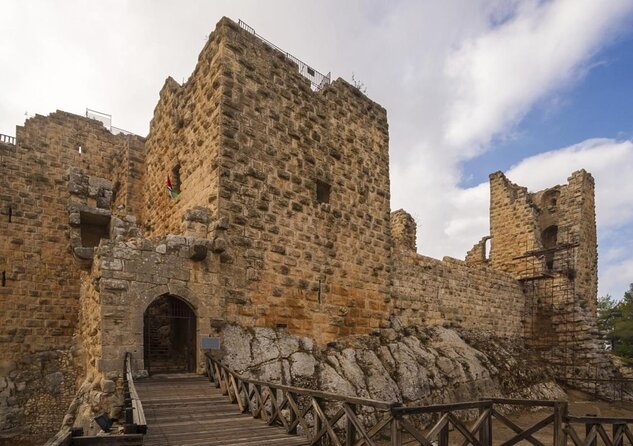
- Ajloun Castle payoff: climb into the tower for Jordan Valley-to-Dead-Sea views
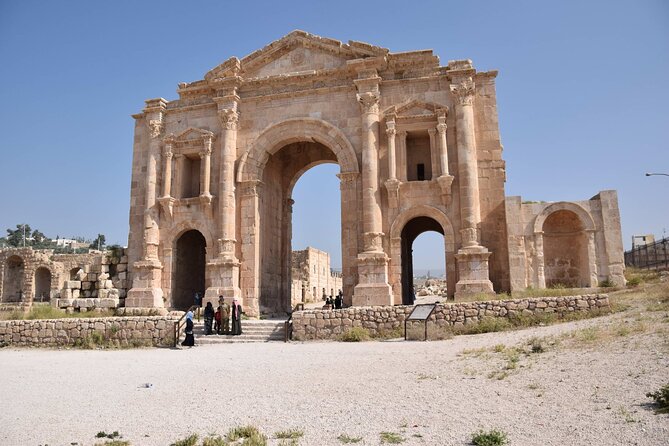
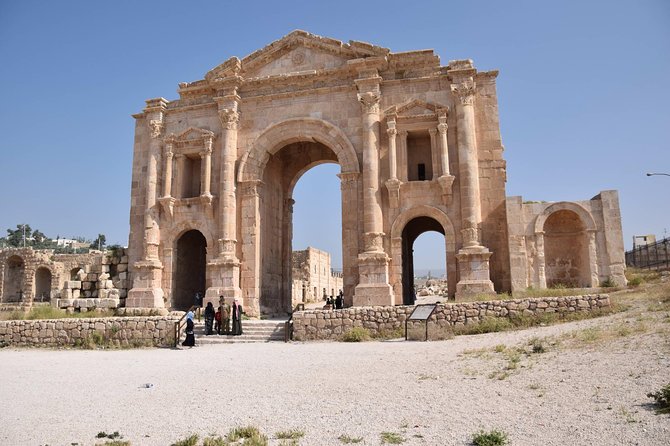
- Jerash is the main event: Hadrian’s Arch, the Temple of Artemis, and the Forum with 160 Ionic columns
- You can steer the order of attention: if you care more about one site, you’ll usually get a little flexibility
- Private transport helps a lot: it’s a long drive north, so having a car saves energy and hassle
Why This North Jordan Route Works From Amman
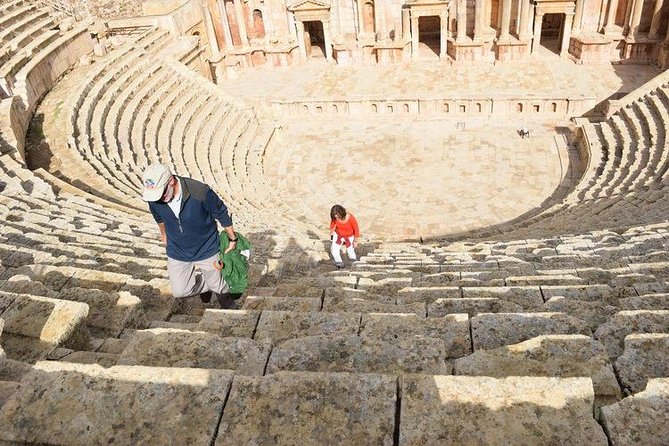
This is one of those days where northern Jordan feels like it’s telling its whole story in chapters. You start with ancient Roman city life, shift to a hilltop fortress built for defense in the medieval era, and end with Jerash—one of the best-preserved Roman-influenced cities outside Italy.
What makes the route practical is also what makes it fun: you’re not hopping between far-flung places on your own. With private pickup in Amman and round-trip transport, your main job is to show up, wear comfortable shoes, and enjoy the view when the road opens up.
You can also read our reviews of more tours and experiences in Amman.
The Real Meaning of a 10-Hour Private Day Trip
Start time is 8:00 am, and the experience runs about 10 hours. That sounds simple until you remember northern Jordan is not next door—there’s real driving time between sites. The upside is that you’re in an air-conditioned vehicle, which makes the day feel much more doable, especially if it’s warm.
This tour is private, meaning it’s just your group and the English-speaking driver. In practice, that often translates into fewer time-wasting handoffs. It also means you can ask for small adjustments—like spending extra minutes where you’re most curious and keeping the walking lighter if you need to.
A heads-up: some parts of these sites involve steps and uneven ground. The experience calls for moderate physical fitness, and I’d trust that. Ajloun’s tower climb and the walking at Jerash are not “trail stroll” levels for everyone.
Umm Qais (Gadara): Amphitheater Drama With Big Open Views
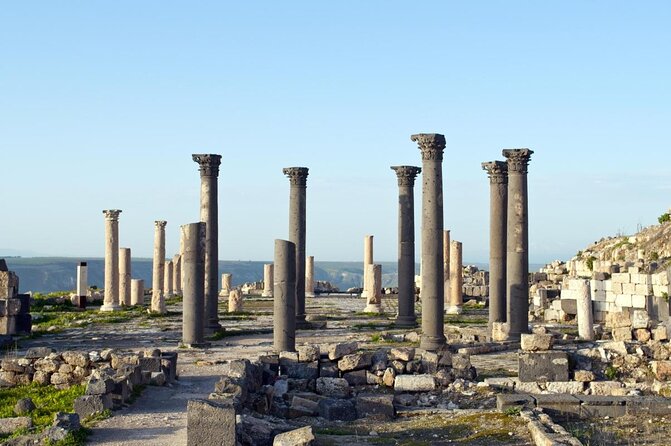
Umm Qais is a Roman site that feels more powerful because it’s so exposed. You’ll see the amphitheater and lines of chipped stone columns, but the real wow comes from the setting. On a clear day, the area’s geography lets you look out toward the Sea of Galilee region, Mt. Tabor, and the Golan Heights.
If you’re the type who enjoys ruins as places, not just photos, Umm Qais hits the sweet spot. It’s not just standing there among stones. You can feel how the location mattered—this was a city set to watch and control the surrounding routes.
Time note: the plan includes visiting the Umm Qais area (with an Archaeological Museum stop included in the sequence). Budget for about an hour at that museum portion, then add the time you want for walking the ruins. If you’re traveling in spring, the ruins can be surrounded by bright wildflowers—one more reason this stop looks different every season.
Quick practical tip: bring a light layer. Hilltop sites can feel breezy, even when Amman is warm.
Ajloun Castle: A Fortress With Tower Views to the Dead Sea
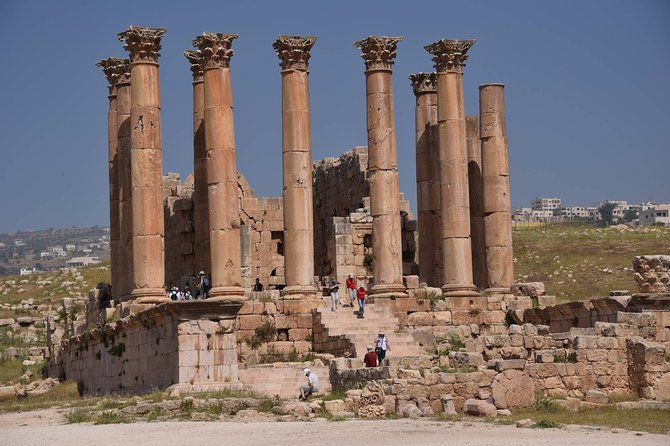
Ajloun Castle is the medieval detour that keeps the day from becoming only Roman history. This 12th-century Muslim castle was built on the remains of a historic monastery, and it carried a defensive job: protecting the region during periods of conflict, including resistance tied to Crusader-era pressure.
The interesting part is how the site’s story cycles through time. You’ll hear about how the fortress helped defend against Crusader attacks, later fell to Mongol invaders, and was finally rebuilt by the Mamluks. That pattern—built, tested, reworked—makes the castle feel less like a museum object and more like something that had to stay useful.
Then there’s the tower. Climb up for views over the Jordan Valley down toward the Dead Sea. Even if you’re not a “castle person,” that viewpoint is worth the effort, because it connects the stones to the geography.
Ajloun also tends to be a quicker stop than Jerash. You might find it works well as a break in the day: enough time for the walk and the tower, without turning your whole afternoon into stairs.
Jerash Ruins: The Roman City You Can Actually Understand
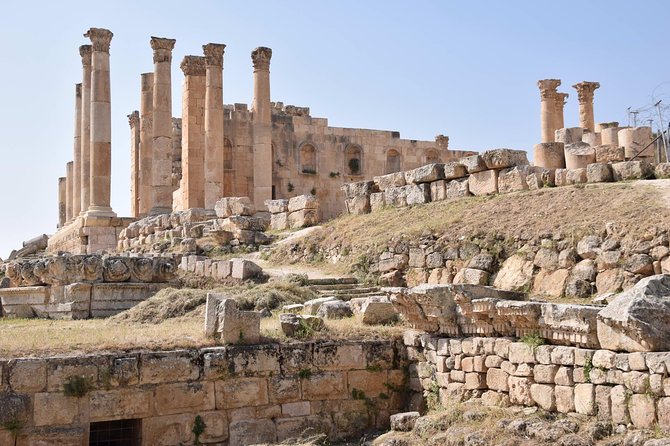
Jerash is the stop that most people remember. It’s huge, well preserved, and detailed enough that it feels like you can get your bearings even without a guide right beside you.
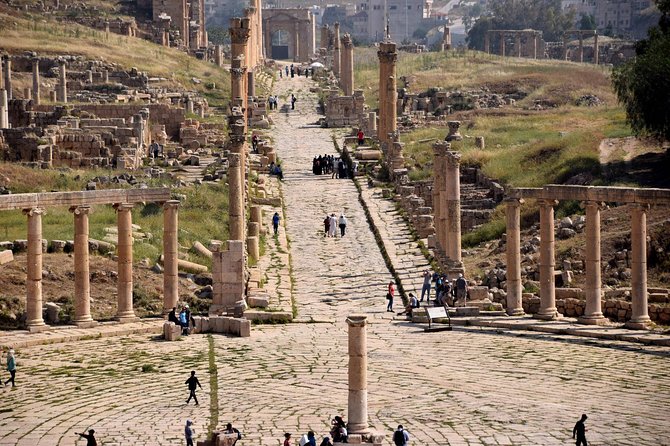
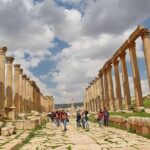
You’ll see major highlights like Hadrian’s Arch, the Temple of Artemis, and the Forum—a broad oval plaza defined by about 160 Ionic columns. That number matters, because it helps you grasp scale. This wasn’t a small town. It was a Roman-era civic machine.
The story of Jerash is also layered. The city rose alongside a Greek federation of 10 cities, then lived through Christian and Muslim rule before falling during the Crusades. That’s the kind of historical switching that makes Jerash more than “ancient Rome.” It becomes a crossroads of cultures.
Timing matters here. The planned visit includes about 2 hours at Jerash. That’s enough to see the main monuments if you move steadily, but I’d still treat it as a minimum. If Jerash is your top priority, plan to use your flexibility so you don’t rush through the Forum area or cut your time short near the Temple zones.
Practical tip: go slow through the busiest areas. Jerash can feel overwhelming simply because it’s so much. Taking your time also helps you notice details like column spacing and street layout.

How the Driver-Guide Experience Really Feels
This tour includes an English-speaking driver, and it’s private. That’s the baseline. Where experiences can differ is how much interpretation your driver provides during the ride and at the edges of each site.
I like that many of the drivers who run this route seem to bring a personal touch—names that have come up with standout service include Saad, Raed Allabadi, and Hazem. In real terms, that often means smoother pacing, helpful answers on the car, and added convenience like snack or coffee stops, or quick breaks that prevent the day from running you over.
Still, one consideration: this is not automatically the same as having a full-time professional historian walking you through every monument. Even when the driver is friendly and answers questions, it’s common for local guides to handle the deeper explanations inside the visitor centers.
So here’s the smart way to use this: if Jerash is your must-see, consider adding an official local guide on-site for that portion. It’s a simple upgrade and it turns “seeing ruins” into “understanding what you’re seeing.”
Price and Value: $118 Per Person for a Long Northern Day
At $118 per person, you’re paying mainly for three things: private door-to-door transport, an air-conditioned car for a full northern route, and a private driver for the day.
Entrance fees are not included, and that matters. You’ll also want to budget possible adds like a local guide at the sites (optional, but useful if you want more context). Food isn’t included either, so you’re also responsible for meals/snacks.
So is it good value? For most people, yes—because this is three far-apart destinations in one day. If you try to do it by arranging separate rides or piecing together transport yourself, the hassle and time cost often eat the savings. The private structure is what you’re really buying.
Where you can lose value is if you rush. When you treat a 10-hour tour as a checklist, you’re more likely to feel it’s too long for what you got. If you treat it as a day of pacing—one great stop after another—$118 starts to look fair.
Food and Breaks: How to Stay Comfortable on the Road
Because the day runs long, food planning isn’t optional. You’ll want water, and you’ll likely appreciate snack and coffee breaks along the way.
Umm Qais can be a good moment for a meal. One helpful detail: there’s an open-air restaurant on-site that some visitors recommend, especially since options at Jerash can feel more geared toward tourists and may not be the best value. In any case, having a plan beats decision fatigue when you’re tired.
Drivers also may suggest or arrange quick local stops, including tea breaks and roadside fruit or snack stops. If you want local flavor, you can ask your driver for a simple lunch spot that isn’t a generic tourist pit stop. That small request can change the vibe of the whole day.
Who Should Book This Trip (and Who Might Skip It)
This tour is a great match if:
- You want a private, air-conditioned day covering three major northern sites
- Jerash is on your list and you also want the “why” behind the region, not just big stones
- You like scenic drives and want viewpoints at Umm Qais and Ajloun
You might consider skipping or reshaping the plan if:
- You get frustrated by long driving days
- You want a fully guided, step-by-step walkthrough of every ruin without paying extra for local guides
- Your mobility is limited and you’re worried about stairs and uneven ground
Should You Book This Private Day Trip to Jerash, Umm Qais and Ajloun Castle?
I’d book it if you’re short on time in Amman and you want northern Jordan to feel like one connected story. The combination of Roman city scale at Jerash, view-driven ruins at Umm Qais, and a tower viewpoint plus medieval defense story at Ajloun is a smart mix.
Book it with one strategy: plan for entrance fees and consider adding a local guide where you care most—usually Jerash. Then you’ll get the best of both worlds: private comfort in the car, and proper context where the sites demand it.
If you want one solid day that saves energy and delivers unforgettable ancient-to-medieval contrasts, this is a strong choice.
FAQ
What time does the tour start?
It starts at 8:00 am.
How long is the trip?
It runs about 10 hours.
Is hotel pickup and drop-off included?
Yes—pickup and drop-off from Amman city hotels are included.
Is the entrance fee included?
No. Entrance fees are not included.
Are tour guides included?
An English-speaking driver is included, but tour guides are not included. Local tour guides can typically be hired at the sites.
Is this a private tour?
Yes. It’s private, with only your group participating.
What transport is provided?
You get round-trip transport in a private air-conditioned vehicle.
Can I cancel for a full refund?
Yes. You can cancel up to 24 hours before the experience start time for a full refund.