REVIEW · AMMAN
From Amman: Desert Castles of Eastern Jordan Tour
Book on GetYourGuide →Operated by Zaid Tours and Travel Jordan · Bookable on GetYourGuide
Your next good desert story starts outside Amman.
This tour hits three major Umayyad desert castles—including UNESCO-listed Quseir Amra—with enough time on-site to actually notice the details, not just rush past them. I also like the private air-conditioned transfers and the way your driver often acts like a real guide, explaining what you’re seeing as you ride out into eastern Jordan.
The only real drawback to plan around is the desert sun and walking time between stops, so comfortable shoes and sunscreen matter more than you’d think.
If you’re curious about how early Muslim rulers lived far from the big cities—and what modern-day Lawrence-of-Arabia legends did with one of these sites—you’ll leave with a strong sense of place, and why these castles still feel oddly personal.
In This Review
- Quick hits before you go
- Three Umayyad Desert Castles From Amman: the feel of the day
- Quseir Amra: the UNESCO stop with the famous frescoes
- Qasr Al-Kharanah: a two-level fortress you can read from far away
- Qasr Al-Azraq: Lawrence’s headquarters and a very specific kind of legend
- The drive, timing, and what your English-speaking driver actually brings
- Optional upgrade: Azraq Wetland Reserve and the self-guided marsh trail
- Value for money: how $93 stacks up for a three-site desert day
- What to bring (and what to skip) for Eastern Jordan heat
- Who should book this tour (and who should think twice)
- Book it or not? My take on the Desert Castles of Eastern Jordan from Amman
- FAQ
- Which desert castles are included in the tour?
- How long is the Desert Castles of Eastern Jordan tour from Amman?
- Is this a private tour and do I get a guide?
- Can I add the Azraq Wetland Reserve?
- Are meals included?
- What should I bring for the day?
Quick hits before you go
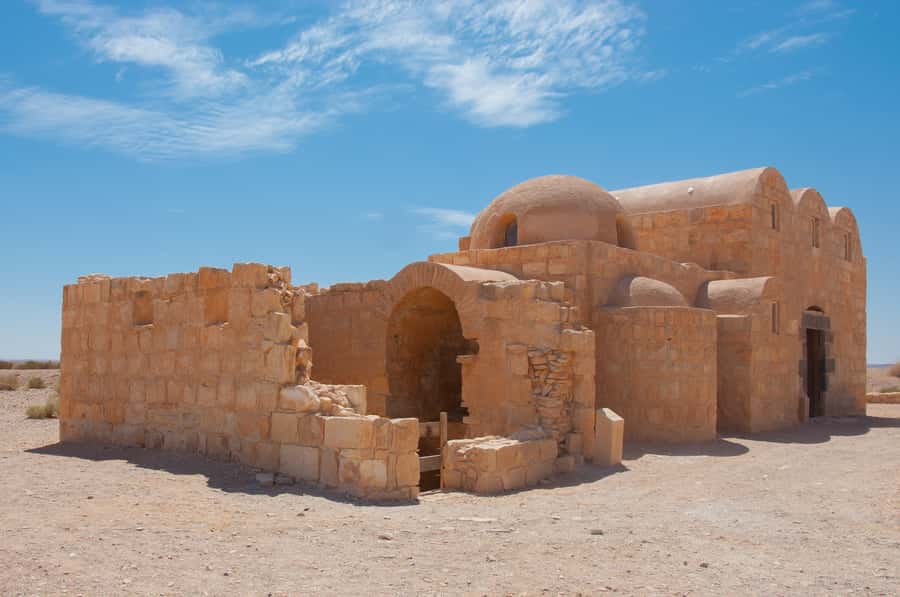
- Quseir Amra: UNESCO ruins with 8th-century frescoes showing wine, parties, and bold scenes (including nude figures)
- Qasr Al-Kharanah: a two-level fortress across a huge plain, with Roman foundations and mixed Mesopotamian, Arabic, and Greek influence
- Qasr Al-Azraq: an Umayyad hunting retreat that became T.E. Lawrence’s headquarters (1917–1918)
- Private pacing: English-speaking driver/guide, and your schedule can be tailored in a private format
- Optional Azraq Wetland Reserve: a self-guided marsh trail near the castles, designed for migratory birds
Three Umayyad Desert Castles From Amman: the feel of the day
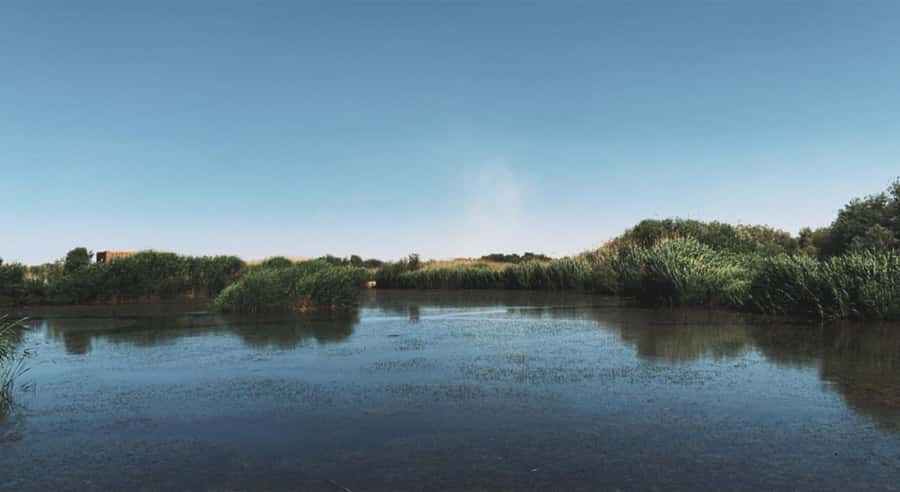
This is a straightforward, high-value day trip built around a simple idea: the desert isn’t empty. It’s dotted with 7th- and 8th-century castles close enough that you can visit multiple in one outing.
You leave Amman by private, air-conditioned vehicle with an English-speaking driver who doubles as a guide. The drive takes you out of the city and into eastern Jordan’s plains, and you’ll start getting context right away—about the Umayyad rulers and why they built rural retreats and hunting lodges far from the capital.
One detail I really like: the region is described as speckled with castles, many within about a 15-minute drive of each other. That matters because it makes the day feel “connected,” not like you’re racing between unrelated stops.
You’ll also see an operator that builds in flexibility. During the tour, you can tell your driver if there’s a particular castle you want to spend more time with, or if you’d rather visit another one at your own expense. It’s the kind of control you don’t get on rigid group tours.
Timing-wise, you’re looking at about 4 to 6 hours total. The practical version of that: you’ll be out long enough to absorb three sites, but not so long that you’re fully cooked by the heat.
You can also read our reviews of more tours and experiences in Amman.
Quseir Amra: the UNESCO stop with the famous frescoes
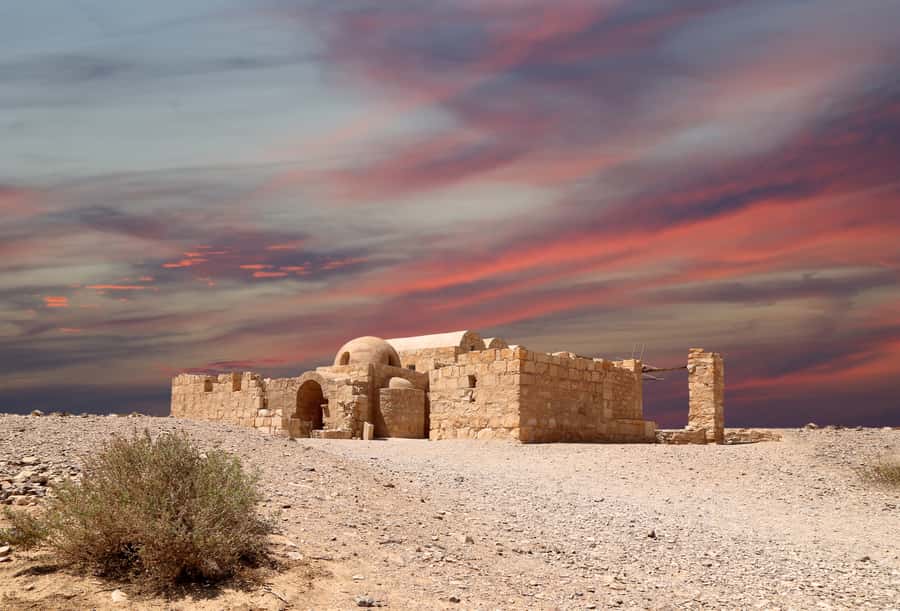
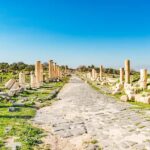
Quseir Amra is the first major leg of the day, and it’s an easy win if you like early art, architecture, and stories with edge.
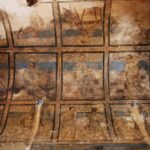
You’ll stop here at a UNESCO-listed site that was once an Umayyad hunting palace. What catches most people is the 8th-century fresco artwork—scenes that the tour description calls out as decadent: nude women, wine, and party life.
Here’s what to pay attention to while you walk:
- Look at how the building is set up as a pleasure-focused retreat, not a defensive fortress.
- Notice how the frescoes communicate power through lifestyle—luxury as a political statement.
- Take a few minutes to just view the fresco scenes from different angles; small shifts help you read the figures and mood.
This stop is one reason the day feels more than “three castles in a row.” Quseir Amra gives you a human, slightly shocking snapshot of what elite life could look like in the desert.
Practical note: fresco viewing can be affected by sun glare and shadows, so wear sunscreen and plan to move slowly. If you rush, you’ll miss the art.
Qasr Al-Kharanah: a two-level fortress you can read from far away
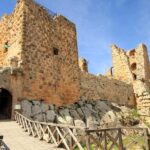
After Quseir Amra, you head to Qasr Al-Kharanah, described as an imperious two-level fortress standing in a huge plain. From a distance, it looks like it belongs in a movie—stone mass, clear structure, no city distractions.
The site is thought to have been built on Roman foundations, and the architecture is noted for mixed influence: Mesopotamian, Arabic, and Greek elements.
That matters because it changes how you experience the castle. Instead of treating it as a single-style “Umayyad building,” you can interpret it as a crossroads. You’re seeing how cultures interacted and how rulers reused older building logic while shaping their own style.
What I’d do at Qasr Al-Kharanah:
- Spend a little time on the “big shape” first. Two levels makes it easier to understand where the functions might have been.
- Then walk and look for design cues that suggest multiple traditions.
- Don’t just photograph the structure—pause and let it sink in that this was built for control and distance, not comfort.
Compared with Quseir Amra, this site feels more about presence and power. Quseir Amra says luxury. Kharanah says authority.
Qasr Al-Azraq: Lawrence’s headquarters and a very specific kind of legend
The final castle stop is Qasr Al-Azraq, and it’s the one with the strongest modern connection.
Originally an Umayyad hunting retreat, it later served as a headquarters for T.E. Lawrence during the Arab Revolt—specifically in 1917 to 1918. In other words: you’re standing on a place that lives in two timelines at once.
Your time here includes time to wander courtyards, towers, and a mosque. The tour context frames how Lawrence based operations here, so your visit becomes more than “spot the castle.” You start noticing how space works for logistics: courtyards for movement, towers for visibility, and religious buildings as part of the daily rhythm.
If you care about storytelling, Azraq gives you the best payoff because you can connect the desert setting to a real campaign period. The site description points you directly to the operational angle, which helps you understand why this location mattered.
Tip: bring patience for the heat here. It’s not a “pop in for 2 minutes” kind of stop. You’ll want to wander and absorb the arrangement.
The drive, timing, and what your English-speaking driver actually brings
A desert-castle day succeeds or fails on pacing. You don’t want a driver who treats sites like quick checkboxes, and you do want someone who can connect what you’re seeing to why it happened.
This tour’s core setup is a friendly English-speaking driver who doubles as your guide. That means the vehicle time isn’t wasted. As you travel out into eastern Jordan, you get the background on the Umayyad dynasty and stories about their rule—described as including snippets about extravagance and debauchery. Even if you’re not a hardcore history person, that context makes the architecture feel less abstract.
You also have a meaningful upgrade option: you can add a guide at the desert castles to visit all three. With an extra guide on-site, you usually get more targeted explanations where you actually stand in front of the stones and frescoes.
On safety and comfort: the vehicle is air-conditioned, and the tour includes on-board Wi‑Fi. Those sound like small details, but in a desert day trip they help your mood. You arrive fresher, not drained.
From the reviews’ overall theme, punctuality and clear English show up repeatedly in the experience quality—names like Hassan and Amer Ramouni come up in connection with calm, careful driving and explanations that add real value. The takeaway for you: this tour tends to work best when you get an actively communicative driver, not just someone who drives.
Optional upgrade: Azraq Wetland Reserve and the self-guided marsh trail
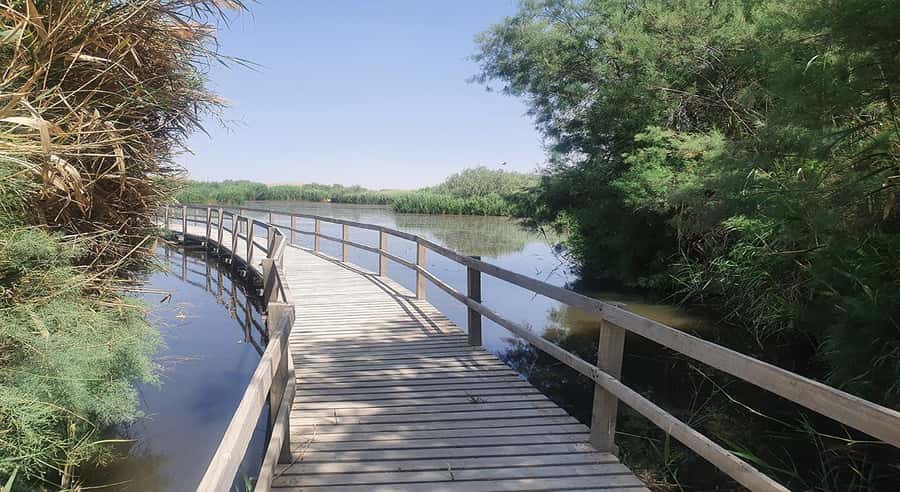
If you want to break up the castle focus with nature, the optional upgrade is worth considering: the Azraq Wetland Reserve, established in 1978.
The description highlights water buffalo and a self-guided Marsh Trail (about 12 kilometers) near the desert castles. It’s also described as an oasis for migratory birds, so if you like birdlife or just want a change of scenery, this is how you get it.
A practical heads-up: this isn’t a guided “point out everything” nature walk. It’s set up for you to explore on your own, so download/bring whatever you need to enjoy it calmly, and take your time.
Best timing for the scenery is said to be late autumn or spring. If you’re traveling in peak summer, expect harsher conditions and plan shade breaks.
Value for money: how $93 stacks up for a three-site desert day
At about $93 per person, this tour isn’t just paying for a driver. You’re also paying for a full package that includes:
- hotel pick-up and drop-off in Amman
- private air-conditioned transport
- entrances to Amra, Al Kharanah, and Al-Azraq
- an English-speaking driver
- optional entrance fees for the wetland reserve if you choose that add-on
- on-board Wi‑Fi
- and, if you select it, an additional on-site guide at the desert castles
So the value comes from the “bundled” part: entrances plus transport plus interpretation. Desert castles outside the city can be annoying to piece together on your own—because you’re dealing with distance, planning, and the cost of making it work.
The price is also easier to justify because it’s a private group format. For two or four people splitting the cost, it can start to feel like you’re buying flexibility, not just a seat.
Where you’ll want to spend smart: if you’re even slightly interested in the historical and architectural connections, consider the upgrade with a guide at the castles. When someone helps you read the site, you get more than photos.
What to bring (and what to skip) for Eastern Jordan heat
This tour makes it simple, but don’t treat the advice like boilerplate. You should actually plan around the desert.
Bring:
- Comfortable shoes (you’ll walk around courtyards and across uneven ground)
- Sun hat
- Sunscreen
Skip heavy luggage. You’re out of Amman for hours, and your best use of time is being ready to move.
If you’re traveling with a stroller or infant car seat, you should contact the provider to confirm. For mobility issues, reach out before booking since the tour includes walking around historical sites.
Who should book this tour (and who should think twice)
This tour fits you if:
- you want three major Umayyad desert castles in one day
- you like a mix of art (Quseir Amra frescoes), architecture (Kharanah), and legend (Lawrence’s Azraq HQ)
- you’d rather have private comfort and a guide-driver than manage transport and entrances on your own
- you’re open to a nature add-on with the wetland reserve upgrade
You might want a different plan if:
- you dislike walking in strong sun (even with shade breaks, desert sites are still exposed)
- you’re only interested in one site and hate splitting your attention across multiple stops
- you want a fully structured museum-style tour where every minute is tightly scripted (this is private and can feel more conversational)
Book it or not? My take on the Desert Castles of Eastern Jordan from Amman
I’d book it if your goal is a focused, high-reward day: three castles, real context, and enough time to actually look. The big strength here is how the stops connect—from Umayyad leisure at Quseir Amra, to authority and mixed architectural influences at Qasr Al-Kharanah, to Lawrence-era strategy at Qasr Al-Azraq.
Also, if you choose the upgrade with a guide at the castles, you’re likely to get more meaning from the architecture and stories, not just a checklist of sights.
Just be honest about your heat tolerance and walking comfort. If you plan for sun and wear good shoes, this becomes one of those desert days you remember long after you’re back in Amman.
FAQ
Which desert castles are included in the tour?
The tour includes entrance fees for Amra Castle (Quseir Amra), Al Kharanah Castle, and Al Azraq Castle.
How long is the Desert Castles of Eastern Jordan tour from Amman?
The duration is listed as 4 to 6 hours.
Is this a private tour and do I get a guide?
Yes, it’s a private group. You’ll have an English-speaking driver who also guides you. There’s also an option to upgrade with an additional guide to visit all three desert castles.
Can I add the Azraq Wetland Reserve?
Yes. There’s an optional upgrade for the Azraq Wetland Reserve, including entrance fees and a self-guided Marsh Trail. The trail is described as near the desert castles and is about 12 kilometers.
Are meals included?
Meals are not included unless you select an option with lunch. If lunch is available, it’s described as vegetarian by request. Beverages are not included.
What should I bring for the day?
Bring comfortable shoes, a sun hat, and sunscreen.