REVIEW · SARAJEVO
Sarajevo: Day Trip to Bosnian Castles Vranduk, Tešanj & Srebrenik
Book on Viator →Bookable on Viator
Three fortresses and big views. This day trip strings together Vranduk, Tešanj, and Srebrenik with included admission tickets, so your day is all about the sites, not planning. I especially like the small group size (max 3 travelers), which makes it easier to ask questions and actually hear the stories behind the stones.
The only real catch is the length: it’s a full day starting at 8:30 am, with a lot of driving time. If you hate long commutes or need frequent breaks, plan your energy accordingly.
In This Review
- Key highlights you’ll feel on the day
- Castle-hopping from Sarajevo, without the usual chaos
- Price and what you actually get for $149
- Getting picked up at 8:30 am and moving through the day
- Vranduk Fortress: a cliff citadel above the River Bosnia
- Tešanj Castle: Bronze Age roots, Roman/Slav layers, Ottoman garrison
- Lunch at Kapija Grill House: a real break near the fortress
- Srebrenik Fortress: 1333 defenses, the bridge entrance, and the view
- The day also includes Tuzla and the Vjetrenica area
- Returning to Sarajevo: a drop-off that keeps your evening flexible
- What you’ll enjoy most (and who this fits best)
- A small performance detail: the drone video touch
- Should you book this Bosnian castles day trip?
- FAQ
- What time does the tour start?
- Where is the meeting point in Sarajevo?
- Do they offer pickup from places other than the meeting point?
- How long is the tour?
- What are the main sites included with admission fees?
- Is lunch included, and where do you eat?
- What language is the tour offered in?
- How big is the group?
- Can I cancel for a full refund?
Key highlights you’ll feel on the day
- Three fortresses, three eras: Bosnian Kingdom, Ottoman period, and medieval defenses all show up in different ways
- Included tickets across all main sites: Vranduk, Tešanj, and Srebrenik entry is part of the price
- Timely pacing: about 2 hours 35 minutes on-site inside the forts, not counting the drive
- Lunch near Tešanj: Kapija Grill House is built into the schedule (meat, salads, soups)
- A memorable finish near Srebrenik: cake tasting and Bosnian coffee, plus great viewpoints
- A guide-led history thread: Adis is repeatedly praised for clear context and warm, flexible hosting
Castle-hopping from Sarajevo, without the usual chaos
If you like your history with views, this is a strong choice. You’re not just driving past places. You’re stepping into three fortified sites that feel like different chapters of the same Bosnian story.
What makes this day work for me is the way the stops are set up. You’re given structured time at each fortress (around 30–35 minutes), plus included entries, so you’re not stuck budgeting time for ticket lines or figuring out museum logistics.
You can also read our reviews of more tours and experiences in Sarajevo.
Price and what you actually get for $149
At $149 per person for a 10-hour-plus day, the value depends on one thing: admissions plus meals. Here, a lot of the cost is already covered for you.
You get entry/admission included for Fortress Vranduk, Castle Tešanj, and Fortress Srebrenik. Lunch is also included at Kapija Grill House near Tešanj, and the day ends (near Srebrenik) with cake tasting and Bosnian coffee.
Add in the practical stuff: an air-conditioned vehicle, bottle of water and snacks in the car, and a small group with pickup options from either Aria Mall or your hotel. For many visitors, that turns the price from a “transport cost” into a “whole day package” instead.
Getting picked up at 8:30 am and moving through the day
The tour starts at 8:30 am from Trg djece Sarajeva 1 in Sarajevo. You can also be picked up either at Aria Mall or directly from your hotel, which helps if you don’t want to drag yourself across town early.
You should expect the total day to run about 10 hours 35 minutes (and the schedule notes that the full elapsed time can be closer to 10 hours 45 minutes once you include travel between places and returning to the starting point). The schedule credits about 2 hours 35 minutes for time inside the fortresses and castles, while the rest is driving and brief stops.
That split matters. You’re getting a good amount of time at each site, but this is still a “one big day out,” not a casual half-day.
Vranduk Fortress: a cliff citadel above the River Bosnia
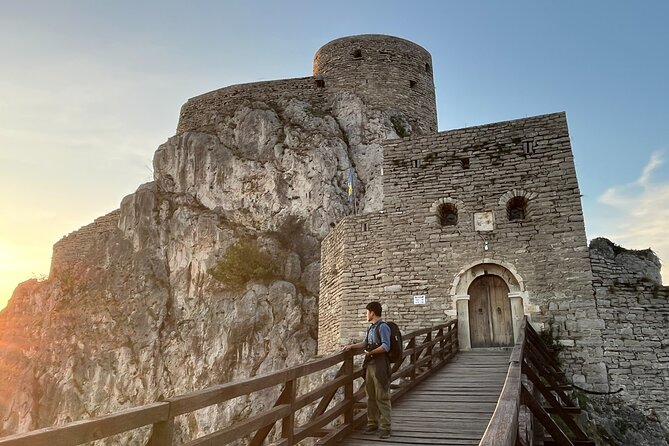
Vranduk is the first big payoff. You’ll head to the fortress perched on a sheer rock above the River Bosnia, and you’ll get about 30 minutes on-site (with admission included).
This place is tied to the Bosnian Kingdom and has a special name-drop in its story: it once served as the residence of King Stjepan Tomas I in the 15th century. In practical terms, that means you’re not just looking at old walls. You’re looking at a strategic residence system—citadel, a main tower, and a protective wall that helped control who could enter and where people could shelter.
Vranduk is also described as one of Bosnia’s medieval towns with serious political, economic, and cultural activity. So when you walk the grounds, it helps to think beyond the view. The view is the reward, but the design is the point.
If you enjoy architecture, watch for how the fortifications shape movement. The fortress layout gives you natural “storytelling routes,” where each turn feels like it was built for defense and oversight.
Tešanj Castle: Bronze Age roots, Roman/Slav layers, Ottoman garrison
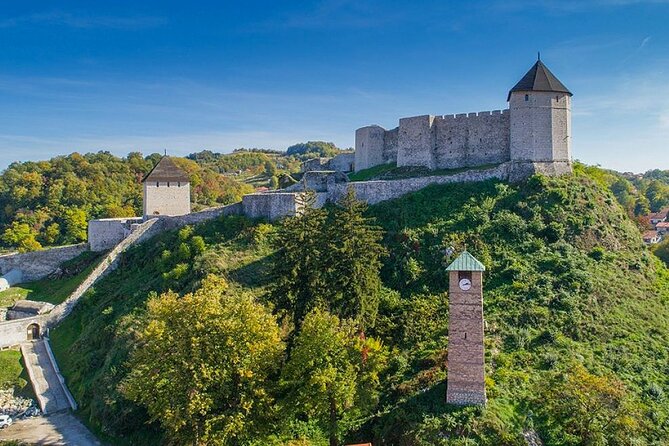
Tešanj Castle is where the history gets layered in a very tangible way. You’ll have about 35 minutes here, with entry/admission included.
This is one of the country’s biggest defensive fortifications, listed at 6,296 square meters. The origin story stretches farther back than many visitors expect: it’s said to have been built during the Bronze Age, then later strengthened by Romans, Slavs, and Ottomans.
One detail I really like is the Ottoman connection: the fortress had a permanent Ottoman Army garrison during the Ottoman period. That gives the site a different flavor than purely medieval European castle stories. You’re seeing a defensive complex that functioned as a living military presence.
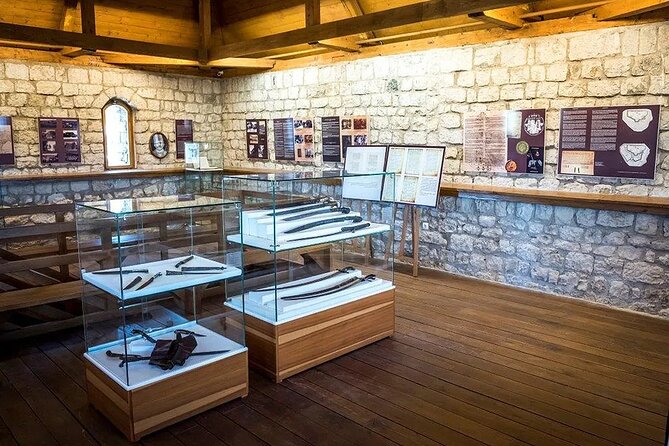
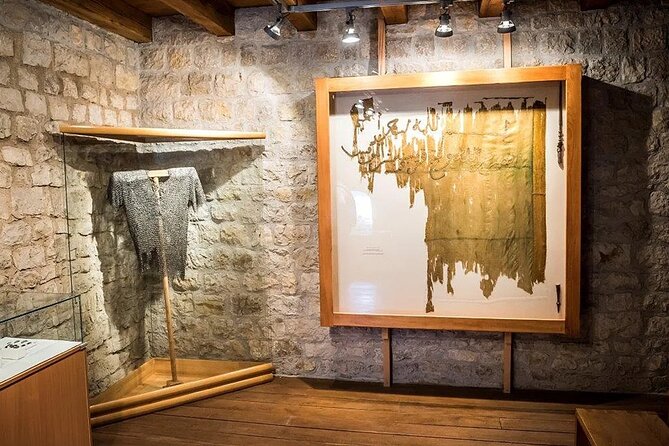
Tešanj is also set up for museum time. It has three museums, including a museum tower. Among the listed exhibits is an Ottoman Turkish flag from the Battle of Mohacs. The site also covers the 19th and 20th centuries in its storytelling, including major local figures like mayor Hamdibey Ajanovic and politician Zijad-bey Djonlagic.
Practical tip: if you’re the type who likes facts while walking, Tešanj is built for you. The museum elements make it easy to connect what you see (towers, walls, layout) to what you learn (historical periods and artifacts).
Lunch at Kapija Grill House: a real break near the fortress
After Tešanj, you get a lunch break at Kapija Grill House near the castle. The stop is listed for 30 minutes, and lunch itself is included in the tour.
The restaurant is known for grilled dishes and a cozy setup. The menu focus includes grilled meats, fresh salads, and homemade soups.
This matters because it’s not just a random food stop. It’s scheduled after Tešanj so you can refuel without turning the day into a search mission. If you’re sensitive to long driving and uneven meal timing, this structured lunch is a big advantage.
Srebrenik Fortress: 1333 defenses, the bridge entrance, and the view
Then you reach Srebrenik Fortress, with about 35 minutes on-site and admission included.
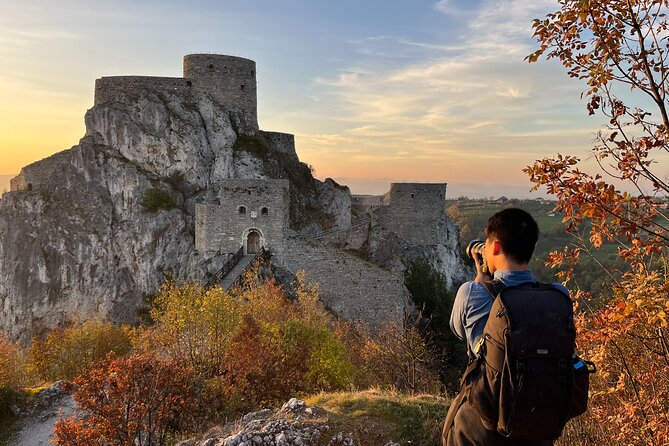
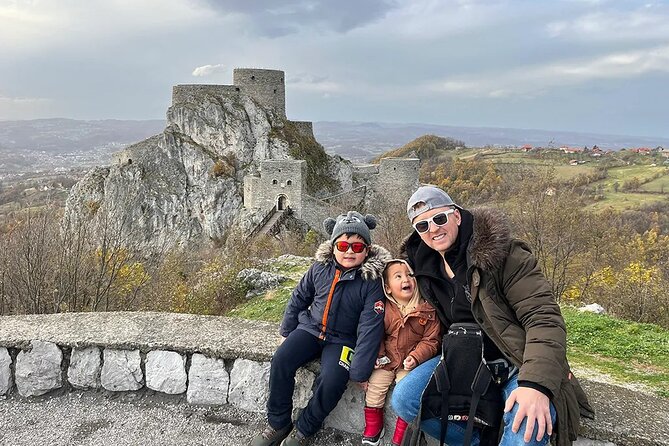
Srebrenik is described as one of Bosnia’s best-preserved medieval castles, dating back to 1333. It sits on the northeastern slopes of Majevica mountain in the village of Gornji Srebrenik, about 5 km from the city center.
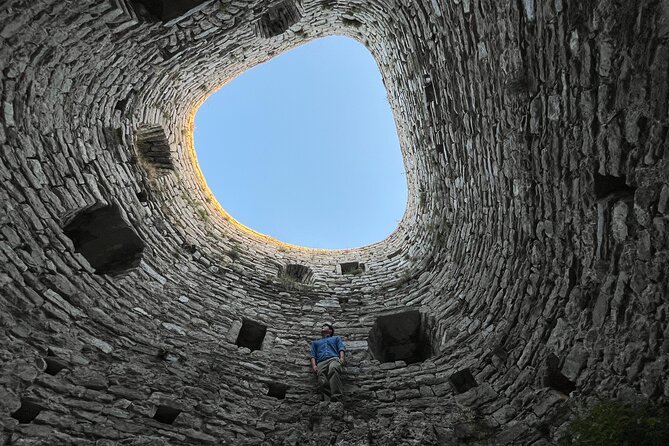
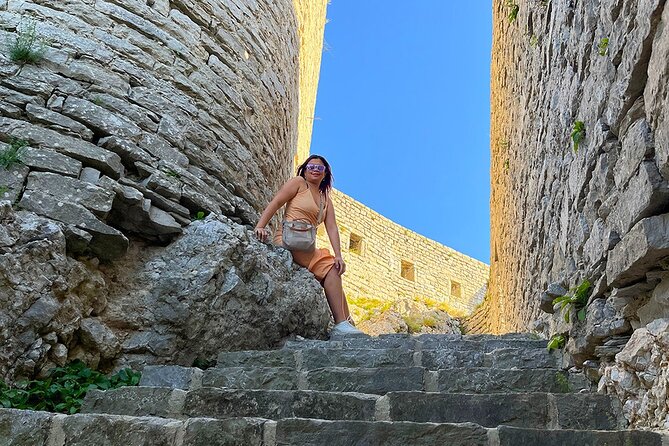
Here’s what makes the setting feel dramatic even before you read the history. The fortress is built on a steep, almost inaccessible rock, with a deep trench underneath, and it’s said the only entrance is via a small bridge. That’s a design meant to slow down attackers and make the defenders’ job easier.
The fortress also ties to the Ban of Bosnia, Stephen II Kotromanić, who is said to have occupied it until his death in 1353. Like Vranduk and Tešanj, it’s listed as a national monument.
And the experience doesn’t end at the walls. The tour includes cake tasting and Bosnian coffee near the fortress Srebrenik. It’s a small moment, but it’s the kind of payoff you remember later, especially after a morning of stone and elevation.
The day also includes Tuzla and the Vjetrenica area
This tour isn’t only castle time. It includes stops linked to Tuzla and Vjetrenica.
Tuzla is described as Bosnia and Herzegovina’s third-largest city and the administrative center of Tuzla Canton in the Federation of Bosnia and Herzegovina. The provided details note a population of 110,979 (as of 2013) and frame the city as an important economic, cultural, educational, health, and tourist center in northeast Bosnia.
Then there’s Vjetrenica, described as the largest cave in Bosnia and Herzegovina and the most biodiverse cave in the world. It’s said to be part of the Dinaric Alps mountain range, located in the Popovo field in Ravno, East Herzegovina.
Important note: the tour data doesn’t explicitly promise cave entry or a specific cave ticket in the same way the fortresses are listed. What you can count on is that you’ll get the context and the connection as part of the day’s route and stops.
Returning to Sarajevo: a drop-off that keeps your evening flexible
You end back in Sarajevo with a drop-off at your hotel or apartment, or at another address you choose. There’s also a short listed time at Sarajevo City Center (about 20 minutes).
This helps you plan the evening. You won’t have to figure out how to get back across town after a long day. Also, because the tour is designed around a morning start and steady pacing, you’ll likely be glad to have the final handoff clearly built in.
What you’ll enjoy most (and who this fits best)
This day trip is ideal if you want medieval fortifications, but you also want the story behind them in plain language. I like that the schedule gives enough time at each site to look, read, and ask questions instead of doing a sprint.
It’s also a good match if you care about getting away from the usual tourist circuits. The fortresses are described in ways that suggest they’re not treated as mass attractions. And because the group is capped at 3 people, you’re more likely to feel like you’re with a host, not packed into a bus.
You’ll probably be happiest booking this if:
- you like history tied to architecture (towers, walls, layouts)
- you want included admissions rather than surprise costs
- you don’t mind a long day for a concentrated set of sites
- you enjoy countryside views during driving breaks
A small performance detail: the drone video touch
One of the most memorable extras mentioned in feedback is a guide-led moment where Adis sends up a drone to record the experience from above. That’s not something every tour offers, and it can turn the castle views into something you’ll actually remember in detail later.
I’d treat this as a bonus that may happen during your particular day, but it’s clearly part of the overall vibe people associate with the guide’s style: thoughtful, tech-friendly, and focused on making the scenery tangible.
Should you book this Bosnian castles day trip?
Book it if you want a full-day, small-group route that hits three major fortress sites with admissions included, plus lunch and a sweet-and-coffee finale. It’s also a smart pick if you care about history that connects different eras: Bronze Age beginnings at Tešanj, Ottoman military presence, and the medieval defensive design logic at Vranduk and Srebrenik.
Skip it (or think twice) if you’re not into long driving days. This runs roughly 10.5 hours, and even though fortress walk time is about 2 hours 35 minutes, the commute portion is real. If you want a lighter schedule, you might prefer something closer to Sarajevo.
FAQ
What time does the tour start?
It starts at 8:30 am.
Where is the meeting point in Sarajevo?
The meeting point is Trg djece Sarajeva 1, Sarajevo 71000, Bosnia and Herzegovina.
Do they offer pickup from places other than the meeting point?
Yes. Pickup is offered either from Aria Mall or from your hotel.
How long is the tour?
The duration is about 10 hours 35 minutes, with travel time included (the schedule also notes the full elapsed time can be around 10 hours 45 minutes).
What are the main sites included with admission fees?
Admission is included for Fortress Vranduk, Castle Tešanj, and Fortress Srebrenik.
Is lunch included, and where do you eat?
Yes. Lunch is included at Kapija Grill House near Tešanj. There’s also cake tasting and Bosnian coffee near Srebrenik.
What language is the tour offered in?
The tour is offered in English.
How big is the group?
The tour has a maximum of 3 travelers.
Can I cancel for a full refund?
Yes. Free cancellation is available up to 24 hours in advance for a full refund.