REVIEW · THE HAGUE
The Hague: Escher in The Palace Museum Ticket
Book on GetYourGuide →Operated by Escher in Het Paleis · Bookable on GetYourGuide
Escher in Het Paleis is a visual prank in the best way. You’ll walk through a permanent exhibition of 130+ works housed in the former Winter Palace of Queen Mother Emma, where optical illusions meet royal rooms and actual stage-sized prints like Metamorphosis III. I love the sheer wow-factor of the big iconic pieces plus the clever way the museum uses the building itself to frame the art. I also like that there’s an interactive floor where puzzles are for your hands, not just your eyes. One thing to consider: the rooms feel pretty tight in places, so if you’re sensitive to crowding or enclosed video areas, it’s worth planning your pacing.
This ticket is also strong value for The Hague. For about $15 per person, you’re getting serious Escher scholarship on the walls, an audio guide in multiple languages, and the option to add a relaxed break in the palace café. It’s the kind of visit where you’ll keep spotting details long after you think you’ve moved on.
In This Review
- Key things you’ll notice right away
- Escher in Het Paleis: what this ticket really delivers
- The former Winter Palace of Queen Mother Emma
- The permanent exhibition: 130+ prints and the big staged moments
- Impossible prints plus real context (not just tricks)
- Looking as Escher Does: hands-on puzzles for your brain
- Museum café breaks: where to reset without losing momentum
- Getting the pacing right (so you don’t rush the illusions)
- Price and value: is $15 worth your time?
- Location and arrival: Lange Voorhout 74 and trams 9 or 17
- Who should book this Escher ticket?
- When it’s open (and when you’ll miss it)
- Quick practical notes that affect your experience
- Final verdict: should you book?
- FAQ
- What’s included with the Escher in Het Paleis ticket?
- How long can the ticket be used?
- Where is the meeting point?
- How do I get there from The Hague Central Station?
- Is an audio guide provided, and what languages are offered?
- Can I bring luggage or large bags?
- Is there food on site?
- Is there anything for kids?
- What are the main highlights inside?
- Is a guided tour included?
Key things you’ll notice right away
- The 7-meter Metamorphosis III is displayed in a way that makes time-and-space feel physical
- 130+ Escher prints in a permanent collection, not a short-lived pop-up
- Impossible favorites like Day and Night and Climbing and Descending
- Looking as Escher Does: puzzles for your eyes and hands on the second floor
- The royal palace setting: original ambience preserved in the Winter Palace rooms
- Museum café + child treasure hunt to break up the art without losing the vibe
Escher in Het Paleis: what this ticket really delivers
This isn’t a generic “Escher room” experience. The museum is built around a permanent collection, so the art feels anchored, not rushed. You’re seeing the way Escher keeps returning to themes—then twisting them again—until patterns become a full language.
The biggest reason this works for most visitors is balance. You get famous prints you probably recognize, but you also get the less-obvious evolution of the artist’s ideas. That mix tends to satisfy both casual fans and people who want the art to make logical sense.
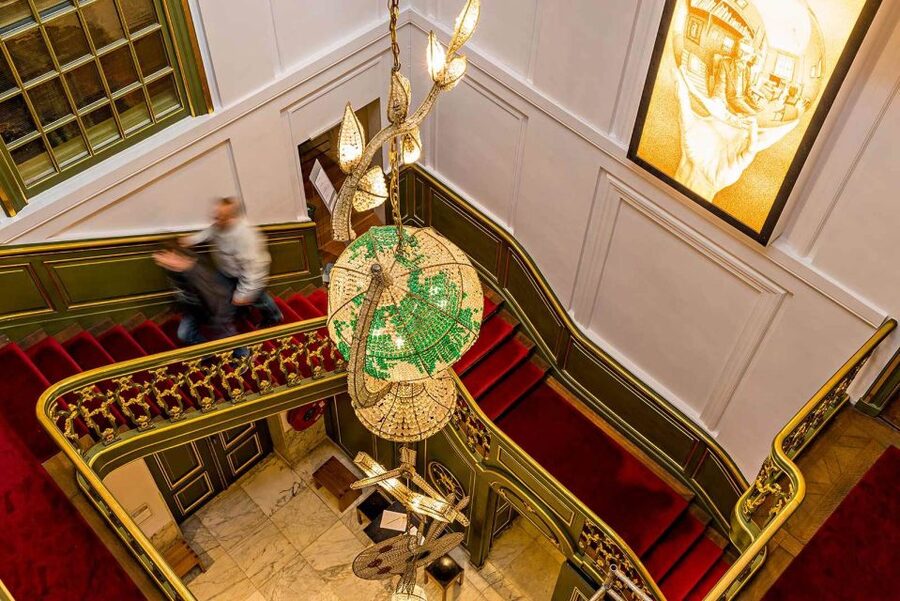
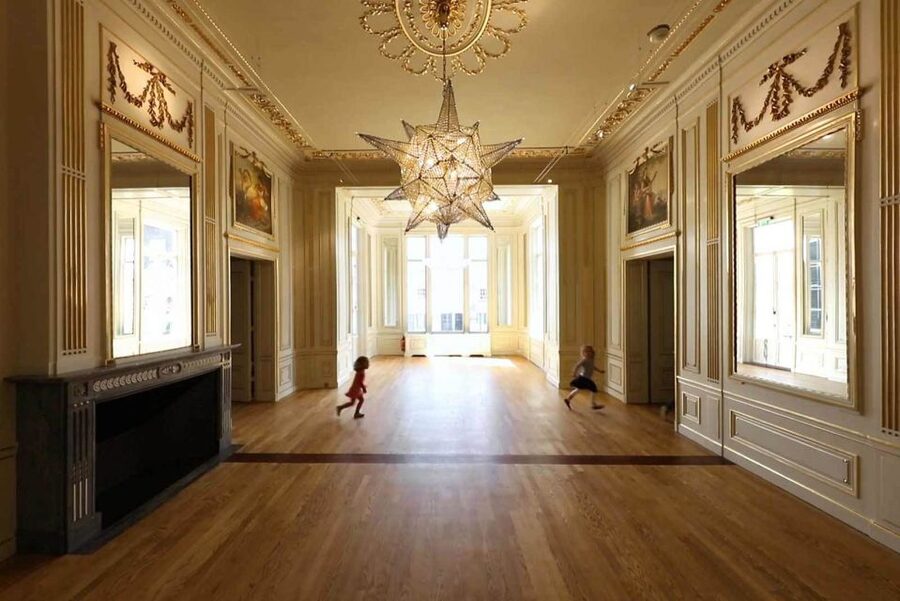
And yes, you’ll likely spend time just looking upward. Several rooms are described as packed with details, including striking features like the chandeliers, so it’s worth slowing down.
The former Winter Palace of Queen Mother Emma
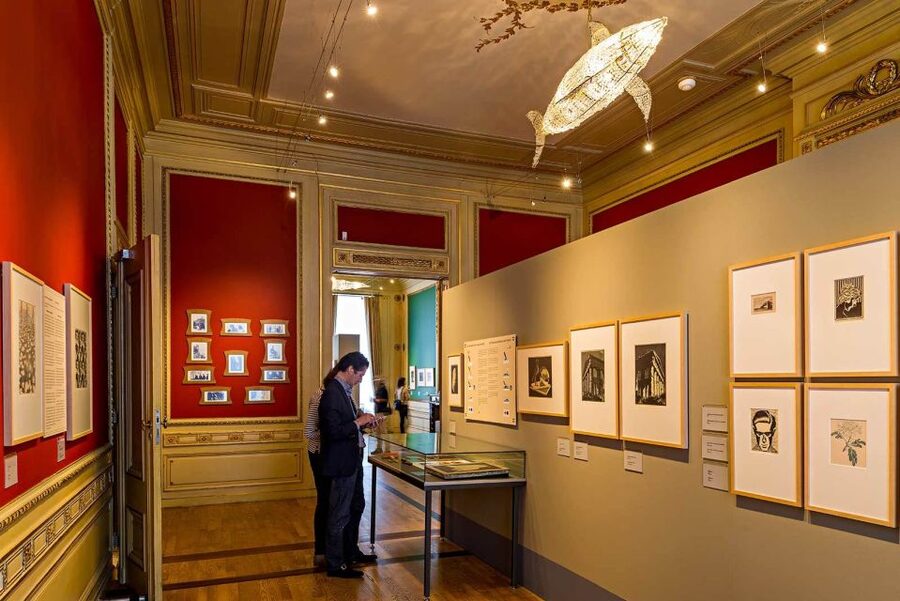
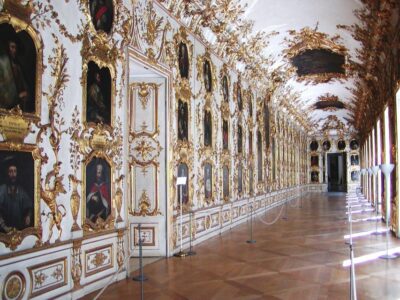
The venue matters here. Het Paleis is the former Winter Palace of Queen Mother Emma of the Netherlands, and it’s the only public building in The Hague where the original royal ambience has been maintained. That means you’re not just viewing prints in a white cube—you’re viewing them in rooms designed for prestige.
Practically, it also changes your pacing. Palace rooms encourage you to look around like you would in a historic house museum—eyes up, then back down to read the work and captions. It can make the art feel less like a lecture and more like discovery.
If you like combining culture with a “place you can remember,” this is a great pairing. The setting also helps explain why the museum feels family-friendly without being dumbed down.
The permanent exhibition: 130+ prints and the big staged moments
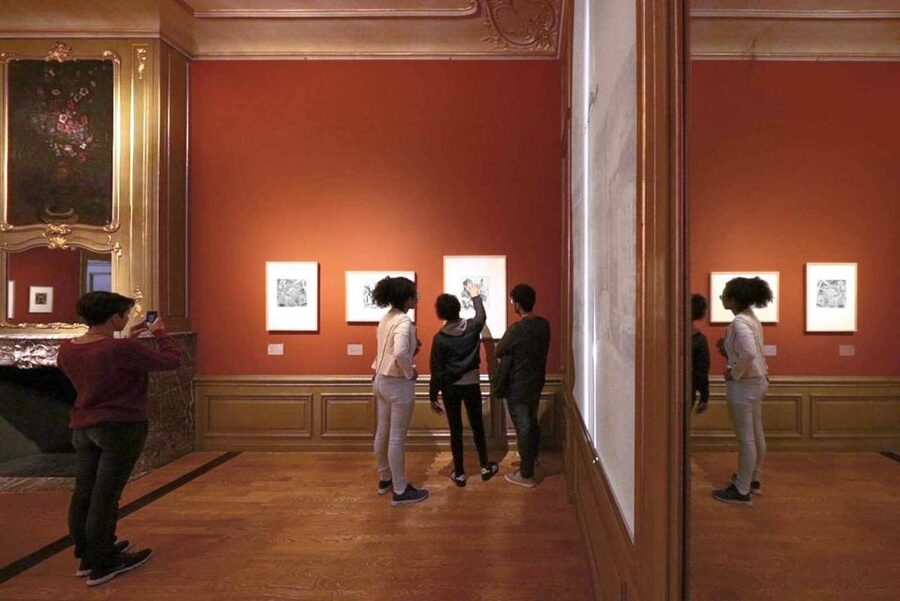
The core experience is the permanent exhibition dedicated to M.C. Escher. Expect over 130 prints spread across multiple levels, with several galleries designed to keep your attention moving.
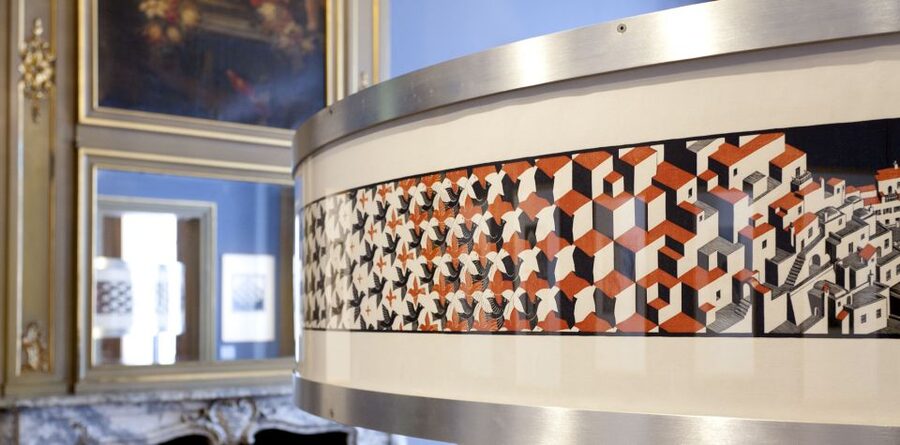
One of the true headline pieces is the long-format woodcut Metamorphosis III, listed at about 7 meters. What makes it special isn’t only the size. It’s displayed in a non-conventional way that helps you experience Escher combining time and space as one continuous, organic visual idea. In plain terms: you don’t just look at it—you sort of follow it.
You’ll also see classic optical-off switches:
- Day and Night, where a Dutch countryside scene shifts into a flock of birds
- Climbing and Descending, rows of people perpetually going up and down a staircase
These prints aren’t just famous because they’re clever. They’re famous because they force your brain to renegotiate what it thinks is stable—horizon lines, motion, and even how a scene can share two realities at once.
Impossible prints plus real context (not just tricks)
A lot of people come for the illusions. Smartly, this museum goes further. You get more than tessellations and impossible stairs; you get a sense of where the fascination came from and how Escher’s interests connect to mathematics.
That matters because it turns the experience from random wow into something you can carry home. After a few rooms, you may start spotting how patterns are built, not just how they appear. You’ll likely notice themes returning in different forms—often the same subject reborn through a new technique.
Also, this exhibition is described as including not only Escher. You can see works by other influential artists as well, which can help you frame Escher in a broader art conversation rather than treating him like a lone planet.
Looking as Escher Does: hands-on puzzles for your brain
On the second floor, you’ll find the interactive exhibition Looking as Escher Does. This is where the museum stops being only observational and starts asking you to participate.
The point of this section is simple: Escher’s ideas work best when your brain actively tests them. Expect puzzles based on optical tricks, and activities that use themes from his work so you can understand the “how” behind the “wow.”
A practical tip: set aside time for this portion early or mid-visit, not at the very end. Interactive areas tend to slow you down in a good way, and you’ll want space to re-check details in the main galleries afterward.
There’s also mention of an introduction video and an audio guide experience. Even if you mostly rely on the printed wall texts, the video can help set the tone and get your eye ready for the illusions.
Museum café breaks: where to reset without losing momentum
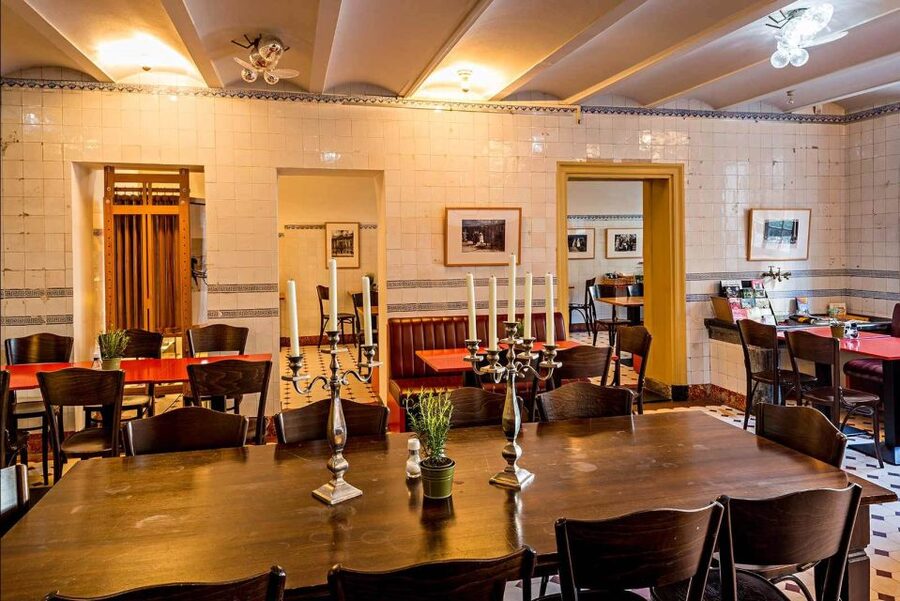
You’ll find a museum café in the former kitchen of the palace. That’s a surprisingly important detail. When art uses visual puzzles, your focus can drain faster than you expect.
A café break here also keeps the experience feeling like it belongs inside the palace, not like you’re just eating next door. It’s an easy way to pause, hydrate, and come back with fresh attention for the next room.
If you’re visiting with kids, the extra structure helps too. There’s a free treasure hunt for children, which can reduce the classic museum fight over attention spans.
Getting the pacing right (so you don’t rush the illusions)
The museum is described as fairly compact for an “art pilgrimage,” and some visitors say it can be a good hour or so if you browse steadily. Others mention there are several floors packed with works, so if you want to actually read and compare prints, plan longer.
Here’s how I’d pace it if your goal is both fun and clarity:
- Start with the big iconic prints so your brain learns Escher’s main tricks fast
- Move into the galleries that show progression and recurring themes
- Use the interactive floor as a reset point
- Revisit whatever caught your eye first, even if it means skipping some text
Also, watch the lighting. Some feedback notes lighting can feel dark or hard to read in certain spots. If you need contrast to comfortably read labels, give yourself a little extra time near the captions so you don’t feel rushed.
Price and value: is $15 worth your time?
At around $15 per person, this ticket is a solid deal for what you’re getting: a permanent, high-demand collection plus interactive elements plus multi-language audio support.
The value is strongest if you match your expectations:
- You want the real prints, not photos or a brief highlight tour
- You enjoy optical illusions enough to spend time looking carefully
- You like museums in historic interiors, not only modern galleries
If you’re only interested in one or two famous prints and nothing else, you might find the museum longer than you need. But for most people, the combination of staged masterpieces like Metamorphosis III and the interactive puzzle floor makes it feel like more than the price tag suggests.
Location and arrival: Lange Voorhout 74 and trams 9 or 17
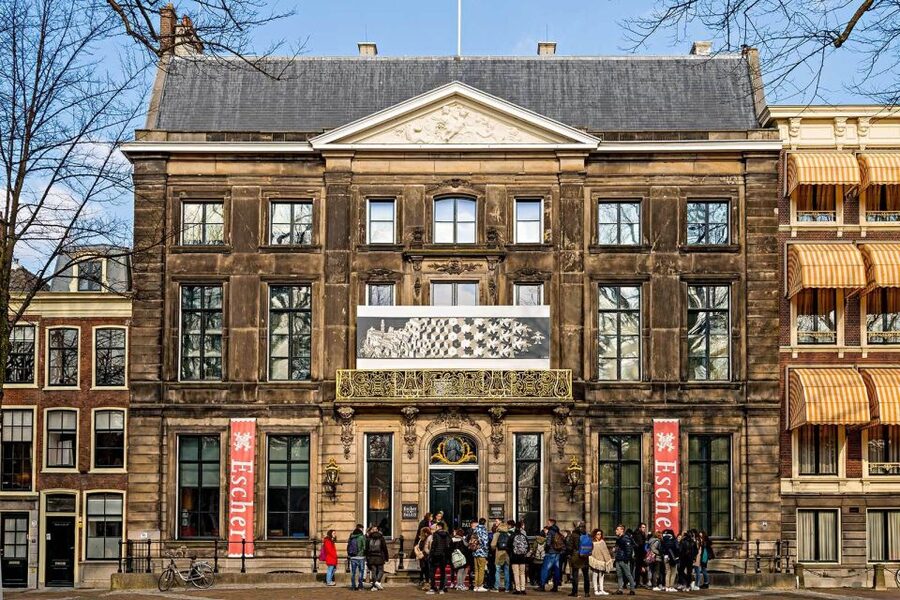
The meeting point is Het Palais, Lange Voorhout 74, Den Haag. It’s easy to reach from The Hague Central Station by tram:
- Tram 9 to stop Korte Voorhout
- Tram 17 to stop Kneuterdijk
Plan a little buffer. It’s a pleasant area to walk and orient, and you’ll likely want to enjoy the surroundings before you step into the museum.
Who should book this Escher ticket?
This is a great fit if you:
- Love optical illusions, pattern work, or design thinking
- Want a museum that works for young and old
- Prefer a permanent collection with major pieces, not a short temporary exhibit
- Appreciate historic buildings and like the idea of art displayed in original palace rooms
It’s also a smart choice for a family day. Kids get interactive puzzles and a treasure hunt, and adults still get serious artwork.
When it’s open (and when you’ll miss it)
The museum is closed on Christmas Day and January 1. It is open on Easter, King’s Day, Ascension Thursday, Whitsun, and Whit Monday.
If you’re planning around holidays, build your visit around those open dates so you don’t get stuck with a cancelled art day.
Quick practical notes that affect your experience
- Audio guide: included, with English, Dutch, German, French, Chinese, Japanese, Ukrainian, Korean
- No large bags: luggage or large bags are not allowed
- In practice, the museum provides cloakroom/luggage storage options reported by visitors, so bring your essentials and plan to store larger items
- Children: entrance is free for children up to 6 years old when accompanied by a paying adult
Final verdict: should you book?
If you’re an Escher fan, this is an easy yes. You’re not just ticking off a name—you’re seeing large staged masterpieces, classic impossible works, and an interactive floor designed around his ideas. The palace setting makes it feel like a special place to spend time, not a quick stop.
Even if you only sort of like Escher, the mix of prints, explanation style, and hands-on puzzles makes the experience approachable. The only real reason to think twice is if you strongly dislike older buildings’ tighter room layouts or you know you get uncomfortable in enclosed video spaces. Otherwise, this ticket is a high-success museum outing in The Hague.
FAQ
What’s included with the Escher in Het Paleis ticket?
Admission to Escher in Het Paleis is included. An audio guide is included as well.
How long can the ticket be used?
The ticket is valid for 365 days. Check starting times when you book.
Where is the meeting point?
Het Palais is at Lange Voorhout 74, Den Haag.
How do I get there from The Hague Central Station?
Take tram 9 and get off at Korte Voorhout, or take tram 17 and get off at Kneuterdijk.
Is an audio guide provided, and what languages are offered?
Yes. The audio guide is available in English, Dutch, German, French, Chinese, Japanese, Ukrainian, and Korean.
Can I bring luggage or large bags?
No. Luggage or large bags are not allowed.
Is there food on site?
Yes. There is a museum café in the former kitchen of the palace.
Is there anything for kids?
Yes. There’s a free treasure hunt for children, and children up to 6 years old can enter for free when accompanied by a paying adult.
What are the main highlights inside?
Expect the permanent collection with 130+ Escher prints, including Metamorphosis III (7 meters), plus major works like Day and Night and Climbing and Descending. There’s also the interactive exhibition Looking as Escher Does on the second floor.
Is a guided tour included?
No. A guided tour is available separately (for a maximum of 20 people at EUR 60 per guide) and requires reservation.