REVIEW · CLUJ NAPOCA
Turda Salt Mine, Corvin Castle and Alba Fortress from Cluj
Book on Viator →Operated by Rolandia · Bookable on Viator
Three sights, one long day, big payoffs. This full-day trip from Cluj strings together Roman-era salt mines, Gothic castle drama, and Vauban-style fortress power into one efficient route.
I especially like the chance to see Salina Turda’s underground lake and salt formations, then switch gears to walk the stone layers of Corvin Castle and Alba Iulia. I also enjoy how the guide ties it all together, so the Ottoman-era defenses and Romania’s 1918 unification moment feel connected, not random stops.
One thing to plan for: it’s a long day (about 10–11 hours), and the main entrance tickets plus lunch are extra costs. If you’re not keen on spending most of the day in a van and on your feet, you may want a slower option.
In This Review
- Key things to know before you go
- Cluj to Transylvania in a single day: what the timing feels like
- Salina Turda: underground salt halls and the Roman starting point
- Corvin Castle: Gothic fort power, Ottoman-era stakes, and real details
- Alba Iulia Fortress: Vauban-style defense and Romania’s 1918 turning point
- Guides, van comfort, and why the pace feels fair
- Price and value: when $143.61 makes sense (and when it doesn’t)
- What to bring and how to survive a full-day “three stop” route
- Should you book this Cluj day trip?
- FAQ
- What places are included on the tour?
- How long is the tour from Cluj?
- What time does the tour start?
- Where do we meet in Cluj-Napoca?
- Is the tour offered in English?
- How many people are in the group?
- What’s included in the price?
- Are entrance fees included for all sites?
- Is lunch included, and how much does it cost?
- What physical readiness level is required?
- What’s the cancellation and weather situation?
Key things to know before you go
- Small group (up to 7 people) keeps questions possible and the pace calmer.
- English-speaking guide turns three very different sites into one clear story.
- Salina Turda time is focused (about 1 hour 30 minutes underground).
- Corvin Castle gets real wandering time (about 2 hours in and around the complex).
- Alba Iulia is a big scale stop (about 2 hours at the fortress area), and admission is free.
- Bottled water and modern transport are included, but you should budget for meals and entrance fees.
Cluj to Transylvania in a single day: what the timing feels like
You’ll start early in Cluj-Napoca, with pickup at the Matthias Rex Monument in Piața Unirii, and the day begins at 8:30 am. Expect roughly 11 hours total, which lines up with what many people call a full, stretched-out day rather than a quick sightseeing hit. That said, the structure is sensible: the stops are far enough apart that you need the morning drive, but each place gets a fair slice of time so you’re not sprinting through rooms.
This is designed as a small-group day. With a cap of 7 people, you’re more likely to get personal attention than on a huge bus tour. Guides (you may meet names like Robert, George, Florin, Miguel, Alex, Andrei, Mihai, or Adrian) are repeatedly praised for clear communication and for keeping the day relaxed instead of frantic.
Where you need to be realistic is on pacing and extras. The itinerary includes three major sites plus travel time, and lunch plus ticket costs aren’t included. If you’re the type who needs long rests, this schedule may feel like a lot.
You can also read our reviews of more tours and experiences in Cluj Napoca.

Salina Turda: underground salt halls and the Roman starting point
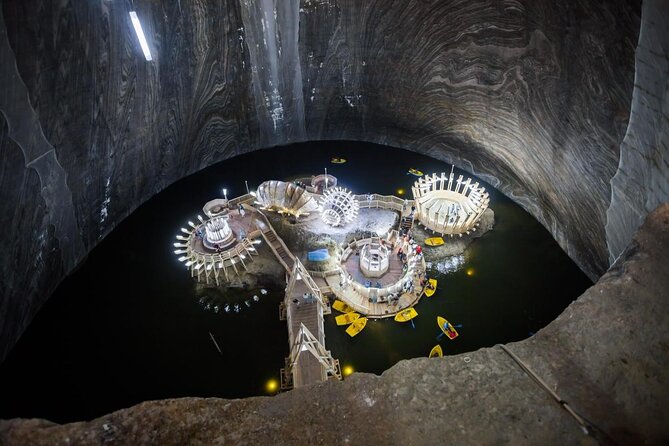
Your morning begins with Salina Turda, one of the most distinctive ways to see Romanian industrial history. The salt mining story here reaches back to the Roman Empire, with extraction beginning around 107 AD during Roman occupation. That detail matters because it gives the mine a longer timeline than you might expect from a modern tourist attraction.
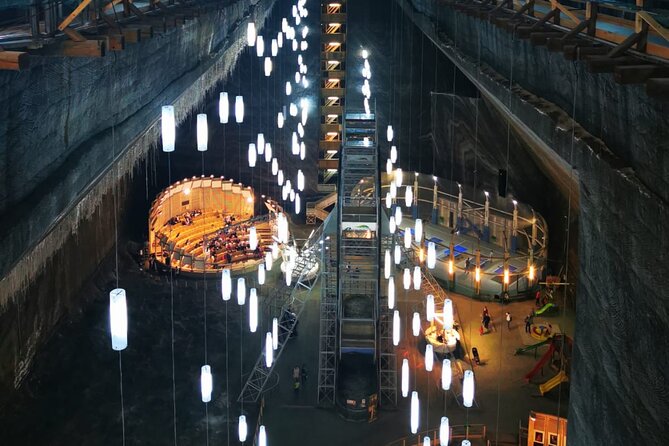
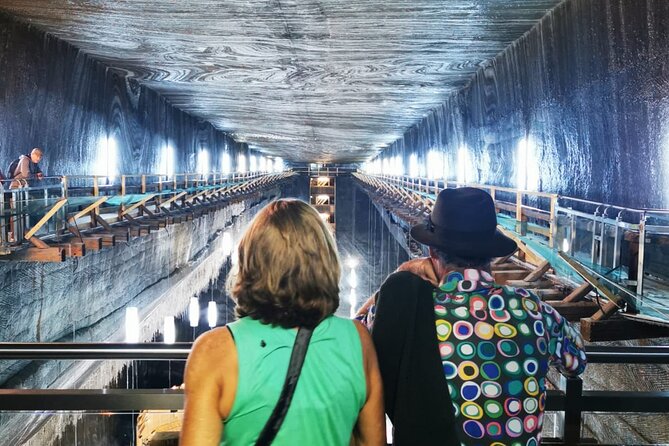
Inside, you’ll see the things people talk about most: striking salt formations, massive halls, and historical machinery that shows how extraction worked. One of the standout features is the underground lake, which changes the whole mood of the space. It’s not just corridors and chambers. The lake makes it feel almost like a different world dropped underground.
You’ll have about 1 hour 30 minutes on-site. That’s usually enough time to walk the key areas, take photos, and still leave with the sense that you actually understood what you saw. The mine ticket is not included, so plan to pay entrance separately and arrive with a little flexibility if lines take longer than expected.
Practical tip: wear shoes you’d be comfortable walking in for uneven surfaces. If you run cold easily, you might also bring a light layer. The mine’s temperature isn’t listed here, but underground places often feel cooler than the street.
Corvin Castle: Gothic fort power, Ottoman-era stakes, and real details
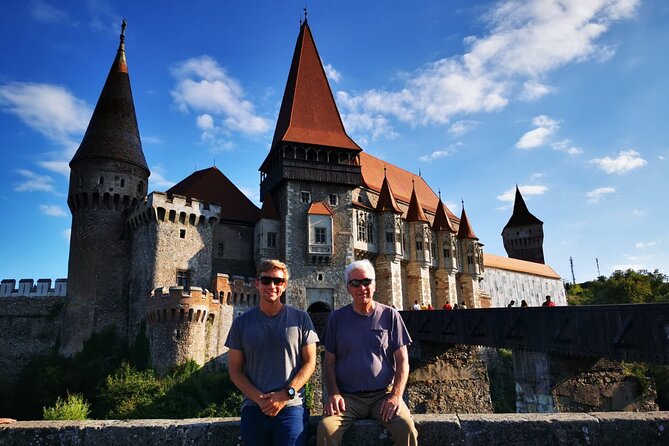
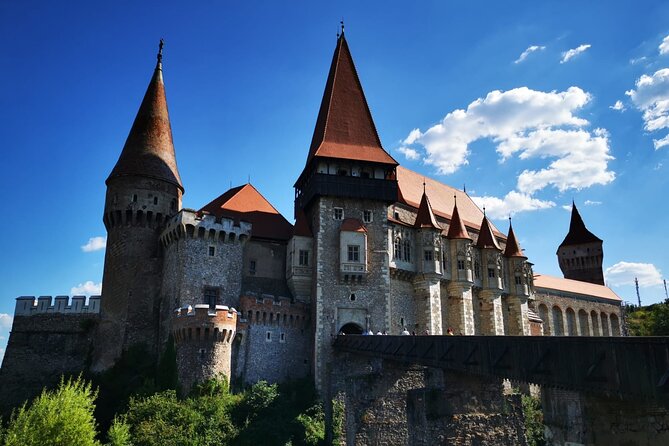
After the salt mine, the scenery shifts fast. Corvin Castle (Castelul Corvinilor) is dramatic in a way that’s easy to understand even if you’re not a medieval architecture expert. Built in the 14th century by Voicu of Hunedoara, it was later expanded and transformed into a fortress by his son, John Hunyadi.
The castle’s historical role is the key. It wasn’t just a fancy residence. It was part of the machinery of defense in the region, including the period when the Kingdom of Hungary faced major pressure from the Ottoman Empire. When a guide explains the why behind the walls, you start noticing things: the layout, the defensive structure, and how the space supports security.
You’ll get about 2 hours here, which is a sweet spot. You can wander the courtyards and move through the main chambers without feeling like time is evaporating. The focus is on Gothic architecture, but the value is in what it connects to: local power, frontier politics, and the way rulers used stone to manage real threats.
Entrance fees for Corvin Castle are not included, so budget for that. Also remember this stop tends to be “photo-friendly” but not always “easy-walk” if you’re sensitive to stairs or uneven ground. The tour asks for moderate physical fitness, which is a polite way of saying you should be comfortable with walking and some uneven surfaces.
Alba Iulia Fortress: Vauban-style defense and Romania’s 1918 turning point
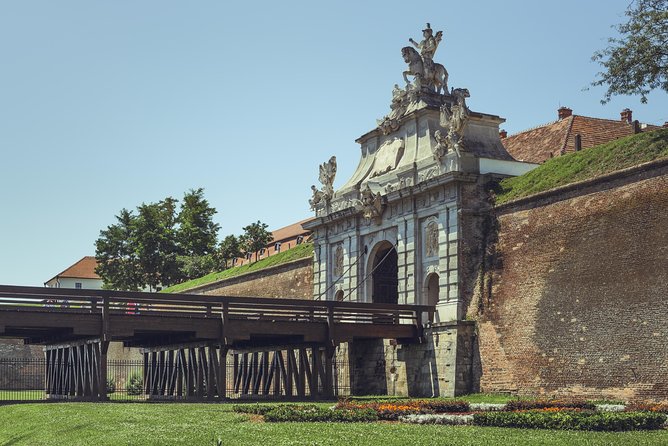
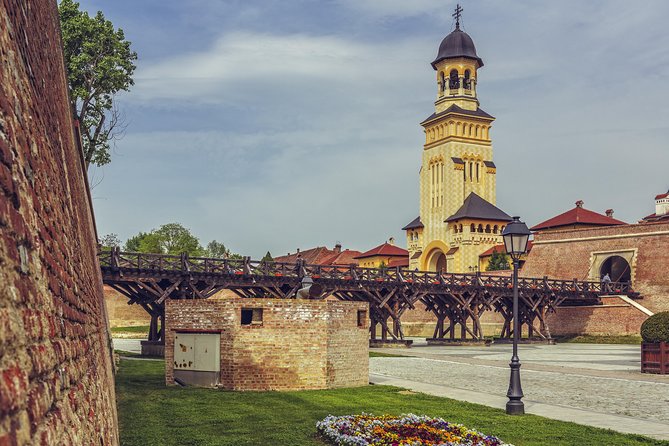
The last major stop is Cetatea Alba Iulia (Alba Carolina Fortress), and it’s a different style of impressive than the castle. This fortress is a strong example of Vauban-style military architecture, which is a fancy way of saying it was built with systematic defense in mind—bastions, ramparts, and the kind of geometry that helps protect key approaches.
The fortress’s scale is part of the experience. You’ll explore massive walls, towers, and bastions, plus courtyards and ramparts. Even if you don’t read every sign, the form of the place helps you understand it. It’s defense as a system, not just a collection of rooms.
The emotional hook here is 1918. Alba Iulia is where the Great National Assembly took place, with over 1,200 delegates gathering to declare the unification of Romania, including Transylvania’s union with Romania. This event is commemorated every year on December 1st as Romania’s National Day.
That’s why this stop can feel more than “just another fortress.” When your guide frames the walking route around that moment—rather than treating it like a history lesson in the parking lot—it clicks into place. You’re seeing the stage where a nation’s story changed.
You’ll have about 2 hours at Alba Iulia. Admission here is listed as free, which helps the value math. Still, allow time for photos and slow walking on ramparts; it’s the kind of place where stopping for a view is part of the point.
Guides, van comfort, and why the pace feels fair
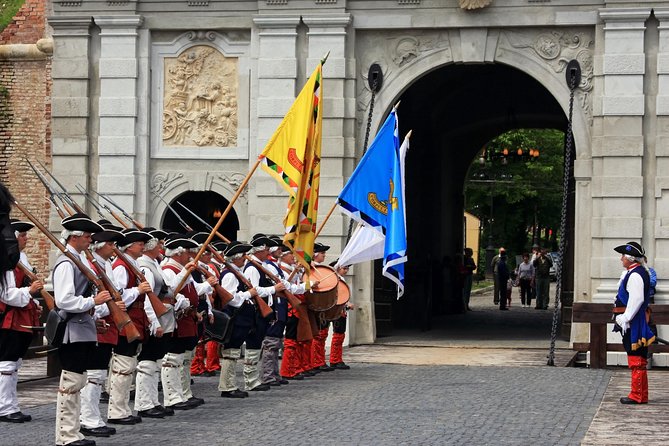
This kind of day trip succeeds or fails on pacing. Too fast, and you miss the meaning. Too slow, and you lose your day. The tour is built around a steady rhythm: guided context at each stop, then time to move through on your own at each location’s pace.
The guide is a big reason many people rate this so high. Names you might see in feedback include Robert and George, plus others like Florin, Miguel, Alex, Andrei, Mihai, and Adrian. Across those accounts, the common theme is that guides bring energy and clarity. One person highlighted that the guide’s passion for Romanian history felt authentic. Another noted that communication was smooth and the van ride was comfortable, including mention of air conditioning.
You also get small-group flexibility. Some people specifically say there were no detours and no hard sell stops—meaning you’re spending your time on the three intended sites instead of shopping corridors. And with a maximum group size of 7 people, it’s easier for a guide to adjust when someone needs more time in a hall or wants to ask a question.
Humor helps too. A number of comments describe guides as funny and warm, which matters because medieval castles and fortress math can get dry fast. A good guide helps you see what to notice, not just what to memorize.
Price and value: when $143.61 makes sense (and when it doesn’t)
The price is $143.61 per person for about 11 hours of small-group touring from Cluj, including transportation with a modern vehicle, a professional English-speaking guide, and bottled water.
What you should do with that number is separate it into two buckets:
1) You’re paying for the planning and time management. Driving between Cluj, Turda, Hunedoara-area Corvin Castle, and Alba Iulia in one day is exactly the kind of route that eats time if you try to DIY. The included transport saves you the headache of coordinating schedules, tickets, and getting back on track.
2) You still pay for entrances and lunch. Entrance fees aren’t included for Turda Salt Mine and Corvin Castle. Lunch is listed as €13 per person, and tips for the guide are not included. Alba Iulia is free for admission, which offsets the extra costs a bit.
So when does this feel like a good deal? If you want a full snapshot of three major Transylvanian sites in one day, and you value having an English guide connect the dots (Romans, Ottoman defense pressures, and 1918 unification), it’s usually worth it. If you only care about one or two stops, or you’re traveling on a tight food budget, you might be happier booking a shorter tour or picking sites on your own schedule.
What to bring and how to survive a full-day “three stop” route
This tour assumes moderate physical fitness level, so pack for walking and getting in and out of vehicles. I’d treat it as a full day outdoors and indoors mixed together: stone floors, long hallways, and ramparts that may require steady steps.
Bring:
- Comfortable walking shoes (the kind you can wear all day)
- A light layer, just in case indoor temperatures differ from the street
- A charged phone for photos, plus cash or card for entrance fees and lunch
- Water discipline: bottled water is included, but it never hurts to carry a little extra
Also plan your energy. Since the day is long, keep breakfast solid and avoid scheduling anything else the same evening if you can help it. The route goes from underground salt to Gothic stone to a fortress network, so your brain will be working even when your legs get tired.
Should you book this Cluj day trip?
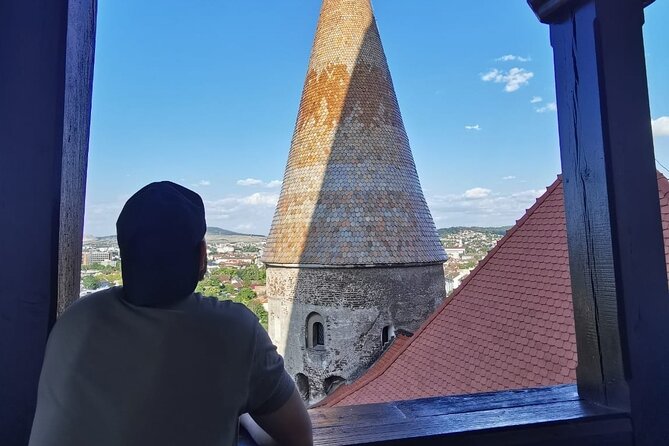
I’d book this tour if you want a well-paced sampler: Turda Salt Mine, Corvin Castle, and Alba Iulia Fortress in one day, with an English guide who can connect Roman-era mining, Ottoman frontier defenses, and the 1918 unification moment. The small group size (up to 7) and the consistent feedback about smooth organization also make it a safer bet if you don’t want to spend your day figuring out logistics.
I would hesitate if you’re easily worn out by long travel days, or if you want a tour where all major costs are fully included. Since ticket entrances for two sites and lunch are extra, the final total is higher than the base price once you add those.
If you’re the kind of person who likes variety—underground wonder, castle drama, and big military architecture—this is a strong one-day route from Cluj.
FAQ
What places are included on the tour?
The tour visits Salina Turda (Turda Salt Mine), Corvin Castle (Castelul Corvinilor), and Alba Iulia Fortress (Cetatea Alba Iulia / Alba Carolina Fortress).
How long is the tour from Cluj?
It runs for about 11 hours total.
What time does the tour start?
The start time is 8:30 am.
Where do we meet in Cluj-Napoca?
Meet at the Matthias Rex Monument, Piața Unirii, Cluj-Napoca, Romania.
Is the tour offered in English?
Yes, the tour is offered in English.
How many people are in the group?
The tour has a maximum of 7 people.
What’s included in the price?
Included are transportation in a modern vehicle, a professional English-speaking guide, and bottled water.
Are entrance fees included for all sites?
No. Entrance tickets are not included for Turda Salt Mine and Corvin Castle. Alba Fortress admission is listed as free.
Is lunch included, and how much does it cost?
Lunch is not included. It is listed as €13 per person.
What physical readiness level is required?
The tour is suitable for people with moderate physical fitness.
What’s the cancellation and weather situation?
Cancellation is free if you cancel up to 24 hours in advance for a full refund. The tour requires good weather; if it’s canceled due to poor weather, you’ll be offered a different date or a full refund.