REVIEW · PHNOM PENH
A Full Day Tour for Royal Palace, S21, Killing Fields & More
Book on Viator →Operated by Sina's Tuk-Tuk or Van Driver & Guide Service · Bookable on Viator
Phnom Penh hits you in two wildly different ways. This full-day tour strings together postcard-worthy temples and palaces, then turns into the sobering reality of the Khmer Rouge era at S21 and Choeung Ek. You’ll learn why these places matter, not just what they look like.
I like the hotel pickup/drop-off and air-conditioned Hyundai Starex that make an 8–9 hour day feel doable. I also like that your guide keeps the whole route understandable, so each stop clicks into place as part of Phnom Penh’s wider story.
The main drawback is budgeting: several big sites have separate entrance fees, and audio add-ons at the two Khmer Rouge stops cost extra. And yes, the memorial content is heavy, so you’ll want to pace yourself mentally.
In This Review
- Key Things I’d Not Skip
- A Full Day Loop Around Phnom Penh (and How to Plan for It)
- Wat Phnom: The Hill Temple That Started the Story
- The Royal Palace: Official Residences and Real Layout
- Monuments Between the Palace and S21 (Quick Stops, Big Meanings)
- Tuol Sleng Genocide Museum (S21): What a High School Became
- Choeung Ek Killing Fields: Learning the Scale at the Memorial Ground
- Central Market: The Art Deco Way to End the Day
- Price and Value: What You Pay vs. What You Budget
- The Transport and Guide Factor: Why This Feels Easiest
- Who Should Book This Tour (and Who Might Want a Different Day)
- Should You Book This Full-Day Tour?
- FAQ
- What time does the tour start?
- How long does the full-day tour take?
- Is hotel pickup and drop-off included?
- What entrance fees should I budget for?
- Do I need to pay extra for audio at S21 and Choeung Ek?
- How big is the group?
- Is cancellation free if I change plans?
Key Things I’d Not Skip
- Small-group comfort (max 7 travelers) means more questions and less waiting.
- Air-conditioned transport helps when the city heat feels relentless.
- A guided, stop-by-stop explanation turns landmarks into context, not just photos.
- S21 and Choeung Ek with optional audio gives you control over how fast you absorb what you’re seeing.
- Central Market shopping time is built in, so you don’t have to scramble at the end.
- Hotel pickup and drop-off keeps your day stress-free from start to finish.
A Full Day Loop Around Phnom Penh (and How to Plan for It)
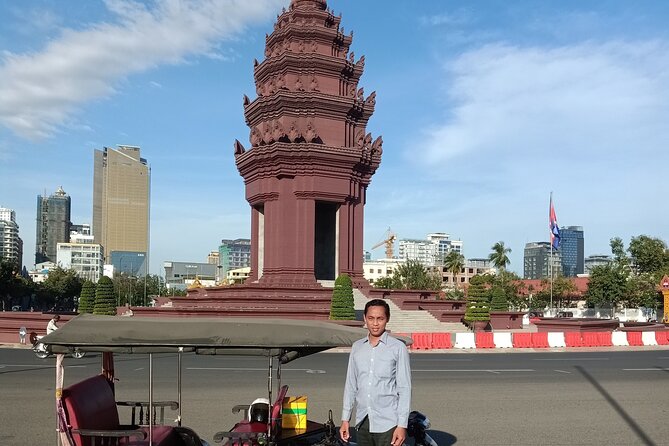
This is built as one continuous circuit, starting at 8:00am and running about 8–9 hours. You’ll cover a lot of ground, and the mini van rides help connect sites that would be annoying to hop between on your own. The tour also lists a moderate physical fitness level, so expect walking inside temple and memorial grounds (and standing around to listen at a few stops).
The vibe of the day is also important. The morning leans scenic and cultural, with Wat Phnom and the Royal Palace. Then the itinerary pivots into the Khmer Rouge genocide story at Tuol Sleng (S21) and Choeung Ek. I think that contrast is the point of doing this particular combo tour, but it also means your emotions will swing—plan for that instead of trying to brute-force it.
If you’re the type who likes structure, this format helps. You get a guide, you get time blocks at each site, and you don’t have to figure out what to see first. If you prefer total freedom to wander, you may find some segments feel timed—especially the longer memorial visits.
You can also read our reviews of more tours and experiences in Phnom Penh.

Wat Phnom: The Hill Temple That Started the Story
Wat Phnom is the first stop, with about 30 minutes on site and a $1 per person entrance fee. This temple is famous because it’s tied to the origin of Phnom Penh’s name and identity. You’ll see the “mountainous pagoda”—a real structure that connects legend to place—so it’s a great opener. It helps you shift from airport-brain mode into Phnom Penh-brain mode fast.
What I like about starting here is that it gives you a frame for the rest of the day. Before you go to royal and political buildings, you understand the spiritual geography. Even if you’re not a religious sites super-fan, Wat Phnom is usually the kind of stop that makes the city feel older than the traffic around it.
Practical note: because the fee is small but separate, keep a bit of cash ready. Also, Wat Phnom is outdoors for parts of the visit—so bring sunscreen or a hat if you’re traveling in the hotter months.
The Royal Palace: Official Residences and Real Layout
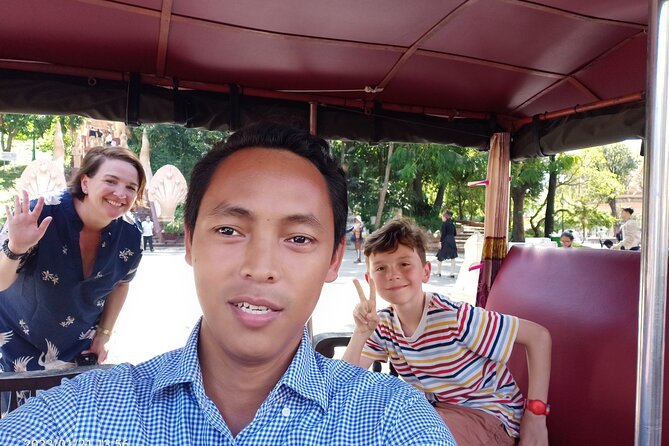
Next comes the Royal Palace, the official residence of the king and queen. Expect about 1 hour 30 minutes here, with an additional $10 per person entrance fee.
This is one of those sites where a guide matters. The palace grounds can look like “big pretty buildings” from the outside, but the real value is understanding what you’re looking at—how the complex is organized and what the buildings represent. Your guide is meant to explain the histories and positions of the structures, which is exactly what helps you avoid the classic mistake of treating it like a generic photo stop.
One consideration: because the Royal Palace fee is separate, the total cost of the tour can creep up. But if you’re doing Phnom Penh in one day and you care about seeing the city’s signature landmark, it’s worth factoring in.
Monuments Between the Palace and S21 (Quick Stops, Big Meanings)
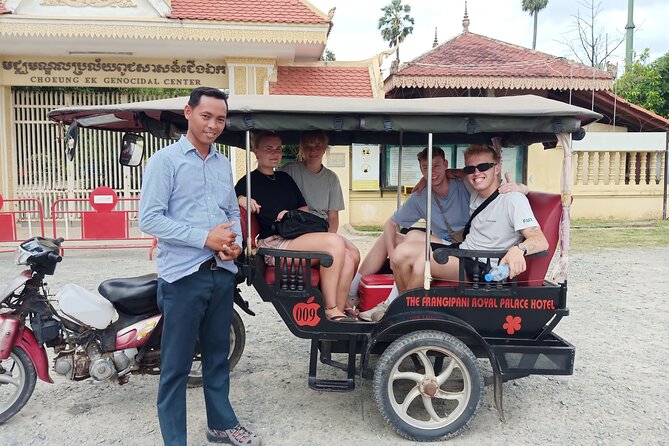
After the palace, the route includes several short photo-and-story stops. These are each around 10 minutes (or about that), and most have no entrance fee.
Here’s what you’ll hit:
- Cambodia–Vietnam Friendship Monument: built to thank Vietnamese armies after Cambodia was liberated from the Khmer Rouge regime in 1979.
- Statue of King Father Norodom Sihanouk: a bronze statue placed in his park in 2013, honoring his role in prosperity during the 1960s.
- Independence Monument: built in 1962 after Khmer people gained independence from French colonization, which is given as lasting from 1863 to 1953.
These stops are easy to skip if you’re rushing, but I don’t think you should. They connect the “temple and palace” side of Phnom Penh to the political events that shaped the country. The monument time is short, but the meaning helps when you later walk through S21 and Choeung Ek.
A newer addition is:
- Wat Langka (about 30 minutes, entrance free): described as being built after the country was liberated from the communist party, and opened to the public on September 24, 2024.
Tuol Sleng Genocide Museum (S21): What a High School Became
Then comes the emotional heart of the day: Tuol Sleng Genocide Museum, also known as S21. You’ll spend about 1 hour 30 minutes here, with an entrance fee of $5, plus $5 for an audio player.
This site is a former high school that was converted into a prison during the Khmer Rouge regime. The tour information also notes that 12,000 victims were imprisoned there. That number isn’t just a statistic—it’s the reason this visit is a guided stop, not a quick wander.
What I appreciate about this tour format is that the audio option lets you control your pace. If you’re the type who learns best by listening as you walk, the audio player can make the museum feel less confusing and more focused. If you prefer silence or reading only, you can still follow along with your guide’s explanations.
The biggest thing to plan for is energy. S21 is mentally demanding. Wear something comfortable, take breaks when you need them, and don’t force yourself to “power through” just to keep up with the group.
Choeung Ek Killing Fields: Learning the Scale at the Memorial Ground
After S21, you’ll go to Choeung Ek Genocidal Center, often referred to as the Killing Fields area. This is another 1 hour 30 minutes and emotionally intense.
The tour information says it was a former local Chinese cemetery turned into the killing fields, where about 20,000 victims were executed. The entrance fee is $3, and there’s $3 for an audio player.
Again, audio is optional but designed to help you learn as you go. Even if you already know the broad story, the place itself has a way of making the scale feel real. A guide also helps you connect what you’re seeing to what happened, instead of letting the space turn into vague sadness.
If you’re sensitive to graphic or heavy historical sites, this is the point where you should slow down. This tour doesn’t try to soften the facts. The value is learning, remembering, and understanding why these places matter.
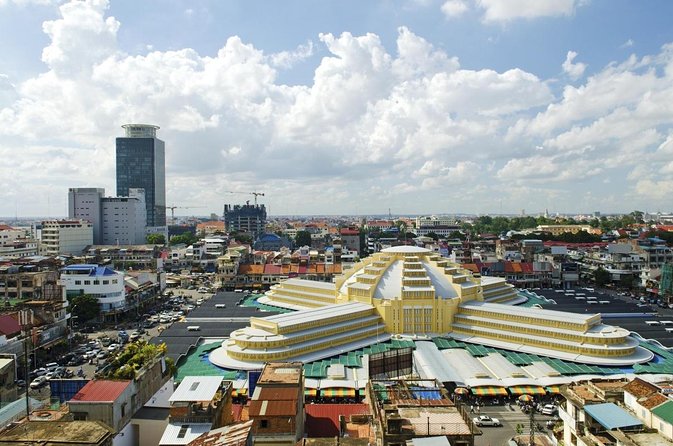
Central Market: The Art Deco Way to End the Day
After the memorials, the itinerary wraps with Central Market for about 30 minutes. Entrance is free.
This is described as a famous colonial building market, and it’s known for local products and souvenirs—things like jewelry and dried fruit, along with other items you can actually take home without needing a separate shopping mission.
What I like here is the placement. You’re not stuck browsing right after the memorials while still trying to process heavy information. You get a chance to shift gears. When you’re done shopping, you’re also not far from where you’ll end your day.
Practical tip: because shopping time is limited, decide what you want before you enter—souvenirs, gifts, or personal items—so you don’t lose 30 minutes comparing the first five stalls.
Price and Value: What You Pay vs. What You Budget
The tour price is $35 per person, and that’s for the core experience: guided sightseeing around Phnom Penh plus hotel pickup and drop-off, an air-conditioned mini van, bottled water, and Coke or local beer after 12 o’clock.
But the big sites are ticketed separately. From the tour info:
- Wat Phnom: $1
- Royal Palace: $10
- Tuol Sleng (S21): $5
- Audio at S21: +$5
- Choeung Ek: $3
- Audio at Choeung Ek: +$3
If you do audio at both memorials, a realistic total looks like:
- $35 base
- + $1 (Wat Phnom)
- + $10 (Royal Palace)
- + $5 + $5 (S21 + audio)
- + $3 + $3 (Choeung Ek + audio)
That’s about $62 per person not counting any extra personal purchases.
Is it still good value? For most people, yes—because this is not just “transport to a few stops.” You’re paying for context at each site, and those guided explanations are especially valuable at the memorial museums, where reading alone can leave gaps. If you’d skip the audio, your total drops, but the audio is there for a reason: it helps you learn as you walk.
Also, the tour lists group discounts and offers a choice between group or private tour. If you have a tight schedule or you want more flexibility in pacing, a private format can be worth it.
The Transport and Guide Factor: Why This Feels Easiest
The tour includes an AC Hyundai Starex mini van and is limited to a maximum of 7 travelers. That small ceiling matters. In a city like Phnom Penh, with traffic and heat, small groups tend to feel more manageable—you spend less time waiting, and it’s easier to ask questions without shouting over the van.
Your guide role is the other big part of why the day works. The tour is designed so you get explanation at Wat Phnom, guided coverage at the Royal Palace, and then structured learning at S21 and Choeung Ek.
From the names attached to this service, Sina is specifically listed as the guide for the experience. Other guides operating under the same service have also been described as patient and attentive in how they speak and handle questions. Either way, the pattern is clear: you’ll want a guide who can keep the facts straight and help you understand what you’re seeing.
And yes, comfort details help. The tour includes bottled water, and the day includes cold drinks (Coke or local beer after 12). On a long day, staying hydrated is not a luxury. It’s the difference between tolerating the schedule and feeling miserable during it.
Who Should Book This Tour (and Who Might Want a Different Day)
This tour is ideal if:
- You want a one-day overview of Phnom Penh’s key landmarks.
- You want both the celebratory side (Wat Phnom, Royal Palace) and the painful political history (S21 and Killing Fields).
- You like having a guide so you can understand what you’re looking at without doing homework first.
- You want hotel pickup/drop-off and a small-group experience with AC.
Consider a different option if:
- You want a light, purely scenic day. This itinerary turns toward genocide sites and stays there for real learning time.
- You’re extremely sensitive to heavy history and prefer to take that content in smaller steps over multiple days.
Should You Book This Full-Day Tour?
I’d book it if you have limited time in Phnom Penh and you want a guided, structured day that covers both the city’s major landmarks and the Khmer Rouge reality. The small group size, AC transport, and hotel pickup/drop-off are practical wins. The memorial stops are emotionally heavy, but that’s exactly why the guide-and-audio approach is valuable.
My final advice: bring cash for the entrance fees, plan for heat and walking, and mentally accept that the second half of the day is darker. If you can do that, you’ll leave with a much clearer sense of Phnom Penh—and a deeper respect for why these sites matter.
FAQ
What time does the tour start?
The tour starts at 8:00am.
How long does the full-day tour take?
It runs about 8 to 9 hours.
Is hotel pickup and drop-off included?
Yes. Hotel pickup and drop-off are included.
What entrance fees should I budget for?
Wat Phnom is $1 per person, the Royal Palace is $10 per person, Tuol Sleng (S21) is $5 per person, and Choeung Ek is $3 per person. Entrance fees are not included in the $35 price.
Do I need to pay extra for audio at S21 and Choeung Ek?
Yes. The audio player costs $5 for S21 and $3 for Choeung Ek.
How big is the group?
The tour has a maximum of 7 travelers.
Is cancellation free if I change plans?
Yes. You can cancel up to 24 hours in advance for a full refund. If you cancel less than 24 hours before the start time, the amount paid is not refunded.