REVIEW · PHNOM PENH
Phnom Penh: Royal Palace, S21, Killing Fields & More Tour
Book on GetYourGuide →Operated by Sina's TukTuk or Van Driver & Guide Service · Bookable on GetYourGuide
One day in Phnom Penh can change how you see history. This tour mixes Wat Phnom and royal Khmer architecture with the hardest sites in the country, handled with care by Sina and the small-group pace that keeps it human. I love that you get the big-picture story at every stop, not just photos, and I also love the practical comfort touches that keep you moving in the heat. The main drawback to think about is that the day includes emotionally heavy places, and you may feel you get fewer wandering minutes if you prefer to move at your own pace.
You’ll also appreciate how Sina asks questions and welcomes yours, which makes the history feel clearer and less like a lecture. The tour is built for an efficient circuit, so even though it lasts about 8 hours, you’ll still want to wear temple-appropriate clothes and keep a cash budget for entrances. If you want a very quiet, self-guided pace at S21 and Choeung Ek, plan on bringing along extra audio focus or mentally buffering for the material.
In This Review
- Key highlights in plain terms
- A Phnom Penh Day That Mixes Khmer Icons With Real Trauma
- Sina, Van Comfort, and the Small-Group Advantage
- Morning Start: Grandma Penh, Wat Phnom, and the Sacred Naming Story
- Royal Palace Compound: Photo-Outside Views and National Symbols
- From River Monuments to Diamond Island: Independence, Alliance, and a 2024 Constitution
- The Hard Core: Tuol Sleng (S21) and Choeung Ek
- Lunch Stop, Cold Drinks, and How the Timing Actually Feels
- Markets and Final Drop: Central Market for Khmer Products and Souvenirs
- Price and Value: What $35 Covers and What Adds Up
- Who This Tour Is For (and Who Might Want a Different Plan)
- Should You Book This Phnom Penh Royal Palace, S21, and Killing Fields Tour?
- FAQ
- How long is the Phnom Penh Royal Palace, S21, Killing Fields & More tour?
- What is included in the tour price?
- What entrance fees are not included?
- Is lunch included?
- Are audio guides available for S21 and the Killing Fields?
- Are there any restrictions on clothing or bags?
- Is the tour small group size limited?
Key highlights in plain terms
- Small-group size (max 7) keeps the stops smoother and the explanations easier to follow
- Sina’s English explanations connect palace, Buddhism, politics, and genocide without hand-waving
- Wat Phnom to Royal Palace gives you the Khmer city identity, fast
- S21 + Choeung Ek are the emotional core, with audio guides available and recommended
- Cold drinks and a good driving plan help you stay comfortable during the long circuit
- Central Market drop-off makes it easy to turn your last hour into real shopping
A Phnom Penh Day That Mixes Khmer Icons With Real Trauma
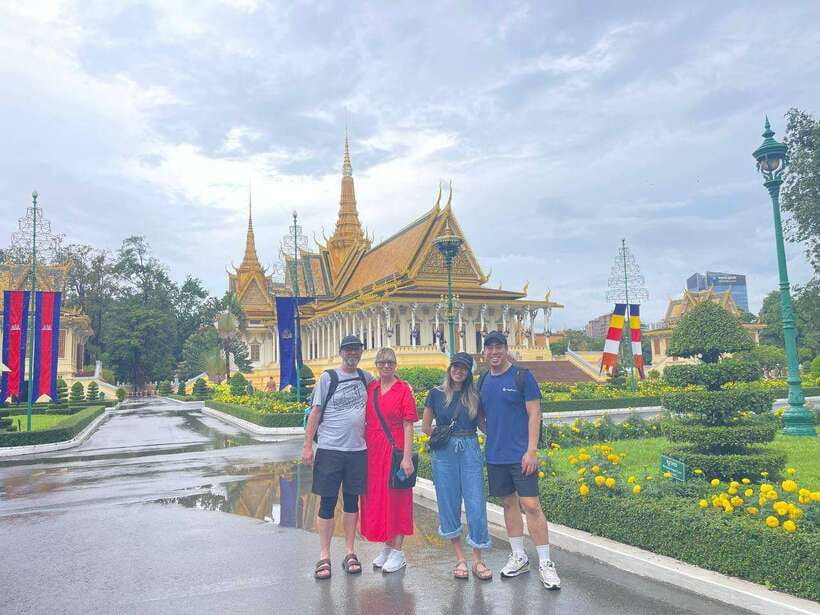
Phnom Penh rewards you most when you can hold two truths at once: the city’s beauty and its brutality. This tour is designed for that. In one day you’ll see sacred hilltop views at Wat Phnom, iconic royal buildings in the Royal Palace compound area, and then the sites that preserve the memory of genocide at Tuol Sleng (S21) and Choeung Ek.
I like that the day doesn’t treat the hard parts like an extra stop tacked on at the end. You’re guided through context first, so what you see later lands with more meaning. And because the group stays small and the vehicle is air-conditioned, you’re not just surviving the commute between sites.
The biggest thing to know upfront is emotional readiness. S21 and Choeung Ek are not light sightseeing. If you’re sensitive, it helps to go in with the expectation that you’ll have moments where you want to pause, step back, or move slower than the group.
You can also read our reviews of more tours and experiences in Phnom Penh.
Sina, Van Comfort, and the Small-Group Advantage
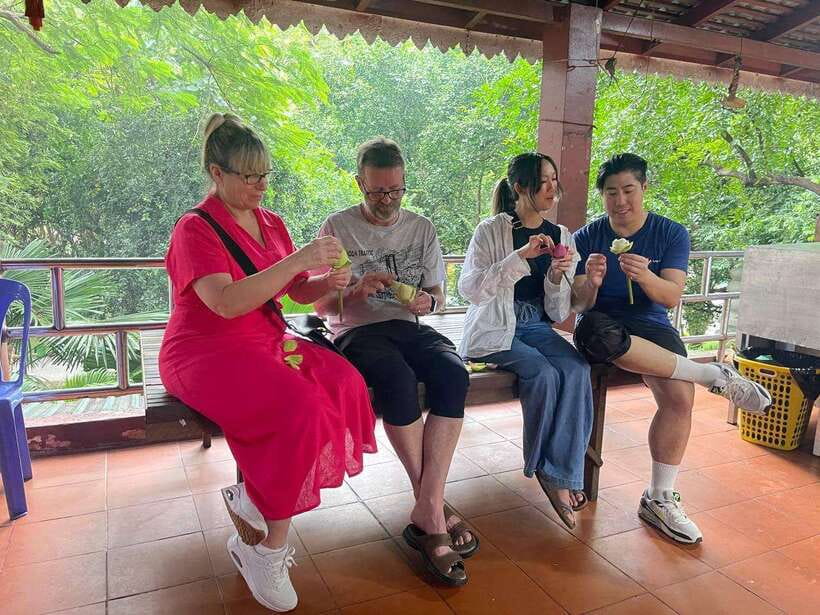
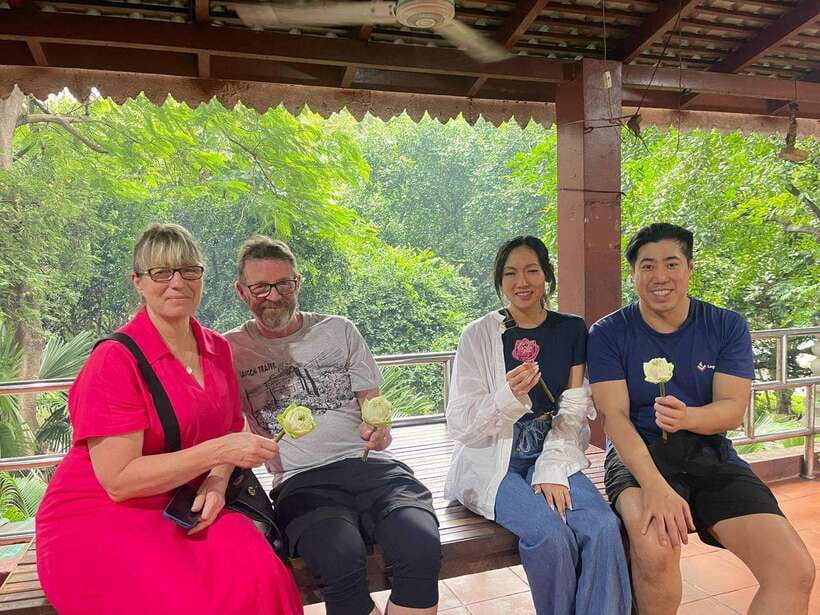
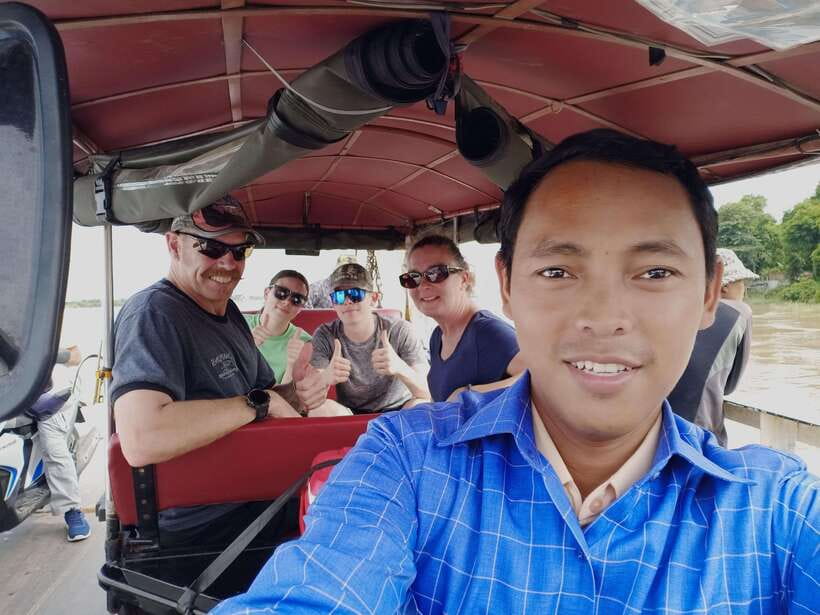
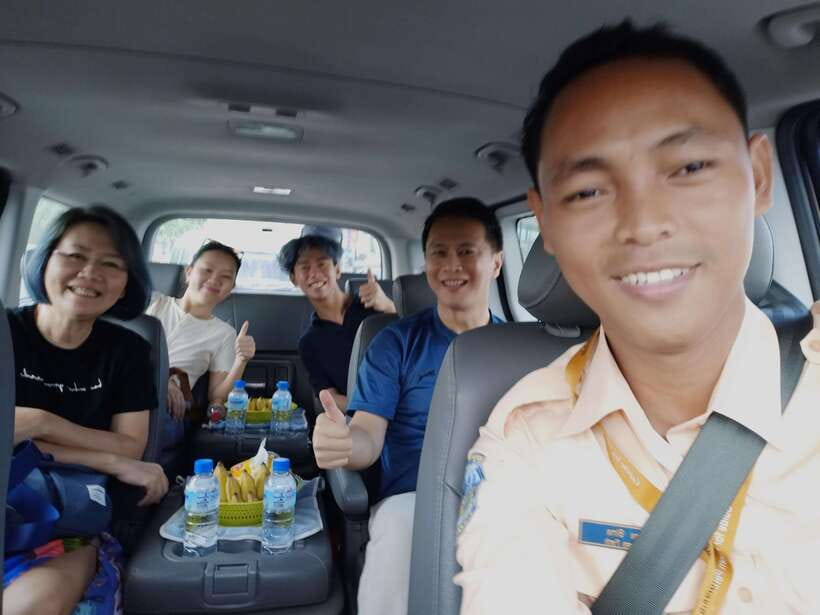
The whole experience runs on the rhythm of a good guide and a vehicle that fits the day. You’re picked up from your hotel, then you ride in an air-conditioned grand Starex with bottled water and coke provided. The group is capped at 7 people, which matters more than it sounds. With fewer people, it’s easier to park close, ask questions, and adjust timing when someone needs a break.
Sina is the key. The tour structure relies on his English explanations at every stop, plus lots of time for questions. That shows up most at the sites that can otherwise feel confusing or overwhelming. Instead of only pointing, he ties places together: why a monument exists, what a symbol means, and how the city’s story connects to Cambodia’s wider political history.
There’s also a very practical side. The day is long, it’s hot, and you’ll be in and out of vehicles. People tend to remember two things in this kind of tour: whether they felt cared for, and whether they felt safe. The transport here is set up for that kind of comfort, with cold drinks along the way.
Morning Start: Grandma Penh, Wat Phnom, and the Sacred Naming Story
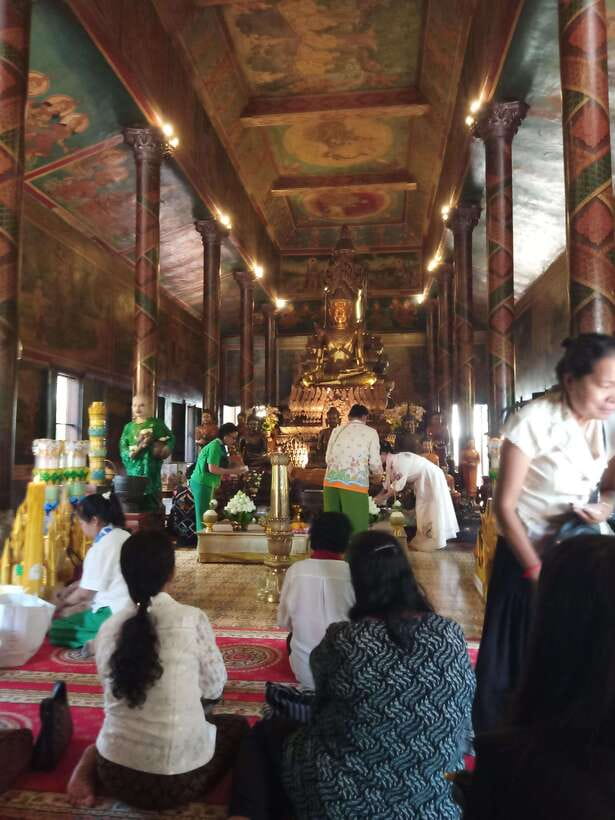
Your morning begins with a shrine connected to Grandma Penh, before you head toward the hilltop area. Even if you’ve only heard Wat Phnom named once or twice, this part gives you the why. You learn the story behind the city’s naming and why this place became a spiritual anchor for Phnom Penh.
From there, you visit Wat Phnom itself, with a guided tour and time for photos. This is the moment where the city’s religious identity becomes visual. The temple complex sits up on the hill, so the view feels like Phnom Penh taking a breath. You’re also shown the flow of the site—what to look for, and why different details matter.
Practical note: Wat Phnom is still a temple visit. Dress appropriately for religious sites and expect some walking and stairs. If you’re planning for the day’s later intensity, this is also your chance to pace yourself physically before S21 and Choeung Ek.
Royal Palace Compound: Photo-Outside Views and National Symbols
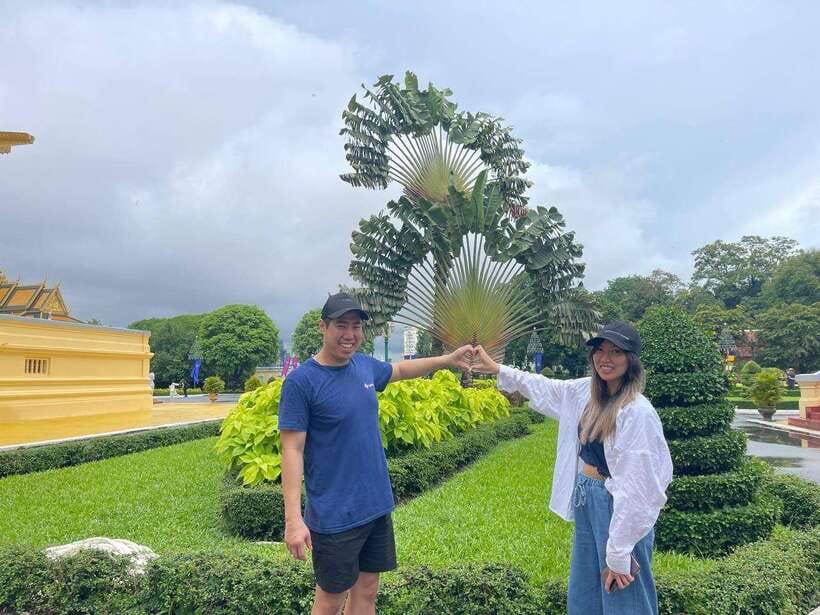
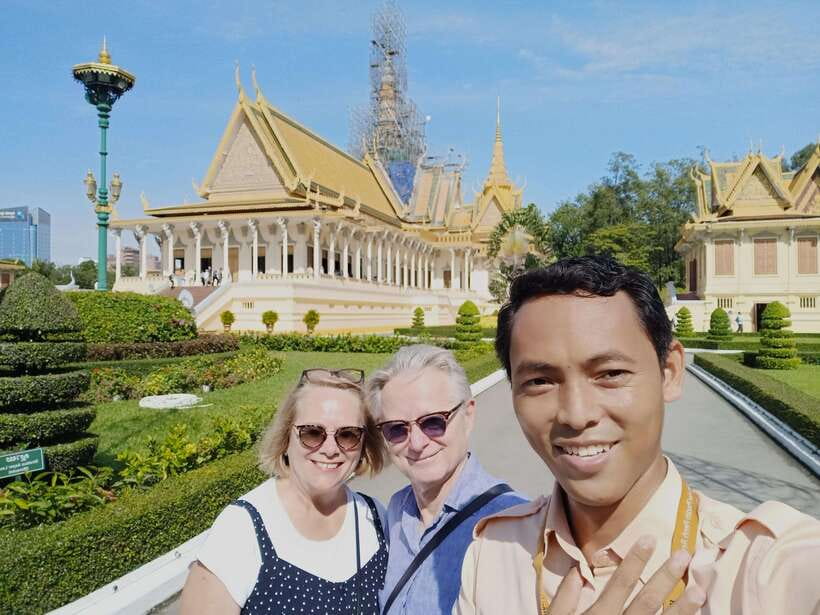
Next comes the Royal Palace, Phnom Penh area. Here’s the key expectation: for the National Museum and the palace, you learn and take photos from outside the buildings. So this isn’t a deep interior palace day. You should think of it as architectural orientation plus symbolism.
Even from outside, the Royal Palace compound hits hard because it’s built to represent the nation. You’ll focus on the Royal Throne and the Silver Pagoda as major must-sees. Sina’s explanations help you understand why these are not just pretty objects; they’re linked to national identity and the monarchy’s role in Cambodia’s story.
I like this approach for first-timers. It keeps the day efficient and lets you move on before fatigue stacks up. If you’ve got limited time in Phnom Penh, this is a smart way to get the big visuals without losing the rest of the itinerary to slow museum-style pacing.
From River Monuments to Diamond Island: Independence, Alliance, and a 2024 Constitution
After the palace area, the itinerary shifts from royal Khmer forms to political monuments and river geography. You’ll visit parks and roundabouts tied to modern Cambodia’s turning points, including a Cambodia–Vietnam monument in Wat Botum Park. This commemorates an alliance connected to Cambodia’s liberation story.
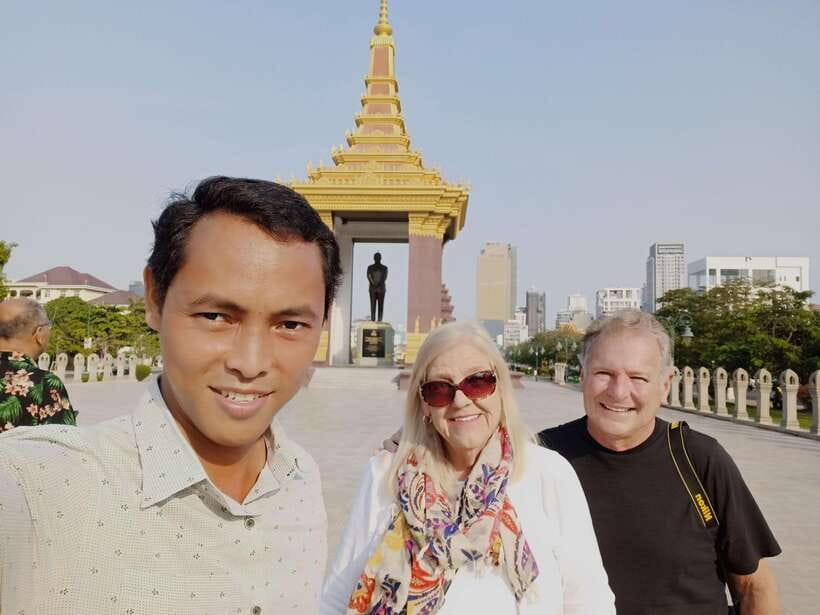
You’ll also see the bronze statue of Norodom Sihanouk in his garden, plus the Independence Monument in the same park area. Those stops are brief, but they matter because they give you the meaning behind the city’s public symbols. After that, you continue to the nearby constitutional monument, built in 2024, which helps you feel how Cambodia’s political identity is still evolving.
Then you’ll get a change of pace with Diamond Island on the Mekong River. The tour description frames it as a relaxing spot with a strong river setting, and it’s a nice visual break before the day turns heavy again.
If you’re someone who likes to understand what monuments represent, this section is a strong bridge. It helps S21 and the Killing Fields feel less like random tragedy and more like the logical outcome of political chaos that Cambodia endured.
The Hard Core: Tuol Sleng (S21) and Choeung Ek
This is the part of the day you cannot rush, even if the schedule keeps moving. Tuol Sleng Genocide Museum (S21) is the first stop, and the tour includes a guided component plus audio guides are available and recommended. The audio guide player itself is not included, so if you want that layer, plan to get it for the visit.
S21 can be mentally intense. The best way to get through it is with structure, and that’s what Sina provides: clear explanations, respectful pacing, and space for questions. The goal isn’t to make you feel numb. It’s to help you understand what happened and what the site represents.
After S21, you go to Choeung Ek (Killing Fields). Like S21, this stop benefits from audio. Again, audio equipment isn’t provided as part of the tour price, so decide in advance whether you want the extra narration while you walk at your own pace.
A practical tip: keep some mental space between the two sites. Don’t treat them like checkboxes. If you need a minute to sit or stand back, do it. The tour’s vehicle comfort and drink breaks earlier in the day are there for a reason, and this section is the real payoff.
Lunch Stop, Cold Drinks, and How the Timing Actually Feels
The itinerary includes a lunch stop at a local restaurant, but lunch is not included in the tour price. Still, having a planned break helps. It means you’re not hunting for food while mentally overloaded, and it keeps the day from turning into a time scramble.
Throughout the route, you’ll have bottled water and coke during the tour, and there’s also local beer after 12:00 PM. That’s a nice touch because many city highlight tours forget the heat factor.
One timing consideration: because there are explanations at every stop, some people may feel there’s less free time to stroll. That’s the trade-off for getting a guided narrative. If you’re the type who loves long, independent exploring, bring that preference into your expectations and use the photo and question windows wisely.
For the sites with strict pacing, like S21 and Choeung Ek, the audio option helps you control how fast you process the information.
Markets and Final Drop: Central Market for Khmer Products and Souvenirs
The tour ends with a drop-off at Central Market, a good place to spend your last hour turning memories into practical items. The tour frames it as famous for Khmer products and souvenirs, and that lines up with why this ending works. After the emotional intensity, the market feels grounding and normal.
If you’re buying anything, remember a key rule: credit cards are not accepted at tour sites. While the market itself may accept various payment methods, it’s still smart to keep cash on hand for smaller purchases and entrance-related expenses.
Also, the tour has a strict clothing and bag policy, including no shorts and no large luggage or bags. If you’re planning to shop later the same day, keep your carry-ons minimal and easy to move in the van and around crowds.
Price and Value: What $35 Covers and What Adds Up
At $35 per person for an 8-hour, guided, small-group highlights day, the value looks strong—especially when you factor in transport, the guide’s time, and the coverage of major sites across the city.
Here’s the practical breakdown based on what’s not included:
- Wat Phnom fee: $1
- Genocide Museum (S21) fee: $5
- Killing Fields fee: $3
- Royal Palace fee: $10
That entrance total comes to $19 on top of the $35. So you should budget closer to $54 before lunch and before any audio guide equipment. Audio player costs are not included, and lunch isn’t included either.
Now, compare that to the value of having Sina coordinate timing across scattered stops, give English explanations throughout, provide drinks for the heat, and keep the day feeling organized. For short visits where you need a clear plan, this is the kind of structured tour that can be more cost-effective than piecing together transport plus separate guide services.
Who This Tour Is For (and Who Might Want a Different Plan)
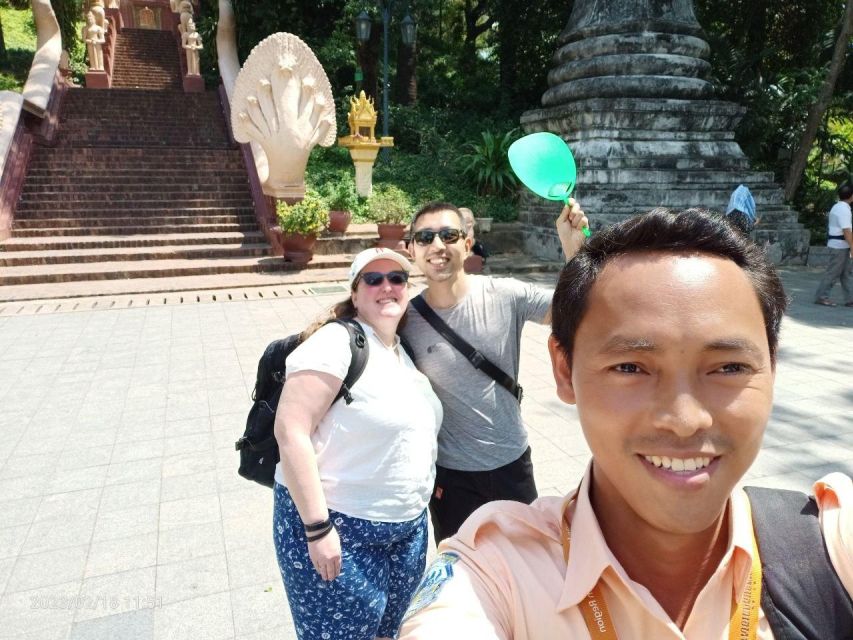
This tour is a great fit if:
- You want the main Phnom Penh landmarks in one day
- You care about history context, not just “see and go”
- You appreciate a guide who takes questions seriously
- You want a small-group setup (max 7 people)
It may be a rough fit if:
- You strongly dislike emotionally heavy content, because S21 and Choeung Ek are unavoidable here
- You prefer long unstructured wandering with minimal guidance
- You’re sensitive to heat and walking, since the day includes multiple sites and temple steps
There are also clear limits: shorts are not allowed, and the tour notes it is not suitable for people with altitude sickness and people over 95 years. The altitude line may relate to temple terrain and steps, so don’t ignore it.
Should You Book This Phnom Penh Royal Palace, S21, and Killing Fields Tour?
Book it if you want a clean, efficient way to understand Phnom Penh, with guidance that helps the city’s symbols make sense and prepares you for the hardest sites. The standout advantage is the guide-led structure: Sina’s English explanations, the frequent question time, and the comfort details like cold drinks and air-conditioned transport make the day feel doable.
Don’t book it if you want an easy, purely sightseeing day. This route includes genocide memorial sites, and they deserve attention, not a casual pace. Also plan for the reality that some stops are outside-only (National Museum and Royal Palace compound areas), and lunch and audio are not automatically included.
If your goal is to leave Phnom Penh with a sharper understanding of both the beauty and the pain of Cambodia’s past, this tour is a strong choice.
FAQ
How long is the Phnom Penh Royal Palace, S21, Killing Fields & More tour?
The tour lasts about 8 hours.
What is included in the tour price?
Hotel pickup and drop-off, an air-conditioned van (grand Starex), English explanations at every stop by Sina, and bottled water and coke. Local beer is included after 12:00 PM.
What entrance fees are not included?
Wat Phnom fee is $1, Genocide Museum (S21) fee is $5, Killing Fields fee is $3, and Royal Palace fee is $10.
Is lunch included?
Lunch is not included, but the day includes a lunch stop at a local restaurant.
Are audio guides available for S21 and the Killing Fields?
Yes, audio guides are available and recommended for both S21 and Choeung Ek. An audio guide player is not included.
Are there any restrictions on clothing or bags?
Shorts are not allowed. Large bags or luggage are also not allowed.
Is the tour small group size limited?
Yes. It’s limited to 7 participants.