REVIEW · BARCELONA
Barcelona: Walking tour with Montjuic Castle & Cable Car
Book on GetYourGuide →Operated by In Out Barcelona Tours · Bookable on GetYourGuide
A castle, a cable car, and real city streets in one run. I love how this tour strings together Barcelona’s architecture and the views from Montjuïc without making you hunt tickets all day. The guided small-group format keeps things easy and lets you linger when something grabs your attention.
The big heads-up: on some days, the cable car or funicular may be affected by maintenance, and the plan can shift (you might use alternate transport to still reach Montjuïc). If you’re the type who needs the cable car component guaranteed no matter what, build a little flexibility into your schedule.
In This Review
- Key takeaways before you go
- Montjuïc views plus Old Town streets: a rare combo that works
- Meeting at Palau Moja and starting in the right part of town
- Las Ramblas and the Boqueria Market: where Barcelona’s daily life meets modernism
- El Raval: the multicultural Old Town side that most first trips skip
- Gran Teatre del Liceu and Palau Güell: Catalan modernism in walking-distance context
- Up the mountain: funicular and cable car for the easiest big views
- Montjuïc Castle: dungeons, tower views, and a real fortress feel
- Returning to the Old Town via cable car and ending at El Molino
- Small-group guiding: why the people part can matter as much as the sights
- Who should book this Montjuïc walking + cable car tour
- Should you book it?
- FAQ
- How long is the Barcelona walking tour with Montjuïc Castle and the cable car?
- Where do I meet the tour guide?
- What time and where does the tour end?
- What is included in the price?
- Is food or drinks included?
- Is the tour wheelchair accessible?
- What should I bring, and what shouldn’t I bring?
Key takeaways before you go
- Small group (max 12) means less waiting and easier movement through crowded spots like La Boqueria.
- Old Town + Raval gives you more than the postcard route, including the street-level personality of El Raval.
- Boqueria Market and modernist stops help you connect the dots between Barcelona’s architecture and its daily life.
- Funicular plus cable car saves your legs while still delivering a dramatic aerial approach to Montjuïc.
- Montjuïc Castle with dungeons adds a serious historical layer, not just a quick photo stop.
- Clear-day views can be wild: on good weather, the panoramas can stretch far enough to spot the Pyrenees.
Montjuïc views plus Old Town streets: a rare combo that works

This tour makes smart use of time. You start in Barcelona’s classic core, then you climb to Montjuïc for the pay-off views. That mix matters because it gives you two kinds of understanding: street-level Barcelona (where people live and eat) and fortress-level Barcelona (where power and defense shaped the city).
I like that the day is paced around iconic landmarks without turning into a rushed checklist. You’ll pass major architectural names, then you’ll shift gears to a different neighborhood energy in El Raval. And once you hit Montjuïc, you get more than a viewpoint. You visit the castle grounds, including the dungeons, plus time at tower viewpoints when the weather cooperates.
You can also read our reviews of more tours and experiences in Barcelona.


Meeting at Palau Moja and starting in the right part of town
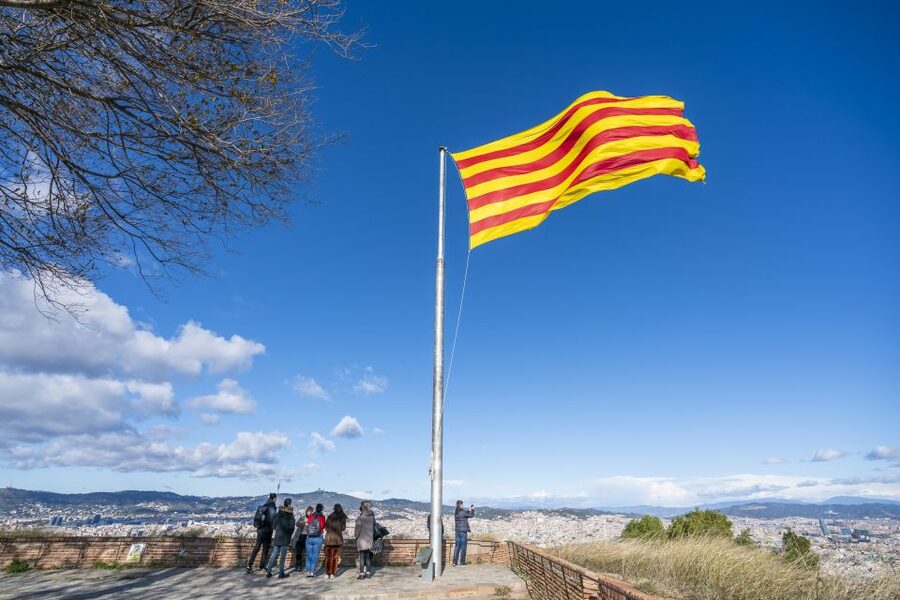
You meet at the reception of Palau Moja, and you’ll spot your guide by the In Out Barcelona Tours badge. The starting area is right in the Old Town gravity well, so within minutes you’re walking through the kinds of streets that define Barcelona beyond the big boulevards.
This matters for a first-timer because it prevents the common mistake: spending your morning wandering the wrong way and then rushing uphill later. By the time you’re moving through La Rambla area and nearby blocks, the guide is already setting up the city’s story—architecture, politics, neighborhoods, and the reasons Montjuïc became such a strategic point.
The tour is designed for comfort on foot, so bring comfortable shoes. And if you’re carrying luggage or large bags, this isn’t set up for that.
Las Ramblas and the Boqueria Market: where Barcelona’s daily life meets modernism

Your walk lines up with the city’s most famous spine, starting near Las Ramblas. Even if you’ve seen photos, it’s the way the street feeds into side lanes and smaller courtyards that makes it useful for orientation.
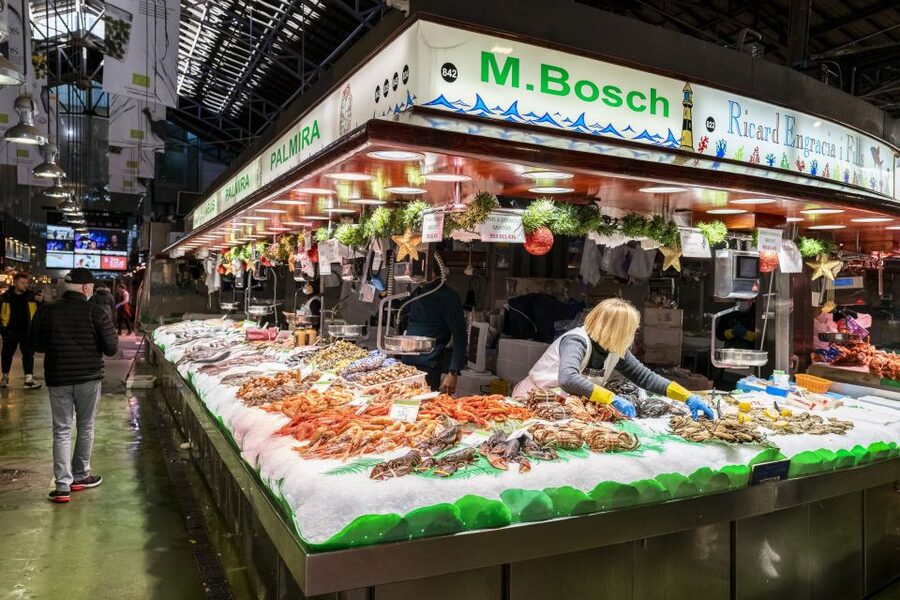
Then comes La Boqueria, a market you’ll recognize instantly. The focus here isn’t on shopping. It’s on seeing how the place works—how the crowd, the vendors, and the architecture all combine into one of Barcelona’s signature experiences. You’ll also get context on why it’s considered a standout market, not just a tourist stop.
One practical note: Boqueria can feel tight and busy. The small-group limit helps. You stay together and keep moving so you don’t waste your tour time threading through gaps.
El Raval: the multicultural Old Town side that most first trips skip
From the main corridors you shift into El Raval, Barcelona’s multicultural district. This is where the city’s character shows up fast: street art, odd little landmarks, and a vibe that’s less polished than the postcard lanes.
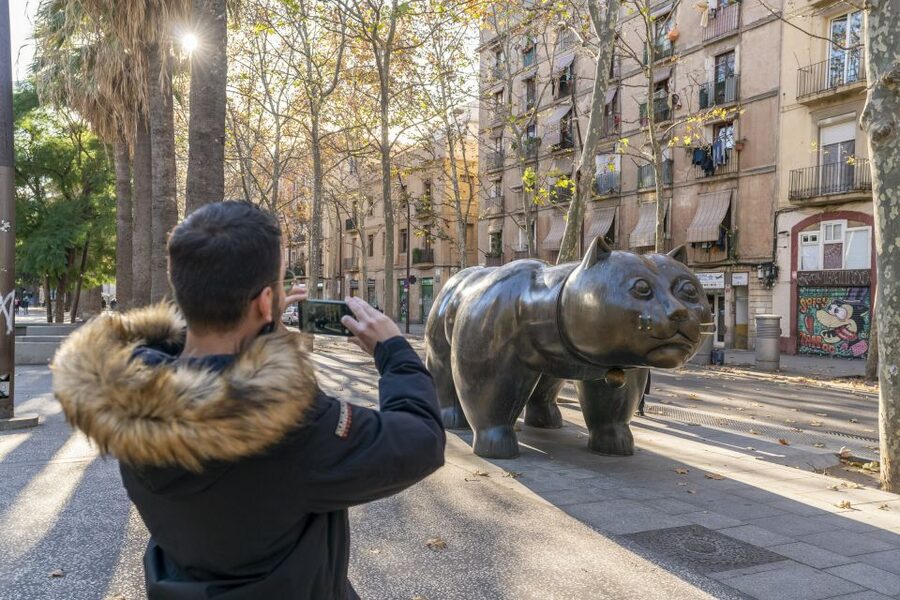
A highlight built into the route is the Cat Statue by Fernando Botero. It’s the kind of stop that feels fun in the moment, but it also helps you understand how Barcelona treats public art and landmarks—sometimes serious, sometimes playful, always part of the neighborhood’s identity.
If you want Barcelona to feel like a living city (not just a museum corridor), this part of the walk is a big reason to book. It’s also a nice change of pace before you head uphill.
Gran Teatre del Liceu and Palau Güell: Catalan modernism in walking-distance context
After Raval, you pass major architecture powerhouses:
- Gran Teatre del Liceu
- Palau Güell, a Gaudí masterpiece
Seeing these from the street, with your guide connecting the dots, helps you make sense of Catalan modernism without needing a full architecture degree. The value here is the sequencing: you’re not just told what a building is. You’re shown how this style fits into the city’s identity—art, wealth, culture, and the ambition to build something uniquely Catalan.
This section also works for people who don’t want an art lecture. You’ll get enough context to notice details on your own later, especially if you plan to return to Barcelona’s architecture neighborhoods.

Up the mountain: funicular and cable car for the easiest big views
Once you’re done with the Old Town blocks, you switch to transports that make the day efficient. Included are roundtrip tickets for the Montjuïc funicular, plus the Montjuïc Cable Car for the big aerial look.
This is the key trade-off: you’re not climbing. You’re using the mountain’s transport system to gain elevation quickly, then saving your energy for the castle visit and viewpoints. That turns Montjuïc from a steep slog into an experience.
The cable car segment is the emotional payoff. Even if you’ve ridden other cable cars in Europe, Barcelona’s layout makes the views especially satisfying. You can see the city’s geometry and coastline in one sweep, and it helps you understand where neighborhoods sit relative to the harbor and the hills.
Montjuïc Castle: dungeons, tower views, and a real fortress feel
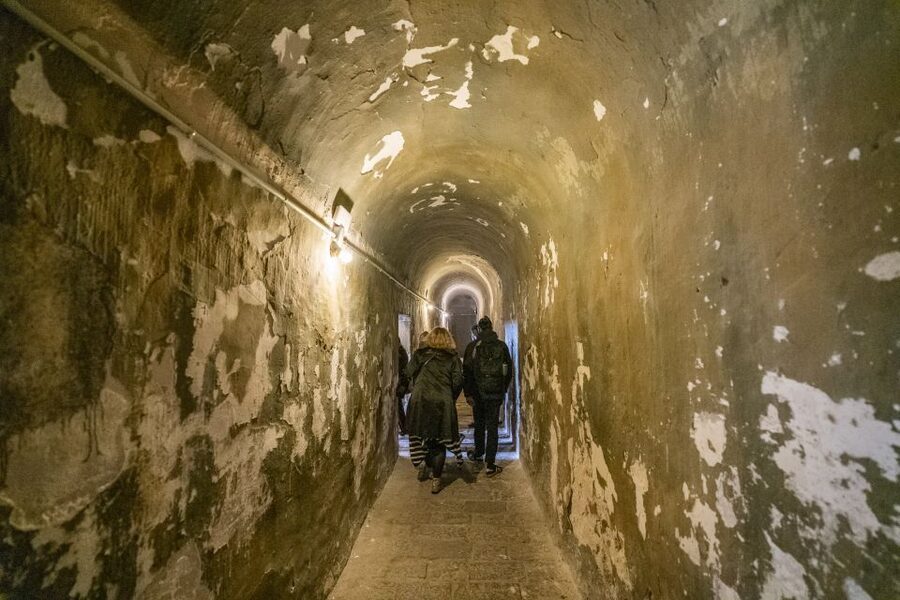
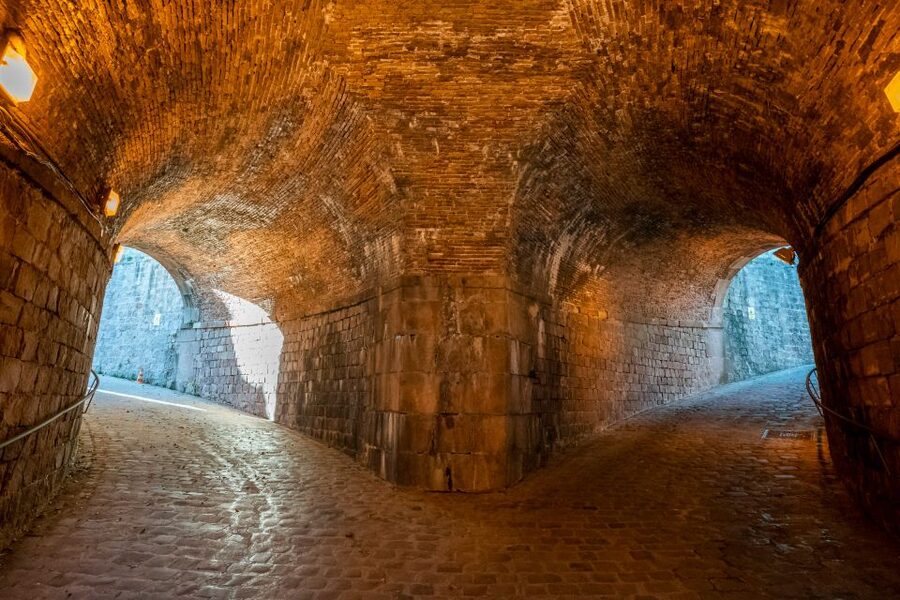
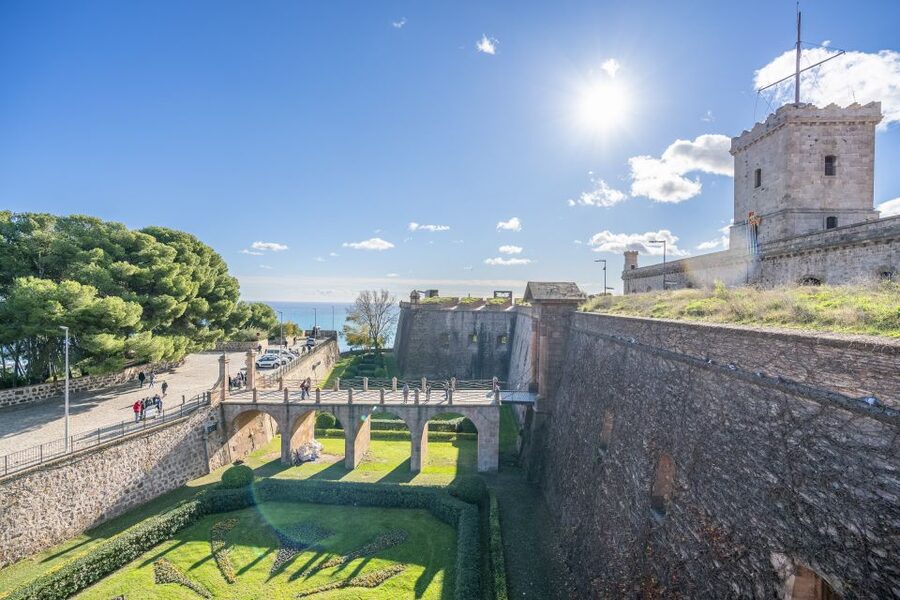
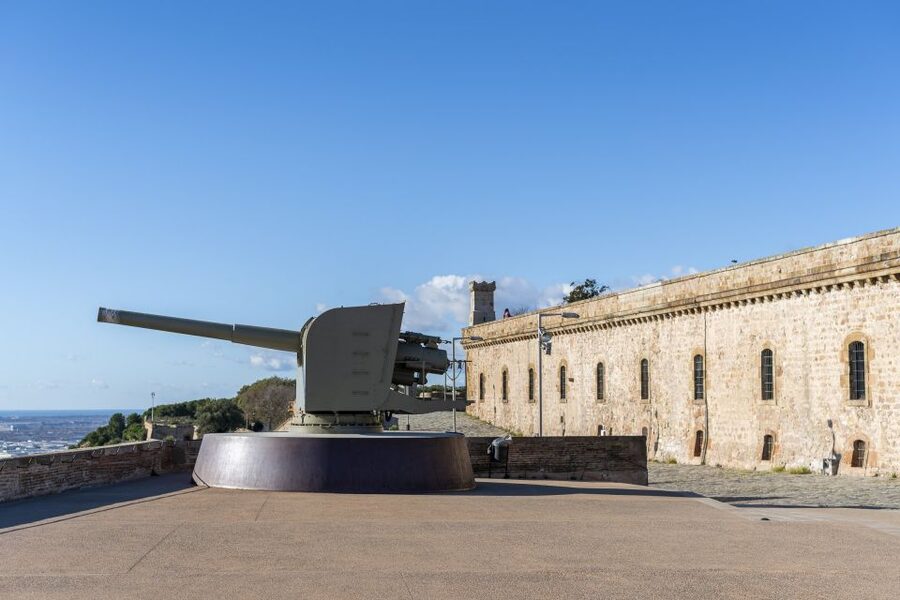
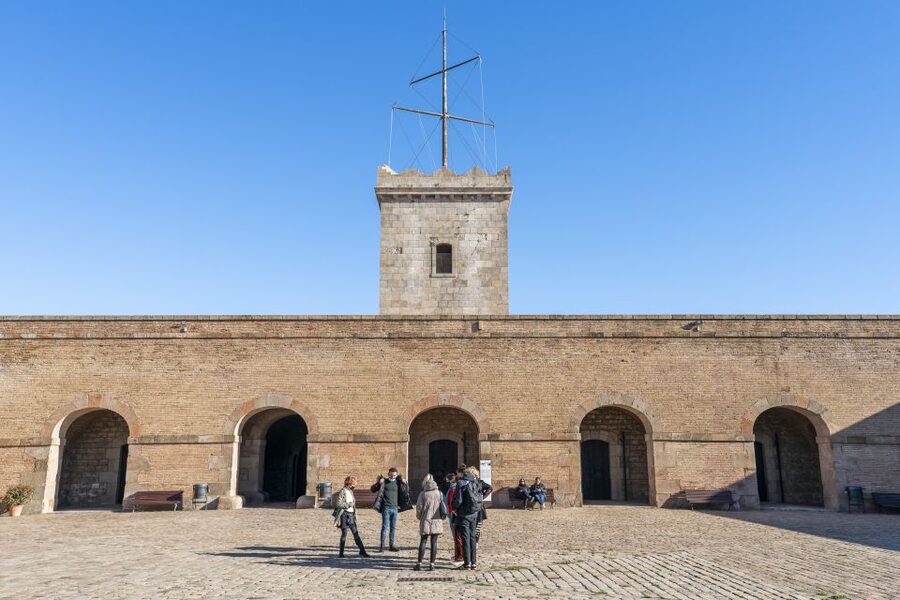
Now the fortress part. The castle visit is an exclusive small-group experience, and it includes access that goes beyond a casual glance—there’s time to explore the dungeons as well as tower areas with panoramic views.
That dungeon piece matters. Montjuïc wasn’t built to be scenic. It was built for defense and control, and the history shows up in the layout and the way spaces are used. The guide helps you read that physical story, not just walk through rooms.
The payoff is the views. When conditions are clear, the panorama can stretch far enough to potentially spot the Pyrenees. Even without perfect visibility, you still get a strong sense of Barcelona’s scale—how dense the city is, how the sea and mountains frame it, and how Montjuïc sits above it all.
I also like that the tour gives you time to take photos at meaningful points. One of the common wins from guides on this route is helping the group keep pace while still letting people stop.
Returning to the Old Town via cable car and ending at El Molino
The day finishes with a return cable car ride back toward the city. It’s not just transportation. It’s another quick “reset” moment: you’re leaving the fortress and returning to the street level where your earlier walking makes sense.
You end at El Molino Paral·lel. That’s a convenient drop-off if you want to keep exploring nearby areas afterward, grab a meal, or connect to metro lines without feeling stranded far from the places you already saw.
If you’re thinking ahead, this is a good point to plan your evening. You’ll have a mental map now, and you won’t feel like you’re starting from zero.
Small-group guiding: why the people part can matter as much as the sights
The tour runs with a professional local guide and keeps the group to a maximum of 12. That limit shows up in tiny ways that add up: fewer people around you at the market, smoother transitions between transport stops, and less time lost in crowds.
The guide quality in this kind of itinerary is a big deal because the tour spans different “worlds” in a short time: markets, modernism on the street, neighborhood texture in El Raval, then the fortress climb and castle interpretation. When it’s done well, you leave with a coherent picture instead of disconnected highlights.
From recent guide examples on this route, you may be led by people like Miguel, Carlos, Edu, Katy, Pepa, Montse, or Anu. Different personalities, same goal: keep the day moving, keep the group together, and connect each stop to the larger Barcelona story.
Who should book this Montjuïc walking + cable car tour
This tour fits best if you want:
- A first-time-friendly Barcelona overview
- A mix of architecture, neighborhoods, and views
- Included transport so you don’t spend your limited vacation time ticket-hunting
- A guided castle visit with dungeon access and viewpoints
It may not fit if:
- You need wheelchair-friendly routes (it’s not suitable for mobility impairments or wheelchair users)
- You hate any amount of walking (even with transports, you’re still on your feet)
- You’re traveling with large luggage
Should you book it?
If you’re trying to choose between “a walking tour” and “a Montjuïc trip,” this is one of the smarter blends because it handles both. For $64, you’re paying for a guided Old Town and Raval route plus the bundled transport tickets and an exclusive castle visit that includes the dungeons. That combination is often the difference between a nice afternoon and a truly useful, memorable one.
I’d book it if you want your first Barcelona day to leave you with a map in your head and a photo view at the end. I’d also keep an eye on the day’s transport status, since maintenance can occasionally change how the cable car/funicular portion works in practice. If you’re flexible, that won’t ruin your day—it just means your guide handles the workaround and still gets you to Montjuïc.
FAQ
How long is the Barcelona walking tour with Montjuïc Castle and the cable car?
The tour lasts about 3.5 hours.
Where do I meet the tour guide?
Meet at the reception of Palau Moja. Look for your guide wearing the In Out Barcelona Tours badge.
What time and where does the tour end?
The tour ends at El Molino Paral·lel.
What is included in the price?
You get an exclusive visit to Montjuïc Castle and its dungeons, roundtrip Montjuïc funicular tickets, roundtrip Montjuïc cable car tickets, a walking tour of the Old Town and El Raval, a professional local guide (English), and small-group access (max 12 people).
Is food or drinks included?
No. Food or beverages are not included.
Is the tour wheelchair accessible?
No. It’s not suitable for wheelchair users or people with mobility impairments.
What should I bring, and what shouldn’t I bring?
Bring comfortable shoes. Don’t bring luggage or large bags.