REVIEW · BRATISLAVA
Bratislava: Guided Walking Tour with Castle Entry Ticket
Book on GetYourGuide →Operated by E-TRAVEL.SK s.r.o. · Bookable on GetYourGuide
Old-town stories, then castle views above the Danube. This guided walking tour makes Bratislava’s history feel personal, walking you through the shift from Great Moravia to the Velvet Revolution and beyond. I like how the guide keeps the big picture understandable while still pointing out the buildings you’re actually seeing.
What I really like is the route itself: you move street by street through landmarks people come to recognize, from the Franciscan Church on Franciscan Square to Michael’s Gate and St. Martin’s Cathedral. You also get the payoff of ending at the cathedral, then heading up to the castle for included entry and unhurried time on your own.
One consideration: this is a walking experience, including an uphill climb to Bratislava Castle, so it is not recommended if you have mobility limitations or need step-free access.
In This Review
- Key things that make this tour work
- Why the afternoon pacing fits Bratislava
- Getting oriented fast: Opera House, Reduta, and Old Town Hall
- Franciscan Square and the oldest building you’ll spot
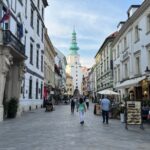
- Biela Street to Michalska Street: reaching Michael’s Gate
- Venturska Street, Panska Street, and the palace-lined feel
- St. Martin’s Cathedral: a smart endpoint for the walking portion
- The climb to Bratislava Castle: included entry and your own time
- Price and value: what $74 is really buying
- Choosing the right pace: energetic guides and small-group comfort
- Practical tips for a smooth, enjoyable day
- Who should book this tour (and who should think twice)
- Should you book this Bratislava walking tour with castle entry?
Key things that make this tour work
- A guided story before you start walking the streets, so the sights mean something right away
- Old Town highlights in one afternoon loop, including the Opera House and House of Reduta
- Medieval landmarks like the Franciscan Church and Michael’s Gate along the way
- St. Martin’s Cathedral as a strong finish point before you go up to the castle
- Castle entry included, so you can skip the ticket line and explore at your own pace
- Small-group flexibility, with guides able to adjust pacing and time spent at places you care about
Why the afternoon pacing fits Bratislava
Bratislava can feel compact until you learn what shaped it. This tour starts in the afternoon and begins with a short, straightforward introduction to Bratislava and Slovakia, so you’re not walking through names that mean nothing. Once the guide sets the stage, the streets start acting like a timeline.
You’ll hear how Slovakia’s story connects to the early Slavs and the Great Moravia Empire, then how Bratislava became the capital of the Hungarian Kingdom, where Hungarian kings and queens were crowned. The talk continues through Czechoslovakia, the hardships of Slovak communism, and the hope that fueled the Velvet Revolution—ending with Slovakia joining the European Union in 2004. That arc matters because Bratislava’s old buildings aren’t just pretty; they reflect centuries of change.
The tour also helps you avoid the common problem of self-guided wandering: you end up seeing a lot of stuff but remembering almost none of it. Here, you get a guided thread you can carry into the castle visit.
You can also read our reviews of more tours and experiences in Bratislava.


Getting oriented fast: Opera House, Reduta, and Old Town Hall
After meeting your guide (arrive about 10 minutes early), you’ll start in the historic center with that “where am I, and why does it matter?” setup. The guide then takes you through key stops that anchor the Old Town.
One of my favorite parts of this kind of route is how it blends major landmarks with the everyday street connections between them. You pass by the Opera House and the House of Reduta, then move on toward the main square area while seeing the Old Town Hall along the way.
Even if you only have a short time in Bratislava, these stops give you a mental map. You’re not just collecting photos; you’re learning how the city’s center is organized. And since you’re learning the context while you walk, you’ll likely look at the facades differently after the explanation.
Franciscan Square and the oldest building you’ll spot
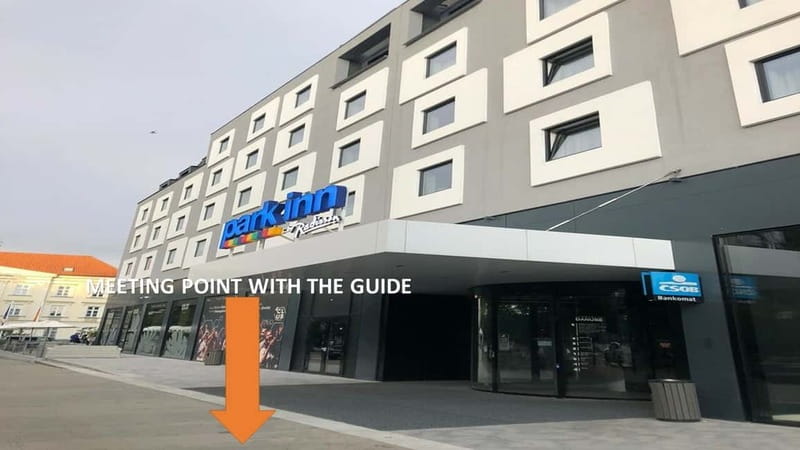
Next comes one of the most satisfying “turn-by-turn” sections of the tour: Franciscan Square. Here you’ll see the Franciscan Church, described as the oldest building in Bratislava. That’s the kind of detail that instantly raises the value of the stop, because it gives you a concrete reason to slow down.
You’ll also get the practical benefit of a guided stop at a major landmark: you know exactly where to stand and what to notice. The guide’s narration ties the building to the broader Bratislava story, so the moment doesn’t feel like a quick photo and move on.
If you like history that’s grounded in place, this is a highlight. You walk from one clue to the next, and the city starts sounding like a story rather than a random list of monuments.
Biela Street to Michalska Street: reaching Michael’s Gate
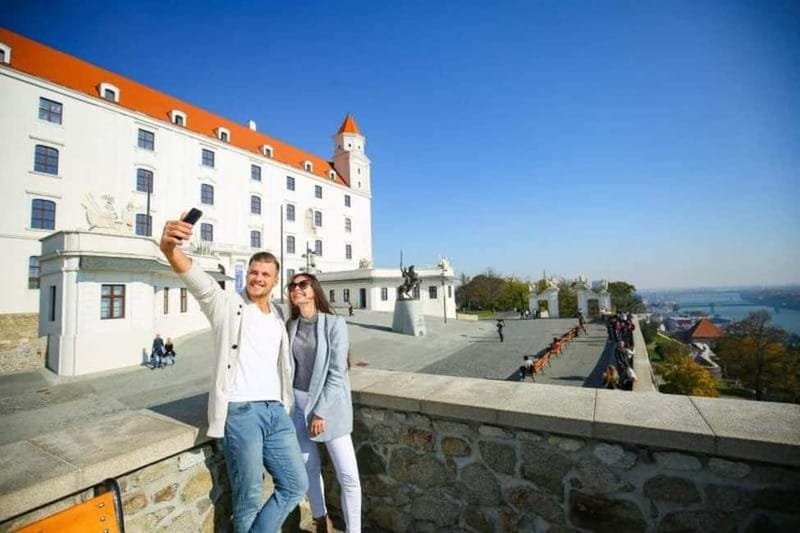
From Franciscan Square, the tour moves onto Biela Street and Michalska Street, heading toward Michael’s Gate. This is a route segment where the guide’s pacing really helps. Gates like this are more than decorative. They mark movement, boundaries, and how cities used to funnel people through specific points.
Michael’s Gate becomes a natural milestone in the walk. You’re not just passing it; you’re arriving at it with context. That changes how you experience it. Instead of seeing one more old structure, you understand it as part of how Bratislava functioned over time.
Venturska Street, Panska Street, and the palace-lined feel
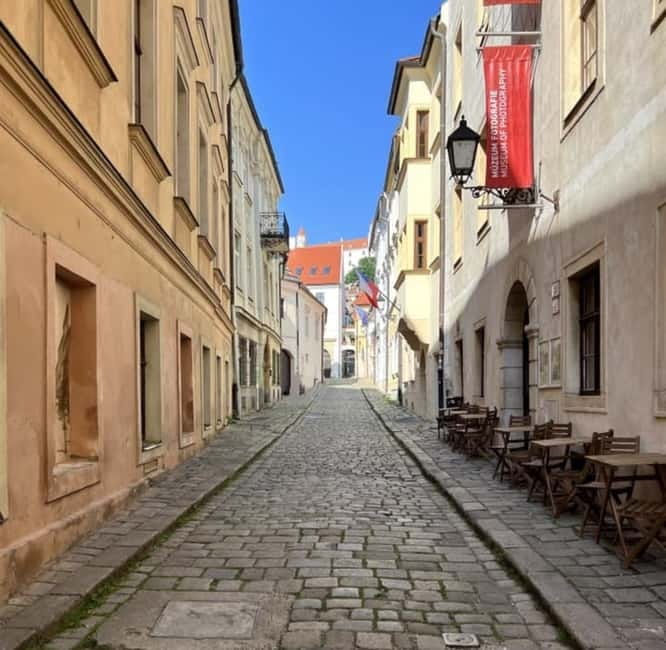
After Michael’s Gate, you continue through the streets where historical buildings and palaces cluster—specifically Venturska Street and Panska Street. This section is a nice change from the big “headline” sights. It’s where the Old Town begins to look like the kind of place you’d happily wander even after the official tour ends.
Because the guide keeps the story connected to what you’re walking past, you’re less likely to mentally drift. You’ll likely start noticing details in the architecture that you would otherwise miss, like how the streets frame views and how buildings sit in relation to the square areas you visited earlier.
This part also tends to be where small adjustments help. In the experience reports, guides are described as able to pause for pictures when requested and shift time between areas depending on interest. That flexibility can make a big difference if you care more about streetscapes than big interiors—or the reverse.

St. Martin’s Cathedral: a smart endpoint for the walking portion
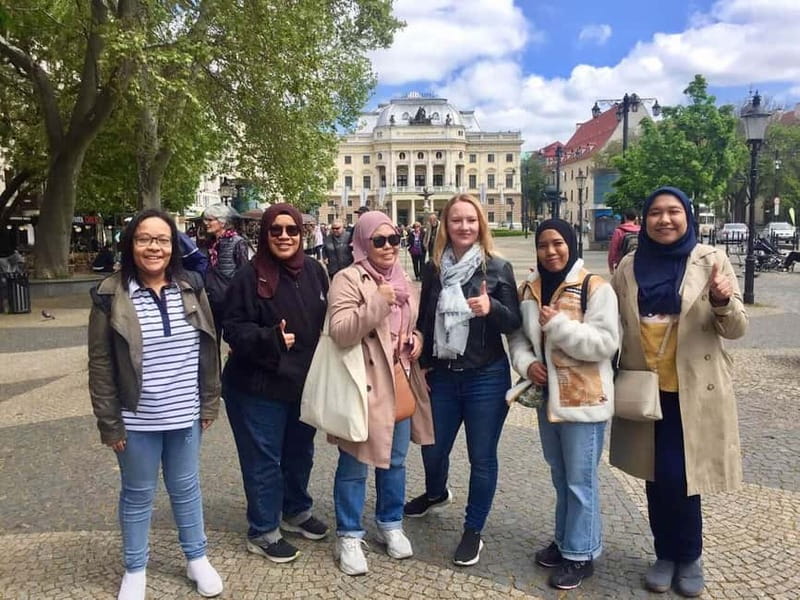
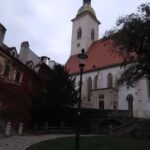
The walking tour ends at St. Martin’s Cathedral. That’s a good place to end because it’s a visual anchor and a recognizable landmark that gives you a clean, satisfying finish line before the castle climb.
It’s also a practical choice. After this point, you’re going up to Bratislava Castle. Ending at a major landmark means your bearings feel more solid when you start the uphill section, which is especially helpful if you’re doing this as your first guided overview of the city.
The climb to Bratislava Castle: included entry and your own time
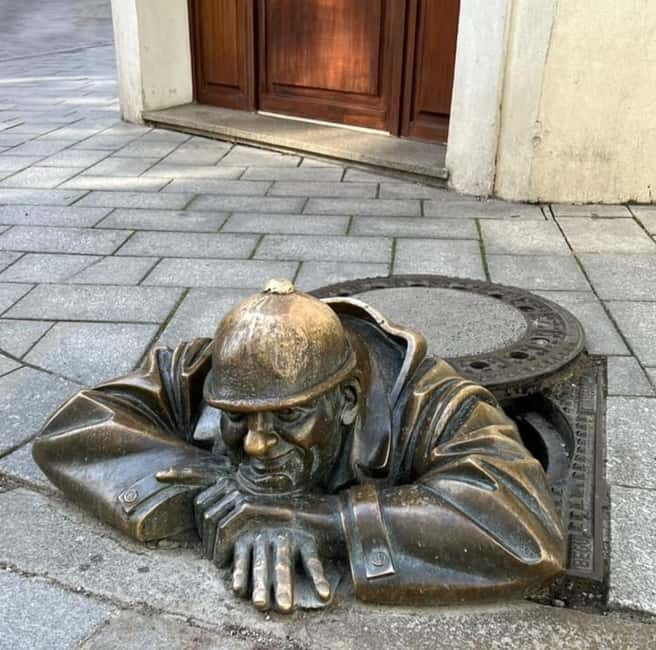
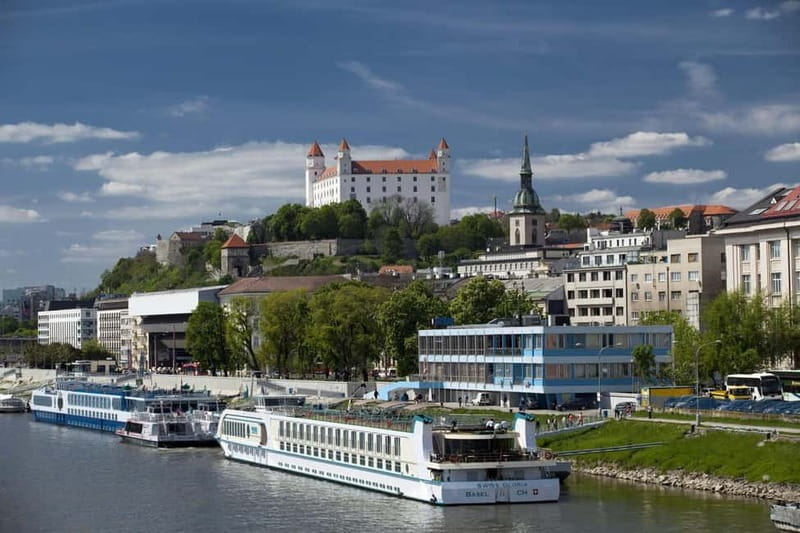
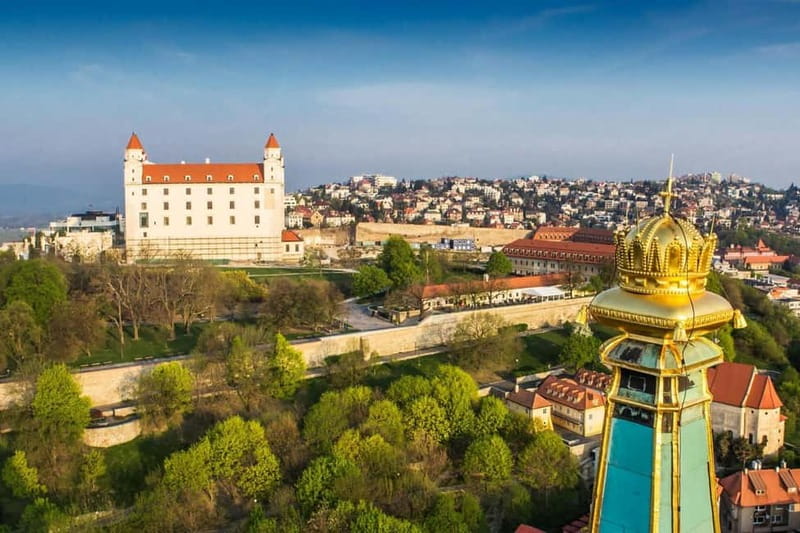
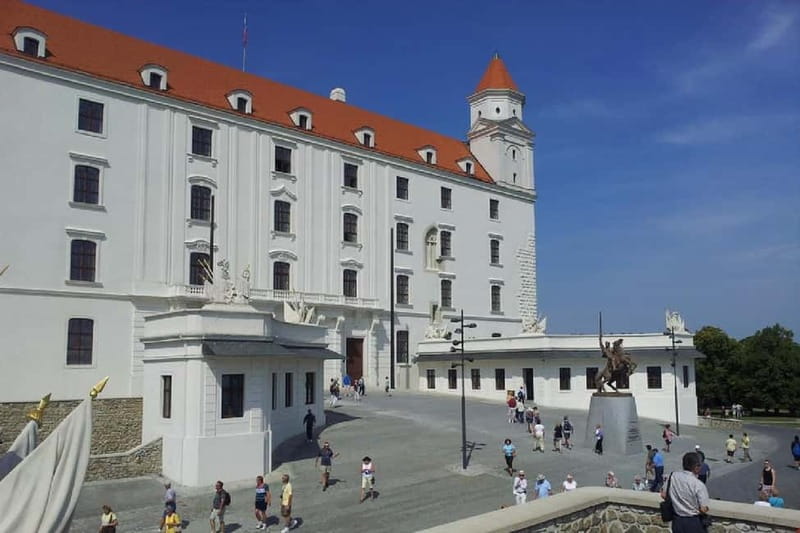
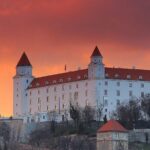
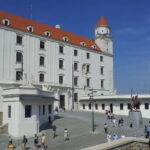
Then comes the transition: you walk up to the iconic Bratislava Castle, which sits above the city. Your guide gives an introduction to the castle and then you explore the most significant symbol of Bratislava on your own at a relaxed pace.
That structure is worth appreciating. A lot of tours either rush through the castle with constant narration or leave you totally without context. Here, you get a guided “orientation moment” and then freedom. If you want more time reading plaques, taking photos, or stepping back to look at the city from above, you can. If you’re the type who wants to move briskly, you can do that too.
Two practical points:
- The experience runs rain or shine, so bring a layer that works in wet weather.
- The climb matters. If your legs aren’t happy with uphill walking, this is where you’ll feel it most.
Price and value: what $74 is really buying
At $74 per person, you’re paying for more than a basic stroll. The price includes:
- A professional guide
- The walking tour through the historic center
- A Bratislava Castle entry ticket
- Priority to skip the ticket line
That combination is the value story. If you tried to piece this together alone, you’d still need a plan for where to go and how to connect the history to the streets. The included guide time saves you the “guessing” stage and helps you understand what you’re seeing.
Also, the tour is designed for a short stay. In roughly 2 to 3 hours, you get the Old Town highlights plus castle entry and some independent time at the top. For many visitors, that’s the sweet spot: enough structure to feel oriented, not so much that you’re trapped on a rigid schedule.
Choosing the right pace: energetic guides and small-group comfort
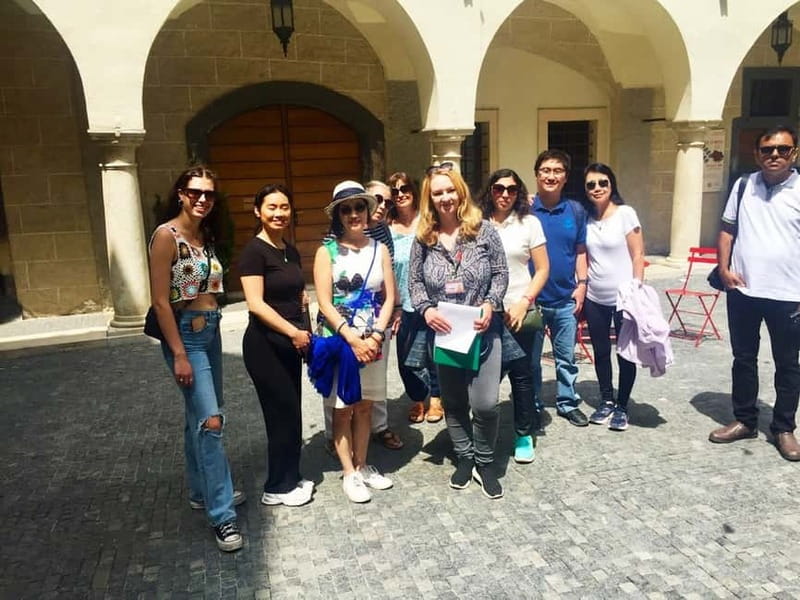
One theme that comes through is that guides can make or break the experience. Guides such as Milan, Elena, Lucia, and Erika are described as patient and very good at answering questions, which is exactly what you want when history is moving through centuries fast. Several reports also note that guides handled requests well—like adjusting where you spend time or stopping for pictures.
There is one caution: not every guide style matches every visitor. In at least one account, the guide was described as too intense or tiring. If you know you prefer a calmer pace, it helps to set expectations at the start: ask for a gentler tempo or more time at photo stops.
The tour also offers a private group available option, which can be a strong move if you’re traveling with family, friends, or anyone who learns better with fewer people around.
Practical tips for a smooth, enjoyable day
- Wear shoes that handle cobblestones. This is street walking, plus you climb up to the castle.
- Bring a light rain jacket. The tour runs rain or shine, so weather won’t pause your schedule.
- If you care about photos, ask early. Guides are reported to accommodate photo stops, which can save you from having to rush later.
- Use the story as a filter. As you walk, pick one theme—Hungarian coronations, communism and the Velvet Revolution, or early Slavic history—and try to connect each landmark to that theme.
And one more thing to keep in mind: the castle can close for an official state visit. If that happens, you’ll be informed and the tour is fully refunded.
Who should book this tour (and who should think twice)
This tour is a great match if you want:
- A guided introduction to Bratislava that ties history to specific buildings
- A manageable walking plan with a clear finish at St. Martin’s Cathedral
- Included castle entry plus time to explore on your own
It’s also a strong option if you’re traveling with kids and need a guide who can keep attention on track—at least one family report highlights that a young traveler stayed engaged for the full duration.
Think twice if:
- You have mobility limitations or need step-free access, because the tour includes a walk up to the castle
- You dislike uphill walking or long stretches without seating options
Should you book this Bratislava walking tour with castle entry?
I’d book it if you want the most efficient way to understand Bratislava’s center in a half-day window, without feeling rushed through the castle. The $74 price makes sense because it covers a guide plus the castle ticket, and the route is designed to connect the city’s changing political eras to landmarks you can actually point to.
Skip it (or find an alternative) if mobility is a concern, since the castle climb is part of the deal. Also, if you know you prefer very calm pacing, choose your guide preferences carefully at the start.
If you’re aiming for a first-time Bratislava visit, this tour gives you a clear “from street to summit” experience: history on the way up, then freedom once you reach the top.