REVIEW · FES
Fes: Royal Palace, Madrasa, Tannery & Souks and Medina Tour
Book on GetYourGuide →Operated by VOYAGISTE MAROC - TRAVEL COMPANY · Bookable on GetYourGuide
Fes teaches fast when you walk with a guide; it ties together the Old Medina and the golden gates in one focused loop. You’ll hit the Royal Palace (external views), the Mellah, key madrasas, the tannery area, and the souks so the city feels readable instead of random. It’s a good way to get your bearings quickly without burning an entire day.
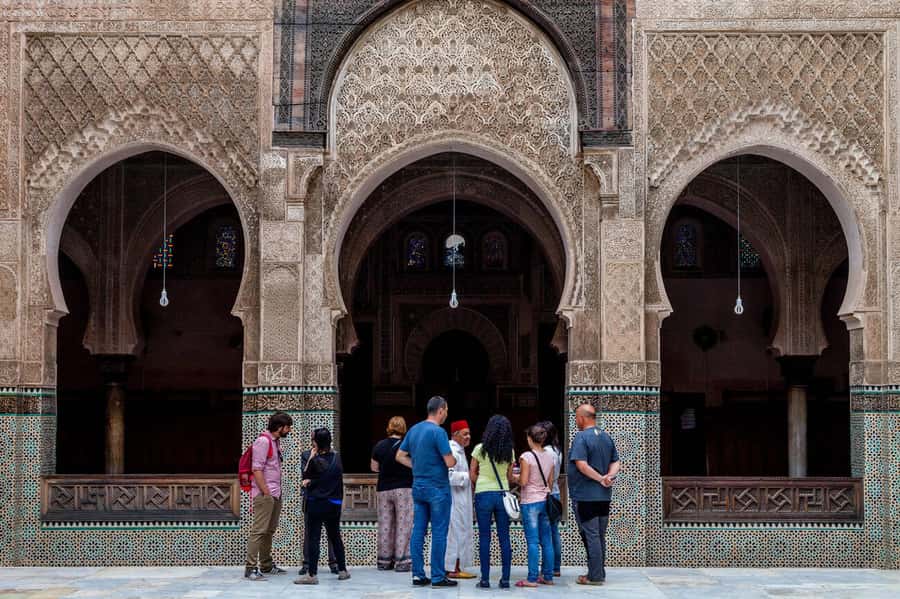
I love the golden-gate photo moment at the Royal Palace, and I also like how the route places you at major study-and-craft landmarks long enough to understand what you’re seeing. The best part is when your guide slows things down at the Bou Inania Madrasa so details like tile patterns and design choices make more sense than just taking pictures.
One consideration: this is a real walking tour and it’s not suitable for wheelchair users, plus you should plan for the 20 MAD entrance fee for Madrasa Bouanania.
In This Review
- Key highlights to look for
- Royal Palace of Fes gates: why an exterior visit still works
- Mellah in Fes: the quick stop that adds real context
- Bou Inania Madrasa + Al Attarine Madrasa: how to read the tilework
- Al-Qarawiyyin Mosque and University: seeing the oldest learning center from outside
- Chouara Tanneries: craft photos, mint strategy, and shopping choices
- Medina of Fes walking + Bab Boujloud: how to shop without getting lost
- Price and value for $15: what’s included, what costs extra
- Using your guide like a pro (the difference-maker)
- Who this tour suits best (and who might want a different plan)
- Should you book the Fes Royal Palace, Madrasas, Tannery & Souks tour?
- FAQ
- How long is the tour?
- What’s the meeting point?
- Is the Royal Palace visit inside or outside?
- Do I need to pay any entrance fees?
- Is the Al-Qarawiyyin Mosque and University visit inside?
- What languages are offered?
- Is it wheelchair accessible?
- Can I cancel for a refund?
Key highlights to look for
- Golden Palace gates: exterior photo stop, but still a major first impression
- Two madrasas: Bou Inania and Al Attarine, with guided explanations for the designs
- Mellah context: a short, meaningful look at the Jewish Quarter’s history and role
- Chouara tannery time: you get to see the process and shop nearby, even with the smell factor
- Bab Boujloud stretch: a longer stop for photos, strolling, and souk browsing
Royal Palace of Fes gates: why an exterior visit still works
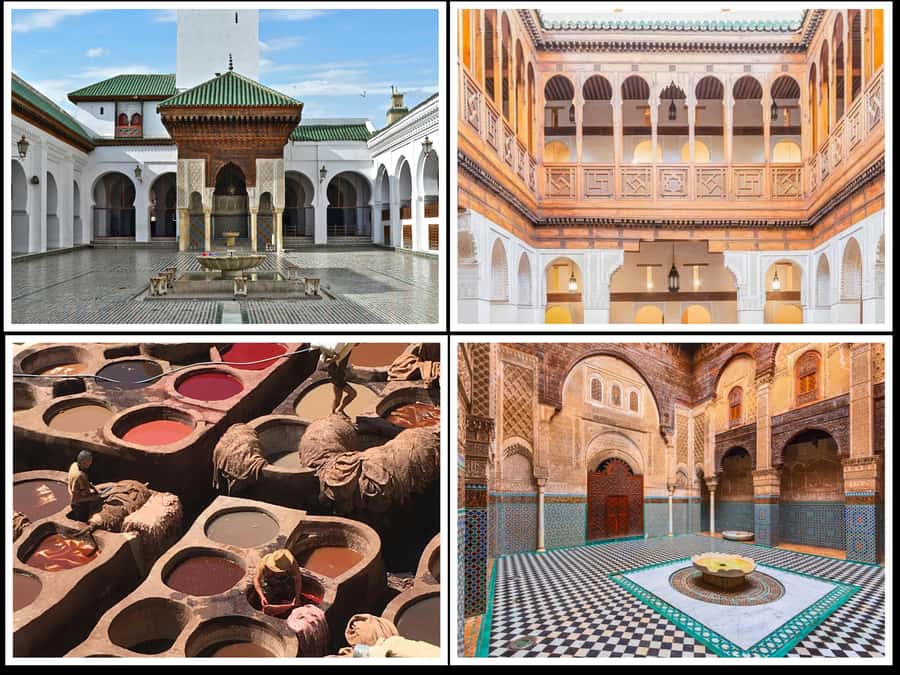
The tour starts with a practical approach: you get the big, iconic view right away with the Royal Palace exterior visit. You’re not going inside, but the famous golden gates are still worth it because they set the tone for the whole city—Fes likes showmanship, precision, and ceremony.
Expect a short guided tour, then some free time. Use that window for photos and quick questions, because once you step into the medina maze, you’ll be glad you know what to look for.
A small tip: don’t rush your camera here. The gates are the kind of landmark you’ll see referenced all over Fes, and it’s easier to connect the dots later when you’ve already seen the real thing.
Mellah in Fes: the quick stop that adds real context
Next you’ll pass through the Mellah area (the Jewish Quarter). Even though the stop is brief, it’s valuable because it gives you historical context for the city beyond the typical postcard route.
Think of it as a mental reset. Fes isn’t only about one era or one group; it’s a layering of communities that shaped the city’s streets, jobs, crafts, and architecture. A short guided moment here helps you notice details later as you walk.
This is also where your guide’s pacing matters. Some guides keep the story tight and move you on; others use the Mellah time to explain how different neighborhoods functioned. Either way, it’s worth listening closely for the names and terms they use.
Bou Inania Madrasa + Al Attarine Madrasa: how to read the tilework
Madrasas in Fes are not just pretty buildings. They’re teaching spaces, and your guide helps you see the logic behind the layout and ornament.
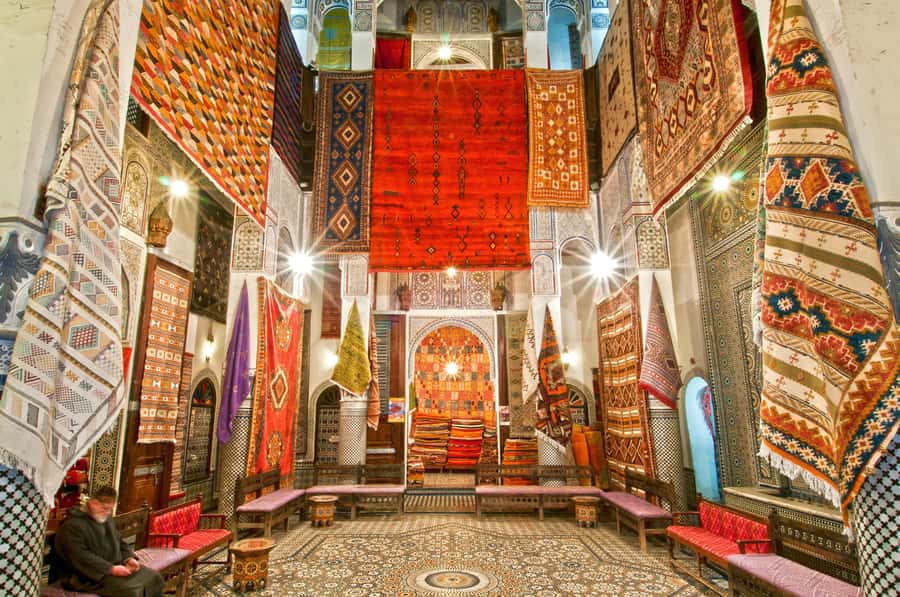
At Bou Inania Madrasa, there’s guided time plus free time, which is perfect. You get explanations first, then you can look again with fresh eyes—especially at the repeating geometric styles and the way the craftsmanship feels intentional, not random.
Then comes Al Attarine Madrasa, another iconic stop with guided viewing and free time. This is a good pairing because you’re not just ticking two boxes. You’re comparing how different madrasas express design choices, then realizing the city’s artisans share techniques across multiple landmarks.
Practical note: Madrasa Bouanania’s entrance fee is not included. The data says it’s 20 MAD for adults, and you’ll want local currency ready. If you hate paying at the last second, keep that money aside in your day bag.
Al-Qarawiyyin Mosque and University: seeing the oldest learning center from outside
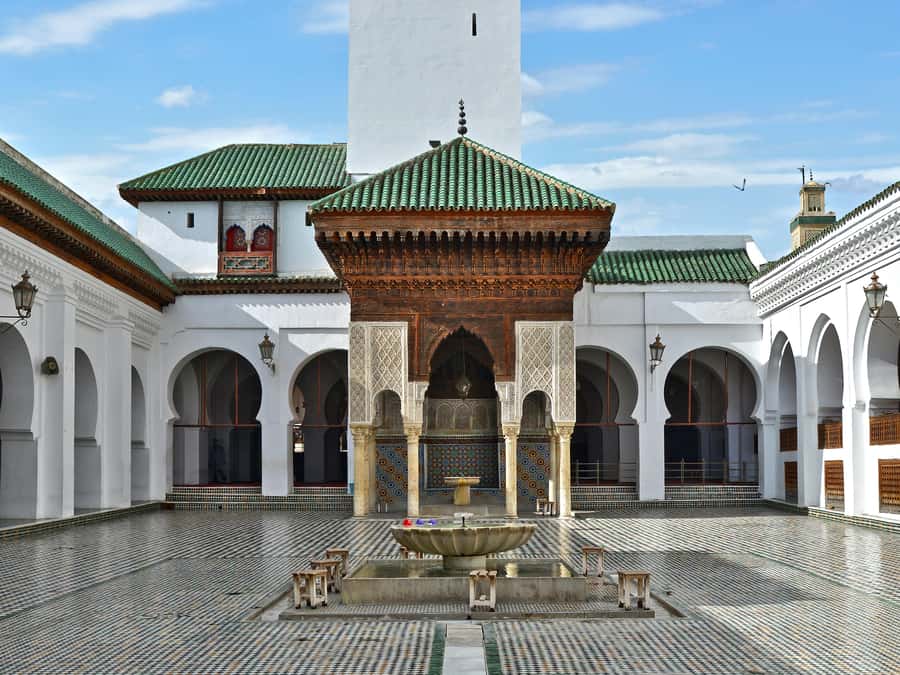
The tour includes an external visit to the Al-Qarawiyyin Mosque and University. You’re not going in, but you still get the big idea: Fes has been a learning center for centuries, not only a market town.
Your guide’s explanations here are usually focused on why the place mattered. Even from the outside, you can appreciate the scale of the institution and the role it played in shaping scholars, students, and the city’s rhythms.
This stop also helps with orientation. Once you understand Fes as a place of study as well as trade, the medina’s street patterns start to feel less chaotic. You’re walking through a city where education, craftsmanship, and commerce share the same streets.
Chouara Tanneries: craft photos, mint strategy, and shopping choices
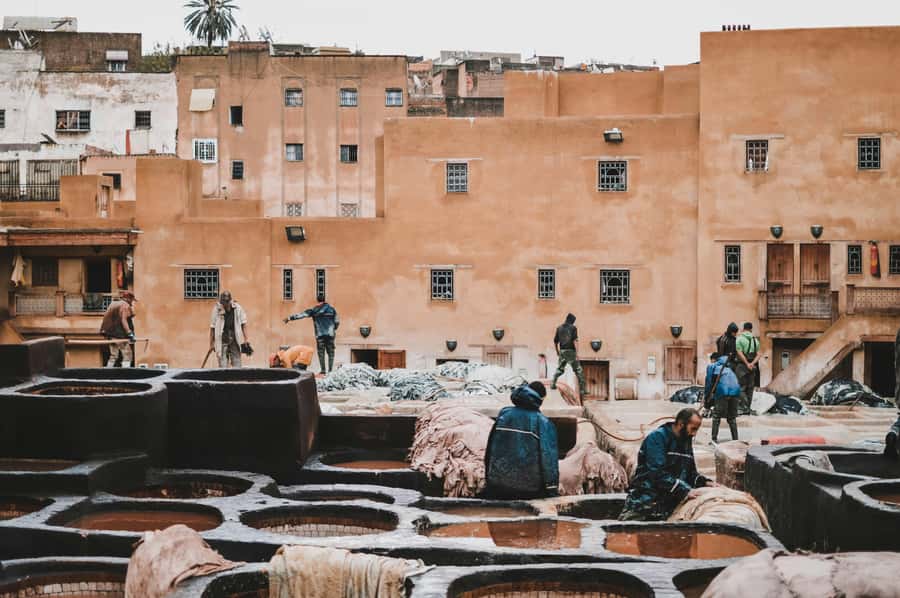
Chouara Tanneries are one of those Fes sights you can’t really skip if you want the full picture of local craft. Yes, it’s smelly. The good news is that some guides bring mint to help mask the odor, so you can stay comfortable while you watch and take photos.
What you should expect is guided time plus the chance to browse and shop nearby. Leather goods, dyes, and related items often show up in this area, and your guide can point out which shops are more serious about the craft and which are mostly sales.
Now the balanced part: not every stop will feel equal for shopping. Some experiences include more sales pressure than others, especially if you’re not interested in buying. If that’s you, say it early and ask your guide to keep moving when you’ve seen what you want.
My practical advice: treat tannery shopping like window shopping. You’re there to understand the process and see the workmanship. You can always buy later if something truly fits your taste and budget.
Medina of Fes walking + Bab Boujloud: how to shop without getting lost
The heart of this experience is the medina walking time, then the longer stretch around Bab Boujloud. This is where Fes stops feeling like landmarks and starts feeling like a working neighborhood.
Expect guided context, free time, and shopping opportunities as you move through the lanes. The value of a guide here isn’t only explanations—it’s navigation. Fes alleys turn fast, and with the wrong turn you can waste your limited time.
Bab Boujloud is the payoff stop for photos and a calmer stroll pace compared with the tightest alleys. It also works well for shopping because you’re more aware of where you are and what direction you’re heading.
One more useful angle: many guides build in little comfort breaks if the day needs it. Some groups report pauses for mint tea or warm bread, and guides also tend to recommend where to eat and how to handle the pace. Even if you skip shopping, those practical stops can make the whole day feel easier.
Price and value for $15: what’s included, what costs extra
At $15 per person for a 4-hour guided tour, this is strong value if you want structure. You’re paying for someone to connect the dots between the palace exterior, madrasas, the Mellah, the tannery area, and the medina/souk streets—plus skip-the-line entry for the monuments that have timed access.
What’s not included is important. The tour data specifically notes the 20 MAD entrance fee for Madrasa Bouanania. You’ll also need local currency for that. And hotel pickup/drop-off is not included unless you book a private option.
Timing matters too. It’s a compact half-day, and some people find it can feel fast if they want to linger at every doorway. If you’re the type who wants slow photos everywhere, ask your guide to prioritize what matters most to you—madrasas, crafts, or shopping.
Using your guide like a pro (the difference-maker)
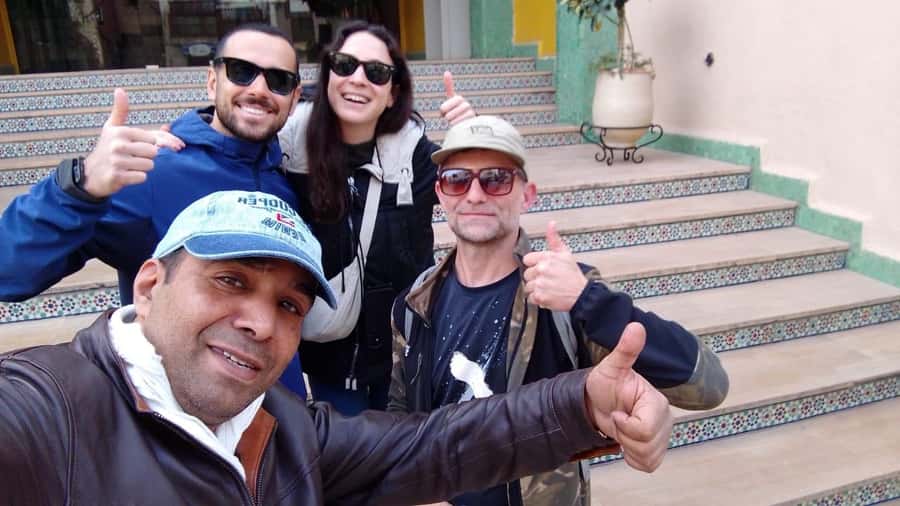
The biggest strength here is the guide. The tone across good experiences is consistent: friendly, flexible, and focused on helping you enjoy Fes without getting tangled in the medina.
You might have a guide such as Mundir, Youssef, Abdul (sometimes listed as Abdul Cous cous), Hassan, Khaled/Khalil, Mohamed, or others, depending on the day. What’s common in high-satisfaction groups is that the guide helps with more than history. They often share practical life tips—like how to talk to people respectfully—and help you spot good places to pause, drink water, and keep the walk comfortable.
If you want the most authentic feel, ask direct questions while you’re walking. Good guides will adjust based on your interests. If your focus is crafts, ask about what you’re seeing in wood, metal, leather, or ceramics. If your focus is culture, ask how the city’s study tradition shaped everyday life.
One more smart move: tell your guide your shopping tolerance. Some experiences include extra time in workshops and shops. If you prefer minimal pressure, say so and request shorter browsing windows.
Who this tour suits best (and who might want a different plan)
This tour is ideal if you want a tight introduction to Fes—madrasas, palace gates, the tannery, and the medina souks—without spending hours figuring out routes. It’s also great for first-time visitors because you get orientation plus context fast.
It’s less ideal if you struggle with walking in uneven medina streets or if you need wheelchair access. The tour is explicitly marked not suitable for wheelchair users.
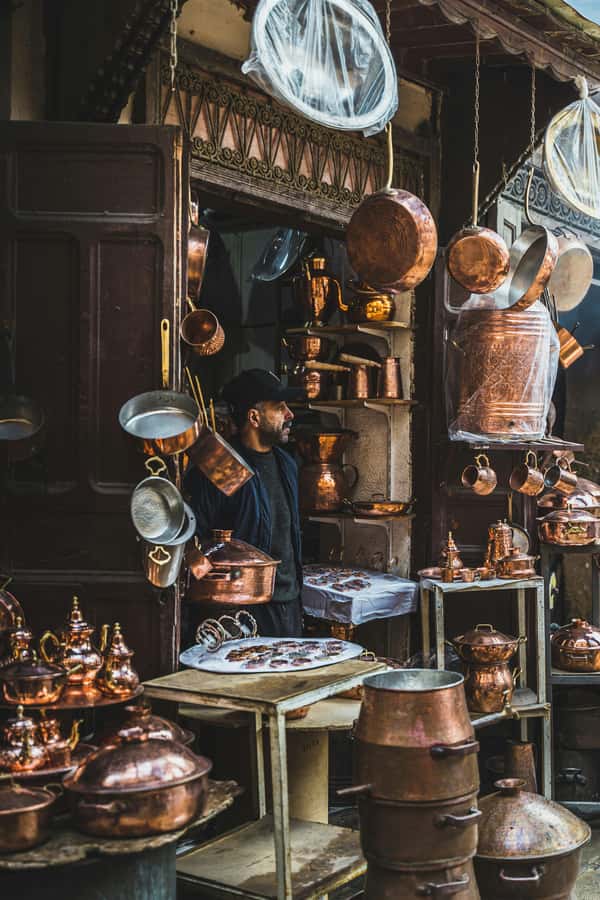
If you’re a craft shopper, this route can be satisfying because you see craft areas and get time to browse. If you’re not shopping at all, don’t worry—you’ll still get the sights and the navigation help. Just keep your expectations realistic about the souk environment.
Should you book the Fes Royal Palace, Madrasas, Tannery & Souks tour?
I’d book it if you want a structured half-day in Fes with a guide who helps you read the city, not just walk past it. At $15 and with skip-the-line entry plus guided stops at Bou Inania, Al Attarine, and key medina areas, the value is hard to beat—especially when you consider how easy it is to get lost in the medina without help.
I wouldn’t book it as-is if you want long, slow museum-style time inside buildings, or if you have limited mobility. Also, if you strongly dislike shopping pressure, communicate your preferences early so the route matches your comfort level.
If you want Fes in one afternoon that actually connects history, craft, and street life, this is a solid choice.
FAQ
How long is the tour?
The tour lasts 4 hours.
What’s the meeting point?
Meet your guide in front of Riad Palais de Fès Suites & Spa.
Is the Royal Palace visit inside or outside?
It’s an external visit only, with a photo stop and guided tour outside.
Do I need to pay any entrance fees?
Yes. Madrasa Bouanania has an adult entrance fee of 20 MAD, and you’re advised to have cash in local currency.
Is the Al-Qarawiyyin Mosque and University visit inside?
It’s an external visit only.
What languages are offered?
The live guide is available in Arabic, French, English, and Italian.
Is it wheelchair accessible?
No. The tour is not suitable for wheelchair users.
Can I cancel for a refund?
Yes. You can cancel up to 24 hours in advance for a full refund.