REVIEW · FES
Fez Ramparts Tour: King’s Palace, Jewish Quarters, Tanneries
Book on GetYourGuide →Operated by 3t Travel · Bookable on GetYourGuide
Seven doors, blue tiles, and big views in Fez. This 2-hour minivan tour gives you a smart way to connect Moroccan, Jewish, and Andalusian culture with the practical comfort of getting driven along the edges of the UNESCO medina. I love the Royal Palace’s seven doors stop, because you can actually take in the scale without sprinting around. I also like how Bab Boujloud’s green-and-blue ceramic details are brought to life with local storytelling.
Next, I really enjoy the Mellah portion. Seeing the 17th-century Ibn Danan synagogue area (including the nearby cemetery) is a powerful change of pace from the usual medina-photo routine, and it helps you understand Fez as more than just markets and mosaics.
One drawback to plan for: the tour is tight at 2 hours, so you won’t get slow, wandering time inside every site. If you like to linger for long photos and deep reading on your own, you may want to follow up with extra visits later.
In This Review
- Key highlights worth your attention
- Why this ramparts route makes sense in Fez
- Where you start: pickup points and medina-edge orientation
- El Batha Museum: arts and traditions, not just a photo stop
- Bab Boujloud gate: the ceramics lesson at ground level
- Mellah and the Ibn Danan synagogue: seeing Fez’s layered communities
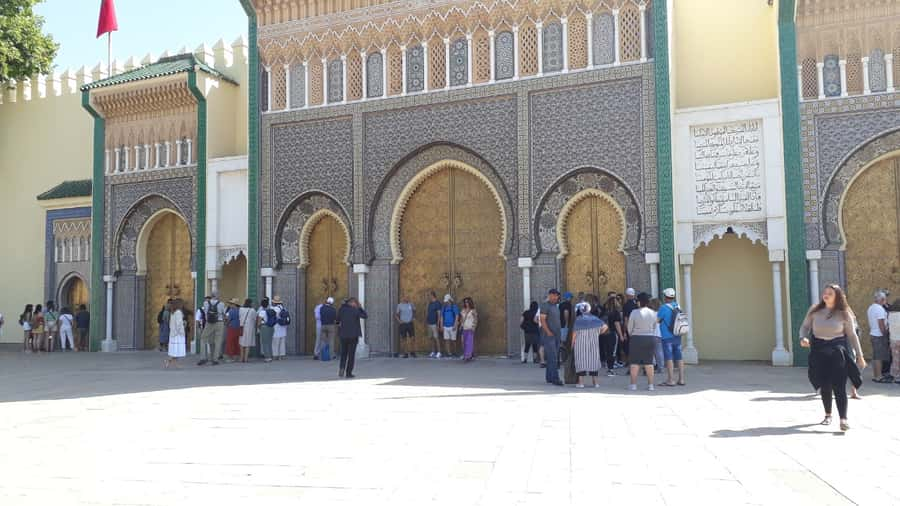
- King’s Palace: the seven doors that define the stop
- The panoramic view: your quick map moment
- The ceramics factory/shop: how “craft” becomes real
- Price and pace: what $8 buys you (and what it doesn’t)
- Languages, group size, and the human side of the tour
- Who should book this tour?
- Should you book the Fez Ramparts Tour?
- FAQ
- How long is the Fez Ramparts Tour?
- How much does the tour cost?
- Does it include hotel pickup and drop-off?
- What’s the meeting point?
- Is food included?
- What languages are available?
- Is the tour private or small group?
- What should I bring?
- Is free cancellation available?
Key highlights worth your attention
- Royal Palace’s seven doors: a standout moment for scale and design
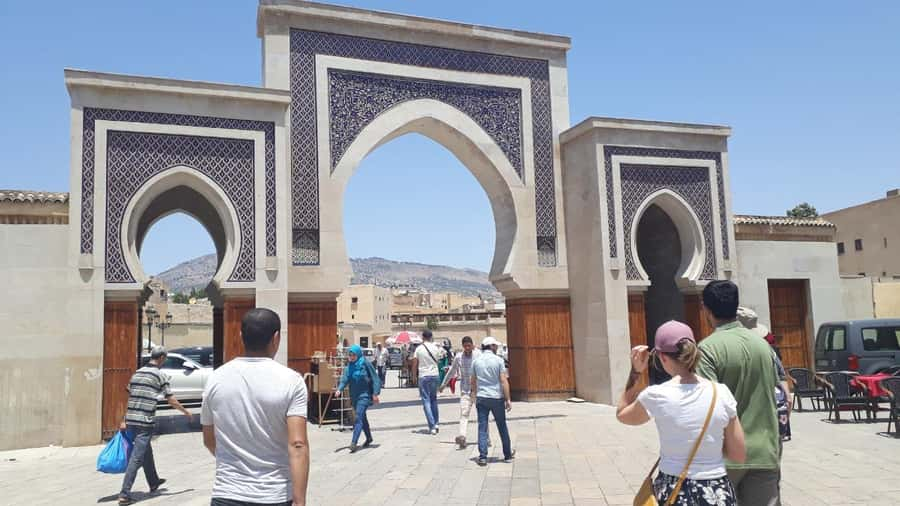
- Bab Boujloud gate: striking green-and-blue ceramic work at the medina’s edge
- Mellah visit for context: Ibn Danan synagogue and cemetery area help you place Jewish Fez
- Batha Palace (El Batha Museum): arts and traditions focus, not just a quick peek
- Panoramic view over the old medina: easy orientation in a place that can feel maze-like
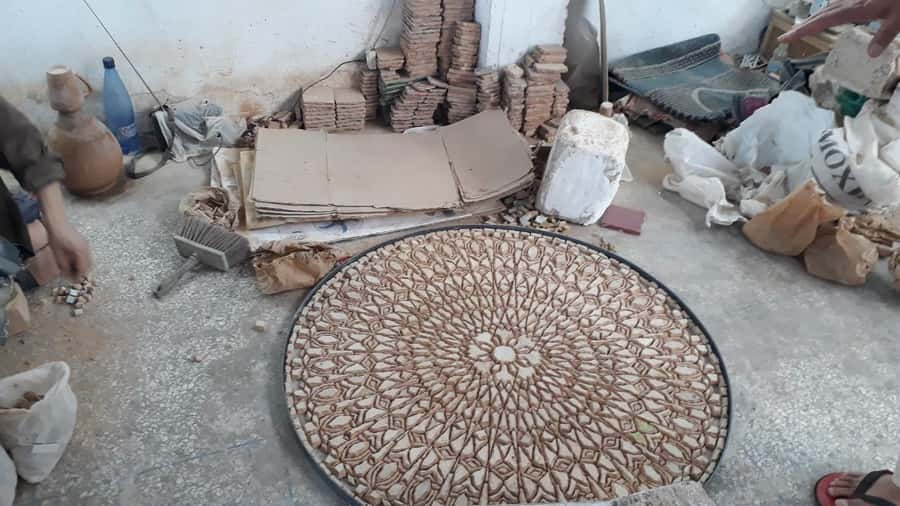
- Ceramics factory/shop visit: see how pieces are made from start to finish
Why this ramparts route makes sense in Fez
Fez can be a lot. The streets can feel tight, the turns can come fast, and it’s easy to lose time on getting your bearings. This kind of ramparts-focused tour solves that problem by combining short medina-area walking with minivan pacing.
You also get a story-driven route. Instead of just pointing at famous corners, the guide connects what you’re seeing—ceramics, architecture, religious quarters, and palace symbolism—so the medina feels like a living place with layers.
And at $8 per person for a guided, transport-based circuit, the value is strong if your goal is orientation plus a few must-sees without the long day commitment.
You can also read our reviews of more tours and experiences in Fes.

Where you start: pickup points and medina-edge orientation
The meeting area is set up to be easy. Your driver will meet you at one of these points: Fes Heritage Boutique Hotel, Riad Andalib, Bab Guissa, or Hotel Barcelo. If pickup is optional, the key is simple: wait in your hotel lobby at your scheduled pickup time so you don’t lose minutes.
From there, you’re oriented right away. The tour begins outside the medina walls, which is helpful because Fez’s inside streets can be confusing for first-timers. That “edge approach” also keeps the pace relaxed. In one recent experience, the setup felt calm and punctual, with a driver who spoke multiple languages and kept things moving smoothly.
Practical tip: wear shoes that you can trust. You’ll do walking on uneven stone and along busy areas near major gates.
El Batha Museum: arts and traditions, not just a photo stop
One early anchor is the Batha Palace area, now the El Batha Museum, centered on arts and traditions. This is a great contrast point: you go from open-air medina life to a more interpretive setting where the focus is on how culture takes shape in objects and craft.
Why it’s valuable: when you first arrive in Fez, everything looks impressive. But it’s hard to know what you’re looking at. A museum-style stop helps you learn the “why” behind the visuals you’ll see later—especially ceramics and the decorative language used across the city.
What to watch for: look closely at patterns and decorative motifs. Even on a short schedule, the museum context makes later street-level details feel less random.
Bab Boujloud gate: the ceramics lesson at ground level
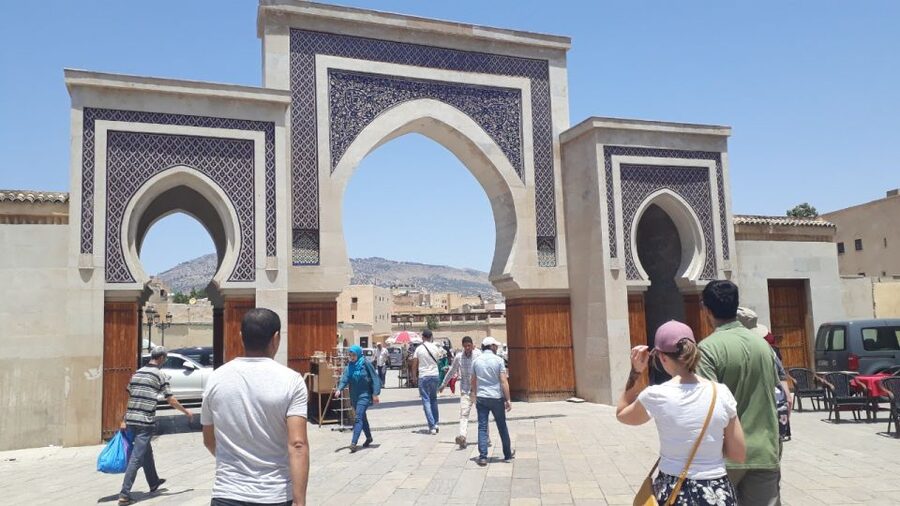
Then comes Bab Boujloud, the famous gate also known for its blue-and-green ceramic work. This is one of those places where your brain says: take the picture. But the best way to experience it is to slow down for a moment and really notice the surface detail—because those colors and patterns weren’t chosen casually.
After the gate, there’s time in and around the square that surrounds it. That matters, because you’re not only viewing the landmark—you’re also seeing the energy of the area around it. In a recent account, this part felt lively without turning chaotic, and the guide kept the facts and stories flowing so it stayed more than a quick snapshot.
If you’re sensitive to crowds, pick a pace that works for you. You can still enjoy the ceramics and watch the flow from the edges.
Mellah and the Ibn Danan synagogue: seeing Fez’s layered communities
Next is the Mellah district. This is one of the most meaningful parts of the route, especially if you want your Fez experience to include more than the standard “medina highlights.”
You’ll stop to gaze at the 17th-century Ibn Danan synagogue area, and you’ll also see the adjacent cemetery context. That combination gives you a fuller sense of Jewish life in Fez than you’d get from a quick street photo alone.
A good guide makes this land. The stories help you connect the quarter’s significance to the broader cultural mix of the city. It also changes your rhythm: after color and craft, you shift into reflection and historical perspective.
Gentle realism: you may not have lots of quiet time here. This is a “see and understand” stop, not a long, unhurried museum morning.
King’s Palace: the seven doors that define the stop
Then you reach the King’s Palace. The standout detail is simple and unforgettable: the huge seven doors.
Even if you’ve seen palace exteriors in other countries, Fez’s version lands differently because of the sheer visual emphasis on entrances and formality. The guide’s explanation helps you understand why that kind of design matters—how power, access, and identity show up in architecture.
Practical angle: this is a stop where you can do your own viewing well. Look for how the doors frame the space around them, and take a few angles if your timing allows.
In one recent tour experience, this was described as a “real” highlight, with the route feeling relaxed enough that people could actually take in what they were seeing.
The panoramic view: your quick map moment
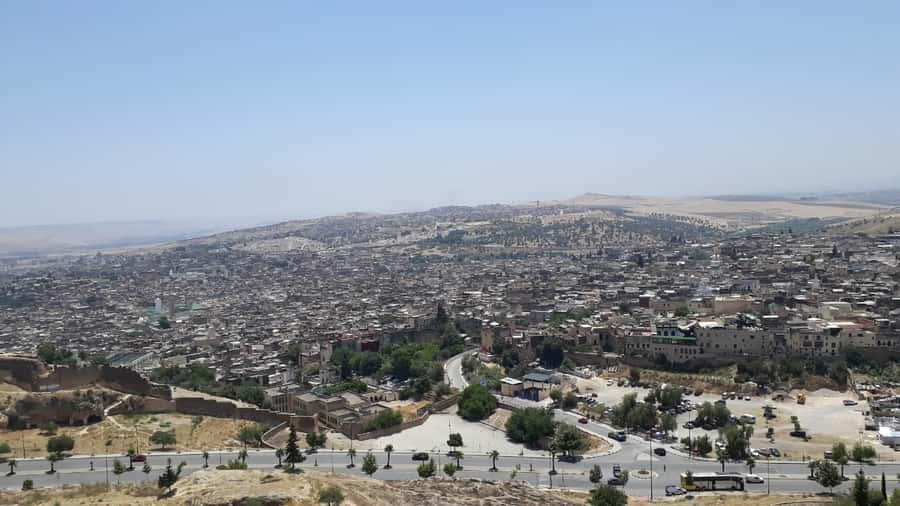
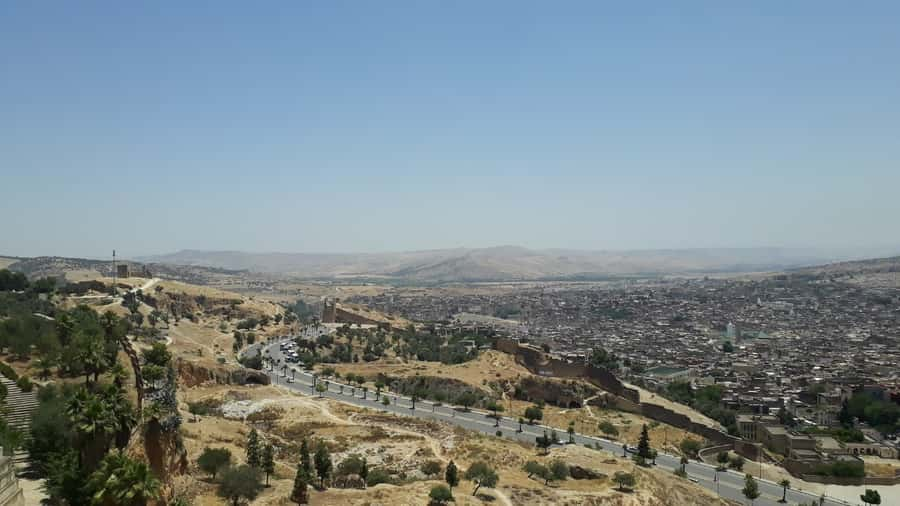
A smart tour needs at least one moment where you step back and see the city as a whole. Here, you end with a panoramic view over the old Medina.
For first-timers, this is huge. Fez inside the walls can feel like you’re moving without direction. A view from above gives you a mental framework—where the quarters sit, how the buildings stack, and what’s likely nearby. Even if you don’t memorize streets, you start to recognize shapes.
If you’re photographing, this is the time to pull out your camera and slow down. The view helps your future self. When you later wander on your own, you’ll feel less lost.
The ceramics factory/shop: how “craft” becomes real
The tour also includes a stop at a ceramic factory (and/or ceramic shop experience) where you see how ceramics are made from start to finish. This is one of the most practical parts of the route, because it turns what you’ve been admiring on doors and gates into a real process: shaping, finishing, decorating, and the path to a finished piece.
What makes this stop work on a short schedule is that you’re not asked to do a long “shopping tour.” In a recent experience, the tone was described as relaxed, with no pushy sales feeling, and the ceramics part came with clear explanations.
One thing to remember: if you’re expecting free samples or a guaranteed souvenir deal, don’t assume it. Food and drinks are not included, and purchases are always optional. But the process explanation is the value.
Bonus note: one recent review mentioned tasting small treats like sugar cane with ginger drink and dates. Since food isn’t listed as included, think of this as a possible extra rather than a promised part of the tour.
Price and pace: what $8 buys you (and what it doesn’t)
At $8 per person for a 2-hour circuit with hotel pickup/drop-off and transportation, you’re paying for efficiency and guidance more than for long time at each site.
Here’s the tradeoff:
- You’ll see key places (Batha Museum area, Bab Boujloud, Mellah/Ibn Danan context, King’s Palace seven doors, panoramic view, ceramics).
- You won’t have hours inside for slow study, quiet prayer-space pauses, or deeply detailed museum time.
For most visitors, that tradeoff is perfect. You get an orientation loop that helps you decide what to revisit later. For people who want long, independent exploration, you’ll probably still need a second day (or at least one follow-up visit) after this.
Languages, group size, and the human side of the tour
The driver is listed as available in English, French, Spanish, and Arabic. The experience also feels built for small groups or private options, so you’re not likely to be squeezed into a huge crowd.
From recent feedback, the “human” factor matters here:
- punctual pickup
- calm driving
- lots of language ability
- a guide who uses humor and keeps things engaging
- a relaxed flow without stress
That’s what turns a short tour into something you actually remember.
Who should book this tour?
I’d point you toward this tour if:
- you’re short on time in Fez but want multiple cultural stops
- you like guided context more than solo wandering
- you want an entry point into Jewish and Andalusian-era cultural layers, not just the main gate-and-tanneries sweep
- you appreciate craft demonstrations, especially ceramics
You might skip or supplement it if:
- you need long, unhurried time inside sites
- you dislike walking in busy squares or prefer fully indoor experiences
Should you book the Fez Ramparts Tour?
If your goal is smart orientation plus a handful of signature moments, I’d say yes. The value at $8, the short 2-hour format, and the mix of Royal Palace seven doors, Mellah/Ibn Danan context, Bab Boujloud ceramic detail, panoramic orientation, and a ceramics process visit create a compact Fez education you can build on.
Book it especially if you want a calm plan that doesn’t leave you scrambling through the medina. Then, after the tour, you’ll know where to return for longer looks.
FAQ
How long is the Fez Ramparts Tour?
The tour duration is 2 hours.
How much does the tour cost?
It’s listed at $8 per person.
Does it include hotel pickup and drop-off?
Yes. Hotel pickup and drop-off are included, and pickup is described as optional depending on your selection.
What’s the meeting point?
Your driver will meet you at one of these points: Fes Heritage Boutique Hotel, Riad Andalib, Bab Guissa, or Hotel Barcelo.
Is food included?
No. Food and drinks are not included.
What languages are available?
The driver is listed as available in English, French, Spanish, and Arabic.
Is the tour private or small group?
Private or small groups are available.
What should I bring?
Bring comfortable shoes and a camera.
Is free cancellation available?
Yes. Free cancellation is available up to 24 hours in advance for a full refund.