REVIEW · BARD ITALY
Fortress: Prisons, Museum of Fortifications and Alps Museum
Book on GetYourGuide →Operated by Forte di Bard · Bookable on GetYourGuide
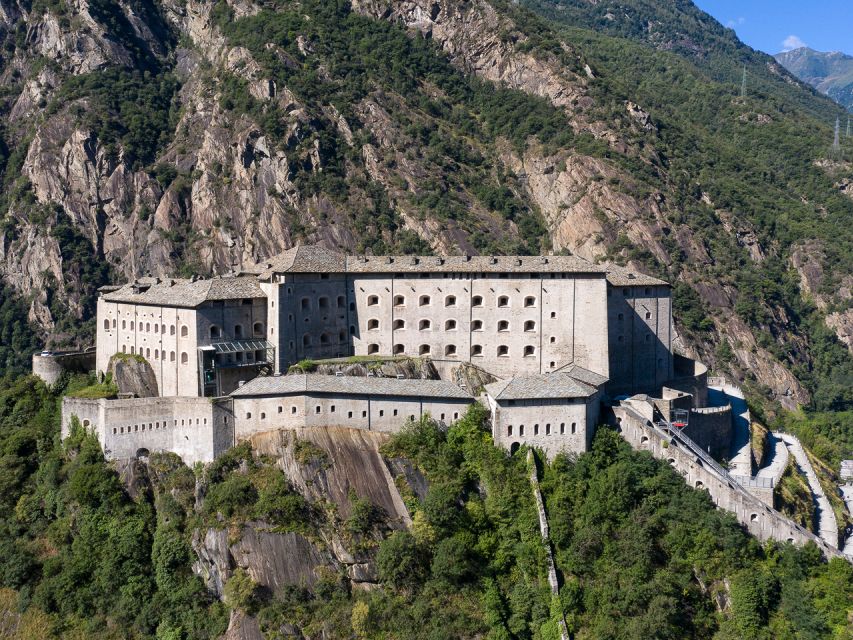
A fortress with teeth and great views. Forte di Bard is one of the most unusual ways to understand Alpine defence, with panoramic lifts, imposing walls, and museums that track how warfare changed over time.
You’ll spend time inside the Museum of Fortifications, where models, film, and original-style weapons explain strategy in the Western Alps. Then you’ll move on to the Prisons—a set of tiny cells that hits harder than you expect. One potential drawback: if you were hoping for a pop-culture tie-in (like the Marvel filming connection some people mention), this visit is firmly focused on military and Alpine themes.
I also like how the visit flows in clear sections: lift up, explore, then go deeper into the story with the prisons and the Alps Museum. Everything is set up to make self-guided wandering feel intentional, not random. The catch is simply time and attention: there’s a lot here, so you’ll want to plan which exhibitions you’ll choose so you don’t feel rushed.
In This Review
- Key things to know before you go
- Forte di Bard: why this fortress matters in the Alps
- Price and value: what $17 buys you
- Arriving and getting in: exchanging your voucher at Bard
- Fortifications Museum: weapons, strategy, and the meaning of a boundary
- Part one: how defence worked in the Western Alps
- Part two: late-19th and early-20th century transformations
- Part three: the Alps, a boundary
- Prisons at Forte di Bard: 24 tiny cells and the psychology of space
- Alps Museum: natural forces, Alpine civilization, and modern change
- Using the included audio guide and Museon APP
- What else is worth your time inside the fortress grounds
- Who this experience is best for (and who may not love it)
- Should you book Forte di Bard: Fortress, Prisons, Fortifications Museum, and Alps Museum?
- FAQ
- What is included with the entrance ticket?
- Do I need a live guided tour?
- How do I use the included audio guide?
- Can I pick which museums to visit?
- Are panoramic lifts included?
- Where do I exchange my voucher?
- Are there two ticket counter locations?
- How many prisons cells are there and how big are they?
- Is the site wheelchair accessible?
- What’s the cancellation and ticket validity policy?
Key things to know before you go
- Panoramic lifts included for quick, high-up views before you start climbing through the complex.
- Museum of Fortifications in three stages, from early defence logic to late-19th/early-20th transformations.
- Prisons with 24 very small cells, about 1.3 x 2 metres, arranged in four sections.
- The “boundary” theme in the final part of the fortifications museum makes you think about borders vs barriers.
- You choose three permanent exhibition spaces, so you can tailor the visit to your interests.
- Audio guide via Museon APP (with a QR code at the ticket office) keeps the story moving without a live guide.
Forte di Bard: why this fortress matters in the Alps
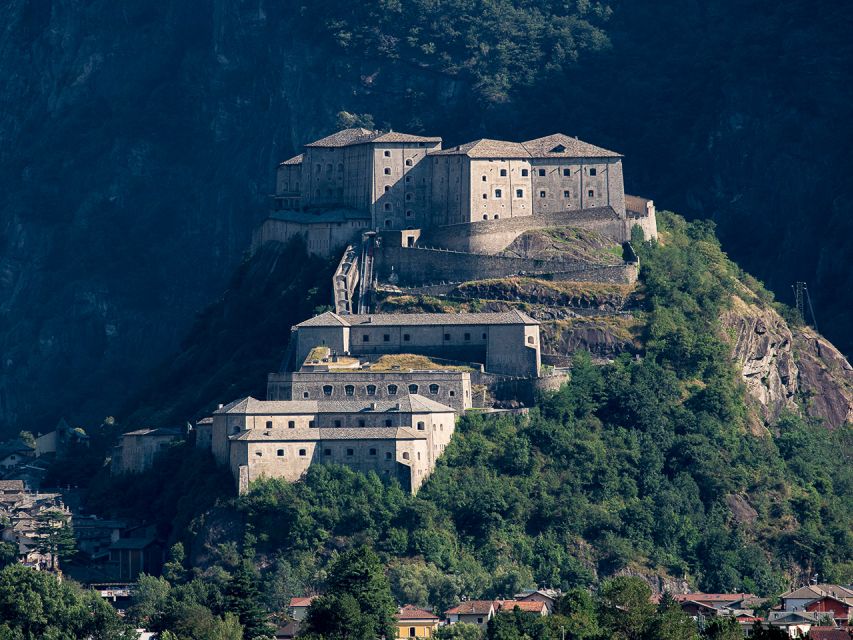
Forte di Bard doesn’t treat the Alps like a pretty backdrop. It treats them like the main character—terrain that forces decisions, shapes supply lines, and defines what “defence” even means.
The fortress played a strategic role in Alpine history, and the site makes that feel real. You’re not just looking at walls; you’re watching the logic of defence evolve as weapons and tactics changed. It’s the kind of museum experience that helps your brain connect the dots: mountains + routes that funnel movement + defensive engineering.
If you like places where architecture does more than decorate—where stone, height, and layout all have a purpose—you’ll probably love this. And if you’re visiting the Aosta Valley and want one stop that’s different from the usual castles-and-churches day, this is a strong pick.
You can also read our reviews of more tours and experiences in Bard Italy.
Price and value: what $17 buys you
The price is $17 per person, and the value comes from breadth. This isn’t just one room with a ticket price. With your entrance ticket you get access to:
- the fortress experience itself
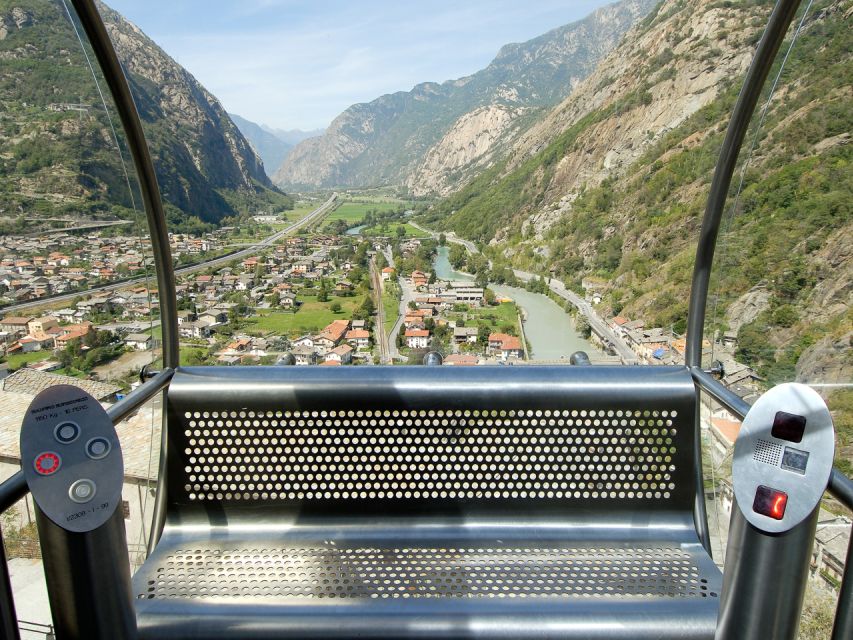
- panoramic lifts
- chapel, parade grounds, courtyards, and walkways
- an included audio guide
- three exhibition spaces of your choice from the permanent museums (with additional art exhibitions if open during your visit)
That combination matters because it lets you mix perspectives. You can start with the big picture (the fortifications museum), then get personal with the prisons, then zoom out again with the Alps Museum and its human story. For one fixed ticket, you’re covering several angles of the same location.
You don’t need a live guide to enjoy it, but you do need to use the audio guide if you want the history and architecture to land the way the site intends. More on that below.
Arriving and getting in: exchanging your voucher at Bard
You’ll exchange your voucher at the ticket counter—two locations are offered, and which one you use depends on where you want to start.
1) Ticket counter at the start of the first panoramic lift
2) Ticket counter at the top of the medieval village, behind the Church of Bard
This matters because the panoramic route shapes your first impression. If you want the views early, go with the first-lift counter. If you prefer to start by navigating the village area first, use the top counter behind the church.
Either way, keep an eye on timing inside the fortress. The site is split into distinct areas, and you’ll move between them, so it helps to decide early which three exhibition spaces you’ll prioritize.
Fortifications Museum: weapons, strategy, and the meaning of a boundary
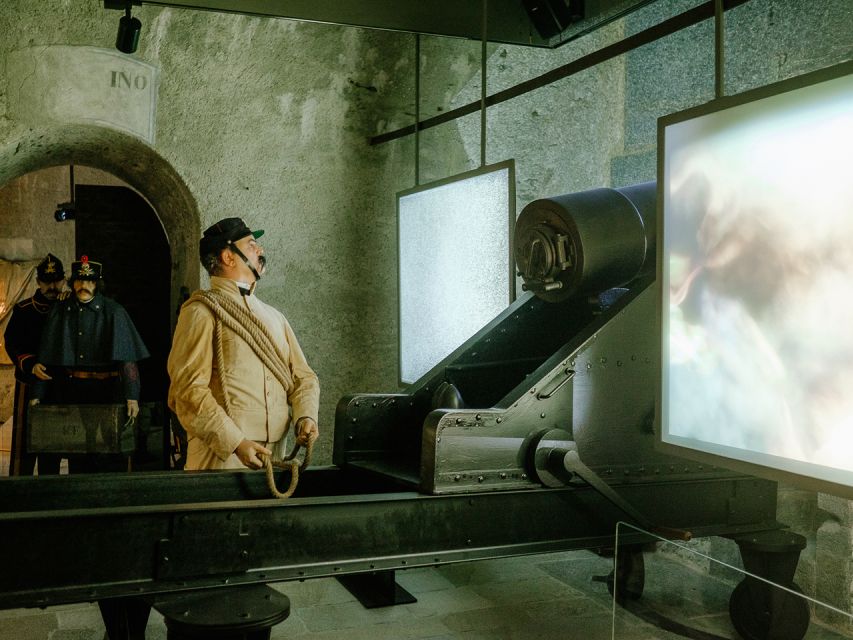
The Museum of Fortifications is where the story becomes structured. It’s built in parts, and each one changes what you’re paying attention to.
Part one: how defence worked in the Western Alps
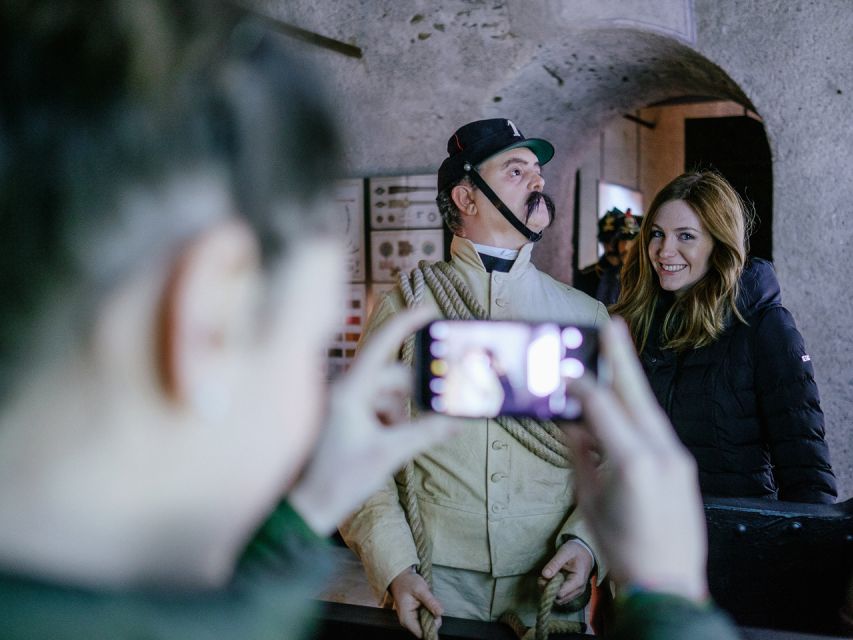
The first section presents historical settings with supporting models, film footage, and authentic-style weapons. It explains the evolution of fortresses by showing the progression of weapons and military strategies.
What I like about this setup is that it stops you from thinking of the fortress as static. Instead, you learn that defence is an ongoing response to changing technology and tactics. The museum design pushes you toward that mindset.
Part two: late-19th and early-20th century transformations
In the second part, the museum shifts to transformations that happened in the latter 19th and early 20th century. Scale models and spectacular reconstructions help you see how the fortress fits into the system of 19th-century fortresses.
This is the section that tends to feel most visual. If you prefer learning with physical representations instead of only text, this is where the museum does a lot of work for you.
Part three: the Alps, a boundary
The final part poses a question: The Alps, a boundary? It asks you to reflect on what “boundary” means. Is it a border or a barrier? An obstacle or a line of union?
This part is important because it turns the visit from “history of war” into “history of movement.” The Alps weren’t just an edge people fought over. They were also a place routes had to cross. That idea gives your visit extra weight.
Prisons at Forte di Bard: 24 tiny cells and the psychology of space
After you get oriented in the fortifications museum, the visit moves upward through the Bard fort’s mountain environment—then you reach the Prisons, one of the most memorable parts of the whole experience.
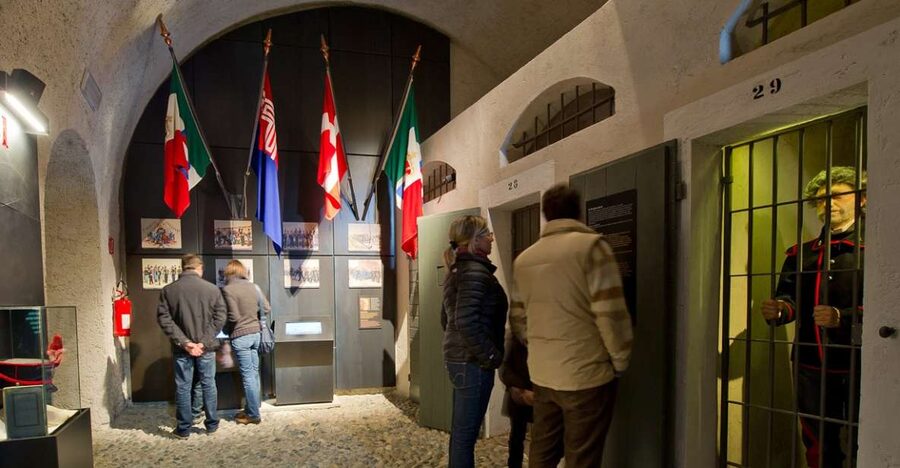
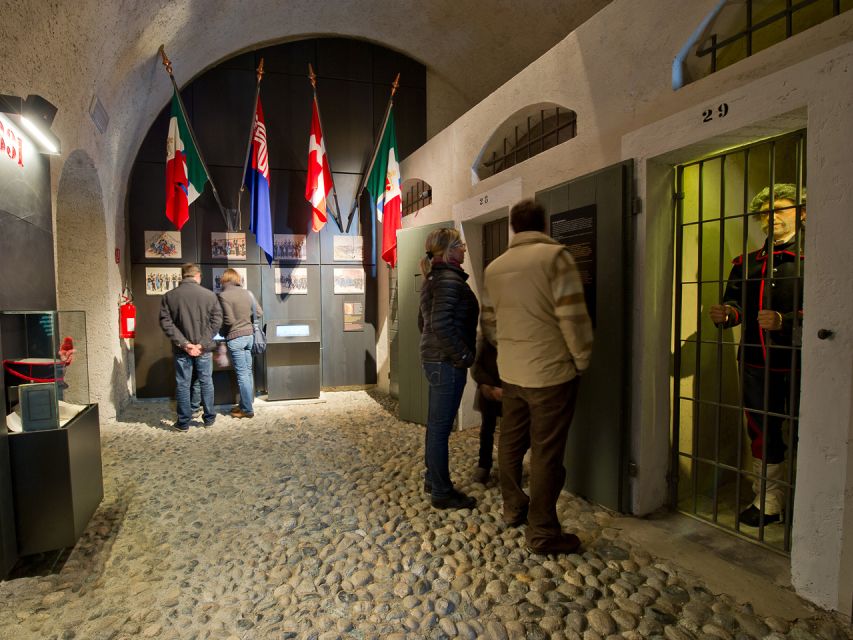
There are 24 very small cells—about 1.3 x 2 metres—arranged along four sections. They’re preceded by an entrance gallery dedicated to the iconographic representation of the fortress.
Two things make this worth your time:
- The scale shocks you. When cell sizes are described like this, your body understands the meaning fast.
- It’s arranged in sections, so you don’t just see one cell and move on—you get a rhythm of confinement across the space.
A fair consideration: the prisons are emotionally intense. If you’re not in the mood for heavy themes, you might want to pace yourself—maybe do a slower pass through the fortifications museum first, then visit the prisons when you’re mentally ready.
Also, because this is self-guided, you’ll want to give yourself enough quiet time to really look. Don’t rush the cells.
Alps Museum: natural forces, Alpine civilization, and modern change
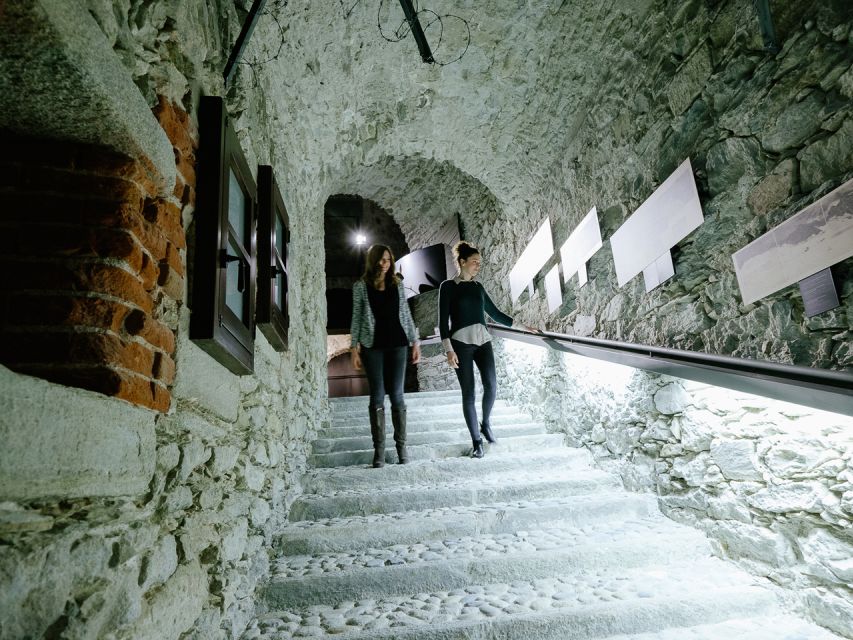
If the fortifications museum explains how people defended space, the Museum of the Alps explains how people lived with that space—and how the mountains changed under modern pressures.
The exhibition is divided into three parts:
1) the main natural and human components of the mountain environment
2) Alpine civilization
3) the transformation of the mountains in the era of modernity
This combination is what makes the Alps Museum a good counterbalance. You’re not stuck on war. You’re shown that mountains are shaped by both nature and people over time.
Practical tip: treat this museum like you’re building a complete picture. Start by noticing the natural factors. Then connect how human communities adapted. Then, when you reach modernity, think about what changes came with new ways of moving, working, and building.
It’s a thoughtful way to leave the fortress with more than just military facts.
Using the included audio guide and Museon APP
The ticket includes an audio guide to discover the history and architecture of the fortress. To use it, you download the Museon APP on your smartphone. A QR code will be provided at the ticket office.
This is the key to making the experience feel guided without needing a live guide. The fortress has enough moving parts—lifts, sections, prisons, museum areas—that the audio track helps you keep your bearings and understand what you’re looking at.
If you’re traveling with kids or you just like variety, you’ll probably appreciate the flexibility of audio too. You can pause, walk on, or backtrack without waiting for a group.
One small planning note: bring your phone with enough battery for app use. If your battery runs low, you’ll lose a big part of the value you paid for.
What else is worth your time inside the fortress grounds
Beyond the museums and prisons, your ticket includes access to key parts of the fortress space:
- the chapel
- the parade grounds
- the courtyards
- the walkways
- and the panoramic lift experience
These aren’t “filler.” They’re part of how Forte di Bard communicates. Courtyards and walkways help you understand movement and vantage points. Parade grounds tell you about how the fortress was meant to function. The chapel adds another layer to daily life and the human side of the site.
Even if you’re more of a museum person than a viewpoint person, don’t skip the open-air sections. They connect the information from inside with what the fortress was built to do: control sight lines and movement.
Who this experience is best for (and who may not love it)
Forte di Bard is a great fit if you like:
- history that connects to real geography
- museums with strong structure and clear themes
- darker, more reflective spaces like the prisons
- self-guided travel with an audio guide that actually supports the visit
It may be less satisfying if you mainly want:
- a short, casual stop with minimal walking
- a guided, live commentary experience (a live guide is not included)
- pop-culture exhibits. One person noted disappointment about the absence of a Marvel-related exhibit connected to filming, so if that’s what you were hoping for, you might want to manage expectations.
If you’re visiting the Aosta Valley with a mix of interests—someone into history, someone into mountain culture—this site can make everyone feel like they got something.
Should you book Forte di Bard: Fortress, Prisons, Fortifications Museum, and Alps Museum?
I’d book it if you want one ticket that covers defence history, confinement, and Alpine life—all in the same place. The value is strong because you choose three exhibition spaces, and the panoramic lifts plus access to courtyards, chapel, and walkways add depth beyond the museums.
I’d think twice if you’re looking for a light, quick attraction, or if pop-culture history is your main hook. Otherwise, Forte di Bard is one of those rare experiences where you leave with a clearer sense of why the Alps have always mattered.
If you’re the type who enjoys reading a place like a puzzle—terrain, architecture, and story—this is a very good day in the mountains.
FAQ
What is included with the entrance ticket?
Your ticket includes entrance to the fortress, access to panoramic lifts, access to the chapel, parade grounds, courtyards, and walkways, and an included audio guide. It also includes access to three exhibition spaces of your choice among the permanent museums (Museum of the Alps, Prisons, Museum of Fortifications and Frontiers) plus any open art exhibitions.
Do I need a live guided tour?
No. A guided tour with a live guide is not included.
How do I use the included audio guide?
You need to download the Museon APP on your smartphone. You’ll get a QR code at the ticket office to use the included service.
Can I pick which museums to visit?
Yes. You get access to three exhibition spaces of your choice from the permanent museums listed, and you can also see art exhibitions open at the time of your visit.
Are panoramic lifts included?
Yes. Access to panoramic lifts is included with the ticket.
Where do I exchange my voucher?
You exchange your voucher at the ticket counter. There are two possible counters depending on where you start.
Are there two ticket counter locations?
Yes. One ticket counter is at the start of the first panoramic lift. The second is at the top of the medieval village, behind the Church of Bard.
How many prisons cells are there and how big are they?
There are 24 very small cells. Each cell is approximately 1.3 x 2 metres, arranged along four sections.
Is the site wheelchair accessible?
Yes. The fortress is wheelchair accessible.
What’s the cancellation and ticket validity policy?
You can cancel up to 24 hours in advance for a full refund. The ticket is valid for 90 days, so you can choose a visit date within that window.