REVIEW · HIROSHIMA
Japanesel Archery Experience HIROSHIMA CASTLE SHARAKU
Book on Viator →Operated by HIROSHIMA CASTLE SHARAKU · Bookable on Viator
Trying Japanese archery at Hiroshima Castle feels surreal. This kyudo lesson walks you through the step-by-step routine, and you get to wear traditional dogi and hakama (plus armor). It’s set right at the Hiroshima Castle Sannomaru Ruins area, so you can pair it with sightseeing without rushing all day.
Two things I really liked: the instruction is structured so you’re not just aiming and hoping, and you get hands-on practice with plenty of shots. The main consideration is that form is taken seriously, and you may feel arm or hand soreness if you’ve never shot a Japanese bow before.
In This Review
- Key things to know before you try kyudo here
- Kyudo at Hiroshima Castle: what makes this lesson feel Japanese
- Your hour on the range: the shooting flow from basics to rounds
- The uniform and armor: why it affects how you shoot
- Instruction style, rules, and the reality of translation
- How much value you’re getting for $43.11
- Where to meet and how to fit it into your Hiroshima day
- Who should book (and who might want to skip)
- Should you book Japanese Archery Experience HIROSHIMA CASTLE SHARAKU?
- FAQ
- How long is the Japanese Archery Experience at Hiroshima Castle Sharak?
- How much does it cost?
- Where do I meet for the experience?
- Is this experience suitable for complete beginners?
- How many people are in the group?
- Can I cancel for a full refund?
Key things to know before you try kyudo here
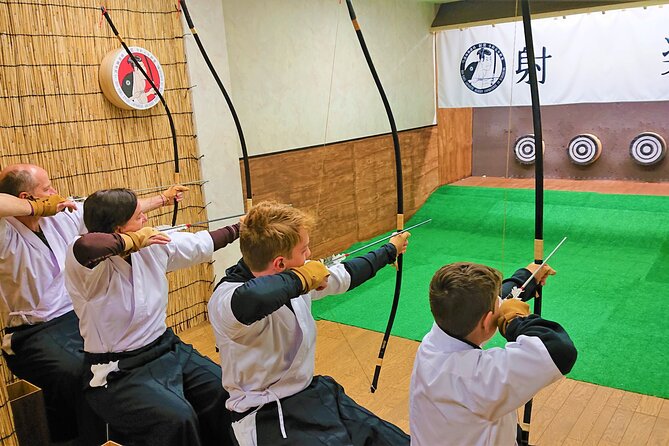
- Small group size (max 4) means more attention on your form and fewer people waiting around.
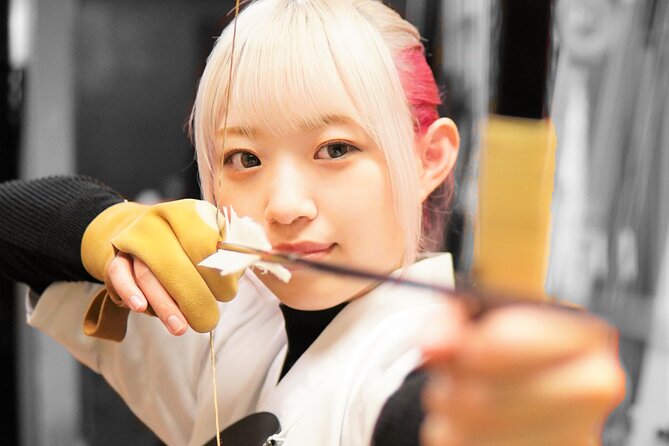
- Authentic kyudo uniform and armor changes the experience from a quick activity into a real practice session.
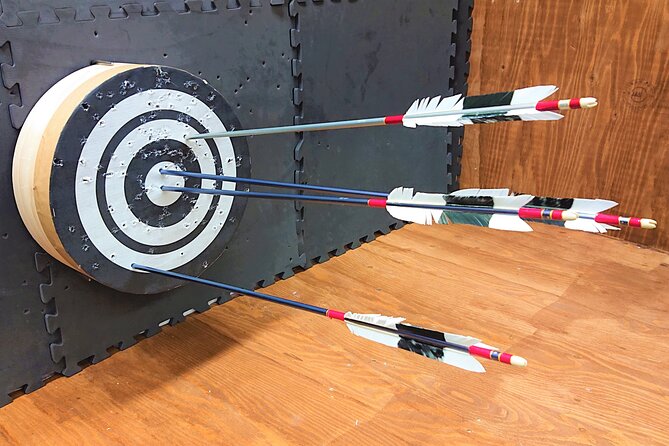
- You’ll shoot real rounds: 8 arrows per round, split into two halves of 4 and 4.
- Beginner-friendly, but still rule-based: you’ll get guided basics and won’t be left to guess.
- Translation support is built in with the guide using tablet/translation apps when needed.
- Photos and videos are taken during the session, so you’re not stuck asking someone else to film.
Kyudo at Hiroshima Castle: what makes this lesson feel Japanese
Kyudo is Japanese archery with a very specific mindset. It’s not just about getting an arrow to stick in the target; it’s about the full routine—how you handle the equipment, how you draw, how you aim, and how you finish—because the movements are meant to show respect to the bow, the process, and your opponent.
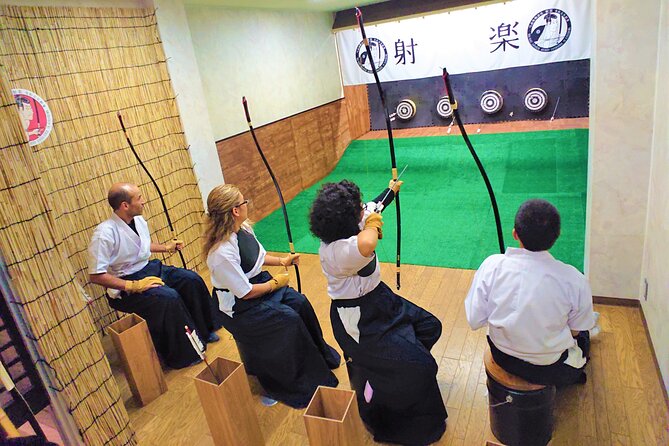
What makes this experience particularly fun (and not just educational) is the setting and the costume. Meeting at the Hiroshima Castle Sannomaru Ruins area puts you in a historical mood right from the start. Then you step into the role yourself: you wear a kyudo uniform that includes dogi (upper) and hakama (lower), and you’ll also experience armor as part of the session. Even if you’ve never done archery, this makes your practice feel like a real tradition instead of a generic outdoor game.
You’ll also get a brief explanation of kyudo’s purpose—focus of mind and body—before the practical part begins. That context matters because it helps you understand why the guide may correct your form with precision. If you treat it like “shooting,” it can feel odd. If you treat it like “a sequence,” it starts to click fast.
You can also read our reviews of more tours and experiences in Hiroshima.

Your hour on the range: the shooting flow from basics to rounds
This is designed to fit into an hour without feeling rushed. The session starts with instruction and demonstrations, then moves into your practice shots, and it can build toward a mini competition depending on how quickly you pick things up.
Here’s the rhythm you can expect:
- Instruction + demos first
You’ll get a walkthrough of how to set up, how to handle the bow and arrow, and how the shooting sequence works. Expect to learn the steps you need before you get control of the basics.
- Practice round with 8 arrows
After the initial teaching, you’ll shoot a first set—8 arrows. For many people, this is where the bow suddenly stops feeling intimidating and starts feeling like a puzzle you can solve.
- One or more rounds with 8 arrows per person
Each round is broken into two halves: 4 arrows, then 4 arrows. That pacing is smart for beginners because it gives you quick feedback without exhausting you.
- Optional mini competition
If you’re catching on quickly, the session can include competition rounds. Some participants even manage to shoot far more than the “minimum” amount by moving steadily and following technique.
A useful thing to know: Japanese bows can behave differently than Western archery bows. Your arrows may curve in flight, which changes how you think about aiming. It’s a fun surprise, and it’s also why the instructor’s guidance matters. You’ll probably feel your first few shots are off, then you’ll start adjusting your approach and the results improve.
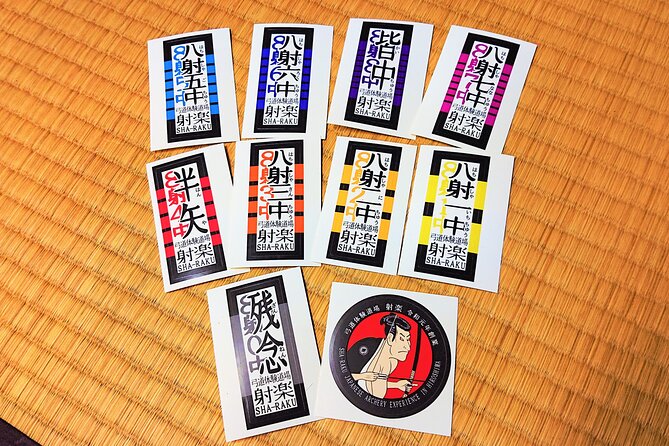
Also, the session uses score-based motivation. If you shoot well, you may receive a high-score card—and there’s even a playful “get a perfect 8/8 score” style reward described in the experience. Even if you don’t chase that, the scoring turns practice into a game, not just repetition.
The uniform and armor: why it affects how you shoot
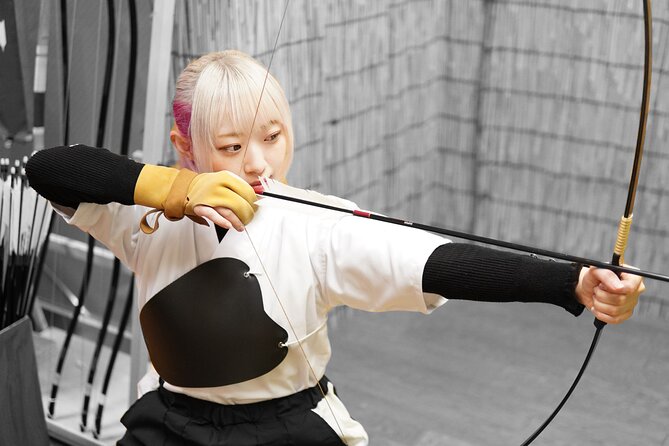
Wearing dogi and hakama sounds like a nice photo op—and yes, it is—but it also affects your posture and movement. Kyudo has a formal sequence, and the clothing supports that feeling of discipline. When you wear the uniform, you tend to move more carefully, which helps you focus on the steps you’re being taught.
Then there’s the armor element. You’ll notice it most during practice, when you’re learning how to hold tension, control your body, and move with the routine. It’s not there to make things uncomfortable for drama; it’s there to keep you in the correct “training mindset” used in kyudo.
Practical tip: wear comfortable layers underneath when you dress for the session. The uniform is authentic, but you don’t need to show up in something stiff or tricky to adjust. Your goal is to concentrate on the bow sequence, not on fiddling with clothing.
The overall payoff is that you leave with real memories, not just target pictures. The guide takes a bunch of photos and videos with your phone toward the end, and you’ll look like you actually belong in the training space.
Instruction style, rules, and the reality of translation
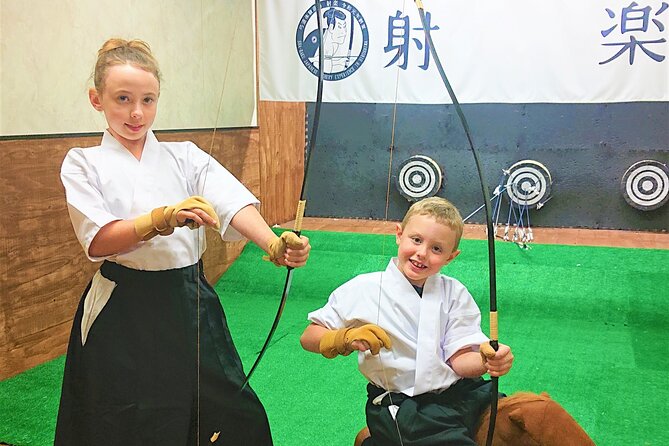
Kyudo is traditional, and that means the guide may be very particular about handling the equipment. In a few cases, people mention the instructor can be strict, especially about not touching authentic gear unless you’re told to. That strictness can feel intense if you want a relaxed vibe—but it’s also part of why the lesson stays respectful and safe.
Good news: you’re not expected to be an expert to participate. The session is built for beginners, and you’ll get instruction and support so you can enjoy the real feel of kyudo even as a first-timer. In standard kyudo practice, beginners may not be allowed to do every part of the draw until they master basics, but this lesson is structured so you can participate fully during your time.
Language-wise, you shouldn’t panic. The guide can communicate in English at least conversationally, and translation support is used when needed—tablet/translation apps are part of the process. That means you can follow the steps even if your Japanese is zero.
What to do on your side:
- Listen for the key sequence cues the instructor repeats.
- Don’t fight the routine with your own habits from other archery styles.
- If something feels unclear, ask once and watch the next demo carefully.
If you’re used to casual, hands-off activities, you’ll notice kyudo has rules. For many people, that turns into the charm: your hour feels like training, not a free-for-all.
How much value you’re getting for $43.11
At $43.11 per person for about an hour, this is one of those experiences that can feel like a “buy once, remember forever” kind of value—if you care about doing something authentic instead of ticking boxes.
Here’s why the math tends to work:
- You get equipment and instructor time, not just admission.
- You wear authentic kyudo clothing (dogi and hakama) and you experience the gear setup used for practice.
- You shoot in structured rounds (8 arrows per round, split into two halves).
- You get photos/videos taken for you, which saves you from asking strangers to capture the moment.
Also, the small group matters. Maximum 4 travelers means you’re not packed in with a crowd waiting their turn. That’s a quality-of-time upgrade, and it usually shows up in how quickly your form improves.
The biggest value question for you is this: do you want a cultural activity that involves skill, focus, and a little discipline? If yes, this is a strong use of an hour. If you want something purely passive, you might find the learning curve a touch intense.
Where to meet and how to fit it into your Hiroshima day
This activity meets at:
Japanese Archery Experience HIROSHIMA CASTLE SHARAKU
Hiroshima Castle Sannomaru Ruins, 21-7-2 Motomachi, Naka Ward, Hiroshima, 730-0011, Japan
It’s described as near public transportation, which helps if you’re touring Hiroshima by tram or bus. The session ends back at the meeting point, so you can plan an easy follow-on step right after.
Timing tip: give yourself some buffer around the meeting area. Some participants note that parking nearby can be stressful, and it’s better to arrive calm than sprinting while you’re trying to get into uniform and start on time.
Because the total session time is about 1 hour, it’s an excellent “midday break” or “before dinner” activity. You get something active and memorable that isn’t just another museum stop.
Who should book (and who might want to skip)
This one is a great match if you want:
- a hands-on cultural experience in Hiroshima
- a structured beginner-friendly lesson
- a small-group activity with real guidance
- a fun way to get photos without posing for hours
You should also know it’s not recommended if you have arm, hand, or shoulder injuries or disabilities. The shooting motion can stress those areas, especially when you’re learning the form from scratch.
If you’re traveling with kids, it can work well. Several experiences describe it as a genuinely family-friendly activity with enough instruction to keep everyone engaged. Just remember: archery can create soreness, so plan for that after.
And if you’re the type who enjoys rules and routine, kyudo will feel satisfying. If you prefer pure casual play, you may find the strictness around equipment handling more noticeable.
Should you book Japanese Archery Experience HIROSHIMA CASTLE SHARAKU?
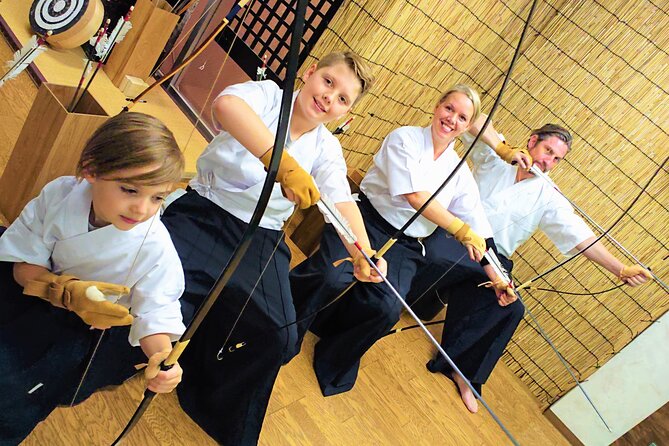
I think you should book if you want an authentic, guided kyudo lesson at Hiroshima Castle—with costume, multiple rounds of shooting, and photos/video included in the experience. The small group size and structured flow make it a strong value for a one-hour slot, and the translation support keeps it accessible even with limited Japanese.
Skip it only if you know your arms/shoulders can’t handle repetitive drawing and shooting, or if you really dislike instruction that’s firm about rules and equipment.
If you want a memorable Hiroshima highlight that’s different from the usual sightseeing loop, this is one of the easiest yes-calls you’ll make all trip.
FAQ
How long is the Japanese Archery Experience at Hiroshima Castle Sharak?
The experience lasts about 1 hour.
How much does it cost?
It costs $43.11 per person.
Where do I meet for the experience?
Meet at Japanese Archery Experience HIROSHIMA CASTLE SHARAKU, Hiroshima Castle Sannomaru Ruins, 21-7-2 Motomachi, Naka Ward, Hiroshima, 730-0011, Japan.
Is this experience suitable for complete beginners?
Yes. The lesson is designed so most beginners can participate and learn through instructions and demonstrations during the session.
How many people are in the group?
The activity has a maximum of 4 travelers.
Can I cancel for a full refund?
Yes, you can cancel for a full refund up to 24 hours before the start time. If you cancel less than 24 hours before, the amount paid will not be refunded.