REVIEW · MADRID
Madrid: Royal Palace Guided Tour with Entry Ticket
Book on GetYourGuide →Operated by Segway Madrid Guided Tours · Bookable on GetYourGuide
Big rooms, small-group guidance makes Madrid’s palace feel personal. This Royal Palace guided tour includes entry and a live guide as you walk in from Plaza de Oriente, with standout rooms like Charles III’s private quarters. I also love the payoff at the end: royal collections such as the Stradivarius violins and the crown and armory areas. The main drawback is simple: at just 2 hours, you’ll cover the highlights, not every corner, so pace won’t be for slow wanders.
You start at the Segway Madrid store on Calle de la Independencia 2, and the route includes a short pass through Plaza de Ópera plus a Plaza de Oriente photo stop before you enter the palace. The group is small—limited to 8—so it’s easier to hear the guide and ask questions, even if your Spanish is still warming up. There’s also free luggage storage, which matters because large bags and suitcases aren’t allowed inside.
The biggest theme in the feedback is how well the guides manage time and energy. I’ve seen names like Jesús and David praised for clear explanations, patient answers, and entertaining delivery without rushing you through the rooms. If your travel style likes a good storyline tied to what you’re actually standing in, this setup fits.
In This Review
- Key highlights worth your attention
- Why this Royal Palace tour feels different than a basic ticket
- Meeting point at Segway Madrid: what to expect before the palace
- Plaza de Ópera and Plaza de Oriente: quick city views that set the stage
- Entering the palace from Plaza de la Armería
- The main staircase, banqueting/leisure rooms, and the art that means something
- Alabarderos Hall and the Hall of Columns: where palace drama becomes architecture
- Charles III’s private quarters and the still-used dining space
- Silver and porcelain rooms, the prince’s courtyard, and the chapel guarded at the entrance
- The grand finale: Stradivarius violins, crown and throne rooms, armory
- How the 2-hour format works (and when you may want more time)
- Price and value: is $38 a good deal here?
- Who should book this guided Royal Palace experience
- Should you book this Royal Palace guided tour?
- FAQ
- Where is the tour meeting point?
- How long is the Royal Palace guided tour?
- What’s included in the ticket price?
- Is food included?
- Are large bags allowed inside the palace?
- How many people are in the group, and what languages are offered?
- Final pick: book or skip?
Key highlights worth your attention
- Skip-the-line entry included, so you spend more time inside the palace than queueing outside.
- Small group size (max 8) keeps the tour from turning into a cattle-herding exercise.
- Charles III’s spaces plus the hall sequence (like the Hall of Columns) give you a logical route through the palace.
- Dining room still used for special events, so you’re not just looking at history behind glass.
- Royal collections finish strong with Stradivarius violins, the crown room, and the armory.
- Free luggage storage helps you travel light without stress at check-in.
Why this Royal Palace tour feels different than a basic ticket
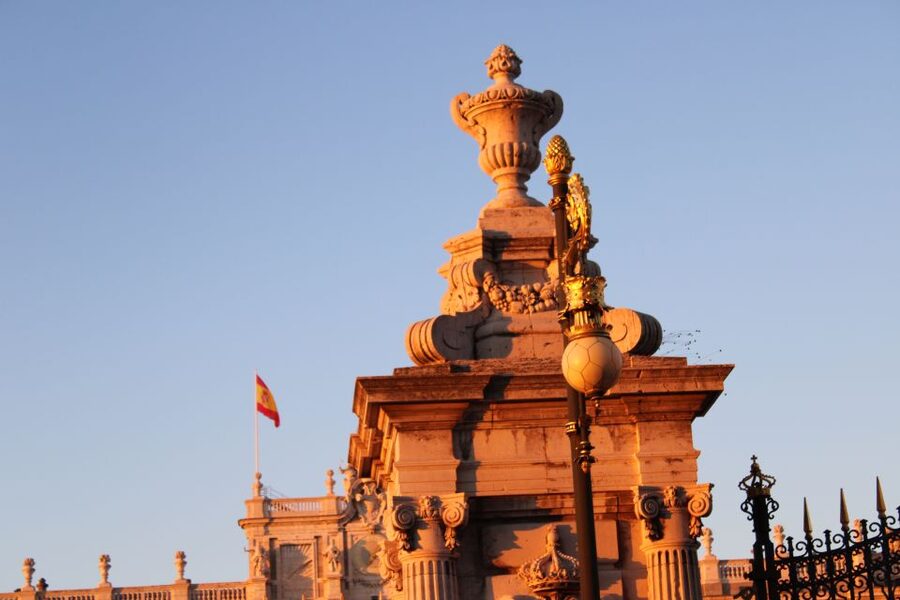
Madrid’s Royal Palace is massive—Europe’s largest royal residence—and that can be a problem when you’re on your own. The building is beautiful, but it’s easy to lose the plot: who lived where, what each room actually meant, and why certain details look the way they do.
This tour solves that with a guided route that follows the palace’s story. You’re not just walking from room to room. You’re moving through key areas designed for ceremony, daily life, entertaining, and court power. The guide’s job is to translate the marble, frescoes, and gilded décor into something you can actually understand in real time.
I also like that the tour is built around recognizable “wow” moments, not only random rooms. You get the main staircase moment, halls with dramatic architecture, Charles III’s private spaces, and then you finish with the royal collections. It’s a well-shaped experience: grand entrance → personal quarters → court life → museum-style treasures.
You can also read our reviews of more tours and experiences in Madrid.


Meeting point at Segway Madrid: what to expect before the palace

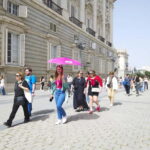
You meet at Segway Madrid at Calle de la Independencia 2. Even if you don’t plan to ride a Segway, this is where check-in happens and where the tour group regroups.
From a practical point of view, this matters because you’re not wandering around Plaza de Oriente trying to guess which entrance to use. You get a lead-up route that starts in the city center and lines you up for the palace approach through the surrounding viewpoints.
One more practical plus: the tour includes a luggage storage service. Large suitcases and big backpacks aren’t allowed, so this is the easiest way to avoid dragging your life-sized bag through narrow streets and then being turned away at the palace entrance.
Plaza de Ópera and Plaza de Oriente: quick city views that set the stage

After check-in, the route includes a short pass through Plaza de Ópera (about 10 minutes). This isn’t the main event. It’s more of a timing and orientation step that gets you moving toward the palace area.
Then you hit Plaza de Oriente for a photo stop and sightseeing (around 15 minutes). This is a smart pause because it gives you context before you step inside. You appreciate the palace’s place in Madrid’s skyline and you get those classic sightlines before the interior turns into a different world.
The tour also focuses on views from the approach—like the sight of Almudena Cathedral, plus glimpses toward Campo del Moro Gardens and Casa de Campo. Even if you only get a short window, these looks help the palace feel grounded in the city, not dropped into it.
Entering the palace from Plaza de la Armería
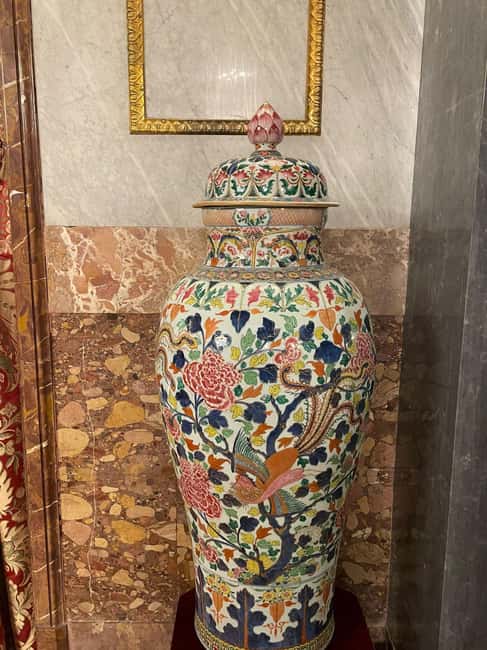
The tour route goes from the exterior approach into the palace through Plaza de la Armería. That transition is more than logistics—it changes how you experience the building. Outside, you see a monumental structure. Inside, you start encountering the palace as a machine for spectacle: staircases for arrival, halls for status, and rooms that were designed for performance.
Once inside, the guide brings order to the building by moving you through a sequence of key spaces. You begin with major interior areas such as the entrance hall and the main staircase. This is where the palace starts to feel like a stage set. The scale hits first, then the details make sense once someone explains why these rooms were used.
If you like understanding the purpose behind design choices—why a hall is laid out a certain way, or why certain spaces were reserved for specific people—this part is where the tour starts paying off.
The main staircase, banqueting/leisure rooms, and the art that means something
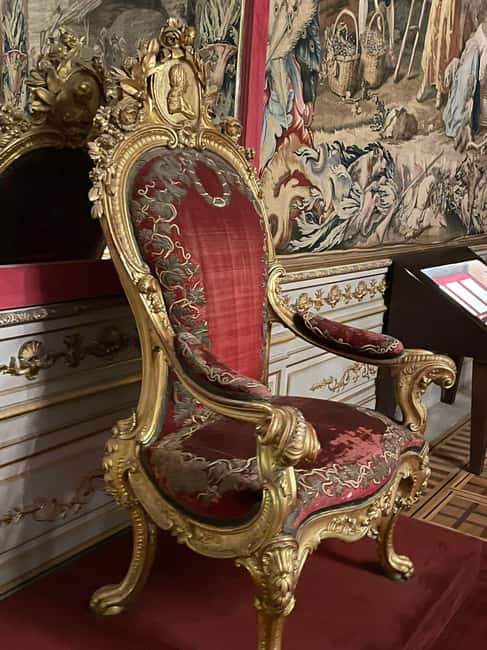
One of the most effective parts of this tour is how it treats the early rooms as a story arc rather than a checklist. You pass through spaces that were used in earlier times as leisure and banqueting areas. The guide then points out paintings, tapestries, and dramatic vaulted ceilings so you can look beyond the first glance.
This is a great section to “zoom in” mentally. Without context, you’d probably admire everything at once and remember almost nothing. With a guide’s pacing, you get to notice the specific features they flag—then you’re able to connect them to court life and the monarchy’s image-making.
Also, it’s not just art talk. The tour also moves you physically through the palace’s flow—so you understand how guests would move through the building.




Alabarderos Hall and the Hall of Columns: where palace drama becomes architecture

As the tour continues, you reach major rooms with names that sound like they belong on a map of power. You visit Alabarderos Hall and the Hall of Columns as part of the main route through the palace.
These halls are worth your attention because they’re basically architecture translated into authority. The columns and open spatial design are meant to impress at a distance and reward you when you come closer. Even if you’re not a design nerd, you’ll feel the difference: these are rooms built for ceremonies, public-facing moments, and formal receptions.
The guide’s explanations help you read the space. You stop seeing it as decoration and start seeing it as function—where people stood, how the room was meant to guide attention, and why it fit royal theater.
Charles III’s private quarters and the still-used dining space
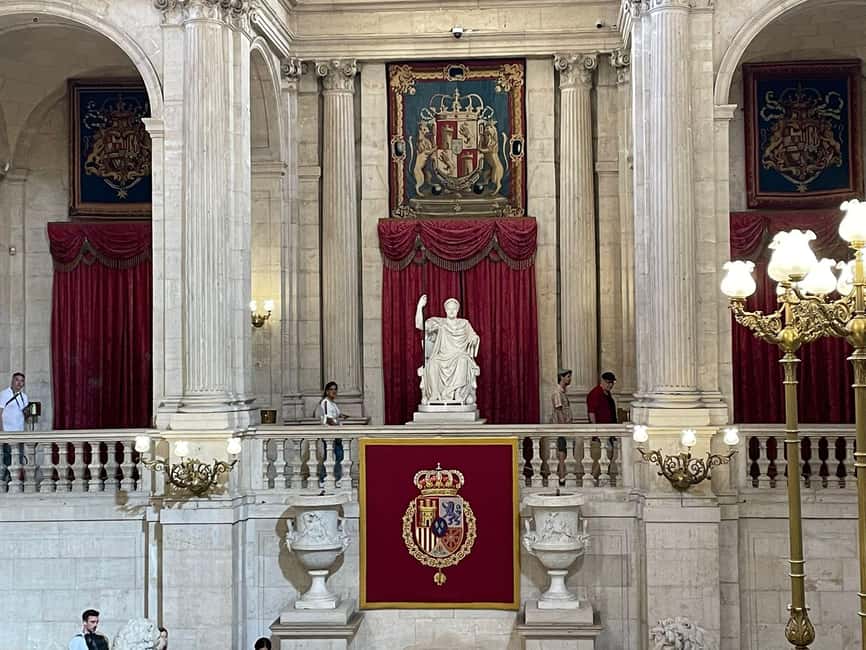
Now you shift from the public-to-ceremonial side of the palace into the more personal areas. The tour includes stops in Charles III’s private rooms, including pauses before his great dressing room, plus Gasparini’s room—described with a chinoiserie style and rococo influences.
That specific room detail matters because it shows you the palace isn’t only one aesthetic. You’re watching royal taste evolve, and you’re seeing how French and Italian artistic influence fits into what the Spanish monarchy wanted to project.
Then you reach Charles III’s main room and the triple room that forms the royal dining space. The big practical detail here is that this dining area is still in use to hold special events. That turns your visit from purely museum-style viewing into something more “alive.” You can better imagine how the space operates today, not only when it was built.
If you enjoy spaces where daily life meets performance—meals, hosting, rituals—this portion is one of the tour’s best balances of beauty and meaning.
Silver and porcelain rooms, the prince’s courtyard, and the chapel guarded at the entrance
After the Charles III sequence, the tour moves through silver and porcelain rooms featuring royal collections of crockery and silverware. This is exactly the kind of room you’d miss on a rushed self-guided visit, because it’s easy to treat it as just more objects. With a guide, it becomes part of the palace’s identity: a visible way of showing wealth, craft, and control.
Then you reach the prince’s courtyard. Here, the tour highlights a precious reliquary and a grandiose chapel positioned at its entrance, described as guarded by the Catholic kings at the beginning. That phrasing matters. It implies this isn’t only decorative religion—it’s power reinforced with symbolism right where people enter and circulate.
In short: this section makes the palace feel like it had rules. Not just etiquette, but worldview. It also gives you a break from hall walls and helps you reset your attention before the tour turns into the final collection rooms.
The grand finale: Stradivarius violins, crown and throne rooms, armory
The last chambers shift the feeling toward museum treasure. You see the palace’s royal collections finishing in some of the most eye-catching items.
Highlights include:
- Stradivarius violins (rare, high-craft objects that scream prestige)
- The crown room, including a scepter and the table of sphinxes
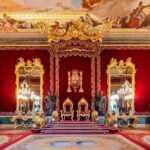
- The throne room, known for 12 mirrors and armchairs, with the detail that Velazquez’ lions guard it
- The great royal armory, where weapons and royal gear add another kind of power image
This finale is valuable because it ends your tour with objects that you can’t easily reproduce in your head later. Even if you forget some hall names, the Stradivarius instruments and the throne-room mirror effect tend to stick.
And there’s a pacing reason, too. Ending with spectacle keeps your attention high through the end of the 2-hour window instead of fizzling out in quiet rooms.
How the 2-hour format works (and when you may want more time)
A palace like this tempts you to spend a whole day. But this tour is built for focus, not for marathon wandering.
Two hours means you’ll see the major rooms that shape the palace’s story, but you won’t have time to stop for ten-minute readings in every corner. That can be a drawback if you’re the type who likes to take your time in each room and sketch, study, or sit with art.
Still, for many visitors, this timing is the sweet spot. You get a complete guided arc: major interiors, Charles III’s spaces, and the collection rooms that people come to see. Then you can decide if you want to return later with a more leisurely self-guided approach based on what stuck with you during the tour.
If you’re trying to fit Madrid highlights into a packed itinerary, this format is efficient without feeling like a drive-by.
Price and value: is $38 a good deal here?
At $38 per person, what you’re really paying for is not just entry. You’re paying for:
- a guided storyline that helps you interpret what you’re looking at
- entry ticket to the Royal Palace
- skip the ticket line
- free luggage storage
- a small group cap (8 participants), which is rare for big-name sights
If you’ve ever tried to do a huge museum in “free time mode,” you know how often your visit turns into lots of walking and very little memory. A guide changes that ratio. You spend a bit more, but you come away with a stronger sense of place and purpose.
Could you do it for less with self-guided entry? Sure. But you’d likely spend that savings on confusion—asking what you’re looking at, or missing key rooms that a guide routes you through.
For $38, this feels like strong value if you want the palace experience to make sense quickly and if you’re okay with a tight, highlights-first timeline.
Who should book this guided Royal Palace experience
This tour is a strong match if you:
- want high-impact rooms without spending a full day
- like explanations that connect art, monarchy, and how the palace was used
- appreciate a small group where questions are possible
- are traveling with kids or family who may get bored with slow museum pacing
It may be less ideal if you:
- want to linger in every room for long stretches
- prefer a silent, self-directed visit where you read everything at your own speed
Should you book this Royal Palace guided tour?
Yes, I think you should book it if you want a fast, satisfying way to experience the Royal Palace with the room-by-room meaning attached. The combination of included skip-line entry, a live guide, and a focused route through Charles III’s key spaces plus the final collection rooms makes the $38 feel practical.
If you’re planning a one-or-two-sight Madrid day, this is also a smart way to avoid wasting time. You’ll get the sights that people actually talk about afterward, but with context that makes them more than just photos.
FAQ
Where is the tour meeting point?
Check in for your tour at the Segway Madrid store at Calle de la Independencia 2.
How long is the Royal Palace guided tour?
The duration is 2 hours. Starting times vary, so you’ll need to check availability.
What’s included in the ticket price?
It includes the Royal Palace entry ticket, a tour guide, and luggage storage service.
Is food included?
No. Food and drinks are not included.
Are large bags allowed inside the palace?
No. Large suitcases and backpacks are not allowed, but the tour includes a free luggage storage service.
How many people are in the group, and what languages are offered?
The group is limited to 8 participants, and the live tour guide is available in English and Spanish.
Final pick: book or skip?
Book if you want the Royal Palace to make sense quickly: major rooms, Charles III’s highlights, and the collection finale, all in a small-group format. Skip if you’re planning a long, quiet self-guided palace day where you’ll spend extra time reading and lingering in every space.