REVIEW · MILAN
Milan: Sforza Castle and Michelangelo’s Pietà Rondanini Tour
Book on GetYourGuide →Operated by Hidden Experiences · Bookable on GetYourGuide
Michelangelo’s last unfinished work hits hard. In this Sforza Castle tour, you get the emotional punch of the Pietà Rondanini plus the political muscle behind Renaissance Milan.
I especially like the way the art lesson connects directly to the people in charge—the Visconti and Sforza world that turned the castle into a center of power. I also like the practical pacing for such a short visit: you cover the key spaces without feeling like you’re wandering lost.
A possible drawback: because it’s only 1.5 hours, you’re focused on highlights. If you’re hoping for a long, slow museum stroll, you might wish you had more time inside.
In This Review
- Key Things I’d Prioritize
- Why Sforza Castle and Pietà Rondanini Belong in the Same Slot
- Meeting Point and Getting Oriented Fast at Piazza Castello
- Michelangelo’s Pietà Rondanini: Why the Unfinished Marble Feels So Modern
- Inside the Castle: Courtyards, Renaissance Architecture, and the Shape of Power
- Visconti and Sforza Stories: Ludovico il Moro, Women, and Court Intrigue
- Leonardo da Vinci’s Nearly Two Decades Inside the Walls
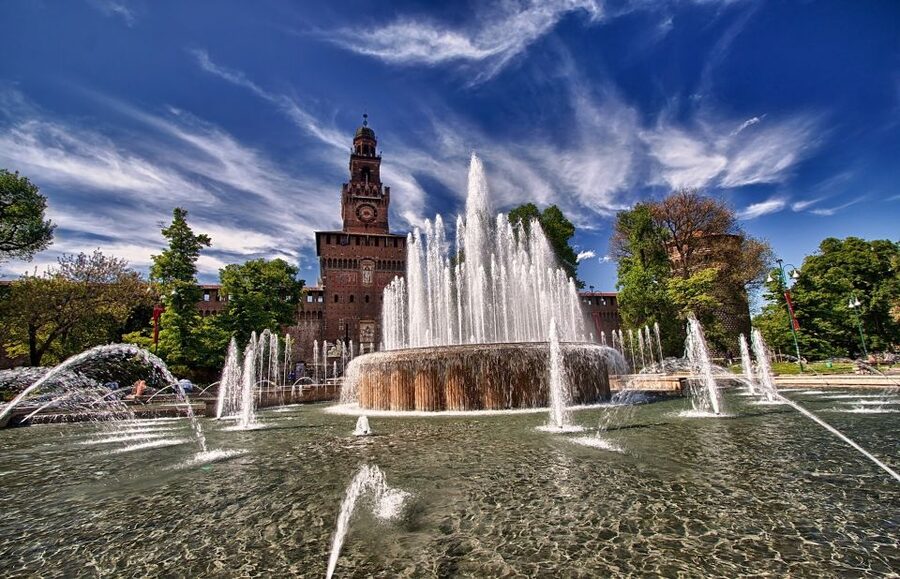
- Filarete Tower and Castle Survival: How Milan Kept This Place Alive
- Tour Pace, Headphones, and What “Small Group” Really Feels Like
- Price and Value: What You’re Really Paying For
- Who This Tour Fits Best
- Should You Book This Sforza Castle and Pietà Rondanini Tour?
- FAQ
- Where is the meeting point?
- How long is the tour?
- What’s included in the ticket price?
- Is anything extra not included?
- What languages are available?
- Is the tour wheelchair accessible?
- Is there a cancellation option?
- Can I reserve without paying right away?
Key Things I’d Prioritize
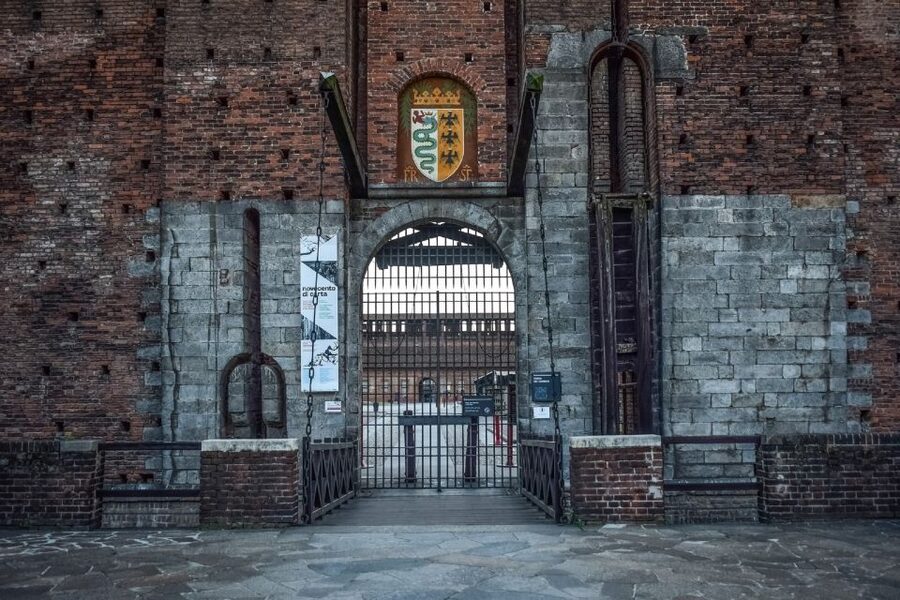
- Start outside at Piazza Castello (under the Filarete clock tower): you’ll meet your guide in a clear spot before entering the castle.
- See Michelangelo’s Pietà Rondanini as an unfinished message: the guide explains why the raw, stretched forms matter.
- Tour the ducal courtyards and Renaissance architecture: it’s where the castle stops feeling like a fortress and starts feeling like a palace.
- Leonardo da Vinci’s castle years come into focus: not just the famous works—his engineering and court role too.
- The Biscione and ducal court intrigues add color: symbols, power, and the human stories that shaped Milan.
Why Sforza Castle and Pietà Rondanini Belong in the Same Slot
Milan can feel like two cities. There’s the modern skyline and design energy. Then there’s the older Milan—political, dramatic, and built on ambition. This tour plays that full movie in miniature by pairing one of Michelangelo’s most haunting pieces with the very walls that housed the people who funded and inspired Renaissance culture.
The trick is that you don’t just look at the sculpture and move on. You hear what the sculpture was like at the end of Michelangelo’s life—unfinished, urgent, and strange in a way that feels honest. Then the story shifts to the ducal court life inside the castle, where art and power weren’t separate topics. They were the same conversation, just spoken in marble and politics.
And for the timing: the castle is close to the Duomo, so this is a smart “art hit” on a day when you still want time to roam independently.
You can also read our reviews of more tours and experiences in Milan.

Meeting Point and Getting Oriented Fast at Piazza Castello
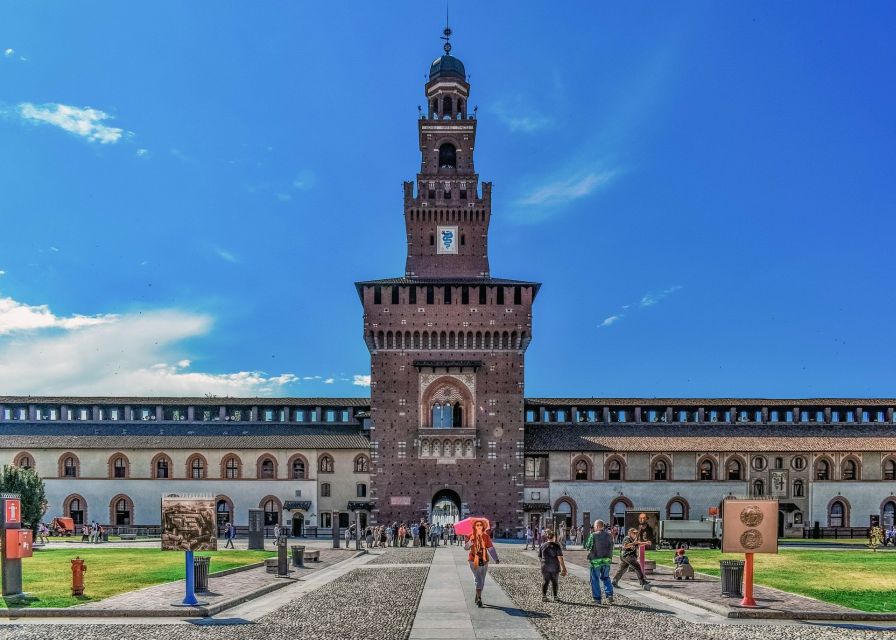
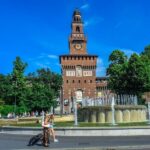
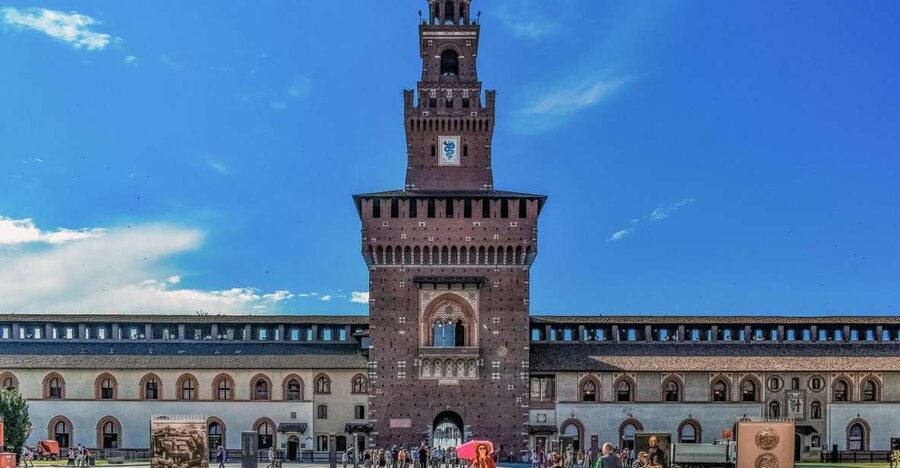
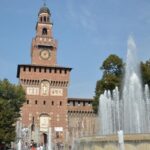
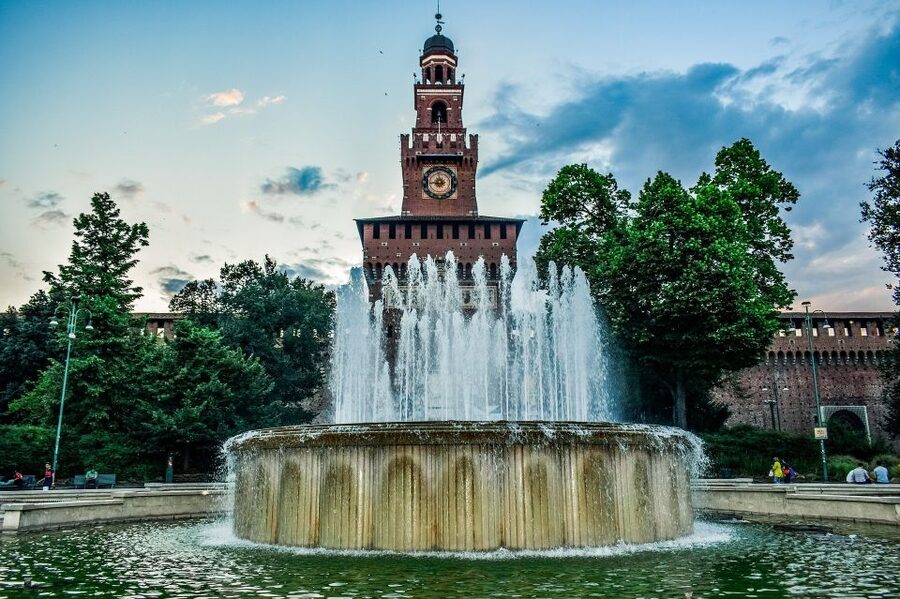
You meet your guide in Piazza Castello, under the Filarete clock tower, in front of Sforza Castle. Important detail: you do not start inside the courtyards.
That matters because once you’re inside, the castle turns into a maze of spaces—fortress zones, museum rooms, and courtyards that each have their own mood. Starting outside with a clear landmark helps you get your bearings quickly, especially if it’s busy or you’re arriving from the Duomo area.
Practical tips that help:
- Wear shoes you can move in. Even at a short duration, the castle layout has walking.
- If you’re sensitive to heat, aim for earlier times. Some guides are careful about sun exposure and pace, and you’ll feel it in how the tour moves.
Michelangelo’s Pietà Rondanini: Why the Unfinished Marble Feels So Modern
This is the emotional center of the tour. The Pietà Rondanini is housed in a museum space within the castle, and it’s Michelangelo’s final, unfinished work. He worked on this marble block until just a few days before his death at age 89.
Here’s what makes it more than a famous name:
- The figures are elongated.
- The surface shows the raw, unfinished quality often described as non-finito.
- Instead of anatomical perfection, you get strain, motion, and spiritual urgency.
Your guide walks you through how Michelangelo’s approach changes late in life. The earlier Michelangelo is tied to finished ideal beauty. The later Michelangelo—this one—feels like he’s chasing something emotional that can’t be polished into submission. It’s the kind of sculpture where you start by thinking you’re studying it… then you realize you’re being pulled into it.
If you care about why artists change their style, this section is the payoff. If you simply want the most famous “must-see” work, it’s still worth it—because most people miss how powerful the unfinished part can be.
Inside the Castle: Courtyards, Renaissance Architecture, and the Shape of Power
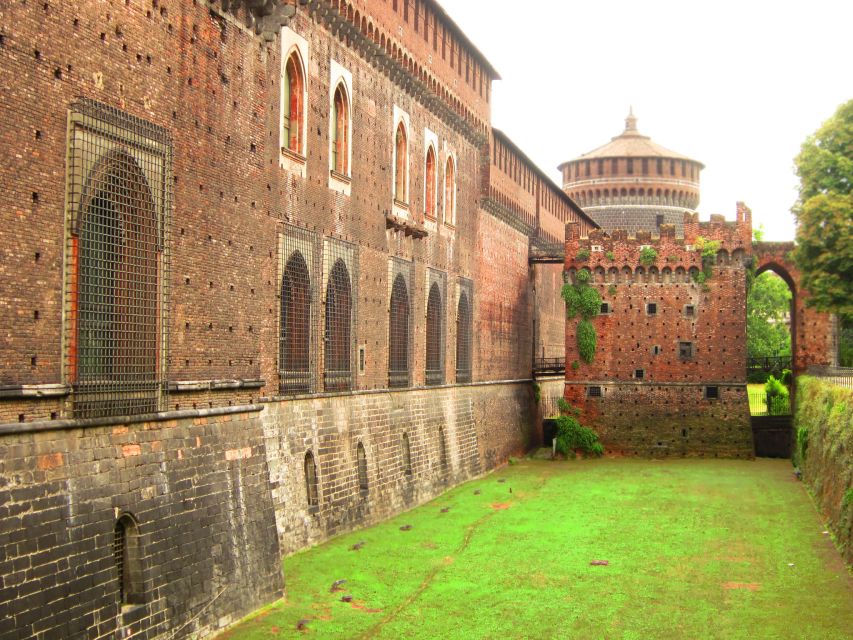
After the Pietà, the tour moves into the spaces that explain how the castle functioned.
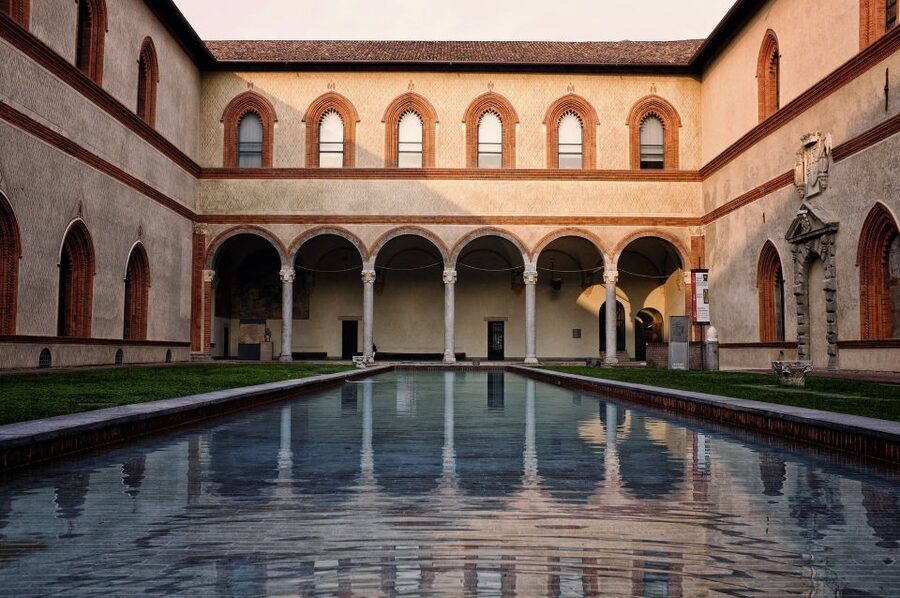
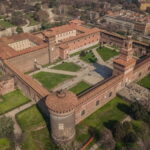
You’ll spend time in the Ducal Courtyards, including areas like the Corte Ducale and the Cortile della Rocchetta. This is where the building stops being only defensive and starts reading like a stage set for Renaissance court life.
What I like about this part is that the guide doesn’t treat architecture like background. You hear the logic of the fortress and then how it transformed—how medieval defensive structures became settings for ducal prestige. It’s also a relief that the tour stays oriented toward the big story: military power, political ambition, and the beauty Renaissance patrons demanded.
One small consideration: a short, guided route means you may not linger as long in every corner as you would on your own. If you love architecture details, bring curiosity and be ready to notice what your guide points out.
Visconti and Sforza Stories: Ludovico il Moro, Women, and Court Intrigue
Sforza Castle is the former home of the Visconti and Sforza dynasties. The tour connects these families to the castle’s identity, and it does so with human stories, not just dates.
A key thread is Ludovico il Moro, who lived and worked in the castle for nearly twenty years. That time matters because it helps you understand why the ducal court felt so “in motion.” This wasn’t only a residence—it was a center of decisions, alliances, and influence.
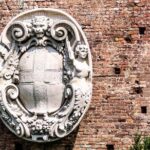
You’ll also hear about the meaning of the Biscione, the iconic serpent coat of arms tied to the Visconti identity. Symbols can feel like decorative trivia until a guide explains what they were used to project: legitimacy, family power, and the branding of rule.
The tour also brings in the role of noblewomen and ambitious men—people who shaped Milan’s culture behind the scenes. That’s a big reason this feels more memorable than a typical castle walk. You leave with names and motives, not just stone.


Leonardo da Vinci’s Nearly Two Decades Inside the Walls
Leonardo is often framed around single masterpieces. This tour treats him differently, and that’s a win.
Yes, you’ll know him from the big stories. But what really lands here is that the castle was tied to his long court role. Leonardo lived and worked in this setting for nearly twenty years. The guide highlights that he acted as a court engineer and architect—work that doesn’t always get the cinematic spotlight of a painting.
As you move through the ducal spaces, your guide points out the relationship between Leonardo’s genius and the Sforza family. It’s not just admiration. It’s also a sense of complexity: how patronage shaped what could be attempted, and how court politics influenced creative work.
And here’s the practical value for you: once you understand Leonardo as both an artist and a court professional, Milan starts making more sense. You stop thinking of art and engineering as separate worlds.
Filarete Tower and Castle Survival: How Milan Kept This Place Alive
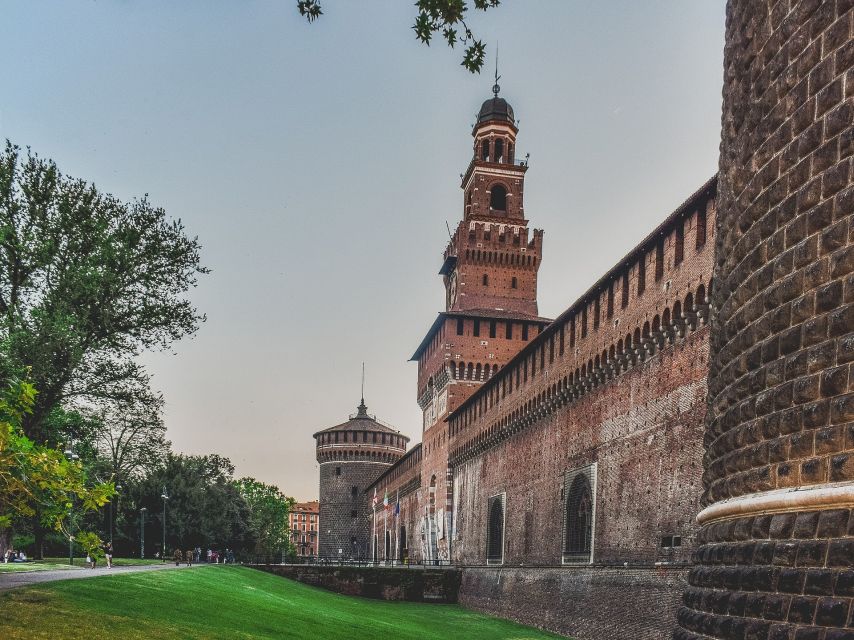
You’ll be under the shadow of the Filarete Tower as part of the meeting orientation, and it comes back as a storytelling point.
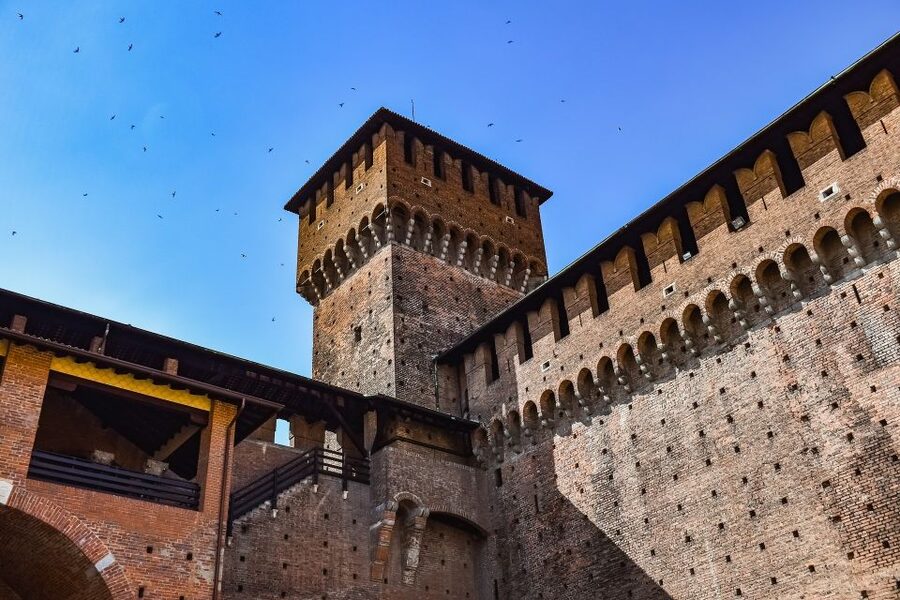
The tour uses the tower and its surrounding context to explain why the castle still exists in recognizable form—how it survived centuries of changing control and shifting needs. That’s a quiet theme of the experience: the castle isn’t just old. It adapted. It was reinterpreted by whoever held power, until it became a symbol of Milanese identity rather than only a military structure.
If you’re the type who likes to understand why a place feels the way it does, this is the section where your mental map locks in. You start seeing the building as a timeline you can walk through.
Tour Pace, Headphones, and What “Small Group” Really Feels Like
This is a small group tour with a duration of 1.5 hours, and that length shapes the whole experience. It’s tight, focused, and highlight-driven. The payoff is that you get guided context without burning half a day.
It also includes certified guiding and headphones from 11 participants. In an ideal world, that means clearer audio during busier indoor sections. One thing to watch for: a rare audio snag can happen. In a few cases, people noted that ear pieces worked intermittently. It’s not a reason to avoid the tour, but if you’re sensitive to hearing issues, I’d stay attentive in indoor museum rooms and ask your guide to repeat if needed.
Group size feels important here. Many guides are praised for answering questions and keeping a lively pace, and the small scale helps that happen. Some guides are even singled out for being extra patient and for connecting dots so the art and history feel like one story.
In short: you’ll likely finish this tour with clear understanding, not just facts.
Price and Value: What You’re Really Paying For
At about $47 per person for a 1.5-hour guided experience, the value comes from three things you don’t have to plan separately:
- Entrance fees to the castle and museum spaces
- A certified guide doing real explanation, not just pointing
- The structure that links Michelangelo’s Pietà Rondanini to the castle’s ducal story
If you attempted this on your own, you could walk the courtyards, but the key advantage here is the “why.” The guide turns the sculpture’s unfinished texture into something you understand, and then ties that creativity to the people and politics inside the walls.
So the price makes sense if you want maximum meaning per hour. If you prefer wandering at your own speed for a long museum day, you might pick a self-guided approach instead. But for a focused stop near the Duomo, this is strong value.
Who This Tour Fits Best
This tour is ideal if:
- You want Michelangelo explained in a way that doesn’t flatten the work into a single “masterpiece” label
- You like Renaissance stories where art, power, and architecture connect
- You’re short on time but want more than a quick look
You might enjoy it less if you’re hoping for:
- A long museum deep-stroll
- Unlimited time in multiple collections
- A tour that feels like it can stretch to your personal pace
Should You Book This Sforza Castle and Pietà Rondanini Tour?
Yes—if you want a concentrated, story-led experience that pairs one of Michelangelo’s most moving works with the political and architectural framework that made Renaissance Milan possible.
Book it if you like your art history practical: you’ll walk out understanding what the unfinished Pietà is saying and why the Visconti/Sforza court mattered for creativity. The structure, included museum access, and small-group approach make it a smart use of a limited afternoon.
Skip it (or adjust your expectations) if you’d rather spend hours drifting through museum rooms with no guide. This is a sharp highlight tour, not a slow, comprehensive museum day.
FAQ
Where is the meeting point?
Meet your guide in Piazza Castello, under the Filarete clock tower, in front of Sforza Castle (not inside the courtyards).
How long is the tour?
The tour lasts about 1.5 hours.
What’s included in the ticket price?
Entrance fees to the castle and museum, a certified tour guide, headphones (from 11 participants), and a small group guided tour.
Is anything extra not included?
Food and drink are not included, and hotel pickup/drop-off is not included (it’s offered for an extra charge).
What languages are available?
The live guide is available in Italian, English, German, French, and Spanish.
Is the tour wheelchair accessible?
Yes, it’s listed as wheelchair accessible.
Is there a cancellation option?
Yes. Free cancellation is available up to 24 hours in advance for a full refund.
Can I reserve without paying right away?
Yes. The option to reserve now & pay later is available.