REVIEW · MILAN
Small-Group Barolo Wine Tasting, Alba & UNESCO Piedmont Hills
Book on Viator →Operated by Abroads Tours · Bookable on Viator
Barolo in your day bag: that’s the plan here. This long, relaxing 10½-hour outing takes you into Piedmont’s Langhe-Roero hills for Barolo cellar time and a real UNESCO castle setting, with medieval Alba in between. I like how the day mixes wine rules and vineyard place names with actual strolling time in Alba. One thing to consider: it’s a full day with lots packed in, and lunch isn’t included—so you’ll want to go in with a plan.
What makes it work is the small group feel. The tour runs in an air-conditioned private van (max 19) and is guided in English, with guides like Monica, Oleg, Chiara, Amato, and others often highlighted for keeping the pacing friendly and the story clear. You’ll get a guided tasting of at least six Langhe DOC/DOCG reds (sometimes seven), plus a winery visit that includes cellar access.
In This Review
- Key highlights worth your attention
- Why this Piedmont day trip feels more real than a rushed wine tour
- Milan to Alba: rolling out of the city at 9:00 and getting the winemaking rhythm
- Alba stop: medieval towers, San Lorenzo, and time to eat like a local
- Alba food and truffle-season reality (and how to handle crowds)
- The family winery in Barolo: where strict DOCG rules meet real vineyard detail
- What the tasting really teaches: 6 to 7 DOC/DOCG reds with Barolo included
- Grinzane Cavour Castle: UNESCO views, an old wine shop, and Camillo Benso’s Barolo role
- Tuesdays: the La Morra viewpoint replacement
- How the pacing holds up in a 10½-hour day
- Price and value: what you’re paying for at about $216.46
- Who should book this (and who might want a different style of wine trip)
- Should you book this Barolo day trip or not?
- FAQ
- How long is the tour?
- What time does the tour start?
- Is lunch included?
- What wines do you taste?
- Do you visit a winery with cellar access?
- What happens on Tuesdays?
- What if the weather is bad?
Key highlights worth your attention
- Small-group size (max 19) keeps the day from feeling like a stampede.
- Family-run winery + cellar access gives you more than a quick sip and snap photos.
- Barolo rules explained in plain terms: Nebbiolo only, plus strict DOCG structure.
- UNESCO Grinzane Cavour castle views over the Langhe hills, with a Tuesday fallback to La Morra.
- Alba time for real Piedmont shopping and lunch choices (especially during truffle season).
Why this Piedmont day trip feels more real than a rushed wine tour
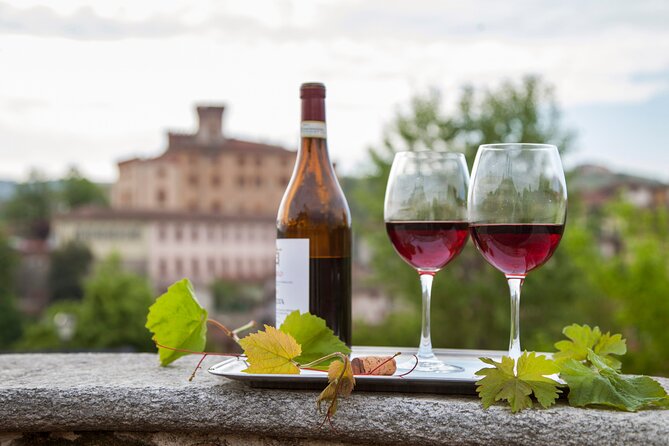
Piedmont wine culture can feel complicated fast, mainly because “terroir” gets thrown around like a magic word. I like how this tour turns that idea into something you can taste: vineyard location, hill character, and aging rules that shape what’s in your glass.
You also get variety in one day. You’re not stuck only with wineries and tasting rooms. You’ll walk through Alba’s medieval core and see the UNESCO-listed Grinzane Cavour site, which is tied to the story of Barolo becoming internationally respected.
And because the group is capped at 19, you’re more likely to have breathing room—at tastings, at viewpoints, and during the Alba walk—rather than rushing to “the next thing” every five minutes.
You can also read our reviews of more tours and experiences in Milan.
Milan to Alba: rolling out of the city at 9:00 and getting the winemaking rhythm
The tour starts at 9:00 am and includes travel time, so plan on a long day even if you don’t feel like you’re “doing” constantly. The van is air-conditioned, which matters once you’re out in the countryside in warmer months.
If you’re thinking about the logistics from Milan: this runs near public transportation, and you’ll have a mobile ticket for the day. The endpoint is back at the meeting point, which helps if you want an easy return without hunting down extra transit plans.
The trip is designed so the early part of the day isn’t just driving. You arrive ready to walk, shop a bit, and then settle into wine country in the afternoon.
Alba stop: medieval towers, San Lorenzo, and time to eat like a local
Alba is the kind of town where you can feel why people come back, even when you only have a couple hours. You’ll stroll through the medieval feel of the center and visit the Cathedral of San Lorenzo, the main church that anchors the town’s historic identity.
Two hours in Alba is enough to do the basics without turning it into a checklist day. You can wander past the towers, take in the old streets, and still have time to pause.
Alba food and truffle-season reality (and how to handle crowds)
This is where timing matters. Alba is closely linked to the White Truffle Fair, which takes place on weekends in October and November. If your date lands during those weekends, the town can get busy, and that’s normal.
I love that the day gives you options instead of forcing one kind of meal. You’ll get lunch recommendations (lunch itself isn’t included), and the area is known for Piedmont specialties like fresh egg pasta and meat dishes such as veal with tuna sauce.
Also, don’t skip the small-shop browsing. Alba is famous for what you can bring home, including hazelnut cream in local shops. It’s the kind of simple souvenir that actually tastes like where you were.
If crowds are intense, have this mindset: your guide can help you choose a practical lunch plan so you’re not stuck searching while everyone else is doing the same.
The family winery in Barolo: where strict DOCG rules meet real vineyard detail
After Alba, you head into Barolo country and meet a family-run winery set in a panoramic vineyard setting. This part of the day isn’t about speed. You get to enter the cellar and learn directly about how Barolo is made.
Barolo is one of Italy’s most regulated wines, and the explanation matters. You’ll hear how it’s made strictly from Nebbiolo grapes, and you’ll learn about rules for vineyard location, aging requirements, and classification. That’s important because Barolo isn’t just one “style.” It’s a system built to control the quality and shape the final wine.
The guide will also connect the dots between the hills and the wine in your glass. In this region, each hill and vineyard has its own identity, and that affects structure, aroma, and aging potential. It sounds theoretical until you taste the wines side by side.
What the tasting really teaches: 6 to 7 DOC/DOCG reds with Barolo included
The guided tasting focuses on quality, terroir expression, and local tradition. You’ll taste at least six Langhe DOC & DOCG red wines, including Barolo, and sometimes you may taste seven depending on the flight that day.
If you don’t know Nebbiolo yet, don’t worry. The format is set up for learning through contrast. By the end, you should be able to connect which wine feels more structured, which one shows more aromatic lift, and how aging style can change what you perceive.
One practical note: this is a tasting-heavy segment, so drink water, pace yourself, and think of the tasting like a guided comparison class. You’ll enjoy it more if you’re taking it slowly instead of trying to “finish” every sip quickly.
Grinzane Cavour Castle: UNESCO views, an old wine shop, and Camillo Benso’s Barolo role
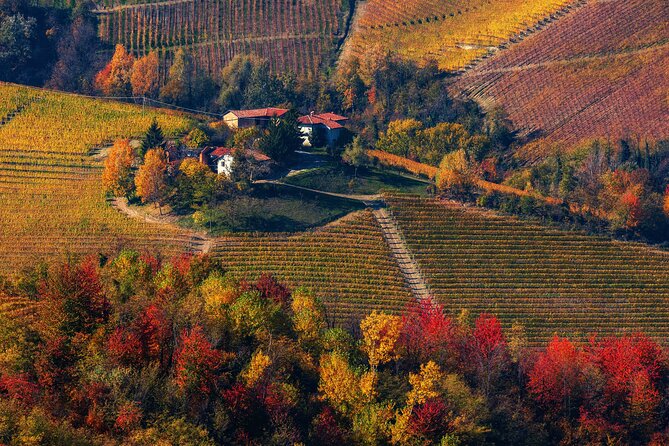
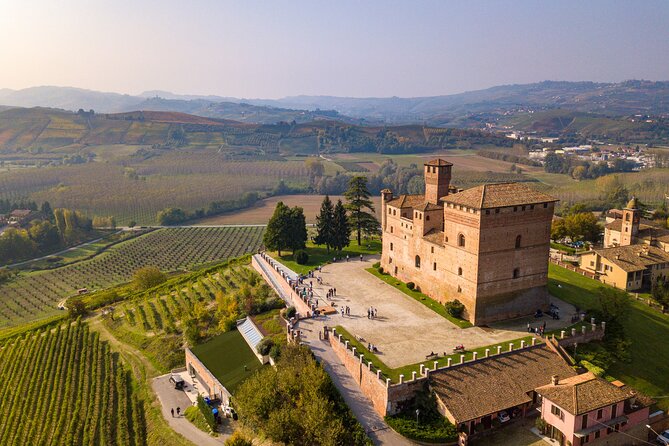
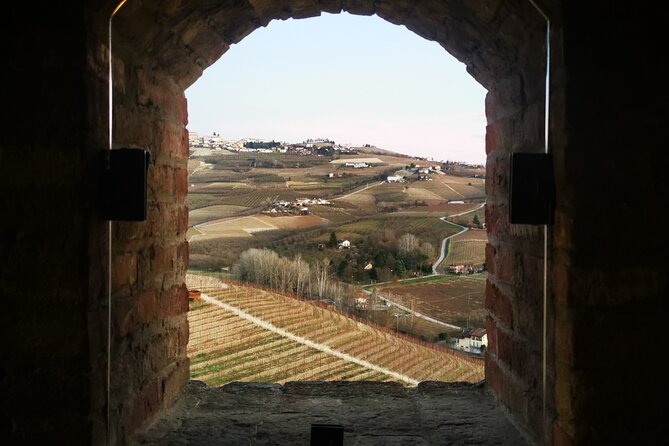
Next comes the Castello di Grinzane Cavour, a medieval castle listed as a UNESCO World Heritage Site. The views over the Langhe hills are a big part of why this stop lands well in one day. Even if you only have an hour, you’ll get the “place” feeling—the hills and vineyards laid out around you.
Inside, you visit a historic wine shop that’s considered the oldest in the Piedmont region. This is more than a trivia stop. It’s tied to Camillo Benso, Count of Cavour, a key figure connected to Barolo’s rise and modernization.
Cavour helped shape how Barolo was made and promoted, supporting modern winemaking methods and helping transform Barolo from a local product into a wine with international reach. That context makes the castle stop feel connected to the tasting you did earlier, rather than feeling like a separate sightseeing detour.
Tuesdays: the La Morra viewpoint replacement
There’s one schedule twist worth knowing. On Tuesdays, the castle is closed, so the visit is replaced with a stop at a panoramic viewpoint in La Morra. La Morra is known for some of the best vineyard views in the Barolo area, so you’ll still get the scenic payoff—just without the castle interior.
How the pacing holds up in a 10½-hour day
This is not a sit-and-relax, slow travel day. It’s a structured outing, and you’ll move through three main settings: Alba, the Barolo winery, and Grinzane Cavour (or La Morra on Tuesdays).
That said, the pacing tends to work because the stops have sensible time blocks:
- Alba gives you walk-and-linger time.
- The winery delivers cellar access and a guided tasting without rushing.
- The castle/viewpoint is short enough to fit the day while still giving you the big views.
The small group format helps you feel less trapped. People often appreciate that the van doesn’t feel like a bus full of strangers, and you’re not constantly squeezed during transitions.
Price and value: what you’re paying for at about $216.46
At $216.46 per person, this isn’t the cheapest way to do a Barolo day trip from Milan. But it’s also not “just a tasting.” Here’s what your money covers:
- A guided day with a licensed English-speaking tour guide
- Air-conditioned private van transport
- Entry to the experience elements like the winery visit with cellar access
- A guided tasting of six (or sometimes seven) DOC/DOCG reds including Barolo
- A walking tour and free time in Alba
- A UNESCO castle stop (or La Morra viewpoint on Tuesdays)
Lunch isn’t included, so that’s your main extra cost, but the tour provides local lunch recommendations so you’re not guessing under pressure.
If you compare this to doing it on your own, the value is in the planning. You avoid the headache of timing wineries, getting to the right hill area, and coordinating a tasting lineup—while still getting time in town and enough context to understand what you’re drinking.
Who should book this (and who might want a different style of wine trip)
This tour fits best if you want a clear introduction to Piedmont wine culture without turning the day into homework. You’ll like it if you care about Barolo beyond the label—especially if you enjoy learning how regulation, vineyard identity, and aging connect to taste.
It also fits couples and solo travelers who prefer small-group energy over large-bus crowding. With max 19 people, you still get conversation and questions without waiting for your turn every five minutes.
I’d consider another option if you’re the type who wants multiple wineries in one day. This experience centers on one family-run winery for tastings and cellar learning, plus the castle and Alba. It’s designed for depth in a few places, not a “hit five wineries” schedule.
A smaller note for comfort of expectations: while the day focuses on wine and regional stories, some guests reported that the guide occasionally added modern political context while explaining historical movements. That doesn’t happen every second of the day, but it’s worth knowing if you prefer strictly neutral travel commentary.
Should you book this Barolo day trip or not?
Yes, I’d book it if you want a well-paced introduction to the Langhe and Barolo with real context and time to enjoy Alba instead of rushing through it. The combination of winery cellar access, a guided DOC/DOCG tasting that includes Barolo, and the UNESCO Grinzane Cavour connection makes the day feel like one story rather than three random stops.
If your main goal is maximum winery count, or you hate long days with lots of movement, you might prefer a different format. But for most people visiting Milan who want a serious Piedmont experience in one shot, this is a strong choice.
One last tip: if you’re traveling in October or November on truffle-fair weekends, lean into the buzz, but plan your lunch strategy early with your guide’s recommendations so you don’t waste time hunting.
FAQ
How long is the tour?
It runs for about 10 hours 30 minutes, including travel time.
What time does the tour start?
The start time is 9:00 am.
Is lunch included?
Lunch isn’t included, but you’ll receive local lunch recommendations.
What wines do you taste?
You’ll taste at least six Langhe DOC and DOCG red wines, including Barolo (sometimes seven). The tasting is guided.
Do you visit a winery with cellar access?
Yes. You visit a family-run winery and you’ll enter the cellars.
What happens on Tuesdays?
On Tuesdays, when the Grinzane Cavour Castle is closed, the castle visit is replaced with a stop at a panoramic viewpoint in La Morra.
What if the weather is bad?
This experience requires good weather. If it’s canceled due to poor weather, you’ll be offered a different date or a full refund.