REVIEW · PRAGUE
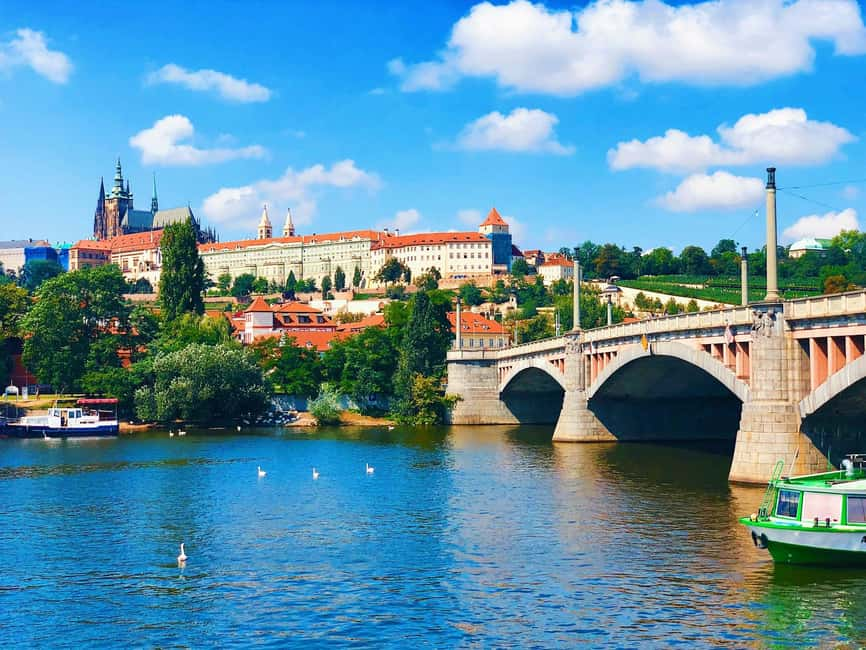
Prague Castle St. Vitus Cathedral, Royal Palace, St. George’s Basilica
Book on GetYourGuide →Operated by Robert Procházka · Bookable on GetYourGuide
Prague Castle is a place that overwhelms fast. This German guided tour with historian Robert Procházka helps you turn the scale into clear stories, from royal burials to alchemists. I love the well-grounded history—not just facts, but why they mattered in Prague. The big plus for me is the way the tour connects stunning buildings with real events, so you stop seeing “pretty churches” and start seeing power and pressure. One possible drawback: the tour is in German, so if you don’t comfortably follow, you may feel like you’re reading a brochure instead of joining the conversation.
You’ll also appreciate the smart pacing over the castle grounds and key interiors. You don’t have to guess what to look for in St. Vitus Cathedral, the Royal Palace, or St. George’s Basilica. My other favorite part is ending in Golden Lane, where the mood shifts from royal ceremony to everyday (and a little weird) city life. The main consideration is that tickets are not included, so plan for the extra cost when you get to the castle ticket counter.
In This Review
- Key things I’d circle before you go
- Entering Prague Castle: where scale becomes a story
- Meeting point and the ticket plan at the castle office
- St. Vitus Cathedral: kings, coronations, and the Gothic powerhouse
- Old Royal Palace: throne room drama and the Thirty Years’ War spark
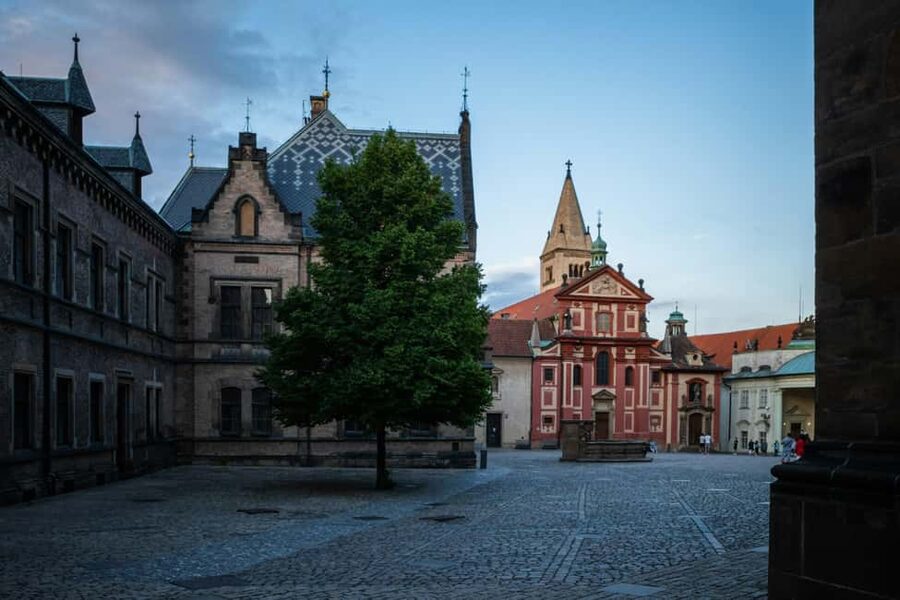
- St. George’s Basilica and St. Ludmila: the softer, darker side
- Golden Lane: alchemists, Kafka, and life in miniature
- Prague Castle grounds and the view that makes it worth the effort
- Price and value: what $41 gets you, and what costs extra
- Who this tour fits best (and who should skip it)
- Should you book Prague Castle: St. Vitus, Royal Palace, St. George’s, Golden Lane?
- FAQ
- Where do I meet for this tour?
- What does the tour include?
- Are entrance tickets included?
- How do tickets get purchased?
- What language is the tour in?
- Is the tour suitable for children?
Key things I’d circle before you go
- Historian-led storytelling: Robert Procházka guides you through the castle grounds and interiors with context.
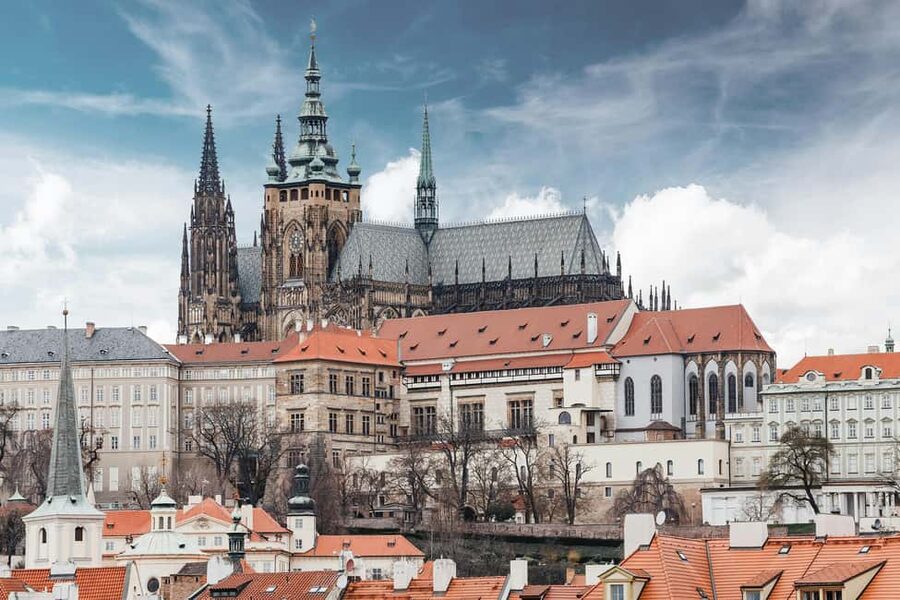
- St. Vitus Cathedral highlights: kings, coronations, and the route from Wenceslas Chapel toward the crown chamber.
- Royal Palace must-sees: a replica of the Bohemian crown jewels and the famed late Gothic throne room.
- Defenestration payoff: the Royal Palace stop ties directly to the Third Defenestration of Prague and the start of the Thirty Years’ War.
- Golden Lane details: Rudolf II’s alchemists, the elixir of life, and Kafka living in one of the little houses.
- Views from the castle grounds: the whole city opens up from the Prague Castle area.
Entering Prague Castle: where scale becomes a story
Prague Castle works like a real-world time machine. You can feel it immediately—walls, courtyards, churches, towers—like someone built the city’s biggest idea and then kept adding chapters. The tour’s big value is that it gives you a way to read all that stone without getting lost in it.
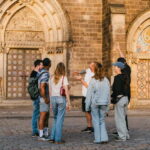
The meeting point is direct and easy to find: the streetcar stop Pražský hrad (lines 22 or 23, direction Bílá hora). Your guide, Mr. Robert Procházka, meets you there and keeps things moving. That matters because Prague Castle isn’t just one building you walk in and out of. It’s a complex, and your brain needs a route. This tour gives you one.
Also, you’re not walking the entire site aimlessly. The guided experience focuses on the core highlights—St. Vitus Cathedral, the Old Royal Palace, St. George’s Basilica, and the Golden Lane—with historian explanations that connect architecture and events. That’s the difference between taking photos and actually understanding what you’re looking at.
One more practical note: the tour lasts about 3 hours, and it’s in German. Check the available start times before you plan your day, because your ideal visit may depend on schedule.
You can also read our reviews of more tours and experiences in Prague.

Meeting point and the ticket plan at the castle office
Here’s what I like about the way this tour handles entrances. The guided tour price covers the historian-led route through castle grounds and interiors, but entrance tickets are not included. Ticket prices are listed as 18 EUR for adults and 14 EUR for seniors (from 65).
The helpful part: the guide accompanies you to the castle ticket office. You pay for your entrance ticket with a payment card there, or you can hand over the amount in EUR directly to the guide and they’ll buy the ticket for you. The key detail is that tickets are purchased at a counter exclusively for guides, which usually means less waiting for your group.
So if your priority is time (and most people who book this tour are short on time), this setup is a real advantage. You’re not stuck trying to figure out ticket lines while everyone else is already inside looking at the good stuff.
Also remember: the tour is not suitable for children under 10. If you’re traveling with younger kids, you’ll want a different option.
St. Vitus Cathedral: kings, coronations, and the Gothic powerhouse
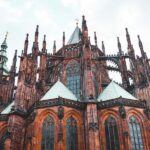
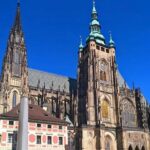
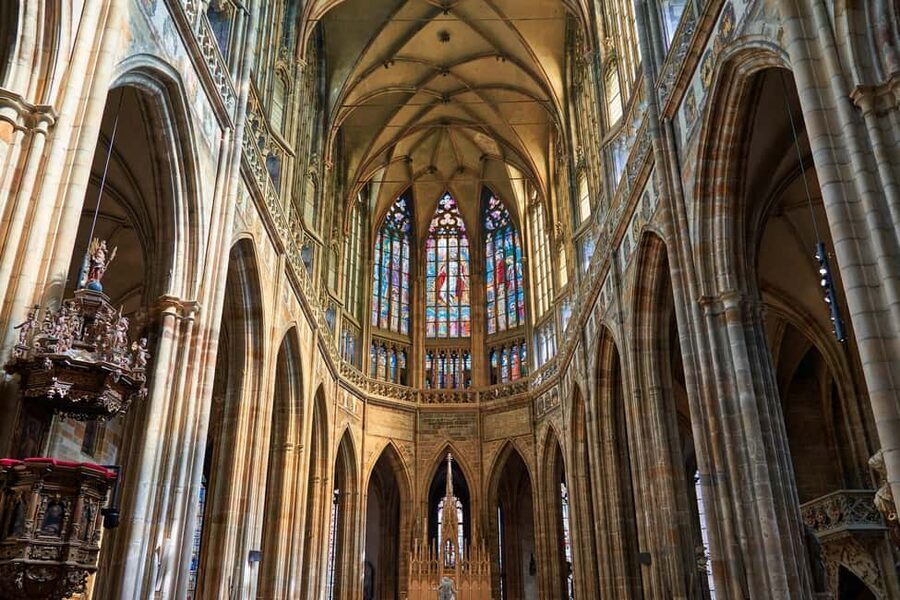
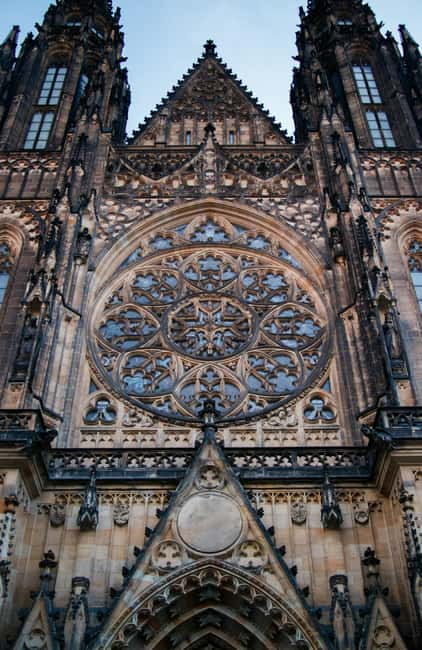
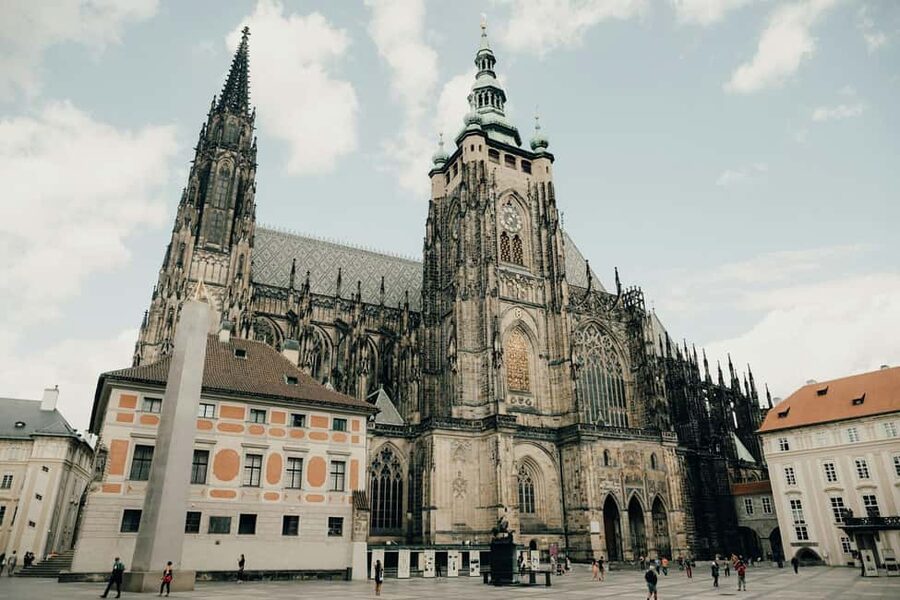
St. Vitus Cathedral is the kind of building that makes you look up without meaning to. What makes this stop click on a guided tour is that you get a clear story of who mattered here and how Prague expressed power through religion and ceremony.
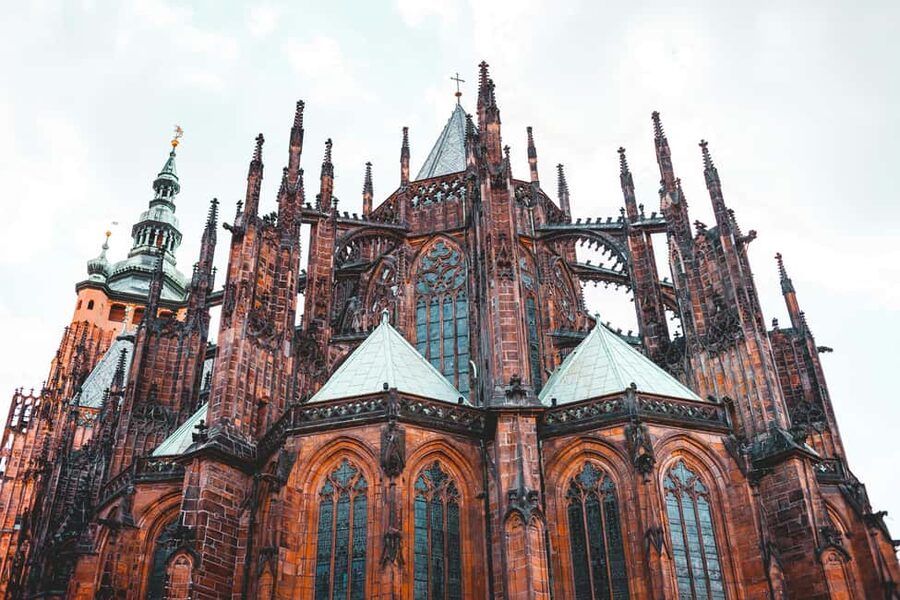
This cathedral is a burial and coronation site for Bohemian kings. You learn that the cathedral has deeper roots than its current Gothic look. Its older predecessor was a Romanesque rotunda, founded around 925. That timeline matters because it explains why the space feels layered: older foundations, then centuries of growth, then the grand Gothic transformation.
A big part of the tour focuses on the most important patron saints of the country, including St. Wenceslas and St. Adalbert, whose burials connect Prague’s identity to the cathedral. And the Gothic design is not just decoration—it’s a statement. The tour highlights that it’s a masterpiece of 14th-century Gothic architecture, so you learn what to notice instead of guessing.
One of the standout elements you’ll hear about is the route from the Wenceslas Chapel. The chapel is decorated with semi-precious stones, and the remains of St. Wenceslas rest in a Gothic shrine. From there, a spiral staircase leads up to the crown chamber, where the coronation regalia are kept.
If you’ve ever visited a cathedral and felt like you were just walking through “beautiful rooms,” this stop is different. You get the meaning of each part as part of coronation tradition—who they honored, what they kept, and how they staged authority in stone.
Old Royal Palace: throne room drama and the Thirty Years’ War spark
From St. Vitus, the tour shifts into the political engine of Prague. The Old Royal Palace stop is where the story of religion becomes the story of ruling—and where Prague history turns sharply from pageantry to conflict.
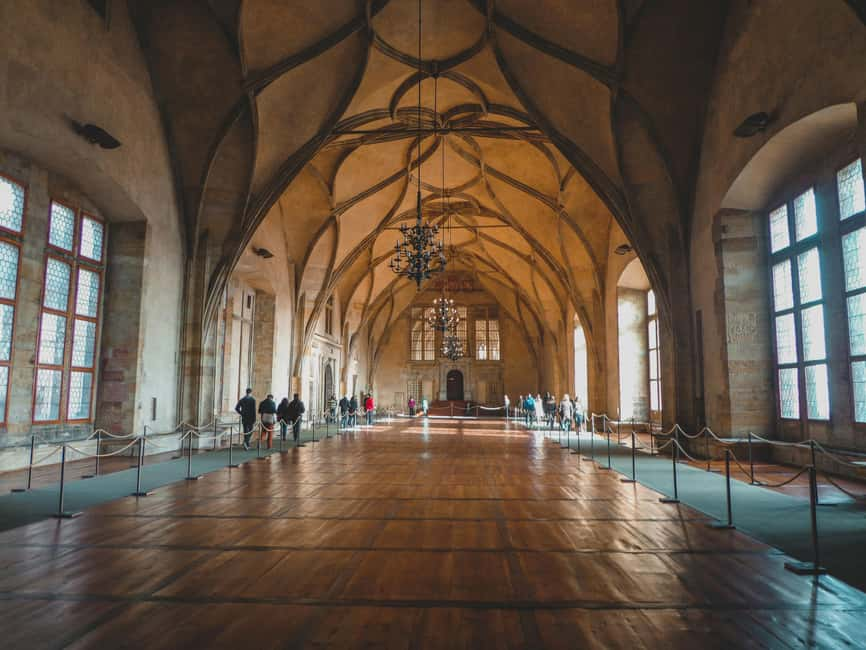
You’ll see a replica of the Bohemian crown jewels, which is a smart way for the tour to connect viewers to power symbols without you having to piece together what’s actually stored versus what’s displayed. You’ll also visit the largest late Gothic throne room in Central Europe, a detail that alone tells you the building wasn’t meant to be modest.
But the real reason I love this stop is that it ties the palace to a specific historical turning point. The tour points out the site of the Third Defenestration of Prague—the State Chancellery—which is described as the event that started the Thirty Years’ War. In other words, it’s not just “history happened here.” It’s history with a clear cause-and-effect.
That’s where a good historian guide earns their keep. The architecture gives the setting, but the story gives the stakes. When you hear what the place became in moments of tension, you start to see rooms as political theaters rather than museum spaces.
If you’re the type who likes your sightseeing with a sense of consequence, this is your strongest payoff. You’re moving from the symbolic to the strategic.
St. George’s Basilica and St. Ludmila: the softer, darker side
St. George’s Basilica brings a different tone to the castle complex. It’s still tied to national identity, but the story is more intimate—and more tragic.
The basilica dates back to the 10th century, and the tour focuses on what it holds. It houses the tomb of St. Ludmila, who was the grandmother of St. Wenceslas. The guide’s story connects her directly to violent power struggles in the region.
You learn that St. Ludmila was strangled to death by Viking warriors on behalf of her daughter-in-law. That’s a detail that’s easy to remember because it’s so specific, and it instantly gives weight to why this tomb mattered.
The cathedral and palace can feel grand and distant. The basilica feels close-up. Even if you only catch a few phrases in German, this stop lands because the narrative is clear: lineage, influence, and the cost of political and religious control.
So if your brain needs variety—less ceremonial “top level” politics and more personal stakes—this is the section that balances the day.


Golden Lane: alchemists, Kafka, and life in miniature
Golden Lane is the part of the visit that changes your perspective the most. After the big buildings and heavy stories, Golden Lane feels like a different century—or even a different kind of Prague.
This lane takes you back to the 16th century. The tour explains that Emperor Rudolf II’s alchemists lived here, searching for the elixir of life and trying to produce gold from lead. That’s the kind of detail that makes history feel human again. You can almost picture the obsessive routines and failed experiments.
Then there’s another name that adds modern literary gravity: Franz Kafka. The tour notes that Kafka lived in one of the little houses on Golden Lane. You don’t have to be a Kafka scholar to appreciate what that does to the atmosphere. It connects the imaginary world people carry in their heads to a real street where he lived.
And this is where the tour’s structure makes sense. The guided experience ends in Golden Lane—so you finish on a street that feels compact, story-rich, and different from the ceremonial spaces earlier. It’s a good way to land the tour with something memorable and walkable.
If you like small-scale details—doors, corners, the feel of old dwellings—this is a strong finish.
Prague Castle grounds and the view that makes it worth the effort
Even if you don’t consider yourself a view person, Prague Castle changes your mind. The tour specifically points out that the castle grounds are listed in the Guinness Book as the largest enclosed castle grounds in the world. That fact is more than trivia. It explains why the area feels like its own landscape. You’re not just visiting attractions—you’re inside a major fortified world.
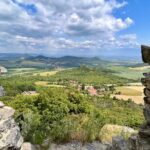
The grounds also give you the kind of viewpoint that makes Prague click. You get a magnificent look across the city, and you understand how the churches, bridges, and neighborhoods fit together. It’s the classic “Prague from above” feeling, but with context.
The historian’s explanations help here too. When you understand that these buildings were tied to coronations, rulings, and major conflicts, the view feels like part of the story rather than just a photo stop.
And yes, it’s practical: after 3 hours of moving through interiors, stepping out for the city view helps reset your senses. It gives you a mental bookmark for what you saw and why it mattered.
Price and value: what $41 gets you, and what costs extra
At $41 per person, this tour can be good value if you care about interpretation, not just location. But here’s the clear math idea.
Your tour price includes the three-hour guided tour in German by a historian through the castle grounds and the interiors of the historic buildings. What it does not include is entrance ticket access to St. Vitus Cathedral, the Old Royal Palace, St. George’s Basilica, and Golden Lane.
Entrance tickets are listed as:
- Adults: 18 EUR
- Seniors (from 65): 14 EUR
So you’re paying for two things: the guide service (your main value), and the site entries (your required access). If you were to self-tour, you might pay similar entrance fees, but you’d lose the structure: the order of stops, the key details to notice, and the cause-and-effect stories like the Third Defenestration leading into the Thirty Years’ War.
The other value piece is the ticket process. The guide helps you get tickets at a guide-only counter, which cuts the chance you waste time waiting. For a place like Prague Castle—where timing matters—that small advantage can add up to a better experience.
One more note: the tour is German. If that’s your language, great. If it’s not, the content can become hard to follow fast. The tour is aimed at people who want depth, not just casual sightseeing.
Who this tour fits best (and who should skip it)
This tour is a strong match if you want:
- A historian-led, story-heavy visit of top Prague Castle sights
- A guided route that connects architecture to events
- A finish in a more intimate setting like Golden Lane
It may not be ideal if:
- You don’t follow German well, since the entire tour is conducted in that language
- You’re traveling with kids under 10, since it’s not suitable for that age group
If you’re doing Prague for a short time and want your Castle day to feel organized, this is built for you. And if you like your landmarks with named saints, coronation details, and a straight line from palace drama to major war events, you’ll probably enjoy it a lot.
Should you book Prague Castle: St. Vitus, Royal Palace, St. George’s, Golden Lane?
If your goal is to get beyond the postcard versions of Prague Castle, I’d book it. The standout reason is the combination of a historian guide (Mr. Robert Procházka) plus a route that hits the core buildings and finishes in Golden Lane. You’re not just walking through rooms—you’re being taught how to read them.
Book it if you:
- Want a 3-hour guided plan rather than a free-for-all
- Enjoy cathedral and palace stories with specific details (Wenceslas Chapel, crown chamber, throne room, the defenestration link, Golden Lane alchemists and Kafka)
- Prefer buying entrance tickets with the guide’s help to keep time friction low
Skip it if you’re not comfortable with German or if you’d rather wander at your own pace for a longer stretch. In that case, a self-guided day might suit you better.
FAQ
Where do I meet for this tour?
You meet directly at the streetcar stop named Pražský hrad (Prague Castle), on streetcar lines 22 or 23 in the direction of Bílá hora. Your guide, Mr. Robert Procházka, will be waiting there.
What does the tour include?
The tour includes a three-hour historian-led guided tour in German through the castle grounds and the interiors of the historic buildings.
Are entrance tickets included?
No. Entrance tickets to St. Vitus Cathedral, the Old Royal Palace, St. George’s Basilica, and the Golden Lane are not included. Adults are listed at 18 EUR and seniors (from 65) at 14 EUR.
How do tickets get purchased?
Your guide accompanies you to the castle ticket office. You can pay with a payment card, or hand the amount in EUR to the guide, who will obtain the tickets for you.
What language is the tour in?
The tour is in German.
Is the tour suitable for children?
It is not suitable for children under 10.