REVIEW · PRAGUE
Prague Castle Walking Tour
Book on Viator →Operated by Insight Cities · Bookable on Viator
Prague Castle history hits different on foot. What I like most is the small-group size (max 8) so you actually hear your guide, and the focus on architecture styles that you can spot on the spot. One thing to consider: major interiors like St. Vitus Cathedral (and castle entry areas) cost extra, so you’ll need to budget in advance.
You start in Malá Strana and walk up to Hradčany Hill with a guide who explains how the buildings changed over centuries—through artillery damage, looting, and long periods of neglect. It’s set up for curious travelers who want more than postcard facts, and the pacing works well for a 3-hour morning or afternoon visit.
Still, it is a walking tour on a hill. If your legs are only okay for short stretches, plan for some stairs and uneven castle terrain, especially around the Royal District.
Why this tour earns top marks
- Max 8 people keeps it personal and easy to ask questions
- Architecture-first storytelling helps you recognize styles as you go
- Two timing options (morning or afternoon) lets you match crowds and your day
- Historian-style guidance turns the castle from buildings into a timeline
- Royal Garden to Hradčany viewpoints gives you a smart route without backtracking
- Bonus stops after the castle like Domeček and Golden Lane add real texture
In This Review
- Prague Castle’s Best Angle: Small Group, Big Stories
- Meeting in Malá Strana: Where You Start Matters
- The 3-Hour Game Plan: From Royal Garden to Hradčany Hill
- Stop-by-Stop: What You’ll See and Why It’s Worth It
- Prague Castle: The Big Complex and the Style Shock
- Ball Game Hall: Renaissance Sports With a Serious Twist
- Queen Anne’s Summer Palace: Outside Italy, Pure Renaissance
- St. Vitus Cathedral: Gothic Height and Royal Tombs (Extra Tickets)
- Old Royal Palace and Vladislav Hall: Coronations and Defenestration
- St. George’s Basilica: A Romanesque Counterpoint
- Golden Lane: Small Doors, Big Power
- After the Castle: Domeček, Strahov Monastery, and the Pause Factor
- Price and Value: What You’re Paying For (and What You’re Not)
- A Quick Note on Timing: Morning vs Afternoon
- The Guide Factor: Why Robert Stuck the Landing
- Who This Tour Is For (and Who Might Skip It)
- Should You Book This Prague Castle Walking Tour?
- FAQ
- How long is the Prague Castle Walking Tour?
- What’s included in the tour price?
- Are the main cathedral and palace interiors included?
- How much is Prague Castle entrance?
- Where do I meet the guide?
- Is there a group size limit?
- What if I need to cancel?
Prague Castle’s Best Angle: Small Group, Big Stories
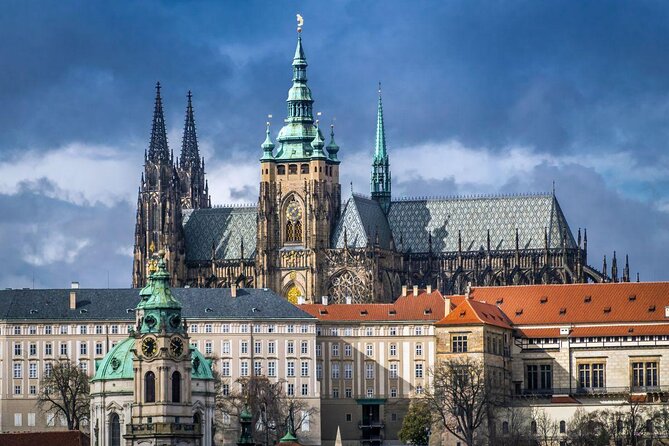
Prague Castle can feel like a theme park if you’re just rushing between gates. This tour is different. It’s built around a guided walk where the guide helps you see what you’re looking at—Romanesque, Gothic, Baroque, Rococo, Renaissance, and Neoclassical details—without turning every sentence into a lecture.
I like that this tour is explicitly designed for good listening. With a maximum group size of 8, the experience stays interactive. In the best-case scenario, you get the kind of exchange where questions don’t get lost in the crowd.
The other win is the tone: it’s not just dates and names. You’ll get the cause-and-effect of why buildings look the way they do—like the castle complex being bombarded, plundered, and left to deteriorate under indifferent Austrian rulers.
Meeting in Malá Strana: Where You Start Matters
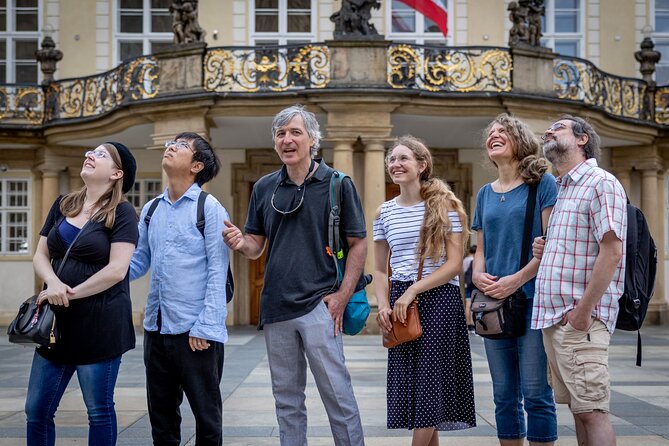
You meet at Bagel Lounge MalostranskáLetenská, 118/1, in Prague 1-Malá Strana, right before your scheduled time. That’s a solid location for getting oriented because Malá Strana is already a historic neighborhood, and you’re not starting in the middle of nowhere.
The tour is near public transportation, which matters when you’re balancing the rest of your Prague day. It also uses a mobile ticket, so you’re not hunting for paper confirmations while you’re trying to reach your group.
Tip from the practical side: arrive a little early. Castle-area timing can make you feel like you’re late even when you aren’t, because streets around the hill can be slow-going on foot.
You can also read our reviews of more tours and experiences in Prague.


The 3-Hour Game Plan: From Royal Garden to Hradčany Hill
This is roughly a 3-hour walk, give or take. You’ll head from Malá Strana up to Hradčany Hill and into the Prague Castle area. The route follows key outdoor spaces first—then shifts into the major indoor sites where possible (with some parts at your own expense).
Along the way, you’ll cross through settings that help you “read” the complex:
- You’ll get pointed through the Royal Garden and over the Stag Moat.
- You’ll be directed to the castle buildings that have been constructed and reconstructed through multiple eras.
- You’ll learn how the castle’s physical scars connect to Prague’s political turbulence.
I like that the pacing gives you sightlines to the bigger shapes of the complex, not just close-up details. That helps you understand why this place feels so dominant on the hill.
Stop-by-Stop: What You’ll See and Why It’s Worth It
Prague Castle: The Big Complex and the Style Shock
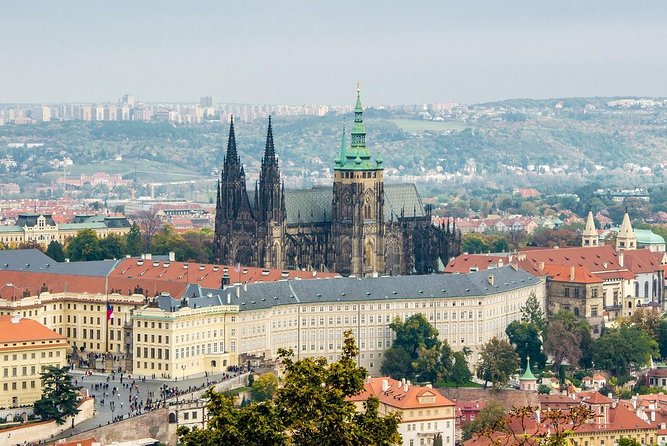
The main stop is Prague Castle itself—described as a world-class complex with around 1,100 years of history. You’ll walk through a route that includes the Royal Garden and passes over the Stag Moat before reaching the castle buildings.
What makes this part valuable is the architecture mix. You’ll see how different political periods left fingerprints on the same hilltop space. The guide’s job is to help you connect the dots: Romanesque solidity, Gothic height and structure, Baroque drama, Rococo ornament, and later Renaissance/Neoclassical refinement.
You’ll also get the darker context. This castle isn’t just decorative. Expect the story of how it has faced artillery damage and plunder, and how long stretches of neglect shaped what survived and what needed rebuilding.
Ball Game Hall: Renaissance Sports With a Serious Twist
In the Royal Garden, you’ll pass the Renaissance Ball Game Hall. The entertaining part here is how it’s framed as elite recreation: sporty aristocrats playing ball games with the Emperor, plus Renaissance sgraffito decoration that depicts allegories of virtues, arts, and sciences.
This is one of those stops that’s short but makes you look twice. The hall isn’t just a pretty facade; it’s a snapshot of how Renaissance power liked to combine culture, leisure, and symbolism.




Queen Anne’s Summer Palace: Outside Italy, Pure Renaissance
Next up is Queen Anne’s Summer Palace, often described as the purest Renaissance architecture outside Italy. You’ll learn it was commissioned by Ferdinand I in the mid-1500s, and later converted into an astronomical observatory by Rudolf II.
The name-drop matters here because it changes the mood from palace-lifestyle to brains-and-math. You’ll hear that Tycho de Brahe and Johannes Kepler were among those connected with the observatory scene, and that Rudolf II even died here after losing the royal title.
If you like when a stop reframes history (not just tells it), this one does the job.
St. Vitus Cathedral: Gothic Height and Royal Tombs (Extra Tickets)
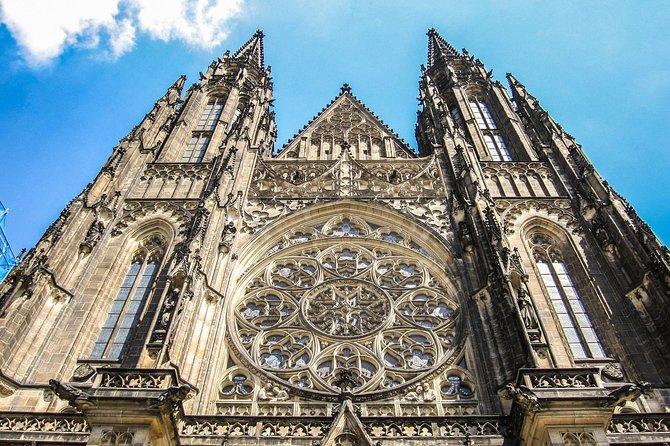
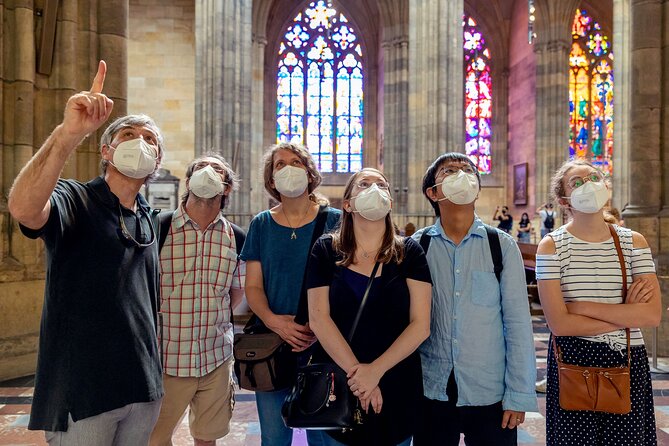
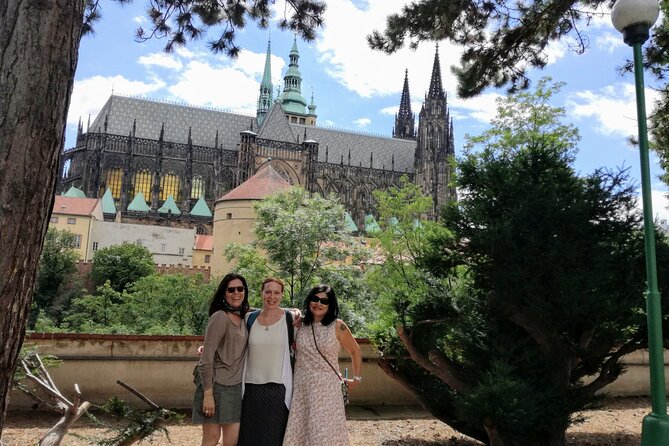
You’ll spend time at St. Vitus Cathedral, one of Central Europe’s monumental Gothic churches. The building story is long: it was founded in the first half of the 14th century and finished about 600 years later in the first half of the 19th century.
That long build timeline matters. You can see how Gothic was carried forward through multiple generations, instead of being one quick project.
Inside, you’ll want to clock a few named highlights:
- The baroque tomb of St. John of Nepomuk, associated with the seal of the confessional
- The Gothic St. Wenceslas Chapel, which houses relics of the saint
Practical note: cathedral entry is not included. Plan for the additional admission fee when you’re budgeting your day.
Old Royal Palace and Vladislav Hall: Coronations and Defenestration
Then you move to the Old Royal Palace area and spend time in Vladislav Hall. This is late Gothic mixing with Renaissance changes, built at the end of the 15th century. The guide’s description leans into the hall’s theater: coronation festivities, banquets, and knights’ tournaments.
Even if you don’t picture every historical scene perfectly, the design details help. The hall was built so knights could enter in armor and move through the Riders’ Staircase—made for the action.
One of the most story-heavy moments here is what you’ll connect to the Ludwig Wing. You’ll pass the window linked with the defenestration of two Austrian governors and their scribe, an incident that sparked the Thirty Years’ War.
That’s a good example of what this tour does well: it links architecture to consequences.
Like the cathedral, Old Royal Palace access is not included, so you’ll pay separately if you choose to enter those interiors.
St. George’s Basilica: A Romanesque Counterpoint
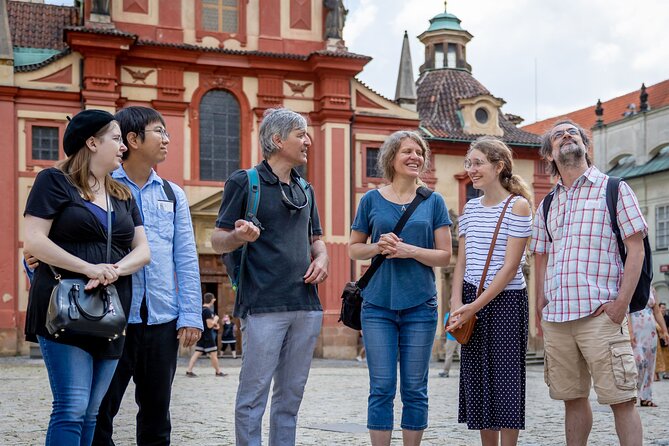
After the Gothic and the Renaissance drama, you’ll shift styles again at St. George’s Basilica. It’s described as an austere, monumental Romanesque basilica built in the 1100s.
This stop works because it gives you contrast. You just saw Gothic structure; now you compare how Romanesque feels heavier, more grounded, and different in interior mood. If you’re the type who notices details like arches and proportions, you’ll probably enjoy doing the mental compare-and-contrast in real time.
Golden Lane: Small Doors, Big Power
In the complex’s quieter corners, you’ll walk through Golden Lane. It’s a diminutive street built in the 16th century to house castle guards during Rudolf II’s time.
The tour highlights a key reality: Golden Lane today can feel like a tiny shopping lane, but it also hides layers. You can step into tiny rooms and you’ll also find a museum of medieval weaponry inside a former fortification.
Golden Lane links to Dalibor Tower, which used to function as a dungeon. If you like when cute streets aren’t just cute, this is that kind of stop.
After the Castle: Domeček, Strahov Monastery, and the Pause Factor
Once the main castle time ends, the route shifts to Hradčany and nearby sites.
You’ll pass Domeček, described as the former prison where political opponents were imprisoned by the Gestapo. That context can hit harder than you expect when you’re still walking through palace walls.
Then there’s Strahov Monastery, where an ancient library is housed. Even if you only glimpse it from your walking path, it helps you finish the tour with the sense that this area isn’t only politics and buildings—it’s also scholarship and long memory.
This “after” section is useful because it gives you a breather. You’re not constantly paying to enter spaces, and it’s a way to keep the story going beyond the headline sights.
Price and Value: What You’re Paying For (and What You’re Not)
The tour costs $126.16 per person for about 3 hours. That’s not a small price, but it’s also not just paying for walking and pointing.
Here’s where the value comes from:
- You get a historic guide who explains how the buildings changed across centuries
- The group is capped at 8, so you’re paying for attention, not crowd control
- You get a mobile ticket, which keeps logistics simpler
- It’s offered in English, making it easy for independent travelers to follow along
What’s not included is also important. Prague Castle entrance is extra (450 CZK for adults, 300 CZK for students and seniors). St. Vitus Cathedral and Old Royal Palace entries are also not included, and food/drinks are not part of the price.
So my advice is simple: if you’re already planning to see the main interiors, this tour can be a good way to get your money’s worth because the guide helps you understand why each room matters. If you only want outdoor views and you plan to skip most interior tickets, the cost might feel heavier.
A Quick Note on Timing: Morning vs Afternoon
You can choose morning or afternoon timing. For Prague Castle, timing can shape the whole vibe because the hill gets busy.
One smart tip: if you have the flexibility, I tend to prefer an afternoon tour when I can. The reason is practical—castle complexes often feel less packed later in the day, and a small-group walk can feel more relaxed when you’re not constantly stepping around long lines.
Morning can be great too, especially if you want your day to start with views and end with lighter plans. Either way, wear shoes you trust. This is hills and stone.
The Guide Factor: Why Robert Stuck the Landing
One review specifically called out the guide, Robert, as entertaining and very knowledgeable. That praise matters because a tour like this lives or dies on how well the guide ties architecture to story.
When a guide is strong, stops like Vladislav Hall and the defenestration window don’t become trivia dumps. They become a thread you follow through the day.
If you’re the type who likes asking questions, this format usually gives you room to do it. The max of 8 people means your voice has a better chance of getting heard.
Who This Tour Is For (and Who Might Skip It)
This tour fits you best if:
- You’re curious about Czech history and want it connected to buildings
- You like architecture and want help spotting styles as you walk
- You don’t want a group of 20+ people blocking the view or drowning out the guide
- You’re planning at least some castle interior time, since you’ll pay extra for entries anyway
You might consider skipping or mixing it with lighter self-guided time if:
- You want a strictly self-paced visit and hate ticket add-ons
- Your schedule has almost no room for stairs and hill walking
- You’re only interested in one or two landmarks and not the full Royal District story line
Should You Book This Prague Castle Walking Tour?
I think you should book if you want a structured, small-group way to understand Prague Castle beyond the basics. The key strengths—small size, strong guide-led storytelling, and architecture-focused stops—make it a smart use of your limited time on the hill.
If you’re the kind of traveler who likes to know why a building looks the way it does, this tour gives you that “aha” moment repeatedly, from Romanesque to Gothic, then into Renaissance and beyond. Add in the post-castle stops like Domeček and Strahov Monastery, and you get a fuller slice of Hradčany than the standard quick loop.
Just go in with a realistic budget for extra admissions and you’ll feel better about the total day cost.
FAQ
How long is the Prague Castle Walking Tour?
It runs for about 3 hours.
What’s included in the tour price?
The tour includes a historic guide and a mobile ticket. Prague Castle entrance and most interior admissions are not included.
Are the main cathedral and palace interiors included?
No. St. Vitus Cathedral and the Old Royal Palace entry are listed as not included, so you’d pay admission separately.
How much is Prague Castle entrance?
The tour data lists Prague Castle entrance as CZK 450 for adults and CZK 300 for students and seniors.
Where do I meet the guide?
You meet at Bagel Lounge MalostranskáLetenská 118/1, 118 00 Praha 1-Malá Strana.
Is there a group size limit?
Yes. This tour has a maximum of 8 travelers, and it’s offered in English with morning or afternoon timing options.
What if I need to cancel?
The experience offers free cancellation. You can cancel up to 24 hours in advance for a full refund. If you cancel less than 24 hours before, the amount paid is not refunded.