REVIEW · PRAGUE
Prague Castle, St. Vitus Cathedral, Royal Palace, St. George’s Basilica
Book on GetYourGuide →Operated by Robert Procházka · Bookable on GetYourGuide
Prague Castle tells its story in layers. This 3-hour walk through four major sites is guided in German by historian Robert Procházka, which makes the building details feel personal instead of just scenic. You start at the Pražský hrad tram stop and end in the cozy-but-weird Golden Lane.
I love the way this tour stitches together Gothic, Renaissance, and Baroque architecture into one clear timeline. I also like the “don’t miss this” focus on where to look, plus the breathtaking Prague views you get from the castle grounds.
One thing to plan for: the castle area can be very cold, especially in season. Bring warm layers, because even a short stop for photos can feel longer when the wind hits.
In This Review
- Key things to know
- Where you start at Prague Castle and how to find the group
- St. Vitus Cathedral: the kings’ coronations and the Wenceslas route
- The Old Royal Palace: crown jewel replicas and a war-starting moment
- St. George’s Basilica: Ludmila’s tomb and early medieval Prague
- Golden Lane: Rudolf II’s alchemy and Kafka’s corner houses
- Views from the castle grounds: why the Prague panorama is part of the tour
- Price and value: what you pay for, and what you still need
- What the German guide experience feels like in practice
- What to bring, and what to consider before you go
- Who this tour suits best
- Should you book this Prague Castle historian tour?
- FAQ
- What is the meeting point for the Prague Castle tour?
- How long is the tour?
- Is the tour in German?
- Which sites are included in the tour?
- Are tickets included in the price?
- How do I pay for the entrance tickets?
- Is it suitable for children?
Key things to know
- Historian-led in German with Mr. Robert Procházka, so the explanations are built around history, not generic sightseeing
- Four major stops in about 3 hours: St. Vitus Cathedral, the Old Royal Palace, St. George’s Basilica, and Golden Lane
- Ticket help included: the guide walks you to the castle cashier so you can avoid long waits at general lines
- Largest enclosed castle grounds in the world, noted in the Guinness Book of Records, so there’s real space to breathe
- Crown jewels and key events explained through the Royal Palace sights, including the Third Defenestration of Prague
Where you start at Prague Castle and how to find the group
The meeting point is right at the Pražský hrad tram stop, on tram lines 22 or 23 toward Bílá hora. If you’re arriving by public transport, this is straightforward: you don’t have to decode a complicated address or hunt for a specific gate.
Plan for a calm start. You’ll want a couple of minutes before the tour time because the guide waits at the stop itself, and then you move through the castle complex. It’s a big site, so getting settled early helps you enjoy it instead of rushing.
You can also read our reviews of more tours and experiences in Prague.

St. Vitus Cathedral: the kings’ coronations and the Wenceslas route
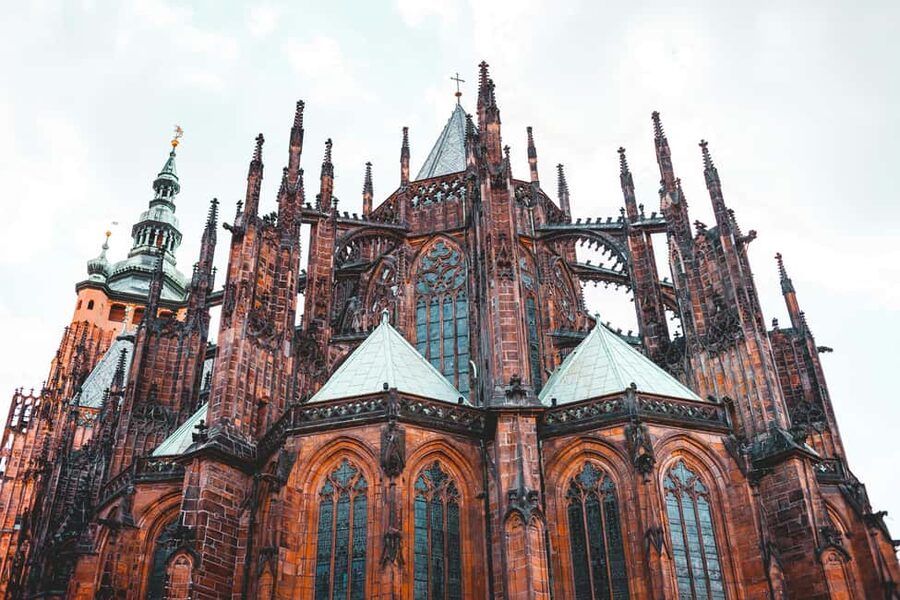
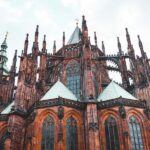
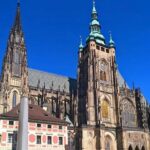
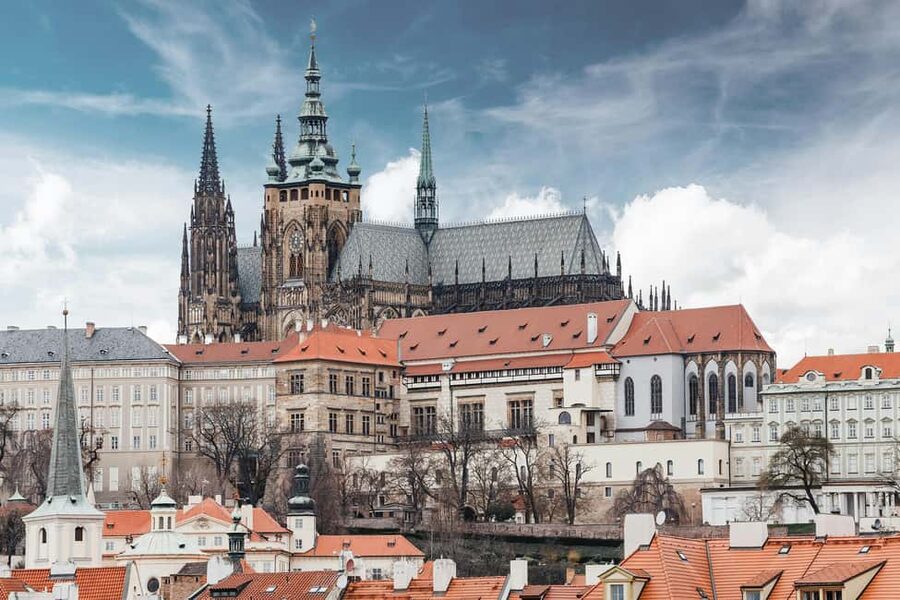
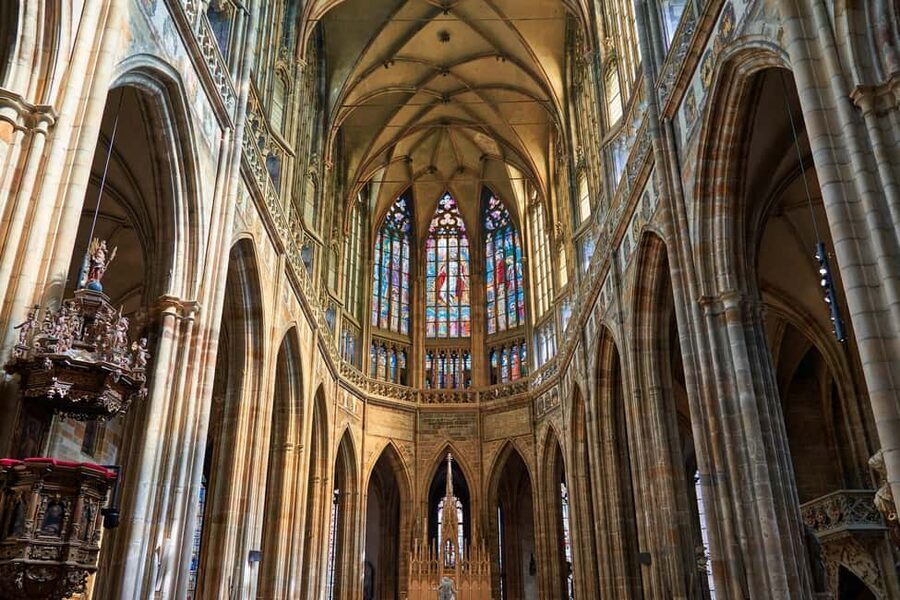
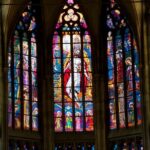
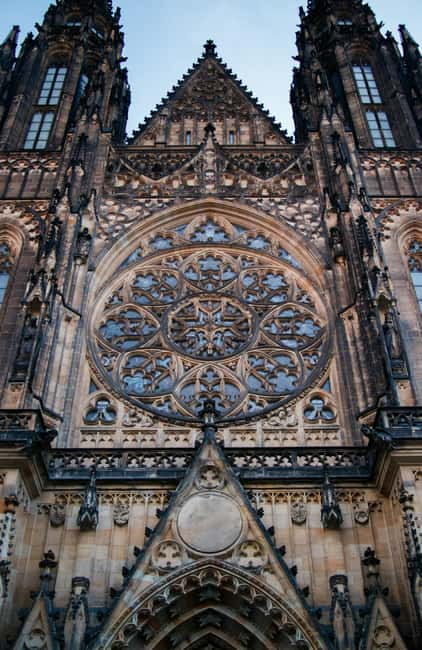
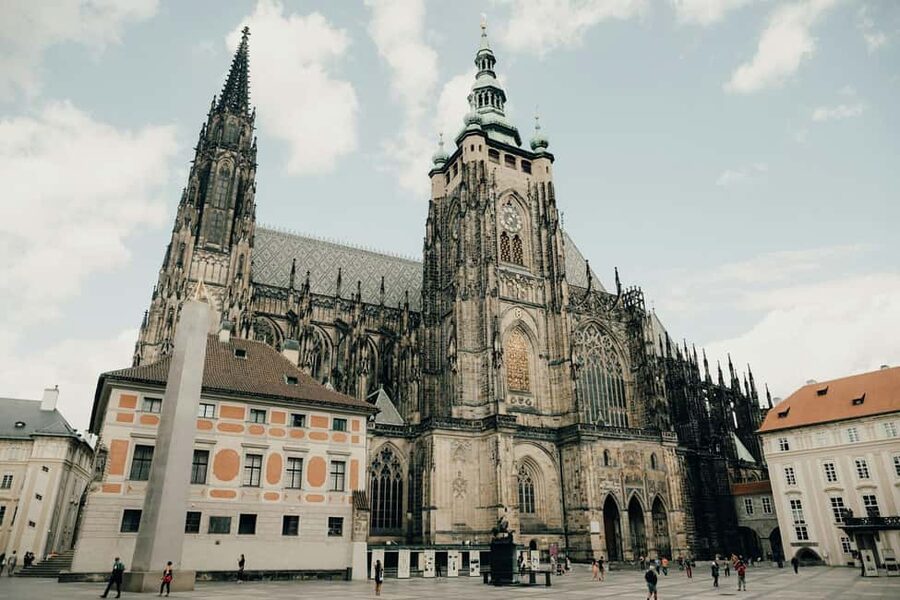
St. Vitus Cathedral is the emotional core of the whole visit. It’s the burial and coronation site of Bohemian kings, and the building itself shows centuries of change. You start by understanding what the cathedral was meant to do: validate power, honor saints, and mark major moments.
What makes the architecture click here is that you’re not just looking at carvings. You’re learning how the cathedral grew into a masterpiece of Gothic architecture. There’s also an older layer in the story: the predecessor building was a Romanesque rotunda founded around 925. That kind of timeline matters because it explains why the cathedral feels layered rather than uniform.
Inside, the cathedral is tied to the country’s most important patron saints, including St. Wenceslas and St. Adalbert. The highlight you’ll want to listen for is the Wenceslas Chapel, decorated with semi-precious stones. Here, the bones of St. Wenceslas rest in a Gothic shrine, and that combination of material beauty and sacred purpose is exactly why this stop matters.
Then there’s the vertical storyline. A spiral staircase connects the Wenceslas Chapel to the Crown Chamber, where the coronation insignia are kept. Even if you’re only seeing parts of this area from where the tour takes you, you’ll understand the logic of the design: it’s a route built to turn religious meaning into political legitimacy.
If you care about details, this is where the historian guide earns his keep. You’re not stuck on broad facts. You get help spotting what each part of the cathedral is trying to communicate.
The Old Royal Palace: crown jewel replicas and a war-starting moment
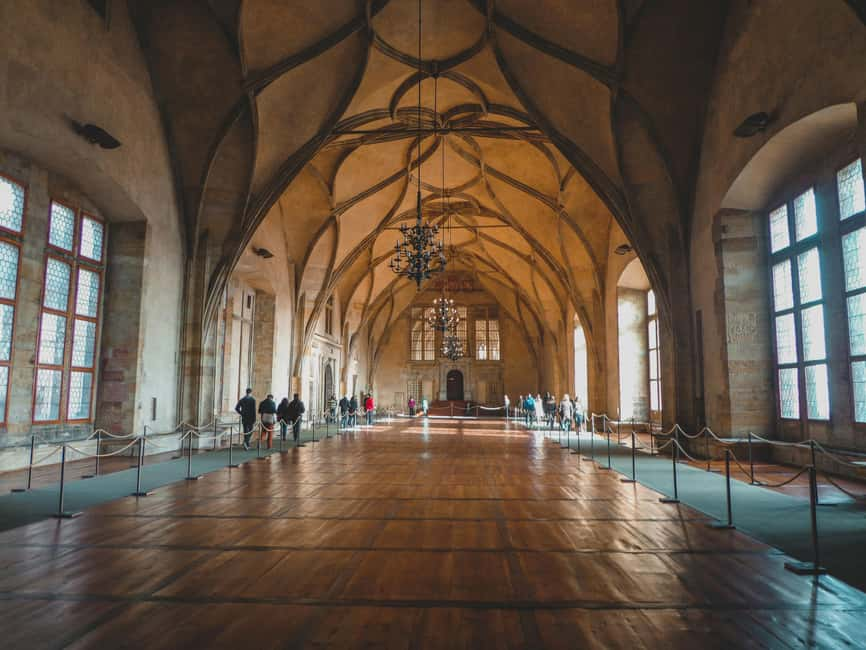
After St. Vitus, you shift from sacred authority to political power in the Old Royal Palace. This is a key contrast. The cathedral explains who should be honored; the palace explains how authority was used.
One practical thing to love here: you can see a replica of the Bohemian crown jewels. Even if you’ve seen crowns in other European capitals, replicas can be more useful than you expect, because your guide can point out what you should look for and how it connects to coronation culture.
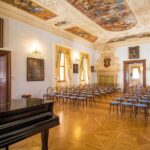
Your next stop in the palace is the largest late Gothic throne room in Central Europe. That superlative is useful, but the real value is the perspective it gives you. You’ll start to understand how ruling wasn’t just done through law; it was staged through architecture.
Then comes a moment that feels surprisingly modern in its drama: the site of the Third Defenestration of Prague, at the State Chancellery. This incident initiated the Thirty Years’ War, and your guide links the building setting to the political shock behind the event. It’s history that lands because the location is part of the story.
If you like your travel with cause-and-effect, this is the stop that usually makes the timeline feel real. Stones and stories stop being separate things.
St. George’s Basilica: Ludmila’s tomb and early medieval Prague
St. George’s Basilica is one of those places where size is not the point. It’s more about meaning, age, and the sense of continuity.
You’re looking at a 10th-century church, and that matters because it’s much older than the Gothic showpieces you’ll see around it. In Prague Castle, that age gives context: this complex didn’t start as a single grand design. It became a capital of layers.
One standout detail is the tomb of St. Ludmila, the grandma of St. Wenceslas. The basilica tradition ties her to a violent political turning point: she was strangled by Viking warriors on behalf of her daughter-in-law. Your guide uses that kind of story to connect religious sites to the struggle for influence in the region.
This stop is often a good pace-break. After the cathedral’s major Gothic statements and the palace’s political drama, St. George’s Basilica gives you something quieter and older—still important, just less loud.
Golden Lane: Rudolf II’s alchemy and Kafka’s corner houses
Golden Lane is where the whole tour ends, and it’s a very different vibe from the grand interiors. Expect small, story-heavy spaces. The lane looks like it belongs in a postcard, but the meaning behind it is anything but simple.
Here’s the big thread: Emperor Rudolf II’s alchemists. They tried to find an elixir of life and, as the legend goes, tried to make gold from lead. That’s a fun detail, but it also explains how Renaissance courts could blend religion, science, and spectacle. You’re learning how people chased big answers in the right place, with the right budget.
Golden Lane also ties to literature. Franz Kafka lived in one of the little houses. That kind of connection makes the lane more than a visual stop. It becomes a timeline checkpoint: power and experiments here, and then later, imagination and writing.
This is a great ending point because it’s easy to keep exploring on your own after you finish the guided portion. You’ll likely want to slow down for photos and read the little details your guide set you up to notice.

Views from the castle grounds: why the Prague panorama is part of the tour
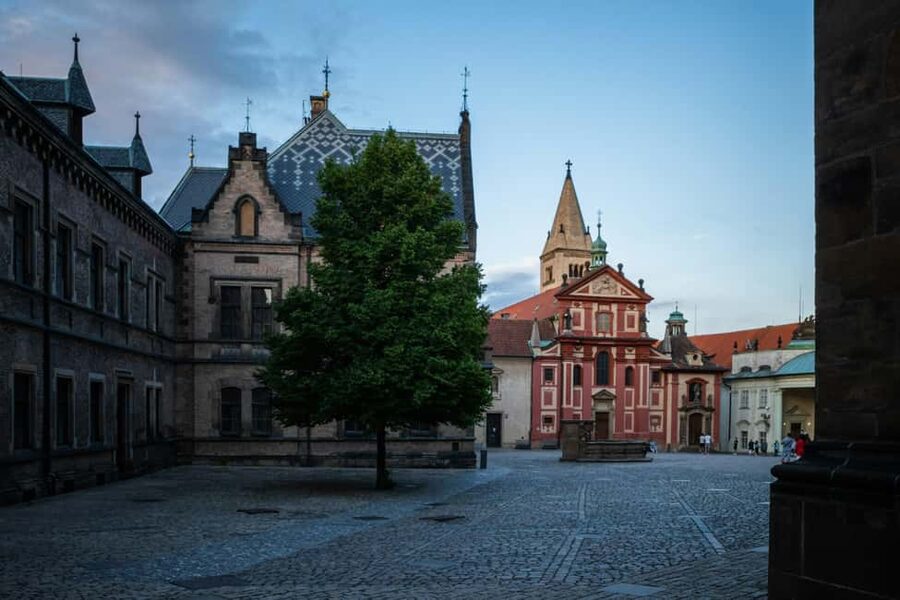
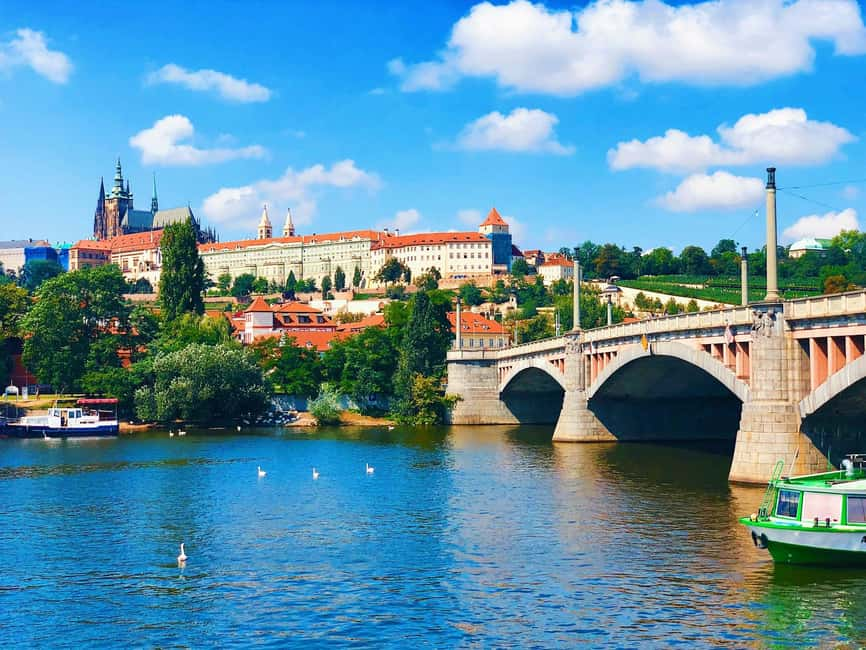
You’re not only touring buildings—you’re also using the castle grounds for what they were built for: dominance and perspective. The entire complex is famous for its size; the grounds are listed in the Guinness Book of Records as the largest enclosed castle grounds in the world.
That matters for your experience. You can step out, take in a wide view of Prague, and then return to the next stop without feeling like you’re constantly navigating crowds. The tour’s structure helps you move between “lookout” moments and “learn” moments.
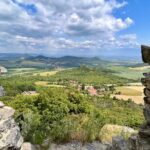
And those views do something practical: they help you understand how the old city sits in relation to the river and the hills. Even if you’re not doing a full skyline hunt, you’ll get your bearings faster.
Price and value: what you pay for, and what you still need
The tour price is $43 per person for a 3-hour guided visit. Tickets for the sites themselves are not included. Adults are listed at 18 EUR, and seniors (from 65) at 14 EUR.
So what are you really paying for? Two things:
- A historian-led tour that connects the sights to the bigger story, including specific events like the Third Defenestration of Prague.
- Ticket handling support that reduces friction: the guide escorts you to the castle cashier where you can pay with a payment card. You can also hand over EUR directly to the guide, who then obtains the admission ticket for you. Tickets are bought at a counter exclusively for guides, so you avoid prolonged waiting at general lines.
In other words, the guided component is the value engine here. If you’re the type who would otherwise rush through museums without understanding what you’re seeing, this tour helps you slow down in the right places.
If you’re a casual visitor who just wants photos, you might decide you’d rather pay for individual tickets and explore on your own. But if you care about meanings behind the stone, the structure is worth the extra cost of the ticket.
What the German guide experience feels like in practice
This tour is conducted in German. That’s the make-or-break detail for many people. If German is comfortable for you, you’ll likely enjoy the flow—especially in the cathedral and palace, where details matter.
The guide’s style also seems built for clarity. The tour is run by a historian, and the descriptions focus on turning architecture into understandable stories. In real terms, it means you’re hearing why things are there, not just what they look like.
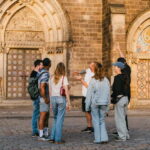
Group size can vary. The experience is sometimes run as a smaller group rather than a giant bundle of people. That’s a big deal at Prague Castle because you want space to hear, and you want enough time to look without always being squeezed forward.
What to bring, and what to consider before you go
Here are the essentials that matter most based on what you’ll face on-site:
- Warm clothing: Castle grounds can be very cold, so plan for layers.
- Ticket budget: admission isn’t included, so plan on 18 EUR adult / 14 EUR senior on top of the tour price.
- Language fit: the tour is in German, so decide if you want to spend 3 hours in that language.
- Age suitability: it’s not suitable for children under 10.
You don’t need special gear. The tour is built around walking and seeing. The main comfort factor is weather, and the main planning factor is ticket cost.
Who this tour suits best
This experience is best for you if:
- You want a historian-led explanation of Prague Castle’s major sites.
- You like connecting architecture to actual events and people (kings, saints, and major historical turning points).
- You enjoy ending in a small, atmospheric place like Golden Lane rather than just cycling back to the start.
It may be less ideal if:
- You’re only after quick photo stops and don’t want structured explanations.
- You’re not comfortable with German, since the tour is only offered in that language here.
If you’re traveling with someone who loves details and you’re the one who plans the day, this is a strong choice. The balance between big monuments and human stories usually works well.
Should you book this Prague Castle historian tour?
If your goal is to leave Prague Castle understanding what you saw—without getting lost in details—you should seriously consider booking. The tour’s value comes from two places: a historian guide who ties together four major sites, and ticket help that reduces waiting.
The main downside is simple: it’s in German, and the castle can be cold. If those two points fit your comfort level, this is a smart way to spend 3 hours and get far more out of the complex than a casual walk-by.
FAQ
What is the meeting point for the Prague Castle tour?
You meet right at the Pražský hrad tram stop, on tram line 22 or 23 in the direction of Bílá hora.
How long is the tour?
The tour lasts 3 hours.
Is the tour in German?
Yes. The live guide provides the tour in German.
Which sites are included in the tour?
You’ll visit St. Vitus Cathedral, the Old Royal Palace, St. George’s Basilica, and you end in Golden Lane.
Are tickets included in the price?
No. Tickets for the sites are not included. Adult tickets are 18 EUR and senior tickets (from 65) are 14 EUR.
How do I pay for the entrance tickets?
The guide will accompany you to the castle cashier so you can pay by card. You can also hand over EUR directly to the guide, who will purchase the tickets for you.
Is it suitable for children?
It is not suitable for children under 10.