REVIEW · PARIS
Royal Palace & Covered Passages, audioguided tour
Book on Viator →Operated by REWIND · Bookable on Viator
Paris hides its shopping routes under glass. This audioguided walk, led through Rewind’s app, takes you through surviving 1800s passageways like Galerie Vivienne and Passage des Panoramas, with the audio triggering right where you are.
I love the way the narration feels placed in the moment—voice comments match the sights as you move. I also like the stop-and-restart freedom, since the tour is self-paced and you can linger in courtyards and storefronts without losing your place.
The one thing to watch is tech and logistics: a few people reported app trouble or difficulty getting the tour to start. Before you set off, make sure your phone is charged and ready, and use the exact meeting-point landmarks so you don’t waste time.
In This Review
- Key highlights worth your attention
- Covered Passages That Feel Like Time Travel
- Starting at Colonnes de Buren and Getting Oriented Fast
- Palais-Royal: Gardens, Comedy, and the Phrase Midi Pétante
- Galerie Vivienne and the Passage Wars of the 1800s
- Passage des Panoramas: The Ancestor of Cinema
- Passage Jouffroy: Grévin, Segas Gallery, and Hidden Treasures
- Passage Verdeau and Hôtel Drouot: Antiques and Collector Energy
- Price and Value: What $11.56 Buys You in Real Time
- How to Use the Rewind App Without Losing Your Day
- Best Fit: Who Will Enjoy This Most
- Should You Book Royal Palace and Covered Passages by Audioguide?
- FAQ
- How long is the Royal Palace & Covered Passages audioguided tour?
- Where does the tour start and end?
- Is this tour guided by a person in real time?
- Do I need admission tickets for the stops?
- How does the audio work while I’m walking?
- Can I pause the tour and start again later?
- Is the tour private?
- Is the tour suitable for most people?
- Do they provide a smartphone app only, or do I need anything else?
- What if I cancel?
Key highlights worth your attention
- Automatic, location-triggered audio so you hear the right story at the right spot
- Old-school covered passages like Galerie Vivienne and Passage des Panoramas, plus stops tied to shopping, theater, and auctions
- Flexible pacing: you can pause and continue when it fits your day
- 19th-century details that actually stick (the language, the rival shops, and the odd entertainments)
- A low-friction way to explore many central sites in about 1 to 1.5 hours
Covered Passages That Feel Like Time Travel
This is one of the better ways I know to experience Paris without the usual checklist pressure. You’re walking a string of glass-roofed, stone-paved passages that once served as sheltered shopping corridors—protected from sun and rain, but also protected from the messy parts of the street.
The fun part is how the stories connect to real locations. Instead of a museum lecture, you get short, entertaining audio segments that point your attention to courtyards, shop facades, and passage interiors. And because the audio cues are designed to trigger in place, you don’t just drift through empty corridors—you notice them.
Expect a light walking experience rather than a heavy “march.” The route is built around a handful of major passages, plus key nearby landmarks that explain why these spaces mattered in the 1800s.
You can also read our reviews of more tours and experiences in Paris.



Starting at Colonnes de Buren and Getting Oriented Fast
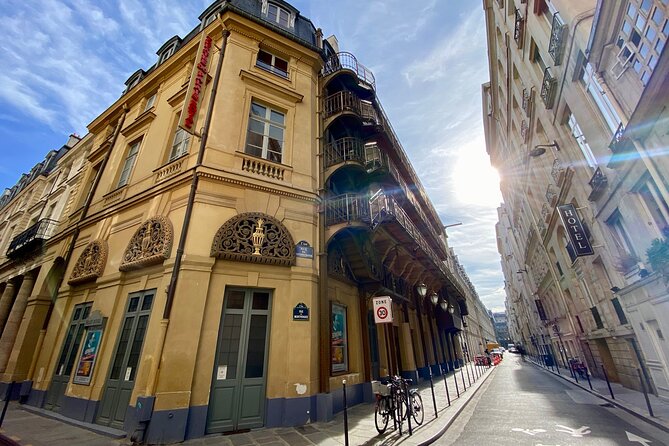
Your walk begins at the Colonnes de Buren / Les Deux Plateaux, at the Galerie de la Cour d’Honneur address: 2 Rue de Montpensier, 75001 Paris. It’s a very central, landmarky spot, which helps because covered passages are easy to miss if you’re hunting by street name alone.
From there, the route guides you toward the area around Palais-Royal—a good move, because this neighborhood sets the tone for the whole theme: elegance, commerce, theater, and street culture all in close quarters.
Practical tip: arrive with your phone ready before you start walking. A few issues were reported around the app not functioning or the audio not triggering properly. If your phone is at 10% battery, you’re asking for a bad time.
Palais-Royal: Gardens, Comedy, and the Phrase Midi Pétante
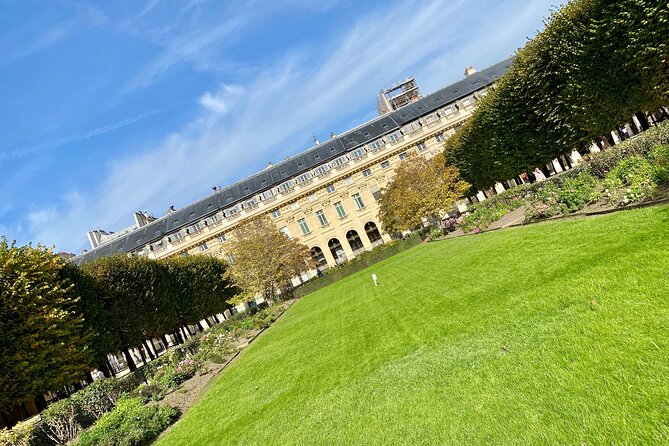
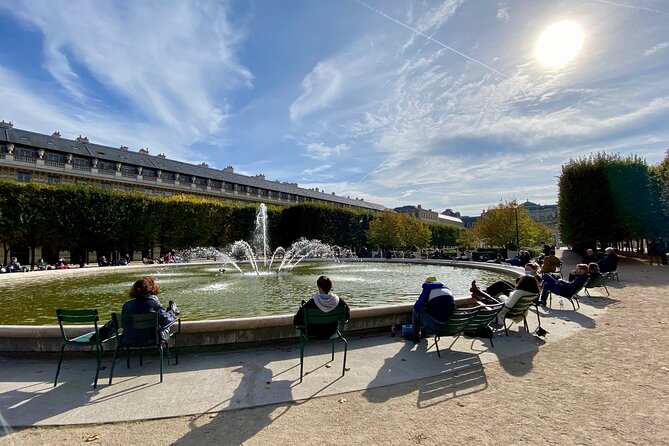
The first stop is Palais-Royal, and this is a smart anchor for the tour. It isn’t just a pretty place to wander; it’s a launch pad into how Parisians used public spaces for leisure and consumption.
Here, you’ll get stories tied to small details and famous corners, including the Blind’s Café and the origins of expressions like midi pétante—the idea of noon sharp. It also connects Palais-Royal’s courtyard and vibe to its role as a 19th-century gastronomic mecca, when people came here to see and be seen.
Then there are the gardens. Even if you’re not a garden person, taking a few minutes to slow down in the Palais-Royal grounds makes the rest of the walk feel more meaningful. You’re not just moving from passage to passage; you’re stepping into the style of place they were meant to imitate.
Time on this segment is around 15 minutes, and it works as a warm-up. If you want a calmer start, keep your phone audio on while you walk the courtyard paths, then reduce volume while you sit for a minute in the gardens.
Galerie Vivienne and the Passage Wars of the 1800s
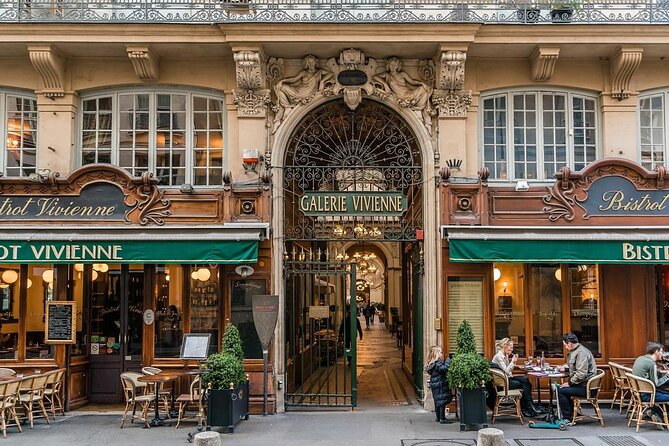
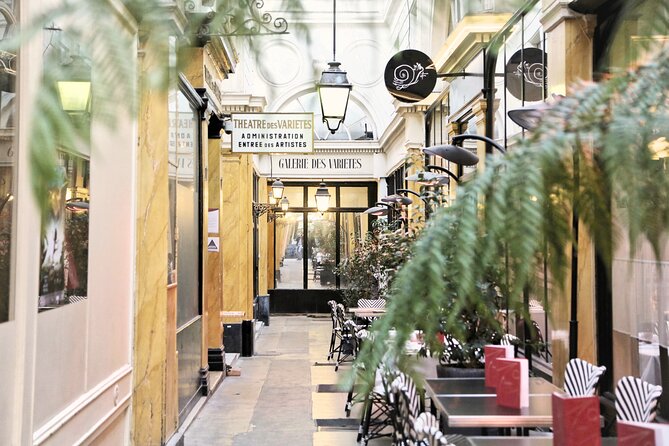
Next comes Galerie Vivienne, one of the standout surviving passageways. This is where you start seeing the tour’s real value: it teaches you how these passages were competing businesses, not just decorative leftovers.
You’ll hear about the network of passage couverts—places like Galerie Vivienne, Passage des Panoramas, and Passage Jouffroy—as early cousins of department stores. The audio frames them as destinations engineered to draw customers, often with spectacle.
One particularly memorable angle is the idea that shop owners went beyond normal retail to attract people with entertainments like exotic animals, clowns, and acrobats. It’s odd, and that’s why it works. You’ll look at the passage interior differently once you picture the bustle it once hosted.
The stop also points you to an important shopping legacy: the oldest chocolate factory in Paris, founded in 1761. Even if you don’t buy anything, knowing a brand has that kind of staying power adds weight to the “shopping arcade” theme.
This segment is about 10 minutes. If you like reading storefront details and old signage, you might naturally spend a bit longer—just don’t lose track of your audio cues if you’re trying to finish within the tour’s typical timing.
Passage des Panoramas: The Ancestor of Cinema
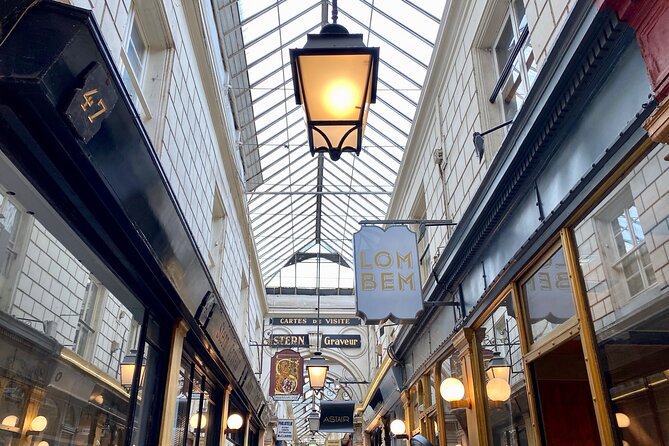
Then you reach Passage des Panoramas, and this stop has a neat “why you should care” hook. The audio explains why it’s considered an ancestor of cinema, tying a passage built for walking and viewing to the later idea of mass entertainment and image culture.
This is a good example of how the tour works at its best: it doesn’t just say what a place is. It explains why it connects to a bigger story in Paris.
In practical terms, this is one of the easier stops to enjoy quickly. You don’t need special context to appreciate the architecture, because the passage layout guides your attention as you walk. The audio does the rest, keeping things from turning into a generic “pretty hallway” experience.
Plan on about 10 minutes here. If one section is crowded or you lose your place, you can often move slowly until you catch the next audio segment for the next location.






Passage Jouffroy: Grévin, Segas Gallery, and Hidden Treasures

Passage Jouffroy is the next step, and it’s designed to feel like the tour is getting more playful. Here, you’ll hear about nearby cultural draws including the Grévin wax museum and the Segas Gallery.
The key idea is that the passage is full of small “what is that?” moments. The audio nudges you to look beyond the main walkway so you don’t miss the details that make the space feel layered. There’s also the thrill of hearing a short explanation and then immediately spotting the element it describes.
If you like places where Paris blends commerce with spectacle, this stop is for you. It also fits well after Passage des Panoramas, because you can connect the dots: passages as early entertainment corridors, not just sheltered shopping routes.
This is another 10-minute stop. If you’re pressed for time, keep moving—but don’t rush so much that you skip the Segas-related areas the audio points out.
Passage Verdeau and Hôtel Drouot: Antiques and Collector Energy
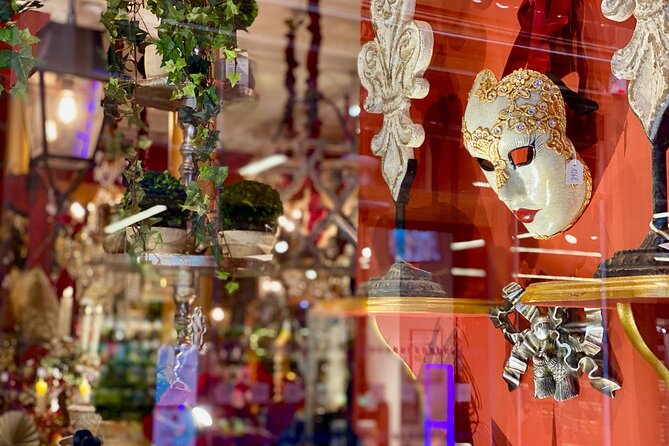
The final stop is Passage Verdeau, and it brings the theme forward into a more specific Parisian lane: auctions and collecting. The route links this passage to Hôtel Drouot, known for antique and collectors auctions.
Even if you’re not an auction person, this ending makes sense. It ties the idea of “shopping and spectacle” to something that’s still active in a different form. Paris didn’t just freeze these passages in time; the city keeps reinventing the same impulse: gather people in a place where value is shown, discussed, and exchanged.
This stop is also where you finish the walk, with the tour ending at Pass. Verdeau, 75009 Paris. It’s a good location because it places you near an active part of the city rather than dropping you in an awkward dead zone.
Typical time at this segment is about 10 minutes, but if the auction angle sparks your curiosity, you might naturally spend a little longer looking around before you move on.
Price and Value: What $11.56 Buys You in Real Time
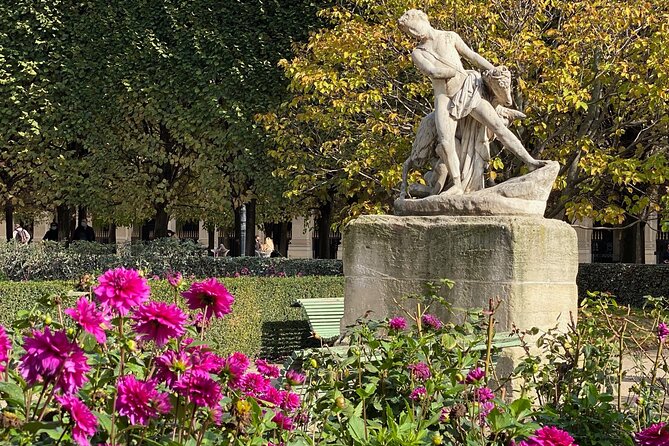
At $11.56 per person, you’re paying for an audio-led walk that strings together several major covered passages and nearby points of interest. That’s not a lot of money for central Paris, especially when the experience time is about 1 hour to 1 hour 30 minutes.
Here’s the value logic that matters: this tour replaces multiple separate decisions. Instead of choosing between “Palais-Royal area,” “Galerie Vivienne,” “Passage des Panoramas,” and “something else,” you get a planned sequence with narration designed to keep you engaged while you move.
The main reason this feels like good value is pacing. You’re not stuck in a long guided session, and you’re not wandering aimlessly. You walk, listen, pause if you want, and complete a meaningful loop quickly.
The trade-off is obvious: it’s app-driven. If the app doesn’t work or audio doesn’t trigger, the experience can shrink fast. The positive reviews point to strong narration and location syncing, but the low ratings show that when the tech fails, it turns frustrating. So treat your phone like part of the ticket.
If you’re traveling with a charging setup, you’ll feel the value even more.
How to Use the Rewind App Without Losing Your Day
This experience is “self guided,” but it’s not self-absorbed. The tour depends on following the professional voice comments through Rewind’s app, with audio that triggers automatically as you reach each scene.
That matters because covered passages are easy to confuse with each other. Their entrances can look similar from the street. Automatic cues help you avoid the classic problem: you’re inside, but you’re not sure if you’re at the right place yet.
Based on feedback tied to the experience, these are the practical habits that protect your time:
- Start with your phone charged and sound on.
- Use the meeting point landmarks exactly as given, not a nearby guess.
- If one passage feels off or closed, keep walking in the route sequence and let the app catch up.
- If you need to take breaks, pause and resume instead of pushing through while the battery fades.
One more thing I appreciate: the experience is described as flexible—people liked that there were no rigid schedules to obey. That means it fits well into a morning or afternoon when you want something structured but not boxed in.
Best Fit: Who Will Enjoy This Most
This walk suits you if you like:
- Architecture with a story attached
- Short walking routes that cover multiple sites
- Learning fun details in context, like phrases and retail traditions
- A less formal way to experience Paris than a sit-and-listen tour
It’s also a solid choice if you’re a frequent Paris visitor—or if you’ve already done the big sights and want the city’s lesser-used layers. One of the strongest themes from the feedback is discovering places that feel unusual even for people who know Paris well.
If you dislike app-based tours or you’re traveling with a weak phone signal and a low-battery setup, you might want to think twice. The route is straightforward, but the experience quality depends on your audio working smoothly.
Should You Book Royal Palace and Covered Passages by Audioguide?
I’d book it if you want a quick, high-detail way to see multiple 1800s passages plus the Palais-Royal area in about an hour to 90 minutes. The strongest reason to choose it is the mix: authentic spaces plus stories that explain why they mattered, not just what they look like.
Skip it—or at least go in with eyes open—if you’ve had bad luck with audio apps while traveling, or if you’re the kind of person who gets stressed when an app doesn’t behave. The tour’s value is excellent when it works as intended, and the frustration risk is real based on reported app and start-point issues.
If you can handle a little tech setup, you’ll likely come away feeling like you saw Paris with a lens you don’t get from a normal walk.
FAQ
How long is the Royal Palace & Covered Passages audioguided tour?
It’s listed as approximately 1 hour to 1 hour 30 minutes.
Where does the tour start and end?
The start is at Colonnes de Buren / Les Deux Plateaux (Galerie de la Cour d’Honneur, 2 Rue de Montpensier, 75001 Paris). The end is at Passage Verdeau (Pass. Verdeau, 75009 Paris).
Is this tour guided by a person in real time?
It’s audioguided. You follow the guide’s commentaries using Rewind’s app on your smartphone.
Do I need admission tickets for the stops?
The stops listed are marked Admission Ticket Free. Still, double-check whatever is shown in your booking details in case redemption instructions appear.
How does the audio work while I’m walking?
The audio commentaries trigger automatically when you reach the relevant spots, so you hear the story in the location where it applies.
Can I pause the tour and start again later?
The experience is presented as flexible, and you can stop and resume rather than being locked into a strict schedule.
Is the tour private?
Yes. It’s listed as private, meaning only your group participates.
Is the tour suitable for most people?
The information says most travelers can participate.
Do they provide a smartphone app only, or do I need anything else?
You’ll use your smartphone with Rewind’s app to access the audio while you walk.
What if I cancel?
Free cancellation is available up to 24 hours in advance for a full refund.