REVIEW · SALZBURG
Salzburg Highlight Tour with Fortress Hohensalzburg
Book on Viator →Operated by Salzburg Experience · Bookable on Viator
Old Salzburg, plus views from a fortress. A private guide shepherds you through the key sights, ending with a trip up to Fortress Hohensalzburg for big panoramic payoff.
I especially love how the route blends music-town landmarks with everyday city life. You get a focused Cathedral stop with Mozart-linked details, and you also stroll through Getreidegasse with its wrought-iron signs and the Mozart house area.
One watch-out: if you end up with a guide who speaks very quietly, you could miss the details that make these stops click. Since this is a private group, it’s worth speaking up early if you can’t hear well.
In This Review
- Key takeaways before you go
- Price and logistics: what you’re really paying for
- Mozartpl. 2 to Residenzplatz: getting your bearings the right way
- Salzburg Cathedral Dom and crypt: frescoes, organs, and a Mozart baptism stop
- Getreidegasse and Mozart’s Birthplace: the street walk that turns into a mini-history lesson
- Kollegienkirche Farmers Market and the Old Market square coffee pause
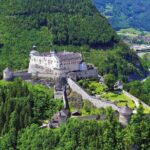
- Fortress Hohensalzburg by funicular: views, state rooms, and 900-plus-year walls
- Guide quality makes or breaks the experience
- Who this tour fits best (and who might want another option)
- Should you book this Salzburg Highlight Tour with Fortress Hohensalzburg?
- FAQ
- Where is the meeting point for the tour?
- Is pickup from hotels included?
- How long does the Salzburg highlights tour last?
- Is this tour private, and what group size is it?
- Is the tour offered in English?
- Are tickets included for the Cathedral and the fortress?
- Is the tour suitable for everyone in terms of walking?
Key takeaways before you go
- Private, group-up-to-8 format: you’re not sharing your attention with strangers.
- Smart Mozart start point at Mozartpl. 2: easy to find, and it sets the tone fast.
- Salzburg Dom + crypt are included: you spend less time worrying about tickets and more time looking.
- Funicular up to Fortress Hohensalzburg: fewer steep climbs, better views with less stress.
- Markets and coffeehouse time built in: Salzburg isn’t only churches and statues.
Price and logistics: what you’re really paying for
This is priced at $505.23 per group (up to 8 people), and the tour runs about 2 hours 30 minutes to 3 hours. Do the quick math: if you book with a full group, it’s roughly $63 per person; if it’s just 2 of you, it’s closer to $250 each. That pricing makes the most sense when you’re traveling with friends, or you can fill out a small group.
You’ll get English guidance and a mobile ticket, which helps when you’re juggling church entry times and the fortress. Pickup is offered from hotels near Salzburg’s historic center, so you can start without a scramble.
One practical detail: the tour calls for moderate physical fitness. You’ll be on foot in old-town streets and you’ll spend about an hour up at the fortress. The funicular helps for the climb, but you should still be ready for standing, walking, and some stairs once you’re up top.
You can also read our reviews of more tours and experiences in Salzburg.

Mozartpl. 2 to Residenzplatz: getting your bearings the right way
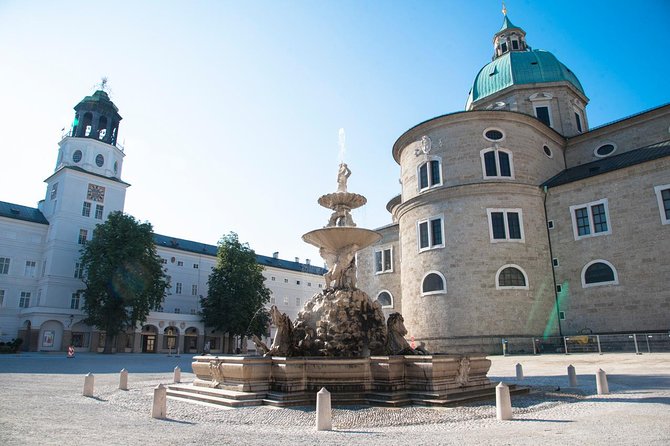
The tour begins in front of the Mozart Statue at Mozart square, with your guide meeting you at Mozartpl. 2, 5020 Salzburg. It’s a great opener because it anchors the city’s identity early—Salzburg didn’t just become Mozart’s hometown by accident.
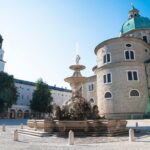
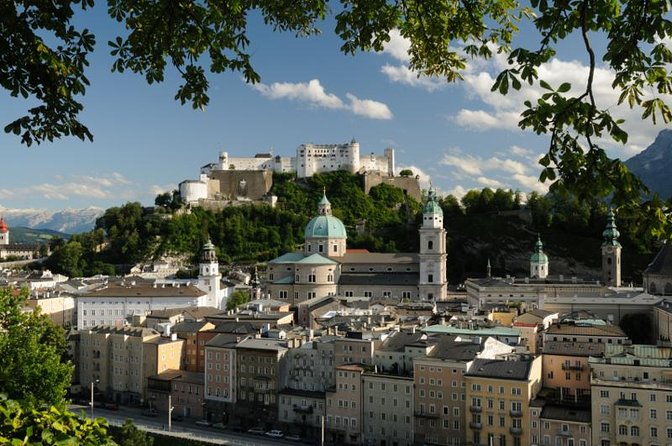
From there, you move toward Residenzplatz, where the city suddenly feels bigger. The architecture shifts from tight little streets to open squares, and you’ll see the Residence fountain plus the Old and New Residenz buildings framing the space. I like this section because it helps you understand what kind of city Salzburg is: compact enough to walk, but designed with major power and ceremony at the center.
This part of the route is also a low-pressure warm-up. You get orientation and context without having to rush through it like a checklist.
Salzburg Cathedral Dom and crypt: frescoes, organs, and a Mozart baptism stop
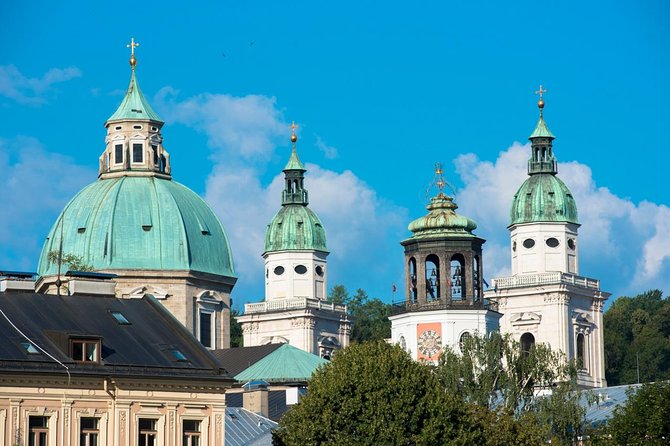
Next comes Salzburg Cathedral (Salzburg Dom), with admission included. Even if you’re not a stained-glass or organ superfan, the Dom is worth your time because you’re looking at layered art and symbols in the same space.
Inside, expect to notice frescos, altars, and organs. Then the focus turns underground in the crypt, where you’ll see graves of former Prince-Archbishops. There’s also mention of modern art placed in a 12th-century apsis, which is a useful reminder that old buildings in Salzburg don’t always feel frozen in time.
On the way out, there’s a very specific stop: the baptismal where W.A. Mozart was baptized. That detail matters because it connects the art and the church to a real life moment, not just a famous name. It’s the kind of thing you’d otherwise miss if you were rushing through on your own.
Time-wise, plan for about 15 minutes here. If you’re the type who wants extra minutes for photographs or quiet looking, tell your guide early so they can pace you without sacrificing the rest of the day.
Getreidegasse and Mozart’s Birthplace: the street walk that turns into a mini-history lesson
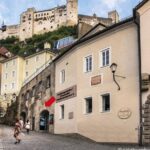
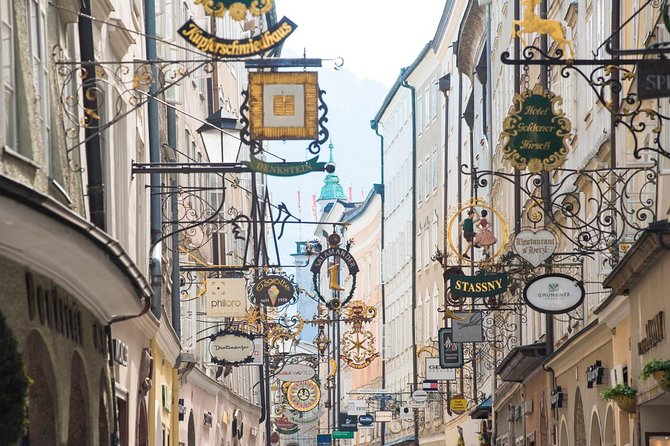
After the Dom, you head to Getreidegasse, one of Salzburg’s most fun walking stretches. This is the street with wrought iron shop signs, arts and craft shops, and the odd mix of well-known brands tucked into the same narrow lane.
You’ll have a chance to enjoy the street at an unhurried pace—about 10 minutes—and that’s important because Getreidegasse is better when you slow down and notice the details. Pay attention to the facades and the old signage style; it’s part of how Salzburg still feels like itself.
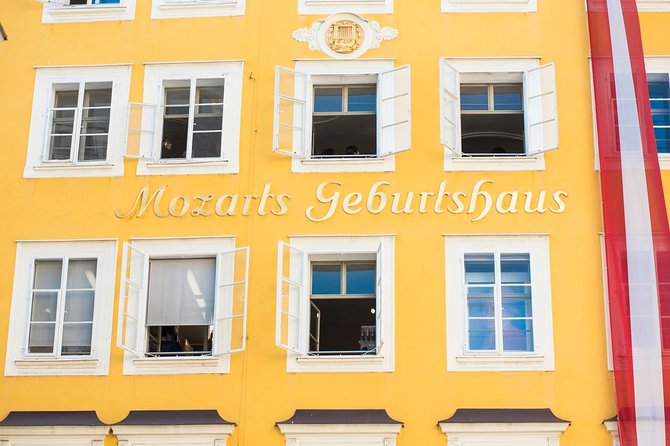
Right in the center of this street is Mozart’s Birthplace in the famous yellow house area. Many people stop simply to look at the exterior, while others choose to add the museum time. Your guide can point you to what’s most worth it based on your interest level, so you don’t waste time paying for something you won’t enjoy.
If you’re shopping, this is a good moment to do it. If you’re not, it’s still a great place to pick up small gifts and snacks and let the city’s personality hit you.
Kollegienkirche Farmers Market and the Old Market square coffee pause
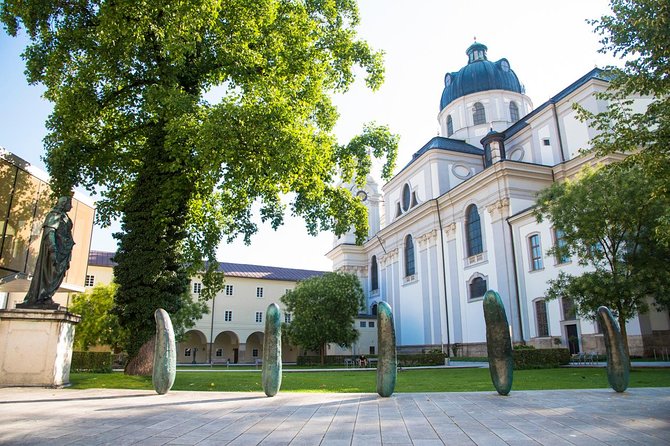
Next you’ll be at Kollegienkirche (Collegiate Church) on University square, where the experience highlights a farmers market atmosphere. The church forms a strong backdrop for the food stands, and the whole area feels like Salzburg’s more everyday side.
This is your built-in chance to taste local-style bites. You’ll be pointed toward options like local cheese, sausages, fruits, and pretzels, and you can pair that with local beer or fresh water depending on what fits your day. Even if you don’t buy much, the market energy is worth a look—it’s one of those places that makes the city feel lived-in.
After that, you’ll have a nod toward Old Market square, surrounded by shops and famous coffeehouses. The practical idea here is simple: use the last portion of the tour to reset with a cup of coffee and something like freshly made apple strudel. Salzburg does pastry like it’s a civic duty.
You only get about 10 minutes in this section, so think of it as a sampling and vibe-stop, not a full food itinerary.

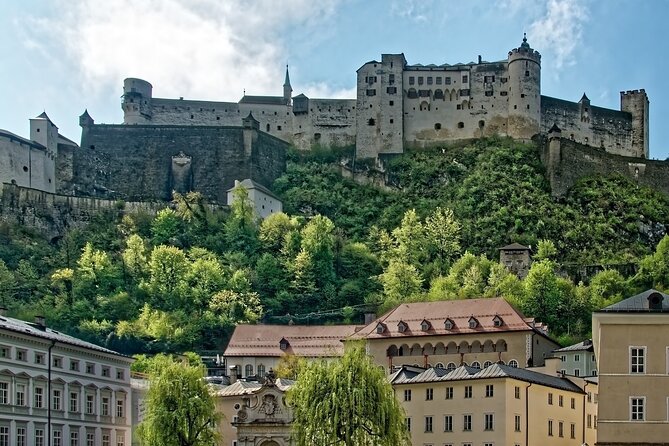
Fortress Hohensalzburg by funicular: views, state rooms, and 900-plus-year walls
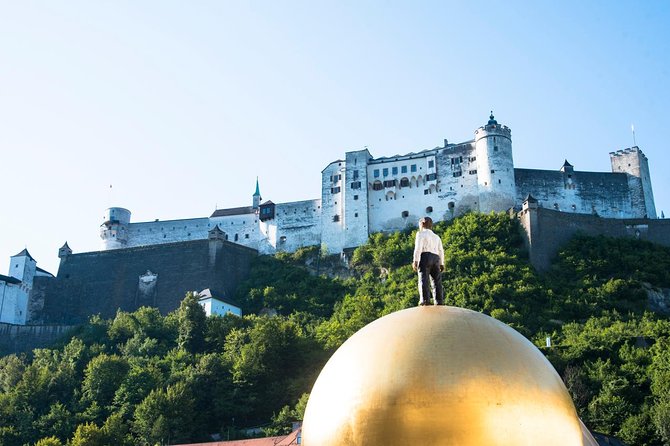
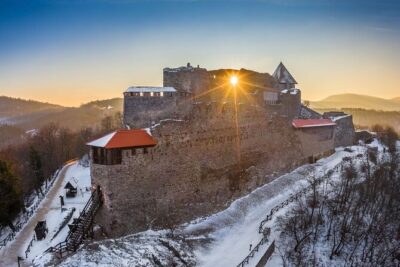
The day’s big finale is Fortress Hohensalzburg, reached by funicular. The fortress entry ticket is not included, so plan for that extra cost when you’re budgeting. Once you’re up there, your guide walks you through the fortress highlights in about one hour.
The view is the main reason this works so well. From the top of this over 900-year-old fortress, you can look out over Salzburg and, on a clear day, reach toward the Northern Limestone Alps. There’s also a mention that you might see Eagles Nest in the far distance when the visibility is right.
What I like about the way this is guided: you don’t only stand at viewpoints. Your guide shows hidden areas and moves through 15th-century state rooms all the way to the tall tower. That matters because fortress visits can become repetitive if all you do is follow the obvious path and take the same three photos. A good guide helps you understand what you’re looking at—who used these spaces, how power worked, and why the fortress shaped the city.
Practical note: fortress time is usually more standing and walking than the old-town streets. If you’re wearing shoes that are fine for cobblestones but don’t like inclines, this is where you’ll feel it.
Guide quality makes or breaks the experience
The biggest pattern in the tour’s success is the guide. When you get a strong storyteller, the stops feel connected—Mozart’s life, church art, city architecture, and fortress power all click into one coherent Salzburg picture.
Guides such as Natascha are known for customizing the pace and turning the fortress viewpoint experience into an extra-long moment of looking from above. Others, like Annabelle, have a reputation for being flexible with what you want to prioritize, including tips for seasonal things like the Christmas markets. Maria and Nicoletta stand out for knowledge, personable delivery, and story-first explanations that make the places easier to remember.
One caution comes from a very different guide experience: a quiet guide can ruin the value of a guided tour. In a private group of 8, hearing matters. If you notice your guide is too soft, address it right away so they can slow down or project better. In this kind of walking-and-looking tour, missing the narration means missing the point.
Who this tour fits best (and who might want another option)
This is a smart pick if you want a first-time orientation to Salzburg without bouncing around on your own. You’ll cover the big Mozart-linked stops, the Dom, a classic walking street, a market vibe, and a fortress viewpoint in one plan.
It also fits well for families and friend groups up to 8, mainly because pickup from near the historic center reduces time lost to logistics. If you’re short on days, this tour’s structure helps you see more of the “must” pieces without spending half your morning figuring out routes.
You might want a different format if you hate timed stops. Some sections are only 10 minutes, so you won’t get a long, leisurely browse at every shopfront or every side chapel. And if you’re sensitive to noise or you need clear audio in order to enjoy narration, pick the departure time and group setup that feels comfortable for you.
Should you book this Salzburg Highlight Tour with Fortress Hohensalzburg?
I’d book it if you want one guided day that connects Salzburg’s Mozart identity to its religious and civic power centers, then finishes with real views from Fortress Hohensalzburg. The value is strongest when you can spread the $505.23 per-group cost across multiple people, and the included Salzburg Dom admission helps keep the day smooth.
Skip or rethink it if you’re looking for a slow, unstructured wander where you control every minute. This tour is built to move—just not in a frantic way—so you’ll get more “how to see Salzburg” than “free-form exploring.”
Bottom line: if you’ll appreciate guided context and you’re ready for some walking plus a fortress climb-by-funicular, this is a very workable way to start your Salzburg trip.
FAQ
Where is the meeting point for the tour?
The guide meets you in front of the Mozart Statue at Mozart square, at Mozartpl. 2, 5020 Salzburg, Austria.
Is pickup from hotels included?
Yes. Pickup is offered from all Salzburg hotels near the historic centre.
How long does the Salzburg highlights tour last?
It runs about 2 hours 30 minutes to 3 hours (approx.).
Is this tour private, and what group size is it?
Yes, it’s a private tour/activity. Only your group participates, with a maximum of up to 8 people.
Is the tour offered in English?
Yes, the tour is offered in English.
Are tickets included for the Cathedral and the fortress?
Salzburg Cathedral (Salzburg Dom) entry is included. Fortress Hohensalzburg entry is not included.
Is the tour suitable for everyone in terms of walking?
It’s listed as suitable for travelers with moderate physical fitness. You should expect walking in the historic center and time spent up at the fortress.