REVIEW · SPLIT
Split Diocletian Palace Highlights – Private walking tour
Book on Viator →Operated by Split Guide · Bookable on Viator
Split’s Roman palace isn’t a museum—it’s still lived in. In this private 1 hour 30 minute walk, I love how the tour connects big names and big stone to the day-to-day feel of Old Town, and how the route hits the key spots around Diocletian’s Palace without wasting time.
One thing to know up front: you won’t be paying for special interiors. The experience is designed for seeing the sights from the outside, so if your dream is climbing inside every famous room and paying for ticketed exhibits, this may feel a bit limited.
In This Review
- Key Highlights to Look for
- Entering Diocletian’s Palace Without the Museum Vibe
- Price and What You Actually Get for $137.80
- Where the Tour Starts and Ends in Split
- Step-by-Step: From Split Riva Into the Palace Walls
- Stop 1: Split Riva (The Promenade with Real People Energy)
- Stop 2: Diocletian’s Palace (Where Homes and Shops Sit Inside Ancient Walls)
- Stop 3: Diocletian’s Cellars (A Sense of Scale, Straight Away)
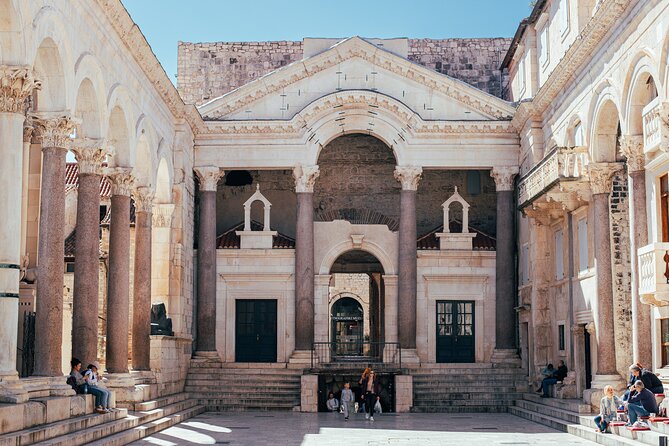
- Stop 4: The Peristyle (Imperial Theater and Sacred Space)
- Stop 5: Cathedral of Saint Domnius (Pagan Mausoleum Becomes Christian Cathedral)
- Stop 6: Iron Gate / Silver Gate (The Gate That Reopens to the Market)
- Triklinij and the Temple of Jupiter: Eating, Religion, Power
- Stop 7: Triklinij (Dining Room, Roman-Style)
- Stop 8: Vestibulum of Diocletian’s Palace (Entrance to Private Chambers)
- Stop 9: Temple of Jupiter (Now a Baptistery)
- The West Gate Loop: Markets, Squares, and a Clean Exit
- Stop 10: Iron Gate (West Gate) and the Trap-Enemy Design
- Stop 11: Golden Gate (Road to Salona)
- Stop 12: Green Market (Everyday Food, Not Tourist Props)
- Stop 13: Back to Split Riva (See-and-Be-Seen, Round Two)
- The Private-Guide Advantage: Why Small Matters Here
- What to Expect on the Ground (So You’re Not Surprised)
- Who This Tour Suits Best
- Should You Book This Private Walking Tour?
- FAQ
- How long is the Split Diocletian Palace Highlights private walking tour?
- Where does the tour start and end?
- Is the tour offered in English?
- Is this a private tour, and what’s the group size?
- Are entrance fees included for the sights?
- Do I need an entrance ticket for the landmarks?
- Do you get a mobile ticket?
- What’s included besides sightseeing?
- What happens if the weather is bad?
- Can the tour accommodate special needs and service animals?
- What’s the cancellation policy?
Key Highlights to Look for
- Small-group pace: designed for up to 6 people, with a max group size listed as 10
- No paid entry fees: the stops don’t require entrance tickets
- Roman-to-Christian timeline: see how pagan structures became later sacred spaces
- Gates with a purpose: Iron Gate, Golden Gate, and the story of trapped enemies
- Market detour energy: finish near places where locals buy everyday food
Entering Diocletian’s Palace Without the Museum Vibe
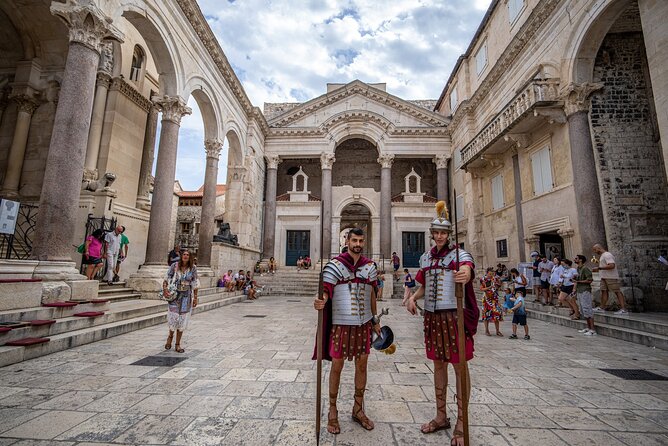
If you only know Diocletian’s Palace from photos, you’re in for a surprise. This place was built by Roman Emperor Diocletian and used as a home more than 1,700 years ago. Today it still functions like a neighborhood: you’ll see houses, shops, and normal street life inside the palace walls. That living-in feel changes how you read the stone. Instead of distant ruins, it feels like you’re walking through the backbone of Split.
You also get a route that’s practical. In 90 minutes you hit the big landmarks most visitors want, but in a way that makes sense geographically: the promenade, the palace core, then the gates and the market side. It’s a fast way to get your bearings fast in Old Town.
You can also read our reviews of more tours and experiences in Split.

Price and What You Actually Get for $137.80
At $137.80 per person, this is not a cheap stroll. But it’s also not overpriced for what you’re buying: a private walking guide focused on the key palace highlights, designed to keep your time efficient. You’re paying for explanation, routing, and the small-group format so you can ask questions and get context as you go.
The value improves because entrance fees aren’t part of the deal. The tour emphasizes free-to-access areas and outside viewing, so you’re not hit with surprise ticket costs. And you get extras beyond sightseeing: restaurant, bar, and leisure recommendations, plus the option to customize the experience.
My take: if you want the palace highlights covered in a short window (and you’d rather not guess what you’re looking at), the guide component is the reason to book.
Where the Tour Starts and Ends in Split
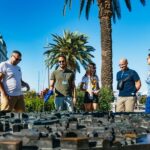
You start at the Model of the historical core of the city of Split. That’s helpful because it gives your brain a map before you’re dropped into the maze of Old Town streets. You end at Republic Square, a central hub where it’s easy to continue on your own—grab food, catch a bus, or wander toward the waterfront again.
That start-to-finish choice matters. The route is shaped so you’re not retracing steps the whole time. You walk the palace perimeter, see the core highlights, then pop back toward major squares and market areas where you can keep the day going.
Step-by-Step: From Split Riva Into the Palace Walls
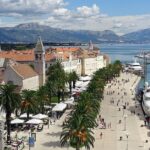
Stop 1: Split Riva (The Promenade with Real People Energy)
The tour begins on the Riva, Split’s famous promenade. This is where tourists and locals both hang out in the sun—cafes, restaurants, and that classic see-and-be-seen energy. Even before Roman stones appear, you’re getting a feel for modern Split’s rhythm.
Why it’s a good first stop: it frames what the rest of the walk will feel like. You’re not only visiting ruins; you’re entering a living historic core.



Stop 2: Diocletian’s Palace (Where Homes and Shops Sit Inside Ancient Walls)
Next is the palace itself—built by Diocletian more than 1,700 years ago. The important idea here is that it’s not a traditional museum. Inside the walls, people still live and trade. That means your guide can point out how the palace design supports both imperial power and everyday use.
A possible drawback of this format: if you want a silent, ticketed experience, you won’t get it. The palace is active, and your view can be shaped by crowds and storefronts. Still, that’s part of the magic: you’re seeing the palace as it exists in real life.
Stop 3: Diocletian’s Cellars (A Sense of Scale, Straight Away)
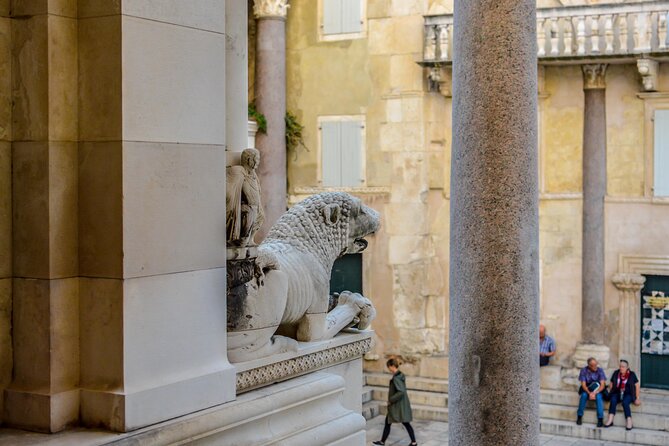
Through the south gate, you’ll reach the cellars. They’re very well preserved, and this stop helps you understand the palace’s sheer dimensions. Even when you’re looking around rather than touring an exhibit, the cellars give context: you can’t fully picture Diocletian’s planning without imagining what sat underground.
If you’re the type who likes structure and layout, this will click quickly.
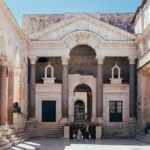
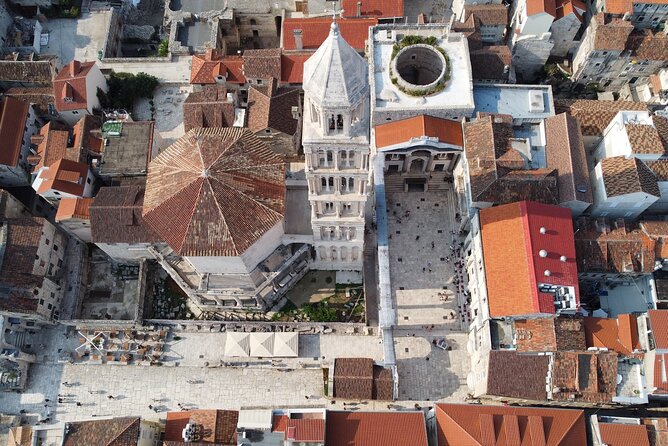
Stop 4: The Peristyle (Imperial Theater and Sacred Space)
Then comes the Peristyle, described as a sacral meeting place where Diocletian showed himself to his subjects. Your guide will connect the religious angle to the emperor’s political power—he was worshipped as the son of Jupiter.
What I like about this stop is the interpretation. Without context, the stones are just stones. With it, you start noticing how Roman spaces were designed to control attention.
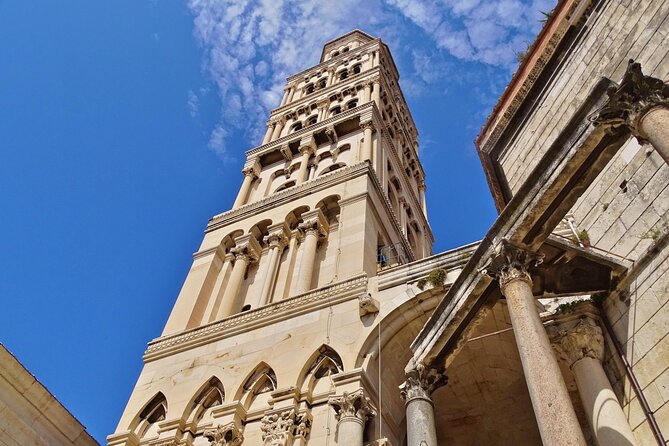
Stop 5: Cathedral of Saint Domnius (Pagan Mausoleum Becomes Christian Cathedral)
You’ll look at the Cathedral of Saint Domnius from the outside. This site once functioned as Diocletian’s mausoleum. When Christianity spread, the coffin and mortal remains disappeared, and the pagan mausoleum became a cathedral.
That timeline is the kind of detail that makes a city feel smarter. Split isn’t only Roman and not only Christian; it’s layers stacked over each other.
Stop 6: Iron Gate / Silver Gate (The Gate That Reopens to the Market)
The east side features the Iron Gate, also tied to the Silver Gate story. It was walled up several times over the centuries and reopened in the 1940s. Today, it leads into the market zone, where local products are offered.
This stop is about function. Gates weren’t just decoration—they were traffic control, defense strategy, and later, access points for daily life.
Triklinij and the Temple of Jupiter: Eating, Religion, Power
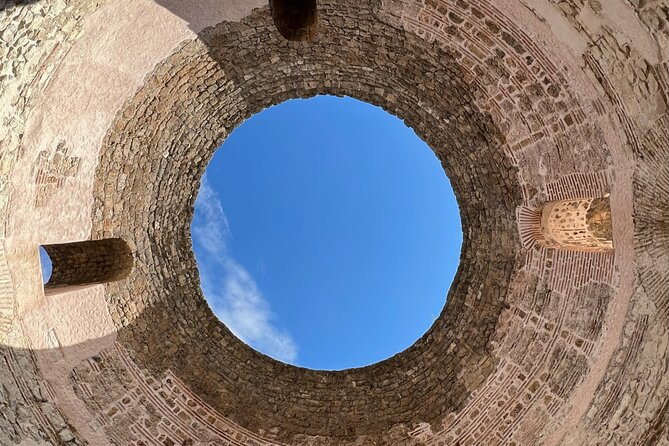
Stop 7: Triklinij (Dining Room, Roman-Style)
Triclinium—triklinij in Latin—means dining room. This is where Diocletian dined with guests, with Mediterranean dishes, local wine, and fish mentioned as common themes. Honey is also described as popular, and an evening could include as many as 20 different courses.
Even if you’re mostly seeing the space from the outside, the explanation helps you picture the social ritual: power shown through hospitality.
Stop 8: Vestibulum of Diocletian’s Palace (Entrance to Private Chambers)
The vestibule is the entry area to Diocletian’s private chambers. In many historic buildings, “private areas” are where you learn how power works. Here, the guide helps you understand that the palace wasn’t all public spectacle; it had controlled access zones.
Stop 9: Temple of Jupiter (Now a Baptistery)
The Temple of Jupiter is now used as a baptistery. You’ll look at it from the outside again—no ticket fee—yet the transformation tells a big story about shifting beliefs.
This is a good moment to slow down mentally. You’ve gone from gates to dining rooms to sacred worship spaces. The palace becomes less like a single monument and more like a system of roles.
The West Gate Loop: Markets, Squares, and a Clean Exit
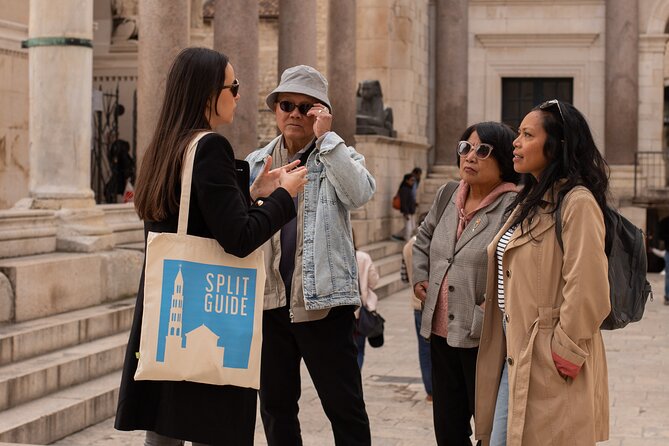
Stop 10: Iron Gate (West Gate) and the Trap-Enemy Design
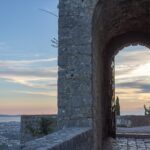
The tour continues to the west side with the Iron Gate. Like the north and east gates, it was a double gate called Propugnaculum. Between the two gate structures, enemies could be trapped and hit with stones, arrows, and hot oil.
That might sound intense, but it’s actually one of the best explanations of Roman defensive logic. A gate is a chokepoint—and the details matter.
Then you transition into the square called Pjaca, a beautiful open area that gives you room to reset after walking through the tight palace zones.
Stop 11: Golden Gate (Road to Salona)
The Golden Gate is the north gate and was the most important gate in Roman times. From here, the road led to Salona, the capital of the Roman province.
If you like maps and routes, this is a satisfying stop. It turns the palace from a standalone block into a link in a larger network.
Stop 12: Green Market (Everyday Food, Not Tourist Props)
On the east side you’ll see the Green Market, with fresh fruits, vegetables, and traditional foods sold daily. This is where the tour’s practical side shines. You’re not only learning history—you’re also ending near places where you can buy real food for your next meal.
Stop 13: Back to Split Riva (See-and-Be-Seen, Round Two)
Finally, the route returns along the palace walls to the promenade. Back on the Riva, you get that same sunny, café-lined energy as at the start. It’s a nice closing loop: first you understand the modern city, then you understand the ancient machine beneath it, and then you look at modern Split again with new eyes.
The Private-Guide Advantage: Why Small Matters Here
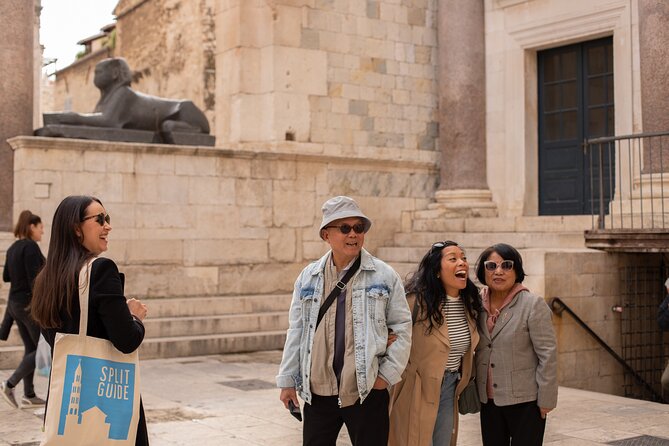
Because this is private and small-group oriented, the guide can tailor pacing. You can ask what to look for, and you can get clarifications without feeling rushed. That matters a lot in Split’s palace walls, where the geometry and symbolism can be confusing if you’re just reading signs on your own.
Also, there’s built-in flexibility. The tour is described as individually customizable, and it can be adapted to special needs if you inform the provider in advance. Even if you don’t need adjustments, the option is a comfort.
One more point: confirmation is handled at booking, and you’ll receive a mobile ticket. In a city where you might be bouncing between sights, that’s one less thing to manage.
What to Expect on the Ground (So You’re Not Surprised)
This tour requires good weather. That’s common in outdoor historic cores, but it’s especially relevant because the route is largely walking between open-air landmarks and squares.
Come prepared for sun and uneven old-town surfaces. Even though the time is only about 1 hour 30 minutes, you’ll still cover ground around the palace walls and through key access points.
Also, since the sights are visited only from the outside, your “wow” moments will come from your guide’s explanation and your own attention to details—gates, layouts, and transformations like the mausoleum-to-cathedral story.
Who This Tour Suits Best
I’d strongly consider this experience if:
- you want the Diocletian’s Palace highlights in a short visit window
- you enjoy context and stories tied to what you’re physically seeing
- you prefer a small group and practical guidance over wandering on your own
- you’d like local recommendations for food and leisure as part of the day
It may not be ideal if you’re chasing only ticketed interior attractions where you spend time inside multiple rooms.
And if you’re traveling with someone who needs extra pacing, the ability to adapt the tour can be a big deal.
Should You Book This Private Walking Tour?
Book it if you want a fast, focused way to understand why Split’s palace still feels alive. The route hits the major landmarks—Riva promenade, Diocletian’s Palace core areas, cellars, peristyle, cathedral outside views, Triklinij, Jupiter’s temple area, the gates, and the market zone—and your guide ties it together with clear explanations.
Skip it or reconsider if you’re planning an itinerary full of paid museum-style interiors. Since you’re mostly viewing from the outside and entrance fees aren’t part of the plan, this is best for people who want meaning, layout, and local context more than ticketed rooms.
If you’re on the fence, use this rule: if you’re worried about getting lost or not knowing what you’re looking at, a private guide here is a smart use of time.
FAQ
How long is the Split Diocletian Palace Highlights private walking tour?
It’s about 1 hour 30 minutes.
Where does the tour start and end?
It starts at the Model of the historical core of the city of Split (Obala Hrvatskog narodnog preporoda 23, Split) and ends at Republic Square (Prokurative, Split).
Is the tour offered in English?
Yes, it’s offered in English.
Is this a private tour, and what’s the group size?
The tour is designed for a group of maximum 6 participants, and the activity also lists a maximum of 10 travelers.
Are entrance fees included for the sights?
No entrance fees are included; the sights are visited without paying ticket fees.
Do I need an entrance ticket for the landmarks?
No separate entrance tickets are required for the stops listed, and the tour notes admission ticket free for the included highlights.
Do you get a mobile ticket?
Yes, the tour includes a mobile ticket.
What’s included besides sightseeing?
You’ll get recommendations for restaurants, bars, and leisure activities, and the tour can be individually customized.
What happens if the weather is bad?
The experience requires good weather. If it’s canceled due to poor weather, you’ll be offered a different date or a full refund.
Can the tour accommodate special needs and service animals?
Service animals are allowed, and the tour can be adapted to special needs if you inform the provider in advance.
What’s the cancellation policy?
Free cancellation is available up to 24 hours in advance for a full refund. If you cancel less than 24 hours before the start time, the amount paid is not refunded.