REVIEW · SPLIT
Split & Diocletian Palace Historical Walking Tour
Book on Viator →Operated by Ancient Tours · Bookable on Viator
Split feels like a living puzzle, and Diocletian’s Palace is the box. This walking tour is interesting because you’ll move through the palace like an ancient map, learning what each key space was for, while also getting close photo angles at major landmarks. I especially like the small-group option (up to 5) for a calmer pace, and the way the route strings together the palace’s big names—like the Peristyle and the Golden Gate—with clear context. One drawback to keep in mind: a few of the more “optional-feeling” sights can cost extra, so you’ll want to decide in advance what you want to pay for versus what you’ll see for free.
You’ll cover a compact circuit in about 1 hour 30 minutes, in English, with a mobile ticket and clear orientation from start to finish. If you’re arriving in Split with only a short amount of time, this kind of focused walk helps you understand what you’re looking at, so the rest of your day in town makes more sense.
In This Review
- Key things that make this tour worth your time
- Getting oriented at the Peristyle square
- The palace substructures: what holds the palace up
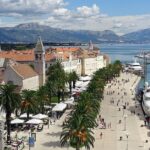
- Riva Harbor and the palace’s south wall
- Fruit’s Square and the Marko Marulić sculpture
- The last ancient Roman temple inside the palace
- Vestibulum, the emperor’s entrance hall, and possible singing
- Triklinij: the dining hall remnants
- The 12th-century clock tower and the church of Our Lady of the Belfry
- Grgur Ninski and the Golden Gate: language and the main entrance
- Price and what you’re actually paying for
- Group size, pace, and how to get the best experience
- Who this tour fits best (and who might skip it)
- Should you book Split & Diocletian Palace Historical Walking Tour?
- FAQ
- How long is the Split & Diocletian Palace Historical Walking Tour?
- How much does the tour cost?
- Is the tour in English?
- What group sizes are available?
- Are admission fees included for all stops?
- Is it easy to join public transportation and suitable for most visitors?
Key things that make this tour worth your time
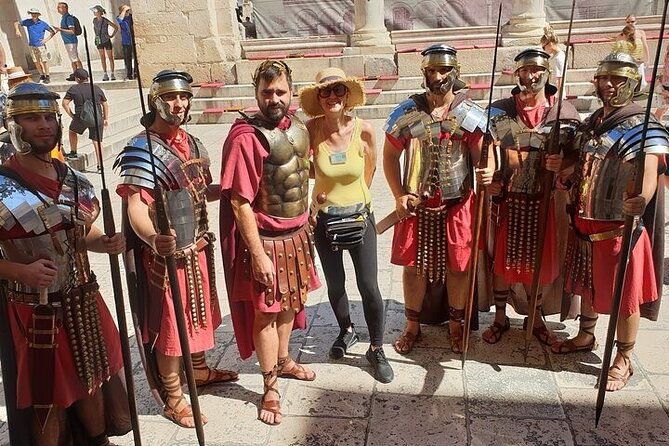
- Peristyle orientation: You start at the central square that connects to almost everywhere inside the palace complex.
- Substructures tour focus: You’ll learn how the palace was built and what the foundation spaces did over the years, without being forced into the museum portion.
- Photo-friendly palace edges: You get viewpoints that put you close to the palace story and the waterfront at Riva.
- Language-and-identity stop: The route highlights Gregory of Nin and the father of the Croatian language statue near the north gate area.
- Mausoleum-to-cathedral perspective: You’ll see the cathedral area tied to Diocletian’s final resting place.
Getting oriented at the Peristyle square
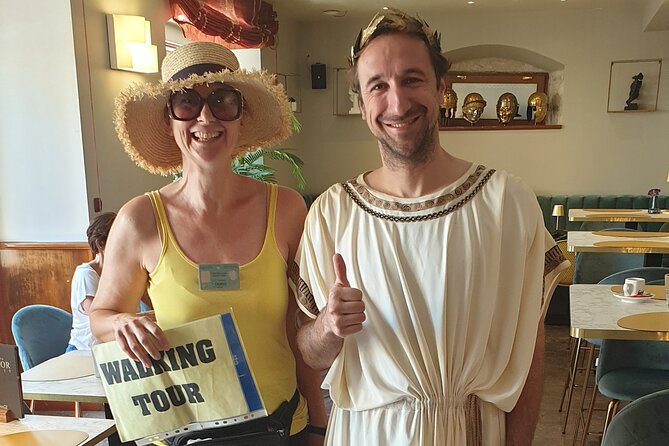
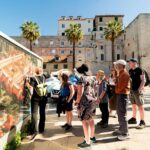
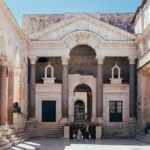
I love tours that act like a good street map. Right away, you’ll stand in the Peristyle—the central square inside Diocletian’s Palace. This is where you get your bearings fast, because from here you can reach nearly all the other major interior zones. If you’ve ever wandered through a giant historic complex and felt like you were guessing where you were, this stop fixes that problem.
The Peristyle also works as a visual anchor. You’ll see how the palace layout funnels movement, and you’ll understand why later “wow” moments don’t feel random—they’re placed where they matter. Even if your only goal is photos, this is one of the best places to capture the palace at a scale that makes it feel real.
Time on this stop is about 15 minutes, and that’s a good length: enough to look around, not enough to make your legs tired before the walking starts in earnest.
You can also read our reviews of more tours and experiences in Split.


The palace substructures: what holds the palace up
Next you’ll head into the Diocletian Palace Substructures, which focus on the building foundation and what these spaces were used for as the centuries went by. This is the part that many visitors rush past, because they think it’s only for specialists. Here, it’s treated like a key to understanding the entire palace.
You’ll walk through central hallway areas and hear the kind of explanation that turns “stone walls” into “engineering and design.” Also worth knowing: the substructures have a museum part, and this tour keeps you to the core walk-through, so you can visit the museum portion later if you want.
This stop is about 10 minutes, which is just enough to connect dots without feeling like you’re stuck indoors. If you enjoy how cities actually work—where space below ground serves the bigger story—this is one of the smartest inclusions.
Riva Harbor and the palace’s south wall
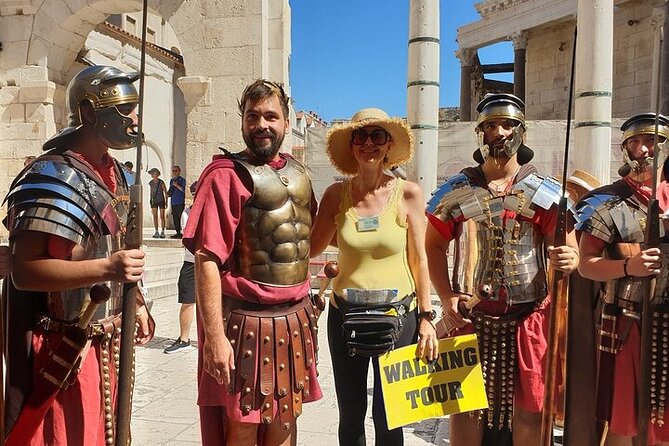
Then you’ll shift toward the Riva Harbor area, where you learn about the waterfront of the city and the palace’s south wall. This is where the palace stops being only “ancient architecture” and becomes something connected to daily life: access, protection, and facing the sea.
What I like about this segment is the balance. You get city context without losing the palace thread. You also get a different angle for photos—less “straight-on landmark shot” and more “here’s how the palace meets the modern promenade.”
It’s a short 10-minute stop, so it doesn’t drag. If you love waterfront strolls, it also helps you spot what you’ll want to come back to after the tour ends.
Fruit’s Square and the Marko Marulić sculpture
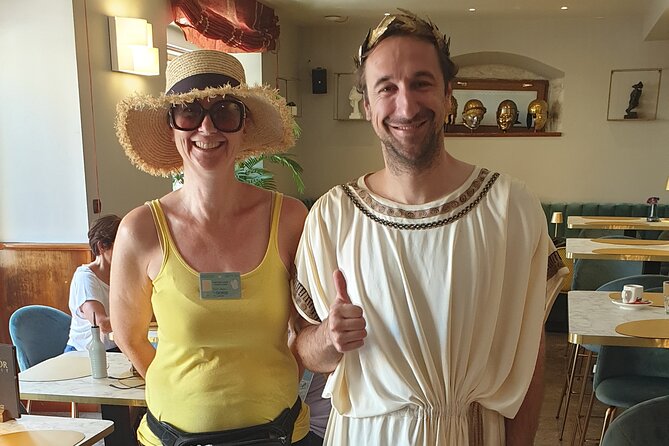
A few minutes later you’ll visit Fruit’s Square, including Trg Brace Radic and the sculpture of Marko Marulić. This is one of those stops that quietly upgrades your understanding of Split as a place where language, culture, and history sit side by side.
Marulić’s name matters because he’s tied to Croatian cultural identity, and the setting helps you see that identity isn’t sealed behind museum glass. Even though it’s a quick 5-minute pause, it gives you something memorable to carry through the rest of the palace walk.
If you’re the type who likes connecting a city’s “big monument” story to the people and ideas that shaped it, you’ll probably appreciate this stop more than you expect.
The last ancient Roman temple inside the palace
One stop is simply described as the last remaining ancient Roman temple in the palace. You’ll see it as part of the palace complex rather than as a standalone relic. That matters: it helps you understand how the palace functioned as a full political and spiritual space, not just housing.
This is the kind of place where you can slow down and really notice details, but it’s not treated like a long museum intermission. You’re shown the significance, then you’re back on the route.
Because the tour keeps everything moving, you may want to take a second look later from outside the tour pace—especially if you like Roman-era religious architecture.


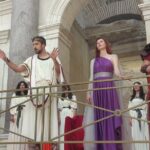
Vestibulum, the emperor’s entrance hall, and possible singing
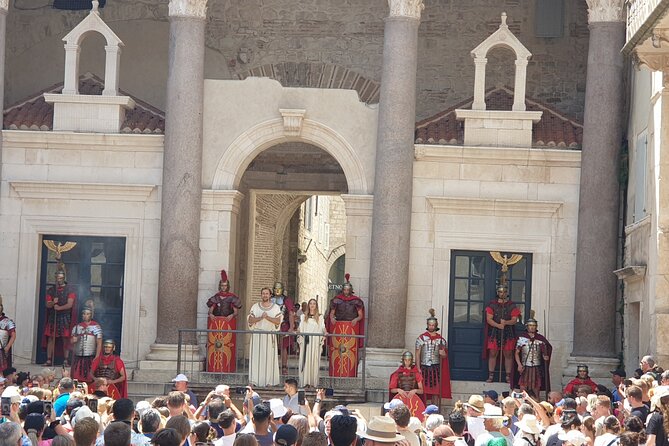
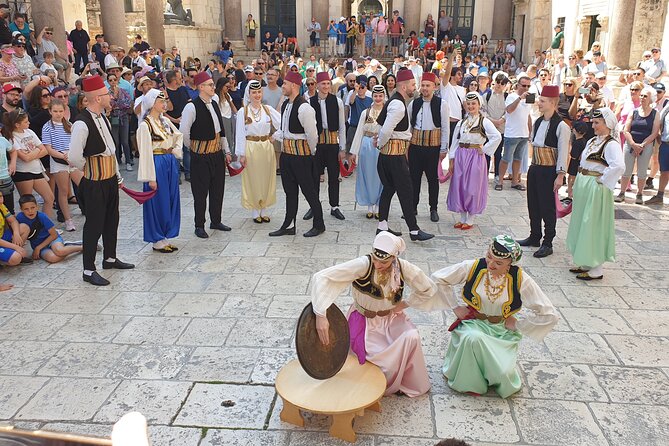
Next up is the Vestibulum of Diocletian’s Palace, described as the entrance hall of Diocletian’s personal quarters. This stop is all about the idea of power made visible through layout. You’ll learn about the vestibule’s history, and there’s even mention of potential traditional Dalmatian singing.
Even if the singing doesn’t happen during your exact timing, the stop is still valuable because it frames how an emperor’s private spaces were experienced—how you move toward importance, and how architecture guides that feeling.
It’s a short 5-minute stop, but it’s the kind of short that works. You’re not stuck; you’re just given a story that makes the later sections click.
Triklinij: the dining hall remnants
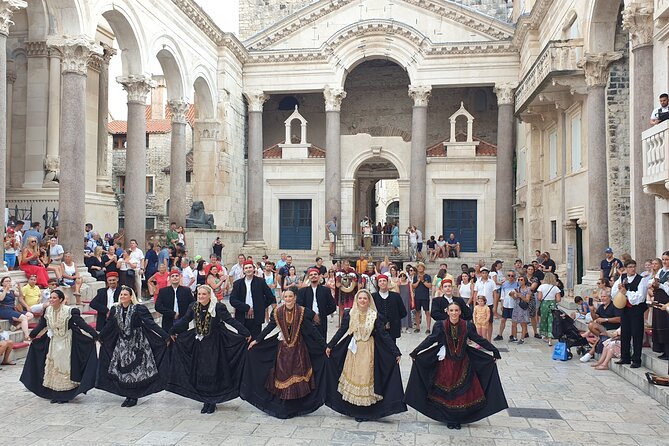
Then you’ll see Triklinij, the remains and partial reconstruction of Diocletian’s personal walkway and dining hall. This is one of the most human-feeling segments on the tour. It turns the palace from “big stone fortress” into “daily life at the top.”
Dining spaces are powerful because they show how leadership was performed. Even with only partial reconstruction, you can imagine the flow of movement—where people would gather, how the walkway connects spaces, and how the dining hall fits the overall palace plan.
The time here is about 5 minutes, so it’s more of a guided glimpse than a long study session. If you like architecture and atmosphere, this quick stop usually leaves people wanting to linger longer.
The 12th-century clock tower and the church of Our Lady of the Belfry
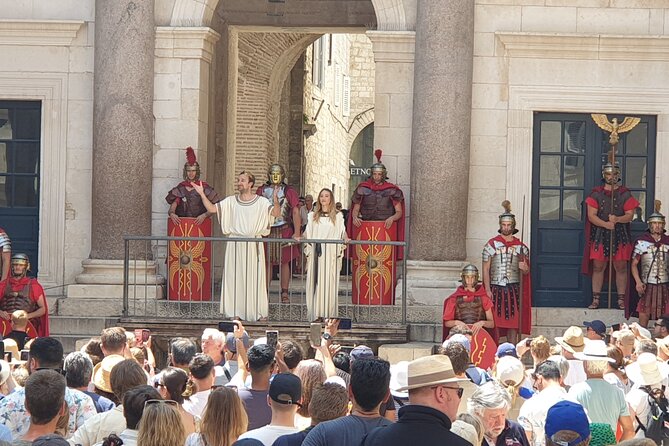
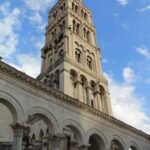
As you continue, you’ll move through the area tied to the 12th-century clock tower and the church of Our Lady of the Belfry. This is where Split’s story expands beyond Roman and early imperial eras and into medieval city life.
What’s useful here is the sequencing: you’re not only collecting stops; you’re watching time layers stack. The earlier palace context helps you understand why later structures feel “placed” rather than random.
Because you’re on a walking route, the tour keeps these stops compact, letting you see the landmarks without turning the day into a sit-and-listen lecture.
Grgur Ninski and the Golden Gate: language and the main entrance
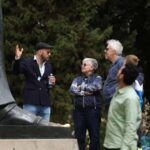
This tour takes a culturally meaningful turn near Grgur Ninski Statue, a work by Meštrović depicting the father of the Croatian language. It’s placed in front of the north gate of Diocletian Palace area. That positioning matters: you’re literally standing at a gate while a language-history figure is honored at the threshold.
You’ll spend about 15 minutes here, which is longer than some stops. That’s a good sign if you like context, because it suggests the guide doesn’t treat this like a quick “point and go.” It’s also one of those moments where photography feels more intentional than accidental.
Then you’ll reach the Golden Gate, the main entrance of Diocletian’s Palace, where you’ll learn about the gate and also see the statue of Gregory of Nin. Importantly, the Golden Gate admission is not included in the tour price. This is one of the key “pay attention” notes: you’ll likely see the outside and get the context, but if you want the full access experience inside, plan for extra cost.
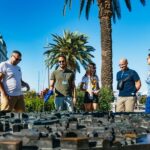
Finally, the tour revisits the Riva Harbor area for a bronze model of Diocletian’s Palace and history of Split’s Riva promenade. Like the Golden Gate, admission is not included for this part. Still, it’s a smart closing move because the palace model helps you understand everything you just walked through—how it all fits together at once.
Price and what you’re actually paying for
The tour costs $156.17 per person and runs about 1 hour 30 minutes. For Split’s top attractions, I look at price in terms of three things: how much you’ll see, how clearly it’s connected, and how much your future self will thank you later.
Here, you get:
- Guided orientation across major palace zones (Peristyle, substructures, key halls)
- Cultural anchors tied to Croatian identity (Marulić and the Gregory of Nin/Grgur Ninski focus)
- Short stops that prevent “museum overload”
- The option of a small group (max of 5) for a more personal experience
Is $156 a bargain? Not exactly. But for a compact, English-guided route that helps you understand an enormous complex without getting lost, the value is real. You’re paying for a guide who can connect space to story so you can move through the rest of Split with confidence.
The only time price feels less satisfying is if you expected everything to be fully inclusive. Two parts can require extra admission, so if you’re trying to keep spending low, go in with a simple plan: identify which paid entries you care about most.
Group size, pace, and how to get the best experience
This is offered in regular and small group styles, with a maximum of 20 on the larger option and 5 on the smaller one. I strongly prefer the small group when you can afford it, because Diocletian’s Palace is complicated and small group pacing makes questions easier. You also tend to walk with fewer people crowding the same angles for photos.
The tour is available in the morning and afternoon, and there are reviews highlighting an evening option as a particularly good fit for getting oriented fast. If you’re choosing between time slots, I’d pick based on your energy: earlier can help you beat crowds, and later can feel calmer for photos along the harbor and palace walls.
One more practical point: some segments involve standing in or near passages where sound can get swallowed by stone and crowds. If you want the best experience, arrive a few minutes early and aim to be where you can hear clearly.
Who this tour fits best (and who might skip it)
I think this tour is a great fit if:
- You want a fast, guided understanding of Diocletian’s Palace and how Split grew around it
- You enjoy short stops paired with explanation, not long indoor museum time
- You’d rather pay for guidance than spend your precious hours wandering and guessing
You might consider skipping or mixing it with independent time if:
- You want a deeply detailed, fully ticketed palace “inside-everything” day (because some admissions are not included)
- You’re the type who only likes huge open-ended exploration and hates structured routes
If you’re deciding between doing this as one of your first Split activities versus later, I’d do it early. Once you’ve seen the palace layout and key entrance points, everything after feels easier to navigate.
Should you book Split & Diocletian Palace Historical Walking Tour?
I’d book this if you want your Split day to start with clarity. The route is built around strong orientation anchors like the Peristyle, key palace spaces like the substructures, and cultural history moments tied to Croatian language and identity. Add the small group option and the compact 1.5-hour timing, and it becomes a smart use of limited time.
I would hesitate only if you’re on a tight budget and hate the idea that some portions (like the Golden Gate and the model/admission areas) may require extra payments. If you’re comfortable making those choices—or skipping what you don’t need—this tour can give you the kind of “now I get it” feeling that makes the rest of your trip smoother.
FAQ
How long is the Split & Diocletian Palace Historical Walking Tour?
It runs for about 1 hour 30 minutes.
How much does the tour cost?
The price is $156.17 per person.
Is the tour in English?
Yes, it’s offered in English.
What group sizes are available?
You can choose between a Small group tour (max of 5) and a Regular tour (max of 20).
Are admission fees included for all stops?
No. Many stops are listed as free, but some parts such as the Golden Gate and a later Riva Harbor model segment note admission not included.
Is it easy to join public transportation and suitable for most visitors?
The meeting area is near public transportation, and the tour says most travelers can participate. Service animals are allowed.