REVIEW · SPLIT
SPLIT-History Tour of Diocletian’s Palace & Old Town with Daniela
Book on Viator →Operated by Split Walking Tour with Daniela · Bookable on Viator
A palace you can still walk through. This Split tour with Daniela makes Diocletian’s Palace feel readable fast, with Roman sights, medieval streets, and little surprises like klapa singing. You get a licensed guide who turns stone and street corners into a story you can actually follow.
I especially like the tight group size and the way Daniela paces the walk so you’re not rushing through the palace chaos. I also like how the tour hits both the big-name highlights (Peristyle, the Golden Gate, Saint Domnius) and the less-obvious stops like the Split Synagogue and old town squares. One consideration: a few key entrances cost extra (cellars/substructures, bell tower areas, and the Jupiter temple), so decide in advance what you want to pay for.
In This Review
- Key highlights worth planning for
- Walking into Diocletian’s Palace, and why it works
- Meeting point on Split’s waterfront: starting with the right vibe
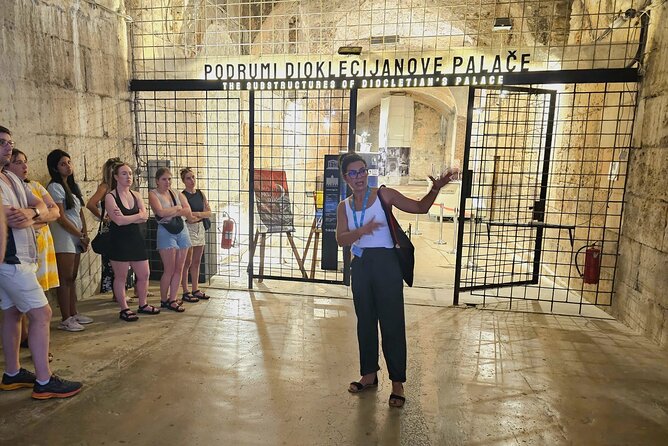
- Stop 1: Diocletian Palace substructures—best-preserved, but ticketed
- Stop 2: Vestibulum and klapa singing—history with a pulse
- Stop 3: The Peristyle—your orientation shortcut
- Stop 4: Cathedral of Saint Domnius—small, oldest, and close-up
- Stop 5: Temple of Jupiter (Baptistry of Saint John)—the optional “pay if you care” moment
- Stop 6: Golden Gate—the palace entrance you remember
- Stop 7: Grgur Ninski statue—Croatian art in a Roman setting
- Stop 8: Split Synagogue—one of Europe’s oldest active ones (ticketed)
- Stop 9-11: Narodni Trg and Fruit’s Square—Old Town rhythm between landmarks
- Stop 12: City Clock and the way out to Riva Harbor
- Price and value: what $25 buys you in real terms
- Who should book this walk (and who might skip it)
- Should you book the Split History Tour with Daniela?
- FAQ
- How long is the tour?
- What is the price?
- Is the tour offered in English?
- How big is the group?
- Where do we meet, and does the tour end nearby?
- What entrance tickets are not included?
- Do I get a mobile ticket?
- Is it ever canceled for weather, and can I cancel for free?
Key highlights worth planning for
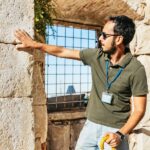
- Daniela, a licensed local guide who keeps the walk fun and question-friendly
- Klapa singing at the Vestibulum area of Diocletian’s Palace
- A high-impact route that strings together Roman, Christian, and Jewish landmarks without long detours
- Optional ticket stops so you can tailor the cost and time
- Small group size (max 15) that makes it easier to hear and ask questions
Walking into Diocletian’s Palace, and why it works
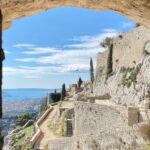
Diocletian’s Palace is not a museum you leave behind. In Split, it’s more like a neighborhood built from empire-scale architecture. You’re walking through walls, corridors, and squares that have been reused for centuries, so the tour has a smart job: help you see the layout instead of getting lost in pretty confusion.
What makes this experience practical is the pacing. You spend short, focused moments at the major “read this place” spots first, then you connect the dots as the Old Town stretches outward. If you only have a day—or you’re on a cruise stop and need something that won’t swallow your afternoon—this kind of route is a good fit.
And yes, it’s a proper walking tour. Expect stone steps and uneven surfaces in the palace and older streets. Most people can do it comfortably, and I’d think about footwear that’s steady, not squishy.
You can also read our reviews of more tours and experiences in Split.
Meeting point on Split’s waterfront: starting with the right vibe
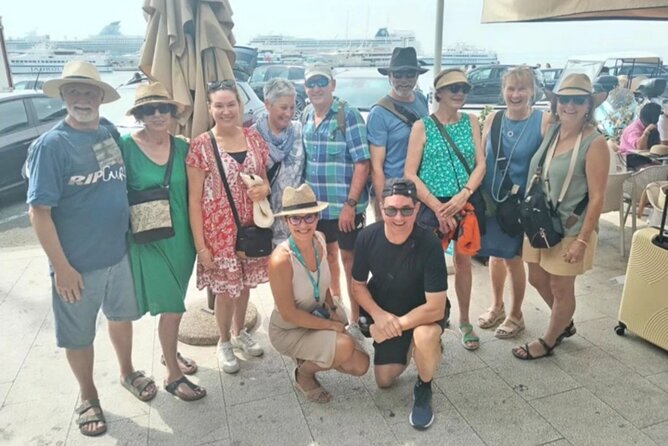
The tour starts at Obala Hrvatskog narodnog preporoda 22, 21000 Split, and it ends back at the same meeting point. That matters because you’re not stranded across town at the finish.
Starting near the waterfront promenade also sets the tone. You get a quick sense of where you are in the city—then you transition into the palace’s interior world. It’s a clean arc: sea air and open views outside, then narrow passages and layered history inside.
Stop 1: Diocletian Palace substructures—best-preserved, but ticketed

Your first real “wow” stop is the Diocletian Palace substructures, often described as the best-preserved part of the palace. This is one of those places that makes you appreciate how Roman planning worked: thick walls, controlled spaces, and a layout that still feels solid today.
But here’s the part to plan for: admission isn’t included for this stop. You can treat it as an optional add-on if you’re budgeting, or as a must-see if you want to understand the palace’s bones. Either way, the guide’s explanation is the glue that turns the walls into a map.
Stop 2: Vestibulum and klapa singing—history with a pulse
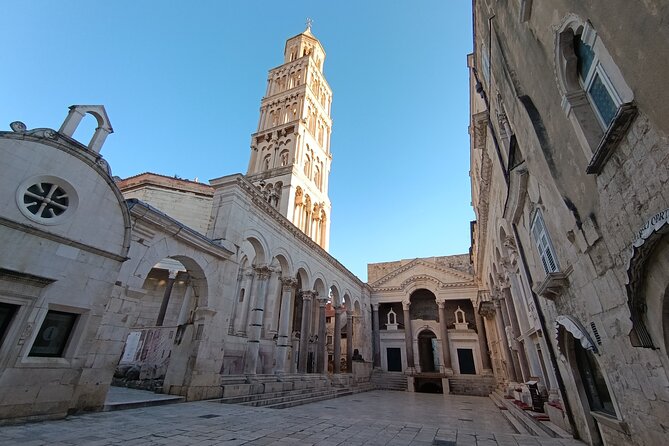
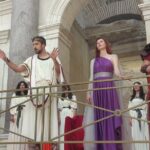
Next comes the Vestibulum of Diocletian’s Palace, where you get an authentic experience of klapa singing. This is a big reason I’d choose this tour over a checklist-only version.
Klapa is a traditional style of Croatian vocal music, and hearing it in the palace setting does something special. It makes the space feel inhabited, not staged. The sound bounces off stone, and suddenly the palace isn’t just ancient—it’s part of everyday culture.
This stop is short, and that’s a good thing. You get the moment without dragging it out, then you move on to the squares where the palace truly “opens” visually.
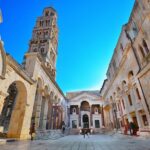
Stop 3: The Peristyle—your orientation shortcut
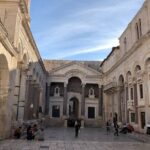
The Peristyle is the central square in the palace, and it’s one of those spaces where everything clicks. You’ll understand why emperors loved a grand forum layout: it’s a natural meeting point, and it’s visually organized.
This stop is free of extra admission during the walk. I like that, because you can spend your optional-ticket money on the places that matter most to you (like cellars/substructures or Jupiter-related areas), while still getting the big anchor of the palace experience.
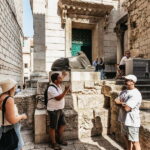
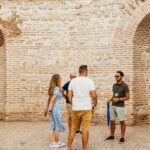



Stop 4: Cathedral of Saint Domnius—small, oldest, and close-up
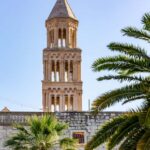
The Cathedral of Saint Domnius is worth your attention for one clear reason: it’s tied to early Christian presence in this area, and it’s described as the smallest and oldest Christian Catholic cathedral in the world.
During the tour, the cathedral stop itself is listed as free. Still, the overall topic is not just a quick exterior peek. This is where the Roman palace story starts transforming into Christian Split.
If you’re the type who likes seeing how cultures layer in the same space over time, this is a strong stop. Even if you’re not, the cathedral area gives you a pause from the intensity of palace corridors.
Stop 5: Temple of Jupiter (Baptistry of Saint John)—the optional “pay if you care” moment
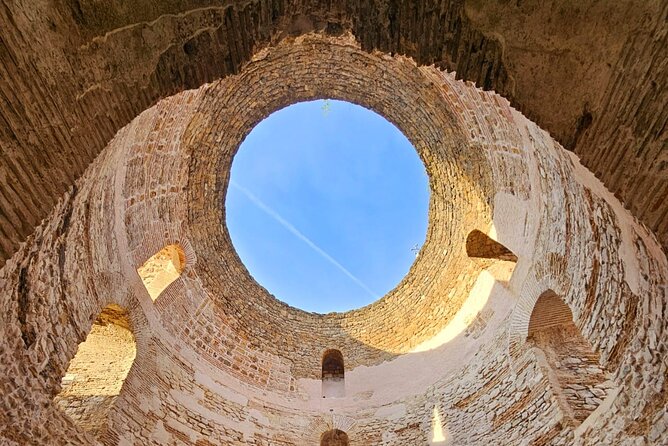
You’ll reach the Temple of Jupiter, which today is the Baptistry of Saint John. This is a fascinating switch: one sacred use becomes another across centuries.
This is one of the stops where admission is not included. I treat it as an optional decision based on two things:
- If you love religious architecture and want the interior details, budget for it.
- If you’re more focused on the overall route and the “read the city” part, you can keep it lighter.
Either way, you’ll come away with a stronger sense of how Diocletian’s palace functioned as both a political and religious space.
Stop 6: Golden Gate—the palace entrance you remember
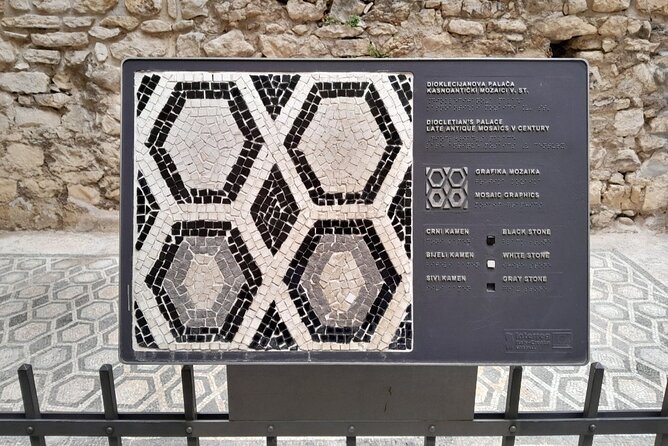
The Golden Gate is the main and most impressive entrance to Diocletian’s palace. It’s the kind of spot where a guide explanation really helps, because it’s not just pretty stone. It signals power, ceremony, and control.
This stop is free of admission during the walk. I like pairing it after the religious and central-square stops because the route starts to feel like a full loop: entrance, core, sacred centers, then back toward the city that grew around it.
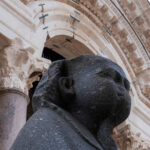
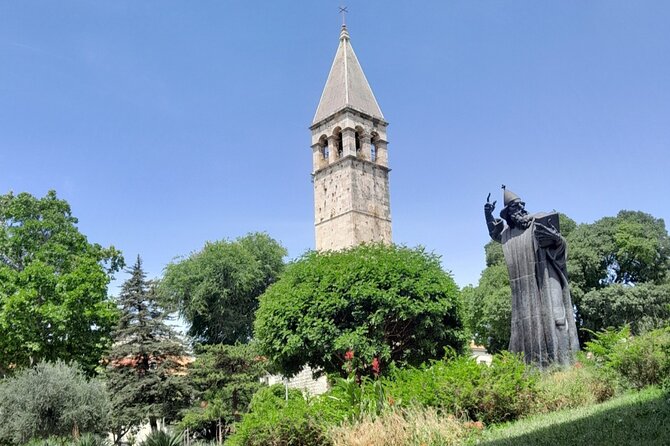
Stop 7: Grgur Ninski statue—Croatian art in a Roman setting
Then you get to Grgur Ninski’s statue, created by Ivan Meštrović, one of Croatia’s most famous sculptors. This is a quick stop, but it’s a useful counterpoint to the Roman-heavy sequence.
It reminds you that Split is not frozen in antiquity. Modern Croatian identity sits literally next to ancient spaces. If you care about how places keep rewriting their meaning, this stop lands well.
Stop 8: Split Synagogue—one of Europe’s oldest active ones (ticketed)
The Split Synagogue is listed as one of the oldest active synagogues in Europe. It’s also one of the stops where admission is not included.
This is exactly where the “optional ticket” structure helps you. If interior access matters to you, pay for the entry when you reach it. If you’d rather keep your schedule tighter and focus on the outside architecture and street context, you still get the location and the story.
Either way, it broadens the tour beyond the typical Roman-Christian framing into a wider view of Split’s history.
Stop 9-11: Narodni Trg and Fruit’s Square—Old Town rhythm between landmarks
After the palace core, the tour shifts into Old Town squares:
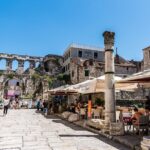
- Narodni Trg, a medieval people’s square
- Fruit’s Square (Trg Brace Radic), with baroque palace connections and a statue of Marko Marulić, a major figure in Croatian literature
These stops aren’t long, and they don’t pretend to replace a full Old Town wandering day. Still, they do something useful: they give you the city’s tempo in small chunks. Squares are where you understand how people move, gather, and trade—then you connect that to the palace’s central organization.
If you want photos, this is a good phase. You get open space views and street scenes that feel like Split rather than “Roman site #3.”
Stop 12: City Clock and the way out to Riva Harbor
You’ll also see the City Clock, a Renaissance clock located at the western entrance to Diocletian’s palace. It’s a small detail, but it works as a visual bookmark: the palace-to-city transition.
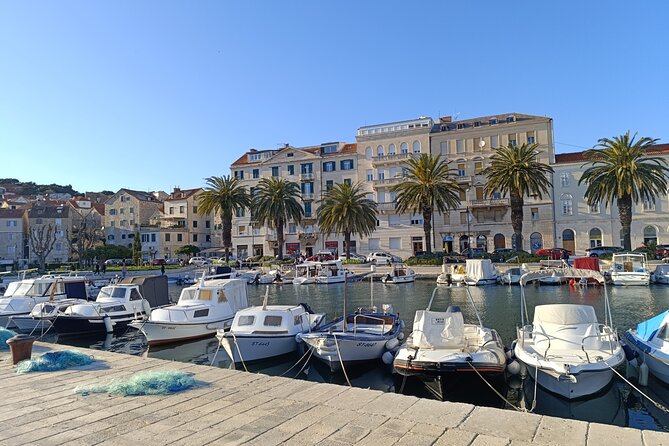
Then the tour finishes at Riva Harbor, the main promenade lined with restaurants and café bars. You’re given enough time here (about 25 minutes) to reset, grab a drink, and orient yourself for whatever you do next.
I like ending on the waterfront because it helps your brain stop treating Split like a corridor of history and start treating it like a real city. You’ll leave with a route you can repeat on your own.
Price and value: what $25 buys you in real terms
At $25 per person for roughly 1.5–2 hours, you’re paying for three things:
- A licensed guide (not just someone speaking facts)
- A structured walk that prevents wasted time
- Access to optional paid interiors if you want them
The best value piece here is how many stops are built into the walk without extra admission, while the ticketed sites stay optional. That lets you control costs instead of being forced into every paid entry.
It also helps that the group max is 15. Smaller groups mean you’re less likely to lose the guide mid-sentence when someone lingers for a photo.
One more value note: this tour has a track record of being booked well ahead of time on average. If you’re traveling in peak months, treat it like a plan, not a maybe.
Who should book this walk (and who might skip it)
This tour is ideal if:
- You want a guided route through Diocletian’s Palace without getting lost
- You like hearing how Roman structures became Christian and then evolved into modern Split
- You want cultural touches like klapa singing in context, not as a random performance stop
- You’re traveling with limited time and want a tight itinerary that still feels substantial
You might look at other options if:
- You hate walking over uneven old-stone surfaces
- You only care about a single museum-style interior and would rather spend longer in one place
- You’re very strict about avoiding any extra ticket costs (because some sites are not included)
Should you book the Split History Tour with Daniela?
Yes, if you want to understand Split fast and in a human way. Daniela’s style—energetic, humorous, and answer-ready—fits this kind of palace-and-old-town route because the details can multiply quickly. A good guide keeps it clear, and this one is built around clarity.
I’d book it if you can handle short, focused stops and you’re okay making a simple choice about optional paid entrances. If that sounds like your travel style, this is a strong use of a half-day in Split.
FAQ
How long is the tour?
It runs about 1 hour 30 minutes to 2 hours.
What is the price?
The price is $25.00 per person.
Is the tour offered in English?
Yes, it’s offered in English.
How big is the group?
The tour has a maximum of 15 travelers.
Where do we meet, and does the tour end nearby?
You meet at Obala Hrvatskog narodnog preporoda 22, 21000 Split, and the tour ends back at the same meeting point.
What entrance tickets are not included?
Entrance tickets for Cellars, Cathedral, Bell Tower, Jupiter Temple, and the Split Synagogue are listed as not included (optional).
Do I get a mobile ticket?
Yes, the tour provides a mobile ticket.
Is it ever canceled for weather, and can I cancel for free?
This activity requires good weather. It also offers free cancellation up to 24 hours in advance for a full refund.