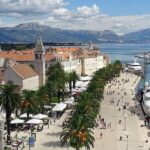
REVIEW · SPLIT
Essential Diocletian’s Palace Tour for First-Time Visitors
Book on GetYourGuide →Operated by KUKUVIA, Vl. Jelena Tanjić · Bookable on GetYourGuide
Split makes sense fast in 90 minutes. This small-group Diocletian’s Palace tour turns confusing stone into clear stories, with a walk that starts at Gregory of Nin and heads through the Golden Gate. I love how guide Jelena Tanjić links Roman power to what Split feels like today, and I love the built-in memory moment with a Vestibule dome group selfie. One watch-out: the tour does not include access to the Substructures or the Bell Tower.
You get an easy, first-timer-friendly route through the palace and Split’s Old Town—without feeling like you’re running. Expect English storytelling, stops at the big names like Jupiter’s Temple and Saint Domnius Cathedral, and a finish on the Riva promenade. Along the way, Jelena shares a practical list of where to eat and what to do next, plus restaurant and bar vouchers for discounted local bites.
In This Review
- Key things that make this tour worth your time
- Starting at Gregory of Nin and finding the Golden Gate
- Golden Gate, People’s Square, and how the palace works as a city
- Jupiter’s Temple and the Peristyle: where the Roman viewpoint clicks
- Saint Domnius Cathedral: Roman walls meet medieval faith
- Vestibul: the group selfie stop that actually helps you remember
- Diocletian’s Cellars and the Riva finish
- Price and value: why $17 can feel like a bargain
- Who should book this tour (and who might skip it)
- Practical tips before you go
- Should you book the Essential Diocletian’s Palace Tour?
- FAQ
- How long is the Essential Diocletian’s Palace Tour?
- What language is the tour offered in?
- How many people are in the small group?
- Where does the tour start and end?
- Which major sites do you visit during the tour?
- Is the tour wheelchair accessible?
- Does the tour include the Substructures or the Bell Tower?
- How much does it cost, and is cancellation flexible?
Key things that make this tour worth your time

- Tight small group (max 10): easier questions, less waiting, more actual conversation.
- Jelena Tanjić’s regional context: she connects Split’s story to the wider Balkans, not just Rome-on-repeat.
- Main sights in one 1.5-hour loop: Golden Gate, People’s Square, Jupiter’s Temple, Peristyle, Saint Domnius, Diocletian’s Cellars.
- Vestibule dome selfie moment: a fun photo stop that also helps you anchor where you are in the palace.
- Food and drink help via vouchers: you leave with discounted options, not just directions.
- Ends at Split Riva: you finish where most people want to be after a tour.
Starting at Gregory of Nin and finding the Golden Gate
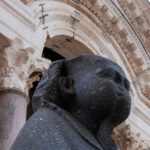
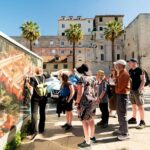
Your tour begins in a very easy-to-spot place: in front of the statue of bishop Gregory of Nin, near the north entrance to the palace called the Golden Gate. There’s even a visual cue—look for a black umbrella (the guide jokes about color choices), and you’ll be in the right spot quickly.
This first moment matters more than it sounds. Diocletian’s Palace isn’t one museum hall. It’s a whole neighborhood inside walls, with entrances, streets, courtyards, and religious sites all layered on top of each other. Starting at Gregory of Nin sets the tone: you’re looking at Split as a living city, not just a pile of ancient rocks.
Once you’re grouped and moving, you’ll get a simple orientation of what you’re about to see. That makes the rest of the walk smoother, because you stop treating every doorway like a surprise jump-scare and start understanding the flow: gates in, squares and temples around, then cathedral and cellars, and finally out to the Riva.
You can also read our reviews of more tours and experiences in Split.
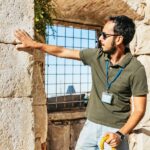

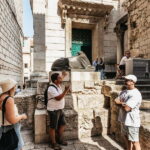
Golden Gate, People’s Square, and how the palace works as a city
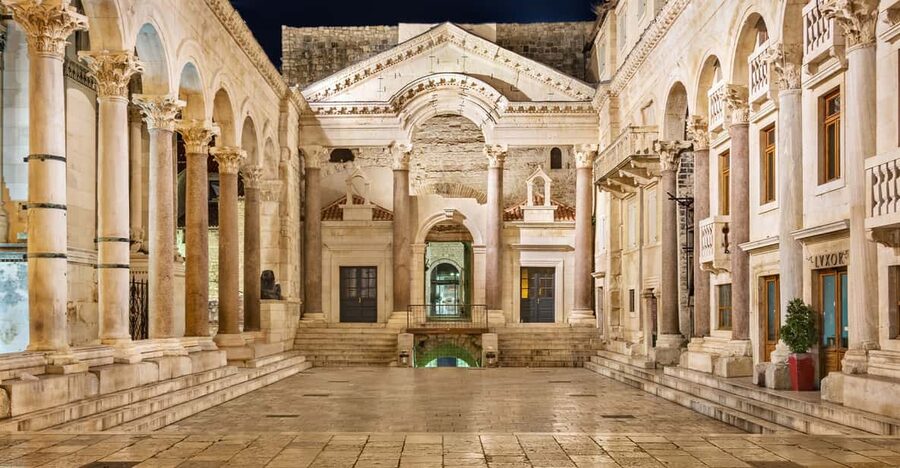
After you’re oriented near the Golden Gate, the tour pushes straight into the palace’s most recognizable “entry points.” The Golden Gate is more than decoration. It helps you grasp how Diocletian’s project functioned: a fortified seat of power with controlled access, built for movement and security.
From there, you head toward People’s Square. This is one of those places where modern life and palace geometry overlap. You’ll see how the palace layout still shapes what feels natural to do today—where people gather, where paths converge, and why certain areas keep pulling attention across centuries.
What I like about this part is the pacing. You’re not just staring at stone labels. Jelena’s storytelling style keeps you listening, then keeps you walking with purpose. And because the group is limited to 10 people, it’s realistic to ask quick questions without losing the thread of the walk.
If you’re a first-time visitor, this segment does a useful job: it gives you a mental map before you start exploring on your own later.
Jupiter’s Temple and the Peristyle: where the Roman viewpoint clicks
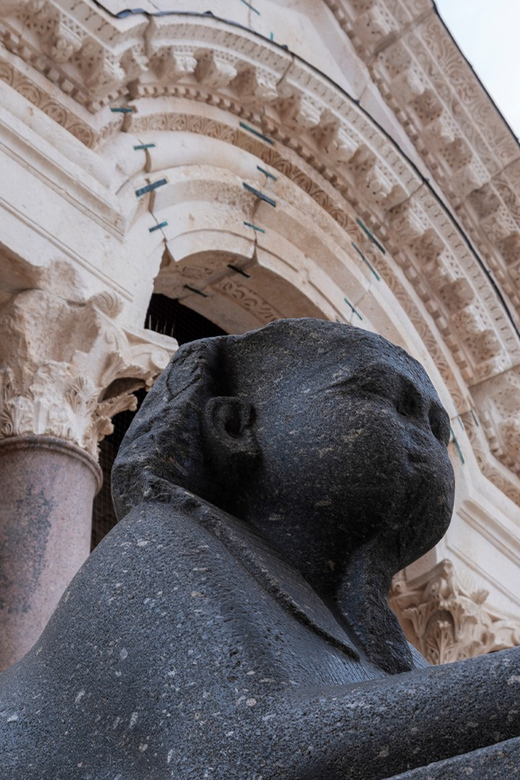
Next comes the heart of the palace experience: Jupiter’s Temple and then the Peristyle. These are the stops where the palace stops being “a palace” and starts being a Roman set piece with rules for how space should feel—ceremonial, controlled, and built to impress.
At Jupiter’s Temple, you’ll get context that helps you understand why this spot is treated like a centerpiece. Even if you’ve never studied Roman religion, the guide frames what you’re seeing in plain language: power expressed through architecture, and architecture shaped by belief.
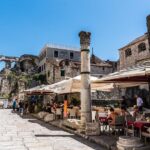
Then you move into the Peristyle, the grand open area that ties together so many palace functions. This is where your brain finally goes: oh, that’s why everyone photographs here. The Peristyle is visually dramatic, sure—but it’s also structurally important. It’s a crossroads of paths, views, and sight lines, and Jelena points out what to notice so you can actually recognize it later when you wander.
A good sign you’re on the right track: this part of the tour feels like it’s building, not repeating. Each stop explains the last one a little more clearly.
Saint Domnius Cathedral: Roman walls meet medieval faith
From temples and civic space, the tour shifts into the religious center: the Cathedral of Saint Domnius. This is one of those places where you can walk in with basic curiosity and still leave understanding something specific. The cathedral’s story is tied to how the palace’s original purpose changed over time—and how sacred space can grow directly out of existing power centers.
This stop is also a great reminder that Split’s identity isn’t only ancient Rome. It’s Roman foundations plus layers of later history, carried forward by everyday people who kept using these places.
In terms of pace, it’s a welcome shift from open-air courtyards to more focused, reflective spaces. If you tend to get museum fatigue, this section can feel like a breather, because it gives your eyes a chance to slow down and take in details rather than constantly scanning for the next big landmark.
If you like religious architecture, you’ll enjoy the guided framing. If you don’t, you’ll still get the key takeaway: the palace wasn’t frozen in time.
Vestibul: the group selfie stop that actually helps you remember
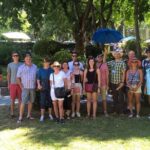
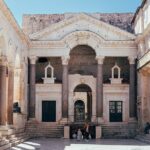
Now for the fun part: the Vestibul area, including the Vestibule dome selfie time. This is where you’ll get a group photo moment, but it’s not just about the picture. It’s also a memory anchor. Once you’ve taken the selfie and heard the quick context from Jelena, the Vestibul area becomes easier to recall when you’re later back outside, trying to orient yourself.
The Vestibul is also a classic “you didn’t know where to look” zone for many first-timers. With no guide, you might notice the grandeur and move on. With a guide, you learn how this space fits into the palace layout and what it meant in daily movement.
This section is where small-group format pays off again. You’re close enough to hear what matters, but you’re not stuck shoulder-to-shoulder for every minute. That makes the selfie feel like a light break rather than an obstacle.
If you’re traveling solo, it’s also a clever way to meet other visitors without forcing small talk for an hour.



Diocletian’s Cellars and the Riva finish
The tour then moves into Diocletian’s Cellars, where the story shifts from “top-side show” to the practical machinery of the palace. Cellars like these are where you start thinking about logistics: storage, supply, and how a ruler’s household kept going.
This is a useful stop even if you don’t usually care about underground spaces. Why? Because it rounds out the palace story. Roman architecture isn’t only about grand façades. It’s also about the work behind the scenes. Jelena’s explanation helps you connect what’s underfoot to what you saw earlier above ground.
After that, the tour ends at Split Riva, which is exactly where many people naturally want to be once their feet are tired. Ending on the waterfront is practical: you can immediately transition into food, a walk, or a slow coffee without backtracking.
One important limitation to keep in mind: the tour does not include access to the Substructures or Bell Tower. If those are on your personal must-do list, you may want a separate ticket or another plan for those areas.
Price and value: why $17 can feel like a bargain
At $17 per person and about 1.5 hours, this tour is priced like a “do-this-first” experience. And that’s exactly how it pays off.
You’re not only paying for the walk. You’re paying for:
- a clear, step-by-step route through major sights,
- a licensed guide telling a cohesive story (including present-day context),
- a small-group setup that keeps questions possible,
- and bonus value via vouchers in recommended restaurants and bars.
If you’ve ever spent a day in a historic center without understanding what you’re looking at, you know the cost of confusion. A short guided loop can save you hours of guesswork later. Plus, the vouchers can offset part of your food budget right away—especially useful in a place like Split where you’ll be tempted to eat wherever the view looks best.
Who should book this tour (and who might skip it)
This tour is a great match if you’re:
- visiting Split for the first time and want orientation fast,
- the kind of person who likes stories, not just timelines,
- traveling solo, as a couple, or with family (with a guide who keeps things lively),
- and you want a plan for where to eat and what to do next.
You might consider skipping or complementing it if you:
- specifically want Substructures or Bell Tower access, since this experience does not include them,
- need wheelchair access, since it’s not suitable for wheelchair users.
If you’re somewhere in the middle—curious but not a Roman history expert—this is the kind of tour that makes the site click without drowning you in dates.
Practical tips before you go
A few things to help you get the most out of the 1.5-hour format:
- Wear shoes that handle uneven old-stone surfaces. You’ll be walking through multiple palace zones.
- Bring something for photos. The Vestibul selfie moment happens during the tour, not after.
- Plan to use the guide’s restaurant and sightseeing recommendations right after. If you wait a day, the advice loses some of its advantage.
- If you care about the Substructures or Bell Tower, line up a separate plan in advance. This one is built as a first-time orientation loop.
And if you’re the type who always wonders what a guide will say beyond the obvious, you’ll likely like Jelena’s approach: she ties Split to the wider region and also points out how the city breathes now.
Should you book the Essential Diocletian’s Palace Tour?
I’d book this if you want the fastest path to understanding Diocletian’s Palace and Split Old Town without feeling rushed. The mix of key landmarks, short storytelling stops, and a finishing point on the Riva promenade makes it a smart first-day move. Add in the small group (max 10) plus vouchers and you’ve got real value, not just a history lecture.
Skip it only if your priority is specifically the Substructures or Bell Tower, or if you need wheelchair access. Otherwise, this is the kind of tour that helps you walk away with direction, not just photos.
FAQ
How long is the Essential Diocletian’s Palace Tour?
The tour lasts about 1.5 hours.
What language is the tour offered in?
The live tour guide provides the experience in English.
How many people are in the small group?
The group is limited to 10 participants.
Where does the tour start and end?
It starts in front of the statue of bishop Gregory of Nin and near the north entrance to the Palace called the Golden Gate. It ends at Split Riva.
Which major sites do you visit during the tour?
You’ll see stops including the Golden Gate, People’s Square, Jupiter’s Temple, the Peristyle, the Cathedral of Saint Domnius, the Vestibul, and Diocletian’s Cellars, with additional key sights in the palace area such as Egyptian Sphinx and other Old Town highlights mentioned in the tour description.
Is the tour wheelchair accessible?
No, it is not suitable for wheelchair users.
Does the tour include the Substructures or the Bell Tower?
No. Access to the Substructures or the Bell Tower is not included.
How much does it cost, and is cancellation flexible?
The price is $17 per person. Free cancellation is available up to 24 hours in advance for a full refund, and you can reserve now and pay later.