REVIEW · SPLIT
Split & Diocletian’s Palace Walking Tour
Book on Viator →Operated by Redono d.o.o. · Bookable on Viator
Roman streets cut right through town. This 1.5-hour Split walking tour gives you a guided walkthrough of Diocletian’s Palace plus the squares and waterfront that shape daily life in the old city. It’s a smart way to understand what you’re seeing without getting lost in the maze of stone lanes.
I especially love the way the guide turns walls and street corners into stories you can actually remember. Guides like Mia, Slavko, and Ivana were mentioned for keeping energy high and making the time fly, even when the weather made things tricky. I also like that you get a tight “main sights plus extras” mix, including Diocletian’s Palace and standout town details most first-timers miss.
One thing to consider: this is an outdoor walking tour, and it depends on good weather. Also, the meeting area can be affected by local construction at times, so give yourself a little extra buffer to find Golden Gate on time.
In This Review
- Key highlights worth your attention
- Starting at Golden Gate on Dioklecijanova
- Palazzo di Diocleziano: the palace as a living city
- Narodni Trg and Pjaca Square: where the city’s rhythm shows
- City Clock: the 24-hour sun clock at the heart of the square
- Riva Harbor: finish on Split’s busiest promenade
- The guide experience: pacing, humor, and clear English
- Price and value for $21.77 in Split
- Practical tips so you enjoy the walk
- Should you book this Split & Diocletian’s Palace walking tour?
- FAQ
- How long is the Split & Diocletian’s Palace Walking Tour?
- What language is the tour offered in?
- How much does the tour cost?
- What’s included in the price?
- Where do I meet the guide?
- Is admission required for the stops?
- Can children join the tour?
- What happens if the weather is poor or I need to cancel?
Key highlights worth your attention
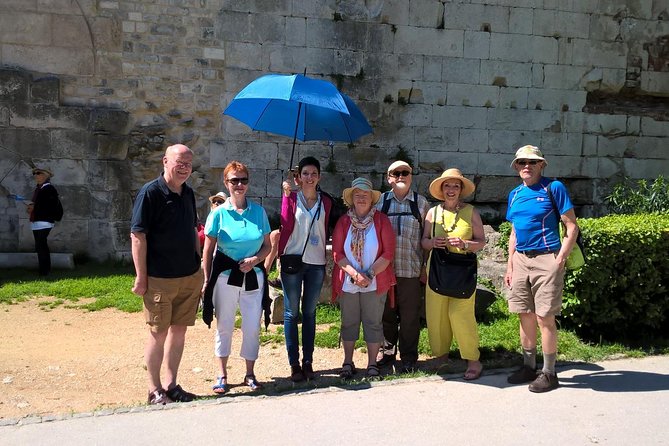
- Diocletian’s Palace, in walking form: see the complex as part of the modern city, not as a distant ruin
- Pjaca square and Narodni Trg context: you learn what the space meant, not just what it looks like
- The 24-hour sun clock: a small detail that helps you connect time, design, and daily life
- Riva Harbor as your finish line: you end where Split feels most alive, ready for your next stop
- English guides who set the pace: multiple guides were praised for clear speaking, humor, and keeping the group moving
Starting at Golden Gate on Dioklecijanova
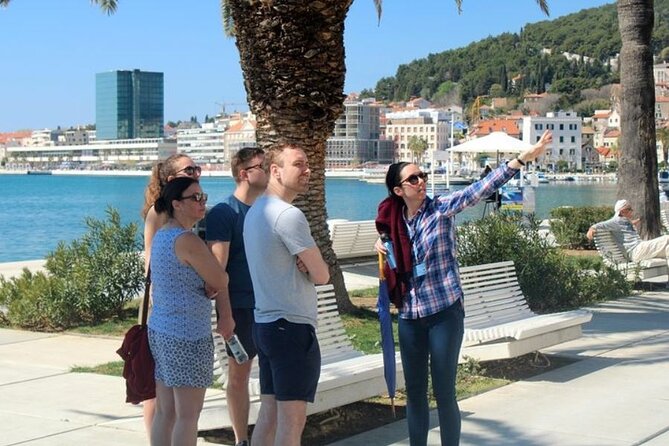
Your tour starts at Golden Gate (Dioklecijanova 7). That’s a good move, because Golden Gate sits right on the edge of where the palace world meets modern Split. If you’re arriving by bus or tram, the meeting point is near public transportation, so you’re not forced into a long pre-walk.
I like starting here because it gives you instant orientation. You’re not just stepping into a random old-street stroll. You’re stepping into the boundary line between the ancient fortress and the city that grew around it.
The tour loops back to the same meeting point at the end, so you don’t have to hunt for your bearings after 90 minutes. It’s also a relief if you’re juggling a ferry, a cruise schedule, or a dinner reservation.
Since the group can be up to 49 people, you’ll want to arrive a touch early. In a crowd, that one extra minute helps you hear the guide without craning.
You can also read our reviews of more tours and experiences in Split.


Palazzo di Diocleziano: the palace as a living city
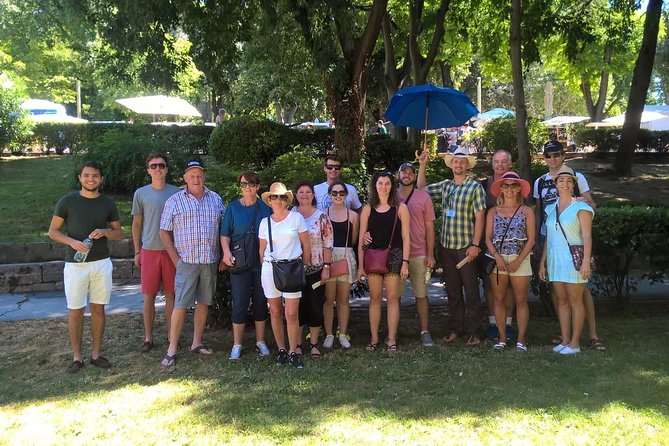
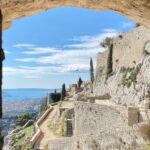
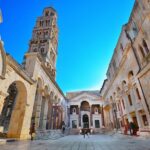
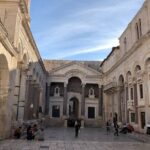
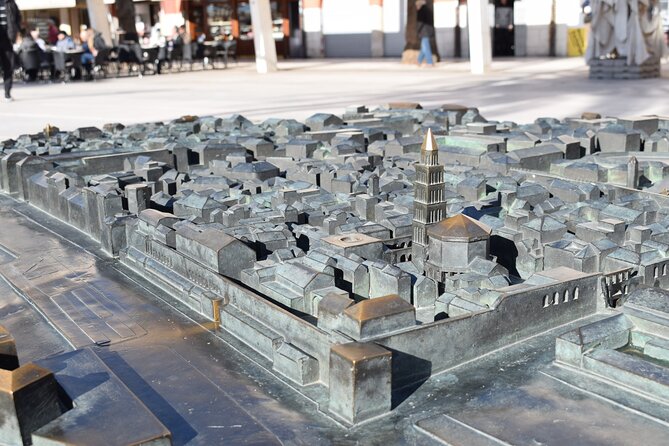
The first stop is the Palazzo di Diocleziano, the core of Diocletian’s Palace, with about an hour set aside. This is the big centerpiece: a complex that’s around 1,700 years old and now surrounded by shops, streets, and everyday life. The standout here is how seamlessly ancient design is woven into modern movement.
What you’ll do in this stop is less about staring and more about understanding. A guide shows you what to notice in the stonework and layout—how the palace functions as a fortress, and how later generations shaped it into a place people actually live and wander.
Guides were praised for using personal storytelling and local perspective, like one guide sharing experiences of growing up within the palace walls. That kind of detail matters. It’s the difference between reading about history and using your eyes with a map in your head.
The palace admission at this stop is listed as free, so you’re not paying extra just to get into the main sights. Still, expect crowds and narrow lanes in busy areas. If you’re sensitive to tight spaces, pace yourself and plan to pause when your feet need it.
Narodni Trg and Pjaca Square: where the city’s rhythm shows
Next you head to Narodni Trg, where you’ll see Pjaca Square. This is a compact stop—about 10 minutes—but it’s a meaningful one. Squares can look like scenery, but they often reveal how a city organizes people, commerce, and movement.
This is where your guide helps you connect the dots. You learn why this space mattered, so you’re not just snapping photos of pretty facades. Instead, you start recognizing the kind of role a square played in older city life—gathering points, everyday bustle, and a natural stage for public life.
The draw of keeping this stop short is that you can actually enjoy it. You’re not stuck waiting around for a long lecture. You get the essential context, then you move on before your interest fades.
A practical tip: take a quick look in more than one direction. In a square, the “story” isn’t in one building—it’s in the layout. Even when the stop is brief, a second glance helps you remember the space later when you’re exploring on your own.
City Clock: the 24-hour sun clock at the heart of the square
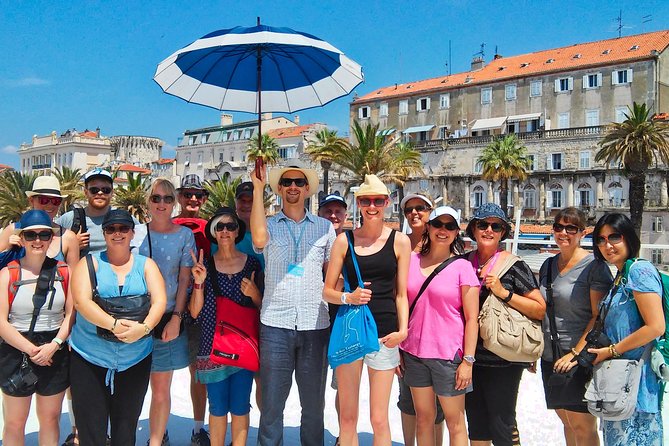
From Narodni Trg, the next quick stop is the City Clock, famous for a 24-hour sun clock. It’s listed as another 10-minute stop, but it’s the kind of detail that sticks because it feels both old and specific.
This is where your guide’s job really matters. A clock like this isn’t just a novelty. It’s a clue to how timekeeping worked in the past, and how people designed daily life around the sun and public signals. Even if you only spend a short time here, you’ll usually leave with a better sense of why it was built and what it meant to the people using it.
The best way to enjoy this stop is to slow down for 30 seconds. Don’t treat it like a quick check-the-box. Stand where the guide tells you, look up, and let the explanation connect the physical design to the practical use.
Like most city-center sights, you may run into foot traffic. If you want photos without other people blocking your frame, step slightly off to the side and wait for a clear moment—then rejoin the group quickly.
Riva Harbor: finish on Split’s busiest promenade
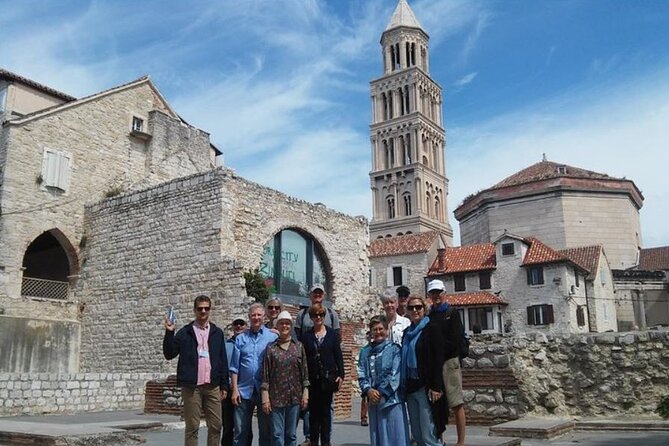
The last stop is Riva Harbor, the famous Riva promenade, also about 10 minutes. This is a classic “your tour ends where the city breathes” move. You start in ancient fortification space, then you end in the open-air street that most people associate with Split today.
I like this ending because it makes your next steps easy. Once you’re back near the waterfront, you can decide what mood you want: coffee, a light lunch, a slow walk toward the water’s edge, or just time to regroup after the history lesson.
It also helps you avoid a common travel mistake. Many tours end in an odd backstreet. This one finishes on a recognizable main promenade, so you don’t spend your remaining energy trying to orient yourself.
In some cases, guides were praised for wrapping up with practical restaurant and coffee-shop ideas. Even if you don’t get a long list, ending at Riva is still a strong advantage. The area is naturally full of options, and you’re finishing close to that decision point.




The guide experience: pacing, humor, and clear English
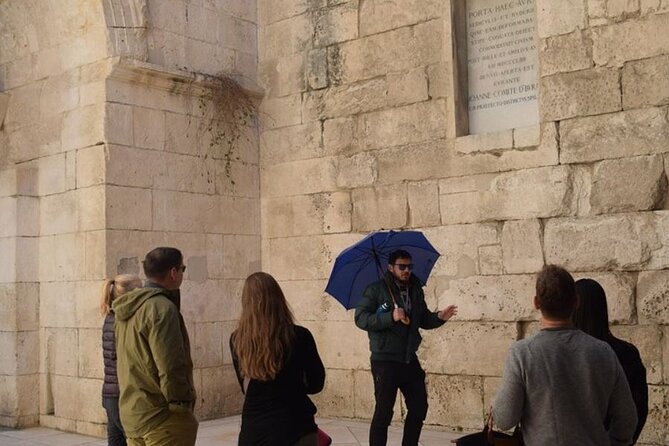
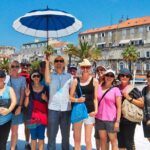
A walking tour like this lives or dies by the guide. The good news here is that multiple named guides got strong mentions for being energetic and engaging, including Slavko, Ivan, Tino, Franke, Maria, Marta, Antonia, and Antonio. The consistent theme: people felt the tour stayed fun and didn’t turn into a dry lecture.
Look at what that means for you. You’re getting a guided route that’s short enough to be manageable, but still packed with key context. If your guide keeps the group moving, you won’t lose the thread of why each stop matters.
Several comments also pointed to strong English clarity and speaking loudly enough to hear. That’s huge in old cities where sound can bounce off stone. If you’ve ever joined a group tour and strained to catch every third word, you’ll appreciate this focus on clarity.
Another plus: guides were described as patient and able to adjust to slower walking pace for at least one family member. That makes a difference when you’re not sure how your group’s stamina will hold up.
The tour also caps at 49 travelers, which helps. It’s not a massive crowd where you feel invisible. You’ll still hear the guide, ask questions, and stay close enough to follow the route.
Price and value for $21.77 in Split
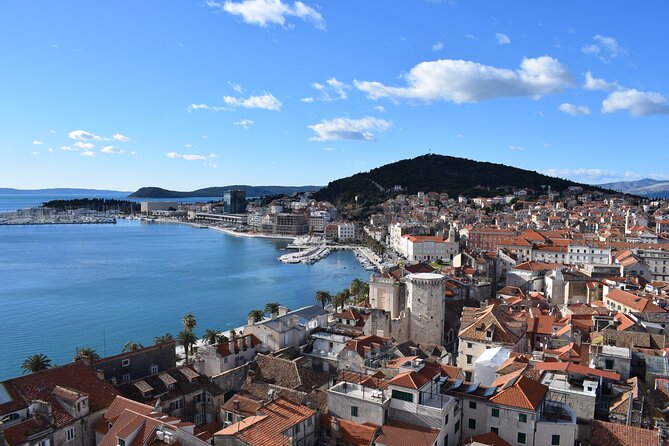
At $21.77 per person for about 1 hour 30 minutes, this is priced like an easy, low-risk add-on for a first visit. What makes it feel like value isn’t only the cost. It’s what you’re getting for that time: the central palace area plus major city landmarks and a guide to connect them.
A key detail is that the stops list admission ticket free for the sights. In plain terms: you’re paying for the guided orientation and time, not for extra entry fees at each listed stop. That matters for travelers watching their budget.
The tour also includes an English walking guide and sightseeing of the palace complex, plus your route covers multiple “I’d like to see that” items in one go. If you tried to do this alone, you’d likely spend time figuring out what’s important, where to stand, and what you’re looking at.
Is it perfect for everyone? Not if you want museum-level detail and long independent exploring time. But for an orientation walk, this price-to-time ratio is hard to beat.
Practical tips so you enjoy the walk
Because this is a walking tour, your comfort matters. Wear shoes that handle cobblestones and uneven streets, especially around the palace area. You’ll be moving between stops quickly, with each highlight scheduled around 10 minutes for the smaller sights and longer time for the palace.
Bring a phone that can handle a mobile ticket. You’ll want it ready at the start so you’re not fumbling in a busy meeting area.
Also, plan for timing. The route ends where it starts, so you can keep your evening flexible afterward. If your schedule is tight, arrive early enough to handle local construction or street changes near the meeting point.
If you’re traveling with kids, note that children must be accompanied by an adult. And if you rely on service animals, they are allowed. The tour is offered in English, and most travelers can participate, but it’s still a city walk—go in expecting to be on your feet.
Lastly: check the weather. The experience is marked as requiring good weather, and poor weather can lead to a different date or a refund. Don’t count on it running rain-or-shine.
Should you book this Split & Diocletian’s Palace walking tour?
I think you should book if you want a fast, guided orientation to Split’s top sights without turning your day into a scavenger hunt. The combination of Diocletian’s Palace, Pjaca Square, the City Clock, and ending on Riva is a practical “first-time visitor path” that makes your later self-guided exploring better.
Skip it or consider adding extra time elsewhere if you need a slower, deeper archaeology-style visit. This tour is designed for a short hit of context, not for hours inside every corner.
If you’re on a tight schedule, the $21.77 price and 90-minute timing make it a sensible choice. And if you hate missing the details, the guide-led storytelling focus is the main reason to choose this one.
FAQ
How long is the Split & Diocletian’s Palace Walking Tour?
The tour runs about 1 hour 30 minutes.
What language is the tour offered in?
The tour is offered in English.
How much does the tour cost?
The price is $21.77 per person.
What’s included in the price?
It includes a walking tour in English, sightseeing of the 1700-year-old Diocletian’s Palace, and a professional local guide.
Where do I meet the guide?
You meet at Golden Gate, Dioklecijanova 7, 21000, Split, Croatia.
Is admission required for the stops?
The listed stops include free admission tickets.
Can children join the tour?
Children must be accompanied by an adult.
What happens if the weather is poor or I need to cancel?
The experience requires good weather. If it’s canceled due to poor weather, you’ll be offered a different date or a full refund. There is free cancellation up to 24 hours in advance for a full refund.